The Single Number That Tells You How Your Body Is Really Aging
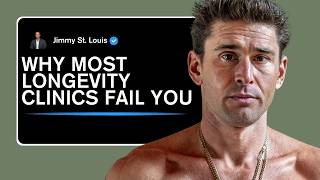
In this segment of the interview, Jimmy St. Louis explains how his longevity clinic, Agentis, partners with Ultra Human to create a seamless, data‑driven experience for patients. He describes the Blood Vision Panel, an at‑home lab service that delivers results directly to an app, and how the platform aggregates data from a variety of wearables (Whoop, Oura, etc.) and home‑environment sensors (CO₂, temperature, air quality) to generate a personalized Longevity Quotient (LQ). The conversation covers the onboarding workflow, real‑time sleep‑optimization alerts, and the clinic’s strategy to share best practices with other providers, offering a directory for doctors and patients to locate services. Jimmy emphasizes a hardware‑agnostic, collaborative approach that aims to embed longevity metrics into primary and concierge care, positioning the clinic as both a service provider and a catalyst for broader healthcare transformation.
Chapters
Nobody had really defined the standard of care in the longevity space, but the consumer journey in my perspective is—
In this show, I interview Agentis founder Jimmy St. Louis in Nashville, where I traveled to see some of the really cool things that he's rolling out at longevity clinics around the country. Great athlete, former NFL football player, cross-country athletes, CrossFit, competed pretty heavily in that, rowing. And his story is pretty inspiring.
So how do you change healthcare? How do you help advance healthier, happier lives but do so by driving standard of care, like truly defining the standard of care in longevity healthcare? When people hear that, they think, you know, tell me how you're doing that. What's the easiest, simplest solutions to help me embark on this journey?
Yeah, all the show notes are going to be at bengreenfieldlife.com/jimmy podcast. Let's go, dude. That was super fun yesterday geeking out of the clinic, trying all the things.
Yeah, man, there's a lot of new things there. And yeah, our goal to just help educate and give people access.
Yeah, what do we do? It's, uh, cryo. I did cryo, you chickened out. Uh, red light bed. Um, thought about the hyperbaric but ran out of time. Did ozone, exosomes. You did, uh, you did NAD or niagen?
I did niagen.
What's the difference?
Yeah. So, niagen is essentially a precursor to NAD. And, I found just for me personally, I love to do n-of-1 experiments and I've actually found that energy levels after niagen increase almost immediately and had been through more, I guess, aggressive NAD protocols if you will and really didn't notice a ton of difference.
You told me yesterday that you stacked them at one point and you were On fire.
It was like—
Like in a good way.
I mean, yeah, just like lit up afterwards.
NAD IV and then you did a niagen IV?
Yeah. And I was just in there with a friend and was like, "I've got time, so we'll try this." And that stack was pretty cool.
If people have heard of NR, is niagen NR?
Do you know? No, I don't know. Yeah.
I'm blanking. I'm sure whoever's in charge of TruNiagen is because it's TruNiagen, right? So, it's their product. Yeah. I think it's NR, but they might be screaming at me right now that's and in any ways different than NAD. And I was telling you, I think maybe that, that form, if I recall properly, gets into the brain better. So you get like a body plus brain boost from doing, doing that stack.
Yeah, I think maybe that's why it caused that, you know, me pure lit up from that perspective as well. And I guess that permeated the brain barrier, maybe a small molecule precursor to NAD.
Yeah, man, a whole bunch of billions of exosomes.
That's right.
And what else do you guys do there at this clinic, uh, Aerote, let's see if I pronounce it right. Yes, we're in Nashville. You guys have a bunch of clinics, we'll talk about that. What else do they do over there, Aerote?
Yeah. So, Aerote was created first just this very interesting story of just helping people recover better, you know, pro athletes, singer-songwriters, and really blossom into this more comprehensive longevity clinic, if you will. So, you think about your typical treatment offerings in a longevity clinic, they're broken up into various cohorts. So, they do hormone optimization therapy there, they do peptide therapies and have access to peptide stacks. Okay. They, of course, have all those modalities you mentioned. So, red light therapy, hyperbaric, infrared sauna, cryotherapy as well. And then, they have what I would call the advanced therapeutics. And that's ozone therapy. We're bringing in therapeutic plasma exchange. Plasmapheresis is available. And then, comprehensive biologics. So, that's the exosome therapies, the stem cell therapies, IV-based plus joint injections.
Ben Greenfield: You were— I didn't even realize because I was looking into you before I came down here and we've been talking a lot over the past few weeks. We can get into that. But, I didn't realize you were a 3-sport athlete. So, it was NFL football and CrossFit and rowing, and then you told me yesterday you also did cross-country.
That's right. Yeah. Yeah. So, growing up, military kid, had the chance to live all over the country, but I spent my younger years in Seattle, Washington, which I always call running country. Yeah. And, just like in the South—
Running, rain, weed. Seattle. Yeah, Starbucks.
I was, uh, exposed to the first two and not necessarily the latter, but yeah, but being there at a young age, it was so cool because you'd wake up on Saturday mornings and there'd be 300 kids doing a cross-country meet. And so to me, that was this foundation for all the other sports. So I grew up a runner, loved cross-country, then outdoor track as well, basketball, and then a bit later in life I found the sport of football just really by coincidence. My father had moved from Seattle to the state of Alabama where there's football country, right? So being a bigger kid, tall kid—
If you're in Seattle, you got Alabama's like football, Bibles.
That's right. Yeah.
I don't know what else.
Well, grunge, Southern food, hipster rap, good country music, and hunting, right?
Yeah.
So I found the sport of football really just because I was motivated to do something that was inspiring to somebody. My best friend was a world-class football player, top recruit in the country. But the coach approached me and just said, we can do cross-country and football in the same season. You'll break the state record for most varsity letters. And I was like, cool. So let's, let's give it a shot.
Yeah. Well, two, two pretty different, you know, slow twitch, fast twitch, uh, AMPK, mTOR sports.
That's right. Yeah. It was, uh, it was Quite the last gym.
I was a receiver. Okay.
But, in high school, we had this— Wesley, my best friend, was the top recruit in the country. At that time, I was 6'5", 180, and so I was tall and a runner. But, we just had tons of exposure. And, with him being a top recruit, we threw the ball a lot. I could jump up and catch it and pretty good at the sport.
Yeah, yeah. That is funny though because I remember when I was in college, I could dunk. And then, as soon as I started doing triathlon, my vertical dropped like 6 inches. And running cross-country and playing receiver, I would imagine you probably could have been even faster if you weren't training so much slow twitch with cross-country.
I think so, but I also think I probably wouldn't have been as successful because I always say when high-performance athletes start to crumble and get defeated, it's when they start to experience fatigue. So, I already had that great cardiovascular base.
Yeah.
Everything was easy, so I could really perform hard every single play. And to me, it was more of a mental game, something like parlaying into CrossFit and whatnot. You know, you just have the ability to break people down mentally and outwork them. So to me, I really use that base to—
yeah, get some grit. My wife ran, uh, track and field and cross-country and, uh, still sprints faster than me and inch for inch has a higher vertical. And so she, she was kind of a hybrid too, like she has the tight springy hamstrings but then can churn out a pretty quick mile.
Well, I had the chance to train with some of the more endurance-based kind of performance optimization trainers as well. They were talking to me about triathlon specifically, and you would know this, but the rotation cycling and how some of those high-performance cyclists, they don't even want them going on the StairMaster or walking upstairs as well. So, I imagine possibly that stretch-shortening cycle or something's helping their—
Yeah. You can get to your vertical. Pointy-pointy and a sport specificity. That's why the best cyclists, the best swimmer or runner in triathlon is never as good as the best pure cyclist, swimmer, or runner. It's just not enough specificity. And then, so you were in high school, you ran cross-country and football, and then I'm assuming you played college ball after that?
I did. I played basketball in high school as well.
Okay.
Had a goal of playing that in college too. So, I was really looking for the college where I could play both sports. That to me was exciting. So, my friend and I just started getting recruited. All around the country, and it was a bit of a whirlwind. Didn't really know what to expect. And so I did. I played college football at Auburn University. Okay. Had the chance to play at the highest level there. SEC football was pretty cool and it was a great experience. And as I say, a nice chapter of life, not really defined me, but yeah, it was a great experience.
You're still playing receiver there?
I was a tight end.
Okay. And then after that, you wound up in the NFL.
I did. Yeah. So I had a couple kind of Setbacks in college, had 2 ACL tears, but to me, I just tried to work my butt off and rehab quickly. And that last year, I had a pretty good senior year and we had some exposure with a bunch of other great athletes around us and was able to sign a contract actually here in Nashville with Tennessee Titans.
That's right. I forgot you played with Tennessee Titans. The ACL tear, do you use a lot of these biohacks on the knee?
I try to.
Yeah.
You know, it's interesting.
I'm just curious what's been like the most successful for ACL stuff.
So I actually— so I actually tore it a third time, and that third time was more of a partial tear. The first two were just clean tears. So of course I had to get in surgical intervention, get it, get it repaired. That third time I did not get it repaired, and it was just kind of hanging on a, on a, you know, limb, if you will.
Yeah.
And so I actually started doing stem cell treatment on it and was just doing joint injections and did before and after MRIs, and I actually saw a physical change in the ACL being more and more intact. And so for me now, I have a very stable knee even despite having not had surgery that last time. But actually, the thing that really bothers me, when I tore it that last time, I fractured the head of my fibula as well. So there's some arthritis I'm walking here in that.
And yeah, the, the arthritis piece is tough because, I mean, you're, you're right, you do see a little bit of regeneration with stem cells, and then collagen is tricky. I had a little bit of arthritis in my left knee and wound up doing stem cells, but it was, it was called intraosseous needling, where they like drill holes in the two articulating surfaces almost like aerating a lawn and then you plug up those surfaces. In this case, they used a— it was a bone marrow-based stem cell matrix. Matt Cook actually did that 5 years ago. And then, that took me from having 30% knee to now I'm probably close to 90%. But yeah, the cartilage piece was tough just because wear and tear from years and years of something else you did. Ironman.
Yeah. So he did just joint injections and he'd stack it with warm jelly or anything.
Exosomes, the bone marrow-based stem cell matrix, the intraosseous needling. It was him and Sean Tierney tag-teamed the protocol. We did it at Matt's clinic in San Jose. I think those are the main modalities. Then, we just chased it with some peptides and stuff for a few weeks afterwards.
Were you doing it repeated over the course of—
That was one. Oh, wow. It's minimally invasive, but it's still a little bit invasive. I mean, you can imagine because you're still having to work with the two surfaces of the bone. Sure.
So, and did you notice an inflammatory response thereafter since— yeah.
Yep. The only— I think I was telling you this the other day— the only, uh, stem cells I haven't gotten the inflammatory response from are the, uh, the ME cells. Okay. Because I don't get anything, like no immune reaction, no inflammation, wow, redness, swelling. I think it's just because partially they're so small and so, uh, histocompatible. Yeah. So, yeah, um, and your immune system doesn't kick them out. So you, you played football, and then before you went to the NFL, when you were in college, were you studying a lot of this stuff like business, franchising? Like, is that where you started to pick up how to do what you're doing now?
Yeah, so my, my whole family are either physicians or nurses, and they're in the healthcare space. So really just always had an affinity towards it, and would run to the hospital and peek around, you know, as a kid. And I was enamored by it, but I always felt like I wanted the chance to make a difference for people, but not just the traditional healthcare path, if you will. And had some family members that had some certain ailments, if you will. And over time, I really just became enamored with the space, but mostly because of the world in sports first. So to me, it's like, how do you just rest, recover, and repeat? And then just starting to understand that there's possibly better, more efficient ways to do it. And I always believed that, like, in team sports, the— most of the treatment offerings are there to be efficient for a team of 85 people, not for a single person. And so I was out there really just working to, to seek different ways to rest, recover, and repeat. Yeah, my ACL injury really put me on this track where it's like, okay, I've got to start to take this into my own hands. I'm surrounded with great physicians and great providers, if you will, But they can only do so much. I had to do, I had to take that into my own hands. So started doing some research and started learning about other modalities and started probing and started asking and started to seek those things out, if you will. So it was really more from a, from a sports perspective. And then for my career, I wanted to be a business owner. I wanted to make a difference for people, had the chance to be a leader on the football field. And to me it was like, okay. What can I do that can really inspire other people? And it just felt very natural for me with the sports performance world, plus the family members that were in healthcare, plus family members suffering from illness. Like, okay, how can I do something to help meet unmet needs in healthcare, if you will? Yeah, that was really the first endeavor for me from a career perspective, was to help people meet unmet needs through innovative healthcare solutions.
Yeah, it's interesting how much of kind of like the pointy edge of this world, like longevity or anti-aging if you want to call it that, and biohacking came from sports. I first heard about HRV back when most of it was being studied and used for professional European football teams. And then, a lot of the early red light photobiomodulation research, a lot of that was based on endurance or recovery. A lot of the compression that we use now in NormaTec boots or Therabody, a lot of that came out of largely the endurance sports world. PEMF, a lot of that came out of the sports world. Half the stuff we do originated for people who wanted to perform at a really high level then trickled down to whatever the normies, the masses. Or, I think the other thing that happens is the athletes get old and they keep on using those same protocols because they felt so darn good using them when they were competing. And then, there's crossover, right? But it's not just sauna and ice after practice. It's like sauna, ice at night helps me to sleep better. That's right.
Well, you think about like, like consumer-driven healthcare where they're really making the decision to invest in their healthcare with your own dollars, right? And I always think like, what's the best way to change healthcare is to build trust with people, work to make it accessible and affordable, and then to show it's efficacious. But when you have a high-performing athlete, right, it's it's almost like an immediate validation point. And people want to do what that athlete's doing. They want to be like that person. Yeah. So when you see these athletes doing these things and they realize, hey, he's doing it to recover and to show up every Sunday and perform at a high level, why can't I do it to go run a 5K?
Yeah.
Right. And so I think, yeah, those trust points are what has allowed this longevity world to really blossom.
Yeah.
With those validation points.
And then there's certain things athletes couldn't give a crap about, like red light helmets and, and whatever, tanning peptide or something. Some of this stuff is just pure vanity or aesthetics.
I'm buying one because standing in your underwear, you actually care about the tanning, right?
That's true.
They used to go stay on the tanning booth. I think we'd have appreciated some injectable instead.
See, what's, what's the, uh, what's the size of your, uh, or your, your follicular health gets factored into your, your combine score. That'll be the day. Um, so when you finish you finished your career in the NFL, did you go straight into the health clinic space simultaneous to doing— because you went on CrossFit and you did rowing. What did that path look like?
Ben Greenfield: Yeah. So, there was some overlap. So, to me, football was just one of those things that was like happen to be good at it, love to be around the team, excited to compete, but it was never really intended to be a multi-year career. And of course, injuries and other powers that be really just led me to a different path anyways. So I was doubling up on all my efforts, even in college. And so graduated early, graduated in 3.5 years, then pursued an MBA, then a master's in finance and economics, and then master's in telecommunications. I was stacking the stuff around the way and really leveraging, frankly, the scholarship dollars to move quickly. So I always knew I wanted to, again, go into business and then really thought, okay, why not do this in the healthcare space? So I started working on this stuff while I was playing football. And while I'm in camp, I was in there learning new things and also thinking about, okay, what resources will the NFL provide me to continue to be this lifelong learner and have the chance to pursue a career after this, no matter how long this is?
Do they do that? Do they provide resources for like post-NFL career development, uh, in, in terms of like ongoing education or, or actual like a financial boost or something like that?
It's actually pretty awesome. Now, it depends on how long you play.
Yeah.
But anyone who's ever even just signed an NFL contract, set foot on a field for one day, has access to a slew of benefits. And there's access to healthcare benefits, access to the network, access to NFLPA chapters, if you will. And depending on how long you played, there's different tiers.
Mm-hmm.
So some get paid pensions, some have access to what they call a world-class healthcare screening. Like, you know, go to Cleveland Clinic, go to Mayo Clinic. But then from an education perspective, if you play for a couple of years, they actually will pay you or give you up to $25,000 a year in reimbursement for education.
I was going to say they dictate what you can use that for, though, right?
It's got to be, you know, certification, undergrad. But I was just at our NFLPA meeting in Tampa, and there's a guy there that's been using it every single year for 15 years. And he's got a law degree. He wants to go to medical school now. I'm like, heck yeah.
So it just repeats like year after year for the rest of your life.
That's right. Yep. And some of this is, is a bit newer. Yeah, the Players Association working to negotiate this stuff, the NFL Trust and the NFL as well. Yeah, but they're really working hard. I mean, you think about it, the world's very different now where millions of dollars for these contracts— even when I was playing, I mean, ligament, and then was $275,000 a year. Now it's double that. And so, um, in the 10, 15 years prior to that, I mean, these guys weren't really getting paid that well. And so this is really designed to help them because those are the guys that built this league. Yeah, they put their life, you know, their bodies on the line every weekend to entertain people to, right, to watch. And so they're really working hard to—
right, then this is Gladiator reimbursement.
That's right.
Yeah, yeah. So you were building this idea of the healthcare clinic space when you were still playing football? And then where did like CrossFit and competitive rowing enter the scene?
Yeah, so for me, it really just never stopped. So it was— football was more just the thing at the time. For me, it's like, what can I compete in next?
Yeah.
So I immediately pivoted from football to triathlon— triathlons.
And I forgot, yeah, yeah, yeah.
And that was—
I wonder if we crossed paths at all. Probably would have been at a similar time as when I was competing.
We'll have to check the podium, which you would have been on, and maybe not me, right? I don't know, the hell with that altogether. That's right. So my parents were very active growing up as well. Stepmother was a 2-time All-American swimmer. Father was a multi-sport athlete as well. Mother comes from a long line of athletes too. And so I always saw them compete in these more traditional sports, running, cycling, et cetera. And did some triathlons as a kid. It was more, it was fun. So to me it was just like, I don't want to run a 5K. I don't want to go run a marathon. That sounds cool, but I would rather just do something that's, you know, maybe a little more utilitarian.
Yeah.
Well, and so I just went straight into triathlons and started training for some Olympic distance, did a bunch of sprints, then got into the, you know, the longer ones there afterwards. So I did that for about 4 years and. A friend walked up and was like, have you heard of this CrossFit stuff? And I was like, no. He's like, dude, you gotta come check this out.
Then this is funny, I'm laughing because like for me it was, it was triathlon and it was, have you heard of this Spartan stuff? Like I got pulled into obstacle course racing from triathlon. Sounds like you got pulled into CrossFit.
I did. And that of course then sparked the rowing thing as well, which I'll talk about too. But so I got into CrossFit, but for people that are listening, I'm now 6'5", 235 pounds. So if you think about the profile of a CrossFitter, that's not quite lanky for powerlifting, like your powerlifting, even just the, the cycle time. Yeah, a thruster, right, taking 50% longer than someone had your traditional build for a CrossFitter. Yeah, but this is 2013, and so I just went at it hard. And back then you could just have raw talent, raw strength. Yeah, a great motor. And if it's programmed enough where some of the kind of longer workouts are built in.
Yeah.
In conjunction with the sprints, like, there's longer ones I can— I could win and do quite well at.
Yeah.
So I was able to qualify for Regionals that year and did that for 4 years in a row. And, um, I, I will never forget though, despite all the other stuff I did in sports, the most humbling experience I'd had to date was the very first workout at Regionals. So I'm 6'5", 235 at the time.
Yeah.
And It's 21-15-9 of handstand push-ups and thrusters. And I'm just like, I've never done a handstand push-up before. And they put your hand in a box, right? So here's my arms.
Yeah.
And you've got a guy, he's much shorter.
Yeah.
And my hands have to go in that same box. So my head's going like this, right? Now, 12 inches off the ground. These guys are pop, pop, pop, pop, pop, pop, pop. And I didn't even complete the workout. So I finished dead last. And this is at regionals. Now, ended up going on and competing and winning a couple of other events. Yeah. Line, but I remember thinking, when this sport advances any further, I mean, how do I do this?
Yeah.
And then of course it did. Then you get into muscle-ups and, you know, you get into handstand walks and all that stuff. But I will tell you, it, it taught me more about my body and just how to lift properly and good form and good posture and structure and all those mechanics than any other thing I did.
Yeah.
Because I had to, being this Jess I am. So, I was able to carry that with me in some of the sports there out there as well.
Yeah, that's funny. CrossFit was one of the things that just never— it made it on my radar and I would drop into WODs every once in a while, but by the time it got popular, I was racing Spartan and pretty serious about Spartan and felt like CrossFit was just like back to the specificity piece. It was kind of detracting from some of the other Spartan-specific stuff I wanted to do. And then, by the time I finished Spartan, I just like not too fragile for CrossFit, but I think high injury potential for me with how competitive I am.
Yeah. Yeah.
Inability to not push.
I would have actually probably preferred Spartan over CrossFit really just with the running background and just, you know, they're a little bit more diversity and whatnot as well.
Still do them.
Yeah.
Still an option, that Tough Mudder. There's a few— well, actually, I don't know if they're still doing Tough Mudder, but they still have Spartan. And then they got, of course, have HIROX and DEKA FIT, the fitness scene.
The next thing as well. Yeah. Have you heard of the— they used to call it the— was it the Death Race? And this was the, the ultimate Spartan where he doesn't give you a finish line. Yeah, I got this.
I did it a couple times. I did, I did the winter Death Race when it was 32 degrees below zero during the cold snap in Vermont out of Joe's Farm. In the first hour, a couple of girls got pulled with frostbite on their toes. Um, they literally had to keep like pulling us into ambulance and medical to check fingers, to check toes. My water bottle, if I didn't keep it right up against my skin would just freeze as soon as I took it out. I remember that my heart really fell during the event, which I finished, I think mid-30s, 37, something like that started. I think around 11, actually finished that year. And I remember I was sitting in medical getting my feet inspected and I could hear some of the race directors in the other room basically having a conversation about what they figured they should have us do next because they were just making it up as they went. So, it was so cold, they were literally just having to call the shots on the evolutions and the exercises. It was hard. And, there was one night we were given the opportunity to crawl into a bivy sack and take a quick nap. When I saw how cold that event was going to be and I was already signed up for it, I didn't have a lot of cold weather gear because I wasn't super hardcore in hunting at that point. And I had a Cabela's membership or not Cabela's, what's it called? REI. REI. So, in the REI and just loaded up on everything rated -40. Somebody REI is probably going to be pissed when they hear this, but did the race, went back, returned it all. It's just been like—
It's all right.
Money I didn't have on the best gear that it paid off.
Yeah.
I paid my membership dues. So then, after CrossFit, So, was rowing like at the same time or was that after you finished the CrossFit career, if you want to call it that?
Yeah, it was a bit interesting. So, back to the theme of being way too tall for the sport and having the chance to win some of the events that were longer ones. Of course, rowing machine was a core element of CrossFit. So, that one was always natural to me. And I was at Regionals one year and actually, former rower walked up, was like, hey, you know, you got to check out this thing called the CRASH-Bs in Boston. It's in like 2 weeks. And I was like, what is that? He's like, it's the World Indoor Rowing Championship. And my response was, well, how the heck are you doing that, right? And so he's like, this is what it is. It's like 300 rowing machines in the bottom of the Boston University Coliseum.
You mean like Concept 2s?
Concept 2s, yeah, yeah, C2s. And he is like, you should just go do it. He's like, we'll sponsor you, we'll fly you up there if you do well, you know, maybe, maybe you go compete around the country and do this. And so I was like, all right, I'll give this a shot. And I learned that I had great fitness but did not know how to row.
Yeah.
But I actually went there and won a bronze medal. And so I lost to the Cuban national champion and the German national champion and beat all the guys on the US rowing team.
Wow.
And so went, went sub-5:50. Yeah. So it's a 2,000-meter race.
No handstand push-ups.
No handstand push-ups. I was fortunate to be able to use my length as well. And so, there were, you know, several hundred of these guys there competing. And if you go sub-5:50, it's a 2,000-meter race. So the standard race in rowing, in the Olympics, all that's 2,000 meters.
Yeah. So a good time is sub-5:50 in a 2K. That's right. Yeah.
That's right. So I won a bronze medal and total coincidence, the US rowing head coach was there, but he actually went to high school with the CFO of my company at the time. He was like, hey, I know a guy who works for you. I looked you up on LinkedIn. He's like, I mean, you just beat all my guys. Do you want to come out to California and see if you can learn the sports? And so I said, yeah, let's give it a—
you mean like actual, like water?
Like, like learn how to row and the water. Yeah. And I was like, sure, let's, let's give it a shot. And I remember I got in the single. Have you ever in a rowing boat before?
Not the kind you're talking about.
A single. And I mean, just straight in the water, just flipped over. And I got up, I was like, there is no way that this is a normal setup. He's like, it is. And then eventually learned and got a bit better. And what was actually really cool was University of Washington, a great rowing program. They were, they had a coach who had a brother who was a former NFL guy as well that I knew. And he said, come on up. It's You learn this sport, this takes people years to learn. Why don't you just go at it hard for a bit? And I went there and trained with the college guys. They were back-to-back-to-back national champions and they thought it was cool, like this older guy who played NFL football. And so they really took me under their wing and, and I just started training and got super enamored by it. So there was a time period for a 3-month time period where I was actually rowing 100,000 meters a day, whether it was on the water or on the machine. 100,000? 100,000. So, 7, 8 hours a day.
Yeah.
Like, we would do 3 to 4 60-minute pieces on the Concept2. We get out in the water and we would just do race pieces and it was—
The only thing I'm thinking about right now is like how sore and tight my low back would be. Like, if I row a 5K, I start to feel in the low back a little bit.
Yeah. And, I think what I learned was mechanics are so important.
Yeah.
So, this was really then the second stint that they're really focusing on mechanics. Yeah. Rowing's all about efficiency. Those are flywheels, zoom, right? And so, I was able to learn that relatively quickly and add some finesse and then just started to compete and just chipped away and got better and better and better and was able to row and finish third in the double in the US Olympic trials and then was able to hop on the 8-man and compete pretty well. And this was about a 1-year period. So, it's just go.
So cool.
Yeah, it was neat.
I'll tell you, were you married at that time, or was that pre— okay, pre-kids, pre-marriage?
Pre-kids, pre-marriage. Wow. So, uh, well, well, pre, uh, pre-current toddlers. I had a 14-year-old daughter, so this was— okay, so she was traveling with me as well. And the men's team was, was okay. I think that year, 5th in the Olympics, but the women had won 4 Olympics in a row. And so we were able to go out to the training center, and my daughter was able to to spend time with these Olympians, soccer players, rowers, is an amazing experience.
Yeah, this is your daughter who plays tennis now, right? That's right. Yes, that's right. Yeah. So, beyond all these sports, which like you were talking about earlier kind of feeds the curiosity of how to optimize performance and recovery into more of the health clinic space, when did Agentis enter the scene?
So Agentis entered the scene after two other business endeavors as well. So we had a, a national network of spine surgery clinics that were really intended to change the standard of care. And we invented the minimally invasive spine surgery. We created this reverse medical tourism model where people would fly in from all over the country. And that business really took off. But at its peak, we had about 2,000 employees and we had about 100,000 spine surgeries out of that business.
Wow.
But we really transformed that marketplace, if you will. And that was when I was able to crystallize the message of like helping people meet unmet needs through an innovative healthcare solution or practice. And so with the success of that company, we were able to get some attention and build some nice connections just in the more innovative healthcare marketplace, if you will. And I started doing some research and was like, what's next? After we sold that company and stumbled into the world of stem cell treatment and biologics and just became enamored with that. And having had the knee injuries and had adopted some of those things myself, I think there's an opportunity here to really help people understand safe, effective solutions from a stem cell treatment perspective, stateside and internationally. So we attacked that. We opened up 15 locations around the country, all within the practice of medicine. And we then had a couple of international locations as well.
And all primarily doing stem cells.
That's right.
Okay.
Primarily doing stem cells. And the, the thing I learned in that space was really how can you meet unmet needs through these solutions, but also started to have my first foray into regulatory and really just understanding that all those nuances as well, which I'm sure is something we'll chat about too. So we, we had some success. We partnered with the Mayo Clinic. They really took that business over. We treated about 10,000 patients actually out of that business. Largest safety study done in the stem cell space, if you will. And they then took it and parlayed that into some of their exosome protocols that they're, that they're through now. So after that business, it then was like the collision of these two worlds, which is like innovative healthcare solutions plus high-performance sports. And I was trying to figure out what I wanted to do next and was just having fun. I was traveling around the country going and checking out all these different clinics. I went to 40 Years of Zen. I found the guys at Next Health. I was able to go and do some secret shopping, you know, and to just go and experience these things. Like, this is really cool. But what I noticed is there's— it's so fragmented. I mean, there's stuff for the healthcare reclaimers, which is like hormone therapy and some peptide treatments, and stuff for the achievers, which is like the advanced biologics and therapies and modalities, if you will. And nobody had really defined the standard of care in the longevity space.
Yeah.
But I knew that different than creating a better mousetrap like in spine care that we did, somebody had to identify what best practices are but really do it on the fly. And so that's how Agentis was born, where we essentially have the business model of acquiring best-in-class longevity healthcare clinics who are doing certain things within our treatment scope, or what we call our honeycomb services, exceptionally well. And then we bring in world-class medical advisors to drive the standard, and then we leverage some technology to, to train our clinicians across the board.
Yeah, so a place like we were at yesterday, Eraté in Nashville, you didn't start that clinic, you found that clinic and then acquired it with the dentist. And then that allowed you to basically build on what they're already doing and introduce, well, we'll talk about it later on, like the Longevity Quotient and some of the tests we were doing yesterday. And you just basically rinse, wash, and repeat that at different clinics in the U.S. or is it—
In the U.S. currently. I think we're very disciplined in terms of not getting shiny object syndrome. I mean, there's so many cool things out there in the longevity space, But the consumer journey, in my perspective, is fragmented, confusing. Some is built with trust and some isn't. And so I think consumers are really just seeking like, what's best in class look like? What, what's the easiest, simplest solutions to help me embark on this journey? Yeah, if you will. So a company like Aira that we found were doing things exceptionally well and more of the advanced therapies like stem cell treatments and peptide therapies and modalities, but some of the other clinics that we've acquired were practicing hormone optimization therapy exceptionally well, right? And we saw that as a chance to marry with a clinic like Erithae and start to share some best practices to expand services.
So, so it's kind of like a rising tide thing. So you, you'll like find a clinic who's really good at, say, hormone therapy, and you can acquire that clinic and you can kind decode their secret sauce for hormone therapy, so to speak, go to another clinic who's done a really good job with stem cells, and eventually build this network where all the clinics are using all the best practices that they've learned from all the other clinics.
That's right, that's right. Yeah, so think about— we call it a honeycomb of services, right? So it's like, here, here's your honeycomb with all the different service offerings, and this is the puzzle for how it all fits together. Yeah, but not all clinics have to do all things. And they don't have to do all things exactly the same at the start. Our goal is to share those best practices. So our different treatment verticals are one is hormone therapy and be really good at that. The next is peptide therapies, then it's biologics, stem cell treatment, exosomes, if you will. Then there's IV therapies. Then there is the advanced therapeutics like therapy, plasma exchange, plasmapheresis. There's a new talk about Then there's the modalities, and that's hyperbaric and red light. Yeah. If you think about that, that can feel like a lot. So we're really working hard to systematize those things across all of our clinics. So if any of them do one of those things exceptionally well, like we think, okay, you have the chance to be best in class, we will acquire them and then we'll seek out that world-class physician or expert or team of experts like a Matt Cook on peptides. Clinics, right? And we will say, help us define the standard of care for these specific treatments, and then we will create those protocols, and then we will leverage our tech solution, which we'll chat about, to really train across all of our clinics. And so then eventually they're all singing from that same sheet of music. Yeah, but the differences is they're serving different markets, right? Some are like Midwest and they're servicing maybe the healthcare reclaimer who's like, I've lost a step, so maybe I don't need all those advanced therapeutics and they're available, but help me just start my journey. Or in some more prime markets like in Nashville where you have people that are like, yeah, sure, I want to start on my journey, but you have also others that are like, help me optimize as well.
Yeah.
So the idea is we're able to serve both populations, but through this systematized approach where the onboarding process is consistent, data collection process is consistent. But not all of them will go all the way downstream to all those additional services.
Yeah, so it's not exactly like a McDonald's. It's not going to be the same thing everywhere. They each have a little bit of their own flavor and personality when you walk into a clinic. That's right. Okay. Yeah. Are these clinics finding you at all, or are you pretty much doing 100% of the sourcing yourself as a Genesis?
Sure. At the beginning, there, nobody knew who we were, so they're of course, uh, You know, we're corresponding them, but now it's actually pretty interesting. We've got some recognition. Our vision, I think, is something people can really get behind. Yeah, it's like, how do you change healthcare? How do you help advance healthier, happier lives, but do so by driving the standard of care, like truly defining the standard of care in longevity healthcare? And so when people hear that, they think, okay, that's, that's pretty cool. Now tell me how you're doing that. But then I think when they see that we've been able to attract world-class physicians, they see the advocacy work that we're doing in D.C. to not just talk about change, but actually working to educate and instill change in this marketplace and define the standard from that perspective. It's seen as legitimate and serious. And so now most clinics are reaching out to us and saying, how can we be a part of that ecosystem? Yeah, the vision is so important from that perspective.
Yeah, I'll put on for you who are watching, even if you own a clinic, for example, for a link to Jimmy's stuff. Stuff and to the Agentis website if you go to BenGreenfieldLife.com/JimmyPodcast, J-I-M-M-Y Podcast. Yesterday, we were going through, I think, what is probably this technology that you were referring to where you designed this longevity quotient, this battery of tests, like 15 minutes of tests that you can go through to get a score. Which I thought was kind of cool. Okay, can you walk people through what you're— like, if somebody walks in, they want to get a longevity quotient, what it is that they're getting tested?
Sure. So the, the objective of the LQ, as we call it, one was to have this cool name. Like, you have IQ, now what's your LQ? And so people here, hopefully they can resonate with that. And, but in the theme of working to be accessible and affordable, create consistency, and drive best-in-class standards, we knew we had to have a starting point. And if every patient walked in the door with a different journey, with a whole slew of tests and, you know, information, it would have been very difficult to create this journey that's consistent for them. So we created this concept of the Longevity Quotient, which is a series of 5 tests, takes 12 to 15 minutes to complete. We believe it's the most efficient, effective solution that's accessible and affordable to give people critical health information to help them embark on their journey and to really inform their care plan. So the Longevity Quotient is made up of these various tests, again, 15 minutes to complete. The tests that it's made up of are all scientifically validated. They're highly tested, they're widely adopted. But we've married these 5 different tests together with a team of world-class experts who are biostatisticians to help create this composite score. And to me, it's more like How do you gamify the solution where now you've got a scoreboard for your health? Yeah, that's the benchmark. And then test, retest as you're getting treated along the way to actually see your scoreboard change, if you will. Yeah. So these 5 tests, which I can happily go into them and explain what they are, uh, you know, you walk in the—
I mean, I know one was body comp, one was grip strength, uh, what else do we do? That, uh, the computer vision eye tracking, reaction time. Yeah, Cognivue. Go ahead, explain it to people.
Sure. So, the journey is you walk in the door, you're handed an iPad or download the app, and you answer 9 questions that are from a whole health questionnaire, if you will. So, this whole health questionnaire actually is scientifically validated to assess emotional well-being, you know, physical well-being, healthy habits, quality of life, that type of stuff. So that was a, that's a scientifically validated questionnaire, if you will. And then after that, they answer a few more questions about their cardiometabolic health. So there's a test called the COSAC-17. And so what that is, that's the, it stands for Composite Southeastern Hypertension Composite Score.
Do it right.
So there you go. So, yeah, so there's 17 different markers. There's a questionnaire and then there's bio—
Yeah, it's like family history of heart disease and have you ever had issues. Yeah, that's— Yeah. And then you can also pull like lipids and triglycerides and stuff like that into that.
That's right.
Okay.
That's right. So there's a number of different biomarkers from your blood work that, that fit into that very well. And so then we do a body composition test and to us some critical markers from that perspective, visceral fat, muscle mass, right? Two great indicators for longevity. Scoreboard. It's gamified. People are excited to see it when they come back in.
Yeah, visceral fat, but also muscle mass distribution, visceral fat distribution. That's right. It can approximate metabolic rate, which is useful for the nutrition design. Phase angle. I've forgotten that it did phase angle. A lot of people don't realize or know what that is, but basically, it's a measurement of the resistance of the cells to the current that flows through the body with the idea that the more hydrated your cells are, the better, the more efficient that they're going to be for from a metabolic rate standpoint. And so, if you have a high phase angle, then you tend to reflect better cellular health, not just based on speculation. There's some interesting data showing nutrition deficiencies correlating pretty well with phase angle, dehydration. And then, I remember I used to hang out, he's kind of a weird cat but cool, Dr. Joe Mercola. He used to have a little phase angle measurement tool and he would measure you but then do things like put you next to a Wi-Fi router, have you hold your cell phone. And he actually not a large-scale clinical study, but he made a pretty good case that the higher the amount of EMFs you were constantly exposed to, the lower your phase angle. Because even Gerald Pollack talks about this, the scientist from University of Washington, about how things like photons of lights and electrical frequencies actually affect the movement and the structure of water in the cells. Kind of a rabbit hole, but you're testing that. That's on that InBody assessment. That's right. And then, so you got the cardiovascular, you have the other questionnaire, you've got the BodyComp, InBody scan. Then, what else?
Ben Greenfield: Then, there is a cognition test. So, it's a device that can measure your executive function, your response time, your memory. And, it's really meant to be a screening tool to understand if you might have any early onset issues to be thinking about or just frankly cognitive impairment. FDA-cleared tool as well.
So we're good at video games, you're gonna crush that test.
That's right. Yeah, that's right. And having not, uh, grown up playing video games, I was— well, I will say I was still pleased with the score, but, but the beauty is it gives you a baseline, right?
Yeah, yeah. A little— I think the little joystick was, it was just throwing me for a loop. Um, but those, those were the longest tests, which took like 5 or 6 minutes. That's right. And then, uh, grip strength.
Grip strength. Yeah, grip strength. I mean, What people may not know is probably the most measured marker for longevity, right? Think about good grip strength, you got some quad strength, good posture, good shin, good concession.
Yeah, yeah. It typically reflects that you're active in other areas of life because in order to have good grip strength, you got to be carrying stuff around or hanging or correlates with leg musculature like you were just saying. I got to figure out a way to game that test. I have big meaty paws, used to race obstacle course. I can dead hang forever, one-arm pull-ups, and I hit like 130s on the grip strength test, which is not high. Like, I should be like hitting close to 200. So, I need to figure out like what— I don't know if it's the way I'm gripping that rig or what, but I'm like, I'm stronger than this. I know for a fact.
You've got the— so, you said— so, that ball—
I've carried sandbags through the mountains with each hand, like straight up the side of a mountain. I know I can do this.
And I always do wonder about the— like, how do you gamify it? How do you kind of rig that test, if you will? It's funny you mentioned the 200. So, As I goal set, my goal this year is to be 200. So, if you're in my car later, you'll see I've got the little, you know, the little hand gripper in there. I'm playing.
Oh, yeah. Yeah. It was in my backpack right now. I, yeah, I have the TSA-friendly one for the airplane. Yeah. Yeah. Because captains have crushed, they don't like, but there's another, the other one that just looks like it's got finger holes.
Okay. Well, you know, I wonder if you're like, if you're a rock climber, right?
Yeah.
And you got incredible grip strength, I would assume. Is that really an indicator of longevity? Right? Because, because then you're, You're going out of your way to train.
Yeah, of course, there's a specificity component. But when you look at walking speed, VO2 max, and grip strength as being 3 correlates to longevity— I was telling you this yesterday, like, it's hard for somebody to go and do a longevity quotient and have to do like a 20-minute graded exercise protocol and fall off the back of treadmills doing a VO2 max test. Like, anybody can hold a grip strength measurement tool. Walking speed is also kind of difficult to, to directly measure. I've got a lot of good correlative studies. So you all those components and then you get a score. But I was looking at my score yesterday. It pulled in my lab measurements as well. Like, those are feeding into it. That's right.
Yep. Yeah. So, there's the series of tests and then you end this experience with your blood drawn and you download the app. And the next day, most of your labs are back. They're in there. And so, you'll actually see your score change over time as we put more and more of the schools in there. Now, the labs were selected by our medical advisory board to really be broken out into a number of different cohorts, if you will. So there's, you know, I know you had Matt on your show and you guys talked about like the different organ systems. Yeah, that's Matt Cook, to, to be able to correlate peptide stacks, that there's organ systems, very similar approach, and he advises us on this as well. So you think about the different cohorts and the blood work being cognition, metabolic function, cardiovascular, hormones. Of course, there's a fitness component and nutrition component as well. So those 60 markers are batched up into those various cohorts, and that way you're able to gamify or see the scoreboard as you—
right, right. Your metabolic score and be hemoglobin A1c and glucose or insulin, and a hormone score might be total T, free T, estrogen, etc. And then say you have each of those broken out as well. That's right. Because you can see blood work, maybe you've got like a— let's say you have a score of 0 to 180 on the blood work, but that might be because hormones are like 30 and metabolic is 90. So breaking them out like that, it was helpful for me to see that. So when somebody comes into a clinic, pretty much any clinic that Agentis owns now, they're going to do that Longevity Quotient as a part of their onboarding?
That's right. So as we described, since each of these clinics been around for different periods of time, different service offering, different type of patients. We just believe there had to be some way to create consistency as we start to migrate and grow those clinics. So this Longevity Question was designed to be that, that single entry point for every patient. So now everyone has the same set of data. Then we can leverage our protocols that we've created that will be the same across the board with some AI enablement to be able to create consistency in the patient journey.. And so you think about the providers, now we don't have to bring them on the phone and flood them into corporate and have them learn all these new protocols. They're really handed the protocol, if you will. Now they still have discretion, of course, that's, that's very important, but we're able to easily enable this patient care plan with consistency across the entire enterprise.
Food is such a big thing. How do you tell people how to eat, or do you guys do much in the way of like diet programming or nutrition?
Yeah. So, I mean, of course, it's, it's CORT, the longevity journey. And so the way that we think about this is we've got these core tests and those core tests will inform the care plan within those services that I described, right? The hormone peptides, etc. And so that creates this care plan. Then there's this other component, which is like, what are the non-negotiables? And I think you talk about a lot of this with, with Boundless Life. It's like, moving, being in sunlight, proper nutrition.
Big glass of water when you wake up, getting outside, you know, preferably touching the ground, 15 to 20 minutes a day, 7 to 9 hours of sleep a night.
That's right, that's right. And so we believe that nutrition being a core component is a specialty of its own as well. So you think about things like the weight loss modalities, all those things. So it's a great question because that's actually our next endeavor. So What we do is we'll find, again, these specialists. And so, we have an engagement that we're about to do with a specialist that we think is a world-class provider on this as well. And, she is going to help us develop more of the nutrition components, if you will, of our plan.
Yeah, yeah. That's what I attempted to do even with Boundless, not from a tech standpoint, from an I can look this up in a book standpoint is there are 13 different diets in the nutrition section of the book and then a matrices under each diet that indicates, okay, so if your goals are this, whatever, fat loss, metabolic management, muscle gain, autoimmune conditions, whatever, this is the diet that might work best for you. You could theoretically long-term with the help of a nutritionist actually develop something that's pulling in the longevity quotient and then after assessing blood work.
That's right.
Possibly some other labs depending on how deep you want to go. Than you're getting an actual nutrition program that's selecting for the client one out of, say, like, you know, 5, 6 nutrition programs that you have available.
That's right. There's really two important pieces with that question. So, the way I look at this is accessibility and affordability drives trust, which drives adoption. And so, most of what we do and want to keep very simple. It's like, yeah, because a lot of this is cash pay, right? That's right. So like, here's LQ, here's world-class protocols, here's how we marry them, here's your care plan. Yeah, a care plan needs to be easy to understand, and then they can do add-ons and those things there afterwards. Yeah, you think about nutrition, there's a lot that goes into it though, right? There's, there's psychology, there's, there's culture, there's where you live, there's access to certain foods, there's knowledge, and that's like a whole other endeavor. That's taken place. So our perspective is let's give people the most critical information about their health. Let's help them understand supplementation and proper diet and those things. But there has to be a level of alignment, which is why I love cash pay healthcare, right? Because you're already aligned because they're making that decision to invest in you and invest in the fact that they trust you along the So we try to keep it simple on them. We don't do a ton of dietary advice and specialized type advice from that perspective for the reclaimers, right? So to me, that what I just discussed, like, that's the reclaimers, like, I've lost a step, tell me what I need to know, right? But some of the more advanced things like DNA methylation tests, you know, genomics testing, food sensitivity tests we were talking about yesterday, I believe that should be the second phase of the care plan as well.
Right.
But to me, the LQ addresses things that every single person in the world deserves to have access to.
Yeah, yeah. And a lot of times the type of person you're going to come into a clinic like yours and do cash pay for services like that, they're kind of like a little bit aware of what they're shoving down their gaping maw. They're not eating at McDonald's. Um, the exercise— hopefully anything can be fixed with the right peptide protocol. Big Mac and BPCs. So, with the exercise component, this is how we connected in terms of me coming down here was that's part of my specialty with my background in exercise physiology, strength conditioning, personal training is how do you actually create the perfect exercise protocol. That's right. And, it pulls in components like VO2 max and lactate threshold and mitochondrial efficiency, fat burning, strength, power, mobility. And, that's kind of what we're trying to weave in now as well on the customer journey where Simon's going to be doing hyperbaric, red lights, maybe ozone, possibly peptide protocol or even a stem cell protocol. What's the actual fitness routine look like? So, this has been kind of exciting the past couple of days. We're mapping out this, I guess, opening the kimono for people, what a 12-week journey would look like that includes my flavor of optimizing human metabolism, muscle composition, strength, and overall movement protocols.
Yeah. So, that is the exact model that we've done with other treatment operands, if you will. So, you think about how we connected on this specific topic was that's a big gap for us. People are asking for it. Who's world-class at it? You, right? And so, Now, our thought is we share the same mission— help people live longer, healthier, happier lives, right? And you have incredible knowledge from that perspective that people are seeking out. And so to me, this continuity of care where now we're able to connect the dots with all the different treatment offerings, with great knowledge, with world-class advice and guidance from a fitness perspective, that really helps to close the loop for patients. So Without being a jack of all trades, master of none, like the objective is really how do you create this consistent plan that's easy to undergo? And you got Boundless Life, we have LQ, and Agensis, and which just seems like it's a pretty cool match made in heaven.
Yeah. We should be close by the time this podcast comes out. If you go to the show notes at bengreenfieldlife.com/jimmy podcast, hopefully we'll have a little bit of a preview for you there or something for you to look at. And then you put the tracking—
I'm sure our marketing and tech team is not going to love to hear that, that we're embarking I mean, or at least, yeah, bookmark the podcast or subscribe to The Agenda.
You guys have like a newsletter where you'd probably be—
That's all right.
—telling people about it. You're using this little guy for the measurement, the UltraHuman?
Yeah. So, you know, part of the theme of creating this consistency and continuity for patients and arming them with great information. There's lots of people who are these longevity achievers, if you will. Yeah. And they're already wearing their wearables. But the problem is, back on the theme of being fragmented, right? You've got all these treatment offerings, you got all this different technology, got this in-home test, this lab, this wearable. We wanted to find a partner that just streamlines those things. Yeah. So we actually found Ultra Human not because their wearables and the other cool stuff, which I will chat about, but because of this thing they call the Blood Vision Panel. And that Blood Vision Panel is like they, they want to Uberize getting your labs done. Yeah. So, you download the app, got access to it, they come straight to your house, get your blood work, and the next day even with these comprehensive panels, most of them are coming in already on the app. Yeah. I've done it, by the way.
Like, when they first rolled it out, I don't know if they're based out of India or if they produce the rings there, but I was in India when they rolled that out and they sent the phlebotomist to my hotel room in India. Yeah. I had my results like a couple days later.
Yeah, yeah, yeah. I had mine done about 2 months ago on a Saturday morning. My daughter and I were about to go out and play tennis and this nurse walks in with 15 vials and my daughter's like, what the heck? What's there? It's like, well, I'll make sure—
I'll be out of tennis today.
But she's seen all the craziness. So had them done. I was like, okay, I'm hooked. This is— this is the right partnership because it allows us to create consistency, but also just efficiency, like easy access to care. Just— it fits the core values from that perspective. And so then we think about what are those things that are important to longevity consumers, and they're like, oh, we've got these great wearables. Some of them have, you know, 30-day battery life, and then they have this, this home device where they can test air quality and a CGM. It's okay, this is pretty neat here. So they are somewhat hardware agnostic though, which is pretty cool. So if you've got, you've got the Whoop, if you have another Ring, if you have other blood work that's done, you can upload it all there into the app.
Oh, so you don't even have to wear an Ultra Human ring to have access to all that within the app. That's right.
That's right. So, that's pretty cool. And so, this partnership that we're doing with them is we're their longevity provider and we've married our data together. So, people have wearables, they can see all their stuff in one place. Longevity quotient plus the wearables. Yeah. Well, yeah.
Yeah. Because you're doing it all. You do everything. And then, oh, we were talking about this yesterday. They actually monitor your home now. As well, right? Is this the one that does like your, uh, like, uh, air quality?
Um, I thought it was cool. So, um, one of the neatest things I discovered is, uh, CO2 and, and brains, um, will disrupt sleep patterns. Yep. Right. And so what this device does is it tells you your room or your home is optimized for sleep, temperature, CO2, number of different—
but doesn't it send the data to your Ultra Human app?— it does.
Yeah, sends the data. It's like, here's prime sleep time. Yeah, but it will also say your sleep cycle was disrupted last night, and by the way, maybe your CO2 is high. And it could be things like you sleep with a dog in the room, right? Yeah. And so it'll just say something simple like crack a window, and you'll see the next day that sleep, that sleep cycle is not disrupted, right? So it's just small little optimization things. Yeah. So as part of our onboarding, what happens is as patient Patients join, they go through LQ, and they can sign up for our Ultra Human partnership because stuff's in their house.
And yeah, I'm a great— So cool, dude. I love what you're doing. This is super cool. Yeah, man. And for people listening, like, if, if like somebody's a doctor, they own a medical clinic, they can go to the website and reach out to you if they kind of want to implement some of what you've created in their clinic. And then if somebody's a future patient, I assume you guys have like a directory on your website that shows cities, locations. They can find us through the main site.
And of course they can seek out some of the brands that we acquire as well. It's interesting you brought up the part about the doctor piece. I mean, my perspective is rising tides lift all boats and this world has a chance to have a lot of really great players in it. And because the space is so new and people are trying to decide if How do I trust it? Yeah, we want to share best practices. We want to collaborate. We want to find those other world-class providers and share notes. And my wife brought this up last night. I thought it was pretty cool. She said, can LQ just make its way into a primary care office or into a concierge office? And to me, I think it belongs there, even independent of Agensis. It's like if patients can walk in with this information and then these physicians can at least be interested in learning about some of the more advanced treatments out there, then that may be the chance to change healthcare.
Right, right. Importantly, that these aren't randomly chosen, grip strength or the cardiac questionnaire or the Cognivue, like you were saying, these are actually good proxies for longevity. They're actually based on big data, not just like— this wasn't Jimmy sitting on the couch like, "Hey, what do I feel like could make somebody live a long time? Let's go with these ones." Alright, cool. BenGreenfieldLife.com/JimmyPodcast where the shownotes are with Jimmy St. Louis, my guest. I don't even know if I said your last name the whole show. St. Louis. Anyways, you guys, thanks so much for watching. I'll put all the other things that you need to know where you can also leave your questions, your comments, and your feedback for Jimmy or me, BenGreenfieldLife.com/JimmyPodcast. BEN GREENFIELD] Thanks for watching. Do you want free access to comprehensive shownotes, my weekly roundup newsletter, cutting-edge research and articles, top recommendations from me for everything that you need to hack your life, and a whole lot more? Check out BenGreenfieldLife.com. It's all there. BenGreenfieldLife.com. See you over there. Most of you who listen don't subscribe. Like, or rate this show. If you're one of those people who do, then huge thank you. But here's why it's important to subscribe, like, and/or rate this show. If you do that, that means we get more eyeballs, we get higher rankings, and the bigger the Ben Greenfield Life show gets, the bigger and better the guests get and the better the content I'm able to deliver to you. So, hit subscribe, leave a ranking, leave a review if you got a little extra time. It means way more than you might think. Thank you so much.
More from Ben




The Solution to Aging Might Be Closer Than Anyone Realizes - With Ben Goertzel



