The Workout Science That Changes Everything
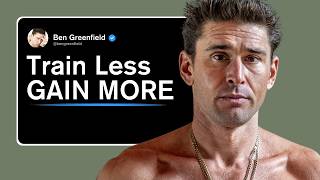
Ben Greenfield reviews strength-training research, including a Schoenfeld study on eccentric overload, blood-flow-restriction training, and biofeedback tools. He covers protein timing (0.4g per kg per meal), pistachios' antioxidant benefits, and how 15g daily of essential amino acids prevented muscle loss in a NASA bed-rest study.
Chapters
In this episode of the Boundless Life Podcast, what is the healthiest nut, advanced strength training secrets, how often should you eat protein, and much more. Welcome to what is actually, according to my calculations, the 500th episode of the Boundless Life Solosodes, meaning I've done 500s of these. All by myself and I still can't talk properly or pronounce words properly on this show. There are actually many more podcasts than that. I've been podcasting since 2007, late 2007. Yes, I know that that's 19 years-ish according to my math. I still suck at it obviously, but I actually owned the Endurance Planet Podcast, the Rockstar Triathlete Academy Podcast, podcast back when I was a personal trainer running my fledgling gyms and training studios, the Train for Top Dollar podcast. And this podcast used to be the Ben Greenfield Fitness Podcast, became the Ben Greenfield Life Podcast, and is now the Boundless Life Show podcast experience, whatever we want to call it, which means that according to my rough math, actually, let's pull out Let me reach over here and grab my phone, which is always not within reach when I'm podcasting. Let's do the math on this. So, 2— I would do this in my head, but it would just be a train wreck. 2 episodes per week. Okay. So, that's 114 episodes per year approximately times 19, 2,166. Did I do that properly? 2,166 episodes. Yeah, around there for this show. And then, I think another 1,000 or so for the other shows. So, well, I'm above 2,000 and this is the 500th episode. So, we're going to do something very, very special, which is nothing except let's just say drinking game. You have to throw back a shot of spirulina apple cider vinegar or your favorite, I don't know, Mastic Gum Unicorn Tear infused Cal liquor anytime I say. The shownotes are at BenGreenfieldLife.com/500. Drink up. Shownotes are always juicy. We're going to jump into an interesting article that came across my plate because I get these for free. And so, I was very pleased to hear what may actually be one of the healthier nuts that you can consume. Now, this is based off of a paper in the journal Nutrients entitled Quantification of Phytochemicals, Cellular Antioxidant Activities, and Antiproliferative Activities of Raw and Roasted American Pistachios, baby. That's right. You guessed it, pistachios. So, the article goes into how certain fruits and vegetables are often thought of as high antioxidant foods, but this study conducted by Cornell University and published in the journal Nutrients actually showed that Pistachios are among the highest antioxidant-containing foods that we can consume and can beat out blueberries, pomegranates, cherries, and the mighty beet. They also analyze the makeup of pistachio phytochemicals, which are compounds within plants that may help to lower risk of chronic disease and keep your body working properly. They look at the antioxidant potential of pistachios. And for the antiproliferative effects, which I know is a mouthful, all that means is that they were looking at whether pistachio extract can help to inhibit the growth of tumor cells like breast, liver, and colon cancer cells. So, they use different methods in science to measure antioxidant activity of certain compounds. So, in this case, they used what's called the Oxygen Radical Absorbance Capacity, the ORAC score, and the Cellular Antioxidant Activity, the CAA score. They found that pistachio was very due to its natural vitamin E and carotenoids, phenolics, flavonoids. Pistachios actually in other studies have been shown to be very good for your gut biome as well. They help to feed bacteria in the gut in a good way without causing a lot of gas, flatulation, and heck, they taste good. I was at an auction for a local school. Shout-out to Logos School in Moscow, Idaho. I was at an auction for Logos School and part of the auction involved a cake dash in which everyone at the table would kind of come together and bid to be first in line to go get some of the wonderful cakes that were baked that day fresh. I was able to secure a pistachio cake for my table. You never know if once you get past the outside beautiful layer of a cake if the inside is going to be the cheapo out-of-a-cardboard-box cake mix or real dense nutty gooey creamy goodness. It was the latter in my case. So, I actually have half of a giant-ass pistachio cake in the refrigerator. And perhaps more importantly, for those of you who fly on airplanes depending on which class you're in or whether any of the flight attendants happen to be around in the back when the snack pack's sitting there free to take, nudge, nudge, wink, wink, hey, you paid for the ticket. The pistachios are often in that little snack box. Considering they cost about $17.99 for a large bag of pistachios at the airport bookstore or candy shop or what have you, grabbing a few bags of those pistachios on the airplane is a good idea. It's actually a habit of mine. I managed to score 4 small bags of pistachios during my flight home from Nashville a couple of days ago. So, there you have it. And I'm healthier because of it as we know now from this article. Okay. So, next up. This one's interesting because Maybe because my friend Gary Brecka is now wearing a weighted vest everywhere. It's not like a rucksack vest. I think it's 10 pounds-ish called an ION Vest. And even that 10 pounds can add up as far as a little bit of extra gravity for the body. As I reported in another podcast episode a few months ago, increased proprioceptive awareness of the body in space and then a little bit of an effect on bone density. And of course, you just look. Like a superhero. Well, the question is, and this is the question asked in a recent study, is a weighted vest as good as actual weight training when it comes to maintaining or building muscle? So, what this was, was a 12-month randomized control trial in 150 older adults who were obese, who underwent a weight loss intervention, and who wore a weighted vest. Now, the first thing you should note as a good little research student, is that these folks were obese, right? So, the relative weight addition of a weighted vest in someone who weighs, say, 300 pounds is going to be much less significant than the relative added weight and potential muscle-triggering effect of someone who's, say, like 170 pounds wearing a 10-pound weighted vest. Nonetheless, what they looked at was supervised weight training 3 times per week, or wearing a weighted vest daily for up to 8 hours per day. And they did increase the vest's weight as the participant lost body weight, which is actually a little bit counterintuitive to me. It seems like the more you weigh, the higher your weighted vest should be, but they use the opposite approach. And what they found was that the, the actual loss of weight did not change between each group, but the resistance training group wound up doing a better job at mitigating the muscle loss that occurs with a diet or exercise-based program. Meaning that the, let's say, like the anabolic or muscle protein synthesis triggering properties of weight training is superior to that of wearing a weighted vest. That does not mean you should throw your weighted vest out or perhaps stop thinking about getting one if you don't have one. But, it kind of makes intuitive sense, right? If you're at the gym and you're squatting, lunging, hinging, overhead pressing, overhead pulling, chest pressing, and say rowing, you're moving muscles through a joint range of motion that is higher than, let's say, what you might be moving joints through if you're just walking with a weighted vest. You're causing more muscle tissue damage. You know what's called eccentric loading in most cases is what's going to trigger muscle growth. And you're training a little bit more functionally as well. Then, with the weighted vest, I mean, really you're just moving against a weight to burn more calories. Now, of course, you could do what, for example, if I have some friends over, I've got 5 weighted vests and there's not enough weights to go around but everybody can wear a weighted vest and do squats and push-ups and lunges, et cetera. I'll do a workout like that. I use a weighted vest when I go on a walk and I go on fitness walks where I wear the weighted vest, there's a big hill, shout out to Saddle Ridge Hill behind my house, and I will climb that thing. And for example, I'll play games, I gamify it. For example, every time I get to a mailbox, I do 20 air squats wearing the weighted vest. And then, the next mailbox, I'll do 20 push-ups and I'll alternate back and forth like that going all the way up the hill. And then, going back down the hill, I'll do the mailboxes again, but this time I'll do uphill-facing burpees. And then mountain climbers and alternate between those two exercises coming back down the hill, all while wearing a weighted vest. That's an example of a way that you could use a vest and kind of get both strength training, high calorie burn, a little bit of increased metabolic load while working with the weighted vest. But the main takeaway from this study is that you still need to do like formal weight training in the gym if you want to stave off muscle loss with a diet, or if you want to theoretically build or maintain muscle rather than just using a weighted vest. So, there you have it. Alright. So, this next one I'm pretty excited about. It's basically what I consider to be a really, really good walkthrough of what the future of strength training could look like. Now, I've subscribed to the National— or not the National, the Journal of Strength and Conditioning Research since I was probably, gosh, 19 years old. I'm 44. You do the math. I get this blue journal to my house every month. I read through it and it's not the only journal that I read, but it's one that I like. My personal training and strength conditioning certifications are through the NSCA. In 2008, little horn toot here, I was actually voted as the Personal Trainer of the Year by the NSCA. So, I've got a special place in my heart for the literature that they put out primarily on on exercise, weight training, and even some advanced modalities like those discussed in this recent article. It was entitled "Maximizing Strength: The Stimuli and Mediators of Strength Gains and Their Application to Training and Rehabilitation." So, the short version of what these authors, Brad Schoenfeld among them, who's the guy who's done a lot of the research on like what's better, high weight, low rep, or high rep, low weight for weight training. He was an author in this paper. And really the biggest takeaway message for me is that you could potentially be leaving strength gains or muscle gains on the table. And there are ways that you can enhance training that could allow you to get a lot more bang for your buck out of the time that you spend at the gym. So, before getting to the future stuff, the paper kind of lays out what's happening mechanistically when you get stronger. So, strength gains are triggered through a sequence of events that they describe in the article. And I'll link to it, BenGreenfieldLife.com/500. Drink up. Maximal mental effort causing maximal neural activation of the muscle. So, your brain's turning on the muscle when you're really focusing on the muscle, resulting in a forceful contraction, concentric and eccentric movement, meaning a positive and a negative aspects of lifting the weight and lowering the weight. Full range of motion, and muscular metabolic stress. And when we combine that maximal mental effort, maximal neural activation of the muscle, forceful contraction, concentric eccentric movements, full range of motion, and muscular metabolic strength or maximum muscle metabolic stress, that's how we get strength gains quickly and efficiently. And of course, hearing all of that, I'm sure you can imagine you have to go beyond yoga and sauna and buying resistance bands and following a Gwyneth Paltrow DVD. So, let's get into how each of these work when we talk about the future of strength training. I'm going to chunk these up into how that they describe them in the article, and then I'm going to finish with walking you through what a sample week might look like if you were to use a lot of these strategies. So first, we start off with eccentric overload training. So, your muscles can produce greater force during the lowering action, let's say dropping into a squat or blowing a pair of dumbbells to your chest, during that action, you produce greater force than you do during the lifting action, the concentric action of say standing up out of the squat or pushing the dumbbells or barbell away from the chest. During traditional heavy resistance exercise, your muscles are near maximally loaded during the concentric phase, but they're submaximally loaded during the eccentric phase. Meaning that your muscles could technically handle a lot more when you're— let's use the bench press now. I don't even bench press that much, but I'm going to roll with it. When you're lowering the bar to your chest than when you're pressing the bar away from your chest. So, you're theoretically like sandbagging half of the set, the hardest part of the rep if you are not taking advantage of some element of eccentric-only training or what's also known as accentuated eccentric loading where the load during the eccentric phase actually exceeds the load during the concentric phase because again, remember, you can move more during the eccentric or you can have more force during the eccentric like lowering the weight or lowering through the movement than you can during the concentric phase. So, if you want to enhance strength, then the idea is that you can actually focus on the eccentric movement. A simple low-tech method for this would be lift bilaterally and then lower unilaterally. So, for example, you could load up a leg press and you could push with both legs and then lower with one. Or you could load up, let's say, like a machine that allows for single activation of either arm on the machine and you could press out and then lower with just one. Now, I think there are even better ways to do this. For example, variable resistance training using really heavy bands. There's one guy I interviewed, John Jaquish, who has something called the X3 Bar System where you're pressing the band up. But if you reduce the intense or you reduce the speed of the band as it's lowering, let's say during an overhead press, you're getting a lot more eccentric loading because you're struggling to keep that band from lowering too quickly as you're bringing the band back down to your shoulders. I think that that's one really good way to do it. And bands like that can be portable. And then, there are a lot of machines now. The Tonal, if you have a Tonal, you can choose eccentric phase of the set on that to maximize the force or to increase the force as you're lowering. The ARX is the one that I use. It is kind of a big machine, but it's a 2-horsepower engine and it will push against you just as hard as you push against it. So, when I do a chest press, I actually was doing chest presses on the ARX this morning. When I press out, I can push as much weight as I want, but when it's pushing me back in, sometimes that weight will be 20, 30, 40 pounds heavier because it's matching the force that I am working against it with. So, the last way and a very simple way that you can do this is simply lower the weight. For a longer period of time than you're lifting the weight. Let's say like a 2-4 tempo, right? Overhead press, 2 seconds up, 1, 2, 3, 4 down. Squat, 2 seconds out of the squat, 4-second drop. And, and by just reducing the speed during the eccentric portion, you are triggering more of the muscle fibers that can handle a heavier load. So, in many circles, this would be called, you know, focusing on the negative phase of the lift. The next is blood flow restriction. Blood flow restriction typically involves using pneumatic cuffs or bands, and these are commercially available to increase metabolic stress inside the muscle and enhance strength gains compared with low-load resistance training. So, what you do is you— tourniquet's the wrong word because blood is getting into the muscle, but it's not getting out of the muscle when you're using a BFR band. An example of a very simple BFR band setup. I'll link to in the shownotes. You can get these things for like $60 on Amazon. You can go all the way up to like, you know, $1,500+ fancy Japanese Katsu devices for doing this. But BFR traps metabolic byproducts in the muscle because remember, the blood can get in but the blood can't get out. So, inside of the muscle, you're building up lactic acid and all these metabolic byproducts. And by being stuck in the muscle, so to speak, you are triggering a greater anabolic response and you can get a heavy load training effect with lighter weights. You could walk into the crappiest gym at a hotel and it's got 20-pound dumbbells and it's got a rusty elliptical trainer and it's got a half pumped up stability ball. You can put on resistance or BFR bands. And, I do this and do squats and push-ups and lunges and curls with the 20-pound dumbbells and I sprint on the elliptical trainer and God knows what you're going to do with that stability ball, but your muscles think they're lifting a heavier load. You're basically tricking your muscles and you can get a really good strength-gaining response and muscle gain response to BFR training. This is also useful if you're injured and you can't lift heavy weights. So, there's a whole bunch of different protocols out there for BFR training, but an example would be you choose an exercise, you do 4 sets of that exercise like 30 reps, then 15, then 15, then 15 with 30 seconds of rest between sets. Then, you move on to the next set. The way I personally like to do BFR training, I don't advise this because they don't advise it, but I cuff both my arms and my legs and I'll do this in a hotel room. I'll crank out 30 squats, 20 push-ups, 10 pull-ups with the doorframe suspension strap, and then I'll do 30 lunges, 20 dips, and 10 overhead presses. And I'll just run through that as a circuit. Squats, push-ups, pull-ups, lunges, dips, overhead press for however much time I have available, which is usually a half hour. BFR bands still, I think, underrated when it comes to being able to produce strength gains even with low load. So, the next one is motor imagery or mental rehearsal. This sounds kind of pseudoscience until you read the actual data. So, Imagined forceful muscle contractions performed in the absence of actual physical contractions of motor imagery training that can increase strength over time. And there are actual physiological changes that occur, including central neural adaptations that result in increased command of the muscle. So greater intensity of mental effort during motor imagery actually produces greater subsequent gains in strength. This is also known in some realms as like psychocybernetics, right? Books like "The Inner Game of Tennis," "The Inner Game of Golf," practice your tennis swing while you're sitting on an airplane for 2 hours, whatever, for 10 minutes that time and you actually could get a better forehand or backhand or serve or drop shot or whatever it is that you're trying to visualize. So, you're literally training your motor cortex and corticospinal tract to fire harder without actually loading the tissue. So, practical application of this would be like before each set that you do in the gym, you just close your eyes and you imagine forcefully contracting that muscle. And, it doesn't have to be long. Close your eyes for 20, 30 seconds. Do vivid imagery of the lift, not watching yourself from the outside but just feeling it from the inside. Contract the muscles, not actually contracting them physically but in your mind. And, that's called priming. It primes the nervous system. If you really want to amp this up, look into a company like Halo Sport uses, what is it called, transdirect cranial stimulation, tDCS, to allow you to recruit even more motor units. You can find that with visualization and that's kind of like the cutting-edge futuristic mental aspect of training. Next is arousal, not that kind of arousal, but arousal as relates to mental effort. This is number 4 out of 5. So, the way I'll describe this roughly from the article, the article is really good, you should go read it, BenGreenfieldLife.com/500drink. The dendrites of spinal motor neurons generate this persistent inward current that facilitates descending commands from the brain. I'll say that again. The dendrites of your spinal motor neurons, which are going to recruit muscles, generate a persistent inward current that facilitates demanding commands or descending commands from the brain. So, what this means is that you can amplify neural signals by psyching yourself up. How psyched up you are directly amplifies how hard your nervous system fires. So, that's just spinal cord physiology. This means that physiological arousal can enhance mental effort. Now, put very plainly, this means that pre-lift protocols or pre-training protocols to enhance arousal do actually work. This could be, proceed with caution, aggressive music, right? I don't know, dubstep or old-school '80s butt rock or whatever turns you on, or I don't know, Hans Zimmer movie soundtrack if you're like me, at a high cadence. If you actually measure the cadence of the music, da da da da da da da— 130+ BPM is what's actually been supported in research. Powerlifters use them. There's a reason for this ammonia inhalants like smelling salts, stuff like Nose Torque that you can get on Amazon. It will pack a wallop and I do not recommend you walk around smelling ammonia all the time but that can actually help. They've shown that words like everything from cursing to saying attack or explode can help controlled hyperventilation 3-5 deep aggressive breaths before you lift, even hitting a cold plunge before you actually hit the gym, like just 1 to 2 minutes super cold water, towel off, put on your clothes, start to lift. These are all physiological arousal mechanisms. One of my— I'm going to throw this at you kind of like I threw the Halo Sport TDCS at you. It's something you can buy, but it's pretty cool and I like it. It's an app called NuCalm. You can use it for sleep, but they have some also very intense tracks on there that I would say for me because I'm a real audio music guy, get me super pumped up at the gym. And, I rarely listen to music. I'll use music as a sometimes drug when I really want to get going hard because if I use music all the time, I would just overtrain. But basically, in any of these things that psych you up, remember how psyched up you are directly amplifies how your nervous system fires, and you can use that to your advantage. And then finally, the article gets into real-time biofeedback through what's called electromyography. Electromyography enhances forceful muscle contractions during resistance exercise and over time gives you really good strength gains. So, what this means is that there are now tools that will use EMG, which I believe stands for electromyographic Could be wrong there, slap me on the wrist if I am virtually. But EMG is basically going to measure the contractile force of a muscle. And you can gamify this by actually watching via, for example, an app after a set or a screen on a wall, which some strength trainers will use or personal trainers will use to motivate someone what your muscle is actually doing. Some will use a like a light-based, what's called a NIRS device, NIRS. There's one called Moxi Monitor. There's one called HUMON HEX. You clip that to the working muscle and you can watch oxygenation drop during sets, then recover between the sets. And, when you're not recovering fully, you would be accumulating too much fatigue. That's biofeedback. Another would be velocity-based training biofeedback, things like the GymAware or the PushBand. Those would track the bar speed. When velocity drops about 20% from your first rep, then you would terminate the set. That ARX that I was talking about, it has a screen on it. So, when I'm lifting, I can see when I'm producing, say, 60% or less of the force that I was producing during the first rep. And that can be very motivating to allow you to essentially see what your body is doing during a workout, then react in real time. And professional sports teams, I don't know if he's still listening, but I remember when Eric Ferran, Shout out to Eric if you're listening in, the strength coach for the Miami Heat, was walking me through their facilities and showing me how they had devices like this where they could attach something to the athlete that would monitor things like muscle oxygenation and contractile force in real time. And, you could see what's going on during the set. For some of you, you might be thinking, "Gosh, Ben, I just want to go crank out some push-ups at the gym. I don't want to have a bunch of wires attached to myself." This would be more advanced tools that someone who's got a lot of skin in the game is getting paid to do it. A professional athlete might use. But if you just like to see what's going on in your body while you're working out, gamifying with some kind of biofeedback, it's very similar to what a lot of us do, right? We look at our heart rate or HRV or our steps. This is like real-time biofeedback in the gym. And there's more and more tools coming out that allow you to do this. This, of all the elements in the article, is probably what I've experimented with the least. I would love to hear some of the devices that you might recommend for real-time biofeedback that isn't too distracting, when you're working out, but they give you a really good picture. Things like, preferably, an app that does or device that does a lot at once like muscle contractile force, muscle oxygenation, maybe some HRV or heart rate. I know some of you are way nerdier than I am, so I'm curious what you use. Leave me a comment in the shownotes because I'd love to hear what you've discovered in the realm of real-time biofeedback during exercise. So, let's get into what a sample week might look like applying all of this. So, what I'm going to lay out for you is a standard split where let's say you're doing Monday, lower body. Good idea to start Monday with leg day. You have the highest concentration of androgen receptors in your legs. You get the hard stuff over with early in the week. Let's say Tuesday, you're going to do upper body push. Wednesday is going to be an active recovery day. Thursday is going to be another lower body day with a different focus. Like, let's say that your first day lower body day on Monday was more strength focus and eccentric overload, then Thursday might be more BFR-based volume training. And then, Friday would be upper body pull, and Saturday and Sunday you're golfing or playing pickleball or what have you. Okay. So, Monday, lower body strength. You would do about 1 to 2 minutes of motor imagery of your squat and your deadlift patterns before you get into this cycle. So, you're just basically eyes closed at the gym or 20 to 30 seconds before you start each set. And then, you would do, let's say, 4 sets of 5 back squats, 4 sets of 5 Romanian deadlifts, 4 sets of leg press, and 3 sets of 10 walking lunges per leg. For the back squat, you're doing motor imagery before each set. For the Romanian deadlift, you're also doing motor imagery, but for both of these, you're doing 2 seconds up and 4 seconds down. For the leg press, you throw on some BFR bands and you do BFR training for the leg press. And that's more of a 30-15-15-15 rather than a 5-rep set. And then, walking lunges, you're just going full range of motion controlled tempo to finish things off. Tuesday, let's say for the upper body push, you would do, again, motor imagery before every set, but this time you would do bench press, lowering the weight much more slowly than you raise the weight, followed by incline dumbbell press. Again, you could lift with both arms and lower one arm slowly. So, you're maximizing the eccentric phase. Maybe I'll put this— I'll put this full split into the shownotes for you. Overhead press through full range of motion. And then, let's say finish with BFR training, for the triceps with something like a cable triceps pushdown. Wednesday, maybe you're on a plane, so your active recovery day, whatever. You're going to do 5 minutes of vividly feeling a heavy squat, quads firing, bracing, the whole sequence. You're going to do 5 minutes of vividly feeling a heavy deadlift, and you're going to do 5 minutes of vividly feeling like a bench press or an overhead press. And then, go on an easy walk. So, that'd be a motor imagery day. Bonus points if you use something like TDCS, like a Halo Sport or something like that on that day. Thursday would be back to lower body, but here you might be doing more hinging plus BFR. So, let's say same things, you're doing motor imagery, you're doing a 2-second concentric phase, a 4-second eccentric phase, and you're doing conventional deadlifts, Bulgarian split squat, maybe a Nordic hamstring curl, and then finishing with leg extensions and leg curls, but you're wearing the BFR bands, you guessed it, for 30-15-15-15. I mean, it's 30 reps, 15 reps, 15 reps, 15 reps. Then Friday, you do something like an upper body pull day, which might be weighted chin-ups, some kind of like a barbell row with explosive concentric and then slowly lowering the weight, single-arm row. Again, focus on the eccentric. And then, you're going to finish with wearing BFR bands for bicep curl. So, I'll put a sample of that into the shownotes. But then, of course, you're using physiological arousal mechanisms like deep bracing breath or music or cold plunge pre-workout to really enhance physiological arousal during that. And then, you're also using vivid imagery before each set. And if you just want to get very strong very quickly, that would be a sample program that you can do. And by the way, shout out to my coaching team, jointriumphcoaching.com. We study up on techniques like this. We incorporate them into your program. You get full accountability. Q&A, workout library, nutrition library, it works. So, go to jointriumphcoaching.com and you can do a little discovery call with one of our coaches if you want us to work on a training program for you that takes all the guesswork out of it. And in the meantime, I'll put this program out there for free at BenGreenfieldLife.com/500. Let's move on to the next topic, which basically could be paired quite well with what you just learned because it gets into protein, how much you should eat, when, and it's pretty straightforward but pretty good. Alright, here we go. This is something I actually tweeted out, X'd out. That doesn't sound right. I X'd it out, x.com/BenGreenfield, something like that if you want to follow me. I put out 1 or 2 of these research studies a day that I've come across. This one was looking into calorie deficit and what the best way to consume protein to maximize something like muscle protein synthesis would be if you are at a calorie deficit. I believe that Schoenfeld, the guy I mentioned earlier, was actually— yes, him and Alan Aragon, they're kind of two pretty respectable OGs on this paper. This is a little bit of an older one, but it was a good reminder. So, let's say that you did, that you do want to gain some strength and muscle, which seems to be turning into the theme of today's podcast. This is not for just jacked meatheads. This is obviously muscle is youth as Gabrielle Lyon recently elucidated on my podcast with her. But let's say that you did want to maximize anabolism and muscle protein synthesis. How should you spread your protein out throughout the day? Now, my apologies in advance that this is all going to be in grams per kilogram, but the conversion is simple, all the more simple if you're an AI-based person. Just run this through AI and it'll tell you right away if you're an American who deals in freedom units. So based on the current evidence, the conclusion of this paper was that to maximize muscle protein synthesis or anabolism, you should consume protein at a target intake of 0.4 grams per kilogram per meal. Across a minimum of 4 meals in the day to reach right around 1.6 grams per kilogram per day. Okay. So, let's just do some quick like napkin math. So, 0.4 grams per kilogram. Let's say you weigh like me, like I weigh like 80 kilograms. So, 0.4 grams per kilogram, that comes out to a little over 30, right around— we're talking like 30, let's say 32-ish grams of protein that I would want to have with each meal. What does that look like? It's a little more than you might think. I mean, we're talking like 5 eggs. A 4-ounce chicken breast is going to be around like 35 grams. 1.5 cups of something like Greek yogurt, that's going to give me around 32. Canned salmon, but like a bigger can, like a 5-ounce can of salmon. Around like 30 grams of ground beef just to do the direct conversion or something, I think we'd be saying a realm of 4 to 5 ounces of, let's say, a steak. Those are really rough estimates. And of course, you could do a 30-gram whey protein shake. If you really wanted to maximize MPS or muscle protein synthesis, you could do a chicken breast plus 10 grams of essential amino acids or PULS with a few grams of essential amino acids here and there to top yourself off. And then, by the end of the day, you're looking for 1.6 grams per kilogram. It's around like 0.8-ish grams per pound, very rough napkin math. And so, that's more protein than I think a lot of people are getting, but it's doable. And, you would want to do that multiple times throughout the day, right? Minimum of 4 based on this paper. So, that doesn't have to be a chicken breast every meal, but it means whey protein shake in the morning, maybe a few eggs or a can of salmon or 4 or 5 ounces of steak with lunch, another feeding at some point between lunch and dinner that might be maybe 20 grams of amino acids and some beef jerky. And then, at dinner, another 30, 35 grams with dinner. That would be for a person my size. So, think about that. If you're somebody trying to gain muscle or maintain muscle, that's ballpark the type of protein that you're looking for. And, no discussion of protein would be complete without pointing out something that I just mentioned. EAAs or essential amino acids. I was recently listening to my friend and CEO of Kion, Angelo Keely, on the Habits and Hustle podcast with my other friend, Jenn Cohen. I'll put a link to that in the shownotes. So, Angelo was describing a study, and the study he was referring to was actually conducted by NASA. So, NASA had this problem where lack of gravity in space was causing astronauts to lose muscle. So, one of the things they investigated as a possible solution was essential amino acids. So, what they did was they took 20 would-be astronauts, they put them on complete bed rest for 28 days, which sounds like a gut-wrenching experience. I do not want to sign up for that study. Lay around for 28 days. Imagine. They were given 3 meals a day, but then they were given essential amino acids twice a day. The group that received the essential amino acids compared to the group that didn't lost zero muscle mass after 28 days of complete bed rest. How much do you ask? Around 15 grams, 15 grams of essential amino acids. You want to make sure that the ratios are correct, that it's got enough leucine in it, histidine. Like, that is a really good ratio. For example, the one at Kion, which is the company that Angelo and I own, that's a really good ratio. There are other good brands out there, you know, Perfect Aminos, First Form. I think Kion is the best just because our ratios most closely mimic the amino acid composition that seems to be best for muscle protein synthesis. But whichever product you choose, 15 grams was enough to maintain or to allow you to hang on to muscle when you're in that state. And so, the way this works is that EAAs can stimulate net muscle protein synthesis to a significantly greater extent than a meal with protein alone because they are broken down, they're readily available, and they're highly bioavailable. And, you don't get confused between BCAAs and EAAs, right? BCAAs are just 3 amino acids, leucine, valine, isoleucine, whereas EAAs are all 9 of them. So, for example, a scoop of Kion Essential Amino Acids is 5 grams-ish, capsule is around 1 gram. So, you do the math. I right now do 4 scoops pre-workout in the morning and then I typically repeat that and do a couple of scoops around 10 grams towards the early evening. So, I'm getting around 30 grams of essential amino acids per day. And for reference, I'm about 6'2", 194 pounds, and around 6% body fat. So yes, I have a high amount of lean muscle mass, but that's the ratio that works pretty well for me. And I believe that that paper on bed rest was in the Journal of Applied Physiology, and it was conducted by the National Space Biomedical Research Institute. So, certain number of subjects received the essential amino acid. I think I said 20, it was a little less than that. I think it was like 6 or 7 received the essential amino acid supplement. The others received a placebo. The group that consumed the essential amino acids wound up not losing any muscle, which is pretty impressive after 28 days. So, I am actually running out of time for this podcast. So, I think at this point, we will go ahead and call it there. All the show notes, I had a few of the research studies I wanted to go through with you, but I'll save those for the next one. In the meantime, leave your questions, your comments, your feedback over at BenGreenfieldLife.com/Podcast. 500. I hope you enjoy these little solo shows where I just dig into some research for you and occasionally do some Q&As. Hope this is helpful, and, uh, until next time, have an incredible week. Hit subscribe, leave a ranking, leave a review if you got a little extra time. It means way more than you might think. Thank you so much.
More from Ben




The Solution to Aging Might Be Closer Than Anyone Realizes - With Ben Goertzel



