This Pharmacist Has Data on Reversing Dementia Symptoms
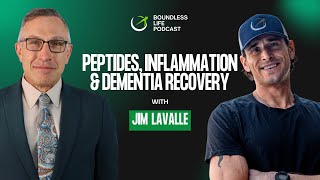
Clinical pharmacist Jim LaValle discusses peptides and testing frameworks for reversing dementia and Parkinson's symptoms. He covers TB006, a dementia treatment, gut repair peptides like KPV and BPC, and the Metabolic Code five-bucket testing system that tracks adrenal, thyroid, pancreas, gut, immune, brain, heart, liver, and hormone function.
Questions this video answers
Under a Phase 2A trial (available to enroll for Parkinson's and dementia).
Enduro2 is a 98% salidroside (salidroside from Rhodiola) extract formulation wrapped in liposomes for oral absorption.
Synapse was described as containing a 95% ginsenoside R3 extract (originally used as a nasal spray, reformulated into a liposomal chewable).
4 micrograms of larazotide twice a day, 30 minutes before a meal.
A 6-week on, 4-week off cycle (to reduce tendon injury risk while gaining lean mass).
Chapters
Ben, if I showed you the data on the dementia cases, I'm talking about significant swings in their mini mental status exam numbers, like from being in the high 20s to going down into the teens. That means people are starting to remember their name again and they can have conversations again and they can function again.
Hey, just finished recording a great episode on peptides, biologic small molecules you've never heard of for mitochondria, for longevity, for sleep, for kidney health, a whole lot more with a great guy, pharmacist Jim Lavalle. You're going to love this guy. Show us via BenGreenfieldLife.com LaValle. L, A, V, A, L, L, E. Let's go talk to Jim. My guest today might have more Alphabet letters after his name than anybody I've interviewed in a long time. Jim Lavalle. B, S, C, C, N, M, T, D, H, N, D, H, P, H. I think that exhausted the entire Alphabet. But he's an internationally recognized clinical pharmacist. His stuff goes way beyond just like standing behind the front desk at CVS and filling out your prescriptions. He's got like 40 years of clinical experience in drugs, nutrients, compounding, pharmacies, peptides, natural products. I met Jim at an event and was just like blown away. We sat at a table together and we were geeking out and I'm like, who is this dude? And then we've had some conversations since then. He's actually even tested me using this super weird test that he has, or at least novel test called the Metabolic code, which I want to fill you guys in on during this show. But then I recently attended the American Academy of Anti Aging Medicine down in Vegas. Jim, I think I told you this afterwards, I didn't realize how big of a deal Jim was. Like literally like posters of him, you know, as big as like the, you know, the Kenny Chesney and the Cirque du Soleil just like plastered over Vegas. So he is one influential guy, very knowledgeable in the field of like pharmacy, peptides, nutrients and a whole lot more. So Jim, welcome to the show, man.
Oh, Ben, man, it's great to be here. I'm already having too much fun.
Oh yeah, we have fun, dude. What's, what's the journey like from, from pharmacy into kind of like being what, what at least I consider to be after interacting with you, kind of like the goat of the anti aging industry.
Yeah, man, it was interesting. So like I, I was into it. So I started training with weights and was kind of into things like in my, and my cousins Were importing natural products from Germany and selling them to physicians. And I went to a pharmacy school that was founded by John Yuri Lloyd. And so it was Lloyd brothers specifics. And they, they like the biggest botanical extractors in the world. When I was going through pharmacy school, man, we didn't even use calculators, all right? We had to use slide rules and we had to study botanical medicine and we had to learn how to extract things. And so there was a little bit of that like in my head. But when I got out of pharmacy school and I was bodybuilding, I just, you know, qualified for the U.S. nationals. I was like all into it, like as I still am, you know, in my 60s. But I wasn't feeling good. I mean, I, I literally was getting like skin rashes and passing out after I ate. I was, you know, eating the wrong foods. Too many carbs, spike in my blood sugar. I went to somebody that did this kind of work, integrated medicine, put me on a specific diet, gave me some nutrients, changed my life. I mean, it literally changed my life. I mean, I thought clearer than my skin rashes that were plaguing me from the time I was a young child because I was one of those kids that lived on antibiotics, thought, you know, amoxicillin was a part of my meal plan.
Oh yeah, I hated that stuff. And by the way, the way it went down at my house was I would go to Albertsons and buy a couple of those big plastic gallons of 2% milk a couple of times a week. I'd punish half to a full gallon at night, get a horrible stomachache. I found out later and I've actually been working with your wife who has tested me, who can attest to this. I, I'm pretty dairy intolerant and my parents were just like, man, you get the stomach flu a lot. Here, here's some more amoxicillin.
I lived on amoxicillin and dimetap. And likewise, my dad thought, hey, I love my son. He was a world famous chef, but he worked 16 hour days and he would bring me home an ice cream sundae every night. So I lived on dairy and therefore lived on tonsillitis and sinus infections and skin rashes. So anyway, I mean, the journey, you know, it just intrigued me that I could feel that much better that fast by someone telling me to avoid. This is like 1983. They said, get off of dairy, get off of gluten. I need you to clean up your gut. Hey, you know your blood sugar's off. Chromium mag. I Still remember that conversation did. It felt amazing. And then I thought I need to apply my knowledge in pharmacy. And that's what kind of got the journey going is, you know, teaching at the College of Pharmacy and Medicine at University of Cincinnati, you know, writing 20 plus books and five databases on natural compounds. I mean, I made up with it, man. I don't know how else to put it. I'm just, I can't get enough of information regarding how do we look at the world of peptides, nutrients, compounds, training. Right. To your expertise, which I loved your talk on was, you know, how do you start to combine all these things of regenerative therapies and peptides, which I thought was fantastic, you know, and most importantly is because I had like six patients this morning. How do we get people to feel better? Like, and we then we measure it so we know they're getting better. Right. And that's the big thing that I think was the journey for me. And you know, whether it was, you know, working with the Pro Football hall of Fame and their performance help program or you know, being the co chair at a 4M or chair in the Peptide Society, all that stuff, I'm just trying to move the ball forward, man, and let the next generation of people not have to suffer. I think what I, I think I had too early on, which was people thought I was pretty weird.
Yeah, well, I think weird is good these days. We were down at the thing, it was like the Florida Chiropractic Association, I think it was fca.
Right.
And you had, you had a booth there and you told me to swing by and try these things you had at the booth. They're like, how do you describe it as like chewable peptides?
Yeah, yeah. Well, basically they're a liposomal tablet technology and that's Metabolic Elite is the brand. My son runs that company and I was looking for how to deliver small molecules or peptides in a solid state. And so I partnered with a pharmaceutical scientist and they're liposomes. So everybody hears liposomes. There's a lot of different ways liposomes are made, man. It's like people can just pour some lepticin in with something and shake it up and say it's a liposome. This is a multi layered liposome where the particles stay really small. And so whether it's a botanical. So I think you tried that enduro too, which you really like that, which is like a botanical that we enhance the absorption of and then your VO2 max goes up and you oxygenate Your tissues or synapse, which is a ginsenoside, that's hard to get the absorb orally. But now when you get it to absorb, your brain gets clear.
Yeah. And by the way, real quick, I'm glad you brought up those two because I was just kind of waiting for this podcast to pick your brain on that. Just unpacking those a little bit more. I don't think it was placebo. You told me, whatever. I'd be like a three lung mutant driving the enduro too. I don't think it was all placebo. Um. Cause I tried it. I still, still have. I'm almost done with that bottle you gave me and I take it before my hit. Interval training, it makes a big difference. What is it doing exactly?
Yeah, so. So that one, Enduro 2 is a 98% solidricide. It was developed in France. It and solidrocide comes from rhodiola, but rhodiola is usually 5% solidricide. So what it's doing is it's increasing VO2 max and increasing microcapillary delivery of oxygen into your muscle tissue and it increases your lactate threshold. So that's what the data, the studies have shown on that. And so what we decided was to take that extract, give the full clinical dose in the clinical trials, but then wrap it in a liposome to get it into your tissues so that it doesn't go through first pass effect. And I have to tell you, I mean, I've got operators because I do a lot of work with, you know, you know, military. I've got pro athletes, hockey players, hockey teams, they just go, wow, I chew this up and it makes a difference.
Yeah. So. So with VO2 max, primarily it's the, the oxygen delivery to the cells that's working on, not necessarily like lung capacity or. Well, I get, I guess you look at lung capacity, looking at oxygen utilization and cellular delivery, and it's working more on the cellular delivery component, Correct?
That's exactly right. That's exactly right. And the other one that's interesting, you know, Ben, is I started having people chew some up at night. And what we're finding when they do their readings, their, you know, their wearable device readings is, wait a second, my deep sleep's getting better and my HRV is improving. And that makes sense from the solidricide standpoint because what solidricides do is it decreases the beta adrenergic response in the periphery. So your blood, basically what's happening is, is you're turning off the sympathetic dominance that you acquire during your daytime. Right. So you bring that parasympathetic tone back, which is going to allow for kind of more rejuvenation and more kind of a, A, A down regulation of the microglial cells, which is, you know, inflammation in the brain.
Yeah. I'd be curious if it's having any effect on SpO2 as well.
Yeah.
Which some of these wearables are measuring now just based on the capillary.
Right, right. So it's very interesting. And then the other one was synapse, in which, you know, when we first developed synapse, and it had to be a nasal spray. And kind of on the performance side, the first time we used it was with Corvette race team. So, you know, Corvette race team, they said, hey, our drivers aren't winning Le Mans. I'm like, you know, you get new drivers. I mean, yeah, I don't know if I have a pill for that. You know what I mean? It's like. Or get better cars. I don't know. But they said, no, no, no. We want you to work our drivers up, clean up their, you know, clean them up. Look at the sympathetic dominance. Well, what we found out is that we had them do telemetry when they were racing around the track. They were losing brain coherence because their core body temperature was going up. And, and, and so therefore their reaction times were eroding. Right. So what I had envisioned was if we could have them do an intranasal spray of Ginsenoside R3, which is an extract from Meyer. It's a, it's a 95% ginsenoside of ginsenoside R3. What that does is it quiets microglial activation, reduces glutamate, and you, you basically get this focusing effect without stimulating them like, you know, caffeine or any of the typical nootropics that are more stimulating. And we gave them that nasal spray, their core body temperature didn't go up, and the rest is a fairy tale. They went and won Le Mans. But the problem was, is nasal sprays really aren't dietary supplements. You don't eat through your nose. I mean, at least I don't. I try to, you know, eat the way I'm supposed to eat so that we use that same technology in order to put it in. Into a tablet. So we took liposomal tablet, put the Ginsenoside R3 in it, and now people are enjoying the benefit of that. Cognitive focus, improved performance, less, you know, less cognitive loss into the evening. Right. They kind of Feel focused in that mid afternoon. And you know, and you know, obviously one of my, you know, roles as chief science officer at Lifetime, I got two and a half million lives I have to oversee the scientific programming for. And you know, we're using that in their Miora clinics that are at Lifetime. And people love those two for performance. People just absolutely love it.
Yeah. What I liked about this synapse is I can kind of stack it with anything, whatever. I tried it with methylene blue, I tried it with, with Qualia, I tried it with like a SS31C length C max nasal spray. It kind of seems to like enhance the effects of any nootropic I've, I've tried it with.
What I love hearing is that you're trying all those different stacks because honestly, when you look at the chemistry of what synapse and does, it should enhance it because it helps with bdnf. Right. It's helping down regulate microglial cells. It stabilizes the glutamate NMDA bridge to reduce calcium ion excitation. So you're kind of getting that baseline of I would call a harmonic in your brain. And now you add that nootropic and if you're using something like SS31. Right. You're getting up mitochondrial upregulation. It makes so much sense to do that together.
Yeah, yeah. And obviously you've got a bunch of other liposomes you've developed. I'm going to. By the way, for those of you listening, I'll link to all Jim's stuff. You go to BenGreenfieldLife.com Laval Jim's last name. L A V A L L E. First time you and I talked for a long time, Jim was. You had me do a test. Actually, I had a phlebotomist come to my hotel on a trip. And then a couple weeks later, you and I got on the phone with this metabolic code thing. And I have to admit, it seems like every time I turn around, somebody's standing there with a needle wanting to get my blood and run me through some tests. And I've seen a lot of them. This one was kind of interesting and you walked me through it. I thought it was interesting enough to actually unpack a little bit. So what's the metabolic code test? Where'd this come from?
Well, I wrote a book called Cracking the Metabolic code back in 2002 and I started talking about the metabolic code philosophy and that 1997. It's about the body being a systems of systems and you know, now everybody goes, yeah, that makes sense. Well, back in 2002, people were looking at me like I had three heads that the adrenal bones connected to the gut bones connected to the heart bone, right? Or the. Or the hormone bone. You know that, but that. The metabolic code, what it does is it takes all of your labs, all a questionnaire, biometrics, and now, as well, wearable data that we've now created increased risk indices for lab values based on where your wearable data is at. So this is a pretty big innovation. But the big thing it does is it groups all of it into five buckets or five systems or networks of the body. The reason I developed it, I was seeing three to 400 patients a week at our institute in Ohio. So we had three physicians running nurses, dietitians. I kept seeing the same problems over and over again. Adrenal thyroid, pancreas, relationship between cortisol, insulin and thyroid hormone and mitochondrial function. When it's good, you got energy. When it's bad, you're tired and you're gaining weight.
Well, you said. You said that really fast. You said adrenal thyroid, pancreas, then what?
Cortisol, insulin, and thyroid hormone. Because. Right. Because your cortisol goes up, your thyroid conversion goes down. Now you don't get mitochondrial function. And as your cortisol goes up, your insulin goes up, and that starts to create more sympathetic dominance and more inflammation. Right, Right.
So what you're saying is when you say adrenal thyroid, pancreas, and then you say cortisol, thyroid, insulin, basically those last three are like the functions of the first three. Adrenal, cortisol, thyroid to thyroid hormone, pancreas to insulin. So you're tracking those.
That's exactly right. We're looking at those relationships, saying, is this playing out in you? Right. Are you dizzy on standing? Do you get tired after a big meal? You know, is your skin dry? Right. Like all the things that relate to those three organ systems. And then the other one, gut immune brain, would be about resiliency. You know, how's your immune system functioning? Do you get sick easily? Do you have any inflammation? Do you feel like someone's. You're pushing a thought through jello. Right. Cognitive loss. Right. Like I'm not thinking clearly. So gut immune brain, meaning that gut brain connection with the immune system being the signaling between those two. Really important. The reason we did this was to make it easy to explain. Well, where are you metabolically broke out? Because typically people get a lab test, you know, if they're not Really a student of biochemistry and labs. The doc is writing notes on it and putting smiley faces on it and putting arrows up and down and writing a vitamin by a number. And people leave confused, like they don't have an actionable plan. So the metabolic code tries to find where your metabolic roadblocks are. And I think in your case, you know, we got you turned on to kind of that gut immune side and really dug into that with you. And it was something that, I think, I remember our conversation, and I think you were a little surprised that we were able to pick that up and really run with that and actually find some gold there, right? I mean, we were able to find some gold, yeah.
And to clarify, by the way, when you say gut immune brain, like, I actually have and like, I'm an open book, you guys. If you're listening, I'll put my full results in the show notes. But for gut, you had crp, eosinophils, monocytes, vitamin D. For immune, you pulled in the albumin, globulin ratio, basophils, globulin, lymphocyte, neutrophil, the neutrophil inside ratio, and then red blood cells, inc. And then for brain, you had homocysteine and B12. And then I was kind of lit up like a Christmas tree on a few of those. But that's just one example. And we can keep on going here. I know this is going to rabbit hole quite a bit, this discussion, but so, yeah, like gut immune brain, we started diving into that almost right away, all the way down to where I think basically based on some of these values, you were like, you probably have some food sensitivities. And then we did a really comprehensive workup with your wife. And man, oh, man, do I ever.
I know, I got to review that. I thought, oh, I remember that.
Yeah, yeah, yeah, yeah.
No, for sure. And so the whole purpose of this is, you know, all of us are reaching for that. I mean, look, I, I want the best health span I can have. I want longevity. You know, I, I, I've got a big gym in my right behind me, you know, out of my studio here. I want to work out when I'm 80 years old and when I'm 85 years old. You know, I love movement, but, but I find that a lot of people don't know where to start. And I'm not saying the metabolic code is that, you know, for everything. I love mitochondrial testing. I test for heavy metals. I look at all kinds of stuff. Metabolism of hormones. I mean, I'm, you know, as the chair at a 4M, I gotta look at all this stuff. But the bottom line is where do we get people started to where we can begin to move the big levers of health, meaning gut integrity. Cortisol. Did you lose your cortisol curve or not? Where is your insulin resistance at? Where, where is your inflammatory chemistry at? Are you metabolically inflamed? You know, obviously now the big term meta. Inflammation leads to inflammatory aging. And then, you know, hey, are your lipids, which I think are usually the tail wagging the dog. You know, the lipids get bad when the insulin's bad, the cortisol's bad, you're exposed to things. You know, your hormones are kind of trending low because, you know, you're, you've either overtrained or you haven't trained. Right. But still, these are the big things that if people don't correct them and, and that's where peptides come in. They give us the next level of help. Right. To get these big things to. They're just going to accelerate their aging. And I find a lot of times people are using more exotic things to try to help themselves before they work on the fundamentals of movement. Movement, movement, movement, eating better, learning how to do that, find joy and purpose. And then, yes, you need to work on your chemistry.
Yeah. And this metabolic code we mentioned or you mentioned, number one and number two, the gut, immune, brain, and then the pancreas. But then you've also got basically of the five, there's the cardiopulmonary, nervascular, the liver, lymph, kidney, and then the hormones, the testosterone, estrogen, progesterone. You mentioned a few things that are kind of like, I'm guessing, just like trends or things that you see pop up over and over again. Just real quick, what would you say are some of the biggies that you just see over and over again? Even if people, you know, like, let's, let's say me, like, I'm a high performer, I take care of myself. I'm not just like eating out of a trash can. And yet you see some things pop up. What are some patterns that you tend to see?
Yeah, that's great. Yeah. The big patterns I see are people that one are either under a lot of stress psychogenically or physically. So people that train a lot, their gut tends to break down. So then we start to see that gut immune, brain barrier, the gut barrier is breaking down a little bit in the resiliency side on the brain can be breaking down and therefore their focus is starting to go away. But when you're under a lot of stress due to that, I start to see younger and younger people with lowered sex hormones. So one of the big trends is that, hey, stress, lowered sex hormones. The other one is increased insulin. Like a, I'm, I'm taking on too much carbs. I'm, you know, I'm eating too many of the wrong foods and now I'm making bad actor lipids. Right. So when you think of cardiopulmonary neurovascular, when your insulin's up, your heart rate goes up. When your heart rate goes up, you're more sympathetic, dominant. And that neurovascular component, hrv, heart rate recovery, resting heart rate becomes an issue to shift. So I see a lot of people that are pre diabetic. Glucose and insulin are off, and now their heart rate cycle in the 70s. And then you have to remember, for every four points above 62 on your resting heart rate, got about a 7 to 10% risk on a future cardiovascular event.
Wow, that's the first time I've heard that stat. So every four points above 62. 62, yeah. Okay. Interesting.
Yeah. And I think it's that part where people don't tie in their nervous system and the vagus nervous system and understanding the parasympathetic nervous system. And now it's becoming in vogue, right? Like people are using, you know, vagal tone stimulators and all that stuff. You know, it's about, are you breathing deep? You know, do you take a deep breath? You know, because if you don't, it's kind of showing you're in that sympathetic dominance. So that, so the trends for me are your body getting under a lot of stress, creating allostatic load. Right. You know, the, and the circuit breaker box and the brain breaks, and now you're not telling your testosterone to be produced, and now you're not regulating your glucose and insulin, and now you're not sleeping well. And as soon as you don't sleep well now you start to throw off the whole circadian rhythm of all your hormones. Right. And so these are some of the patterns I see now when it's environmental burden like, you know, toxic metals, you know, mercury, lead, arsenic, those kind of things, that's when things can get sideways in a lot of different directions. Right. Because it affects all the enzyme substrates in your body. So, you know, people can be, you know, blood sugar problems with pesticides. Right. You know, obviously with glyphosate, it creates Problems in the gut, mercury, nervous system issues, lead, bone, brain issues. So. But that's when I start to look at, you know, those kind of things. It starts to. All bets are off as to what the issue is. But if it's a natural progression of where your body's at, adrenal, thyroid, pancreas, gut, immune, brain, that's. I get under stress, the gut gets permeable, I start making more kind of inflammatory compounds in the brain, right?
Yep.
And, you know, one of the big things that we're now finding out is that, you know, when you're insulin resistant, you make more Galectin 3. Galectin 3 starts Galactin 3, Lectin 3. So this is a big one. This is massive for dementia and Parkinson's. We know that Galectin 3 goes up in the brain, and when that's going up in the brain, it's because you've made too much lipopolysaccharide, which is what gets made in your gut, Right? Gets made in your gut because of the breakdown of the microbiome. LPS crosses the blood brain barrier. Galectin 3 gets made, and now the inflammation bombs start taking off, destroying your neurons. And we. And for example, we know, using something like, there's a biologic called TB006. It blocks galectin 3. Symptoms of Parkinson's and dementia get better.
Is that a peptide? The TB O6, it's actually a biologic.
So it's kind of not a peptide. It's more of an immunologic molecule, but it's a very. So for me, I look at people's chemistries not as a series of numbers, but as a slipstream, you know, their chemistries in motion through time. What are the factors, like stress, like insulin exposures, your gut being thrown off, inflammatory. Now you're making a lot of inflammatory compounds that lead to autoimmunity. But what we're doing. Where are you moving? Based on the look of your metabolic code and those five triads of adrenal, thyroid, pancreas, gut, immune, brain, cardiopulmonary, neurovascular. Am I breathing deep? What's my CO2 like? What's my blood pressure like? What's my lipids like? Where's my iron and ferritin? And then, of course, liver, lymph, kidney, which I think are. Oftentimes we forget about looking at the kidney as being incredibly important to try to help people. So we're big on the. That's the triad of detox, right? Liver, lymph, Kidney, but it's also, Are you anemic? What's your iron? What's your ferritin? If your GFR or your kidney filtration is low, are you under heightened oxidative stress? What's the PH of your urine? An acidotic urine means you have excess hydrogen ions you don't want. That means you got oxidative stress, which.
I had, by the way, because again, you're not just testing blood. There's a questionnaire, there's some wearables. And you told me, hey, go check your urine ph because you saw some indications that it might be low on the liver, lymph, kidney. And then I tested and it was acidic. And then we had a conversation about that. I don't know if it was me and you or me and your wife, Laura, but it turns out that you can make a case for hefty use of exogenous ketones, which are kind of a staple in my diet, especially 1, 3 butanediol and as potentially causing that. So just as an experiment, I cut the volume of particularly one three butane dial that I was consuming and the PH became less acidic.
That's beautiful. I remember it was so funny because we had just hit early on met and I was being somewhat predictive for your gut and then the PH of your urine, and you were kind of like, well, okay, yeah, I'm going to check that out. And then you checked it out and then you researched and found solution because there's no getting around. An acidotic PH in your urine will damage your kidneys over time. That's why they give, I give this example, you know, when you go, when you're getting ready to go on dialysis, right? So your kidneys have really been messing up for a while. You're probably a pre diabetic and you haven't taken care of your insulin for a long time. Men's Triad 1. What the nephrologist does is gives you baking soda capsules. They give you baking soda capsules so that you can suspend the time until you actually need to start dialysis. Because when you alkalinize the urine while your, your kidneys, it takes the pressure off the damage to them. But why are we waiting to teach people that they should try to keep that urine a little less acidic? Because, you know, Ben, you drive around, man, you see how many dialysis centers are going up.
Oh, yeah.
And it's like, it's like you could be taking mag, you could be doing chlorophyll, you could be eating more Green foods. You know, there's a lot that you could be doing that is good for you and, and you know, it's going to spare your kidneys, which I, I'm passionate about that because I watched my father go through dialysis.
Yeah. And including some peptide solutions. John, I don't know if you've talked much with Dr. Grinberg, Alexander Grinberg, who was at a 4M. You know, I've gotten to know him a little bit and he's, he's super knowledgeable when it comes to kidneys and when. Especially when it comes to peptide solutions.
Oh, yeah, absolutely. So he's big on using humanin, using tea, using TB500BPC. I'm actually on a board with him. I know him really well. He's a brilliant guy, really brilliant physician on the peptide side. And we work together, actually collaborate on peptide design. But yeah, there are some keen peptides for the kidneys that I think are essential in small molecules. OSO1, which otherwise known as ATX304, is a small molecule, is not a peptide, but absolutely it's got a lot of promise when you combine it with some of these peptides for really helping people that are in big trouble with their kidneys.
Yeah. Now, when you're talking about like TB06 or ATX as a biologic or a small molecule, obviously people aren't grabbing these from Costco. What's the regulatory landscape look like as far as getting educated about these things or even getting access to them?
Yeah, sure. So TB006 is. It's under a phase 2A trial, so people can absolutely enroll and legally get TB006 both for Parkinson's and for dementia. And Ben, if I showed you the data on the dementia cases, I'm talking about significant swings in their mini mental status exam numbers, like from being in the high 20s to going down into the teens, which basically, for those listening, that means people are starting to remember their name again and they can have conversations again and they can function again, and this is a very real benefit. And then on ATX 304, otherwise known as OSO1. Compounding pharmacy use it. You can do that. PD Labs out of Austin, Texas, is big on OSO1. I like OSO1 because it. So it modulates MTOR and upregulates amp kinase. So you're getting an increase in lean mass and you lose fat mass a bit. And, and I found it to be, I mean, probably giving it to a couple hundred people. I mean, people like being on it. The only thing about it is you got to be on it six weeks and then you take off four because you start gaining lean mass. And if you don't have tendon structure and strength. Oh yeah, you could start blowing out a tendon, man. Like all of a sudden you get an Achilles tear. So it's kind of like a 6 week on, 4 week off cycle for OSO1. So OSO1 is fine from the regulatory side. You can get it, you can get it prescribed, no problem. And I, I personally love it. And you know, being in my 60s and still wanting to maintain lean mass, I'm solidly in my 60s. I'm on my last half decade. It's. I, I just am looking for things that help me to maintain lean mass. Because lean mass to me is the currency of longevity, man. You gotta have.
Oh yeah. How would you compare that to something like follow statin?
Yeah, I think they're, it's a little bit different. I like follistatin. I think it's great in terms of, you know, you know, being able to maintain lean mass with it and gain lean mass. A little bit different of a mechanism because it's going off of AMP kinase.
Yeah.
You know. Right. Instead of myostatin, it's kind of an AMP kinase activator. So I like it because it's a, you know, it's, it, it's not creating any excessive muscle stimulation directly like, hey, we're going to really jack up mtor. In fact, it's modulating mtor, but it's improving mitochondrial signaling because obviously when you upregulate AMP kinase, Here comes the PGC1 Alpha, which is fantastic for, you know, creating mitochondrial biogenesis and all those muscles.
Yeah, you mentioned, I know we're bouncing around a little bit here, but this is great. And by the way, for those of you who are like, whatever, working out on a commute, I'll take notes and I'll put all this stuff in the show. Notes. You have to remember it all. For the lipopolysaccharide piece, a couple of things regarding that as it relates to gut permeability. One would be any peptides you favor. Like one that I know is often discussed for. This is like KPV for lipopolysaccharides or leaky gut issues. And then kind of related to that, you hear people talk about potential LPS contamination in the peptides themselves. I don't know if you have a take on that, but how do you approach the LPS issue specifically from a peptide and a safety standpoint endotoxin can.
Be a byproduct of making an injectable. Right. That's what you're worried about. And it really is dependent on the manufacturer of the peptide or compounding pharmacy using the appropriate filter to get rid of that endotoxin one. So it's a expensive filter to do that. The second one, of course, is measuring it after the finish product. So I'm a big proponent, obviously, being the chair of the International Peptide Society, I'm a big proponent of for human use, compounding, pharmacy production or if it's a. Right now, SS31 is a drug now, right? It's an FDA approved drug. That's fine. I mean, that's going through the safety standards. So that's where you have to watch on, you know, appropriate acquisition of peptides. Is, you know, circulating endotoxins an issue, man? I mean, if you're, if it's not made appropriately, that's a risk. And people can get really sick if they inject endotoxin. It's not a good thing.
Yeah, I've had it happen to some friends and you know, frankly, they, you know, they, they bought the bargain bin peptides and they were injecting them and that happened.
That's exactly right. I mean, we warn about it all the time. I'm, you know, on my pulpit about it. It's like, look, these are not dietary supplements, especially when you're injecting them. This is a next order of seriousness when you're, you know, doing that. The lipopolysaccharide in the gut, I mean, I first started lecturing on it about 20 years ago. I couldn't get a lot of people to understand the issue that as the microbiome breaks down and you release millions of molecules of lipopolysaccharide with every bacteria that dies. That lipopolysaccharide, if it's not being filtered, it's going to circulate, crosses the blood, brain barrier, gets into your systemic circulation, attaches to your heart and triggers inflammation in the heart and other vital organs and tissues. And I love kpv. I mean, I got to be honest with you, Ben, kpv. For me, one of my absolute favorite peptides, first of all, very small, right? Three amino acids. It's a very small peptide, but its ability to regulate inflammatory signaling is phenomenal. So I love that. And the other one I like is lorazatide, because lorazatide, you know, when the gut is permeable and the gut gets permeable for a lot of reasons medications will do it. Stress is a big one. If you upregulate interleukin 6, you're going to get a more permeable gut because it triggers the loss of your tight junctions. So, you know, you lose that epithelial barrier. And so I love lorazatide for the. Bringing the tight junction together, reducing zonulin. BPC for redoing the mucosal barrier, KPB for the counterregulation of the inflammation that's occurred in the signaling of the. The epithelial cells and the immune cells in the gut.
Yeah. And if we're, if we're specifically using these for, for gut support for kpv, lorazotide and bpc, would you prefer oral administration or does it matter?
I like oral. I'm. I'm kind of. Obviously, I'm a little jaded because I really believe in the liposome technology that we have.
Yeah, yeah.
So I'm gonna just say that out front. I'm, you know, I obviously have an opinion, but I know that people that are using it are saying when they chew that up and use it orally, they're getting better effects than other oral peptides. So for the gut. If it's for the gut, oral will work fine.
Yeah. And you guys have KPV and bpc. Do you have lorazatide?
We use lorazatide not as a chewable and not available through Metabolic Elite, but we have that with PD Labs in Austin.
Okay.
And also with Strive Pharmacy, so razatides. I mean, my people that are really food sensitive like you. Your test was amazing. You know, we've got a, you know.
Some people tell me it's all the Ashkenazi Jew. I don't know.
Well, there's something to that, man. I mean, right?
There's something to that.
So, I mean, 4 micrograms of lorazatide twice a day, 30 minutes before a meal. I mean, I've just found I can get people over their kind of food sensitivities that they've developed and evolved over time.
Yeah.
Obviously the allergies as well. But. But yeah, it works great. And I love, I love BBC and KPV riding along with it. It's a beautiful trifecta for healing that base layer of what's going on in that gut lining.
Okay, I got a fun one for you. So you mentioned sleep and circadian rhythmicity. Let's say I come to you, I sleep like shit. What are you doing?
The first thing I'm doing is talking to you about what your stress is like during the day because what happens is people treat sleep problems at night, which you do need to do that. But insomnia is a disorder of hyperarousal of the HPA axis. So your brain takes on too much stress. Your sympathetic dominance. So love cell link, once we can get DSIP back. I thought delta sleep inducing peptide was, was fantastic. But the big thing that I do with people is I start to work on their nervous system. I want to understand where their heart rate's at. I want them doing some breathing exercises during the day. I want them to get up and move during the day. I want them to really work on dampening that stress response. And then what I'll do in addition to say using peptides that are good for dampening the stress response, I'll, you know, I'll give them something like, you know, relora theanine. Holy basil. Something that's going to start to retrain their brain to not be so excitable. And then when we go into the night. So one of the things that we've been playing with is a group out of Taiwan actually that makes a string of peptides that look like a protein. And there are you know, 15 peptides related to sleep. But when you look at them because they're all tied together, it's actually just a protein. And there's a pepsin break between each of the peptides. So when you put it in, your stomach breaks apart and you've got a pretty good delivery of peptides. I like using their sleep product, you know, and it's pretty amazing actually.
Is that something you guys are, are selling now? You got to get that from Taiwan.
No, you can get it now. Yeah, it's really neat. They've got a longevity one and they've got a sleep one that are fantastic. I mean it's so it actually is made PD Labs carries it but it's over the counter. You can buy it. It's like their longevity powder and then their sleep powder are very interesting. I can get you the names of them and that stuff.
I'll find it and throw some info in the show notes. Yeah, the breathing thing by the way, I'm glad you brought that up. It's kind of top of mind for me because I accidentally slept in this morning. Somebody sent me this lamp. It's called an Ohm Ohm and it has a little stone in the top of the lamp. When you remove the stone, the colors of the lamp go up and down in correlation to your breathing almost like coherent breathing. And then the stone vibrates because it's detecting your heart rate. And so I just got this thing and I woke up at like 4:30. I wanted an extra 30, 45 minutes or so in bed. So I took the stone off the lamp and just kind of laid there on my side watching the lamp and breathing. And then before I knew it, you know, I wake up, I look across the bed, my wife's out of bed, it's like 6:15. And this thing just like shut my nervous system down into total relaxation again. Just, just like coherent breath. Like a five and a half second in, five and a second, half second out, you know, correlated to haptic cues.
That's fantastic, man. I might have to look that one up. I don't know if you can buy.
It yet, but it's called the, the ohm lap. O h m. I'm such a big.
Believer in the, you know, breathing because, I mean, I cut my teeth on doing tai chi and qigong and all that for like 15 years. I did breath work. And I, I just think it's something that most people just have lost. You know, they're sympathetic dominant, they're shallow breathers or diaphragm to move. It's no wonder they're, you know, their carbon dioxide's horrible and they can't oxygenate. Right. So that's. That's a biggie. Yeah, no, that's very cool. I mean, the other one I'm doing right now is just breathing in aerosolized hydrogen water. Right. So I'm bubbling hydrogen because I published on hydrogen water actually in a tier one referee journal because it was very interesting that you drink hydrogen water and all of a sudden your mitochondrial biogenesis goes up.
Yeah, it actually acts. Tyler Lebaron just released a paper on this, I think last month, because I'm a huge fan. I use a hydrogen inhalation machine for like half an hour every afternoon. When I'm doing a little siesta from work, I use the H2 inhale. And Tyler just released a paper and he elucidated the newfound mechanism of action, which is actually the hydrogen acting on, I believe it's called the RISP protein complex in the mitochondria, essentially blocking that complex and short term hampering electron transport chain activity, which results in these protein unfolding mechanisms that result in mitochondrial biogenesis. So essentially, hydrogen gas is almost like a hormetic stress that's inducing mitochondrial growth.
You know, Mort Nicholson was kind of one of the big forerunners. If you look up Nicholson and his papers. He was one of the early researchers that I ended up writing with. And I think it's one of the most interesting things you can do easily for like being very interested in a longevity platform for yourself is breathing in, you know, hydrogen via that vehicle of aerosol ice through water and getting that hydrogen up in your tissues. I think it's, I think it's profound.
Yeah, yeah, I agree, I agree. You know, you're, you know, you're put together, you're in good shape, you obviously practice what you preach, which I respect. When I'm talking with somebody who studies this stuff. You've mentioned a lot of stuff. But in terms of what you found, I have to ask this question without offending you by saying as you get old, but in terms of keeping yourself put together, muscular, strong, you mentioned a couple of these peptides act on amp K pathways, et cetera. But what are some of your big wins in that department that you can share with men and women who especially want to fight things like sarcopenia with age?
Yeah, right on man. I mean, no, I'm a, I'm a huge advocate for keep keeping strong. I mean I've, I've, I've, you know, made it a personal journey turning 65. I use OSO1 now as one of my faves. I'm big on using sermarellin because of my age now. I really like helping myself to kind of improve, you know, the secretag activity for growth hormone. I'm big on oxygenation, I'm big on protecting the brain because, you know, from the brain down, you get the signal for tissue anabolism, right. So that's the, you know, using that synapse. And actually, I mean for me, I mean I, I had a hormone replacement that I had to work with, right. But I moved away from, you know, doing, you know, subcutaneous testosterone. And recently over the last, I don't know, eight months, I actually put testosterone in that liposomal tablet technology and I just chew a few, I know what, yeah, I do a physiologic amount of testosterone. So I chew 7 1/2 milligrams of testosterone in the morning to match my morning circadian peak and then I let it drop till about 1pm and then I chew that testosterone up again at about 1pm and actually we've started to map this on a few people and what we found was there it's seven and a half milligrams. Their testosterone went from, you know, pre treatment like a two, a 36 year old male with a 240 testosterone, right? Not good. He went to 1100. So he chewed that seven and a half milligrams, went to an 1100. Then the next, we drove blood every half hour he dropped like he should have, circadian wise till about 1pm, had him chew up 5mg, bump them back up to like 700 and then goes into the evening in a circadian rhythm for testosterone. And I think that's really helping me to maintain my lean mass, just circadian. I really am big on how can I create circadian timing, alertness in the morning, my evening, I don't work in the evening. Now like one 7pm hits, man, it's like I'm with family.
Yep, same. So the circadian rhythmicity, if you look at that, basically you're kind of glancing at the natural, say diurnal variation in testosterone that occurs with a normal circadian rhythm and you're mimicking that via like an acute oral supplementation at a couple different periods during the day.
That's exactly what I'm doing. And I'm doing it at physiologic levels. And, and, and so this, this is, I think it's pretty exciting. I mean, one of the other hats I wear is, I love invention, right? I like to look for new peptides, new delivery methods. We're working on another delivery method that's pretty disruptive, but I love it because it gives us a way to make it easier to match the way the body's meant to work, which is we're a systems of systems, we're a systems of countermeasures and we want to keep our body in harmony as we're aging. That's the whole thing around. Metabolic code is keeping the signals of all those systems together and then utilizing peptides, nutrients, bioidentical hormones, small molecules, red light therapy, cold, where cold therapies were appropriate, you know, hydrogen. How do we put together a program that doesn't make you crazy but gives you maximum results? Right? Because in the end, you know, you want to feel good and you want to enjoy your family.
Yeah. Are you still lifting much?
I do, I lift, I, I lift. How it works for me is I do. I mean, honestly, I end up about three days a week. And I try to have one day where I'm trying to push with a little bit, a little more weight and then I have two other days where it's more about kind of hypertrophy and movement and, and making sure I'm doing functional movements as I'm aging. So I Don't have to worry about balance. When I'm 75, right. I want to balance. I want to be on a Bosu ball. I want to be able to do a burpee. I want to be able to, you know, not 100 of them, but I want to be able to do a burpee. And then I'll switch that up. Like I'll go to a fully functional movement workout for four weeks. I do interval sprints out of my. Because I got a fairly large driveway, so I do interval cadence sprints and then I'll do some just kind of light zone to run or a zone to walk with a weighted vest. That's kind of like basically the stuff I do.
Yeah, I love it. Especially the functional stuff with age. I mean, that's, that's the one thing I'm always trying to dial in intentionally. Like right now, I'm on a four week landmine training program. Almost everything is landmine. Landmine thrusters and landmine rotations, land main, squat to thrust. Probably the strongest my core has ever been. And it's dirt cheap. I mean, if you already have a barbell, you buy like a $40 apparatus from Amazon and you just attach to your squat rack or the floor.
That's right.
You essentially have a landmine training center.
I love landmine training. You know, my, my son, you know, he works with me in the business, but he got his master's in human performance and was a, you know, graduate assistant at Texas Tech University and trained, you know, they're Olympic athletes. He got me turned on to landmine, you know, you know, he comes home, you know, now and you know, he's 26. I tell him, you know, make sure you remember I'm 65 on these functional things you're making me do. Landvine was great and I felt strong on. Was hard though, starting out for me, that was a little bit of a challenge.
Yeah, it's like a kettlebell. I mean, anything unwieldy, asymmetrical, I think you get better benefits, but there's a little bit steeper learning curve. So with the test, I mean, obviously we talked about some peptides, we talked about some different compounding pharmacies, we talked about interpretation. Let's say somebody, and I'll put a link in the show notes where you can get this test. Let's say somebody gets the test. Do you have like, like people they talk to on the phone that make it so they don't have to just like go to the four corners of the plant to hunt down where to get this stuff and how to interpret the test. Right.
There's a couple of ways that they could do that. You know, Lifetime has people that can do that at their Miora centers. They do it. But Stealth Health is a telemedicine platform. It's launching in the US in a few weeks. They've got a full doctor back end that we've been educating. They're really sharp that you could talk to somebody and really get a good interpretation. Now if somebody really was interested, we obviously have a 50 state telemedicine license in our clinic in Austin, Texas and so people could come to us and, and you know, I've got great staff and obviously they're, they've been trained up because they're under me.
Okay.
But so that's a, that's an easy way to go. So there's the Austin, Texas one's easy. Stealth ELF is easy and I love that. You know. You know, one of the things that I do love about our work that we're doing with Lifetime is the fact that, you know, we're at 50 clinics, everybody doing things the same way. The data we're going to get out of there as to what's working and how it's helping people is going to be incredible. Right.
You got access to actual data.
Yeah, because then we've got, you know, because we're using peptides and we're. They're getting a dietitian, they're getting training all in one spot, all supervised. And I'm pretty excited about that data set that we're going to. We're going to drive right now. It's pretty encouraging.
Yeah. Do you spend most of your time in Austin?
No, most of my time is in Fort Worth, Texas.
Okay.
I'm in Fort Worth on a lake but I have my Austin practice there where I go down. But we got our medical director, nurse practitioners, all that there. So I usually end up doing telehealth with the medical providers and then. But that's home based for me. I mean if I have a home, my wife would probably say that I.
Yeah, my wife sometimes says that too. Is the clinic the same name in all the different locations?
The clinic for me is Laval Performance Health and that is in Austin. The clinics in Lifetimes are all miora M I O R A at Lifetime.
Okay, cool. So if you guys are listening in, I'll link to all this stuff. If you go to BenGreenfieldLife.com Laval like L A V A L L E Jim kind of fits in the category of, like, one of those cool guys I meet who's, like, a real unicorn in the health space. And as you can tell from this interview, just, like, a deep wealth of knowledge on a lot of this stuff. So good guy to keep track of. I highly doubt this will be Jim's only time on the podcast. So good. Look him up. Yeah. And, Jim, thanks so much for doing this, man.
Ben, I'll tell you what, man. Every time I get the chance to talk with you, I look forward to it, man. It was my pleasure.
Sweet, dude. All right, folks, I'm Ben Greenfield, along with Jim Lavelle signing out from BenGreenfieldLife.com Laval. Have an incredible week.
Do you want free access to comprehensive show notes, My weekly roundup newsletter, cutting edge research and articles, top recommendations from me for everything that you need to hack your life and a whole lot more? Check out BenGreenfieldLife.com it's all there. BenGreenfieldLife.com See you over there. Most of you who listen don't subscribe, like, or rate this show.
If you're one of those people who.
Do, then huge thank you. But here's why it's important to subscribe, like and or rate this show. If you do that, that means we get more eyeballs, we get higher rankings, and. And the bigger the Ben Greenfield Life show gets, the bigger and better the guests get and the better the content I'm able to deliver to you. So hit subscribe, leave a ranking, leave a review. If you got a little extra time, it means way more than you might think. Thank you so much.
More from Ben




The Solution to Aging Might Be Closer Than Anyone Realizes - With Ben Goertzel



