This Will Change How You Think About Health Forever | OFF LIMITS w/ Bryan Callen x Ben Greenfield
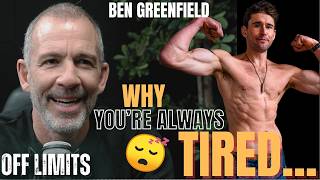
Ben Greenfield tells Bryan Callen that the sweet spot for exercise is about 150 minutes weekly of moderate activity or 75 minutes of high-intensity work, beyond which your arteries stiffen and disease risk rises. He prioritizes outdoor movement and nasal breathing over expensive tech like PEMF mats, and recommends creatine for sleep-deprived focus, NAD for cellular repair, and intranasal peptides like Semax for rapid cognitive boosts.
Chapters
What do you see in 10 years? Do you ever extrapolate and think what most of us are going to be doing? As a biohacker, how optimistic are you and what are we looking at?
I'm obviously biased because I'm me, but I like my approach because if you look at the biohacking world, a lot of the technologies that we have, like if you look at PEMF mats, grounding, earthing, all these electrical modalities that are supposed to reduce inflammation, that's like the indoor technology variant of going outside barefoot, going for a walk on the beach, nasal breathing, doing some breathwork, doing some yoga, going outside in a walk with some deep breathing. Doing that as much as possible, I think, so you don't become jaded and spend your entire life indoors and pale, is a good idea. Do the natural thing as much as possible.
It could be considered off limits. Guys, welcome to the Off Limits podcast here. My next guest is Ben Greenfield. And I had an amazing chat with this guy. You know, I'd seen him selling things and I'm always wary of people like that, but He's got a great sense of humor and he really knows his stuff. And more importantly, as you'll hear, the guy changes his mind when he's wrong. And, uh, he just, he's one of those authentic voices in the health and wellness space, which is actually pretty rare. I, I count like Andy Galpin and Layne Norton, but they're not a lot of 'em. And Ben Greenfield's definitely one of 'em. Little housekeeping, my special false gods. On YouTube. Just dropped. I'm very proud of it.
Take a look.
From what I hear, I don't read this stuff. It's getting great reviews. Not that I ever, ever read any of that stuff. Um, and also I'm going to be in Vancouver, Vancouver at the Westminster House of Comedy. It's, it's kind of in Vancouver, outside of Vancouver, the House of Comedy. I'm excited. Come see me. Come check it out. I hope you get a lot out of this. Uh, we cover a lot of stuff, man, a lot of health stuff. And some of it's dense, but you know, when you talk to a guy who's really done the research and used his own body as a guinea pig, um, you're gonna get long, deep, well-thought-out answers. Um, and by the way, he was doing the podcast on a treadmill the entire time, getting his 20,000 steps in somewhere in the middle of Idaho in his biohacked house with his amazing family. This is it, dude. Ben Greenfield's one of those guys who could probably give seminars on how to, how to basically etch out the life you want to the nth degree. You know, he's just deliberate about everything. One of those really disciplined dudes. And I was very impressed. So, um, I hope you enjoy the podcast today. Ben Greenfield, you and I have been, uh, chatting while we try to get this—
I mean, I already have to pee and we just started recording.
See what I'm saying? Yeah. I have that effect, dude. It's the alpha effect. I'm a Soma or whatever they call these or Sigma. Is that the new thing? You've been in Idaho and you've had this huge impact. That's what I find so impressive. I mean, you kind of use your body as a guinea pig. I would just see you usually just being shredded and talking about some supplement you were taking. Yeah. I don't know, I always find that it's never a surprise to me when somebody's been successful for a long time that they're essentially a complete human being, sense of humor, they get it. Usually, the answers are pretty nuanced. Yeah. But, having said all that, as a biohacker, we were talking about you used to be an endurance athlete, I'm watching like David Goggins do the Moab, and I'm friends with Cameron Hays, who's my age, and he does things like the Moab. I just have to believe that in some ways your body will ultimately pay a price. It's almost like you have a battery in your body and you're just— I don't know how many long-lived, you know, ultra-endurance athletes are out there. I may be wrong, but what do you—
I mean, look, they're out there. Like, you can find a 90-year-old 90-year-old marathoner and they always look pretty shitty compared to the 90-year-old track and field athlete, but they're out there. And, I don't know if I believe the whole body is a battery, you have X number of heartbeats in your ticker and then game over spiel. But, you could make a pretty strong case that there is a Goldilocks zone to exercise, a law of diminishing returns with exercise. And remember, like you mentioned, this is coming from a guy who did 20 years of Ironman and Spartan racing and adventure racing and open water swimming. And, I was telling my kids on a drive home, we passed a cyclist on the road and I'm like, "You guys realize that used to be my life on the weekends was it was 4 to 6-hour ride on a Saturday, get back, run 10 miles, in the pool on Sunday morning, recovery ride on Sunday afternoon." And, if you actually look at the mechanism, at the data of endurance training, Yeah, it's kind of obvious what you see in a guy like Goggins. Goggins has knee issues, Cam has foot issues. They're great. They're inspirational guys. They're really helping people climb their own personal Mount Everest and go out and do incredible things. But, it takes a toll biomechanically on the joints. And, I don't think anybody would be surprised by that, but what a lot of people are surprised by is they would think that, "Well, that means you at least have really strong heart and lungs." And, that's where the research shows that once you pass a certain point, and it's kind of a shockingly low point, you get higher risk of atherosclerosis, higher risk of calcium deposition in the arteries, and higher risk of cardiovascular disease once you exceed a certain allotment. And, it's about 150 minutes of moderate-intensity exercise. And, that doesn't mean going for a walk or gardening, That would be kind of like frowny face on the treadmill, sucking wind a little bit, not going all out, but definitely feeling the burn. Once you get past 150 minutes of that a week or once you get past 75 minutes of super high intensity a week, which again doesn't sound like much, but I mean, you know this because you do some exercising, Brian, like you mentioned you did an EMOM. High-intensity exercise the way it's defined by those parameters, is super hard. Yeah. 95% of people don't even get to that point in the gym, but the average CrossFitter, super serious athlete, gym junkie, they get there. And, once you exceed 75 minutes of that or 150 minutes of the moderate intensity stuff, you don't see more returns. And paradoxically, you actually see earlier onset of arterial stiffening. And, some doctors get pissed at me when I say stuff like this because they're like, You shouldn't be telling people not to exercise, bro. This is dangerous advice. People just need to—
You're not saying that. You're just saying extreme exercise probably puts a tax on your body when part of your body is your arterial branch, your heart. And, it makes sense, right? I mean, it just makes sense when you're not sleeping and running 240 miles. I can't imagine that that's going to be good for your body in general. You're putting yourself in extreme stress.
The other thing is you'll get the ancestral people, some of them will say, "Well, dude, we were wired up to hunt and gather and be out in the wilderness all day long. So, how could you tell me that running 240 miles in a week couldn't be healthier ancestral?" For anybody who's been hunting, you're not jogging through the forest with your backpack on. You're walking, you're lunging, You're bear crawling, you're bending, you're carrying heavy load for short distances, stopping and recovering. And so, I'm not talking about that more ancestral stuff or even what I'm doing, right? I take 20,000 steps a day on this treadmill. I don't consider any of that to be the damaging form of exercise. But, if you step back and look at it, the way I see it is pretty simple. Yes, move a lot like doctors are encouraging people to do more and more, but not at a super intense pace, more like a walking pace.
So, do you know how— I don't know if you know this, but boxers, so the old school boxers like Ali and those, in all the old school boxing camps, they would do something really interesting. The way they built endurance, because when you box, you cannot, if you got a 12, 15 round fight like they used to, obviously your gas tank has got to be there. You cannot run. That's why they were always doing road work. But if you watch them, they actually weren't running fast. What they would do is they would, they would say, okay, you got to keep your heart rate at 120 for an hour and a half, or run for an hour. Now you run for an hour at 120 beats per second, but here's the thing, as you keep doing that and you keep your heart rate at 120, you go further and further. Because your body doesn't need to pump as hard for that pretty slow run.
Yeah, you build efficiency. There's a whole story behind how that form of training came to be. To close that loop real quick, basically, you walk a lot, you lift heavy shit, and you sprint every once in a while. That's the way that I look at things now. But, that whole idea of going at a slow pace and gradually building massive amounts of cardiovascular efficiency over time done at a low enough pace to where you're not stressing the heart, and stressing the joints a lot less is based on this— it's an exercise physiology tactic that was originally designed by this guy named Phil Maffetone who used to work with a bunch of the top Ironman. I don't know if you used to watch Hawaii Ironman on TV, but there were the guys way back in the day who were on steel bikes and Speedos and like Dave Scott, Mark Dowling. Yeah. Yeah. And these guys, especially Mark Allen, he's the guy who popularized this notion.
Yeah. Mark Allen was the guy who was in his 30s but looked like he was 80 because his face had those lines. Yeah. Yeah.
And now, he looks like the grandma from "Something About Mary." I love Mark and Dave and all these guys, but that amount of time in the sun, no matter how slow you're running, it doesn't do you any favors. So, the idea was he would go out for his runs, he had to breathe through his nose, he had to do things like walk up hills if his heart rate got above a certain rate. But, gradually, he got faster and faster and more efficient at that so-called, what we would call popularly in exercise now, the zone 2 pace. And, it works really well to build endurance without beating up the body. And, it's maybe a little bit harder than the pace I'm going while I'm walking right now, but it's almost like a grandma jog. And, it's surprising if you do that consistently how much cardiovascular efficiency you can build up without stressing the body. The one mistake people make is they also hear that that's the fat-burning zone. And, this is the problem is people hear, "Well, you burn more fat at a lower intensity," and then you get the people trying to lose weight walking for 2 hours on the treadmill at the gym. The problem is, yes, I don't know how deep a dive into science your listeners like to take, but I like it because there's so much bro science and what matters to me is what do the human-controlled studies say?
Everybody's got opinions.
So, let's take a couple minutes to explain, but my formal background, my master's degree is in exercise physiology. So, when I got out of college for 5 years, I ran a sports performance laboratory and one of the tests that we did was you would wear this giant mask and you breathe in and out of a tube and you'd lay on the ground and you test your resting metabolic rate with that mask. It's called indirect calorimetry. So, you're estimating how many calories, how much fat, and how many carbs you're burning by measuring the carbon dioxide inhaled and the oxygen— or the carbon dioxide exhaled and the oxygen inhaled. And then, you do that same thing while walking and then running and going at gradually and gradually higher paces until you've kind of got your fat carb burn figured out. At a variety of different intensities. So, it turns out that at the lower intensities, you burn more fat, but the problem is that people hear that, they think, "Best way for me to lose weight is just going to be to walk at a low intensity for a long period of time," but you are burning more fat and appreciably fewer calories. So, if I burn like 80% fat but I'm burning 200 calories an hour, I'm technically going to burn calories and lose weight faster if I'm burning 40% fat, but I'm burning like 800 calories per hour. And, that's why high-intensity interval training, EMOMs, intense bursts of cardio actually work better for fat loss because you're getting this sharp increase in metabolic rate. You're not getting the muscle wasting that comes with long slow bouts of cardio. And then, you have what's called an increased oxygen demand after exercise. And so, all that stuff boosts the metabolic rate. So, when it comes to fat loss, it's like, yeah, Zone 2 burns more fat, but if your number one goal is just losing weight, high-intensity interval training works better for that.
This episode is sponsored by Oura. Guys, you ever wonder how scammers get your phone number or why your inbox is flooded with all kinds of spam? Well, there are companies out there called data brokers, and they sell your data against your— well, without your consent. You don't know it. They sell it to the highest bidder. They sell it to marketers. They sell it even to stalkers. And while they're legally required to remove your info if you ask, they make the process very confusing, very convoluted. All right, but guess what? Aura Aura is a company that takes care of all the hard part by automatically removing your info from all of these sites, and they keep it off. All right, so it is, it is, and I, I have a number of friends that have used this stuff. It is an excellent company. If you look at their, their, um, reviews, they, they are crushing it. It's an all-in-one digital security company Um, you may already have a digital security tool, but not having Aura is like locking the front door but leaving the back door open. Okay, you get alerts if your personal info is found on the dark web. You get real-time fraud alerts for credit and banking, 24/7 monitoring to help keep your identity secure, a secure VPN, antivirus, password manager, and more. US-based support available around the clock if something goes wrong. My whole family— I'm getting my whole family on this.
Okay.
'Cause if anything does happen, Aura includes $5 million in identity theft insurance protection. How about that? One app, every layer of protection. That's why this podcast chooses Aura. Try Aura free 14 days at aura.com/briancallen. Aura.com/briancallen. In those 2 weeks, you'll discover where your data is being exposed and sold. All right? So I'm getting everybody I know on Aura. In my immediate circle because it's just too important not to do. Thank you. Aura.com/BrianCallen. Yeah, man, for me, it's just about like what I can do to keep my energy going and my— not— yeah, I think you can— you got to sleep. A lot of this is pretty simple, but I do think that like a good hour of exercise, doing what you like. I like to do a little jiu-jitsu, a little boxing. With guys who are a little older and pros who aren't going to beat the shit out of me. So, you just get a thing going. There's something great about wrestling, great about jiu-jitsu because it's so complete. Yeah.
And, I think with the energy piece, obviously now, it's kind of fun because I spend a lot of time with the supplements industry and in the nutrition space. So, there are a lot of cool things now that go beyond just caffeine and nicotine that you can use to keep the lights on in your brain. And, some of them aren't even central nervous system stimulants. You've probably seen the new research on creatine, especially in a sleep-deprived state, just old-school plain Jane creatine monohydrate. If you get 10+ grams of that and up to 20 grams and you are cognitively at a higher demand, you're sleep deprived, you have some amount of neural inflammation because you've been traveling, whatever, that actually has a significant effect on cognition with no caffeine, smart drugs, nootropics, mushroom microdosing, whatever. So, creatine is one. Then, the other one that's the non-central nervous system stimulant, and I'm actually wearing a patch of it right now because they make them in patches. You used to have to get IVs, or take a little bit orally is NAD. I don't know if you've been strong on that one.
Yeah, I was going to ask you about NAD. I wanted to know about that.
Yeah, NAD. Yeah, that's like the— I still want to sleep tonight and I don't want to take in a bunch of caffeine or smart drugs, nootropic hack is creatine and NAD. So, it's a big standby for me when I travel.
Do you take NAD every day? You have the patch on all the time?
So, what I do is I take NAD orally every day. I wear a patch once a week. And then, if I'm in a city because we've established— I don't even know if we established the fact before or after the show that I live out in the middle of nowhere. But, if I'm in a place like LA or Austin or whatever and I can get one of those NAD IVs, if I can drop into a Next Health or some medical clinic, the NAD IVs are a really good way to get into the system, but the patches have gotten so good. You leave them on for 12 hours, they'll do 1,200 milligrams of NAD, which would be like a 4-hour IV set.
And, you feel good, you feel a difference with those?
Oh, yeah.
Is there measurable scientific data that we can point to with NAD?
Not on NAD and the sleep deprivation piece. There is on the creatine piece and sleep deprivation. Yeah, for sure. For sure creatine. So, the theorized mechanism of action even though NAD does have some good data on it, for decreasing the rate at which telomeres shorten, assisting with longevity, et cetera. It's almost like a DNA repair compound is that when you sleep, a lot of stuff happens, but two things happen related to energy. One, your body refills its ATP stores, the body's energy currency. And two, you have DNA repair. If you look at creatine, what it's doing is it's giving your body bioavailable phosphate molecules like creatine phosphate that you're not getting because you didn't replenish enough ATP while you were asleep. And then, the theory for the NAD is that because you didn't repair DNA as well because you weren't sleeping as long or as well, NAD is patching up those holes. So, you put those two together and again, there's other stuff that you can take, whatever.
Yeah, I'll take like Mad Brain and Qualia and Paul Stamets mushroom stack.
There's so many things.
Have you ever tried Magic Mind? I do Magic Mind Max, which is a time-release product.
Yeah. That's a little shot.
Yeah. And, I actually really like it. It actually makes a difference because it's a nootropic. It's got ashwagandha. It's got these different mushroom compounds adaptogens. Yeah.
And, it's— I'll tell you, you mentioned that I guinea pig a lot of stuff and I do. I've done everything, the blood filtrations and all the different stem cells and the gene therapies. And so, I also test a lot of supplements. There are a lot of done-for-you formulas out there. Magic Mind would be one of them. And then, there's a lot of kind of lesser-known companies that have weird formulations where they've tried to simulate what the Navy SEAL wakefulness drug modafinil would do, but instead of keeping you awake for 24 hours, it would just last 12 hours. Wow. And then, there's other combinations of compounds that work really well. And, I would say a few that fly under the radar, and I don't really have a financial affiliation or anything with this, is there's one company called Wukiyo, W-U-K-I-Y-O. They have one called Apex. It's kind of like a baby modafinil without needing a prescription or going to an online pharmacy. That one gives you about 12 hours of really good clean energy.
Damn. Is it a central nervous stimulant? Is it a caffeine?
Yeah. They designed it to almost mimic the effects with the psychedelic part removed of microdosing LSD and psilocybin at the same time. Wow. So, that one's super interesting. They have another one called Bliss that's basically— it's like the Stamets stack where you take a nitric oxide precursor, a little bit of psilocybin, and I think the last one in that one is niacin, but this one just kind of combines them all together in a capsule. And then, they have one more, but those two, Apex and Bliss, work really well. The second one that not a lot of people know about are intranasal peptides. So, a lot of people are familiar, of course, like GLP, BPC-157, TB-500, whatever, But, you can actually administer peptides intranasally and it feels like you're spraying smart drugs into your brain. Really? Yeah, the top 3, and I have a pro tip for this if you want to spend a little extra money, the top 3 are Semax, like S-E-M-A-X, Selank, S-E-L-A-N-K, and SS31. All 3 of those you can find as intranasal peptides. They're legal to sell for human research online. And, you just do a few huffs of any of those and it's like lights on. And, all 3 of them also have neural anti-inflammatory effects, meaning especially jet lag, travel, sleep deprivation, they help out with that also. Some doctors like— you're in Austin, right, primarily? Yeah. Yeah. So, if you talk to a guy, I think he has access to these, Brigham Bueller way too well. Yeah, he's my buddy.
Yeah, I know Brigham.
Yeah. Yeah. If you can find a doctor that will sell you exosomes, you can actually open the bottle of exosomes and dump them into that nasal spray bottle, and that basically amplifies the effects on steroids. You're literally intranasally snorting exosomes. And, exosomes are just chock-full of these growth factors that help to heal tissue. But, that combo of an intranasal peptide plus exosomes is probably the most powerful light bulb for the brain that I've ever found.
Wow. Damn. And, I thought Adderall was good. By the way, I took Adderall.
I mean, if I had to choose and just go for something super simple and I didn't want Adderall, I would get armodafinil instead.
Dude, I tried— somebody told me to take Adderall. Somebody gave me Vyvanse and then they gave me Adderall. They tried 10 milligrams. I'm not a drug guy, And, I was on and I was like, "Dude, this is blow." I was on the plane rocking back and forth texting people. I'm like, "This literally feels like good cocaine." Ben Greenfield: Yeah, yeah.
Arguably, the only way to skirt some of the side effects and almost the excess stimulation you can get from that sometimes is it more rapidly depletes two things in your brain that you can replace. Dopamine and choline. So, if somebody came up to me right now and told me, "Hey, you got to take Adderall for the next week," I would take Mucuna Dopa, which is an over-the-counter herb that replenishes your dopamine levels that are just getting pooped out way more quickly when you're on Adderall. And then, choline. Choline you find naturally in fish, eggs, walnut. That's why a lot of those things are known to be good for the brain. You can also buy phosphatidylcholine or acetylcholine.
Is choline an amino acid?
I don't think it fits into the amino acid category. I think it would more fit into the fatty acid category. I don't remember for sure. It's like— what's this? Onnit Alpha Brain, one of their primary ingredients is high amounts of choline for that reason. It's like some of these compounds speed up the rate at which you burn gas and then you would consider choline to be kind of like the gas.
Ben Greenfield: What do you see in 10 years? Do you ever extrapolate and think what most of us are going to be doing. We're pushing ourselves beyond our biology, but still, you know, stem cells, um, the, the, the— I think they probably work, but this— the science feels it's still not quite definitive. Uh, you've got, um, peptides, which I think are going to be the new frontier in terms of building muscle, building— growing hair, all that stuff, it sounds like.
But what—
yeah, I mean, as a biohacker, what, what is your How optimistic are you and what, what are we looking at? I mean, are we looking at, are we looking at tissue regeneration? Are we looking at CRISPR-Cas9? And what, what are we doing? Is this— is we're still in the dark ages?
I think we're looking at all of us just basically moving to Sardinia and, you know, adopting a great grandma and hiking Nigerian dwarf goats up the side of a mountain.
There you go, dude.
That's what I want. Triple baby, dude. It does work. Like, there's a provable model over there. Like, that's one way to go. Yeah, community, you know. And then you have whatever the Bryan Johnson model. I think he's a great pioneer. He's brought a lot of energy and interest into the longevity space, but that's kind of like every minute of every day is dialed in and your last meal is at 11:30 AM or whatever ungodly hour he has dinner. And—
It's so strange.
You're just cold and hungry and libidoless huddled inside a hyperbaric chamber and eating the same thing for breakfast, lunch, and dinner and doing the same workout every day. And, more power to him. I would put that into the David Goggins category of like—
Yeah, it's very strange.
It's an extreme way to go. That's inspirational but maybe not relatable. And so, I'm obviously biased because I'm me, but I like my approach. Do the natural thing as much as possible because if you look at the biohacking world, a lot of the technologies that we have like Red light, red light beds, red light panels, infrared light saunas, those are simulating sunlight and the temperature dysregulation and stress we would get from being outside on a hot warm afternoon. If you look at PEMF mats, grounding, earthing, all these electrical modalities that are supposed to reduce inflammation, that's like the indoor technology variant of going outside barefoot, going for a walk on the beach, swimming in a salty body of water, just a natural body of water in general to get the grounding and earthing effect. If you look at— what would be another example? Like, hyperbaric oxygen, exercise with oxygen therapy, intermittent hypoxia machines, all these ways people are tweaking oxygen in the biohacking realm. I mean, nasal breathing, doing some breathwork, doing some yoga, going outside on a walk with some deep breathing. Doing that as much as possible, I think, so you don't become jaded and spend your entire life indoors and pale is a good idea. But, the way I view my life, and there's also another reason I live out in Idaho, and we were talking before the show, I highly cherish and value family, legacy, setting up roots somewhere, my great-grandkids living in the same area that I lived and just this generational familial wealth. Both relationally and financially building up over years. But, if you look at a place like Idaho, you can also combine the best of what ancestral wisdom and modern science has to offer. So, I can be outside, I can be doing breathwork and sunlight and grounding and earthing, but then you walk into my office and there's a half million dollars worth of every biohack known to humankind because this is what I get paid to do. I don't think everybody has to own all this stuff, but especially when I travel, using things like red light therapy, hyperbaric therapy, getting an NAD IV. Most people who do some of this stuff, and I don't know how much you've experimented with this stuff, Brian. Not enough. You do feel better. You can definitely get to the point where similar to exercise, there's a law of diminishing returns or you're, again, cold and hungry and libidoless all day just doing all the hacks. But, I think 10 years from now, we'll see people who have an understanding of and know how to use some of these cool technologies but also based on a lot of, say, the Blue Zone data, have an appreciation of ancestral wisdom. You may—
It's a perfect mix, right? I love your approach. I mean, I'm looking at you versus Bryan Johnson, first of all, and I'd rather look like you. Bryan looks just way too pale and skinny for me, but maybe that's a genetic thing.
Well, I have a theory about that. And again, I like Bryan, I talk with him, we're on friendly terms. I think he's doing a great thing for the industry, but I have a hypothesis that the better job you do at human anti-aging and longevity, the more you begin to look like an elf.
Dude, what is that? He's got this— Remind me to tell you what Rogan said about red light. I'll tell you now, then I want to get back to Bryan. Rogan said that he has been using red light therapy He used glasses to read, and I do too now, finally, depending on what it is. I've always had really good eyes, but he used red light therapy and this thing called Macular Support. It's some kind of a supplement, and he doesn't need glasses anymore. So do you have any idea how that happens and what that is?
Or is that— Yeah, and it's confusing for a lot of people, right? Because if you ever buy a red light panel or red light, they all come with glasses. Or not glass, goggles that you're supposed to wear. Goggles or sunglasses. So, a lot of people are under the impression that that light is going to be like a laser, like a Star Wars laser. I was.
I've only been in one red light bed once at Wastewell and it's not great, but I didn't mind.
Yeah. And, if you look at the mechanism of action, why is red light actually a thing anyways? Why has it caught on in the health world and the longevity world? Is it impacts the mitochondria. Specifically, if you think back to high school chemistry or whatever, you had the electron transport chain, little electrons travel through that chain, eventually they poop out the other side and ATP gets thrown off as a byproduct of that. Well, there's technically 4 different protein complexes that those electrons travel through as they're going through the electron transport chain in the mitochondria. And, they all have different names. There's Complex I, II, III, and IV. And, one of them is called cytochrome c oxidase. That's the name of the actual protein complex. That can absorb light. And, when that complex absorbs light, particularly in the infrared spectrum, it increases, like speeds up the motor, so it produces more ATP. So, if you look at any tissue including the eyes, including the retina that contain mitochondria, if there's any type of mitochondrial dysfunction or deficit contributing to some kind of disease state, low energy, low ATP, poor vision, then if the dysregulated mitochondria is the reason for that, then red light may actually help. And, what's interesting is you see this thing going around, the methylene blue. Have you seen this?
Yeah.
Yeah. So, people have the blue mouths and you don't have to have a blue mouth, you can get taken a capsule or a dropper in water. But, methylene blue actually interacts with that cytochrome c oxidase to speed up the ATP production even more, which is why a lot of people use methylene blue 60 to 90 minutes before they do red light or sunlight to amplify that even more. But, back to the retinal thing, the mechanism of action would be if there was some type of mitochondrial deficiency, whether genetic or lifestyle age-based, that could be repaired by exposure to red light, then it could theoretically improve eyesight or reduce, say, macular degeneration.
I eat dates because the Bedouin can see forever and they say that dates help. I don't know if I'm wrong, an Egyptian doctor said that.
I mean, if you dipped them in methylene blue and then laid in a red light bed with your testicle cinch on, might work.
That's what I'm talking about. And, that's what I'm going to do. I just need to get a red light bed. With Bryan Johnson, he's got that new supplement that he drinks in the morning. Have you looked at that?
I know nothing about it. This is news to me. What is it?
He's selling a supplement. He's selling a concoction. He's selling a cocktail.
It's not just olive oil, right?
No, it's a— it's a—
it's a—
it's kind of like—
I don't know what it is. Let's do this live.
Yeah, let's do it live and see what it is.
Okay. Bryan Johnson morning supplement. And, this is a new thing? Longevity Mix, that one, the blue one?
Yes, Longevity Mix. I want to see what's in that.
And knowing Bryan, it probably is not one of those artificial sweeteners, food colorings. So, usually—
He's legit. I think he's sincere.
Okay. So, calcium alpha-ketoglutarate, CaAKG, that's interesting because there is kind of like fish oil, for example, it's got so many years of research behind it. And, as long as it's a good fish oil and it hasn't been heated or kept rancid, it's pretty good for your cells. Calcium AKG, I was at a longevity conference 2 months ago and a guy gave a presentation on it and it actually has a pretty good emerging body of mammalian evidence for longevity. So, that one, I don't know how much they're using. Whenever you're looking at supplements, you look at is this proprietary and if so, is the dose being used equivocal to what you'd actually need based on what they use in human research.
Yeah, dosage is important.
So, but yeah, that's a good one. Creatine monohydrate, we already established. With creatine, the one thing to look for, and he doesn't list this on the label, and typically, if they're actually paying for this, they will because it's like a bragging point. Creapure from Germany usually is the actual pure unadulterated form of creatine. So, he's got creatine monohydrate in there. It might not be the best one, but it's good. Glycine, As an amino acid, that one's great. And, by the way, a couple of rabbit holes here. I'm going to set this down for a second. You know how some people will use an Eight Sleep or a cooling mattress or get the room cold because there's certain things that impair deep sleep. THC impairs deep sleep, heavy meal before bed, high amounts of caffeine, you're blushing when you sleep. Cooling increases deep sleep. But, for a guy like you or me when we travel, we don't walk in every hotel room and it's got an Eight Sleep mattress or whatever. But, glycine at about 5 grams, glycine is dirt cheap. You can get just Now Foods glycine on Amazon or whatever. It cools the body. And, I use that when I travel if I'm going to a hot place and I want to sleep better at night. Glycine is a good one.
I wake up in the middle of the night. That's a problem.
To pee or just wake up?
Yeah, to pee and also I just wake up sometimes.
Yeah, we can talk about that. There's some hacks for that. We'll come back to that. Theanine, glutathione, sodium hyaluronate, vitamin C, lysine, taurine, calcium, and magnesium. This is almost like a blend of things that would theoretically support mental function and aging and may also play a role in mitochondrial support. It's not bad. What's he selling it for? $46.55. He's making decent margins on it because not a lot of those things are super expensive to get, especially if you're not using Creapure. But, there's no red flags. If you handed this to me, I'd take it in the morning.
Right.
Yeah.
Yeah. I'm sorry to say this, but Gary Brecka, that guy will say things where I'm like, "No, cold plunge does not melt fat off your body." like he said nitrogen water. I just don't—
Is that what he said cold plunge will melt fat off your body?
Oh, yeah, yeah, yeah. He was like cold water and stuff.
I'm like, "No, dude." Well, let me put it this way. And, remind me, we'll talk about the sleep thing like waking up at night, but you do see an appreciable increase in metabolic rate when you cold plunge. Back to my explanation of why high-intensity cardio is going to potentially long-term help with weight loss more than zone 2 cardio, It's because you get the post-exercise metabolic rate increase. The issue though is you can't find any long-term clinical studies showing that that increase in metabolic rate is clinically meaningful from a weight loss standpoint. You could theorize that it would be, but then you take a couple of other human clinical studies that have shown that people tend to overeat after they do a cold plunge. Not a lot of people talk about these studies. Yeah, because they're cold. On average, 200 to 400 extra calories And, if you're self-aware and you're not a little bitch and you understand that and you're like, "Okay, I know I'm going to be hungry after this, but I'm not going to add an extra handful of macadamia nuts and dark chocolate to my smoothie or whatever," then you can use that to your advantage, burn extra calories, and not calorically hypercompensate after the cold plunge. But, it's all still theory about whether or not it would actually melt fat off your body. Drawing from just perspective and experience, if you are restricting calories and you're doing some type of cold plunging and you're restricting calories and you have no thermal dysregulation, you're probably going to burn fat a little faster than you would if you weren't doing cold plunges, but it's not like the magic ticket.
Right, right.
The other myth that goes around about cold plunges, you've probably seen this one, is that you're not supposed to do it after a workout, right?
Have you heard this? No, I've not heard it, but yeah. Alright.
So, everybody's saying, "Don't cold plunge after a workout. It's going to shut down inflammation. It's going to shut down your body's ability to build muscle." And now, people are saying do it before. First of all, yes, doing a cold plunge before a workout is a total hack on motivation, on a huge dump of epinephrine and adrenaline. Increase in your resistance to pain, ability to exercise at what's called a reduced rating of perceived exertion. It is kind of a cheat if you've got the balls to go do a quick 2-minute cold plunge before you hit the gym. But, all of the research showing that cold plunging or cold exposure post-workout is going to somehow impair your gains, the amount of time spent in the cold plunge was 10 to 20 minutes with the 1°C or greater drop in muscle core temperature, meaning that you would have to be in there for a long time and be shivering-ass cold.
Hypothermic practically, yeah.
Where you're stimulating what they did in research. Most people I know who are doing cold plunge after workout, they're like, "Yeah, I took a quick cold shower so I'm not sweating at work," or, "I jumped for 2 minutes into the inflatable one at the gym and I'm done." Not a lot of people are doing the 20-minute suffer fest, which you shouldn't do. Post-workout, you shouldn't do that. But, one of the things that happens in exercise and nutrition in all research but in health research a lot is baby talk. It's like, "All red meat good, all red meat bad." Well, no, where's it from? Is it processed? What's it served with? It's very American.
It's very American. Be either one or the other. There's no nuance or be in the middle. Moderation is not very American.
Yeah, so many nuances. You know what I use for waking up at night besides just being careful how much water I drink is— well, there's two things I use. One is an app and one is this thing you wear. There's this little wristband or ankle band. I wear it on my ankle. It's called an Apollo. Have you heard of it?
No.
Okay. So, it's got a built-in accelerometer. That will detect nighttime movement and then it will produce this vibratory sensation that lulls your body back into a sleep-like state without you needing to pick up your phone or do anything or adjust it or push any buttons. And, you can barely feel it, but it's almost like kind of a purring cat on your chest, kind of the equivalent of that on your ankle.
I always sleep with a purring cat on my chest.
Yeah, exactly.
Game Changer.
I get up 2:00 a.m. like clockwork to pee. A lot of guys do. Except for when I travel because my wife would kill me if I did this at home. I sleep with a giant water bottle next to the bed when I travel. It's like the old keep your water bottle in your sleeping bag when you're camping trick. You'd be surprised at how much longer you stay awake when you get out of the hotel room bed searching for the bathroom and you don't know where it's at. Oh, fuck yeah. Because it's an unfamiliar room and you flip on the light and it's bright and you get back into bed and you're probably exhausted.
So, you mean you piss in the bottle?
I roll over, I shove my dick into this little water bottle next to the bed, big water, like a 32-ouncer so I can hit it multiple times if I need to. Fuck, yeah. And then, I just remember not to drink out of it in the morning. And so anyways, the second thing is there's an app besides the Apollo. The second thing is there's an app, it's called NuCalm, N-U-Calm. And I mean, the sleep apps and the sleep YouTube channels and tracks, they're a dime a dozen, but this is the one that even though I don't go to sleep with headphones or earbuds in, if I wake up at 2:00 or 3:00 a.m., I'll put that in and it's the only app I've found that will lull me back to sleep super fast using sound. Wow.
What's it called?
There's just one track that I use.
What's it called?
It's called NuCalm, N-U-Calm.
NuCalm.
Alright. And, there's something about the way they describe it to me because I interviewed the guy on my podcast because I was just curious about like how this thing actually works, it kind of confuses your brain because it's these super complex tracks laid on top of something very similar to binaural beats. And, airplane, car, waking up at night to go, that's my go-to app for actual sounds that for some reason just work.
That's awesome. I like that though. I like sounds. I like sounds. Yeah. That makes sense.
A lot of people with racing brains, it's like, Sleep hygiene, most people know about. Keep the room cold. Don't exercise or eat a heavy spicy meal before bed. That's part of the cold thing. Keep the room dark, which is also simple.
I need to get a colder room. I've been lucky to an extent. I think genetically, I've always had really high testosterone. I'm 58 and my test last time I checked at WaysToWell was 785. And, that was after I hadn't slept that much.
You probably have Prisoner genes or something.
I got Prisoner genes, bro.
Large history of violent That's it. That's it. Criminals in your family. Yeah. No criminals. Always ready. Always ready.
You know what's funny about that is my cholesterol when I was about, I don't know, I was 23 or 25. And the doctor said, your cholesterol is very low. Are you physically very aggressive? And I was like, I mean, I don't know. I wrestled and I like to, you know, I kickbox and I do all that stuff, you know? And he's like, yeah, you know, he had done some, he had been part of some weird experiment or study where violent criminals typically have low cholesterol. I don't know if that's still true. But, it's kind of interesting. It's a weird— I don't know if it checks out. He said that, so I've always held on to that and been like, you know. It makes me feel macho. It makes me feel tough and macho. I feel like I'm—
Yeah. I mean, you know what the mechanism would be if that were true is that testosterone, growth hormone, anabolism, muscularity in general would result in a higher turnover of cholesterol due to it being a precursor hormone. As a building block for a lot of those. So, you might—
You get rid of it more, you get rid of the plastic.
You might deplete your cholesterol more readily. That would probably be why that occur. You also have the one where people who are left-handed tend to be more violent because apparently left-handed people are harder to fight than right-handed people. So, from a genetic standpoint, left-handed people were bred into scenarios of warrior fighter more than right-handed people and still carry that in their genes. Yeah.
Yeah. The only problem with that is apparently pedophiles are more left-handed. I read about that. There are a lot of pedophiles that are left-handed. So, look, it's a balance, man.
What if you're a pedophile with low cholesterol?
What's that mean? Now, that's a very good question. That's something we have to do an experiment.
Yeah. But, what I was saying about the sleep thing is most people understand, they keep their room dark, keep their room cold, don't work in bed. But, people with racing minds, and a lot of times those are creatives, entrepreneurs, et cetera, you'd probably fit in that category. Quieting the sound in the brain can be achieved two ways. One, by cooling the frontal cortex. And, there's some companies actually working on this, actual head cooling wraparounds that you wear while you're asleep. And, I've tried a couple that they're not good for side sleepers right now. It feels like a bunch of wires attached to your head. But then, the second, and this is easy and doable, is sound. Sound keeps your mind from thinking about other things.
And, sound won't prevent you from deep sleep?
No. I mean, you could blast it, but no.
Yeah. Okay. Yeah. Because my baby, I mean, I got a 1.5-year-old and the sound machine's on. And, a dark room obviously, right? You want a dark room.
I mean, so this home that I just built out in Idaho, we pulled out all the stops, dude, the most advanced HEPA air filters, air scrubbers, MERV filters, We did the air. We did the electricity. There's no Wi-Fi. Everything is hardwired. There's ethernet cables in every room of the house and ethernet ports.
Wow. Because you don't want any of that electromagnetic—
You hardwire everything. Every floor of the house is grounded. There's actual copper cabling under the floor. So, when you're on the third floor, it's the same as being outside barefoot in the dirt. And then, the water, it's a 14-stage reverse osmosis whole-house water filter system with remineralization and it puts 40 ppm oxygen into the water. Being in the sector that I'm in, I find out about all these cool aspects of this field known as building biology. And, my project was to just build them all into this house. But then, the lighting, back to your question about the darkness, what we did with that was we went all LED flicker-free lighting and then the light bulbs next to the bed, are just red. So, when we flip on the light bulbs at night, when I travel, I just use a red light headlamp that I travel with. There's none of the melatonin-disrupting blue light.
And so, some people— And so, by the way, blue light really is a thing. On my phone, when I'm looking at it at night, that's going to interrupt my sleep. Yeah.
Well, I mean, you can put it in night mode. What I did— What do you have, an iPhone?
Yeah.
Yeah. If you Google iPhone red light trick, you'll come up— It takes 2 seconds, but and accessibility settings. So, that's my phone in daytime. And, if I triple-click the action button on the right side, 2, 3—
If you triple-click what?
You see it flip into red. So, I triple-click the action button and you just go into accessibility settings and you set your color filter up. But, just Google iPhone red light trick. So, yeah, it produces blue light. I mean, I think some of this stuff is blown out of proportion. I don't want to be alarmist and there's actually a new documentary on YouTube about how blue light blocking glasses are a scam. I don't believe that, but it's one of those things that fits into the category of every little thing makes a difference. So, if you can have the phone in night mode, if you can wear blue light blocking glasses, if you can have a red light bulb next to your bed, blackout curtains and a sleep mask. I mean, that stuff helps. But, I'm super adamant about it. When I go to a hotel room, I get the curtain hanger out of the closet or the coat hanger out of the closet and I use it to keep the curtains more closed so the light doesn't leak through in the morning. So, I'm super picky about light. And, I think it does make a difference.
I'm sure it does. I mean, part of this is also you've worked very hard to carve out the kind of life that you saw for yourself. And I think part of health, part of living well is being very deliberate and specific about what you— first of all, you have to isolate what you want, and then you have to take daily action to do it. And it just takes discipline. You're the kind of guy that's very disciplined naturally. So, part of it is just— and then if you want to be successful, you got to make sure you're not bullshitting yourself or other people. 'Cause you want longevity in your business, you want longevity with your family and all that stuff. So, if you're not a total sociopath, I think it's almost impossible to avoid being honest all the way through. So then, you don't have shit hanging on your head and stuff like that.
That's me. Yeah. You're always going to have times in your career when you're jaded, when you're biased, when you call the shots wrong. I've had this happen many times. You promote something or say something or endorse something and then, later find out that the research behind it is false or that even simple things like eating 6 small meals a day, which I used to tell all my personal training clients, doesn't actually result in more weight loss than eating 2 meals a day. But, I think— No. But, I think what's most important is, and this is something I hold myself to, is admit when you're wrong. Always be willing to swallow the humble pill and say— It's so important. I was wrong about that. And sometimes, that is financially harmful to yourself to do so.
Yeah, but when you're, when you're a scientist, if you're, if you're, if you're, if you want longevity— I talked to Layne Norton about this all the time— it's like, at the end of the day, you have to always have some doubt. This, the scientific method is upon further research. If there's research, if there is evidence that suggests that this is the wrong way to go, I adjust my approach. And there's nothing wrong with that. Actually, the way I think, that's the way you build trust and financial stability long-term. If Ben Greenfield goes, "Hey, guys, I was wrong about this. I was actually wrong. I looked at this research." I'm in. Now, I go, "I can trust this dude." Yeah, yeah.
I mean, most recent example of that, for better or worse, I don't know what you think about this, but I used to be up till 8 months ago super on the anti-GLP-1 bandwagon. They're just the devil's playground, you're going to lose a bunch of muscle and you're going to get a zeptic face and they're going to cause gastric distress. And inflammation of various organs, I've kind of changed my stance on them because most of those problematic side effects you see at standard doses. And, if you look at a really small dose, for example, I inject retatrutide right now 3 times a week. And, it's not because I'm morbidly obese or have diabetes or want to lose weight or manage blood sugar control, it's for two reasons. A, there is more and more research coming out on GLP-1s and what are called the pleiotropic effects. Pleiotropic means like system-wide effects, like on neural inflammation and on cholesterol health and triglyceride management and a host of factors related to having a healthy metabolism, again, at very small doses. The other thing is it kind of quiets food noise a little bit. Right now, okay, so my time is 1:40, Brian. Before I started microdosing about 8 weeks ago with Reddit Truetide, I would have been thinking about lunch and I would have been thinking about lunch pretty seriously right now. I'd have been like, "Gosh, I'm pretty ready to go punish last night's steak and make a salad, get some olive oil and do the chips." And now, it's like I have to force myself to stop and eat lunch. So, there's a little bit of a productivity hack in there. But, on a standard dose, because I actually— I wanted to see what people who were saying the standard dose was so bad were actually feeling like, I did a standard dose of both tirzepatide and retatrutide. And, people tell you, "Hey, if you're on these, you won't lose muscle if you just get your ass into the gym and eat adequate protein." But, you can sit down in front of the most beautiful ribeye steak, your $48 SunLife superfood protein smoothie, whatever, and you feel like throwing up. Like you don't want to touch it. And then, just imagine you're going to the gym then and you have no energy at the gym to actually lift weights. All you want to do at the gym is just walk and do some crunches. So, it's one thing to say have the protein and exercise and another thing to be on a standard dose and to make a half-ass attempt at actually doing it. But, the microdose, the baby dose, I'm pretty impressed. Even just the blood— I wear this blood sugar—
Yeah. There's no doubt it helps people who are very fat stop eating, and calorie restriction is better for you. For a lot of people. There are a lot of food—
I mean, improve or maintain metabolically health and people aren't overweight or obese, which is kind of why I'm doing it.
I mean, you see so many of these people, I mean, metabolic disease and, and the fact the way Americans eat— I travel this country— is actually borderline insanity. Like, the way they've been hijacked by big food, whatever you want to call it, just, it's borderline insanity. And if GLP-1 and these kinds of peptides can help people not taking as many calories I think ultimately—
And look, the baby dose, because some people will be like, "Well, now you got to be on this for life. You no longer self-control." The baby dose, I would even consider that to be training wheels. It just quiets food noise enough because I've even stopped taking it for 2 of the 8 weeks that I've been on it. You don't go back into hedonistic Epicurean eating greasy chicken wings in bed mode. It's almost like you remember a little bit, "Oh, yeah. I didn't have to have lunch the past 4 weeks and I didn't die. I felt fine." It's almost like training wheels to learn how to eat or at least control your eating habits a little better.
Changing your approach, saying you're wrong, I think has so much currency. I will say Saladino, is it David Saladino? I don't know his name.
Paul.
Paul Saladino, I don't know him.
You mean the carnivore guy?
Yeah, I don't know him. And I think he says a lot of things that I hear are debunked all the time on Instagram. I don't know. But, I will say that with his raw milk shit, he wants the whole world to drink raw. Good luck with getting the world— Good luck with— and everything else.
Yeah, okay, dude. Make sure you choose the right farm on that. I mean, you know, I think he has good intentions. I did kind of laugh, but I did kind of laugh when all of a sudden carnivore became carnivore. But it's like that.
What he did— what I appreciated about him, what I respected about Saladino was he wrote a book and then he, he realized that carnivore was not the way to go. He realized that eating fruit and eating some honey and things, that was— that made him feel better and It took a lot of guts and I give him so much credit for saying, "Hey, I wrote this book," and that's a lot. Writing a book, you're an author. Yeah.
I've heard him say before, I just heard him say recently, "I used to be carnivore." And kudos to him.
Yeah. That's a very ethical thing to do.
I really appreciate it. There was a crossover period where he was eating honey and avocados and berries and these were part of the carnivore diet. I'm glad he transitioned to just say, "No, there are deficiencies on a carnivore diet." And Yeah. I don't know how you eat, Brian, but like—
Not carnivore.
I could totally get— I consider the modified carnivore diet paleo, and I love a paleo-esque approach like berries, sweet potatoes, yams, so-called underground storage organs, fish, beef, meat, not a ton and barely any grains, not a whole lot of dairy. And, it's simple and my gut feels great on that.
Yeah. I'll do a whole-fat yogurt from a local farm here in Austin, Maybe I'll put some blueberries in there. Sometimes I even mix whey protein isolate in there if it's really clean whey, just to get that extra thing. I take creatine in the morning and then I'll typically have— I live on— it'll be like berries, maybe some salad, and then just protein, like bison or just— Rogan gave me a bunch of elk recently. Anything like that that I can eat. If I can eat game meat or good meat, chicken. And then once in a while I'll have pizza or something, but I'm not a big— grain eater.
Yeah. I bow hunt and I'm on the fence about— the meat that I hunt, I am more concerned about it than I am about the meat that I buy. It's kind of like seafood. A lot of people think, "Oh, only wild-caught." Well, technically, if you get farm fish from a good farm, we get a monthly box from a company called Seatopia where they control the fish food and everything is completely clean. I'd rather have that than wild-caught fish because I don't know what it's been out eating.
And then, with deer, it's like— I'm going to write that down, Seatopia. I'm going to write that down.
Yeah, Seatopia. They're good, SEA. But then, yeah, with deer because I just shot a whitetail a couple of weeks ago.
Love that.
I don't know how many of the local farms alfalfa and clover that it was feeding on were sprayed. And yeah, it's generally healthier than most of the meat I can buy from the average Rosarito.
Yeah.
But yeah, exactly. I'll shoot turkey, go out turkey hunting later on this week before Thanksgiving. And, last turkey I shot when I field dressed it, it was just a bunch of corn came pouring out of it. I'm like, "I have no clue where this turkey got this corn." Just feeding on it on some random farm somewhere, what it's been sprayed with. So, I love to hunt, but unless it literally is elk at 13,000 feet or something like that, you can't fool yourself into thinking that hunted wild game meat is necessarily Super.
I shot a bunch of deer in Wisconsin for MeatEater, and that was some of the best meat I've ever had because it was all corn-fed deer. Huge, huge deer.
It's like the grain-fed cows.
Oh yeah, they were fucking delicious.
Uh, in America now, you go to farm-to-table, they brag about the grass-fed, grass-finished beef. It's kind of funny, I was in Dubai and like they, they brag on the window, this is a grain-fed beef, because they know it, you know, tastes better.
Yeah, well, I— you know what the best meat I've had? I've eaten everything from, you know, elk, whitetail, whatever it is. I, I, Steve Rinella trapped some beaver and cooked beaver the way you cook stew. I got to tell you, man, it was so tender. It was so good. I'm not saying it's better than elk, but it was astonishingly good. Astonishingly.
I've never had beaver.
Oh dude, it's so good. The way he cooked it was ridiculous.
Slow cook, crock pot, sous vide, or smoking for any wild game like that usually does the trick. You know, the, the best, if you're a meat guy, The best meat and the coolest meat story I've discovered this year was some guy messaged me on Instagram. He had a farm an hour from the house I used to live at in Spokane and he said, "I've got some of the only 100% pure Piedmontese cows in the country. You should come check out my farm sometime." Wow. I heard about Piedmontese beef before and didn't know what to try.
I've had it in Piedmonte. I've had it in Piedmonte.
Most of the time unless you've had it in Piedmonte, it's like 50 Angus, 50 Piedmontese. But, apparently what happened was these cattle originated in the Middle East. And, I don't know if you've seen them before, they have the follistatin knockout gene, meaning they have uninhibited muscle growth. So, they're massive, massive animals. If you were to Google the myostatin knockout mice and you see those huge mice, your little German boys, kind of like that. So, apparently somebody in Canada bought a steer and 3 cows and then this horse farmer in Washington State Wound up buying them, bringing them across the border, and starting this Pure Pied Montese farm. But, because they originated in the Middle East, they developed sweat glands. From a biological evolutionary standpoint, they developed the ability to be able to regulate temperature in stressful temperature conditions, which I've learned all this recently. This is unheard of in cattle. So, because of that, you know how you hear like an animal shouldn't know that you're hunting or that's being shot because then it gets the big cortisol release. And that causes a calcium rigor mortis-like influx into the muscle and you get tougher muscle. Well, temperature dysregulation is another source of cortisol release, so that also allows the meat to be super tender because they're less stressed. And, because of that follistatin knockout gene, the fiber of the protein is 1/16th the diameter of an Angus cow. So, what that means is You would pull a medium rare at like 95 degrees. The first few times I got this, because we wound up getting a whole cow, first few times I overcooked the meat because I just didn't believe the guy. And so, it barely takes any cooking. The other thing is that because the fiber diameter is so thin, every cut of the cow is tender, meaning the rump, the sirloin, the ribeye, the chuck roast, It's all the same tenderness as the filet mignon. It's crazy. Wow. Wow. It's called Monzo is the name of the peanut ingredient.
When are they going to— your cut of this, when are they going to have myostatin inhibitors that I can take that are going to have no other effects but just build me up and I can get—
Well, they have it. It's legal. You can go to Mexico, Cabo, Lithuania, Dubai. It's not myostatin, it's actually the same one that Pedro Montes Cal has is follistatin. Wow. I've done it. Have you? So, I weigh 196 right now. So, I'm 6'2" and single-digit body fat percentage and 196. A year and a half ago, I was at 180. When I finished Ironman Triathlon, I was at 169. A year and a half ago, I was at 180 and I went to Mexico and I got the follistatin gene. A nurse walks into the room, she has a syringe, and she literally says, "Are you ready to be superhuman?" I'm like, "Okay." And, she did an intramuscular injection of follistatin.
I know somebody who did this. Now that I'm realizing it, yeah.
It is reversible. You can take an antibiotic and it reverses it.
Really?
And, that's how they would get rid of it if there were deleterious effects. I went from 1 from 180 to 192 over 12 weeks, and I didn't change protein intake, my exercise protocol, and then it tapered off. And, they said the effects wear off after about a year and a half or two. And, to keep it going, you just reinject, but they actually do have a follistatin gene therapy.
And, how do you feel?
I feel good. I mean, the only thing I noticed was more muscle gain. And, I love the way I feel at 196 instead of you know, 180 or 175, stronger and don't get cold as easily. There's other gene therapies they're working on, CLOTHO for the brain. They're working on one for testosterone that basically allows you to make testosterone without getting on testosterone replacement therapy. But, these are highly experimental and these are your genes, right? So, the main company that leads most of the research on this is called Minicircle and they've got the patented technology to be able to do this via an intramuscular injection.
So, the intramuscular injection you took, did you feel like that was a gamble because it could be dangerous, right? Or no, there's been enough research?
Well, your body naturally contains follistatin, so you're upregulating something your body already makes itself but at a higher rate. And, it's reversible. The long-term research on it, And, this is something I run into sometimes. I've done the full-body blood filtration in Mexico and the full-body head-to-toe stem cell thing. And, I did the plasma replacement therapy in Texas where they literally— this was the one you saw in Bryan Johnson's documentary where they pull out your plasma and then I sat for 2 days in a medical clinic bed and had 10 1-liter bags of young 18-year-old male human donor plasma. Like dripped back into me. Many of these things, if I look at them, I'm not going to fool myself into thinking there's 20 years of really good research on 43-year-old biohacking dads laying in a hospital bed in Austin getting 18-year-old male plasma infused into their bodies. But, I do look at as objectively as I can the filtration protocols, the screening protocols, the cleanliness of what's going into my body, the theorized mechanism of action, what could go wrong, and if something could go wrong, is it reversible? So, I don't Mickey Mouse too. I still consider myself to be— to live in this home I got to live in for another 40, 50, 60, 70 years and I don't want to irresponsibly just grow a fourth testicle and pass away in my sleep while my kids are still 17 years old. So, I'm pretty careful with what I do, but There are some things that are not fully without risk.
Right. Testosterone, talk to me about testosterone replacement, human growth hormone, steroids in general, your thoughts.
TRT, I do think because of the natural levels that decline with age and the fact that that is accelerated by the fact that men now work less in manual labor type of jobs that would theoretically increase testosterone than we used to do. They even shown that chopping wood increases your testosterone. But, not a lot of us are painting, chopping wood, doing construction work, building fences. So, we have a somewhat sedentary comfortable existence that would downregulate testosterone.
Less of a threat too. I feel like there's less of a physical threat to men in a lot of ways.
We don't need to fight as much. Yeah, in most scenarios. So, there's that also. And then, if you look at the The thing highest up on the totem pole to fix that, it would be testosterone replacement therapy. The problem is a lot of guys will use that as a band-aid. Like, there are so many things, main building blocks for testosterone, vitamin D, minerals like magnesium, omega-3 fatty acids like fish and fish oil, creatine, zinc, and boron, right? Super simple things that you can find in many supplements and foods. You cover your bases with that. Second thing, lifting heavy weights, especially with your legs, 'cause your legs are where the highest concentration of androgen receptors are. Squats, deadlifts, that's not just gym lore that those increase testosterone, they actually do. So, lifting heavy weights, good amounts of sleep, low amounts of stress, good amounts of sunshine, healthy relationships. I tell guys get all those pieces in place and test your testosterone again.
Ben Greenfield: And then test your testosterone.
And if it's still low and you're over 40 years old and you're done having kids because once you get on it, Unless you get on some crazy enclomiphene, HCG, you know, gonadotropin cycle, it's unlikely you're going to maintain fertility.
I also have a theory on testosterone. After you take it for a while, I've seen this with a lot of guys and I've had them quietly admit it to me. A lot of guys that take testosterone, if you check in with them about a year later, their libido actually dies. It goes down.
Yeah, this is a myth. There's not a significant link between testosterone and libido. Really? There isn't. Libido is other— libido is relationship factors and neurotransmitter factors like dopamine and serotonin. It's not that regular or that— so, there are indirect effects. If testosterone helps me lift weights, be more virile, have more energy, yeah, there's going to be indirect effects on libido, but testosterone does not increase your desire for sex. Yeah.
Rogan said the funniest thing in the world to me. He goes, I said, "I think my testosterone is really high, man, because I just want to have sex all the time." And, he goes, "That's not from your testosterone, you're just a fucking pervert." I was like, "Alright, well." You know what I mean? A lot of this is mental.
I hope you're not left-handed. So, the other thing is the delivery mechanism. Let's say you're going to get on it, still 90% of doctors, that's just a guesstimate on my part, are going to give you a once or twice weekly injection. A big bolus of testosterone administered all at once in no way mimics the natural diurnal variation that men would see in their testosterone levels that occurs from their own natural production. So, the problem with that is you can see a bigger increase in DHT, which would risk baldness and aggression. You'd see a bigger increase in estrogen, which would risk gynecomastia and man boobs, and you're not mimicking a more natural approach. I think if you were to get on testosterone, there are some newer oral blends that I can't speak to from personal experience that are supposed to be one good alternative for that. But, I think the easiest thing as long as you're willing to rub it in well and wash your hands well afterwards is just a small amount of cream applied scrotally in the morning and the evening. Super simple, very similar to what your body would make naturally. And, It's way better than injections. You don't have to turn yourself into a human porcupine. So, kind of a nuanced subject, but that's the way I would do it if you were going to do it is cover the bases first and then use the right replenishment approach. As far as HGH, dude, a lot of guys will turn to nandrolone and you will gain massive amounts of muscle on it. Growth hormone, If you look at like nandrolone, it is incredible for putting on size. Anybody who's been on is like, "Dude, all of a sudden I got traps and I got a neck and I got the cannonball shoulders I've been looking for." The aggression and the affects on sleep parameters and the stress, particularly on the kidneys from that, would put it into the category, especially in an era of peptides that can upregulate your body's own natural growth hormone production, as something I wouldn't do unless it's a short-term stint to heal from an injury or surgery.
Because you can get the same effects from a peptide, do you believe it? Just, do you think peptides—
Not the same, but you can get a pretty significant effect without the side effects. An example of that would be Stac. So, most growth hormones because your body does best with anabolic-catabolic cycles and a constant state of anabolism could be roughly correlated to increased rates of carcinogenicity just because, you know, cell cancer growth is a pro-growth state. You don't want to be in a pro-growth state all the time. But, an example of this would be a couple of times a year for 12 weeks, so 24 weeks out of the year with a good 12-week break in between, you would do something like the peptide tesamorelin in the morning and ipamorelin in the evening. And, those act on two different pathways, one to increase growth hormone receptor sensitivity and one to increase your own production. And, you actually don't even take it every day, 5-day on, 2-day off, two 12-week cycles with a 12-week rest period between each of those two alone. Not 100% without risks, we are still talking about non-FDA-approved sold-for-human-research-only peptides, but far fewer side effects because they're kind of just supporting your body's own natural production and sensitivity.
Right, right. And that's it, that's what you would take? You wouldn't—
I mean, that's what I've done for the past 2 years.
Okay. And that builds muscle?
Yeah. And those are just injectable peptides.
Right.
I would say yes on the muscle building, although it's not going to happen unless you have adequate protein and calories. Yeah. However, on the recovery piece— Yeah, and you're lifting. On the recovery piece, pretty good game changer. That's why if I ever got knee surgery or had some serious accident, I would get on an actual— I would get on an Andro, an actual growth hormone cycle because it's so good at repairing the body. So, you see really good recovery doing something like that.
Man, it's amazing how much you know. You've obviously— I know— Where can they find your products? Where do they go?
I mean, my book is kind of like the Bible of all this stuff. It's called "Boundless." "Boundless." But, if you just Google my name, you'll find most of my stuff.
Yeah, I'll read that book because you're really somebody that spent not only so much time looking into this stuff but also changing your mind and also using your own body as an experiment. And, that's kind of the calling card there, man. What's next for you? What are you doing? What are you excited about? What are you looking to do? You've kind of at 44, You kind of arrived. You got money, you got a great family, you're living out in the middle of nowhere.
You know, I published this book like 6 months ago and right now I'm noodling about— so I went from like writing long, like long form, like 4,000 to 6,000-word posts. I love to write like 3 times a week until like 2016. Then I started to write once a week, still pretty good posts until about 2021. And then, just the advent of social media and short form and everything, I kind of put a lot of that on pause. But, one of the primary ways that I write books is by writing syndicated content on my website. And so, what's next for me is I want to start writing again and I'm pretty sure the topic of the next bout of writing and book is going to be kind of similar to some of the stuff we've talked about like myths in the health industry and how to come at things with the right approach when it comes to getting healthy and just kind of dispelling a lot of stuff that's out there about whatever, cold plunges and peptide and testosterone, any of the type of things we talked about today. So, I'm going to start writing again pretty soon.
When are you in Austin next? We got to hang out, probably in New York.
So, that place that I did the plasma replacement therapy, they When I was down there, they injected my penis with Botox, which was incredible. My wife asked me why I was getting a paralytic agent injected into my dick, but it relaxes smooth muscle tissue and you get this huge rush of blood, which is great. So, they do all this sexual rejuvenation stuff and then they did some facial exosomes. And so, they—
Wait a minute, they shot Botox into your dick?
And they did shockwave therapy afterwards to let it go.
I thought you were joking. Why did you shoot Botox into your dick?
With a needle. The effects were incredible. Really? And so, apparently, they do— one of their specialties is vaginal rejuvenation. They do Wing Lift, they call it the Wing Lift and aesthetic treatments for that. So, I'm bringing my wife on a little sexual longevity biohacking tour of Austin in at the end of December, and, uh, we're gonna, we're gonna build her a great vagina and, uh, eat some good food and, and then come home. So maybe I'll see you. There it is, baby.
And you might get another shot of Botox in your dick.
If she's getting the wing lift, I got to get whatever they call that.
What did that do for you?
It just gives you better erections. Really? Yeah.
All right, well, I'm doing pretty well in that department, not to brag, but Maybe because I'm so attracted to my wife.
Yeah, maybe that's why you're waking up at night.
That might be exactly what it is.
Yeah. Yeah. If you attach that little wristband vibrating thing to the base of the dick and just cinch it up really, really tight, it might kill two birds with one stone.
That little piece of advice has made this podcast very worth it.
Alright. Cool, man.
Thank you, sir.
Yeah. No problem.
More from Ben




The Solution to Aging Might Be Closer Than Anyone Realizes - With Ben Goertzel



