Transform Your Life & Health By Drinking Hydrogen! Answers to All Of My Hydrogen Water Questions
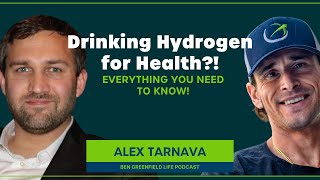
Ben Greenfield talks with Alex Tarnava about hydrogen water tablets he developed after a post-viral illness. The tablets create nanobubbles that deliver about 12 ppm H2, and Tarnava cites roughly 18 human trials and 20 university partnerships studying effects on mitochondrial function and inflammation.
Chapters
The way we produce or evolve to produce hydrogen endogenously is by fermenting fiber. Upwards of 80% of middle aged overweight individuals no longer have the capacity to produce hydrogen. When they're given a fiber for a hydrogen breath test, they produce methane instead. And this is critical because we know as breath methane rises and breath hydrogen lowers, worse health outcomes happen. And, and we also know in studies of centenarians like in Okinawa, that these centenarians, people over 100, have higher breath hydrogen than the average younger person in middle age. We're getting this declining H2 because of lifestyle changes. It's so prevalent that a lot of people, even if they start making changes to their diet, they start consuming fiber again. They basically killed off the bacteria in their gut that can make hydrogen, so they'll just produce methane instead.
Been a long time since I've done a podcast about hydrogen. I think probably my most popular episode about the magic of molecular hydrogen was with this guy named Tyler LeBaron, who's actually a buddy of mine. Cool dude. And we geeked out for a while. He's the director of the Molecular Hydrogen Foundation. But I have recently discovered another guy who is really knowledgeable about hydrogen. His name is Alex Tarnava and he's my guest today. He actually invented many of you might have used these before the little hydrogen tablets that you put into water and dissolve. My best friend on airplanes particularly for some reason, just helps with airplane travel tremendously. Maybe Alex can explain that later why I just feel so much better when I fly and use hydrogen. But Alex has done a ton of research and very inventive activity in the realm of hydrogen and has presented at a variety of conferences. He has been responsible for kind of digging into myths and truths about hydrogen, has a great website. So I'm going to link to Alex and all of his stuff if you go to BenGreenfieldLife.com hydrogenalex I'm just going to call you Hydrogen Alex today, Alex, so. BenGreenfieldLife.com hydrogenalex I know you have some kind of a crazy story, Alex, about how you got kind of into hydrogen in the first place. So I'd love to hear a little bit more about that.
Yeah, it was definitely born out of necessity going back about 10 years ago. So I'm 39 now. It was when I was 29. I was the healthiest, most fit of my life. I was training four plus hours a day, six days a week, competing in CrossFit, training hours a day of various martial arts, helping other guys prep for fights.
Just not a care in the world when it came to my health, because everything was absolutely perfect. And I had the free time to do this because my previous business, I'd be on the road maybe like 100 hour, like working 100 hours a week, one week a month on the road, and then I'd have like two hours of work a day the other three weeks when I was at home. But I got hit with what was believed to be a mystery virus, and it absolutely wrecked me. So overnight I had central nervous system fatigue. I went from a 54 inch plyometric box jump to not being able to jump an inch off the ground, Being able to string 15, 20 muscle ups to not being able to do like a chest bar. It was bizarre. But my strength was normal, like my squat and my bench press, everything deadlift, those were all normal. I also developed sudden onset narcolepsy. So if I sat down and wasn't active for like a minute, I just conk out. I was sleeping 16 to 18 hours a day. My inflammation was insanely high. It was like my. My C reactive proteins were 34 milligrams per liter. Right. So, you know, 70 to 100 times abnormal. And they just couldn't figure out what was going on. And after a couple of months of this, when the dust settled and.
All of this cleared up, I was left with polyarthritis. So I had osteoarthritis in 11 joints.
Is that what polyarthritis means? It just means arthritis in different areas.
Yeah. So I developed like, you know, degenerative osteoarthritis and 11 areas, the worst of which was my left shoulder and my left hip. But basically anywhere I'd had a previous injury, you know, it developed.
And I got put on, you know, cortisone injections and 1000mg of naproxen a day. For those who don't know what naproxen is, it's like a leaf, but with the leave, you'll take like 200 milligrams. I was doing a thousand. I knew this wasn't sustainable.
I bet your liver loved that too.
Oh, yeah, well, yeah, my gut was worse off, but I just started scouring PubMed, you know, because I wasn't training this four to six hours a day anymore. So I had all this free time. I was just reading PubMed, anything that could help regulate the inflammatory response. And I started doing a lot of things. I started going to cryo chambers, I started various supplements and I found hydrogen. Right. And you know, the research wasn't where it is right now. It's pretty sparse. But there were some pretty cool studies back then.
Like, how long ago was this?
10 years ago?
Okay.
Yeah, yeah. So I knew some people who were selling a hydrogen water machine or an alkaline ionizer that they said made hydrogen water. And I paid like five grand for one and just went on my merry way. But I think it was about eight, nine months later. I fainted a few times in the gym. And what had happened is the naproxen use had ruined my gut, caused multiple ulcers, and I wasn't absorbing nutrients properly. Right. So I had to abruptly stop the naproxen and within days, all my joints seized again. Like I'm talking, I couldn't put on a shirt, couldn't put on socks, you know, without assistance. It was brutal. So I had to go back to square one. And I'm like, none of these things that I'm doing are working.
Even that, even that hydrogen machine that you got, you were drinking from that too?
Yeah, I was drinking from that. But.
I just. As I was going back into PubMed and I saw new studies on hydrogen. I'm thinking, okay, well, is this a scam? But it just dawned on me. How do I even know this machine is producing hydrogen? So I got the test reagent and I tested it and it was undetectable. So I had to triple the input to reduce a single drop. So it was 0.03 parts per million or milligrams a liter of H2. So a fraction of the minimum observed therapeutic level. And hydrogen works on a dose and concentration dependent response. So it just, it was absolutely nothing.
What's a good level for ppm? Like, what should you look for?
So the tablets in 500 milliliters of water, our gas chromatography data shows a little over 12 parts per million. Right. So we're, we're hundreds of times higher.
Yeah, that's. That's a lot. I mean, like, I even have some hydrogen water bottles and they brag that they can put out 4 ppm.
They won't consistently put out 4 because to get that 4 ppm, they need over 50 psi of pressure to hit the equilibrium under Henry's law. And the gaskets.
Aren'T designed for that, that high of pressure. So you might get the four or five parts per million for a few uses, maybe a few weeks, but then the gaskets start separating and they start leaking and you'll be down around 1 ppm on those okay.
I actually want to get into hydrogen water bottles later on, but I want to hear the rest of your story.
Yeah. So I thought to myself, okay, well, how are these researchers making hydrogen water? So I started buying the full studies to read the materials and method, and absolutely none of them were using a machine like what I'd bought.
So a lot of them were using, like, magnesium sticks and such. So I went about trying to use magnesium sticks, but using rods of magnesium. You can't control the amount of magnesium.
Wait, can I ask you a quick question about that, Alex? Because some people might not be familiar with the chemistry of this. Why would you use a magnesium stick to get hydrogen.
So elemental magnesium. We're not talking about a magnesium supplement here. We're talking about the metal magnesium. It reacts with water, right? And it'll split the H2O into hydrogen gas, and then the oxygen becomes hydroxide, which is a function of ph. So you'll get H2 and then magnesium hydroxide.
So this might be a really dumb question, but, like, if I use, like, natural calm magnesium or one of these magnesium powders, am I getting hydrogen if I use something like that?
No, because they're. They're in ionic form. Right. Magnesium there. Right. You're getting magnesium compounds, so they're no longer reactive.
Okay, got it.
To do this, so you. You have to use a metal form. But if you're using just like a rod of magnesium, you know, and then you're using some acid to liberate it, you're not able to control how much magnesium you're getting. So you could end up getting way too much magnesium. Get hyper magnesia, get. Get some side effects from that.
Could any of the metal, also from the magnesium stick, get broken down into the water?
Well, the metal reacts away and becomes free magnesium ions. Or first it becomes magnesium hydroxide, which is milk of magnesia. But if you're using enough buffering acids, like in the tablets, we use malic acid and tartaric acid. Those buffer down the hydroxide, leaving just mg2 plus. So just free magnesium ions, which is the exact same form we need to get into ourselves.
Okay, got it.
Yeah. So as I was thinking about issues with the magnesium rods, I started looking for powdered magnesium, and I started making concoctions. I figured out that the powder floats. Right. So I needed to compress them into tablets to get them to sink. And during. While I was messing around with this in my kitchen, I just thought to myself, I don't want to win a Dunning Kruger award or I don't want to win a sorry Darwin award. Right. And blow myself up in my kitchen and blow up my house, maybe kill myself dealing with the element magnesium, which is the white and fireworks and hydrogen gas.
Right. Or just massive diarrhea pants from a milk of magnesia overdose.
Yeah, yeah, that was the first one with the magnesium rods. I was like, okay, this is a problem. Then when I started making the tablets, I'm like, you know, this is kind of dangerous. And I knew enough about the subject to be dangerous. Right. So I'm like, I need some expert help.
Leading up to that point, was your previous job or your educational background in chemistry or anything like that?
No. So my previous career, my partner and I had a business we'd innovated on.
So basically like roadside breathalyzers to see if you're drunk, they use something called the platinum fuel cell. And we worked with, you know, a manufacturer and we put them in vending machines, but we made them disposable so you can plug them in and out rather than recalibrating because we figured out that it was cheaper to replace them than to send it to a chemical engineer to recalibrate. So I distributed these vending machines where you put in a dollar, get a straw and you blow and it gives a police grade accurate, breathless result.
So you had a little bit of a history, kind of like fabrication and industrial design? To a certain extent, yeah.
And I, I've always been an avid reader and science has been a third of what I read alongside fine literature and philosophy. So I had a good enough understanding to get started. But then I thought to myself, like, I really need to make sure that I'm not going to kill myself here. So I found my founding partner, Dr. Richard Holland. He's a PhD in organic and synthetic chemistry. He's from the pharmaceutical industry. He develops molecules to use in drugs. At first he called it the worst pseudoscience he'd ever heard in his life.
Well, he said that about hydrogen?
Yeah, yeah. And he gave me all these reasons why it was nonsense, why it couldn't work, why hydrogen was inert and wouldn't have a physiological effect and why you couldn't dissolve it, you know, like it wouldn't be wise to dissolve it in water anyways because of the low solubility. Now by that time I'd read so many studies that I was able to rebut him with peer reviewed evidence, show him, look, it is having a physiological effect. And look, yeah, you know, you could get way more of it from inhaling, but these studies are showing that even a fraction of the dose dissolved in water is performing as well or better than inhaling the gas. So he looked at that and said, well, I'm absolutely shocked. You know, maybe there's something here. I'll take a look at what you're doing.
And I just kept on sending him a new study every day as he was reviewing my formulation and chemistry. And serendipitously I sent him one on a certain disease model that he was actually the lead chemist developing small molecules to target that disease. And he called me for a lunch meeting and he said, you know, listen, those other studies, I had to trust the findings because I'm not a subject matter expert. But in this study, unless this is fraud, this stuff works, right? And it works better than the molecules we're developing. You know, are you interested in commercializing this or are you just dead set on doing it as a do it yourself project?
So at that point I was.
Unsure, Right. I had no expertise in this area, but I'm a quick learner and I figured, why not go for it? You know, I developed some other things in the past that I didn't commercialize that ended up getting picked up, you know, by companies. I'm like, you just got to go for it. So I dove deep into the industry and I tried to get my our first production batch made.
Dr. Holland refined my chemistry in like just a few weeks. It didn't take long. But then we realized making millions of them at high speed is a different game than making 20 in a mortar and pestle.
Yeah. You mean millions of the tablets?
Of the tablets, yeah.
Yeah.
So it took us 15 failed scale up attempts, a few thousand formula and process adjustments at a year to get our first production ready batch.
Okay, and the whole time you're doing this, did you, Were you still dealing with all this polyarthritis and these post viral symptoms?
Yeah, yeah.
Oh, geez.
And I made it a lot worse. Like in the early days of developing this, I was working over 100 hours a week. I was only sleeping about four hours a day. I was often forgetting to eat and then ordering pizza at midnight.
Yeah, that's a great plan for healing illness.
Yeah, exactly. So it ended up being rough. In the first couple years that I was doing this, I ended up putting on £100. You know, because of the massive lifestyle change, which I've lost most of it, But I'm still nowhere near the fitness that I was 10 years ago. But I did a lot of damage, ironically looking for something to help with my Issues.
But, yeah, it took us about a year. We finally got it going. Once we got the tablets going, there actually was an existing market of people just waiting for me to figure this out. Robert Slovak was my first customer.
Yeah, he's been on the podcast guest or the podcast before, the water and wellness guy. He's a wealth of knowledge. But for you, at that point, had you looked into what these. What were these other studies that you had found on PubMed where they were getting their hydrogen tablets?
So there weren't hydrogen tablets at that time? They were or there were, but they weren't used in any of the studies. They were mostly using magnesium rods. Some of the studies were using another technology out of Japan that can get about 7 parts per million, and it uses elemental aluminum rather than magnesium. Myself and many others have concerns about putting aluminum in your drinking water. So that technology has never really taken off.
So what was on PubMed at that point was not a. What was not scalable to be a mass consumer product?
No, no. And back then, 10 years ago, there was maybe 30 human studies. You know, now there's something like 180. Right. So it's. It's increased a lot in size and scale of the research. Quality of the research has been advancing. I've had a good hand in that. When I decided to get into supplements, I didn't have a good opinion of the supplement industry. I thought a lot of it was, you know, bogus snake oil. Obviously there's some good things with science at work, but there's a lot of ridiculous claims, you know, and a lot of issues like fairy dusting, where an ingredient works at, you know, this dose, but then a company will put one tenth the dose in and claim the benefits. So there's a lot of. A lot of stuff like that. And I decided if I'm going to get into this industry, I want to do it right. So what I did, as soon as we're ready to launch, I emailed every single first and corresponding author on every single human and rodent study that I could find of hydrogen, offering to support research, to donate product, said, this is how much hydrogen we're getting. Make placebos.
Right.
Help the research. And over time, I developed a lot of connections with a lot of different professors at different institutions. I'm working with 20 or so universities around the world right now. We have 20 something human trials, I think 18 clinical trials and a handful of case studies and half a dozen preclinical, like, rodent studies to date. And we have about that many more that Are underway at various stages.
What happened when you, when you showed to Slovak? I interrupted you when you brought him up.
Slovak was selling a different tablet that's now out of business. So what's novel about the tablet that I ended up developing is we figured out how to make very small nanobubbles. This is how we're getting the 12 parts per million, because the saturation of hydrogen and water is only 1.6 parts per million million. Now, the only way you can get beyond 1.6 parts per million at satp is either by increasing the pressure so that it reaches an equilibrium, that's Henry's law. Or by making nanobubbles small enough that they, they basically stay in suspension and they don't dissipate up. So this is the same concept, you know, if you remember during the, the pandemic when they realized that the six feet of social distancing wasn't working because they were small aerosols and they'd stay in the air or days and could travel long distances. That's because the viral particles were in the nano range. So they were small. They don't sink, they don't float. They just, you know, stay in, in this state of suspension. It's the same thing in particles. You know, in supplements. Like, often you'll see micronized or nano sized ingredients, and that's because they're not water soluble. But if you make them under 5 microns in size, they become dispersible. You know, so they don't want form sludge on the top or the bottom. But we, we realized that it was the same concept with gas bubbles in the water. So our laser back, our laser back scattering shows that our tablets are producing small nanobubbles in a first wave between 10-30nm in size. So they're very, very small. Right. And they resist coalescence. So it's stable enough that you can drop the tablet in the water, let it dissolve, it creates this white milky cloud and then chug it down. Right. And then you're getting this very high concentration in dose that other technologies aren't capable of doing.
And you said that was close to 12 ppm?
Yeah. Our gas chromatography shows a little over 12. So the first one we did a couple of years ago was 12.4. This last round we did right now was 12.2, which is in the margin barrel. So we're getting about 12 parts per million or milligrams a liter, and 500 milliliters, which is a 6 milligram dose. Of H2.
Okay, this might be a dumb question, but like when I'm on an airplane, like I mentioned, I might get the little dinky plastic water bottle and everybody's gonna freak out about microplastics. But that's. We get handed sometimes and I'll drink just a little bit of that off the top and drop a hydrogen tablet into it. I actually use the ones from Water and Wellness right now. I might ask you about brands later on and whether that's an okay one. But I put one of those, so that's probably like 7 ounces of water. But then when I'm at home, I'll put like three hydrogen tablets into my morning on nearly 30 ounce glass of water. So what's the difference in the ppm in terms of the volume and the number of tablets used?
So in say 8 ounces, I think you're gonna get about 20 parts per million, right?
8 ounces with one tablet?
Yeah, with one tablet actually I think more like 18 parts per million. And 8 ounces, which is a little less than half than 500 milliliters or I think we're 18 and 250 milliliters, which is just shy of 9 ounces.
So you're gonna get a good amount of hydrogen, but that would be say 4.5 milligrams instead of 6 milligrams. Right. So it's not quite as efficient. You get a higher concentration, but the dose goes down. But it's still a very, very high dose. Right. That's going to be therapeutic. At home, I do basically exactly what you do. I use their 1 liter jar. So that's about 34 ounces. And I'll put typically four or five tablets and a liter and I chug it.
Okay, Got it. Yeah. I might ask you a few usage questions later on. The, the water and wellness ones. Are those okay? Like, like, is that a good, good PPM and a good tablet?
Absolutely. They, they have our standard tablet that has been used in all the clinical research. They also have a flavored, naturally flavored and sweetened tablet. And they have a really cool tablet called their Chromax tablet that has chromium picolinate in it with the hydrogen creating ingredients.
And that would be to help with insulin sensitivity.
Yeah. You know, Robert wanted to target, you know, metabolic health and function. It's some of our best research on the tablets. We've reversed metabolic syndrome, we've shown improvements in liver health, we've shown improvements in body composition in five or six clinical trials right now and shown to affect A lot of markers that we know are important for weight loss, right? So we have regulated ghrelin, we've shown in rodent research to regulate GLP1, and we've shown to regulate the brain chemistry involved with satiety.
You don't look like you're on death's door right now, dude. What happened with your whole virus thing?
I mean, I am a candidate for multiple surgeries at this point. Like, this is where my left arm goes. So I've got bone on bone arthritis with multiple labral tears.
My left hip, I have moderate arthritis with labral tears and soft tissue damage. I am a candidate for disc replacement to my lower back, and I need a surgery on my neck. I'm kind of managing. I still have some aches and pains, but I do my blood tests with cypox once every month or so. My HCRP is typically now below 0.2, you know, so below the detection limit.
Was hydrogen something that helped with that?
I think so. I believe so. I've done some other things. Hydrogen was starting to repair my gut. And then as I dove deeper into why hydrogen was having this effect, I realized the evolutionary basis of why we expect hydrogen and why we're no longer getting it. So, you know, to go back to the very beginning, hydrogen has been with us since before mitochondria, right? So our mitochondria evolved from eukaryotes, which expelled hydrogen as a waste product. Those eukaryotes formed from an a symbiotic relationship between two organelles, one which consumed hydrogen. Now, throughout the last several billion years, hydrogen has been with us at much higher levels, you know, been with living organisms. For instance, the oldest water we found on the planet, deep beneath the Canadian Shield, estimated at 2 billion years old, still has dissolved H2. Now, none of the water on the planet has dissolved hydrogen anymore. We also know it was higher in the atmosphere. But more important to human evolution, we no longer produce hydrogen in the way that we evolve to. So during the majority of human evolution, we consumed between 100 to 150 grams of dietary fiber a day. We can't even get that amount of fiber because through horticulture, we basically bred the fiber out of all of our fruits and vegetables and grains. A lot of it way less than what used to be. But today, the average person only consumes 10 to 15 grams of dietary fiber a day. And someone on a standard American Diet might consume 1 to 3 grams of dietary fiber a day. So, you know, a fraction, you know, maybe 1% of what we evolved to Anticipate. Now this is important because the way we produce or evolve to produce hydrogen, you know, endogenously, is by fermenting fiber. We're not getting the fiber that we evolved to anticipate. And hydrogen is basically, it's an adaptive stressor. It's an evolved stressor. It's hormesis.
Right.
Just like exercise. Right. So we anticipate this hormesis. It's something called mitohormesis. So it's a slight stress on our mitochondria that leads to positive adaptations of mitochondria. More mitochondria, we get more energy and we start correcting balances. So hydrogen can work sort of like a supervisor in the cell. For instance. A lot of people will say that hydrogen is an antioxidant, which it usually has antioxidant like effect effects, but it actually does this by acutely raising oxidative stress in a slight way, just like exercise does. Right. So you actually get a slight spike in oxidative stress, which triggers a NERF2 response and production of our own endogenous antioxidants like glutathione, superoxide dismutase and catalase. So hydrogen is sort of like the supervisor in our cell. It helps us adapt to various external stressors, which is why it would work great for you on an airplane.
And we don't get it anymore, not even a fraction of what we used to. But what makes matters worse is research is starting to show that upwards of 80% of middle aged, overweight individuals no longer have the capacity to produce hydrogen. When they're given, you know, a fiber for a hydrogen breath test, they produce methane instead. And this is critical because we know as breath methane rises and breath hydrogen lowers, worse health outcomes happen. And we also know in studies of centenarians like in Okinawa that these centenarians, so people over 100 have higher breath hydrogen than the average younger person in middle age.
We're getting this declining H2 because of lifestyle changes. And it's so prevalent that a lot of people, even if they start making changes to their diet, they start consuming fiber again. They basically killed off the bacteria in their gut that can make hydrogen, so they'll just produce methane instead.
That is really interesting. So explain this to me. When it comes to hydrogen and it acting as a mitochondrial hormetic agent, inducing mitohormesis, are you suggesting that it's not necessarily donating an electron to stabilize a free radical, but is instead inducing mild amounts of oxidation and perhaps even acting as a, as a Like an oxidation agent, not a reduction agent.
Yeah, absolutely. So the research that has shown hydrogen acts as a direct antioxidant has all been in vitro. We have no direct evidence that in vivo, you know, in a living being, that hydrogen can do this. But what we do see is this, this mild increase in oxidative stress, which triggers a nerf to activation and increase in our endogenous antioxidants. So this means maybe 19 out of 20 times hydrogen has a pretty strong antioxidant response. But 1 out of 20 times, we've actually seen an increase in oxidative stress, typically for beneficial results. So a paper that I was an author ON that, Tyler LeBaron, was as well. We were using the tablets in a rodent model of colorectal cancer. And we were using the hydrogen either alone or in conjunction with 5fd Fluorosil, which is a chemotherapeutic. So we had the control group, the hydrogen group, the fluorosil group, and the hydrogen plus fluorosol group. Now, the hydrogen and the fluorocell had similar outcomes in reduction of tumor weight and size and collagen content. They were both like 23, 24% collagen content. As expected, the hydrogen had a strong antioxidant response and lowered oxidative stress. The tumor cell, which may or may not be good, but the fluorosil had a strong reduction or a strong reduction in antioxidant activity and increase in oxidative stress, which is as expected. That's how the chemotherapeutic was works to kill the cancer. The combination group. This is where it got really interesting. Now, the tumor size and weight were basically destroyed. Right. The collagen content was down from the 23, 24 down to 6%.
Right.
So it was way reduced. But for the antioxidant activity and oxidative stress, the combo group actually potentiated the stress response of the chemotherapeutic, but just within the cancer cell. So it decreased antioxidant activity and increased oxidative stress, which worked to wipe out the cancer.
That's really interesting, especially when you consider that other things that can serve as potential adjuncts to chemotherapeutic treatments like ozone or heat, also seem to increase the efficacy of the chemotherapy, not necessarily by acting as antioxidants, because both heat and oxygen are oxidative stressors, but by upregulating the body's own endogenous antioxidant production.
Yeah. So this has been my. The area of research that I'm most Excited about and I think this is going to be the future of hydrogen, is using it in conjunction with other therapeutics, whether it's exercise or pharmaceuticals or supplements for synergistic outcomes. We've shown synergy in multiple models with hydrogen and other molecules.
That's really interesting. Now something that kind of confuses me is you described how something like one time out of 20 it might act as an oxidative stressor, but then the rest of the time it's acting as an antioxidant. Is it acting as an antioxidant or is it similar to something like ozone or xeno hormetic agents from plants increasing endogenous antioxidant production?
Yeah, 100%. So that's what hydrogen is doing. It's increasing our endogenous production, but it's also regulating various free radicals and beneficial stressors like H2O2, like nitric oxide. So hydrogen is driving towards something called the redox homeostasis. Right. Which is the harmony between oxidative stress and antioxidants. Now a lot of people think antioxidants are default. Good for you. Because most people have an excess of oxidative stress. But if you have too many antioxidants, you go into something called reductive stress, which can be as harmful as excess oxidative stress. So hydrogen can never put you into reductive stress because it's just driving towards this redox homeostasis. Right.
It's a homeostatic agent very similar to the idea of blunting the hormetic response with something like high dose vitamin C or vitamin E post exercise. So is this why some people will refer to hydrogen as a selective antioxidant, meaning the ability to either donate or accept electrons to cause beneficial oxidative stress or to induce an antioxidant response?
That is tied to the in vitro research which shows that hydrogen can be a selective antioxidant and basically only target the hydroxyl radical and peroxynitrate. Now we haven't demonstrated that in vivo yet. And even if it's shown in vivo, it's still probably more prevalent that this Nerf 2 activation. But the reason that hydrogen would be a selective antioxidant in vitro is molecular. Hydrogen is a pretty stable molecule. So most, most free radicals and such are just not able to break the bond of H2. Only the most reactive ones like hydroxyl and peroxy nitrite can, can break the bond. So that was one of the very interesting things.
In vitro that we've seen about hydrogen, because most antioxidants will be indiscriminate. They'll wipe out the good and bad guys. But in vitro hydrogen only wipes out the bad guys. We just need more evidence to see if that's happening in a living cell.
Yeah, yeah, that makes sense. And we could probably talk about the science until we're blue in the face, But I get so many questions from people about the logistics. So if you don't mind, I'd love to just ask you a few questions about usage, dosing, you know, bottles versus tablets, et cetera. Is that cool? All right, so you mentioned that you kind of drink yours down right away as soon as the tablets have dissolved. How much of a window do you have after you've dropped the tablets in the water to actually drink it and get the hydrogen into your body?
So you want to chug it as fast as you can. And this is why I say I recommend 500ml or basically as much water as you can. If you can do a liter and drop more tablets in, that's even better.
Why is more volume of water better?
Because you'll get a higher dose. So what we're realizing about hydrogen is just like every other hermetic agent, it works in a dose dependent response. Now we look at something like exercise and all hermetic agents work on this. They'll work on basically like a reverse J curve. So with exercise, if you have, if you're inactive, your health is low, you work out even a few hours a week and you get huge improvements. You know, now you up that to 20 hours a week and you really don't have any improvements. It's a plateau. But then all of a sudden you go to 40 hours a week of exercise and you drop down because it's chronic stress would happen. The same thing with cold exposure. On a tighter J curve with hydrogen. We have not in many models even found the plateau, let alone where it's harmful. And in many, many models, we have shown that you need a higher dose or concentration to see results. But in no models to date has it shown that a lower concentration is more beneficial than a higher concentration. So going at a higher concentration and dose seems to always be better, like erring on the side of caution that we need more. And then we look at the translation between the rodent research and the human research. And now one consideration is for most molecules that are metabolized, which hydrogen is not. You know, rodents have a much higher metabolism. So you have to scale the dose, you know, down for humans but this is not the case with H2. But what is the case with H2 is that rodents drink many times higher water per body weight than humans. So if you give the same concentration to a mouse and they're getting it for all of their water every day they're consuming. If you're only getting one liter a day of hydrogen water, they're actually consuming about 48 times more hydrogen per body weight that we are. If you're only doing half a liter a day, they're getting 96 times more. So this can explain why a lot of the rodent research has been basically miraculous, whereas the human research has been very positive, but not the same level of basically curing all diseases, extending health and lifespan and so on and so forth. Because we just, we can't get the same dose that we're giving to the mice just because of the differences in our consumption. So the only way we can bridge that gap is by increasing the concentration.
Okay, interesting. So high concentration. Drink it right away. You said you're doing like four to five tablets and around 30 liters of water. How about time of day? Like, should you do dosing at multiple times during the day? Is a morning or evening dose best? How do you approach the timing of the dose?
So you definitely want to pulse it? I'd say no more than three, four times a day. Right. But you can do it once a day. You can do it twice a day? I do it once or twice a day, depending on my level of activity and stress.
Oh, wow. So you might go through 10 tablets in a day then with your approach?
If I'm doing twice a day, I'll do usually three. Three and. Okay, so I'll max it about six, which is taking you to the upper limit of the daily magnesium intake. Yeah, so I try not to go beyond about 500 milligrams of magnesium a day. So, yeah, the 6 is kind of like the max that I put it at.
Now, what you need to consider when you're taking hydrogen is one, you want to take it when your stress is highest, but you want to take it on an empty stomach. So especially if you ate a carb heavy meal, a fiber heavy meal, you might get a little hydrogen production, so you want to utilize that anyways. But also, these carbohydrates and fibers will retain hydrogen gas in them and creates gels and foams, which will slow release into the rest of your body. So an empty stomach is important. I will take it first thing in the morning on days that I'm not doing that much. If I'm going kickboxing, for instance, which I'm going to do right after. Right after we talk, I'll take it maybe within an hour before I exercise. Right. To block the stress of that exercise. And hydrogen has actually shown to be really unique in terms of using it in conjunction with exercise because you often don't want to take antioxidants and anti inflammatories in conjunction with exercise. At blunts hypertrophy gains with hydrogen. Some cool studies in rats have actually shown during four swim tests that the hydrogen group has a higher initial spike in oxidative stress and inflammation. So it's actually potentiating the stress response of the exercise, but the returning to homeostasis faster as if they worked out harder and recovered quicker.
Yeah. This is a similar strategy to doing a pre exercise heat treatment or even pre exercise cryotherapy. There's actually a spike in oxidative stress and then a rebound response in endogenous antioxidant production.
Yeah, yeah, exactly. So I tend to use it either first thing in the morning right before I exercise. If I'm going to do a second dose, it's usually days that I'm flying. I mean, I travel about 100 days a year, so I fly a lot. I always take a double dose of days I fly, I also take a double dose. And this isn't nearly as often anymore, but the once a month or so I might indulge in a bottle of wine or. So I always double down on my dose on days like that.
Not in the wine. In water. Separate from the wine.
Yeah, in water. Yeah.
You don't want to bastardize a good red. So I do three, sometimes four tablets in that morning. Big liter or so of water that I have, similar to you on an empty stomach. And because I've got three of them laying around the kitchen, I've been drinking my second dose. I think it was. I first heard from Tyler Labaron that diurnal dosing is beneficial. So I've been doing a second dose on an empty stomach mid afternoon, but I've been using a hydrogen water bottle for that second dose. Again because I have a few of them, but it sounds to me like there might be a potential issue with that.
So the water bottles, I mean, some of them are not too bad. Again, the issue is the gaskets. Right. So you can basically get to. Some of them can get up to 5 ppm right at the start, but they will rarely maintain that 5 ppm for more than a few weeks. And they'll just start leaking out H2 and going down. I think Tyler is actually doing a video through the MHI to tell people to listen for the pop. When you open the cap, you know, if that pop is gone, that means pressure didn't build up in the gaskets. Toast.
Okay, that's, that's good to know. I've. The one I've been using the most right now is the Echo. And that one's still kind of popping like when I release it. It's kind of like opening a fizzy bottle of soda.
Yeah, it's not a bad bottle. Again, I think they got about four parts per million.
Yeah, if, if you run it for the full 10 minutes.
Yeah, yeah. They trend down in concentration as a gasket start separating and leaking. That's just. You're always going to get that wear and tear, no matter how good the gasket is. I mean, I developed units trying to, to help use it in preclinical research to get the dose dependent responses even higher where we can saturate up to like 13 parts per million of H2.
Using Henry's Law. So it was a cool contraction we made. And we had these engineered with the hot like heaviest duty parts that could happen. And.
They work, but for less than 10 uses. So these prototypes cost about seven grand each, and I made five of them and every single one broke in under 10 uses. And there is not parts available that are better for this type of purpose.
Interesting. Okay, what about the machines? What about the generators like that one that you bought?
Yeah, they tend to. They make tremendous amounts of hydrogen through electrolysis. Right. That's how the bottles work too. But they're making very large bubbles. And what ends up happening on these machines is first off, they're dependent on the tds, the total dissolved solids and.
The source water you're using. You need a high TDS to get a higher H2. So some of the machines can get over 1 parts per million in the beginning. But as you use them, these minerals, they stick to the plates that are used to create the electrical charge through the water. Something called calcification happens. Scaling on the plates. Now, as more and more scaling happens, the H2 bubbles coming off the plates get bigger and bigger and bigger, and the bigger the bubbles get, the less likely they are to dissolve in the water. So you can take some of these machines after they've been used for a while, and they're still making a lot of H2. You put a lighter up and it flickers.
Right.
Like the Hydrogen burns as it's coming out. That means it's not in the water. So often these machines, they might start at like 1 part per million, but within a short amount of time they're down to 0.3, 0.1, like the one that I tested, 0.03. So they have some serious longevity issues.
Okay, Is there anything to those at home hydrogen tests you can get like on Amazon? I think some are methylene blue based if somebody just wanted to see, hey, is my hydrogen bottle still producing ppm or how much am I getting if I dissolve two tablets versus four?
Yeah. So with those drops, the issue is with the eco that they send to consumers, they can actually detect the nanobubbles right, in, in the, the tablet hydrogen water. So H2 Sciences that makes the H2 Blue actually has a big article. Right. So they have an ethanol based formula that researchers and companies order. The reason they don't sell it to consumers is because it's hazmat.
Right.
So it's hard to ship a single bottles on something like Amazon. Right. So the ones that they sell on Amazon are good to detect up to the 1.6 parts per million, but they can't get up to, you know, 10, 12 or higher parts per million.
So are you saying there's no good consumer test kits that one could order to their house to test?
No, no, unfortunately not. The most accurate way to test hydrogen is gas chromatography. And it is very complicated and expensive setup. So that's why we, we send our gas chromatography reports to all the brands that sell and a lot of them post them online so people can say, listen, this was tested by H2 analytics, right? You know, certified by the IHSA. This is a hydrogen level.
What happens if I just dissolve a tablet in my mouth or I swallow it?
We have a case study on this for buccal administration. Right. Like for a concussion study. I would say be careful with it because the tablets are exothermic. They give off quite a bit of heat.
Yeah, so do the bottles. By the way, my wife got pissed because it like burnt a little wringer hole in the dining room table.
Yeah, no, they give off quite a bit of heat. So the heat isn't an issue when it's in a glass of water, but if it's say on your skin with a drop of water, it could cause some unpleasantness.
What if I just like drink some water and keep it in my mouth and swish it around and put a hydrogen tablet in there at the same time?
I do that sometimes. I know Tyler LeBaron says he does that sometimes. I can't recommend it though, just for that one in a hundred thousand people that that might have an issue with it. Basically, if you don't drink enough water and if you don't have enough stomach acid, that same exothermic issue can happen. It could sit against your stomach lining, maybe cause an ulcer. Now that would be very, very rare for a young healthy person. And if you drink a bunch of water with it, you're going to have no issues doing that. But again, we don't know that for sure. It's going to dissolve the same way into the water in your stomach and make it to your cells probably, but we don't know. Again, it's fine for a lot of people when you drink enough water, have sufficient stomach acid, but we can't recommend it because say, if your stomach acid's really low, if you only take a sip of water, it could cause some GI distress.
Okay, got it. For skin health and transdermal absorption, some people are now using the bath hydrogen tablets. I think, I think maybe Robert Slovak sent those to me. They're huge. They're like three times the size, maybe more of the normal tablets. And you're supposed to put them in a bathtub when you take a bath. What do you think of those?
So I developed those too. Right. So I provided them to them. We have a couple clinical trials on them and a few case studies. We have seen tremendous results. So in two of our clinical trials, the first it was done to be a non inferiority, so they didn't recruit a whole ton of people. And it was after grade 2 ankle tears in pro soccer players. And it was compared against Rice protocol. So rest, ice, compress, elevate. Now, hydrogen was equivalent in the single ankle bass, but BASS to Rice protocol.
However, it was trending better in almost every outcome. If they'd recruited just four more people, it would have been significantly better than Rice protocol if the data held up. Unfortunately, the authors didn't think it was going to be better. They were just looking to see if it was as good as. But it was like four areas. There was a strong trend like p values of 0.07 that the hydrogen was out competing and lowering inflammation, lowering swelling, lowering vascular of pain, lowering circumference. They were all training better in the hydrogen.
What about skin issues like eczema or acne or something like that?
Yeah, I mean there's quite a few studies, not on the tablets, but on other hydrogen waters. That have shown improvements in various skin health, even in reducing wrinkles. And then probably where we get the best testimonials is pro athletes and athletes using them for muscle recovery. Right. So we have a double blind placebo controlled trial with the bath tablets versus a placebo tablet after high intensity eccentric exercise. And it significantly reduced delayed onset muscle soreness compared to placebo by the VAS scale and it blunted the rise in creatine kinase.
Wow, interesting. For the size of a typical bathtub, about how many tablets would you use for a standard PPM based on that research?
Yeah, in our studies we've used between like 20 to 40.
Oh, that's a lot. That might almost feel like the whole bottle.
I think the bottles come in 60 or 180. It's an expensive bath, but it works. And for especially a lot of athletes that are sometimes paying 50, 60 bucks for a cryotherapy session. Right. This is a lot cheaper and wipes out the pain.
Yeah, that is a good point. My baths are very few and far between, but when I take them, dude, it's like the CBD bath bomb and the lavender oil and the hydrogen tablets and the red light and a good book and I'm like, if I'm carving out the time to take a bath, which is very few and far between for me, based on my time limitations, I want to get the most damn efficacy out of that bath possible. So I get it. So when it comes to these hydrogen tablets, I briefly alluded to this earlier when you were talking about using these magnesium sticks. But I've heard a few times people express concerns about potential contaminants or metals or something like that in the hydrogen tablets. Is that something that we need to be cautious about?
A lot of people who say things like this don't realize that there are heavy metals in everything. In our food, in our drinking water, you know, everything that we're going to consume or touch. Now with the hydrogen tablets, we're one, we have new dietary ingredient status with the US fda, we have GRAS status, generally regarded as safe. Two, every batch is tested not just to FDA standards but to California Prop 65, which is the strictest requirements in the world for heavy metals. So there is nothing that doesn't have heavy metals that we consume. It's just about how much of them is in it. And there is a minuscule amount in the hydrogen tablets well, well below the thresholds for California Prop 65.
Okay, got it. That's good to know. So you helped develop the ones for water and Wellness, which is one company that I've ordered from. They've actually been a sponsor of this show in the past. Past. Are there other brands that you would vouch for? Is that kind of the main one?
Yeah. So I supply to what's going on, about 70 brands right now. Many of them have different tablets. Like I mentioned, I developed the Trax tablet with Robert Slovak to. To try and synergistically target metabolic health, water and wellness. Again, is. They were my very first customer. So they have been in this game a long time. And Robert's interest in hydrogen was. Goes before my invention of the tablet. You know, before he launched mine, he was selling a different tablet that you had to seal and bottle and wait till the next day. You get about two parts per million, but you have to make a convex next year on top of the bottle, drop the tablet, twist, put it upside down, put it in the fridge and drink it A day later, that that guy has gone out of business that developed that tablet. But even before that, Robert and his late brother were the first people to try to invent a hydrogen tablet. And they did extensive amounts of R and D, you know, trying to develop these hydrogen tablets, and they couldn't figure out how to get it work working in manufacturing. So actually he was a wealth of knowledge. When I started developing before he was my customer, I was put in touch with him and he sent me over all their failures in R and D so I wouldn't make the same mistakes. Because, I mean, Robert's a great guy. He is worth many, many millions of dollars and he does a lot of this stuff just because he's passionate about it. So he wasn't looking at me as a competitor. He said, I just want a good product on the market.
Yeah, yeah. And I'll link in the show notes. If folks listening, go to BenGreenfieldLife.com hydrogenalex I'll link to those podcast episodes that I did with Robert. I'll link to my ones with Tyler Lebaron too, of the Molecular Hydrogen Institute. Are there. You know, you mentioned Chromax, how you're mixing chromium in with the hydrogen. Are there other kind of blends out there in the future that you think could work well or that is rolling around in the back of your mind as far as modifications or new inventions?
Yeah. So I've developed some other custom tablets for some other companies. When companies develop a custom tablet, they tend to want to pick a lane, you know, so either go after metabolic health or go after brain health or mitochondrial function. So there's a lot of different custom tablets and I think in the future people might cycle through different custom tablets to get different purposes with the hydrogen and then use the stock tablets to boost their hydrogen intake.
What do you think about Methylene Blue? That's another one that's been touted as a selective antioxidant.
I've tried it a few times. I think it tastes pretty nasty.
But I don't know enough about the research. I know it was emerging.
Yeah. The reason I ask is the blue hydrogen tablet. You've got two different selective antioxidants that might be interesting to have together.
I could do a deeper dive into it.
Or fortunately, as.
I've been expanding on how many companies I'm supplying to and at the same time expanding on how many research teams I'm working with, I've had less and less time to look into other non hydrogen related things for my own knowledge and curiosity.
You actually answered a lot of the questions that people constantly ask me about hydrogen. This is going to be a great resource for folks. And if you're listening and you have follow up questions or clarifications, you want to dive into anything we talk about in the show notes. You want to check out bath tablets or this water and wellness website or Alex website in which he has some fantastic articles and publications, go to BenGreenfieldLife.com hydrogenalex it's BenGreenfieldLife.com hydrogenadex anything else you want to throw in while I have you here, Alex, before you go, kickbox.
Yeah, I'd say just a lot of people wonder if hydrogen is right for them. And again, I don't think there's anyone on the planet that that is getting the hydrogen that we used to throughout evolution. I mean, I have slowly scaled up my dietary fiber to 60 to 80 grams a day. It is hard to get to 100 to 150. Right. It takes serious work to even get to around 60.
So everyone can utilize hydrogen and again, everyone has daily stressors, right? And especially for biohackers, there's so many cool things about hydrogen and how it's basically like a supervisor and just a smart molecule, so to speak. Like, I know autophagy is a huge rage in the biohacking world. Hydrogen usually activates autophagy, but in certain models where you absolutely don't want autophagy, it's inhibited it, such as heart failure and after drowning, resuscitation. So again, hydrogen I think is.
One.
Of the pillars that everyone should be utilizing for their health.
Yeah. Well, I like it. I've been using it for almost a decade now, and it's impressive stuff. And again, if anything, try it. If you do a lot of airline travel, you'll swear you feel so much better. So. BenGreenfieldLife.com hydrogenalex is where the shownotes are. Alex, thank you so much, man. This has been incredible.
Yeah, no problem. Thanks for having me on.
All right, folks, I'm Ben Greenfield with Alex Tarnava. Hydrogen Alex, signing up from BenGreenfieldLife.com have an incredible week.
Do you want free access to comprehensive show notes, my weekly roundup newsletter, cutting edge research and articles, top recommendations from me for everything that you need to hack your life, and a whole lot more? Check out Ben Greenfield.
It's all there.
BenGreenfieldLife.com See you over there. Most of you who listen don't subscribe, like or rate this show.
If you're one of those people who.
Do, then huge thank you. But here's why it's important to subscribe, like and or rate this show. If you do that, that means we get more eyeballs, we get higher rankings, and the bigger the Ben Greenfield Life show gets, the bigger and better the gift guests get and the better the content I'm able to deliver to you. So hit subscribe, leave a ranking, leave a review.
If you got a little extra time.
It means way more than you might think. Thank you so much.
More from Ben




The Solution to Aging Might Be Closer Than Anyone Realizes - With Ben Goertzel



