WATCH Me Get PRF Injections: JOINT Health, PAIN Management & Hydrodissection With Dr. Phil Lenoue
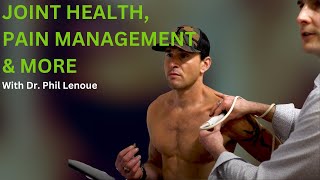
Ben Greenfield gets PRF injections from Dr. Phil Lenoue while the doctor walks through ultrasound exams of his neck, shoulder, hip, and knee. They show hydrodissection to free trapped nerves, prolotherapy with dextrose, and shockwave therapy. The ultrasound reveals facet fluid, tendinosis, and a Baker's cyst.
Chapters
Hydrodissection is a technique where you actually take a nerve and or fascial plane that's stuck. So you get the scar tissue that's stuck and you come in there with a needle and fluid and you actually use the fluid to decompress either the nerve or just unstick the fascial planes. And so then if the fascial planes are gliding properly, then all of a sudden you can get that range of motion back and get that function back. We had this guy who came in, he fell off a 12 foot ladder onto a 4x4 and he ended up injuring his spinal cord. He was paralyzed for like two hours. Miraculously, he's not paralyzed, but he ended up getting a fusion through his mid thoracic spine. Came in to me and we've done five or six rounds of treatment and what we've done is we just really hydrodissected all those fascial planes both on his back and along his ribs. And this guy does not like medications. He's off all of his hydrocodone. He's off Lyrica. He's like, incredible. Change his life. Just so cool.
This episode is brought to you by really the best way to nuke zombie cells. When you look at this buildup of senescent zombie cells in your body, it turns out that although these things churn out inflammation like, well, zombies, there's ways you can fight against them. The good folks at Neurohacker Collective are experts and they've cracked the code at nuking these zombie cells in a safe and effective way with just two days a month of using their Qualia senolytic. You get a pack, take six capsules one day, six capsules the next day, set it, and forget it for the next month. So if you want 15% off the best way to nuke zombie cells, go to neuro hacker.com bgl15 and use code bgl15 for 15% off any purchase. That's n e u r o hacker.com forward slash bgl15 and use code bGL15 for 15% off of any purchase. Enjoy nuking your zombie cells. Kiss them goodbye. So I'm out here by Gonzaga University. You might know this as the big basketball school, but it's also in close proximity to my local wizard for all things musculoskeletal injury related. So one of my friends, his name is Dr. Phil Leno, runs something called Leno Musculoskeletal clinic. And when I have like a bum knee, a shoulder, a neck issue, whatever, I go see him because he uses a lot of these diagnostic imaging protocols that are surprisingly very hard to hunt down when it comes to an expert who's actually good at them. He does things like nerve hydrodissection, ultrasound guided imaging, trt, shockwave therapy. And because I'm in here seeing him often, I thought it would be cool to give you guys an insider sneak peek on what cutting edge musculoskeletal medicine looks like. Now, as you're watching or listening, if you want the show notes, those are all going to be at BenGreenfieldLife.com Leno L E N O U E. If you have questions, comments, feedback, you can leave them there. I think you're really going to love the Dr. Phil. Not that Dr. Phil, the other Dr. Phil. So let's go see what Phil has in store for us today. It could get grimy, gritty, gross, lots of needles, but it's always a good time. Here we go.
Just an everyday visit to the doctor.
Ben.
Phil. What's up, dude?
Good to see you, man. Welcome.
Good to see you too. See, I always get a nice hug when I come see Phil. Yes, like that. Yeah. This is Dr. Lindo, by the way. Say, say hi, Phil.
Hi, nice to meet you.
This is the man, everybody. This is a wizard I was talking about. So it's gonna be a little show and tell today.
Oh, man. You know Phil, by the way, I know that you're gonna. You're gonna probably have all sorts of things to show people, but.
People might be wondering, just like a quick little overview. Like, you were pretty hardcore competitive athlete back in the day, right?
Yeah. So growing up, our life was sports. Football, basketball, baseball. In high school, I played football, basketball, baseball. I got a little jealous at times during baseball season with all the track guys with the girls hanging out, shirts off. But anyways, I ended up playing college football at Carroll College. I was a defensive end as part of four national championship football teams.
I was gonna say, I heard rumors you're a pretty good defensive end.
So we're NAIA started for three years and such a good experience.
I told you I played college, Nai. Sweet.
So it's still high level. We're just not as big as the D1 athletes. Yeah, but yeah, I was part of a stingy defense and it was good times at Carol.
If you go to the website for your clinic, your dad's on there too?
Yes.
Is that still like a father son practice?
Yes. My father's chiropractor, so he works upstairs and so he actually going back to the basics. So my Grandma and grandpa grew up in this neighborhood. And then my.
In the Gonzaga neighborhood.
In the Gonzaga neighborhood. So then my grandpa and his mom, they actually used to do all the laundry for all the Jesuit priests around here. And then my grandma and grandpa, when they got married, they actually sold them the land to build the house right next door to this building. And then.
So is this like the laundry house?
Yeah, not quite.
This one. Can I still smell Jesuit priest clothing.
Not quite, but close. So anyways, my grandpa ended up buying this. This building, which is now our office building. And it was. A guy owned it. It was his house. So he converted it. This was his optometry practice. So my grandpa's eye doctor.
Okay.
And he used to do all kinds of cool stuff with people that had, you know, double vision or dyslexia. Like trampoline therapy. All this cool stuff I didn't learn about until after he passed away. And so anyways, this room that we're in right now is actually where he first, like diagnosed me with eye problems and gave me my first pair of glasses.
Did you ever have to do trampoline therapy?
I didn't. I wish I would have.
I was gonna say I pretty much do trampoline therapy every morning. That's like a thing.
I like to jump. I like my Bosu ball.
Yeah. Yeah. And I was gonna ask you too, I think you were telling me this. It was either last time or the time before I was in. Are you still doing the progressive resistance exercise training as your main form of fitness?
Oh, so you mean like X3 bar?
Yeah, like the X3 bar elastic band stuff.
So, yeah, I do X3 bar about two days a week. I notice if I go any more than that, it's a little too much for me.
Yeah.
And then I have been getting a pull up bar that's in our bathroom. Like it's actually going in my bathroom closet.
Yeah.
And so I make sure that I hang from that regularly. You know, doing some Ben Patrick or.
You get up and hold it as.
Long as you can.
Toes guy.
Yeah. And then Bosu ball, when I can as well, because I have a basketball tournament in four weeks, so. Alumni tournament, Gonzaga prep.
Oh, nice.
So I'm trying to get prepped for that.
Yeah, that X3 bar. I haven't talked about that in a while, but it is pretty crazy. Do you do the single set to failure?
Yeah, I do a single set to failure. I modify it a little bit because I have a superior labral tear from when I was playing college football. And so for Example, like instead of doing front squats, what I do is I put it around my shoulders and I'll do single leg and then I'll just do it to complete burnout for that. And that's a great way to get my legs. But then I'll do the pulls. The push. And you just want do one set fried.
Yeah. I interviewed Dr. Jakish, who invented that thing. I'll put a link in the show notes. But the secret sauce is the bouncing at the end end. Like you bounce to failure. So you hit the fast switch muscles.
Yeah, the. I actually just went to Osteostrong a couple weeks ago here in town and. Which is great for osteoporosis.
Yeah.
And so I went through kind of their whole thing. But the real big thing for like bone density is trying to get at least two and a half times your body weight. And a lot of times as we get older, it's hard to do that safely. So. But, but that's the power is like you can do it safely if you're at the end range where you're strong. And so. Yeah, I try to do that as well. Because you just feel powerful afterwards.
Well, if you're glutton for punishment, do it the BFR straps on.
I do.
Oh, you do?
That's my. I call it my dad workout. So when I get home from work, jump in the cold shower so that I can be up and present for my wife and my kids. And then I put on my BFR bands while we make dinner. So at least I get a little something and then do some, you know, some pull ups here and there and then do my X3 bar a couple times a week.
Yeah, that's an inspiration. Maybe I need to jump in the cold path when I get home before dinner. Jess was making steaks when I left, so it's probably a good idea anyways.
Yeah.
Yeah. Get rid of the meat sweats. So when I walked in here, I called your practice Lino Musculoskeletal Medicine. And a lot of people might not really be familiar with the type of protocols that you do. I know you're going to show some stuff so people can watch, but how do you describe it to people when they ask you what kind of doctor you are?
So originally when I started all this, I thought I was going to do some integrative medicine. So our original name was Lanu Integrative Medicine. And just over the last two, two weeks, we're rebranding to the new Musculoskeletal Medicine and really? That's because we specialize in musculoskeletal injuries. So somebody that comes in like head to toe, like, if we can safely get there and evaluate and get there with a needle, we'll treat it.
Yeah.
So for example, like, somebody that comes in with like a whiplash injury, and. And this is not like a fresh whiplash. We have people that had whiplash injuries 20, 30 years ago, and we still get results with that.
Wow.
And so what makes us different is, is that we're not just saying, like, oh, yeah, we can pump you full of like, PRP or, you know, whatever. We're like, hey, we're all about proper diagnosis first.
Right.
You know, and then from there, like, we can figure out what to do. So really kind of what I specialize is non surgical interventional orthopedics.
Yeah.
So people that, A, they don't want surgery, or B, they had surgery and didn't work, you know, or C, anywhere in between, you know, and so that's kind of what we really do well at is trying to evaluate these people. Either A, they've, they kind of tried everything else other than surgery or even failed surgery, and they want to, like, they still want to get better with their function back.
Yeah.
And so the key is to really evaluate what's going on there and to figure out, like, hey, how can we help your body to stimulate, you know, healing in that area where you had the injury. So, such as you have an old, like, you know, lumbar injury and. And I look and you have fluid on your facets. We're going to evaluate your low back in a little bit, and then we can say, okay, you have some arthritis in these joints, some fluid in these joints, and then you also have some ligaments around that you've actually injured. And so our goal is to.
Figure out what's going on. And then with ultrasound guidance, we guide the needle exactly where the problem is and then we inject our solutions, which typically prf, Platelet rich fibrin.
So like prolotherapy.
Yeah, so prolotherapy would be the dextrose, the sugar water. The next step up from that that we've been doing a lot more of now is the platelet rich fibrin, which are you semi familiar with that in the regenerative world?
Yeah, yeah, it's come up a few times on podcast, but just real quick to describe that to people, the difference between that and platelet rich plasma. PRP.
So I did PRP for about 10 years. PRP works great with PRP, you draw the blood, spin it down, you add an anticoagulant, either sodium citrate or edta. And that makes it. So once you spin it down, the. The growth factors stay in a liquid form the platelets, and so you could leave it there for a week, and it's still liquid, so you inject it. It's liquid. So with prp, you get the release of growth factors within the first, like, three to four hours. So it's really fast, and it's way more inflammatory. Yeah, we call it hot. The joint, it gets hot.
Yeah, it feels like I've experienced that before. Yeah.
So prf, a lot of it came out of regenerative dentistry. So, for example, you pull a tooth and you have a socket. You have an empty space there. So what they do is draw the blood, spin it down, no anticoagulant. So that's the main difference. There's no anticoagulant with prf. And this F stands for fibrin. So you let that. You spin it down, which separates the plasma from the rbcs. If you just let it sit out a little bit, it'll actually gelatinize and form a fibrin clot, like a matrix. So you take that plug and you put it back into where that pull tooth was and suture it in. Then you have a slow release of white blood cells, which is antimicrobial. You get the pain relief that comes with the fibrin matrix, but then you also fill that hole. So you use the same technology. And we're able to. It's called CPRF, which means concentrated PRF. So we're able to get a 10 to 15 times increase in platelets and growth factors compared to baseline, which the average PRP is like 7.7 somewhere around there. So you're getting higher. And then if you have like a. For example, like a rotator cuff tear, it's great because you can actually inject that stuff into that space and it will actually stay there. Whereas prp, some of it stays there, but some of it also leaks out because it's actually in liquid form.
That makes sense. You know, now I remember where I heard about the PRF from first from Dr. Dahm, a German dentist who I interviewed who uses it in this crazy holistic dentistry surgery that he does over there. And then I don't know if your ears are burning, but Cameron Chestnut and I, a local cosmetic surgeon, he and I recorded a podcast. He was talking about prf, and actually your name came up. He's like, yeah, if you need anything diagnostically imaged, Phil's the guy. As a matter of fact, the top probably three smartest docs who I know here in Spokane is you. And then camera chest, not for the beauty stuff. And then Dr. Patrick Love, mostly just because his smoothies are amazing. At the wellness clinic. Yeah, the wellness tree. Shout out to Patrick. So anyways, I think it would be cool for people to see how all of this work works, like how the ultrasound guided imaging works and what the protocol actually looks like when you bring a patient in using me as a guinea pig.
Yeah, no, that's great. Let's do it.
Yeah.
Yeah. We'll just hurt you a little bit.
Yeah.
But all for good.
All right.
All right, so let's start with. Let's say we're going to start with next, Ben's neck. And I'll kind of show you just slide your necklaces off. So I'll kind of go through what I'm looking for. Okay. What? And if his neck looks pretty good, I'll tell you what I see on people that have necks that are not good, kind of how we treat that. And then we'll go to shoulder, and then hip, knee come back, and then we can treat you some at the end.
All right. Yeah. The only area you and I have talked about before is you've drained my knee a few times. Hopefully you got. Well, you might like to see that on video.
Yeah.
All the nasty stuff that can take out of an area that's been injured.
Lay on your left side and left side.
Okay.
All right. Here's for your knees.
All right, cool.
So, Katie, you want to come around this side? Katie's my medical assistant here.
Yeah, Phil's a good teacher for everybody watching, so he'll. He'll kind of talk to you and walk you through what he's doing as he goes here.
All right, so we're looking at Ben's neck first. So let's say Nick, Ben comes in and he was in a whiplash injury. He's having neck pain. I'm going to kind of go through kind of a cervical evaluation, because a lot of times X rays don't cut it, and a lot of times MRIs won't actually show the detail that ultrasound does. And so people will be like, oh, you have a normal mri. Your neck shouldn't hurt. No, that's false. Typically, like, if you have ligamentous laxity, if you have old whiplash injuries, a lot of times that doesn't show up on MRIs, and they don't really know how to call it. And so right here, this is kind of a cool start. So this actually right here, this little oval, that's actually Ben's spinal cord. You can see it pulsating. I don't know. That's not something I inject. But then you can see some.
Just be careful with my spinal cord, Phil. I gotta walk home.
So you can see actually these. These planes. So these are actually muscular planes that I'm looking through as I'm going through the spine. So you can see how the. I believe he had a podcast with Joel Green, and he talks about young muscle and old muscle.
Yeah.
And I actually see that. So you see how it's more black right through this area. That's healthy, younger muscle. You see how it's, like, kind of white through there. That's actually some fibrosis.
Oh, wow.
Scar tissue through there. So people that have horrible necks, I'm going to see a lot of this kind of stuff. And what we get, what we do is we inject it with PRF and that stuff remodels pretty fast. And it goes back to that black, healthy muscle as they get that range of motion back. So that's more of a cross section. And this is actually cross section where the supraspinous ligament is here. But what I'm going to go to is the facet joint. So stay here, rotate a little bit, and we'll see. We'll see if you got anything going on here.
So what I'm looking at is what is there much change in contour? This looks real flat. So see 2, 3. Facet looks good. 3, 4. There might be a little fluid there. There's like a little black. And then as I get, I go down. Four, five. Maybe a little something.
Five, six. Not too bad.
So black's fluid.
Yeah, black's fluid. Six, seven. There's definitely a little bit more. So a lot of times when these lower facets have injuries, people get this chronic upper trap pain, and they get trigger points, they get chiropractic, they get all these things done, when in reality, it's actually from a facet injury. And I know that from personal experience because I played college football and had some of those injuries, and I've had them successfully treated. So then I go down a little bit lower, and you can actually see where the first rib comes. Comes together with the vertebra right here, T1. And so there's a costa transverse ligament right here that helps stabilize that first rib to that vertebra. And there's several different muscles that attach here and this also contributes to that pain in the upper back. This is really common too, with whiplash injuries like seatbelt, the seat belts over this area, people that have hard working jobs where they're sitting all the time, very common area to treat. So as far as like the neck goes, we do that on both sides and that gives us a much better idea of like, hey, what's going on? To quantity quantify. So some of my patients, they'll be like, yeah, I've had this horrible neck pain forever. And I look at their facet joints and it looks like literally a grenade went off.
Wow.
And then. So the cool thing is that often we'll do diagnostic injections. So we'll, we'll actually inject numbing into that facet joint just to see like, hey, how much, you know, pain goes away. If we, you know, treat that spot that looks bad and then they get up and they're like, oh my God, that feels like the best it's felt in 15 years, you know, immediately. And so that helps to confirm we're in the right area when we're treating it with PRF or, you know, therapy.
Yeah. So potentially dumb question, but you hear some people say, like, oh, you're not supposed to get a ton of ultrasounds, like if you're pregnant and you're looking at the baby because of exposure, I guess, to heat or frequencies or something like that, like, is there any risks that to doing something like this? Like having a wand up by my neck?
No, not at all.
Okay.
I mean, the thing is with babies it's different because you're actually. There is a little heat from the sound waves going in.
Yeah.
And so there's some unknowns too of like, what does that do? And obviously with pregnant women you want to do no harm, but if you.
Left that one in the same place for a really long time and heat up the tissue.
Right. I haven't seen any studies looking at it. And then. And this also is not a therapeutic ultrasound. This is, I think that would be more a therapeutic.
Because I think I've had therapeutic ultrasound before and the tissue feels kind of hot.
So yeah, that would probably be bad to keep on for too long. So that's evaluation of the neck. Now we're going to actually look at Ben's right shoulder. All right, so now we're here with Ben and we're going to look at his right shoulder. So I'm going to kind of go take you guys through a shoulder protocol.
That's the Pickleball shoulder.
Yep.
Yeah. Be careful with that.
All right, so this is subcutaneous fascia here. As we come down, you can see Ben's large deltoid. And then you have the long head of the biceps right here. And so what I'm looking for here, you see how there's a little black there? So that's actually a little fluid over that tendon, means that you might have a little acute tendinosis or tendonitis and also might be coming from the shoulder joint. So we look at that plane, then what I do is I go all the way down, and then as we come down here, you can actually see this tendon coming over here. This is the pectoralis muscle and so coming back up. And then this is a bicipital groove. And then what happens is the long head of the biceps tendon comes up and it turns the corner and goes back towards the midline, towards the superior glenoid where it attaches at the top of the shoulder joint. So biceps itself looks really good. So what I do is I stay on it and then we're going to rotate. And so then this is called long axis. So you can actually see this is a very healthy looking biceps tendon.
Yeah, we getting this on the screen.
You must work, you must work out.
Yeah, yeah.
And so, so here's the Ben's biceps tendon right here. Long axis.
Yep.
And then as I come up here, what I do is I externally rotate and then all of a sudden this muscle is your subscapularis right here. That is responsible for internal rotation. So I go up and then as I keep going up, you can see how this little white ball coming in, that's your biceps tendon come over the top. But you can see there's a little irregularity right there. You might have like a little micro tear of your subscapularis.
Interesting, huh? Is it pretty often that you'll see stuff and people are kind of asymptomatic, but you can catch it anyway.
Exactly. And that's like truly being preventative.
Yeah.
And so this is actually a change in that short axis. That's the same spot. And you can see it's a little black right there. So if I were treating you as a patient, I would definitely inject that spot.
Yeah.
And fill that hole in.
Yeah, interesting.
So as we come back here, so next thing we do is we come up, come up. We're, we're going to look at his AC joint. And he AC joint should be about.
0.4 cm apart acromioclavicular.
Yep, chromioclavicular. And so Ben, right here, this is his distal collarbone clavicle.
So you can measure everything with that screen and get the exact measurement.
So this should be 0.4. Yours is 1.0. So you actually have too much laxity here. This moves too much. And so the important thing about that is, is we want to tighten that up. So over time, if that doesn't get tightened, this is going to fall down and the supraspinatus comes underneath and that's going to wear on that.
That is truly preventive. So you can measure, you can see if it's excessively lax. And then you. What would you do about that?
So then what we would do, I would inject some PRF in there, and that's going to help tighten that stuff up.
Interesting.
Yeah. And so it's nice too, because you can quantify. And then down the road, like three months after treatment, you can look at it and say, oh, yeah, that's tightening up.
Yeah.
You know, and then it just helps overall function. So that's the AC joint. Next thing we do after that is like put your hand on your hip, shoulder, back this way. And this is called biceps interval model pose. Yep. And right here. So we're looking at the interval where this is your biceps tendon. This is more supraspinatus. This is where there's a lot of me. I can zoom with my finger. So there's a lot of tears, like right in this interval right here. Looks like maybe there's a little something. Nothing too major. And then subscapularis is more on this side. I'm not seeing too much there. So the next thing we do is subacromial dynamic testing. Okay, so this is cool. So you can see this is rotator cuff coming underneath. This is acromion. And you can actually come all the way over here. And this is the AC joint. So if you watch right here on that right side as that slides underneath, look at the AC joint, how much that moves.
Is it supposed to move like that?
This should hardly move at all.
Wow.
And that's like some major motion. So what's happening over time is this acromion is dropping down over the top of that rotator cuff. And that can wear that down, cause chronic tears.
Yeah. It's kind of weird because a lot of times people tell me I have hyper flexible shoulders, which I've kind of always thought was a good thing, you know, my swimming and everything. But what you're saying is long term.
We want to tighten that up.
That can lead to injuries for sure.
Especially with all your pickleball. And so now if we move a little closer this way, we're just looking at that slide and glide underneath and that. That glides well. So I'm. You don't have impingement right now, but over time, if this doesn't get tightened up, that's going to cause problems there.
Yeah.
So we might also want to inject that today while we're.
Okay.
So next thing we're going to do is we're going to put the back of this hand on your back left pocket.
Okay.
So now we're evaluating rotator cuff.
So this is. It's called bird's beak. And so this is going to be the supraspinatus we're looking at first. So supraspinatus comes right along here and inserts right there. And you can see it's a little bit black in this area. You might have some little bit of like, partial tearing in there.
Right there it's a little more black. You see that line?
Yeah.
So that's a little bit of tearing also.
Yeah.
And so one thing we can confirm is when we go in there under ultrasound and inject those areas, when you inject some fluid, if there's a bigger tear, sometimes it's hidden. It'll blow open.
Wow.
And so often I have these people that have MRIs. They're weak, but they have MRIs that don't show a tear. But when I go in there under ultrasound and then inject, it will blow open. And so it confirms there's a tear, whereas a lot of times that's missed. And then, you know, you can treat them, make them better. So then as I keep kind of coming down. So that's where you have that little tear right there. We call it interstitial because it means it's on the inside. And this is articular. So it'd be like an articular interstitial.
Yeah.
Tear. As I come down here, this is more infraspinatus. And this is more just heterogeneous, like thickening. So it's just kind of irregular, a little thicker. We call that more tendinosis.
What's heterogeneous mean?
Heterogeneous means like a various different colors.
Okay.
Like it's. It's not like. So as you can see right here, that's a super white.
Yeah.
But this is like black white. You know, black, gray.
Yeah.
And that's something that we use to describe like Chronic wear and tear on tendons.
Yeah.
All right, so. So now what we do.
And you ever go bilateral, you look at both sides to compare?
Yeah, it depends. Most of my patients come in and they're like, hey, my right shoulder's messed up.
Yeah. So right handed.
But occasionally I have people that are more preventative and they're like, hey, I want you to look at both.
Yeah.
You know, because I want to be prophylactic. Yeah.
It's kind of fun. I rarely get shoulder pain.
Yeah.
And I don't know, but that's something that we like some of the muscles in the area.
I'm sure that helps. Alright, so now we're looking at the posterior shoulder. And so right here you can see this is posterior deltoid, which is also very large. And then we have the infraspinatus. And this is a posterior humerus, this is the posterior joint. And then this is actually the labrum. Posterior labrum. So what's really cool about ultrasound that you can't do with X ray unless you have digital motion or MRI is that we can actually test it dynamically. So you can see that infraspinatus moving over the top.
So cool.
And so what I'm looking at right here is like what's going on with this labrum? Does it flapping back and forth? Because this is actually a common injury and your labrum looks actually very healthy.
Good.
So that's good. So now the next thing, this is like the hidden prankster of the shoulder that a lot of people don't realize they have it. It's superior labral injuries. Usually it's from a mechanism where something pulls right away or you fall on your shoulder really hard and kind of like a traction mechanism. And it feels like it's biceps. It feels like it's kind of in there. It's hard to describe at times. And I know because I have one of these. So what we're going to do is we're going to change it to curvilinear.
Probe, which is a different probe.
So different probe. So curvilinear probes are nice because they actually are lower frequency and lower frequency actually penetrates more. So what we're doing, we're just kind of lining up here. Turn the gain up a little bit more.
Alright. So this is actually the superior spinal glenode notch. So there's actually the suprascapular nerve and artery that goes right through there. And so sometimes people can actually have cysts that push on that and that will actually inhibit those Nerves from functioning, but that's kind of an aside. So this is. This is the top of your joint. This is actually your superior labrum. That's your humerus. So as you can see, when I move it, you can see your humerus move.
Yeah.
And so what I'm doing is I'm going to pull down a little bit and see what happens. Man, you're just tight. That's great.
Good.
So if. If somebody has an injury here, sometimes that will drop all the way off the screen.
Wow.
So you don't have a superior labral injury, which is great. So, like, really assessment with your shoulder, your big thing is you got some supraspinatus issues, but it's probably because your AC joints messed up. And we got to tighten that.
Especially if you're like a young athlete or pro athlete who just wants to increase their career time, some of this preventive stuff would be super helpful.
Totally. And then, like, like you said, you're not symptomatic.
No, I'm asymptomatic.
Okay.
My shoulders feel bomb.
But, like, how much better would it be if, like, you know, you don't have the problems down the road? Okay, so that's shoulder. So now we can do. Let's do low back.
Okay, cool. So what we're gonna do for people watching is we're doing all the imaging, kind of taking a look at everything, and then Phil will show a few examples of what he does with the needles and injection treats and all that jazz.
All right. So do you ever have low back pain?
You know, occasionally it kind of tightens up, you know, like right around in that region bilaterally. Yeah.
Okay.
Might have been all that liposuction I got years ago for the stem cells.
Yeah, it could be.
Yeah. Honestly, like, sometimes there's fascial. Yeah, it's restriction. It still kind of hurts in the areas where I got the.
We might have to hydrodisect those little spots.
Yeah.
Was that from bone marrow? These ones? Bone marrow?
Oh, yeah. You see little scars. That's where Dr. Adelson took up bone marrow for that full body stem cell procedure.
I've had one of those done, but.
That'S not the one. That kind of made my back and my nerves feel funny in the low back. It was way back in the day, like early days of stem cells.
When I had. Yeah, it's liposuction, basically. But it's like this big wand and I'm super lean, and they're like going in and out kind of violently with the wand because I gotta get a bunch of fat to expand for stem cells. So long story short is if you need fat from your stem cells, ask them to go for the butt.
Alright, so we're looking at Ben's low back now. So right here, spinous process. And some of this might be a little above your head if you're not met medical, but it's very interesting. So this is a spinous process. This is the part that kind of sticks out along your spine. As I go a little bit lower, there's actually an inner space and this is actually the back of the vertebral spinal column, the posterior longitudinal ligament. And as I go down a little bit further, this is actually sacrum. And then si joint is going to be right in this region. So what I'm doing is I'm just trying to look at what are the, what's going on with the muscles. Does he have fibrosis, like scar tissue through the muscles? Which he does a little bit looks a little bit on the right and a little bit on the left, as you can kind of see here.
But really one of the big players, like with low back injuries is the facet joints. They're the little joints that allow you to kind of go forward and back. So as I'm kind of looking at his facet joints, I go up to 2, 3, looks like 2, 3 looks pretty smooth. Not too bad. Maybe a little bit of fluid there. As I go down three, four, there's a little bit more fluid. You can see black in that area. And then as I go to four or five, you can see it looks a little bit more irregular. And you can see more fluid in that region as well. Often if people have facet injuries, the pain's worse when they lie on their stomach. When they extend backwards, it often will refer down as well. And so typically, if anybody has low back pain, this is kind of what I do to evaluate. As I turn here, you can actually see a cross section through the facet joint as well. And you can actually see the cauda equina, the nerve roots that go deeper through that region. So this is actually the transverse process right here. And as I go.
You saying I have a horsetail?
Yep, exactly.
So this is really cool. So Ben has very good muscular development. You can see this is actually his quadratus lumborum as it kind of comes in and inserts into his lumbar vertebra. And then deep to here, he has very good tone to his psoas muscle. So sometimes people will actually have groin pain. And it actually comes from the iliohypogastric and iliohypogastric nerves that come from this area. So what we do is we come in down here with a needle and we'll actually hydrodissect and put fluid in this place plane. And that will help decompress those nerves and actually help that anterior groin pain. And so bends pretty easy with the imaging. So I'm just going to look at that left side real quick just to make sure there's nothing, nothing too, too bad. And again, the 4, 5 facet on the left side right here, you can see there's a little bit more fluid. You see that black right there? So if we're going to treat something, this is what I treat here. And it looks like 3, 4, 2 has some fluid.
There's. Well, so for all the people who listen to John Sarno say back pain is all in your head, Phil's kind of proving it wrong right now.
I mean, objective data is objective data.
Yeah.
All right, so that's low back. So now what I'm gonna do is I'm gonna clean you up and we'll take a quick look at your hip and then we'll go to knee. Okay, we'll treat you.
Sounds good.
All right.
For all you do, though, the back looks pretty good.
Did it take a long time to learn all this, like, do you have to go to extra school for the ultrasound stuff?
So I went to do school. And so as a DO, we're trained for those of you that.
Doctor of Osteopathy.
Yeah, Dr. Osteopathy. Osteopathy. So we're trained just like MDs do, but we also get an additional 250 hours of within school of like lab training that's hands on diagnosis and manipulation. Very similar to chiropractic, but a little bit different. If you've heard of like cranial sacral work, that actually came from Dr. Sutherland, who's a do he learned that treatment and then Dr. Upledger ended up introducing that to massage therapists and physical therapists. And so as a do, it's nice because you get a lot more anatomy, a lot more like hands on diagnosis and palpation, which is really good for the kind of stuff we do here as well. And so it comes in handy to be able to kind of palpate and feel what's going on and help help your patients advertise.
I almost went to do school.
I. I did hear that.
Yeah. Sounds like I got accepted to four different DO schools.
I'll send you lay in your back.
Never went. Got too busy running gyms and never.
I mean, it was great. It was a great training.
Yeah, good, because I'd be here in Spokane competing with you or maybe we're partnered up.
All right, so. So as far as the ultrasound training, so went to do school and I knew right away that I wanted to do this type of work. I hung out with Dr. Gearing when I was a fourth year osteopathic medical student. And he had a practice where he mainly just did osteopathic manipulation and prolotherapy prp. And he was working on some of the big time MMA fighters at the time. And I told him I was like, hey, I want to learn how to do that. And so he told me like the courses to go to. So then during residency I trained with the Hackett Hemwell foundation, which is a prolotherapy organization that does palpation based prolo. So we actually, we learn how to like feel structures and then inject them. No ultrasound. But the nice thing is you get really good at feeling things, which I think there's a, there's a important like foundation for, for understanding. So then during my second year and third year of residency, I started seeing patients out of this space because my dad just let me use it. And then it was great because I got to work on people, I got to help them and I got to practice my skills.
Yeah.
And so I got really good at doing just palpation prolo and I got good results. But then once I finished residency, I ended up wanting to learn ultrasound because I was like, I want to do PRP stuff like that. So if I'm doing that, I want to make sure I'm putting it one where it's supposed to go.
If one of the doctors who listens to the podcast or watches it is tuning in. Do people ever come up here and train with you?
Yes, they do. Yeah. So I'm actually part of MSK US it's an organization where we train other physicians, other providers, like nurse practitioners, PAs, how to actually do diagnostic ultrasound and how to do ultrasound guided injections.
Oh, cool.
So every year we go to Fort Worth and we have a cadaver course. And so we actually practice these injections. We teach you how to do them on cadavers, which is a good place to learn so that people don't hip.
And knee surgical sales. I remember one of my first gigs, like they put me on this private jet and I was pretty stoked to go down to LA and practice the hips on cadavers. And there was an earthquake, and we were up on, like, the third floor and in a room full of cadavers who had all these, like, dissected torsos on sticks, shaking around in la in the. The cadaveric lab.
Oh, that's good. Good times.
Yeah. Yeah.
All right. So anyways, I ended up starting to go after residency to all these diagnostic ultrasound courses and ultrasound guided injection courses. And it just practiced a ton because it wasn't like I was just trying to learn shoulders or just trying to learn hips. I was trying to learn the whole body.
Yeah.
And I was blessed enough to come across the MSK us. Tom Clark, your friend Matt Cook.
That stand for Muscular Skeleton Us. Oh, yeah, that's right. I forgot.
You know Matt.
Yeah.
So that's how we know each other. And, I mean, these are like the people that are on faculty there. I'm very humbled to be part of that because they're like wizards. They're just amazing. So our goal is to just try to figure out what's wrong with people and help them get better.
I don't know. I think you're a wizard, dude.
Yeah, I do my best.
All right, so what we are going here.
All right, so we're looking at right anterior hip. So a lot of people say, like, oh, my psoas is tight. Like, I just need to stretch my hip. Flex flexors. Typically, people that have that, especially as they start getting older, older, a lot of them have labral issues.
Really.
It's people that are doing too much, like, pigeon pose and yoga. Too much deep, deep squats. People that used to, when they were younger, like me, do plyometrics where you land in a deep squat.
Yeah.
Which feels good at the time, but as you get older, that's really hard on your acetabulum. It's interesting on your labor.
I do a lot of that stuff. So let's see.
I did a ton of that stuff. So first thing we're looking at, this is the femur. And so this is kind of the head neck junction. This is the femoral head right here. As if I freeze this. There's kind of normal, normal measurements for hip capsule. And so what did you do the last day or two? Did you do some extra jumping plyos or anything?
I started officially training for Spartan decafit with my son. So, yeah, we've been like, jumping, running, all the things.
So you have. You at the moment have a little bit of fluid in your hip joint, but a lot of times that's Reactive from actually just working out more.
Yeah.
So that should be under 0.7. The anterior hips capsule. So the. The fact that it's over 0.7 means he has a little extra fluid in this hip joint. But often, like, if you're athletically training hard, sometimes that can happen. All right, so now what I'm going to do is I'm going to go down a little bit, and now we're going to go up to check out his.
I only athletically train hard in days of mfy.
So right here. So this is actually the acetabulum right here. So this is like, hip joint, bottom of the hip joint. This little triangle right here is the anterior labrum. And so what I'm doing is I'm kind of looking through there and seeing what that looks like. There might be a little bit of irregularity kind of right in that spot. Not too bad. Typically, people that have labral problems, too, it's like if you go into deep hip flexion, like, you bring your knee all the way to your chest, and it kind of pinches, that's usually, like, one of the signs of that get anything. So there might be a little bit of wear and tear right there, but really not too bad. What I can also look at, too, is your rectus femoris muscle comes up, inserts kind of right in this area. Often I'll have people that come in, and they'll actually have a lot of, like, calcium deposits in some of those muscles. So we're kind of evaluating what that looks like.
Yeah.
And I'm not seeing any in the calcium deposits for you. So as a whole, like this hips. Hip looks really good cross section. You can see it's a little black kind of. Right?
Yeah.
Right in that region. So then I get on it, and then look.
And you're like, hey, there's a little fluid over the top. Is that little part partial labral tear. You also have your iliofemoral ligament that comes over the top and stabilizes your hip anteriorly, and it's a little irregular there. So if you were symptomatic, I would consider tightening that ligament up a little bit, maybe injecting a little bit into that anterior labrum or just prophylactic.
Looks like a painful place. I.
So I've had a labral tear since college, and it's almost completely healed from doing prf. So I used to have a huge hole, and now it's almost all the way gone. Wow. Which I'm grateful for because way less painful.
All right, so now let's go down to me. Let's look at your bad knee.
You know me on the front of the back side.
Well, we'll just do.
Usually it's the backside where we see.
Yeah, Baker cyst. Want to start with the back first?
Why not?
Yeah, let's do it. Let's have you lay in your stomach.
All right, here's where things will get a little gnarly, folks. All right, so this is the actual symptomatic part.
So this is Ben's posterior knee. So Ben has one of the biggest baker cysts I've ever seen.
So, typically, a baker cyst, it's fluid behind your knee. It can be. Bakers used to get it from standing too long because they had posterior medial meniscal tears. So what happens is that if I'm looking.
I have been making a lot of cinnamon rolls.
Yeah. Hey, there you go.
Is we're looking right through here. So this is actually the posterior medial meniscus. And as you look through this area, you can actually see how it's kind of black right there. And then the meniscal capsular, which is like, kind of the ligament that connects on the posterior knee. You can see how it's little bit black in that region. So that's probably where he has the tear in the fluid from his joints leaking out, and then it gets trapped in this area and. And creates a problem. So, Ben, since I last saw you, I have this new meniscus protocol where you do three rounds of PRF about, like, seven to 10 days apart. And we do intra meniscal, so we'll inject into the meniscus. And so far, I've been extremely happy with the. The results for you. That might be worth trying to see if we can get rid of that. So anyways, you can see it's. And for you medical students out there, it's between the semimembranosus and the medial gastrocnemius. Those are the two muscles that form the actual border around the baker's cyst. But you can see right here, it's.
Basically the hamstring and the calf.
Yep. Hamstring calf. So membranosis, medial calf. But you can see all that black in there. That's all fluid, and so a cross section. So what we're gonna do today, we're definitely gonna drain that fluid and give Ben a little bit relief there and inject his.
Do an episode of Fear Factor and dare people to drink it.
So what we're gonna do now is I'm gonna clean him up and we're gonna have him lay on his back and then we're gonna look at the rest of his knee. Alright, so we're doing diagnostic of knee. So we're starting. This is quadriceps tendon. It comes down, inserts into the superior patella. We have the femur right there at the bottom. This is a pre femoral fat pad right here. And then this is the suprapatellar fat pad. There's a little line right here and that's actually the joint line. And so that's typically the plane where there's fluid. So you can see right here how there's a little bit of black. We'll get more in this area. So you see there's a lot more black over here. So that's actually fluid in the joint. So if I push down, the black goes away. If I let up, you can see more of that. So I would say from looking at this, Ben has a moderate effusion, which means too much fluid of his knee joint. And so from assessing that, we're now going to look at his cartilage. So we're going to bend that knee up. And this is what also is awesome about ultrasound. So.
From the cartilage on the top of his femur, he actually has really good cartilage here. The problem is at some point in this past, he ended up nicking the cartilage that's a little bit on the.
Bottom of his femur.
Femur. And we're going to look at that in a second. But that's, that's what you want your cartilage to look like right up here.
All right. Bone marrow on sourdough bread, baby.
All right, so. So now we're looking at the bottom of his knee. So you can see how this looks all thick right through here. And then all of a sudden you get to here, you see that little spot? So that's a chondral defect that he. At some point you. Do you remember what the injury was when you hit, did you hit your knee or land on it?
What was it that originally hurt it man it like. Or multiple spartan races, like jumping off walls, buckling and then continue to run for like 10 miles.
But you can really see how at.
Least five separate times you can see.
How it's all fat here and then all of a sudden there's nothing.
Yeah.
You know, and that honestly looks better probably than it used to be, just with all the treatment you've had. But yeah, I mean that would explain overall like the cartilage Looks great. Except. Except for that little spot.
Yeah.
So at least it's not all osteoarthritic.
Yeah. And so that's interesting, because that's the only spot I really get pain besides the Baker cyst is that part of the knee right there.
And so what I can do now is you can actually see this is there's, like a little valley here where it kind of goes down and then kind of comes back up. So this is the bottom of your femur. And so what I do is I take a line and then go up this way, and then this is roughly the middle of your patella. And then I come over here. And so from this, you can actually tell from this line the middle of the kneecap. The patella should be about right here. The middle is all the way over here. So that's telling me that Ben's kneecap is tracking too laterally. So that's where he needs to do some more knees over toes and some more strengthening. And then also actually strengthening, like your. Your mcl. There's also your medial patellofemoral ligament, which we'll look through and just kind of hold that tight.
So have one of those super nice, like, newbie Easton machines. I could probably even slap that on there and do some electrical muscle for retraining, too, completely.
And so. So anyways, that. That gives us some insight of what we would do as far as treatment.
Yeah.
Now what we're going to do is we're going to actually look at his medial knee joint, because often these people that have, like, a patellar dislocation or MCL sprain, what happens is that when you sprain that area, all these muscles in here quit activating.
Right.
And then all of a sudden you have tracking issues.
Yeah.
And so you got to kind of integrate all that. So as we look in here, this is actually his vastus medialis. And I'm coming down. And then this is his medial patella. This is his cartilage on the back of the patella. And then this line, this little black line over the top is his medial patella, femoral ligament. Then as I come. Let me get a little more gel here. As I come over here, there's this black expansion, and that's going to be mcl. So then as I turn on the mcl, you can actually see MCL right here. So this is the mcl. It's kind of starting here, and it comes over the top of the joint, and it comes down, and there's a kind of trippy part, is the mcl. Let me get a little more gel, and we'll show you how far the MCL goes down. Mcl.
Wow. That far, huh?
Mco.
Yeah.
Isn't that cool? Put the.
Put the camera on my. On my leg. Show them how far down he is showing the mcl.
So this is the distal mcl.
A lot of people don't realize it goes down that far.
You think it's, like, right here to here, but, like, the MCL actually goes all the way down and connects all the way down into this area. And so that's why it's important to kind of evaluate all that when people actually have knee injuries, just to kind of see what's going on.
I realized it went down that far.
And so what. What we're looking at now is we're looking at actually medial meniscus, and it looks like you actually have a little bit of an injury to your medial meniscus right here.
You can see that little black. I definitely have an injury to the media.
Yeah. And so.
And then that's probably what's draining the Baker's.
It looks a little white. Yeah. And so this is straight medial, because we know you have the medial posterior meniscal issue. And so what's nice with this is we can kind of walk it around and just see, like, hey, what's going on? Yeah. So meniscus, you can see. Oh, you see that black kind of right. Right through there?
Yep.
Yeah. And so these are all things where you're like, okay, we probably need to treat this thing.
Yeah.
To get this better. There's also a ligament right around here called the medial coronary ligament, and it actually connects from the tibia to the meniscus. And if that's torn right there, that can actually cause some issues. You have a little bit of black changes kind of through that guy.
But not too bad.
So now what I'm going to do is I'll actually demonstrate on this side, just so you can kind of see for purposes. So this is the dynamic testing. So what I do is I can look at the ultrasound right here, and then I can test like, oh, does that move? So that is his good knee right there. You can see there's, like, a little bit of motion. So now we're going to do it on this knee. So you can make sure you get that over there.
And I'm guessing this is going to move more. Let's check it out.
So you can see there's a little bit more motion there. You see that, Ben?
Yep.
And so he has some functional laxity of the mcl. So that's something where we would want to tighten up the mcl. Kind of like the same thing in the shoulder. Not as bad, but you want to tighten that up because if that doesn't tighten up over time, your femur starts moving too much.
Is that what you use like fibrin for?
Yeah, yeah, exactly. And then you get predispose you to arthritis because that extra motion.
Yeah. Wow.
All right, so now we're going to look at your patellar tendon.
Okay.
Since you're a tennis player, did you have osht slaughter when you're younger?
No, I never had. All good. I was good.
For those of you who don't know, a slaughter is war. Like teenage teenager, very active, Develops a lot of like patellar knee pain from being so active. And so.
It'S easily treated with the kind of stuff that we do, prolotherapy, prf. And so typically people have ashgate slaughter is all irregular. This is the patellar tendon kind of coming along here. But as we look along here, that looks nice and smooth and that looks healthy. Then I'm going to do a cross section through the patellar tendon so you can actually see some joint fluid underneath that. And then as I'm slowly kind of coming up and you can see it's maybe a little thicker and irregular right in that area. But as a whole that's a pretty healthy looking patellar tendon. So strong work.
Good.
Alright, so now we're going to do it band.
Okay.
So it band comes over the top, top right here. Sometimes people get friction syndrome and they'll have fluid right here.
Everybody's favorite thing to foam roll and.
Massage and it comes down and connects right down right here. It's called Gertie's tubercle. Lateral tibial tuberosity. That looks healthy. Like as I move down a little bit, the bone's a little irregular there. There might be a tiny bit of pathology. And so typically what I do is I press on. Does that hurt much?
No.
Okay. So probably nothing needs to be treated. So lateral meniscus. So I'm looking at lateral meniscus here. Geniculate artery, that little thing that's pulsating. So another good thing with ultrasound is you can actually put on doppler and you can see how it goes red.
Yeah, catch that red on the camera.
So we always use that when we're doing like very technical treatments because we.
Don'T want to hit your artery into an artery. Yeah.
Although sometimes we'll Hydrodissect arteries.
Yeah, we're doing like a baggage nerve injection or something. Point.
Yeah.
Yeah.
All right, so. So then right here we have lateral knee. So this is popliteus, the muscle that actually starts here and then wraps around the posterior part of the knee. Right over the top of that, we have your lco, lateral collateral ligament. That kind of comes over the top. Keep going. It's a long one. And then comes over and actually will insert down and then into your fibular head. So that's fibular head right here.
And we're trying to get right about there. Comes over, inserts into the fibular head as a whole. That looks for what I see, that looks pretty healthy. You might have sprained it a little bit in the past.
Yeah.
But nothing too bad right there.
Yeah.
So as a whole, like, for assessment for Ben, really the biggest thing, medial meniscus, posterior medial meniscus, mcl, some of your patellar tracking, your cartilages issue. So if I was going to treat you, definitely drain your knee.
Ideal word. We would do, like, three rounds of PRF for the medial meniscus. But, like, for today, what we'll do, we'll drain the baker cyst. We'll drain the knee joint. We're gonna hydrodissect along the medial knee joint with doing maybe a little bit of prolo to tighten up that mcl, and then we'll put a little bit of dextrose in the knee to kind of just stimulate some healing.
So if you're watching, you have a weak stuff stomach, now it's time to just listen.
So I forgot with Ben's knee that he also has a PES bursa. Which pez is our three muscles that insert into the medial knee, the gracilis, sartorius and semitendinosus. And so you can see all that fluid there. And so we're going to drain that fluid, too, because everything feels better when fluid's gone.
No million dollar question. Do we get to add this to our original guess?
Yeah. Really?
Yeah, we should do it overall, I mean.
No, it makes sense.
60. I'm gonna say 60. We'll see.
Overall.
So you're thinking we'll get like 40 out of there, huh?
Yeah, we'll see. Well, because. Because what do we get so far? 19. 19. Well, I'm counting the knee joint, too.
All right, so right there, needle.
It's pretty cool. You can see the needle in there. You can see.
You can see the fluid kind of going down on the screen right there. Okay, so now the fluid's gone. And then what we're going to do now is we're going to. So now you can see that fluid. And this one looks like more jelly. You see how it's kind of very viscous.
Yeah. Interesting.
And so a lot of times this is almost like rubber cement.
Yeah. Wow.
So we want to get that stuff out. And then since we're not doing PRF today, I'm just gonna put in a little bit of dextrose just to kind of help calm that down.
So then my needle stays in the same spot, and then I just put a little bit of dextrose in there. Kind of stimulate a healing response. And so needle out. So now what we're gonna do next is we're gonna treat the mcl and then we're also gonna hydrodissect some of the nerves over the top of the mcl. So.
For people who haven't heard that term before. Hydrodissection.
Oh, yes. So hydrodissection is a technique where you actually take a nerve and or fascial plane that's stuck. So you get the scar tissue that's stuck, and you come in there with a needle and fluid, and you actually use the fluid to decompress either the nerve or just unstick the fascial planes. And so then if the fascial planes are gliding properly, then all of a sudden you can get that response range of motion back and get that function back.
That alone can be a huge pain for a lot of people.
Tons of. Especially people that have chronic issues.
I think it was like Matt Cook's office once. I saw a guy at tennis elbow for like 10 years. He, like sat from the table crying. She was like, gone after a nerve. Hydrodissection.
Yeah, it's pretty amazing stuff. It also works for, like carpal tunnel syndrome. People that anytime they have like nerve entrapment type of issue or just like a chronic, like, traumatic issue.
We had this guy who came in, he fell off a 12 foot ladder onto a 4x4 and he ended up injuring his spinal cord. He was paralyzed for like two hours. Miraculously, he's not paralyzed, but he ended up getting a fusion. Fusion through his mid thoracic spine. Came into me. Can you give me a 22? 2 came into me. And we did. We've done five or six rounds of treatment. And what we've done is we just really hydrodissected all those fascial planes both on his back and along his ribs. He's now. And this guy does not like medications. He's off all of his hydrocodone. He's off Lyrica. He's like, change his life. Just so cool. All right, so now we're gonna go in.
Eject a little bit so you can see the needle tip. And then so you're going to see it kind of inject over the top. So this is the hydrodissection part because you can actually see those planes open up right there.
Yep, that's super cool.
As you can see, folks, you really only want to do this under ultrasound guided imaging.
Yeah, it's just nice because you can be specific and you can be kind of safe as you're actually doing it. So as I get a little bit lower here.
And we'll do that a little bit more on the other end here, actually, I'll do so now from the same position, I'm going to do a little bit of. Can you have 15 ropem can with the CC. So now I'm going to do a little 15 dextrose into the actual ligament to help stimulate that to heal.
And again, folks, the dextrose, that's. That's the prolotherapy that Phil was talking about.
Dextrose, prolotherapy. There's actually some pretty good research and it's a great place to start for a lot of people. Yeah, PRF just has more horsepower and can fill holes.
How much one of these machines cost these ultrasound?
Typically, I think ours fresh was like 40.
Yeah.
But you can get them refurbished for less. But the quality of the machine makes a huge difference. So you can see that needle kind of going in and out and it's going through the mcl. So then what I do is, because this is only two dimensional, I'll actually rotate. And so then this way we can actually see. Okay, I'm more on that left side of the mcl. So then I'm going to come out and you can see that needle tip kind of go in the middle. So I inject a little bit and then you're going to see it kind of walk over this way. So this way you can make sure you get that whole MCL as you're treating it.
And that's what's important because if you comprehensively treat it, you're going to get a much better outcome.
All right, so that's. So now we just treated his proximal mcl. So now we're going to do is one more spot, his medial coronary ligament. So we're going to come down here, get a little more gel.
By the way, for those of you watching the other thing that's kind of cool that Phil does here is it's called TRT Shockwave therapy.
Oh, yeah.
My brother's been digging.
Oh, yeah, it's been working great.
Yeah. He's been using it on my brother's daughter.
It works great for especially young athletes.
Yeah, she's like pain free now.
Yeah.
So I at least feels way better.
I went to a conference and I. I had had shoulder problems for six months after Hoopfest. And so now you're going to see this is out of plane. So you're going to see that needle, just that needle tip pop up right here. And you can see it kind of a little bit of motion there. So that's just numbing I'm putting in there. So that's why you can't see it because it's out of plane.
And now we're going to come out of plane again and then we'll go in plane. So this one's a little bit more sensitive.
And so we're getting that medial coronary ligament that connects that meniscus to the tibia right there. And so now since I'm here, I'm actually going to switch out and then I'm going to do some hydrodissection while I'm at it. So the nice thing is you can treat ligaments and then hydrodissect the fascial planes and nerves kind of over the top because you got little branches of the obturator nerve and saphenous nerve that comes through here. So you're going to see this needle kind of come through here, put a little fluid through.
Push a little fluid. You can see it kind of going over the top right there.
Then you can kind of see it kind of coming down.
And so we're just trying to separate some of these fascial planes and that will help patients have relief from just pain alone. I've had people I've just hydrodissected.
Done.
You don't do anything else and they get great relief.
Yeah, it's incredible.
All right, so that's medial knee joint. But anyways, back to the shockwave. So I'd had this issue for like six months after Hoop Fest. Couldn't do like flat belt, flat dumbbell press because it hurt too much.
Yeah.
And use the shockwave. And on Tuesday, like three days later, I could do it with no pain, man. So I was like, I need kind.
Like PMF on st.
I need one of those.
Yeah.
So it's a great adjunct to all these different types of treatments. If you have A mild problem. It works great. If you have a more significant problem like a rotator cuff tear, we use that as an adjunct of the treatment to actually help.
It doesn't really heal as much as it kills pain, right?
No, it also stimulates healing.
Oh, does it?
Yeah, yeah.
It'S just not to be.
Confused with testosterone replacement.
Correct. Shockwave TRT Tissue Regenerative Technologies, I believe is the name of the company. All right, so now let's have. Katie, you want to give me that stool right there? I don't think he has that. Ben, lift your knees up a little bit. So now what we're doing is we're going to drain Ben's knee. So what's our total? Do we only get like three from the other one? Yeah. All right, so we're total. Right now we're about how anti climactic. 21. 21. We'll see 20. 21. So let's see what we can get.
We're gonna need some big fluid in here to hit our numbers. All right, so what's your final guess?
I'll start, I'll start squeezing from my head down there. I mean, I guess 60, but no. What did I get? 60?
You can re guess now you can.
Actually, I think I guess 50 total. I don't think about it. It's on camera. It was recorded.
Okay. Yeah, 54. All right, so you can see when I push down there, all the fluid goes away. But then when I push up, there's a lot more fluid. So that's all fluid in Ben's knee joint right here. And then when I push, it kind of goes away. So that's why I'm going to have Katie come and just kind of hold. There we go. Perfect. And then put gain up a little bit for me, Katie. So another thing about ultrasound, you have to know how the machine works. There's some more basic machines that work really well. Like Sonocyte's really good for more like the highly technical imaging. GE is awesome because it has really good doppler so you can see arteries really well.
Yeah, I can see this one's ge.
And most of my buddies that I work with, like Matt and Tom, they all.
Yeah. Are those Shockwave TRT machines expensive?
Yeah, they're like 75 grand.
Wow.
So those are.
So a lot of people don't actually have those in their home. No, well, well there's, you know, some people use that for like the sexual. Yeah, exactly. And there's one company that called the Phoenix that makes like an at home device. Okay, that's technically. You could use it on joints and stuff. Yeah, but it's not quite 70k.
Yeah, the.
But it's very small.
You get what you pay for.
Much lower power.
Yeah, for sure. All right, so there we go. So that's the needle.
All right, so now.
I'm just going to drain some.
All that black stuff. Fluid.
Yep, all that black. So we're just seeing what we can get.
54. Let's see what we can get here.
If anybody's watching and you got, like, questions or comments or feedback or you want to know more about this stuff, again, you go to the show notes@BenGreenfield Life.com Leno L E N O U E and awesome shown us there. That'll be helpful for you.
All right, so here there's more fluid. So we got another 14cc's and again, there's kind of adding up. Yeah, there's a little bit of artifact in there. Some synovium or municipal chunks.
Yep. Museum artifacts.
All right, so then what we do is while the needle's in there, there, we just switch it out. And then we're just going to inject the dextrose into the knee.
Pretty cool. You can just use the same needle and go.
Makes it easy. All right, so let's pull back right here.
So for people who aren't gonna, like, fly out to Spokane to see you, is there, like, a directory of physicians that you trust who practice this kind of medicine?
So, yeah, so I usually ask my buddies at MSK US so you can see MSKUS. MSKUS.
Is that like MSKUS.com or something?
Yeah, yeah, yeah. And they. If you call them, they usually have somebody you can call our clinic, and I can, you know, direct you to see if my buddies know anybody. But typically, if I have somebody that's like, hey, my grandpa's down in Arizona. Like, do you know anybody? I just reach out to them and they tell me like, hey, yeah, there's somebody good down there. Although sometimes people are like, I'm just gonna find fly up. Because I trust you.
Yeah. But, yeah, you're only like, 15 minutes from the airport.
Yeah. Which is nice. Give me a one band aid. So we just drained the knee joint, and then we injected with a little bit of dextrose there. That's going to be probably a little sore for a day or two, but honestly, it's probably going to feel a lot better right now because we just took all that fluid out.
Yeah.
Thank you.
And so, Katie, what's the final count then?
35 35, basically. You know, I think that gives people a really good idea of me doing a shirtless podcast. First of all, it's cold in here. And then the type of musculoskeletal if you're from the UK or skeletal if you're American, procedures that Dr. Leno does. But this whole idea, I thought it'd be really cool because I've talked about hydrothermal dissection, ultrasound guided imaging, prolotherapy, but I've never actually really given you guys a good demo of what an analysis and a treatment looks like. So I thought it was. It was pretty cool to be able to see that. And if this is the type of thing that you want to get done again, you go to mskus.com and check out practitioners who do this. Dr. Lano's clinic is Lano Musculoskeletal Medicine in Spokane. Definitely worth checking out this guy. And they're very responsive. You can call the clinic and make an appointment if this is the type of thing you want to do. But Phil's been incredible. He's worked on a lot of my friends, worked on myself, and so hopefully that gives you a little bit of insight into what he does. Phil, any last words?
No, I just think that if you have problems, just don't give up. If a doctor says, like, there's no fix to your problem, keep looking. There's plenty of us out there that actually know what we're doing, and we have a different type of training. But just, you know, find somebody, direct them towards us, and, you know, we'll do your best to help you out.
Cool. Thanks for watching, everybody. BenGreenfieldLife.com Len O U E for the Show Notes. Talk to you later. Do you want free access to comprehensive Show Notes, my weekly roundup newsletter? Cutting edge research and articles, top recommendations from me for everything that you need to hack your life and a whole lot more. Check out BenGreenfieldLife.com it's all there. BenGreenfieldLife.com See you over there. Most of you who listen don't subscribe like or rate this show. If you're one of those people who do, then huge thank you. But here's why it's important to subscribe like and or rate this show. If you do that, that means we get more eyeballs, we get higher rankings. And the bigger the Ben Greenfield Live show gets, the bigger and better the guests get and the better the content I'm able to deliver to you. So hit subscribe, leave a ranking, leave a review. If you got a little extra time, it means way more than you might think. Thank you so much.
More from Ben




The Solution to Aging Might Be Closer Than Anyone Realizes - With Ben Goertzel



