What They Don't Tell You About Nutrition Coaching & Going From Anorexia to Healthy Fitness Pro
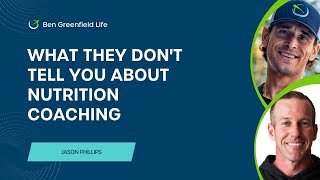
Transcript of a 2024 YouTube interview between Ben Greenfield and Jason Phillips about real-world nutrition coaching, diet trends (Paleo, Carnivore, ketogenic approaches), carbohydrate needs for athletes (especially CrossFit), and Jason’s personal history from anorexia to becoming founder/CEO of the Nutritional Coaching Institute (NCI). The conversation covers scope-of-practice for coaches vs. RDs, practical coaching strategies for underfed clients, hormone replacement therapy history, business and content strategies for coaches, training/nutrition routines, and the value of human connection in coaching.
Chapters
The average person that's showing up today, 2024, has tried eight diets, nine diets. They're probably showing up with the effects of that, but they're probably showing up afraid to consume any more than 800 to 1,000 calories. And so wherein do you connect with an individual? How do you get an individual on board to be consuming an adequate amount of calories? How do you lead them through that journey that's not addressed in the textbook because the textbook says, well, just give the person 2,000 calories. Well, what if the person is only willing to go to like 1200 or 1400? How do you navigate that? Well, the average person also comes to us. You know, if you do an intake form, what are your goals? I want to look better and I want to perform better. It's like, okay, so you want to lose body fat and you want to increase potential strength and performance at the same time. Scientifically, what the book is going to tell you is calorie deficit, but calorie maintenance and or surplus. Well, like, when have you ever navigated an individual that can be in a deficit and a surplus at the same time?
Hey, you may have heard me interview or be interviewed by my friends at Mind Pump, guys who are, who are well known and prolific in the fitness and nutrition and fitness and nutrition coaching industry. And they recently interviewed me to a guy who's been in the fitness industry for decades as a cover model, as a professional athlete, and now as a sought after fitness and nutrition coach. His name is Jason Phillips. He's the CEO and the founder of the Nutritional Coaching Institute, which as the name implies, teaches people how to be nutrition coaches. But I'll let Jason tell you more about that. You may have seen him on the COVID of various magazines. You may have seen his book Macros Explained. He has also written the book Macros Applied. He's been all over men's fitness and podcasts such as Renegade Radio and Ever Forward Radio, Mind Pump. Barbell shrugged. And of course, most importantly now the Ben Greenfield Life Show. That's really the only one we actually care about. But anyways, Jason is a guy who knows the ins and outs of the fitness industry and the nutrition industry. So I thought it'd be fun to, I don't know, I suppose, talk shop a little bit. Jason, what do you think?
Yeah, man, I'm looking forward to it, dude.
Yeah? Yeah. And you know what was funny, what stood out to me when I was looking over your bio was it says that you were the first one to educate the crossfit community on the importance of post workout supplements. That seems pretty darn specific, but I'd love to hear a little bit more of what that actually means.
Yeah, so I always say I was the most hated nutritionist in CrossFit in 2012 and then one of the most loved nutritionists in CrossFit in 2013. So if we, we kind of go back and we look at 2012, Paleo was the predominant diet in CrossFit. I think that officially HQ had maybe switched over to Zone, but you know, when you went into a CrossFit gym, pretty much everybody was talking about Paleo and you know, it just, it didn't add up to me that the stress response from CrossFit was so high and that there just wasn't enough carbohydrate in the Paleo diet not only to fuel the activity, but to recover from the activity, especially for those people choosing to compete in it. And so the, you know, it sounds really basic today in 2024, but 12 years ago, just the notion of a high molecular weight carbohydrate post workout or any sort of carbohydrate post workout to really help facilitate an attenuation of the cortisol response of the workout as well as, you know, help begin getting the CNS to a better place. Also to just really fuel and recover from the day again. It almost sounds remedial and ridiculous to say today, but 12 years ago this was novel.
So it's like the Paleo diet, which I think a lot of people know is, or at least was kind of the darling of the CrossFit community. Maybe some of it's been replaced by Carnivore. Now, I don't know. But what you're saying is that the level of carbohydrate intake on the Paleo diet, at least traditionally applied, was so shockingly low that people weren't getting the type of glycogen replenishment that they should have been getting for a highly glycolytic sport like CrossFit. And you're the person who pointed that out to them.
Yeah, I mean, in not so many words. Yeah, that was pretty much it. You know, we saw.
A lot of it too. Was CNS regulated. You know, I mean, I think that so many people, you know, primarily my work at the time was done with competitive crossfitters. So I don't want to say anybody engaging in the activity of CrossFit. So I'm going to say the sport of CrossFit. So I got people working out two, sometimes three times a day for two hours at a time. And they're doing very little if anything post workout or between sessions. And when I'm looking at their daily carbohydrate intake, I'm seeing you know, maybe 300 grams of carbohydrates. And so really getting them to understand, you know, I mean we're going deep into the nervous system into a session and, and there's absolutely nothing for recovery, let alone anything nutritionally speaking. And you know, obviously that's evolved quite a bit, but there was, there was nothing being done at the time.
And what do you mean when you say nervous system regulation? Do you mean that you are seeing the issues with under fueling of carbohydrates specifically show up when it came to measurements of nervous system health like HRV or something like that?
So not necessarily hrv, but one of the things that was starting to run rampant, the big conversation at the time was more like adrenal fatigue and I guess we better stated HPA axis dysfunction. And basically we would just see people overreaching and over training relative to the overall stimulus. You know, I mean life stress combined with training induced stress under fueling, under recovering and then the subsequent hormonal implications that showed up. You know, I mean I, I was under the guidance when I first got into CrossFit of James Fitzgerald and one of the things he talked about was like just a cortisol response of high intensity workouts.
And so basically there was, you're seeing people go harder at higher intensities, but absolutely nothing from a regulation standpoint at any time throughout the day, let alone post workout to modulate that.
Do you think people who follow the Carnivore diet now are also perhaps not eating enough carbohydrates to satisfy their training?
I can't in any way think that people doing Carnivore are going to be able to perform glycolytic activity for prolonged periods of time. I, I don't think that like I think Carnivore in the short term, you know, I, I could, I could see it working assuming like a really good hormonal profile. I think you know, back in the day you did like volix 90 keto diet and performed reasonably well in an activity, if I recall. Wasn't there something like that?
Well, yeah, I mean to a certain extent. That was part of Jeff Volek's study at University of Connecticut called the Faster study where he had a group of athletes, which I was part of, follow about 85 to 90% fat based ketogenic diet. Very Low carb diet. I mean, you mentioned 300 carbs as an example of what might not be sufficient for crossfitters. And I mean, we're talking about closer to like 50 to 60 grams of carbohydrates per day for a year. Well, engaged in Ironman training, culminating in going into the UConn lab and doing a three hour treadmill test, muscle biopsies, blood measurement, microbiome measurement, a VO2 max test and.
Indirect calorimetry. Right. Like how much carbohydrates and how much fat are you burning at rest and during exercise? And what that test showed was that for long term aerobic activity you can really almost double what textbooks at that point had said that you could burn in terms of fat grams per minute if you'd been following a high fat diet for a certain period of time and not necessarily have a faster aerobic time or better aerobic performance, but at least not see a decrement in aerobic performance. But then if you dig into the data, I mean like the RPE, the rating of perceived exertion on the VO2 max test was higher. No surprises there in the low carb athletes. You also, and this wasn't reported in the study, but this is just anecdotal and this would include me, thyroid dysregulation, decreased testosterone and libido, increased recovery time. And generally, I think the takeaway from that study is that if all you're going to do is aerobic sports, then yeah, you could get away with a pretty low amount of carb intake and high fat intake, especially once you get that long term shift into greater amounts of fat oxidation. But if you're throwing anything else into the mix, or if you want high libido, or if you don't want long term endocrine disruption, even if you're doing a lot of aerobic activity, if you're under fueling with carbohydrates, you're still going to see some issues. So I mean.
I tried it out for a few years and I think it is a little bit of an endurance performance hack. But if I could go back and do it over again, Jason, I would do more like a cyclic keto or cyclic low carb approach with at least a weekly refeed, if not more of a significant amount of carbohydrates, you know.
And so it's interesting you say that because so like a, I mean a lot of that I think is what shows up early in CrossFit. So you know, at the time, you know, a lot of these crossfit gyms were doing Paleo challenges. And the reason I think Paleo got its prominence is you take a very beginner crossfit and we understand that the majority of the training adaptation is not necessarily what we consider physical adaptations as much as perhaps neurological adaptations. Right. Like you take a brand new person, you put them in the gym, they're going to PR every day for the first six to eight months because it's just their body's learning how to move, they're learning how to lift.
I'm of the opinion we could fuel that with a thousand calories or 3,000 calories, and you're largely going to see the same response, you know, independent of even like the fuel source in those calories. And so. But as soon as we actually become efficient in the movements, that's when the fuel source started mattering. Well, these people did these Paleo challenges. They're hypocaloric, they're expending more energy than they're used to. They're pring in the gym and they're like, oh my God, Paleo is the best thing in the world. And they tried to apply that to high level athletics. And I think a lot of the things that you just described in anecdotally speaking, right, thyroid dysregulation, sex hormone decrease, you know, increase in recovery time, that's what we were seeing in high level crossfit athletes at the time. And so I went in and it was like, man, like at the very least we have to get carbohydrate in. You know, everybody thought of it in terms of just post workout supplementation, but it was really an Overall volume of CrossFit or of carbs throughout the day. Now, you know, similar to you, I think that at that time aerobic base was all the rage. And I actually preferred almost like a minimum effective dose type thing with refeeds because I think that I found people felt better and actually performed better on slightly lower carbohydrate days. But yeah, I mean, that is similar application to some degree.
Yeah. And I think there's a lot of subtle nuances to it too. For example, if you're using, let's say you're an aerobic athlete and you're using kind of like that classic 80, 20 polarized approach where, and this is kind of like a proven method for a lot of top aerobic athletes, 80% of your training is in more of like a zone 2 below lactate threshold, easily level of intensity. And then 20% is pretty screaming high above lactate threshold. And there's not a lot of in betweener work being done. Well, subtle nuances. For example, you could say, well for all of that aerobic work, sure, go high fat, go ketosis, use ketone esters, limit carbs, et cetera. And then prior to, or the evening before or even during that other 20% then you have the carbohydrates. As the phrase goes, sugar is a sometimes drug. Right. And use the carbohydrates as a performance enhancing aid. Then. And another nuance, and I'd love to hear your take on this, is a lot of times it's not necessarily the carbohydrates that were the issue. And maybe this is why the crossfitter paleo group that you were talking about felt better when they'd restrict carbs. Sometimes it's like gluten intolerances or FODMAP intolerances because a lot of the carbohydrates were of a fermentable source. Or I realize this gets really into the weeds, but maybe you're sensitive to GMOs or pesticides or herbicides or something like that that was on all the bread that you'd been eating. Or perhaps you have some type of a fructose intolerance. And so I'd be curious how many people feel good on.
I guess, a higher carbohydrate intake, but a higher carbohydrate intake that comes more from safe starches, like underground storage roots, purple potatoes, sweet potatoes, berries, honey, et cetera, versus more of a, a grain forward approach.
Yeah, I mean, I think it kind of goes into the time of year too. You know, I mean as, as you were saying, like even in like the keto diet where we introduce carbohydrate interactivity, you know, those aren't the high, those aren't going to be what anybody would consider like the, the cleanest sources of carbs. Right. Like they're just going to be simple sugars effectively. You know, I, I think that in the, in the off season of an athletic, you know, of an athletic pursuit, you're controlling the stimulus, right? I mean at the end of the day we're, we're inducing stimulus for a response, but at the end of the day we can control the amount of that stimulus relative to our recovery abilities. When we're in season, we don't control the stimulus. You know, we show up on game day and we got to do what's in front of us. And so I think there was in one of the CrossFit videos, you know, Tia Toomey once said, like, I can't wait for this to be over because I'm so tired of eating so damn much. And you know, I think that that statement was so appropriate because the majority of athletes just weren't fueling relative to what they truly needed. They were just eating on hunger or doing whatever they felt like. There were nights where I had a crossfitter at the games that had done four workouts that day. The majority of our carbs were liquid carbohydrates, just relative to how close the workouts were together. And just to get calories in, man, we're getting burger patties and sometimes just to get some things in there, like, dude, I'm used to eating fries the night before a workout. Great, go get some fries. I'm not saying that's in any way good advice, but from a caloric load standpoint and just simply getting starch in them, we had to do what we had to do.
Yeah. What about the carnivore community?
I'd be curious to hear your take on how especially physically active or athletic carnivore diet enthusiasts are getting carbohydrates. Because I've looked at guys like Paul Saladino, who's been on a podcast before, and he's now eating, seems to be like a lot of fruit and I think honey as well. But then there are other people who I think are more strict carnivore diet enthusiasts. Like I think Sean Baker is one and I honestly don't really know where or if they're actually consuming carbohydrates.
Yeah, I mean, it's funny because actually at the local gym that I go to, I go to a lifetime here where I live, one of the trainers is like, yeah, I'm eating nothing but, but meat and berries and doing carnivore. And I actually hadn't heard of berries, like making their way into the carnivore diet. I was like, I didn't know fruit was, was now part of the carnivore diet. I didn't know if that was some evolution that I missed. I can't imagine in, in classical carnivore diet that carbohydrate does exist. I mean, I mean, maybe we're getting glucose from some level of gluconeogenesis, but like, we're not, we're not directly getting carbohydrates, that's for sure.
Yeah, well, I mean, I can't think of many long lived populations or.
I suppose established civilizations who really follow a strict carnivore diet. Maybe there's some random, I don't know, Inuit whale blubber eating population or some tribe that's subsisting on fermented meat and blood, but it's pretty few and far between that you can epidemiologically identify a strict example of carnivory. Which is why I think probably a lot of these influencers who are championing a carnivore diet are all of a sudden eating whatever avocados and fruit and berries and honey and the like.
And I think effectively what you're going to see is you're going to see it evolve more or less into a paleo type protocol, which again, like, I never once had anything against a paleo type diet. I mean, I think if you trace its roots, it was more so an autoimmune diet. And, you know, to like what you were saying a lot. Why did a lot of the people, like a lot of the people initially when undertaking the Paleo diet, feel better? I do think they probably had some underlying things that, you know, you don't know what you don't know, you don't know how good you can feel until you feel that way, or you don't know how bad you feel until you feel good. And I think some of these people, it's like, man, they had never experienced life with removing some of these things that they had grown up 30 plus years used to. And so, yeah, I mean, I think you're going to see an evolution towards that. I think that quite honestly, paleo ish, and I'll use that very loosely, is a reasonable foundation for the way that the majority of people should eat. But I'll still stand by the fact that I don't think it's ever going to fuel high level athletics. But to your point, most society, the 1% is the 1% for a reason, it's not the 100%.
Yeah, I agree. And the paleo diet, I think the history of it, even though I'm not 100% sure this is correct, I'm just going to claim it to be correct, is largely driven by an interest in controlling autoimmunity. Eliminating wheat and soy and gluten and sometimes nightshades and seeds and nuts to help people relieve things like, I don't know, eczema or rheumatoid arthritis or gut issues that could be brought on by largely plant defense compounds. I mean, that's how I came across the paleo diet was my wife had horrible skin issues, acne and eczema. And this was in college. And I was already in nutrition studies at University of Idaho, but I'd never heard of this. She brought back this little. It was actually this crappy, cheesy, you know, those plastic coil bound books with the plastic cover on them and like the printed 8 1/2 by 11 title. And it was by Lauren Cordain, who I later found out was the grandfather of the Paleo movement or something like that. And it was called the Dietary Cure for Acne. And it was basically the Paleo diet. It's like, well, cut out grains and cut out dairy and be careful with these different plants and legumes. And I watched her skin transform within two to three days and she felt fantastic. And then I started talking with my clients about it and started experimenting with at least the general idea of food elimination, which at the time, I mean, my diet was what's on shot the perimeter of the grocery store and buy what happens to be on sale. Because I'm living paycheck to paycheck essentially as a personal trainer.
And so I realized there was something to it. But again, that was my initial exposure to it was, oh, you're controlling autoimmunity like eczema and acne and skin rashes and skin issues by cutting out offending foods.
Yeah, I mean, I would say since that period of time, Paleo itself, the movement has died down a little bit. But I still think something you hear referenced all the time is aip, like autoimmune Paleo. And I honestly couldn't discern the difference, quite honestly, between autoimmune Paleo or Paleo. I mean, to some degree they're the same protocols. So, yeah, I mean, it's. I always understood it to be an amazing diet for assisting with autoimmunity, and I still think it's fantastic in that application. But, you know, when we look at three distinct goal sets and something that like, we talk about it at our, you know, at nci quite a bit. It's, you know, we talk about the goal set of performance, the goal set of aesthetics, and the goal set of longevity. They're just different. Like, you know, someone that's going to live to be 120 years old. I didn't play in the super bowl and wasn't Mr. Olympia. And so therefore the diets are largely going to be different.
Yeah, same thing. And much of the chagrin of a lot of people. I think in my experience, largely females, but these days also males, higher body fat percentages are often associated with longevity. I'm not talking about the, what do you call it? Man, the healthy fat or the healthy obesity.
Idea, which I can tend to be a myth. Yeah, I'm not talking about that. I'm talking about being cut and lean and having a 12 pack ABS all year long is not synonymous with longevity. It's a stressor.
I mean, at the end of the day, we know the way to live a long time is to reduce your stressors. And you know, foundationally speaking, any navigation away from your set point is a stressor. And so a reduction in body fat is only stimulated, we know, by creating a calorie deficit. So either intentionally restricting or, or, you know, intentionally burning excess calories. And that is, that is stressful. Like whether we want to acknowledge it or not, like looking a certain way is a stressor to the body. And people hate hearing that. I mean, dude, I'm a former anorexic. I hate it with everything in me and I still struggle with it. I mean, knowing what I know, I couldn't sit here and tell you I do everything properly. But you know, it's one of those things where what I know and what my brain will allow me to do at times it's different, man.
Yeah. And I'll put a link to Jason's photo if you're not watching the video right now over@BenGreenfieldLife.com JasonP it's BenGreenfieldLife.com J A S O N P. But you wouldn't have guessed that you were formally anorexic, Jason. But what exactly happened?
Well, long story short, I graduated high school and I thought I was going to play golf for a living. I thought that was my calling. And I experienced my first ever injury and found myself like in the rehab setting and just kind of in. Honestly, like I really enjoyed the gym.
At that same time, I got approached by a modeling recruiter that was from Abercrombie and Fitch. This is 2002. So it was like every male's like wet dream to be in Abercrombie.
Oh, yeah, that was back in the days of the highly controversial Abercrombie catalogs where one of my wife's classmates was in the issue where he was like wake surfing naked behind a boat with a Christmas tree over his crotch or something like that. And you know, everybody's parents were freaking out about their kids buying Abercrombie and Fitch because it was like, you know, quasi porn. And back in that day. Yeah, yeah.
So I, I got recruited to be in the magazine. But I'll never forget, like when I, when I left the store that day the recruiter said to me, she said, hey, when you send your pictures, send, make sure you send pictures of your apps. And like, dude, again, I was a golfer. Like, I ate nothing but like burgers, Mac and cheese, chicken. Like, I was the all American, like, dieter.
Yeah.
Like, I, I ordered Taco Bell with no lettuce. Like, I hated vegetables.
And you, well, no, no, no, you, you were autoimmune Paleo before it was cool.
I was everything but autoimmune paleo. So I was the reason AIP was built, I'm pretty sure. But you know, honestly, so I went to, I asked everyone, like, how do I get abs? And you know, my pediatrician at the time, good family friend, he said, you know, it's all nutrition. You know, read the magazines and read the periodicals. And so I did, I read everything I get my hands on. And basically like, you know, 2002, everything in a magazine was like, don't eat this, don't eat this, don't eat this cardio. And so I was at Gold's Gym every day training for two hours and, you know, basically eating less than 800 calories. And it took me into a pretty dark place, man. Took me to anorexia. Anorexia took me into a pretty big downward spiral in my life, you know, so much so that, you know, each night I honestly, I contemplated. Ended my life multiple times. Yeah. Just because it, honestly, it didn't feel worth living. Like, I would go to, I'd go to my bedroom after dinner, I would do sit ups because I thought I was getting fat. And you know, then I'm like, why am I doing this? I'm not hanging out with friends. I have no, I have nothing. And like, it was, yeah, dude, it sucked. It was a gnarly place, man.
So when did the turnaround happen?
So ironically, you know, one of the things that came with that was, you know, hormonal decline. I couldn't hold any sort of job because at about 2 o' clock in the afternoon every day, I would just be extremely tired. Um, not like, it wasn't even like I desired a nap. It was like if I was on concrete, I'd lay down and go to sleep. Like, it was awful. But Gold's Gym had a job opening the gym from 5am to 11. And I was like, well, that's perfect. It's the only time I have any energy and it's the only environment I like being in. So I got a job opening the gym and one of the trainers saw what I was doing. To myself. And so there was a bodybuilder that would come in every day towards the end of my shift. He was getting ready for a bantamweight, like, national show. And he was pretty lean, but not like a, you know, he's not a fucking monster by any means. And so I was like, well, cool, like I want to look like him. And she was like, I do his training in nutrition. And I was like, can you do mine? And she said, sure. And so she told me that day, you need to eat 4,000 calories a day. Now, like, looking back on it, horrible advice.
Why do you say that was horrible advice? Looking back on it?
I mean, I don't think if an anorexic person came to me today eating 800 calories a day, my first advice would be go eat 4,000 calories knowing absolutely nothing about the person.
Oh, yeah.
You know, I think, you know, mentally there's a pretty significant chance that we gain weight reasonably rapidly. And you know, anorexics don't have a great relationship with the scale.
Okay. Yeah, it free, it freak him out. That's just too much too soon versus like a crawl, walk, crawl, walk, run type of strategy.
Exactly. So, but, you know, I put trust in it. And so it's O2. I went to, there's no calorie, you know, there's no like my fitness pal or anything at the time. And so I went to Barnes and Noble, I got a calorie counter book, and I wrote out meal plans every day. The one thing anorexics don't lack is discipline. And so I went each night, I wrote the meal plan, I made the food, I brought it with me to work the next day. And you know, three weeks later, I think I'd gained like a little over 10 pounds, maybe 12 pounds. And I remember looking in the mirror as I was opening the gym and I was like, man, I'm not fat. And, and I was like, this food thing's not, not so bad after all. You know, Shortly after that, I, I got blood work done. My testosterone level was that of like a 90 year old man.
I got put on Androgel. In between, you know, getting my calories back up and, and the cream, I actually started feeling like a normal 18, 19 year old again. And that, that's actually what sparked me getting into health and fitness, like as a profession.
At Gold's. I transferred over, I got certified as a trainer. My, my PT director had graduated from Florida State. So I, I transferred schools to Florida State, got my degree, and that Was it man, that's what got me in the space.
Wow. I want to talk more about the work that you do now, but getting on testosterone that early, did you have to wean yourself off of that or are you kind of like on testosterone for life now?
Yeah. Interesting. So when I went to school, I went to get a refill on, on it and they couldn't for the life of them figure out why I would have been put on it at 19 years old. And you know, by the time I got there, man, you know, I was at the peak of anorexia. I was £118. By the time I was in Tallahassee going to school, I was probably almost 165ish pounds, 170. And so, you know, pretty normal 19 year old looking dude at 170 pounds. And they're like, yeah, you just want steroids. And so they pulled me off and so they wouldn't give it to me. But then my levels actually came back down like so we had blood work done again. 90 days later they had come back down. The doctors were like, okay. And honestly, like I needed hrt. Ever since I've never been able to completely get off. And so I've been on Testosterone replacement since 20 years old, full time, 19 years now.
Have you tried anything like Clomid or HCG or enclomiphene or anything like that?
So I've been able recently and when I say recently, the last two to three years so like to really get my test dose down with using HCG more frequently and I actually feel better.
So you know, at one point I was, I was as high as like 1cc a week, 200mg a week.
Oh wow.
And when I got my lifestyle more in order, we started to see my numbers get as high as like 1200, which is ridiculous. And so we pulled me down. Now I'm only, Now I'm on 500 milligrams a week or I'm sorry, 100 milligrams a week. So 0.5 ccs a week. But I do use HCG three times a week.
Probably one of the number one questions that I get from guys these days is, and maybe this is because there's so many hormone and testosterone farms now, right, where you fill out a quiz and you get your prescription for your Androgel or your injectable, your enclomiphene or whatever. I mean I freaking recently sent out an email to my list about one. It was called Maximus, right? But it is very similar. It's Pretty easy even at a young age to get on this stuff. So a lot of times people ask me, well, what do you think about what Huberman says about Turkesterone? I think is one that he talks about or Tribulus is also very popular. There are these herbal strategies that seem to be all over the, you know, the Internets and the Reddit forums, etc. What do you think about those approaches?
I mean, I don't think Trib has any peer reviewed data behind it that I've seen. Maybe Huberman has, you know, new stuff that I haven't seen. I certainly haven't looked in quite some time. Turkesterone seems to be new. I haven't gone into the rabbit hole of researching that. We just, we just brought a new chief science officer into NCI and so I'd be better served to ask him on that. I mean, you know, when I was coming up, man, it was the days of, you know, Maguire and Ergo Farm and so like 1 AD and 6 OXO, 1 TU, you know, so Androstine Dion, Anderson Dial. You know, the 1 in 4 ads were the big ones. You know, I will say, like, I don't remember, I don't want to misquote, but I think it was like the, the one four or, or it was four, but it was, there was one that actually helped and then there was one that suppressed me while I was on hrt, you know, so I remember the first time I took one ad, all my friends were like, this is the best thing ever. You need it for the gains. And like I took it and I actually instantly felt like shit.
So you know, I could never explain that. But you know, to your point, man, I think that a lot of HRT is, is not well distributed and I don't think it's well controlled. I know for a long time it was my general practitioner providing it. He's like, sure, just take 1 cc a week. Here's 1 milligram of anastasol a week. He wouldn't even discuss HCG or Clomid, you know, then I went to a clinic like you described and they're like, oh well, do you want to add some deca? Do you want to add some Anavar? You know, and I'm like, listen, I'm not trying to run a cycle. You know, at this point I'm 39 years old, I got a 5 year old. Like I'm genuinely trying to feel good and be here for my daughter.
I'm not trying to be a liver king. Right.
Sorry, Brian Johnson. That was Mean, but yeah, I get what you're saying. And.
My take on all those herbal blends, Jason, is that I've seen more concrete evidence for icing the balls and red light therapy than I have for a lot of that stuff. And definitely more evidence for lifting with the legs where there's a larger concentration of antigen receptors, or sleeping or managing stress or even adequate sunlight. But I think one of the reasons they work is they do upregulate the central nervous system. They do give you energy, and they definitely increase libido. And I think there's this positive feedback loop between exercising more and having more sex and accomplishing more and a natural endogenous rise in testosterone. I think that's why a lot of people just feel better on some of the herbal products. I don't think it's a. It's a direct, steep, significant rise in total or free testosterone. I think it's an affect on lifestyle that results in a positive feedback loop for endogenous production.
Yeah, I would completely agree. I mean, I don't think we haven't seen anything stand the test of time.
There's been several that come and go that claim they're the herbal thing.
I think everything in the supplement industry is mildly cyclical, you know, and so you see things pop off, it's proven that it doesn't really work and then, you know, goes away for two or three years and then it comes back as like the next greatest thing. And, you know, I think Trip is no different. There's another one that's escaping me that was really popular for a minute that just. It didn't work out. You know, I've been, I've been behind the scenes at some supplement companies. I've sat in the office of like the president of a major supplement company and heard how they describe certain ingredients and the way they're going to market them. And so I just, I have very little faith in the majority of supplements in the absence of any kind of peer reviewed study.
Yeah.
And we just haven't seen anything hold up in the test of time.
Yeah, well, if everything's cyclical, we got what, maybe a few months before marathoning and power bars become the fad. Really high shorty shorts, big old Nikes. So the nutrition coaching. So I think you call it the nci. You and I haven't talked a lot about that, but I think, at least for my audience, I think people get confused about the qualifications or certifications or credibility of folks who they're seeking nutrition advice from. And I don't Think that social media and influencer status and people posting their meals and then their, you know, their androcarb bods has helped out much with that. So in, in your description, like, how would you differentiate between the types of people out there offering nutrition advice or even nutrition coaching? Right, between like an RD or a nutritionist or whatever?
Yeah, I think that the biggest thing to understand is scope of practice in general. I mean, I, I think it's, it's clear the only people that can provide any sort of meal planning are registered dietitians. Like, that's, that's abundantly clear. And so any, any nutrition coach that's giving you a meal plan is 100% breaking the law.
I'm going to totally apologize for already derailing you, but when it comes to that, does it differ in terms of how it's positioned? Like a meal plan that's served up as a prescription versus a meal plan that says, here's a sample meal plan that satisfies what it is that you want to accomplish without claiming, like, it's a customized prescription? Does that make sense?
Yeah, so that's, that's the way to beat it. So, you know, I, I think that a lot of times. So if we go back to, like, again, 2012, ish, like when I first came into the space, it was very common for coaches to send you a meal plan. Here's what I want you to eat. And, and that was illegal. You know, again, this is real. It's. That's kind of the infancy of the online coaching movement. So it wasn't. Well, it wasn't watched. I don't even know how well it's watched today, quite honestly. But clearly online coaching is much bigger today than it was 12 years ago. But, yeah, I mean, it's not illegal for a coach to go in and say, here's, you know, here's what I believe you should do. If I were you, this is what I think you should do. This is nothing more than me telling you what I believe to be true. Take from it, like, what you want. But what I'm really doing as your coach is you're telling me what you're doing every single week, and I'm telling you how to adjust that based on what I believe to be true.
Right.
And so it's nothing more than advice. And you really have to, you have to label yourself a coach. I mean, that's why we named our institute the Nutritional Coaching Institute. And we, we build coaches, you know, people that are there to help you navigate life effectively more so through the vehicle of what you're consuming nutritionally. And so it definitely, you know, over time, more and more.
You know, any, any cases that have gone to court, like there was one that I believe went to court in Florida where a nutritional coach was challenged. And because the person observed scope of practice, the, the coach was found that they were doing everything correctly.
Now when you, when you say they, they observe scope of practice, you mean they were able to supply meal planning advice without it being prescriptive.
Yeah, and I would actually argue most coaches in the space today aren't even providing meal plans like most, most coaches.
Like macronutrient protocols. But even, even there, you have to be super careful, man. Like I, you know, I can't be like, hey Ben, you like, your prescription is, you know, 200 protein, 400 carb, 80 fat. Like, like the way that I present this to you has to be like, based on this information, this is what we see happening with your body. If you wanted to do this, if you wanted to make the change, science tells us this, this is how I would anticipate you starting. And then it's like, here, fill out this information over the course of the next seven days, let me know what you do and then I'll help you interpret that in a week. You have to be very careful that you're not in any way creating prescriptive measures.
And that would, that would be for anybody who's not an rd, a registered.
Dietitian, Anyone not a registered dietitian, or I would assume, and again, you can't quote, quote me on this one, but I would assume a medical professional of any degree.
Okay, so at nci, the Nutrition Coaching Institute, what do you guys do exactly? Like, what are you providing to people?
Yeah, so effectively, when, when we built NCI, 2016, 2017, you know, the other certifications existed, you know, so there's JB and the guys at pn, you know, there's nasm, I think Issa has one.
And by the way, issn, that's another one. I have that one. The issn. Yeah.
So Jose Antonio. Yep, they're fantastic. And so all of those places are phenomenal in terms of knowledge. Right? And so when we built nci, I was like, man, there's people way smarter than me for sure. But there's people that are not getting amazing client results. They could, they could score 100% on a multiple choice test when it comes to nutritional knowledge, but they have no idea what they're doing in the real world of application. And so really like what we've gone out is we've taken, all right, here's the science, but here's how you apply it. In a real world scenario when clients are coming to your door, like, how do you take somebody that's tried every diet under the sun that's currently consuming 800 calories, that if you feed them more, they gain weight potentially before they lose weight. How do you connect with that person? How do you get them through that journey? How do you observe scope of practice? And how do you actually be the leader that they need? Nobody had ever bridged the gap from science to application in the nutritional space and that was really what we set out to do.
So can you give me an example of what that looks like in terms of you discovering some scientific principle or in reverse like somebody else discovering some scientific principle and either doing a good job or for illustrative examples, like a crappy job applying that to a client in a practical real world scenario?
Yeah, I think the most common one that people would connect to is like, okay, go read any textbook and we talk about fat loss, right? It's, it's going to lead you pretty straight to like understanding daily energy expenditure and then creating a caloric deficit, right? Either through some sort of mild food restriction and, or increase in activity. I think everybody can agree, like that's, that's going to be the same across the board, right? Like you, you don't need a nutritional certification to understand that. That's all over Google.
The average person that's showing up today, 2024, has tried, I don't know, eight diets, nine diets. They're probably showing up with the effects of that, but they're probably showing up afraid to consume any more than 800 to 1,000 calories. And so wherein do you connect with an individual? How do you get an individual on board to be consuming an adequate amount of calories? How do you lead them through, through that journey that's not addressed in the textbook because the textbook says, well, just give the person 2,000 calories, right? Well, what if the person is only willing to go to 1200 or 1400? How do you navigate that? Well, the average person also comes to us. If you do an intake form, what are your goals? Well, I want to look better, I want to look better and I want to perform better. It's like, okay, so you want to lose body fat and you want to increase potential strength and performance at the same time. Scientifically, what the book is going to tell you is calorie deficit, but calorie maintenance and or surplus. Well, like when have you ever navigated an individual that can be in a deficit and a surplus at the same time? And, and obviously there's semantics here, right? There's certain people that sure, like there's recon possible, there's certain people depending on their training age, where they're at their season that like you could achieve multiple sets of goals. But at the end of the day, the average person like at their current start point is probably going to reach a point of diminishing returns in their aesthetic pursuit when it comes to their performance. And how do you explain that to them?
So that's interesting. And by the way, I think that the number one way to get somebody who's not eating enough calories to get more is basically how many letters. What is a 10 letter word called nut butter? Maybe a 13 letter word called peanut butter. That's how to increase calorie intake fast. But, but when it comes to the nci, so you're basically taking people who, and correct me if I'm wrong, already have some kind of a certification like they're a personal trainer or they're a doctor or something like that, and then you're equipping them with the knowledge to be able to do the type of coaching that you just talked about.
So yes and no. So that's some of the population. So I would argue 50% of the population that comes to us is already in the fitness industry to some degree and they have some level of Nutol, some level of knowledge around nutrition. You know, there's another 50% that comes to us that they just want a career change. They're like, you know what I want to do remote work. Health and fitness has helped me in some way in my life and I want to learn how to now, you know, pay it forward to others and change their lives.
Okay. I don't know if this is a question other people are wondering, but sometimes if I'm wondering, I know there might be a small handful of other people curious about this. How much money does a nutrition coach actually, actually make? Like, is that a sole profession nowadays?
Yes. So I think I wish I actually had the tab open because I just was like going through it. So industry standard, I think for nutrition coaches and this could be off. So I'm going to give you a Delta of like 20k, I think was like 65k.
The average. So this is where like subtle flex. The average coach through NCI that has gone through both our certification program and our business development program is making upwards of 120,000 per year. So we've doubled the industry standard through what we've been able to teach in connection and application.
Okay, yeah, that's significant. Number one thing that I think I get asked, if I get asked business questions, is not necessarily how do I get smarter, how do I gain more education, how do I get more knowledge? It's more like a lot of really smart, pretty well educated, driven people out there who have a decent amount of intelligence but don't know how to market themselves. So would you say that the increase in profit that you're generating via NCI is based on teaching people how to get out there more, how to have more visibility and if so, are there any tips that you'd share that don't delve too deeply into your secret sauce?
Yeah, so I think it's a combination of a few things. I think to answer the direct question, is being a nutrition coach a standalone career first? Like it is, like I know a lot of, I mean I had my coaching practice hit $3 million before I sold it. You know, I've helped others build multimillion dollar nutrition coaching practices. So it certainly is a standalone thing. That being said, I think you only get to those levels if you possess three very specific skills, the first of which is you actually need to be, be able to create change for a human.
I think that the biggest problem in this space right now is people see the financial opportunity and they're not well enough equipped to create that change. They actually suck at what they do.
And by the way, I think one big reason for that is coaches treat everybody else like they treat themselves and assume their fitness and nutrition program is what's going to work for the person that's hired.
I completely agree, I completely agree. I mean, I consulted with one business literally that was doing over 100k a month that that's what they were doing. And I had to walk away from that consulting job because I obviously ethically didn't align. But yeah, I mean, so the first skill is obviously the ability to create change and that's super noble. And you know, I think in if we're marketing, we're like, oh, impact, you know, I mean NCI is, you know, we talk about the impact, the billion person mission. That's amazing. But you're not going to touch anyone's life if you can't get clients. And if you can't get clients, you're not going to change anyone's life in this world. So I actually think it's incumbent upon coaches to learn how to monetize their skills. But you talked about earlier being a personal trainer. Charging money for your services does not make a business. Your ability to transactionally monetize and charge somebody something is not a business. It doesn't mean that you understand top line revenue and bottom line profit. It doesn't mean you know how to maintain a P and L. It doesn't mean you understand growth and scale and any of those things. And so the third skill would obviously be understanding how to run a business. So do, do I attribute NCI's increased earnings to our marketing alone? No, I think it's, we've equipped people with multiple skills inside of that. Do we teach marketing? Absolutely. Because part of monetization and part of business is marketing.
Yeah. You know, the number one way that, that I made a name for myself and people don't like to hear my answer this when they ask me this question, but it's content. And specifically I spent over 10 years with long form content. Right? 60 to 90 minute podcasts, 3000 plus word articles that I'd be writing in the backs of taxis and Ubers and on airplanes. Content, content, content was always my model. And now I'm kind of wondering how much AI is going to disrupt that because you could obviously churn out ten 3k word articles in like what, 15 minutes now with good prompts for AI. So I'm just kind of wondering if the algorithms will change. But I mean, that was really like the number one thing that I did was I just created massive amount of content to establish expert status in my industry. And that, that still is probably the number one source of incoming traffic for me.
Yeah, I mean, listen, if I had to start over again, if you said, you know, you need to build a business that makes, I don't know, 300k in the next 12 months, I would probably spend the first 11 months trying to make $0 and, and just creating content and becoming visible and adding value. And then I would come up with a really good launch in, in month 12 and make the $300,000. I, I think people underestimate. You know, you said 10 years. I mean, that's how I first found out about you is I consumed so much of your content. You know, it's, it's one of those things where people underestimate the longevity of what they've been able to do. I've been, I remember like, you know, we, our company is eight figures and you know, like last year everyone's like, oh, like overnight you blew up. And I'm like, yeah, overnight, like I've been, I've been doing this since like just after anorexia. So, you know, it's, it's 20 years of doing things. I, you know, I think content is always going to be important. You know, to answer your question on AI, I don't think AI is going to disrupt anything for the next three years in our space. I don't a. I don't think, I don't think long form content is leveraged enough for it to be a big disruptor. I think that too many people have gone to shorter form content. They're expecting like creating reels and shorter videos to convert faster. When I, I don't necessarily agree with that content strategy. Holistically, I think it's, it's certainly part of a content strategy, but I, I think that people that adopt longer forms of content.
Will, will be better. But I also think people that are really good at what they do, man. Like, you're extremely intelligent, you know your shit and you know, you. I had a conversation with Lane Norton recently. Lane's obviously extremely intelligent and Lane didn't know how to market for shit. Lane might not know how to market now, but he's built a really big business.
Yeah.
And you know, and I told him that I was like, you know, like jokingly because he's a friend. I'm like, dude, I made more money than you faster. And you're way smarter than I. You've forgotten more than I'll ever know. And, and it's like, but I learned the marketing side and the content side faster. He, he's really good at what he does and in the absence of marketing, was still able to produce. I think that the fastest growing businesses blend the two. You're, you're extremely talented at what you do and you understand the game of, of marketing and sales.
Yeah, that's like, it reminds me of like, I don't know, Chris Masterjohn, right? He's another guy friend of mine, super smart. I would say he's really, really dialed in on content and intelligence and knowledge. But probably from a marketing and a branding standpoint, could use some improvement. I could say this about like, my dad has a company, right? They're water filters and it's great stuff, you know, imported from Tel Aviv and Germany and you know, hand assembled and it's like the Cadillac of water filters. But I would say like marketing, getting the name out there and you know, the general branding could be improved because as you alluded to earlier, a good product doesn't mean that you're making Money, you actually have to have the marketing component. And I think with the AI, I'm working on updating my book Boundless Jason, and I was thinking about this the other day. I was working on a chapter on gab and I was telling a story of me having too much alcohol and waking up in the wee hours and basically spinning this tale that was creatively written and then getting into. Okay, so if you do wake up at night, you got transdermal solutions for gaba, like a somnium cream, or you got passionflower valerian, or you could straight up go to a supplement that contains gamma aminobutyric acid and kind of weaving all this together. And I think that for content is what AI could be weak on is the personal story, the experiential approach, the oh hey, the textbooks will tell you this works. But here's what actually happens if you've had two glasses of wine instead of one the night before. And here's what to do if this makes you groggy in the morning because the AI didn't tell you, you're going to need to install a lightbox on your desk if you're going to use this solution at 3:00am in the morning so that you can wake up and be alert. Like, I think that's where AI falls short, is consolidating everything and also telling a compelling story prior to sharing that knowledge. You know, I think if you think.
Back to a lot of the content you wrote in your earlier days, very, very little of it would you consider just like purely.
Academic I guess is the word. Right. Like obviously very info packed, you know, solutions to people's problems, but always, you know, paired anecdotally with a story with something that had some level of entertainment value so that people would, you know, continue reading the article and, or listening to the podcast. You know, there's no recitation of facts for 90 minutes that is holding anybody's attention. It has to be mixed with entertainment. And you know, I think that people also just crave connection, man. Like, you know, I, I, we had Tom Bilyu on at our event last year and you know, Tom's huge on the AI movies.
Great.
And, and he's there, dude. And he's scaring the living out of everybody in attendance. And you know, my whole shtick has been that I think it's going to be hard for AI to replace eq.
Tom is of the opinion that EQ can be surmised by AI, that EQ can actually be intelligently understood algorithmically, which is mind blowing. To me, if that's the case. But, you know, I think we just. We have recent events in the world that prove that humans crave connection. And I mean, 2020, the world shuts down. Everything digitally blew up because people were on zoom. People were, you know, doing their workouts remotely. You know, 2023, the world reopens. All of a sudden, people are exiting the digital platforms. You know, I mean, ask Peloton how that worked out for them. And it's like, you know, people want that connection to another human being. And so I think if. If we leave out the human element of anything, I think that we're leaving way too much behind. And that's why I think we're still away from AI really hitting. I think AI will figure it out. I think that the people in the AI world will figure out how to weave stories and stuff in, but I just don't think we're there yet.
Yeah. And even if you do, say, have the belief that reading is going to become a more useless skill, or writing is going to, I should say writing specifically, not reading, but writing is going to become a more useless skill as AI progresses, well, I tell my sons this. If you're a good writer, you're going to be a good prompt engineer. And even if AI is creating the majority of content, if you're prompting it intelligently and interpreting what it puts out intelligently and editing it intelligently, you're still going to be ahead of the curve when it comes to creating unique and compelling content. But what about the meal plans, man? It seems to me that if you're a nutrition coach, and I don't know how this fits into the operating inside the scope of practice, maybe you do, and you're using AI possibly even more effectively than your brain to generate an appropriate nutrition plan for someone. Do you think that's going to affect the nutrition coaching industry?
Well, I mean, again, I think it's how it's delivered. You know, just staying inside, inside of scope of practice. I think that delivering a meal plan is something I would never dive into. I'll tell you, as a safeguard for me, every time I operated as a coach and when I was working with individuals, anytime we dove into meal plans, I always made a collaborative effort to where it could never be perceived that I was the one building the meal plan. And so I went in with parameters of advice. I would ask very specific questions. I would watch the person create the meal plan, and by the end of it, they would almost ask me, would you approve of something like this? I would say yes. And at that point they had constructed the meal plan. Do I think that that can be done through AI? Yeah, I genuinely do. I, I think that's something that will probably start showing up more, more and more. I think I've, you know, obviously at nci we get approached all the time with different tech platforms. And so we've had a couple tech platforms come out to us and, you know, say that they're working on AI meal planning type softwares and asking us if we have interest. So I, I know it's being worked on. I don't know where it's at in terms of actual progress, but yeah, I think that it would be a massively valuable tool.
People still want the one on one help, the accountability, the support the tribe. I mean, I have clients who I coach for fitness and nutrition. They repeatedly tell me the number one value add that they get is being able to ask me questions at any time during the day and get personalized replies. It's not, oh, hey, I'm following the fitness template you wrote or these different meals that you recommended or this supplement version. It's all, I like being able to ask you questions about something I heard in a podcast and is that right for me? Or I'm going out to a steakhouse tonight. Here's the menu. What do you think I should order? And I think it's the personal touch.
Yeah, it was one of my first big things with clients. I'm like, man, if you're out to dinner, you don't know what to order. Take a picture, send it to me and I'll help you. People are like, wow, I could do that. And also to some degree there's an element. Your clients want to make you proud. You know, we're, we're recording this between Christmas and New Year's. And you know, one of those things is like, you know, we had a lot of coaches are like, oh my God, I'm afraid to take time off. Like, my clients are going to be so mad if they can't check in with me. And I was like, you know, the majority of your clients that you reach out to and say, hey, I'm taking a week off. They'll reply back and say, I'm so happy for you because they actually want what's best for you. Your clients become very invested in your happiness as well. You know, assuming you're doing a good job. And so they want to make dad proud. Right. And so they can't wait to send that text. Check in. Oh my God, I'm down so many pounds, I'm down to pant size. I crushed it today. I, I, you know, I, I killed it in the gym, whatever it might be. There's, there's that part of it too that is non numerical, non data driven. Just, you know, human connection driven.
Yeah, exactly. And most of them are going to double down on January 1st and double or triple the amount of questions they ask you. Anyways, fine, take a week off before then. So I've got just one other thing I wanted to ask you about. You've obviously studied up on the industry quite a bit and I'm sure that you've got your own training or nutrition routines that you've assembled that seem to work based on the combination of science and experience and the discussions that you've had in the industry. So, you know, this doesn't have to be an hour long TED talk, but I'm just curious what your big wins are as far as your routine that you engage in each day. Whether, whether it's your exercise routine, your meals or certain supplements that you're just like, yeah, these are desert island compounds, that type of thing.
So I don't get into supplementation a ton. I just obviously I've been on hrt. I try to control that and maximize that. But that's really it on that side. Side. Not saying that I shouldn't or that I, that I don't think I should. I just, I haven't. You. I've spent the majority of my time really just on business development. You know, nutritionally speaking, I think that. Well, first I'll just, I'll say training. I train three to four times a week max. I found that, you know, I'm 39 now. I used to be a six day a week guy. I know that I actually get better gains. I get better adaptation. The less I train, the more I can recover. And I think some of that has to do with just my overall stress profile. I wouldn't say I go so far as to like the minimum effective dose, but I think I've figured out what the appropriate dose is. It took me a very long time to get comfortable with that. Like I knew subconsciously I should be trading less, but it was hard for me to do that. I would say I'm very comfortable with that now. I do primarily full body work. My training is more geared around.
Golf specific work. I'm actually trying to play high level golf. So I'm trying to become one of the top 20amateur golfers in the world. So that's my current Pursuit.
And by the way, you said something that was very important there, that you do full body training. And I was talking with a client about this earlier today, Jason. They're into body part splits. And here's the problem. They're a busy traveling executive. So they'll hit like whatever chest and shoulders on a Monday and then arms on a Tuesday, get, I don't know, maybe core in on a Wednesday and then take off for a week and be unable to train and come back and they've trained like half their body. Look, for me personally, my hack is full body strength three times a week. Because even if I miss a session, I've still triggered that muscle group at least once that week.
Exactly. That's exactly why I crossed over. Same thing. I just, I wasn't, I knew I could commit to three to four a week. I just couldn't commit the same three to four days each week.
Yeah.
And so it's all become full body. And honestly, I enjoy it too. I'm still making, you know, strength gains, performance gains. Mobility is a high priority for me right now. You know, I would say nutritionally, man, like I, I'm very, very intuitive. I'm not extremely numerical habitually. Given that I have a past with anorexia, I would say I error on under eating, but I also enjoy, I enjoy dinner. I enjoy kind of like ending my work day with a dinner. Now this doesn't mean like eating junk at dinner all the time, but it means like sometimes going out for a nice steak. It means sitting down as a family. Like my daughter will say she loves family dinner. And so I do. I would say I backload the majority of my calories to dinner. Maybe 40% of them are at dinner. I would say I found that the same breakfast works for me 90% of the time. And then I have various snacks that are go to's throughout lunch or throughout the day rather. And so these are things that when I'm traveling, it's the same breakfast I can get at virtually any breakfast restaurant. You know, the things that I interchange throughout the day I can find virtually anywhere. And then the dinners, I would say I probably have six or seven different options so that they don't get overly stale throughout the week. And again, these are things that I can find out, you know, and, and I would say again, almost not to champion anorexia, but like, you learn a lot about your body, you learn a lot about physiological responses and you become very in tune with how, how you feel. That was probably like the one thing. And so I'm very in tune with how I'm feeling from a recovery standpoint, from an energy standpoint, and I'm intelligent enough and objective enough to say, hey, I need more of this, less of this. Not saying I'm perfect, that I always follow it, but I at least know kind of where I sit on the.
Spectrum most of the time. Yeah, I achieve the same awareness through bodybuilding and Ironman triathlon, arguably also too pretty unhealthy activities to participate in, at least in the traditional sense of the word. But one of the things that you also mentioned, I think is really important is the family dinner and the evening social time. I'm often asked, Jason, oh, well, what's the scientific reason that you save the majority of your calories towards the end of the day? Well, I think you could certainly make a case that carbohydrates might induce a little bit of a serotonin release that causes extra melatonin and sleepiness at night. The number one reason is, well, that's family dinner night, that's social going out night. Right. Calories, A calorie at a certain point, if you save a few during the day for being able to be a lot more flexible and have a more robust social life and maybe have an extra helping as you're playing Monopoly with the kids at the dinner table, because you're sitting there for an hour and a half anyways. It's more of a life hack than it is a scientifically driven principle.
And I'm not trying to be elite, you know, with my training. I'm not trying to be elite with, you know, my aesthetics. I'm trying to, you know, my current goals. Like I said, I, I want to, I do want to be elite in the sport of golf, and I want to be elite as a father, man. I want to, I want to be the best I can day to day in, you know, for, for my family. But, you know, also.
Just I want to be here in, you know, 45 more years. I mean, dude, you know, I mean, actually an hour before we recorded this, my, my uncle finally passed and, you know, he was 82 years old. You know, I'm 39. And so, you know, I look at that from a, a mortality perspective and I'm like, man, I'm almost halfway there. You know, I, I want to live past that and, and I want to be around for the moments that will, you know, that will be there as I age. So I think that it's perspective I definitely didn't have in my 20s or my early 30s. It's perspective that I think you only gain as you age. But I'm glad that we're able to create nutritional application around that perspective.
Yeah, you're absolutely right. Two things I think are very powerful, making you question your priorities and motives and how you spend the hours that you do have in the day. One is awareness of your mortality through the passing of a loved one or a dear one, like your uncle. And I think the other one is the. And this is happening to me right now, so I mention it. It's the upcoming realization that this might be the last year that your children are living at home. And all of a sudden you're like, oh, I have so many things I still need to equip them with and mentor them about and lead them in. And for me, that's a big theme of this coming year, 2024 is doubling down on fatherhood and leadership for my sons because they're 16. I mean, you start to see that writing on the wall. And while I don't swallow hook, line and sink or the idea that whatever 90 or 95 or 99 or whatever percentage they say of the time you're going to spend with your kids is over by the time they're 18, I want to create a scenario where my kids want to come over and hang out at the house. And I see them a lot, but at the same time, yeah, it definitely makes you think about how you're spending your day and how you're mentoring your kids when they get close to leaving. Absolutely, man. Yeah. Well, Jason, you're a fascinating guy and this NCI I'm very interested in, I'm going to go explore your website a little bit more because it looks like you're providing folks with a good education. I have a lot of people who listen who are trainers and work professionally in the field, so I'm sure they'll want to tune into that as well. So I'm going to put all the shownotes@bengreenfieldlife.com JasonP BenGreenfieldLife.com JasonP Like I mentioned, my friends at Mind Pump were who originally introduced me to Jason and they have an interview with them as well that I think was really good, even though mine is better. And you can find that also. I'll link to it@BenGreenfieldLife.com JasonP so, Jason, thanks for coming on the show, man.
Dude, I appreciate it, man. I've been a fan a long time and so it's an honor to connect and an honor to be here, dude. And I also appreciate you being flexible with everything we've had going on. So thank you so much for getting.
Yeah. Sweet, man. All right, folks. Well, Jason Phillips, BenGreenfieldLife.com JasonP have an amazing week. Hey, quick thing. Most of you who listen don't subscribe like or rate this show. If you're one of those people who do, they, Ben, huge. Thank you. But here's why it's important to subscribe like and or rate this show. If you do that, that means we get more eyeballs, we get higher rankings. And the bigger the Ben Greenfield Live show gets, the bigger and better the guests get and the better the content I'm able to deliver to you. So hit subscribe anywhere you listen. It means way more than you might think. Thanks for listening, RA.
More from Ben




The Solution to Aging Might Be Closer Than Anyone Realizes - With Ben Goertzel



