WHOOP: The Performance Enhancing Wearable That Tells You When To Sleep, How To Exercise, Your...
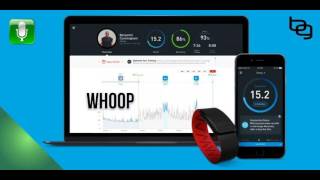
Will Ahmed and Kristen Holmes-Winn explain how WHOOP, a Harvard-born wearable, measures strain, recovery, and sleep using four LEDs and a photodiode to track heart rate variability from your wrist. The band claims 90% accuracy against clinical sleep tests, runs 44 hours between charges, and costs $500. WHOOP's data on MLB players showed recovery directly predicted performance.
Questions this video answers
WHOOP claims it samples five sensors at 100 times per second.
Four LEDs and one photodiode (photoplethysmography).
Approximately 44 hours; WHOOP provides a modular on-body charger to top up while wearing it.
WHOOP states waterproof testing up to ~30 feet (30 ft).
WHOOP stores data for up to three days before syncing to a phone.
Chapters
Whoop whoop da doop Whoop da doo.
Whoop deep da doop da doo.
Hey, what's up?
It's Ben Greenfield. I'm singing the Whoop song because this is the Whoop podcast. Why is it the Whoop Podcast? Because in today's podcast, I talk all about this thing called a whoop, a whoop wearable, which is this brand new device. A whole bunch of you have been asking me about it, and it's actually one of the more intriguing wearables that I've come across lately. I like to experiment with different things that allow you to collect really intriguing information about your body. And this one's pretty cool. So we're gonna talk about it. You're gonna discover information about body temp and heart rate variability and sleep and all sorts of cool things. So, speaking of wearables, by the way, this is the time of year when it is gray and dark in my area of the world, when you get things like Seasonal affective disorder or sad, which makes you sad. You don't get a lot of sun. You don't get a lot of vitamin D. And there's this thing that I just stick into my ears every morning while I'm checking emails on my computer. It turns on minutes and it shines into your ear blue, enriched white light that simulates sunlight. And this was developed in Finland. And what they discovered over in Finland was that you have these photoreceptor proteins on the surface of your brain. They're very similar to those that are in your eye. Like your brain can actually see light.
And they've shown that you can reach.
Those photoreceptors by shining light through your ear canals. And you can do things like zap away Seasonal affective disorder. So, you know, all of your friends and family don't want to kill you because you're just so angry all the time and depressed. It's a depressing state to be in. And I'm not in that state, as you can tell. I'm happy because I shone the light in my ears. I put LED in my orifices. But this can also be used for things like jet lag, to reset your circadian rhythm. It can be used, for example, before a party or a workout to increase energy and mood and focus. And it looks just like a set of headphones, right? It's one of those biohacking pieces of equipment that is not embarrassing, right? Like a giant globe that you put around your head or some kind of spiked mat that you stick to your back. It's just little lights that you put in your ears. And it really does look just, it looks just like headphones. Anyways, though, it's called the Human Charger. And you can check this out@HumanCharger.com Ben and when you go to HumanCharger.com Ben, you can use code B Fitness to get 20% off. 20% off. Over at HumanCharger.com.
This podcast is also brought to you by the tasty, tasty, Tasty Blue Apron. On this week's menu is pasta bolognese. I don't know if I pronounced that wrong. All the Italians are gonna kill me. With Brussels sprouts, a chicken paillard. Pretty sure I pronounced that right. With potato, fennel and Meyer lemon sauce, Lemon caper, catfish. Here's my favorite one for this week. Spicy Korean rice cakes. And these are rice cakes that come to you. All the ingredients for making them come to you. So you learn how like chop the scallions and you learn how to make this stuff called yu choy. And you learn how to make the rice cakes and you get the garlic chives and get the carrots. And it even comes with the recommendation for the Westmont Pinot Gris 2015. In case you want to pair wine with your spicy Korean rice cakes, it's this company called Blue Apron. And Blue Apron is right now the number one fresh ingredient and recipe delivery service in the US they send incredibly tasty food to your house. It's all sourced sustainably from local farms and fisheries and ranchers. You can build family bonds by cooking together. So that's right. If your family's falling apart, all you need is to cook some Korean rice cakes together and maybe throw a little bit of Pinot gris in there. Maybe a lot of pinot gris. I don't know. Depends on your family status. But anyways, you can get your first three meals free. You can try this out yourself and it's super duper easy. You just go to blueapron.com Ben. You get your first three meals free with free shipping, too. And you can see how easy it is. You get these recipe cards, you get the ingredients, boom, make it, you're done. Super duper simple. And it kicks the butt of like, you know, ordering pizza or like my family used to do, just swinging through McDonald's and grabbing bags and bags of bags of hamburgers and cheeseburgers on 39 cent cheeseburger day. We really did used to do that. Anyways, though, let's jump into today's show. I think you're really gonna enjoy this one about Whoop the wearable. Let's do this. In this episode of the Ben Greenfield.
Fitness show, we need to be agile enough to be able to program, so we can really help the athlete get the most out of the day. And I think that's where I've seen this platform be extraordinarily powerful for coaches.
Whoop will give you an objective measurement of strain and you will separately have your own subjective rate of perceived exertion. And so what happens is you have these two different numbers that you can look at. And so you may have found this yourself. There may be times where you say a workout is a 14 and whoop says it's a 14.1.
He's an expert in human performance and nutrition.
America's top personal trainer, and one of the globe's most influential people in health and fitness. His show provides you with everything you need to optimize physical and mental performance. He is Ben Greenfield.
Power.
Speed, mobility, balance, whatever it is.
For you, that's the natural movement. Get out there. When you look at all the studies done, studies that have shown the greatest efficacy.
All the information you need in one place right here, right now on the Ben Greenfield Fitness Podcast.
Hey folks, it's Ben Greenfield. Welcome to the Whoop Show. Like I mentioned earlier, Whoop Day dupe. My guest on today's show is Will Ahmed. And Will grew up playing sports, exercising. He had a lot of childhood heroes who were athletes, and he actually wound up getting recruited to Harvard and became captain of the men's varsity squash team. He was a D1 athlete, but he was also pretty surprised about how little he knew about his body. And in today's show, you're going to learn exactly what he did about that because he took a deep, deep dive into medical science. He met with a bunch of cardiologists, bunch of exercise physiologists, and kind of figured out how you can find out more about your body, whether you're an athlete or just a fitness enthusiast or an anti aging geek or a consummate biohacker or just someone who's obsessed with self quantification. Will also has a special guest on along with him and I'll let him intro that guest. But prepare to hear Will's cool story about how he figured out how to self quantify his own physiology and his own performance. And then what he's gone on and done since then in terms of developing pretty cool self quantification tool that I think you're going to dig. So Will, welcome To the show, man.
Hey, Ben, thanks for having me. And I'm lucky to be joined here as well by Kristen Holmes. Winn. Kristen is our VP of Performance Optimization. She works with a number of elite athletes across professional, collegiate, and Olympic markets. And a rock star athlete and coach in her own right. So she was an all American field hockey player in her day and as well, 12 time Ivy League champion at Princeton University as head coach and also won a national championship as head coach at Princeton. So she'll also be able to tell us a little bit about her experience with technology and how she's been working with athletes today.
Nice. Well, not only are you guys slackers, complete slackers, Ivy League athletes and beyond, but you also play two sports that you could definitely kick my butt in. Both squash and hockey are sports I have not taken a deep dive into. And if you put a tennis racket in my hand, I might be able to give you a run for your money, but definitely not squash. A squash racket?
Is it a racket that you use?
Yep. Squash rack.
Yeah. It's like a badminton racket in a way.
Right.
It's a game similar to racquetball in terms of look and feel, but it's a much softer ball, more cardiovascular in terms of intensity.
Nice.
Oh, and Kristin, by the way, welcome. Didn't mean to ignore you there.
Thank you so much, Ben. It's an honor to be on the show.
All right, cool. Well, for those of you who thought.
You might have trouble telling Will and Kristen apart, that was Kristen who just spoke. So just clearing that up. So, Will, speaking of squash, you were captain of the squash team and you were trying to figure out more about your body, right?
Yeah. So being a college athlete was a pretty fascinating experience for me. And as a student athlete in general. Right. You're balancing so many rigors across exercise and studying as a student and socializing with friends and going out and everything else in your life. And you're training as much as three or four hours a day. And so for me personally, I was someone who used to over train almost every season where you keep pushing, you keep pushing, you have these moments where you feel incredibly fit and then all of a sudden it hits you and you're like run down for a week or sometimes even longer. And that feeling of fatigue really got to me where I just wanted to better understand how could I prepare my body to perform optimally. And furthermore, given how much time and energy and money goes into sports and exercise, shouldn't we know so much more about our bodies? On a general level, and then even the experience of being a captain of a team, I realized how team based, all the practices and schedules were where you're treating almost 10 or 20 athletes as one. And that got me thinking too, like, shouldn't this be so much more personalized, Individualized, right, as you think about a training plan. So for me it was getting really interested in, and to your point, self quantification, physiology, cardiology. I met with a number of cardiologists and physiologists while I was at Harvard. I read something like 500 medical papers, such as just this incredible deep dive, which was unfamiliar territory for a government concentrator in school.
You weren't studying physiology in school, you were studying government.
Yeah, I was studying government and economics. And next thing you know I'm in the science department geeking out over HRV and other so called secrets really that your body is trying to tell you. And it was through that process that I wrote a paper around how I thought you could continuously understand the body. And I also met my now co founder, John Capalupo, our cto, our chief technology officer. And John was studying the hardest math classes in the country at Harvard. And as it turns out, his father is a professor of exercise physiology. So we had this like clear, you know, marriage around physiology and he really had the technical chops to implement a lot of things on the engineering side. And I had a vision for how I thought this could help coaches and athletes. So that was about four years ago. We started the company out of the Harvard Innovation Lab.
You know, and the company is called Whoop, right? W H O O P. Whoop.
Yes, absolutely.
Why'd you guys call it Whoop?
Well, we wanted a name that was energetic, that made people smile. In college, people would talk about sort of their different whoop levels in terms of how prepared they felt for the day or for the night. And you know, it was something that made people smile. And so, you know, all the feedback that we've gotten on it today has been terrific. And it seems to be a name that people love.
And you haven't gotten any cease and desist orders from the whoopee cushion people?
No, no, they don't seem to know much about us yet. I think performance and the cushion market are still somewhat separate. Although we may find things about the right options for your environment.
You never know when the self quantifying fart pillow might come out.
This whoop that you wound up developing. I mean, from what I understand, you guys have like 50 engineers and designers and data scientists now over in Boston working on this thing. But what exactly is it? I mean, in full disclosure, everybody listening in, I own one. You guys sent me one to play around with. I've been messing around with it for a month, syncing it to my phone, seeing how it does, tracking my sleep, tracking what's called my strain, et cetera. But I'm trying to wrap my head around what sets it apart, because as you guys know, if you were to go to like the Consumer Electronics show, there are 8 billion devices out there that all claim to be like the next big thing when it comes to self quantification. So what are the key defining characteristics that set the whoop once a wristband apart?
Yeah, so whoop, at its core is really focused on performance. It's really focused on working with athletes. And we really want to position you to be the most optimal version of yourself. And I think a little bit of that lens is a key differentiator in its own right. And then on top of that, we summarize the world in terms of strain and recovery. Right. And recovery is probably the single most important thing that we're bringing to market. So you can think of strain as the intensity of a workout or the intensity of your overall day, and you can think of recovery as how prepared your body is for strain. So if you have a higher recovery, you can take on more strain, and if you have a lower recovery, you may want to take on less strain. And so if we go back to my college anecdote, in college, I was probably someone who, woop, would have told, was run down, but was consistently taking on a lot of strain. And so that recovery piece, Ben, and I'm sure you found this yourself when using the product, is pretty differentiated in the market. We measure heart rate variability continuously, which goes into it. We have super accurate sleep now, measuring.
HRV continuously throughout the day.
You got it.
Okay. And that's on the wrist.
Yeah.
So we're one of the first companies to be able to accurately measure heart rate variability from the wrist. We do it continuously. And I think part of the differentiation too, from a hardware standpoint is that we're sampling five sensors 100 times a second.
So we're looking at heart rate, heart.
Rate variability, capacitive touch, which is sort.
Of the relation of the sensor to.
Your skin, ambient temperature, which is the temperature in your environment, and accelerometry, which is effectively movement.
Okay, got it. So you've got continuous HRV measurements throughout the day that are done from the wrist. And I actually Want to ask you a little bit more about that in a moment. You've got heart rate. What are the other things that this thing is measuring as I'm wearing it during the day?
Yeah.
So again, all the sensing rolls up.
To strain and recovery and sleep. That's how we like to summarize the world.
And there's incredible depth in which you can go through those different scores. So within strain, you know, you'd be able to look at your maximum heart.
Rate or your resting heart rate, or.
Your average heart rate, or your calories.
Or if you had your phone with.
You, distance traveled and time and pace.
For any given activity.
If you're looking at your sleep, you'd be able to understand the quality of your sleep through hours. You'd be able to understand your REM.
And slow wave and light and awake.
I mean, not all cycles are created equal, as you know. Well, Ben.
Right.
The more slow wave and REM you're getting, the better. So having a real granular understanding of that is critical. We look at microarousals over the course of the night. So are there certain things.
Microarousals. That sounds interesting. Is a microarousal what I'm thinking of or something different? Yeah.
And they also go by disturbances.
Okay, gotcha. So that's all good and well in terms of the strain and the recovery, but what are the actual parameters? Because my listeners are geeks, they like the nitty gritty science. So what are the actual things that are being measured to tell someone their strain? And what's being measured to tell someone their recovery? Are we talking about like skin temperatures, skin conductivity, accelerometer data, oxygen or lactate? Like what is it actually measuring?
A lot of the value of the technology is that it's using a number of sensors at once to triangulate a specific number for you. So Whoop has really optimized ppg, which is photoplesmography, and the sensor technology around that.
Photoplasmography.
Photoplesmography, yeah.
Okay.
And so we have four LEDs and one photodiode along with the three axis accelerometer, the capacitive touch sensor, the ambient temperature sensor. And we look at all this sensor data alongside the activities that people are doing. And we do a lot of data collection as well alongside electrocardiograms, chest straps. So we really want to calibrate our technology as closely as possible to, you know, the gold standards in the market. And so from that standpoint, we've been able to create the most accurate wrist worn device Which I'm sure you've seen a little bit in your testing.
So what is. I want to. I want to back up here and go into some of those things, some of those big words you just threw out. Photoplasmography. What is a.
In simple terms, it's light shining on your skin, right? So if you look at the underside of the sensor, you'll see green light. And we've done all sorts of testing to look at how light reflected from the inside of your skin and correlated with your capillaries firing actually equates to accurate heart rate. And we look at that as well alongside a motion artifact, alongside ambient temperature, alongside the capacitive touch.
What's capacitive touch?
It's effectively measuring whether the sensor is on your skin. So it gives a separate reading in terms of how well oriented it is to your body, and it adds or removes confidence associated with any statistic that we give you.
Now, you also talked about a three axis accelerometer.
What is that?
So we're measuring the range of motion that is moving on your wrist. So if you go up and down, you're talking about x and y and Z axes in terms of relation to the ground or your body or anything else in your environment.
Okay, got it. So using all these different sensors, this photoplasmography, the accelerometer, the touch sensor, and the temperature sensor, what is kind of like the full list of physiological parameters that this thing is measuring? I'm just curious. I'm still not.
Fully up to date.
On exactly everything that I was measuring.
So we'll summarize this across the three pillars of strain, recovery and sleep. Okay, so within sleep, we'll give you your heart rate throughout the night, we'll.
Give you the disturbances over the course of the night. We'll calculate automatically how much time in bed you spent and how many hours of sleep you actually got. And then within the hours of sleep.
That you actually got, we'll calculate rem.
So the amount of time you spent in rem, the amount of time you spent in slow wave sleep, light, and then also the amount of time you spent awake. So that's within the sleep pillar.
Now, before you go into like strain and recovery, a lot of other devices do that. Is this thing like more accurate than other devices? Have you ever compared it against a sleep lab? Like what. How is that any different than what any of these other sleep tracking devices do?
Yeah, so a number of products fail to be able to measure cycles. Right. So if you look at a product like Fitbit, for example, it won't be able to go into the sleep cycles. And part of what's valuable about looking at sleep cycles is they happen to be the most important time to capture heart rate variability which other products don't actually measure.
So we look at your heart rate.
Variability benchmark during the last five minutes of your slow wave sleep and then we baseline that to you. So slow wave sleep and REM sleep, the transition between those two periods is when your body's restoring. So you have to be able to measure those things to really understand restoration and then you have to be able to measure heart rate variability to really understand recovery. And so that's where we're able actually to get at are you recovered? So so much of the data that we collect is really getting to sort of these key questions of are you prepared to work out is your body run down? And as you can see, it takes a number of layers of technology to get there. Right. So it's not just that we're measuring sleep, it's not just that we're measuring then slow wave sleep within cycles, it's that we're actually able then to look at the last five minutes of slow wave sleep and measure heart rate variability and then Compare it to 3 day and 7 day and 30 day moving averages to really understand for you how recovered your body is at this moment.
Got it. And how accurate is it compared to just like going into a sleep lab.
Yeah. So if you look at, and by.
The way, sorry to interrupt, but one of the reasons I asked that is I've heard, you know, like the Fitbit, the jawbone, a lot of these devices, we're talking like 60 to 70% accuracy which is not that high.
Yeah. So We've seen over 90% sleep wake agreement and that's calibrated against.
The PSG machines which is the highest regarding for sleep lab accuracy. So you know, I think it's the most accurate wrist worn sleep analysis that you'll be able to find.
And although we don't, we don't, you.
Know, sort of take credit for being able to measure sleep apnea. We've actually seen people who have had such questionable sleep results on our platform that they've gone and gotten tested and it turned out they had sleep apnea. So there's some cases where you'll actually notice something about your sleeping behavior that may take, you know, additional follow up steps. It's amazing. We've worked with professional athletes, Ben, who are like half a step away from being, you know, the next star in a league and they spend, you know, nine hours in bed and they get three hours of sleep. I mean, it's like they're playing drunk.
I'd get up and watch tv. Yeah, no, I actually wouldn't get up and watch tv. I'd probably read a book or wander around and eat something. But, yeah, that's.
Well, in a lot of cases, they don't even know it. They don't realize how poor their sleep efficiency is. So I think from an accuracy standpoint, what makes whoop different is that, look, it can tell you these things in pure transparency.
I think it's really interesting, the part about sleep apnea. Does it actually measure oximetry, like your actual blood oxygenation during the night? Because in the past, I've recommended to folks to get like one of those constant pulse oximeters that you put on your fingertip that will monitor your oxygen levels throughout the night so you could see if you're dropping low in oxygen throughout the night. Does the whoop measure oximetry at all?
We currently don't report on it, although there's a number of things that are in our, I would say, research pipeline, and that's one of them.
Okay, got it. So it's. So which of those things you talked about, like the photoplasmography or the sensors, would those be able to, at some point in the future, measure oximetry, or do you have to build a different sensor into the device?
There's a number of optimizations that you can make from using photoplasmography. And today, actually, one of the main ways that pulse oximeters work is through photoplasmography. So it's similar technology, and a lot of it comes down to really smart data analytics and signal processing. Unfortunately, that makes up most of our team.
Gotcha.
Hey, it's Ben Greenfield. I want to interrupt today's show to tell you that every once in a while, I personally assemble this arsenal of over 300 bucks worth of fat loss and recovery and performance enhancing gear and supplements and biohacks and books and clothing, even. Even some Ben Greenfield fitness clothing and Greenfield Fitness Systems clothing. And I ship this all to your front door, and I ship it all to your front door for half the cost. So I take 300 bucks worth of gear, you pay 150, and it's like Christmas any time of year. And when you open the surprise gift box that I send you, you get instant access to all this cutting edge nutrients and smart drugs and biohacks, all sorts of stuff. It's shipped free anywhere in the US and it's super duper simple. All you do to grab a surprise box is you go to greenfield fitness systems.com when you go to greenfieldfitnesssystems.com, it's one of the first things that you see there. You could also just like use a little search bar to search for gift box. Super duper convenient to just get like a done for you box sent straight to your house. This podcast is also brought to you by a brand new form of coffee I've been messing around with. It's called green coffee. So green coffee, being unlike some of the regular roasted coffee beans, actually reduce the absorption of carbohydrates. So they help to lower blood sugar. Especially when you have green coffee before a carbohydrate rich meal, it limits insulin spikes. And what this company has done is they've blended up the green coffee with maitake, which is a mushroom that does the same thing, lowers blood sugar levels. So we're talking about something very similar to like the diabetic drug metformin, except it's in coffee. So you get this little packet. It's got 450 milligrams of really high quality green coffee bean extract. And about 45% of that is what's called the chlorogenic acid, which is the main active ingredient in green coffee beans that allows it to do things like control your blood sugar. And then of course, that's blended with maitake. It tastes amazing because they add chaga mushroom, which not only strengthens the immune system but lowers the acidity. And all of this is made by a company called called four Sigmatic. Four Sigmatic, that's F O U R Sigmatic. And you can check them out over@foursigmatic.com GREENFIELD and if you use code BENGREENFIELD over@foursigmatic.com greenfield then you get 15% off. And this is what I'm recommending you order. Like this month is this mushroom coffee mix. It's called green coffee with Chaga. And Maitake. Coffee will never be the same and neither will your waistline. I made that slogan up myself for free. This podcast is also brought to you by ZipRecruiter.com so when people want to find a job and they go to ziprecruiter.com they could search for any job. Let's say I want to search for a job as a. Well, heck, speak of the devil. Let's say I want to be a coffee roaster in Seattle, Washington. So I could go to ZipRecruiter and they're all 17. I just did a search, 17 different coffee roaster and barista jobs that I can just search for and get plugged right into over at ZipRecruiter. And if you're trying to hire somebody, this is really cool because it means that you just post your job. And what ZipRecruiter does is they distribute your job to all these different top job sites, like 200 plus job sites. So you can find candidates in any city or any industry around the nation. And you can quickly screen, can you candidates. They've got this cool little dashboard. You rate candidates. There's no juggling people like emailing you and calling you and annoying with you when you post that job description. It's just all kept over@ziprecruiter.com over a million businesses are using it right now. So you can use it for absolutely free. Absolutely free. You just go to ZipRecruiter.com first. That's ZipRecruiter.com first. And you too can get very, very cool employees for your business with none of the heartache. So check it out. And now back to today's episode.
Kristen, what goes into measuring strain?
So we talked about sleep.
What about strain?
Yeah. Strain is a measure of cardiovascular exertion. And we kind of use the Borg scale loosely to kind of plot you on a kind of 0 to 21 scale.
Okay, so you can think of the Borg scale, Ben. Right. As the best way to rate perceived exertion.
Yeah, it's.
It's not a one to ten scale. It's like six to 20, right?
Yeah, it's logarithmic. Think of it like it's not linear. You know, I think that's a lot of people view it in those terms, but it's, it builds like over time.
Right.
When you, when you say it's not linear, what do you mean?
So if you work out for an hour at the same rate and you get a 10, and then you work out for another hour at the same exact rate, you won't end up with a 20. Right. That would be linear. It's an exponential curve in that your strain over time, it gets harder and harder to move up on the scale. And the way the score was created, Ben, is by actually looking at individuals baselines. So we took a number of athletes across all sorts of different sports. And now at this point, we've done thousands of athletes and we looked at their baseline information. So their resting heart rate, their maximum heart rate, their heart rate variability, their anaerobic Threshold. And we had them wear chest straps, and we had them work out and then tell us what they thought their rate of perceived exertion was for a workout. And this is in the Harvard Innovation Lab. And so what we saw is you spent X amount of time in these different ranges of your maximum heart rate zone, and you called the workout A12, or you called the workout A16. And Borg actually spent a long time determining that if you called a workout a light workout versus a moderate versus a maximal workout, all of those things actually could correlate closely with a number of. So he did the research on the psychology, so to speak, of what you would actually call a workout. And then we extrapolated on this by tying it actually to physiological information. So the benefit today is that when you work out, WHOOP will give you an objective measurement of strain, and you will separately have your own subjective rate of perceived exertion. And so what happens is you have these two different numbers that you can look at. And so you may have found this yourself. There may be times where you say a workout is a 14 and Whoop says it's a 14.1 and it's in lockstep. And there may be other times where you say a workout is a 12 and Whoop says it's a 16, and that may be a sign that actually you were peaking physically. Right. Actually, the workout felt a lot easier than the objective strain that you put on your body. The opposite is true too. Right. Where if Whoop said a workout was a 12 or a 13 and you said it was a 16 or a 17, which would be higher strain, then it's a sign maybe your body was run down or you were doing a workout that you were less efficient at.
Why wouldn't you just look at heart rate variability to determine that? Like, look at hrv. See, the HRV is low and say, oh, hey, you're beat up versus, like, going through all this RPE and heart rate measurement.
Well, so we look at your HRV the morning of. Right. So we'll take your heart rate variability before you do any of these workouts. So we'll actually.
And it's automatically measuring HRV for those five minutes before I wake up. Yeah.
And that's a lot of the differentiating things. There's no chest straps, there's no wake up, press an app, breathe for five minutes. It's completely automated. And by being automated, as you know, Ben, it gets a lot more accurate because you're comparing it to your baseline.
Mm, interesting. Okay, so what aboutso You've got the exercise strain, but then what about just the strain? Cause you've got this other measurement that I notice, it's telling me which is the strain for my whole day. What's that made up of exactly?
So that's looking at over the course of the day, what kind of strain are you putting on your body relative to all the other workouts that you're doing? Right. So whoop. Just looks at overall time from the minute you wake up to the end of the day. What sorts of exertion levels are you.
Putting on your body using heart rate or heart rate variability or both.
It's looking at all of our sensors again. Now, the main readout in that case is heart rate. But everything that we do, mind you, is triangulation of five different sensors. So heart rate is something that plays a key role in our strain measurement. And what we'll say is, okay, we'll look at maybe stress that's accumulated throughout the day, maybe various activities, maybe.
Working out, obviously exercise. I mean, that's a main driver of strain. And what's interesting too is that you have athletes who have a low recovery and they know they need to rest. And so they would think in the past that rest meant like, oh, I can go out and see my buddies at a bar or I can play ping pong for an hour and a half. And they didn't actually realize that they're accumulating strain by doing these things to their body. And so the day strain metric actually helps you really optimize for days when your body's with a lower recovery and you want to give it the ability to rest.
Okay, got it.
We have athletes who set targets for workout strain that may be high. And we also have athletes who set day strain targets that are low because they want to make sure their body's recovering.
Is there a way for the whoop to like, when I open up the app, let's say at the beginning of the day, can it just tell me, hey, you should make this an easy day or this could be a hard day.
Yeah, a lot of that feedback is built being built into the consumer product. So the aspirational athlete who's listening to this, you know, if you're someone who likes to train regularly and, you know, wants to compete in events or, you know, up and coming high school athlete, you're an endurance competitor, maybe, or, or you're someone who works out at the gym regularly or one of these different fitness cults. I think this is a product that can help guide your big Workouts and also can tell you, hey, you don't need to go today. You're better off resting today than actually exercising. I mean, it's funny. Whoop is the first fitness product to tell you not to exercise.
Yeah, it's really interesting. Or at least to take it easy, right? To do yoga or sauna or something like that. Now, what about recovery? Because we talked about the sleep measurements, the strain measurements, but what goes into the recovery measurements?
So with recovery, we're looking at your whole.
And by the way, sorry to interrupt, but I feel like we're ignoring Kristen. So, Kristen, if you want to jump in, just feel free to, I suppose, shut your boss up and talk if you feel like it.
Well, I want to turn this over.
He's not a roll.
He is on a roll.
I want to turn this over to Kristen to talk about how she works with athletes around recovery, because I think it's so important and so interesting. I just want to quickly say the way we capture recovery is by looking at heart rate variability. And that's by the way, that's the statistic that we're measuring during slow wave sleep. It's this lens into your autonomic nervous system for the first time. It's going to be calculated automatically for you.
Right.
And then we look at three day averages, seven day averages, and 30 day moving averages. So the longer you're on Whoop, the smarter it's getting in terms of understanding who you are. And we also look at your resting heart rate and how much sleep you're getting relative to the sleep that you need. So again, it's looking at number of sensors, and that number of sensors roll up into a number of statistics. And then it's weighting different statistics over time to try to give you one number that explains what you need to do, which is this score. 0 to 100%. Red, yellow, green. How ready am I to go?
Wait, when you said the amount of sleep, you said it'll track your recovery or make recovery recommendations. The amount of sleep needed versus the amount of sleep you got. So this thing, and this is something I noticed, I didn't quite understand, like it would tell me, hey, you should go to bed at this time. You should get up at this time. This is how much sleep you need this night. How is it figuring out how to tell me how much sleep I need each night?
So that's one of the. I mean, one of the ways that we designed the product was to try to have it live a step ahead of the athlete. Right. So you wake up in the morning, you've got a recovery. That recovery is telling you how much strain potentially to take on your body. Over the course of the day, you accumulate strain. Then actually at the end of the day, we look at the strain that's accumulated on your body and we say based on who you are, based on how much you've been working out, based on the sleep debt that's accumulated, this is how much sleep you need for tonight to recover for tomorrow.
Yeah, I've actually never seen a device do that, like, tell me how much sleep I need based on where I'm at.
Yeah. And Kristen, have you seen that where by telling athletes how much sleep they need, there's actually some kind of a mindset shift that may take place?
Yeah, I mean, I think our athletes don't know how little sleep they're actually getting. And I think that's what's been illuminating for many of the NC2A athletes we work with and professional athletes is just this realization that, wow, I'm not giving my body enough time to restore and regenerate in a way that's going to allow me to optimize my performance the next day. So we've seen a huge behavioral shift in all of the athletes that we work with around sleep in particular. And because of this is such a huge input to our recovery score, we've seen athletes ability to recover improve. And I think that's what's been really impressive about the platform is really the behavior modifications that just exposure to this data has enabled our athletes to make.
Will it take into account whether or not I've napped in terms of calculating how much sleep I need that night?
Yeah. So, whoop. Will auto detect naps as well if they're over 30 minutes in terms of, of actual sleep, how does it know.
If I'm napping versus, like, sitting on an airplane?
Well, again, this is the brilliance of triangulating across a number of different sensors. So, for example.
The difference between lying on a couch with a low resting heart rate and no movement and sleeping in a bed with a low resting heart rate and no movement is that in the course of falling asleep, your core temperature drops and you emit heat. So by being able to monitor things about heat and by being able to look at heart rate variability, all of a sudden you have an immediate understanding, wow, this person just fell asleep. So that we wouldn't be able to do that with any one sensor. But by measuring five sensors, you start to really understand the body and you.
Have to actually be asleep for 24 minutes in order for it to get recorded. I think that's kind of an interesting piece.
Yeah, gotcha. One thing that I thought was kind of funky was like, sometimes it would tell me go to bed at 11pm and get up at 7pm and that kind of flew in the face of what I know about circadian biology. Right. Like you're ideally, you know, by 2:00am you should have been asleep, you know, for about four hours to allow your body temperature to come down, you know, to allow for adequate leptin and melatonin release, et cetera. How do you determine the reference of how much an athlete should adhere to normal circadian biology that we know humans are like, ancestrally hardwired to be in versus what the device is telling you? Because I thought that was weird a few times when it would tell me, like, go to bed at like 11:00pm yeah.
So we generally defer to circadian rhythm and the mindset around it. And there's a long history of medical literature to go with it. A lot of this, Ben, is also just optimizing for you. So in the interface, you can actually change when you want to wake up. So if you're telling us that you want to, you can wake up at 8 or 9, then as a result, we can tell you that you can go to bed a little bit later. But for a lot of people, going to bed early is a challenge, even though it may be optimal for their sleep performance. So a little bit of the sleep coach is dedicated to actually allowing individuals to optimize what works within their schedule. You might be on a plane or you might have to get up early for a certain meeting. And we want to make sure that you're also getting the appropriate hours of sleep. So what you'll notice is that you can actually change. Do you want to peak tomorrow, perform tomorrow, or get by? And that'll actually adjust how much time we say you need to spend in bed.
Yeah, I saw that. That was really interesting. So if you know you're going to be like at a conference all day, the next day, just like sitting around versus you have a game or practice or a hard workout, it will adjust the amount of recommended sleep.
Yeah, I mean, one thing that I've noticed with athletes and Kristen, you may have seen this too, is like, they think of sleep in such binary terms where it's like, okay, tonight I'm going to get a ton of sleep because I've got this game tomorrow. But it actually doesn't matter that yesterday I got like two hours of sleep. And was pulling all nighter for a paper. So a lot of that sleep coach.
Is designed to get people to get just enough sleep as much as it.
Is to get them the sleep to optimally perform. And we've gotten a lot of good feedback, I think around how you can sort of navigate that based on your own lifestyle.
Gotcha Helps reduce the binge sleeping mentality, you know, where you think you can kind of make up for lost biological sleep, which we know is not possible, you know, so I think it does like prevent, you know, because we monitor debt, accumulate sleep, debt accumulate and we can see that accumulation happening or the user can see that accumulation happening.
Kind of gets them or helps them maybe just change their modifies their choices, I guess instead of maybe just sleeping for two and saying, okay, next tomorrow I'm going to sleep for 12 to make up for it. They're like, okay, I'm going to sleep six tonight and maybe seven tomorrow or six tomorrow. I think that's. We've seen modifications in that area too, which I think are helpful.
Now one big thing I noticed that you guys are doing is you're working with teams, you're working with athletes. A lot of devices, they're catering to the fitness enthusiasts or the self quantifying nerd. But it looks like you guys are doing a lot with like, you know, I noticed Will recently had an interview with Major League Baseball where you guys worked with a bunch of baseball players. What is it that you do in terms of uniqueness when it comes to athletes or teams and the ability of a coach to look at data of a group of athletes, for example?
Yeah. So I think first of all, just again, the basic analytics of strain recovery and sleep really speaks well to the coach and the trainer. So that mindset I think is the right framework for an athlete.
Right.
We don't measure steps, we measure strain. Right. We really look at your body's recovery. So that speaks to athletes separately. We've built a team dashboard that allows for actually like 27 different layers of privacy in terms of what can be shared between.
An athlete and a coach. And that's a really important detail here. As you think about super personal information that can affect performance, is how do you create an environment that makes coaches and athletes both feel comfortable using a product. We spent a lot of time working closely with athletes to make sure that we did create something where they'd be comfortable wearing it all the time and.
Both parties, both the coach and the.
Athlete would see value in it. And Kristin, I mean, maybe talk a little Bit about just how have you.
Seen coaches react to sort of for.
The first time being able to see like, oh man, like here are all my athletes and how recovered they are.
Because I think that's so much of.
The value of the team dashboard.
Definitely. I think everyone has different challenges. I think there's lots of different ways to kind of measure HRV and timing wise. But I think being able to wake up as a coach and have an understanding of how well recovered or not recovered every single one of your athletes is, it just helps you plan so much better. And we've certainly seen that with the coaches who are using the system and using the data to kind of modify training plans. But I think it's just the mindset around that you can't just train everyone the same way anymore. And I think coaches who are doing that are really missing an opportunity to optimize the individual potential of each athlete. Every athlete is going to experience training in a different way and are going to have different lifestyle choices, therefore are going to recover differently and, and we need to be agile enough to be able to modify programs so we can really help the athlete get the most out of, out of the day. And I think that's where I've seen this platform be extraordinarily powerful for coaches, is just being able to customize. When you've got a team of 24 athletes, for example, be able to customize training so you can help the athlete capitalize on recovery or pull them back if they aren't ready to take on a lot of strength.
So if I'm like, let's say I'm a coach and I've got like 20 basketball players and they're all wearing the whoop, you know, during scrimmage, during sleep, et cetera, how do I actually go in and look at each of those athletes scores? Is there like an online dashboard that I can log into as a trainer or a coach to just automatically get a glimpse of each member of the team?
There's a dashboard that kind of displays, you know, really anything that you want to see around the metrics that we've talked about, talked about for each individual athlete or each individual, you can see everyone at the same time. So it really does give you an awesome picture of, you know, and it's color coded so it's really clear. You've got green, yellow, red. And then you can kind of dive in and look at a little bit more detail around the different metrics. If someone, for example, is in the red, well, what's going on? And Is this in isolation or is this trending? You know, you can kind of certainly make better decisions or have a lot more insight in order to make better decisions for the athlete for the day. Because I think the numbers in isolation on a one off aren't necessarily actionable, but when we see them bigger picture, that's I think where the insight becomes really valuable.
Okay, so I can see like my point guard is at a green for the day, but my center is at a red or a yellow.
Yeah, exactly.
And so instead of necessarily having both the center and the point guard doing the same exact workout today, maybe you scale it back for the center or you think about recovery modalities.
Yeah, or the center is going to get like 9 hours of sleep versus the point guard would be prescribed 7 by the built in sleep coach.
Yeah, there you go.
Okay, got it. Now, in terms of how that works out for like a coach or a trainer, you know, I've been using it as an individual, but is there some kind of like, like a subscription based service that you sign up for? Would a coach like pay for something like this and then all their athletes buy a device? Do you guys just like have like team packages that you ship out to a personal trainer, to a gym or a coach? Like how does that work?
Yeah, so that's, that's a lot of the work that we've been doing to date, Ben. I mean we, we started working with professional teams, collegiate teams, and you know, like you saw recently with Major League Baseball, we just conducted the largest performance study actually ever conducted by a pro sports league with them. So that's, that's the platform that we're describing where you have coaches looking at 20 to 30 of their athletes every day. And what's amazing is actually just how much time they're spending on the platform. So on average up to 30 minutes per day looking at the Whoop dashboard to understand their players data.
And so I think what you're seeing.
Is this like mindset shift around how to treat athletes, how to train athletes, and it's going to be a lot more physiological and a lot more data driven going forwards.
Why is it when I open up the app and I go into my day that it asks me questions, like it'll ask me when I open up my sleep, like whether I shared my bed or if I had sex or if I looked at my screen before bed. What's the app actually doing with all this data that I'mthat I'm feeding into it each day that I use it?
Yeah. So all that information we keep private to the user and we do ask questions after you wake up in the morning, after you receive a recovery, and then also after you work out, that information can actually be used for you later on to understand how certain things in your life affect performance. So, for example, we have some athletes that actually sleep a lot more effectively after having sex and we have some athletes who don't. Right. It's the opposite. Or we've got athletes who across the board don't sleep as well or recover as well when they consume alcohol. But we can actually show an individual after they've recorded this information into the app. Hey, in simple terms, when you've had alcohol versus not, this is how well you sleep and this is what your recovery is. And on a broader scale, Ben, this is an opportunity to actually look at how all sorts of inputs affect your life. Right. Because whoop is always baselining. We're looking at 30 day periods, three day periods, it's always baselining. Right. And so you could look at. Okay, here's Ben normally and here's Ben now. After 30 days of meditation or a new diet, or now I foam roll twice a day or cryotherapy, fill in the blank and let's look at.
Hey, did this new thing that I.
Introduced to my body help me perform at a higher level?
Gotcha. Interesting. Okay, so a few kind of practical questions about the use of the whoop. First of all, swimming, how does it do in terms of water resistance, in terms of taking deep dives, things like that? What's the water resistance like?
We actually, we work with swimmers and we work with swim teams. We're real fortunate to have on staff a three time Olympian. He's the former captain of the Beijing team in 2008, the swimmer. So he's captured a lot of that market. But really what's great about whoop is that it is waterproof and it's one of the only devices that actually is waterproof and collects all the metrics that we collect. So yeah, we do very, very well in the swimming market and I think that's proven to be very accurate in the water. Collect just loads of really clean, wonderful data. So it works well. And I know that we can go deeper now. I'm not exactly sure how deep we can go in water.
Yeah, up to 30ft.
30Ft, yeah, yeah.
Okay, got it.
And that's what we've tested up to, but we've also seen results where it's even deeper. So.
And how long does it, how long does it hold?
Go Ahead, we have a very flexible warranty policy as well. Like if someone's unit, you know, were to.
For whatever reason, if they're, you know, scuba diving or something. We haven't had that happen yet. But if it did happen, we'd swap a band out, no problem.
Okay, how about the battery charge? How long does the battery last?
Yeah. So the Gen 2, our battery life is 44 hours. And what we invented as well is a modular charger so you can slide on a battery pack onto the sensor while you're actually wearing the sensor to charge it. So you never need to take whoop.
Off your body and therefore you truly.
Get 24.7 continuous data.
But you can't get that battery pack wet.
Yeah, the battery pack's the piece that you shouldn't get wet.
Okay. Yeah, I saw that on the instructions when I was using it, because I've done that multiple times, charge up the battery pack, slipped it on, and then gone out and done my things while the whoop is charging on my wrist.
Yeah, hey, look, we don't recommend getting it wet, but again, we've tried to build these things to perform as well as they can in obviously high intensity environments.
We have a lot of listeners who are concerned about the overall effects of things like WI FI radiation constantly transmitted from an Apple Watch or Bluetooth from a headset up next to your head. What do you guys do in terms of the ability for the whoop to be able to collect data without constantly transmitting a signal? Is there anything like that built in?
Yeah, so what we've done is we've built a hardware system that's really intelligent about its relationship with a mobile device. So if it's in range of your mobile device, it'll send data to it, and if it's not, it won't. And so you don't have to worry about things like WI fi, you know, WI fi concerns or anything like that, because we're not connecting to WI fi.
Okay, so just to clarify, like, if I put my phone in airplane mode and then I sleep with the roop with the whoop on my wrist, it's not constantly searching for my phone.
Yeah. So it stays connected when your phone is on and, and.
The Bluetooth connection is made in your settings, if it says connected, it sends data. If it's not connected, then it won't be sending data.
Okay, got it. Because I asked the folks at Fitbit and Jawbone and stuff about this and they told me that no matter what, the devices transmit every one to three seconds.
Yeah. So we store data for up to three days, and I think that storage capabilities allowed us to optimize for that. That relationship.
Gotcha. So it just stores the data in the whoop, and then when I finally sync up to the phone, it'll download all the data.
You got it.
Exactly.
Okay, cool. What. What kind of. I don't know if you guys are allowed to say this, but, you know, like I mentioned, will I notice you, you tested the whoop out on a bunch of MLB baseball players. Are there a number of professional athletes or teams using this thing? Like, like, what have you, what have you found in terms of just like, like hard data out in the streets from folks who are using this?
Yeah, I mean, one of the most fascinating things I think is just looking at the correlation between whoop recovery and actual in game performance. And we've seen this at the professional level and the collegiate level. So with Major League baseball, we had 230 athletes wearing Whoop every day. And we actually got to look at their pitching velocity, their exit bat velocity relative to their recovery. And I mean, this is the first study of its kind. And what we saw is a really strong correlation between how recovered athletes were and how well they performed. So if you had a higher recovery, you were pitching faster fastballs relative to your average, and if you had a higher recovery, you were able to have a better exit bat velocity relative to your average. Now, we've even seen this in other sports as well. So we've got a point guard in the NBA who, when he has a high recovery, he's. He's scoring 22 points per night, averaging one turnover and shooting 52% field goal percentage. When he's got a low recovery, he's scoring 18 points per night, he's got eight turnovers, and he's averaging 35% field goal percentage. I mean, those are like literally two different apples, right? The high recovery.
Are you allowed to say who that is?
In this case? I can't say. But he was former all star and, you know, loyal whoop user. So, you know, it's fascinating just to look at this data alongside, alongside performance. And then we've also published white papers on studies that we've done with college athletes.
Ben.
So, you know, you can find this@whoop.com if you just go to the validation section and there's a science section as well. We like to write white papers. We like to publish stuff. We invite curiosity and critique as well. So we've written a couple papers on how sleep and recovery have correlated with cross country performance. So more sleep, higher recovery leading to faster time trials within cross country. We've seen the same correlation with recovery time trials within swimming. We've seen the same thing with NC2A basketball and free throw percentage. And mind you, we're just getting started. So I think this is what gets us so excited and that's why Kristen and I go to work every day.
Yeah, it's pretty cool. I mean, I noticed you guys have been covered by ESPN and Digital Trends and Sports Illustrated and the MLB Network, so you're obviously getting some traction. I think USA Today did a story on you guys too, right?
Yeah. We were in USA Today this week focused on the MLB performance study. And I think for your listeners, if they are interested in.
How can you use this data beyond just understanding your body on a daily basis? How can you use it to optimize your body? You'll see a lot within.
Our publications relative to the study. So we, we've posted things about findings from the MLB study on our blog called the Locker. So if you go to thelocker.woop.com, you can actually read about how MLB players were traveling, how traveling actually affected the home team versus the away team. Dramatically less sleep, lower recoveries. You can look at some of the things that I just described around correlations with performance. You can look at actually correlations with injury. I mean, we haven't talked much about injury here, Ben, but how important is it to not get injured?
Right?
We've got someone on our team who jokes the best ability is availability. And I think there's some truth to that. And we've seen, you know, a lot of focus at the professional level on injuries. So that's another thing that we saw an interesting correlation with. And I think just as we collect more and more data and get to work closer with athletes, we'll learn so much more. And that's why we're excited as well to have a product now that's publicly available for other athletes who want to work closely with us.
Yeah, it's pretty cool. And I mean, like, I know LeBron James has been using it, Michael Phelps has been using it. So you've got some pretty big athletes using this thing, which is quite cool for you guys and for them, I suppose. So. This thing collects more than 150 megabytes of data every day. It tracks heart rate, heart rate variability, skin conductivity, ambient temperature, accelerometry motion. It's actually a pretty cool device. And like I mentioned to those of you listening in, I've Been experimenting with it and hopefully I'll be able to get some screenshots out to you guys along with this post to kind of show you some of the things that I've been learning as I use it. Now, a couple things I want to make sure folks know. First of all, if you go to Whoop's website, whoop.com, there's a $50 code you can use at checkout. If you just want to buy one and mess around with it, it's the code is just greenfield. That'll give you $50 off@whoop.com or if you want to go to the show notes for today's show, you can just go to BenGreenfieldFitness.com Whoop. That's W H O O P. And again, the discount code to get 50 bucks off is greenfield. How much does it actually cost you guys?
$500.
Okay, so 500 and then 450 if folks use that code.
Yep.
Okay, cool. Awesome. And obviously a little bit more expensive than like a Fitbit or a Jawbone. But you've got the built in computer, you have all this data it's collecting. There's a lot of stuff this thing does that goes above and beyond some of these slightly less advanced devices, which is what I like. You know, as an athlete, I like to be able to track every single parameter that's going on inside my body. So it's cool stuff. So nice job, you guys.
Hey, thank you, Ben. And I would just say, look, you know, this is a product. This, this probably isn't a product for everyone. It's a product for people who really want to perform at a higher level, you know?
Right.
If you're a competitor inside, if you work out regularly, if you're doing events like, you will see enormous benefit from this product and we'd be lucky to work with you.
Yeah, and that's the thing. Like, you know, folks who just want to, like lose a few pounds, you're probably good with like just a basic calorie tracking or basic wearable like a Fitbit or a jawbone. But if you want to takes things to the next level, if you're a trainer or a coach, this seems like a pretty cool solution for you or your team anyways, though. BenGreenfieldFitness.com Whoop. Or you can use code GREENFIELD. Just go to Whoop.com if you want to just go grab one. And by the way, Kristen, I'm a little bit upset that you talked so much and took over the conversation from Will. But thank you both for coming on the show today and sharing all this stuff with us.
Us.
Thanks for having us.
Yeah, thanks for having us, Ben. Pleasure.
All right.
Awesome. This is Ben Greenfield along with Will and Kristen from Whoop.com signing up from BenGreenfieldFitness.com have a healthy week.
You've been listening to the Ben Greenfield Fitness podcast.
Go to BenGreenfieldFitness.com for even more cutting edge fitness and performance advice.
Sa.
More from Ben




The Solution to Aging Might Be Closer Than Anyone Realizes - With Ben Goertzel



