Why Your Dentist Should Be Thinking About Your Brain, Sleep, and Nervous System
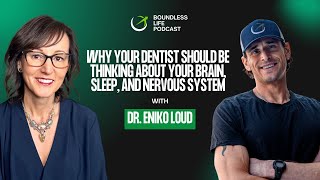
Ben Greenfield talks with Dr. Aniko Loud and Dr. Sophia about how dental work affects sleep, breathing, and nervous system function. They cover tongue posture, myofunctional therapy, and biosthetic dentistry, showing why your dentist should care about your whole body, not just your teeth.
Chapters
In this special Life Network replay, Dr. Aniko Loud and her crazy dental team walk me through a functional dental approach that's changed how I take care of my mouth. From thermography and myofunctional therapy to holistic diagnostics and oral systemic health, this episode is gonna open your eyes to what dental care can really be. Learn more at BenGreenfieldLife.com lnaniko e n I K O and learn more about all our Life Network Featured experts at joinlifenetwork. Incredible to be here at Whole Health Dentistry talking to the people who have had their fingers inside my mouth for like the past three years. Thank you very much. I think. And you know, I interviewed you, Dr. Loud, and we've also done a bunch of videos on YouTube showing kind of like your unique flavor of dentistry. And for people who want the whole backstory of how you got into this whole space, they can go listen to my original podcast with you. All the shownotes for this show are going to be@BenGreenfieldLife.com mouth health BenGreenfieldLife.com mouth health I'm really glad I can say that because the numbing injection has worn off from these finishing touches that you put on me today. So I've got Dr. Nico Loud here. I also have her dental hygienist. And also, how do you describe it? Like an oral facial myologist. Mycologist.
Yeah, that's exactly it. Orofacial myologist or a myofunctional mycologist is mushrooms Myologist.
Myologist. Okay.
You were close.
Cool. And you've been great, giving me all sorts of different jaw and tongue exercises and things I can do with straws and spray bottles and. Yeah, so yeah, you got this special little follow up talent and blowing up balloons. And then Dr. Sophia, just in case people didn't know, Whole Health actually has a whole team here now. So, Dr. Sophia, this is the first time I've actually really, really had you on the show.
Yeah, it's a pleasure. It's a pleasure having you. I'm Dr. Sophie. I'm Dr. Loud's associate. So I'm her right hand woman, basically.
Nice, nice. So we've established Dr. Loud is right handed.
Okay.
So this whole idea, because I used to tell people that you were like a holistic dentist or a biological dentist, and then I think I realized, like maybe a year into our work together that the actual term I should have possibly been using was bio aesthetic. And a lot of people have no clue what bio aesthetic, even if you google it, like there's some fringe, like, you know, German and European websites. It's not very popular. A lot of people don't know about it. We talked a little bit about it in the previous podcast. But for people who kind of want the tldr, how do you explain biosthetic dentistry to somebody?
So biostatic dentistry is not exclusive of biological dentistry. It kind of encompasses that. And biostatic dentistry focuses on restoring a biological form and function in the mouth. It starts from Dr. Robert Lee's work, who studied healthy bites, healthy joints, healthy teeth, and he figured out there's a common denominator in what a healthy bite and joint is. And then he created principles that we apply in how we rebuild somebody's bite, how we analyze somebody's bite to see if your joints, your teeth, or your muscles are out of balance, and how to get somebody, step by step, back into balance and restore their bite to kind of how natural function would work best.
So if I understand it correctly, like holistic biological dentistry, you're using natural materials that are compatible with people's biology. You're not using some of the things people talk about now that you'll find some modern dental offices, you know, metals or, you know, not using ozone or lasers or some of the cool tools you have around here. But then bio aesthetics involves a deeper investigation of the actual biomechanics of the mouth.
That's right.
So that all of that money that somebody might spend on something like a beautiful smile isn't, like, ground away within five years or something like that.
That's right, yeah. So we look at the. How the bot. The bite connects with the jaw and muscles and how that supports the whole posture of the body. So it's more, like, focused on function. And then from. When we store somebody's function, then aesthetics is secondary.
Okay, got it. And you've been doing work on me and my wife. I think we were trying to figure it out back there this morning for, like, three years.
Yeah, we started about.
So this is. This is a. A long process, even though we don't live in Phoenix, where you're located. So we probably slowed it down a little bit, having to fly back and forth, but using. You know, you could use me as an example if you want to. Like, what's the actual process look like with bioesthetic dentistry? Like, somebody's, you know, looking in the mirror. They want better teeth or they've, you know, had, you know, lost a few teeth or had cavities or whatever. Like, what's the actual process look like when somebody walks In.
So the first process was getting. Getting to know you. Like, the first exam that we did on you was, like, about an hour and a half, getting records to figure out where you are. Then the second set would be to make sure we have solid foundation for whatever we build would be getting the gums and teeth healthy. Like, if there's cavities or gum disease, we want that fully under control. And then you wear an appliance. That appliance is almost like an orthotic device.
You see appliance. That sounds like a refrigerator dryer or something. You guys should come up with a new word, like a mouthpiece, something more. Appliance. Yeah.
Yeah. It is a. Is a.
It's not an oven anymore.
Orthotic.
But this. Yeah, it's like orthotic device when you sleep and, you know, sometimes.
I agree.
Yeah.
Appliance.
We have really weird words, kind of a little bit. What are those things called? Like the Invisalign.
Yes, but it's not quite the same. So it's. It's designed to allow your muscles and joints to find their most balanced state. And remember how many times we had to adjust it till we got to a point where your joints and muscles were stable? And then we.
Because my biomechanics were changing, was changing the time that we did this, like, for. For better.
For better.
We kept having to come in and do measurements and change until we got to the point where, basically, correct me if I'm saying this the wrong way, like, my jaw was good enough to be able to fix my teeth.
Yeah. And then we could verify that you closed in the same way several times in a row. So we knew that you were at a stable place. So your muscles and joints shifted back to a balanced state where we could verify that they're staying in a balanced state. And at that point, remember we put that 3D device that measured the jaw motion, and that was specific to you. And then we transfer that onto these models, and then we did an analysis of what needs to be done in order to put teeth back together and rebuild the enamel that was missing and create a stable bite that correlates to stable joint and stable muscles. And then we delivered. And that's when we put everything on in your mouth.
And when you put everything in my mouth, I went home and I told my wife. I'm like, I feel like I have an alien in my mouth. This is a whole new feel. And then, Kat, you remember, I texted you. I'm like. Because I know that you do some of these jaw Exercises and relaxation exercises and tongue training. And I'm just curious, when somebody gets this type of work done or somebody has a tight jaw or doesn't use their mouth or their tongue properly, what do you actually see and what do you do in a case like that?
So an initial myo evaluation takes a lot of time. It's about 90 minutes. But after work with Dr. Loud, I can look at the muscles and see how the, how the jaw opens and closes, opens and closes. And I can give you stretches and exercises, self massages that you can actually do at home to help with the recovery phase of your dental treatment.
Right. And you can do some of that like online, right? You do some of it? I do it because you did, you did me online. When I left, I didn't realize that I had to get used to these new teeth. And then we met via video. But what's your, what's your website again? Honestmyo.com honestmile.com so if somebody goes there and they have something like TMJ or maybe they've read that book Jaws, the Hidden Epidemic, and they don't know if they have their tongue suctioned up against the roof of their mouth, which fortunately I read a couple of months ago. And so it, I, I could tell a lot of what you were teaching was based on that. But give me an example of the type of things that someone does when they're doing like a, a myotherapy session.
So a myotherapy session is basically I'm training you to keep your tongue up on the roof of your mouth. So it's not enough to just keep the tongue up, the tip of the tongue up on the roof of the mouth. You actually want to put the tongue, the tip of the tongue, the middle of the tongue and the back of the tongue up, suctioned lightly on the palate so that your teeth aren't touching, your lips need to be completely closed and then that tongue is suctioned up. So there's actually like a vacuum sensation, a vacuum seal in the back of your, your throat so that you can swallow properly, you can chew properly, you can eat properly. That's where your tongue should live all day and all night.
How many people don't live all day and all night like that? Because I, I never learned that until, and I've been in the health sector and everything. I didn't even learn that till maybe like five months ago that the tongue should be suctioned up against the roof of the mouth basically a lot of.
The time yeah, all the time. Like, unless you're eating or you're talking, then your tongue needs to stay up on your palate. So many people do this. It breaks my heart that nobody teaches you this stuff. Like, the airway is one of the most important aspects of the human body that we need to be evaluating at a very young age. So, I mean, if you think about it, we get our eyes checked, we get our nose checked, we get checked for scoliosis, but nobody's checking the airway.
Well, playing devil's advocate here, if so many people don't suction their tongue against the roof of their mouth from the base to the tip, why is it that we don't just naturally do it from birth? Like, you'd think it'd just be kind of, like, built in for us to do it. And if it was a deficit for chewing or for airway obstruction or something, that we would naturally, from an ancestral or evolutionary standpoint, suction our tongue up against the roof of the mouth. But we don't.
We don't. And there's so many reasons for this. And that's also what we discover in the MYO evaluation is the root cause. Why is the tongue not able to get up into the palate? So we're talking about tonality, mobility, and space. So tonality, obviously, it's talking about strength. So the tongue isn't strong enough to get up there. So part of myofunctional therapy is to strengthen the tongue so that it can get up all the way. Suction on the palate. It could be mobility. If there's a frenum attachment that's too tight, too thick, or too short, it's restricted.
Frenum is the same. That's called like the tongue tie, correct?
Yes. We've all heard the tongue. We've all heard the term tongue tie. Tongue tie is basically when the frenum is too thick or too tight, restricting the tongue to being able to get up on the palate. So if it's too tight, it might need to get a frenectomy is what we call. So Dr. Loud can actually do that and her husband can do it as well, where he just takes a little laser and we free up the tongue and increase the range of motion with the tongue so that it can reach the palate. It's very important. If you do the frenectomy, you have to learn the stretches and exercises. And part of my myofunctional therapy program is to guide the patient through every step of the way of the healing process with that wound that's under the tongue.
Yeah. And that affects the rest of the body too. I just interviewed Dr. Neal, who I introduced you guys to that podcast might have come out by now, but he showed me how the tongue is actually because of embryology and the way that we form via the oral cavity and the diaphragm and then the fascia that interconnects all the muscles. As soon as you start messing around the tongue and the jaw and the mouth, you can affect changes farther down the body.
Absolutely. I don't know if you've seen that picture of the entire cadaver. Somebody actually took fascia out of a human body and a cadaver, and you can actually find it online. I don't know what you would look up, but frontline, deep fascia, and it's connected from the tip of the tongue all the way down to the toes. So if you're having restriction in your knee or knee pain, joint pain, back pain, it could actually be stemming from your tongue.
That's crazy. So how common is it? I don't know if you know the answer to this, Dr. Sophia or Dr. Loud, maybe. How common is it to have bio aesthetic dentistry paired with myotherapy like that? Like, is that kind of common and recommended, or is this like a unique thing that you guys started doing?
The treatment's really customized, but for a lot of people, it can be recommended. It just depends on the findings, really.
With biosthetic dentistry in general, what does modern dentistry think about it? Right. Because when you look at functional medicine and alternative medicine and naturopathy or osteopathy, there still seems to be a little bit of friction between that and modern medicine, loosely defined. And some people will theorize about pharmaceutical interests and education early on affecting that. But how do you guys kind of align with modern dentistry? Is this generally accepted or are you considered to be like, freaks?
It all depends.
Yeah. There.
There are a lot more organizations that are very geared toward the oral systemic connection. They're recognizing the importance of. Of how the mouth is the entry to the rest of the body. So there's more and more organization. I think there's more and more awareness because people are looking for it, the consumer is looking for and is demanding it. So more dentists are looking into practicing that way.
Go ahead.
Myofunctional therapy isn't new. I just want to add that it's actually like, goes back to ancient times where midwives would actually keep a fingernail long so that they could snip, which I hate saying the Word snip. But they could cut the front of underneath the tongue if the baby wasn't latching on the breast enough. The most natural form of myofunctional therapy is breastfeeding. So if you can think about that, like how the proper swallow is, like how deep, I mean, it goes into so much detail. But basically the tongue needs to be suctioned up on the palate in order for you to have a problem.
In order to suck, all the tongue has to be suctioned. Exactly, yes.
You know, fascinating thing happens is when I've done like tongue tie releases with the laser, the patient is completely numb. So they're not aware of what their tongue is doing. As soon as you release the tongue, the tongue rolls back almost like goes in the back of the throat. Like that's a yogic practice of locking energy in through the throat. So it was always fascinating. As soon as I released the tongue, the tongue would roll back and go in the back of the throat.
That's crazy.
Without the page person being aware of what they're doing.
Yeah, yeah. With the yogic practice that you talked about, you're now taking this dive into Ayurveda. And I've done some podcasts about Ayurvedic medicine and Ayurvedic routines, and that's actually when I started doing coconut oil pulling and tongue scraping. Now I do ozone oil pulling and tongue scraping. But what's the link between Ayurveda and dentistry? Was this just like a random interest for you, or do you see how that form of medicine could somehow apply to oral health?
I think it's already making a big difference for my patients because I'm still a newbie. I'm only in my second year of Ayurvedic studies, but one of the things that pushed me toward Ayurvedic medicine is we have so many patients that are elderly with suffering, with dry mouth and a lot of cavities, and yet they seem to be eating pretty decent diets. And they brush like crazy because they don't want to get cavities. Yet every six months they have a problem. So with Ayurveda, I was looking for more these ancient methods to help patients. So it's really making a big difference on helping people figure out with their diet, through their diet, why they're getting dry mouth or why the foods that they eat, the combinations are leading to other conditions that otherwise they would not know about.
What are some examples of ways that you think you're going to change your. Because it's It's a lot of years you're gonna be spending.
It's a lot of years. Almost six years. Yeah.
You're how many years in two years? Two years into six years. And you will be in. What do you call it? An Ayurvedic physician or.
You can't call yourself a physician in this.
Doctor of Ayurvedic medicine.
Not even that. You can't. It's like Ayurveda's some kind of specialist studied a crap.
So how do you envision that affecting dentistry? Like, what would change in your practice, do you think, or has changed in your practice since learning some of those.
Concepts, Truly being able to do more individualized care and knowing what herbs to recommend for certain people, what practices, what. And then food combinations. Really, truly doing individualized care for every single patient when it comes to their diet, lifestyle, and herbs.
Can you give me an example? Like an Ayurvedic food combination for incompatible food combinations? I mean, I've been at your house before and you have all sorts of crazy concoctions. So I'm just curious, like. Well, like, how this has changed the way that you eat or the way that you think about combining certain foods now.
For example, I don't combine fruits with anything. That's a big. No, no. So oftentimes people make smoothies with fruits and dairy. That's a bad combination because fruit will ferment the dairy and then it'll sit and sit in your stomach.
So it's like curling the fruit.
Curling the fruit.
But you could, like, blend a fruit with, like, coconut water.
Yeah, you can. Yeah. But you shouldn't combine fruits with vegetables.
Okay.
So that's also an incompatible combination. Potatoes and meat is not a very good combination.
This sounds really complex. Yeah, you're like, ruining halfway meals.
Fish and dairy, it's incompatible. It's very slimy and creates sliminess in the body interest.
What about meat and dairy?
Meat and dairy, not very good combination. Very heavy.
They. They are. They aren't.
They are heavy. Yeah.
Okay, so those would. Those would count.
There would. So in a healthy person like you, you can eat those things now and then, but somebody that's dealing with medical issues, they really need to be careful to stay away from incompatible food combination.
Yeah, yeah. I know some of the proteins in dairy are. I don't know if it's the proteins or certain enzymes in dairy actually help to bind iron and prevent hemochromatosis from excessive meat consumption. So there's some interplay between some of those, but yeah. The fruit and the dairy. I don't want to tell you how many times that I've had something like a bunch of watermelon or berries and included, like, too much yogurt or too much dairy. And it does kind of like, make your stomach feel upset. So it is interesting. But related to the mouth, are there, like, herbs or sprays or things that you're finding that help with the oral biome or with the care of the mouth in general?
Yeah. A new thing I learned is triphala. You've heard of? Yes. Yeah. Designs for Health has triphala.
Yeah.
So combining triphala with sea salt. Not sea salt. Yeah. Himalayan pink salt and black pepper. It's like astringent, so it drives up any type of inflammation, infection in the gums, and it's super refreshing. And it prevents plaque from forming because it's antimicrobial.
You'd make that as a powder?
You can make it as a powder yourself.
And brush with it.
And brush with it.
Interesting.
And the bitter taste.
That was it.
Oh, okay.
Yeah. The bitter taste. It's. It's like. It pulls and, like, tightens your gum tissues, and it's antibacterial.
Interesting. So the. The. The combination of those reminds me of another combination you told me about triphala. Because it's very drying. I actually tried to dry powder at once. It was just nasty. Have you guys used triphala before? Yeah. Yeah. And it does really help with, like, a morning bowel movement or it's. It's known to help with detoxification. But you said you're supposed to take it with, like, a teaspoon of ghee, depending.
So like, depending on your constitution for you, probably with ghee, but somebody that's overweight, maybe a tiny bit of honey.
Okay.
Yeah. Because honey has a scraping action. Like, it removes blockages.
But if you're taking, like, a capsule or powder of triphala, something oily or something liquid along with it, otherwise it's going to kind of dry out the digestive tract a little bit.
Yeah.
Could be interesting. Have you gotten into ayurveda at all, Dr. Sophia, since Dr. Loud's gotten interested in it, she's actually.
Taught me a lot about it, and I'm very interested in it. I come more from, like, a biologic functional medicine perspective, which is what Dr. Loud was practicing before getting into Ayurveda. But it's fascinating to learn all about it.
It's.
It's really interesting.
Yeah. Yeah. What have you seen with. Because I literally just got done with the swish and Spit test that you do? I think it's been a year since I've done one. What do you do with the results of that type of test or how do you work that into your practice?
So we look at the bacteria that are related to gum disease, and we discuss the different numbers with patients. So if they have low, medium or numbers, we talk about that, and then we talk about the systemic links based on the bacteria that are present in their mouths. And then based on their numbers, we would recommend an antimicrobial therapy to help with lowering those numbers. In addition to that, we would of course, discuss proper oral hygiene, toothbrush care, things like that, to just make sure to disinfect the toothbrush properly, change your toothbrush head once a month, and reduce bacterial load in that way.
If I get a salivary DNA test, you know, like a 23andMe or a 3 by 4 or whatever, you know, one of these tests where. Where you spit. Is that also measuring my oral biome or do you have to get a special test to measure the oral biome?
It has to be a special test that's looking for specific bacteria that are related to the oral cavity.
How often do you see. Because I've heard that the bacteria in the mouth can influence Alzheimer's, cardiovascular disease, gut issues, et cetera. Do you guys tend to see qualitative links between the bacteria in the mouth and some of those symptoms?
Absolutely. There are a lot of articles currently that show associations between, like, diabetes, for example, Alzheimer's and the oral cavity. And so. And there's more studies coming out as we speak regarding these systemic links with the different bacteria.
So as far as cleaning that out, I did a podcast maybe like four weeks ago. I interviewed this company called Thrive. They make a probiotic, and they made a pretty compelling case for being able to actually address the proper biome in the mouth via not just doing things like avoiding excessive youth, use of mouthwash, for example. That was a big one that came up. But also even considering doing something like breaking open a probiotic capsule and putting it in your mouth when you're swishing with water or oil or something like that. Have any ever looked. Looked into that or.
Yeah, so we actually.
Bacteria in the mouth.
Yeah. So one of the things that we recommend, of course, also looking at the patient's diet to address their gut health. But there are oral probiotics. They're a little bit different than the one that you would take. That's more for the gut, for the urinary tract. But these are special oral tablets. And you place them in your mouth after brushing and flossing at night, and you can chew on them or let them dissolve, and they actually populate the mouth with good bacteria to help fight off the bad ones.
Do you know what type of brand or what type of strain you'd be looking for?
There are two that we really like. There's Probiora Pro and then also one by Biocide and botanicals, the Dental Flora Probiotic.
Okay, got it, got it. So you're looking at the oral biome. You're doing the, the whole bio aesthetic, you know, routine start to finish, and then the myotherapy after that. But with the bio aesthetic piece, in terms of the actual steps, I had to come back in multiple times. And each time you were remeasuring my teeth and readjusting that appliance that I wear at night. But what else do you guys do as a part of that process? Or is it really that simple? You're just measuring, adjusting and weighting?
Well, yes, we're adjusting till we don't need to adjust anymore when the system stabilized.
And at that, that's the part I don't get. How do you know when the system is stabilized?
So as you remember, we were adjusting it and oftentimes you were, when, when you came in after wearing it for a while, you were hitting more like touching more on the left side, which meant that that joint wants to go back into its place. So then I'd flatten the appliance again on that side till everything was even. So the goal of the appliance is to have directed in a long axis of the, of the skull instead of being uneven on one side. So every adjustment is, every adjustment's aim is to get the forces even all across front and side, and then allow your jaw to slide left and right smoothly. So at one point we didn't have to do that anymore because your joint and muscle found their balanced state and I didn't have to adjust it anymore. And at that point we verified that, that even without that appliance I can obtain, your jaw would close the same way in the the same spot every single time. And at that point, now we know we're starting with a stable bite. Otherwise, when we try to rely on a teeth to tell us where the bite is, we can't because your teeth were worn down, so they were not functional. It's kind of like the tires of a car that wear down unevenly. You can only balance the tires for so long before you have to replace the tires.
Right.
Kind of thing.
Yeah, that makes sense. Kat, talk to me about chewing because when I came out of the office, it took like maybe a week for me to adjust. That whole week chewing just felt funky. But then once my bite became adjusted and. Thank you. I was doing some of the exercises that you sent me and didn't feel like I had an alien in my mouth anymore. My chewing was different in that I found myself. And I'll totally bastardize the explanation of which teeth these are, but I was using the teeth behind my front teeth way more to chew. My food was like liquid goo when I swallowed. I'm very careful not to rip open things with my front teeth anymore because I don't want to ruin all the hard work that we've been doing. But I used to kind of like rip meat with my front teeth and do a lot with my front teeth. Now I'm using the ones that are farther back. What happened and how should people chew?
So the front teeth are for tearing. So you can chew with the, you can tear with the front teeth. Chewing is for the back teeth.
And tearing would be like if you're eating like chicken on the bone and maybe you're ripping, ripping the, the chicken breast off the bone or the, the chicken leg off the bone or something like that.
Absolutely, yes. Yeah. Meats and stuff. And I was going to add actually with tongue space and tongue mobility earlier when I was talking about myofunctional therapy. It is super important that our diet consists of crunchy hard foods, things like meat, things that we can tear with. Because your muscles, your facial muscles actually need that bone loading stimulation to grow and become strong and develop properly.
Right. That's another premise of the book Jaws. By the way, kids that grow up on Gerber baby food and liquid smoothies and ultra processed foods that are pre digested or at least pre processed, develop weak jaws, teeth crowding, improper tongue posture, et cetera.
Yes, correct. So the fact that you said your food was a consistency of soup is really good. That's what you want. You want to chew your food enough. A lot of people are not chewing their food enough. And so now that you have new teeth, you have new Cusp. What Dr. Laud did was she gave you more anatomy in your tooth to be able to chew. So before your teeth were very worn down, you weren't able to chew your food enough. And now that your teeth are built back up again and you have cusps, those mountains, the mountain part of your tooth. Right. We have mountains and valleys in our tooth in the back Molars. If you can imagine, like the back cusp sitting up really tall and then the valley of the, of the tooth kind of dipping down. Each tooth is in a specific position for a reason. And so Dr. Loud is able to put back what God initially gave you, what you were supposed to have in your face to begin with. And so it's really cool that you're, you're noticing that your muscles are working together properly now. Your tongue is actually moving the way that it should, that you have new teeth now. So it takes a while, but you can get there. And once you get to the point where you're like, okay, this is how my jaw moves. This is how my teeth move. These are the teeth that I'm supposed to tear with and cut with and chew with, then you can chew your food enough to where you can swallow it and digest it enough.
Yeah.
To have a healthy body.
It is interesting. Like, I thought that I had something like leaky gut syndrome for a while because I would, you know, as everybody, you know, you do it, sometimes you turn around and look and, you know, see the consistency of the poop and what's in the, what's in the bowl. And I would see, like little pieces of food in there for a long time. But I also do consistent gut tests and I rarely had, you know, elevated levels of zonulin or markers of leaky gut or anything like that. I don't get that now. Like, the food's actually, it was, it was my mouth. I actually, because of the way that my teeth were worn down, I was chewing on. You're mashing, you know, mashed up kind of half ground food, and it was winding up in my stool. I'm sure that's something that happens somewhat frequently.
Yeah, absolutely. And think of what that's doing to your digestive tract when you're swallowing food that's not chewed enough.
And then you're risking things like diverticulitis or, you know, inflammatory pockets or irritation of the digestive tract.
Right.
What you are noticing with your eye teeth is actually one of the principles of biosthetics is we. The eye teeth are actually a little longer. And they're the ones that guide our jaw in an even motion left and right. So right now that's guidance. So when you slide to the right, all your back teeth disengage. So you're not wearing your back teeth. And then they're, they're set up in a way that they guide you right back to the center. So left and right guide you back and that's one of the things people notice after we build it back in, like, what is happening. Most people chew sideways, so they chew usually to one side only. And then they wear down their eye teeth and they become super flat. Once those wear out, then the rest of the front teeth will start wearing out and the back teeth start wearing out. So what you are noticing is that you're being kept in a kind of like a chewing vertically instead of laterally.
Yeah. Yeah. Well, it feels really good now, but, yeah, it took a lot of getting used to. Okay, so this is going to be a fun question, and I want to hear from each of you on this. I think it was one of the times that I was in here. Kat, you actually taught me a lot of kind of cool facts about how I should be flossing and how I should be brushing. And I've learned so much from you guys over the years about proper oral care. I mean, I'm now to the point where I might have passed you up because I'm using an electric smart toothbrush now. It's called a feno. You literally put tooth foam on it. To put tooth foam on it. Because I hate to water pick floss. It's like, just time consuming. So anyways, you put this entire. In this case, probably it is an appliance, like a mouthpiece in your mouth. Yeah. And it's covered in bristles. And then you press the button and. And you put foam on it beforehand. And it just does your whole mouth all at once. And you said, my gums look pretty good. I've only used it for 10 days. And it's incredible because I can just like, walk around getting stuff done, you know, turn on the alarm in the garage, get stuff ready at night. I've just got that thing vibrating in my mouth.
Yeah, your plaque levels. And then the inflammation is, like, gone now.
Yeah.
I have to add this one's custom to your mouth specifically. Correct.
This is not custom to your mouth, but it has what's called a smart scan feature on it, which allows you to scan your teeth and your tongue after brushing. And that's the only thing that I don't like about it so far is I don't have WI FI at my house because I'm just a Luddite. And you have to have WI FI to use that feature. But it does have, like a smart scan feature, so it can kind of like give you a readout of your mouth as you go. So I'll eventually experiment with that. What I actually wanted to ask you was based on that. What are the biggest mistakes? And again, I want to hear from each of you the biggest mistakes that people make when taking care of their teeth at home. If you could just name one or two of the ones that really just bug the heck out of you.
Someone is using toxic products. They have Teflon and then leave residues on their teeth. The other one is to not being mindful about what they're doing. They're just kind of rushing through it so they don't really pay attention to.
Rushing through the brushing process.
Yeah, rushing through it and not really even knowing if they're missing any areas. So they're just not very mindful of what's happening. It's just something that we do quickly.
How do you do it?
I actually multitask. So I do it in front of the red light. So I brush for four minutes at night.
I do that all the time. I'm naked in front of my giant red light panel. Checking emails in the morning. Yeah, yeah. Okay. So that's what you're doing while you do it. But as far as making sure you get the adequate coverage, do you have a strategy when you brush?
I just really pay attention to every single side of my mouth. Like, I go through it more mindfully. I almost, like, say gratitude for every tooth I have. I know this sounds silly, but it's like a gratitude practice.
You have a cheek out of your dentist. You know, like the number of each tooth.
I know, right?
Number one and number eight. A And number three.
So it's hard to ask me.
Yeah.
I see so many people would I hit mostly the insides of my gums because, like, right at the tongue side, everybody's forgetting to brush their teeth. So I see what other people are not doing, and I make sure I do it on myself.
And how long and how often do you brush?
Morning and at night. Sometimes lunch also. And at night it's almost four minutes because I'm in front of my red light machine.
Okay. Yeah. So use that as your timer. And then are you doing water picking, flossing, oil pulling, anything like that?
Flossing.
Okay.
Flossing and oil pulling in the morning. And tongue. Tongue scraping.
Okay. All right, cool. The hardest part is going to be the people who go after Dr. Loud because you have to come up with something different.
I know, but I'm a hygienist, so it's okay.
All right, go. You got time. Go.
Yes, exactly. So not doing it long enough and not doing it properly. So to piggyback off what she said. Correct. Yes. Not brushing long enough and not brushing properly. So, yes. Being quick, being spastic, not spending a full two minutes with brushing, but also you want to angle the toothbrush towards the gum line. So you do want to brush the gums and not just the teeth.
Angle. What do you mean, angle the toothbrush?
So I guess it just depends on which toothbrush you're using, because if you're using an oral B, it's 90 degrees towards the gums. If it's any other toothbrush that's a regular toothbrush, it's 45 degrees towards the gum line.
45 degrees towards the gum.
Yeah. So a little bit up.
So if I were holding like an imaginary toothbrush or like my phone, here was a toothbrush, and there's a regular toothbrush that I bought it. 7 11. I'm brushing like that.
So 45 degrees towards the gun line on the top and on the bottom.
And then on the bottom, it'd be like that.
Correct.
And then on this side. Like that.
And a trick you can do with the.
Because most people go like this. Like.
Correct.
90 degrees.
Yes.
I guess that would be 180 degrees. Yeah.
Right. So you want to. The angles do make a huge difference. And then also with the lower front six teeth, if you can angle the toothbrush straight up and down on the inside surface of the lower front six teeth.
Lower front six. Yeah, lower front six. I'll use my. My phone brush here as an example.
Yeah.
So the perfect.
It'd be like that.
Yes.
Okay.
Yes.
Being both the front and the back.
Just the back.
Just the back.
The front. You could do the same way as you would before.
Okay.
Yeah.
Front would be the 45 degrees.
Correct.
Okay.
Yes.
Got it.
Ye.
So the actual angle of the brush is important. 45 degrees across all the teeth except the front back ones, which is 90 degrees.
Correct. And you can do that on the top as well. The top front six teeth. On the inside, straight up and down, there's a salivary gland that sits under your tongue, and it just creates more calcium buildup on your teeth. So that's why everybody has more plaque buildup on the lower front six teeth on the inside.
So there's a way so that again, there's a salivary gland and it causes calcium to build up on the teeth.
Yep. It causes a little bit more buildup to build up on the lower front six teeth.
Why would that be?
Yeah, we have salivary glands all over our mouth. Actually, we have them up in the. In the cheeks as well.
Yeah. But that seems like if, like there's an actual built in gland in the mouth that's increasing plaque accumulation.
No, it's just in some people that.
Have calcium and phosphorus levels are okay.
The mineral that somebody has an imbalance or is taking too much calcium.
So someone like a hair tissue mineral analysis or something like that and find an imbalance between calcium and phosphorus. Phosphorus, Something like excess calcium would cause the salivary glands to release. That kind of like vitamin D in excess can cause arterial calcification. Something like calcium in excess could cause oral calcification.
Yeah. So usually when we test the saliva, when every patient comes in, we test the ph of the saliva. And when they have more basic saliva, they usually have more buildup on their teeth. When they have more acidic saliva, they get more cavities, typically.
Okay, yeah, that would make sense because you'd see the calcium would be calcium based.
Correct.
Okay. Okay, got it.
Yeah.
So in addition to your pet peeve of people holding their toothbrush at an improper angle, are there any other home oral care mistakes that people make?
Yes. C. C shape flossing. You want to hug the side of the tooth with the floss. You don't just want to pop the floss in and pop it out. Flossing is one of those things that people don't want to do. So you have to force yourself to do is important to get the floss underneath the gum line. And that's where the C shape comes into play. Into play. Because if you're just popping the floss in, you're not going under the gum. Flossing is not just to get food out from in between your teeth, it's actually to get oxygen under the gum line so that it can kill the bacteria that causes bleeding.
Wait, so you're saying even if I don't eat steak or corn on the cob and there's stuff stuck in my teeth, I should floss? Because the purpose of flossing is not just to get those little shards of food out, Correct?
Yes.
And explain again what, what the actual purpose is for the other purpose.
So you're getting oxygen under the gum. Really? So oxygen. So if the bacteria that causes bleeding is anaerobic, they thrive without oxygen.
Right.
So when you're flossing, you're introducing oxygen under the gum line, which is going to kill the anaerobic bacteria that thrive.
What about if I oil pull with something like ozone? Wouldn't that also kind of get oxygen into those areas?
In theory, yes. But it might not get all the way down into the pocket like Floss does.
Ok.
Okay.
So when you say C shape, I'm trying to picture what that would look like in my head. Or maybe you could explain.
Yep. So if you imagine a tooth, you're hugging the side of the tooth with the floss all the way around the side of the tooth and then you're going up and down.
You're using both hands when you floss.
Oh, yeah.
Okay. All right.
The picks are okay, you can use.
How do you get the very back ones?
It's tricky. You can use. I use my index fingers. I kind of go on the very end of my index finger and slide it all the way back with the back teeth. You want to close your jaw halfway and you can even move your jaw towards that side that you're working on.
Okay. Have you seen this thing that's coming out of it? Speaking of devices, the one I was talking about earlier is called the Feno, but have you seen this other one called the E Floss? I don't think it's out yet, but I think they did like a Kickstarter or something. And it's supposed to floss all your teeth at once.
Yeah. There's a bunch of different companies that are making these nowadays, so. Yeah.
Are you okay with that? I mean, do you think if it's. You'll say old school with the taking 10 minutes to do the C shaped flossing or so.
Water picks don't replace flossing, unfortunately. Now, sometimes if you have a very deep pocket or you have implants and bridges, things like that, the water pick is going to be very beneficial in addition to flossing.
Okay.
So sometimes it won't get all the way underneath the gum like you. Like you can with the floss.
Right, right.
Yeah.
And again, I know people are probably listening in thinking like this is a lot, but I'm like, you guys, I multitask. I'll have like a podcast or an audiobook in. I'll be walking around doing the oral care while I'm oil pulling. I'm making the hot water for coffee and tea in the morning. You know, when I'm. When I'm tongue scraping, I'm also just listening to something. So a lot of this you can multitask.
Yeah. I mean, you can water pick in the shower.
Yeah, yeah, that's true. Except I only shower once every few days. Yeah. Big hot tub, cold plunge, sauna guy.
You can floss in the car.
Yeah, yeah, that's true. Yeah, that's true. See how many motor vehicle accidents and Greenfield life Podcast listeners increase after this. All right, so Dr. Sophia, you've had a long time now to think about, about mistakes people make when caring for their teeth at home.
Well, I think just you were talking about tongue scraping and I think just caring more about your. More than about your teeth is caring about the tongue as well. So tongue scraping is super important because the tongue is like a sponge that sits in our mouths and we spend so much time brushing and flossing with the, with the bass method and the C shaped flossing and everything. That takes a long time. But at the end of your routine, you also want to ensure to scrape your tongue to remove any debris that's been sitting on the tongue all day. And I actually recommend to do that morning and night just to remove any residue that might have built up on the tongue while you're sleeping. And the reason for that is if we remove the bacteria from the tongue, there's that can also decrease chances of cavities forming because we're removing more of the bacteria from the mouth. Another thing that that suggest doing is also storing your toothbrush away from the toilet or just somewhere more protected to prevent any debris or anything from collecting on the toothbrush head.
Put their toothbrushes next to the toilet.
You know, sometimes people have a, have a sink that's right next to the toilet. If you don't put the seat down, you have to imagine that, you know, some things can get into the air. So really ensuring to store your toothbrush away in a more protected area and disinfecting the toothbrush and replacing the toothbrush head more often I think is very important as well. I think a lot of times people can forget about that. And another thing I would say is to change your toothbrush head after you're sick just so that you're not reintroducing bacteria back into your mouth.
Because I've done this before. Couldn't you just like wash it with soap like you would in the dishwasher or whatever?
It doesn't really, I mean it, it.
Might remove some of the surface debris on a toothbrush.
I think soaking your toothbrush head in, maybe like hydrogen peroxide and then rinsing it after that would be a really good idea to just ensure that the bacteria, you're actually killing the bacteria that.
Are on the toothbrush. So back to the tongue scraping what you're doing. So if you wake up in the morning and you're scraping, what it sounds like is there's actual bacteria that can build up in the mouth during a night of sleep, similar to the bacteria we were talking about that could be associated with Alzheimer's, cardiovascular disease, etc. And not only by flossing to introduce oxygen to that area, like Kat explained. And into these pockets where bacteria can reside by scraping. It's more than just like cleaning debris or gunk or dragon breath, producing saliva or whatever in the morning off your tongue, you're actually getting rid of that bacteria. Like a tongue scraper is good enough at doing that.
I do think it is good at removing a lot of bacteria off the tongue. I do. I think that oil pulling can help as well with reducing a coating on the tongue. I think overall, just ensuring that you're not leaving any debris on your tongue. Sometimes people can get an overgrowth of bacteria on the tongue as well, which can tell us a lot about their health. So Dr. Laud is studying ayurvedic medicine, and looking at the tongue is very important to determine what's going on with the patient. Patient's gut. So.
Yeah, yeah. Is this why a lot of the tongue scrapers are made out of copper? Because it's antibacterial?
Yeah, copper is really great.
Interesting. And. And you guys don't get worried about killing good bacteria in the mouth?
No. Like going back to the tongue in Ayurveda. And. And this makes sense from functional medicine point of view, too. At night, our liver detoxes, so it removes the toxins from the system, dumps it back into the gut. And the mouth being the first part of it, those toxins can be deposited on the tongue. So, like the very back of the tongue, and they can show up as different coloring. So, like, based on how that color looks like, you could tell, like, if it's yellowish green, then the liver is probably a bit sluggish or struggling or it's more white, you're building more toxins. The foods were too heavy for you, so that's called ama, which is like toxic residue on digestive stuff that the body's trying to kick out. And it's like a breeding ground for bacteria. So if you leave it on there, bacteria will just grow in it, mostly acidic. And it's like just the breeding ground. So scraping that off every morning and really looking at it, what color it is, or if it's too thick, that that means that you're not digesting, you're not assimilating your food really well. You got a lot of leftover toxic residue that your body couldn't handle.
Okay.
Just trying to get it out.
And don't keep your Tongue scraper next to the toilet?
No. Yeah. Definitely don't do that.
Advise you not to do that. I think a lot of people hear the term bio aesthetic, or, for example, you know, hear me talk about the work I've done with my mouth. And a lot of people have complimented me on my new smile, and I think it's great. But do you also work with, I guess, like, you know, sick people or people who have had some kind of work done that's messed up their mouths, that's actually making them sick, like some type of implant or root canal or something like that? Or does bio aesthetic really just mean aesthetic?
No. So biosthetic is the final touch on it. If you think of it like a pyramid, where you're building the foundation is really the getting the teeth healthy, the gums healthy, and then we go get the joints healthy. And then finally the final. The tip of the iceberg is to put the enamel back on a teeth to restore the function of the teeth and the structure of the teeth. So we work with Dr. Sophia. We get a lot of referrals from the Invita Cancer Center. So we work with a lot of cancer patients with a lot of functional.
Medicine, doctors, oncology here in Phoenix or Scottsdale.
It's great. And we help the patients clean out infections. So that's like a big part of our practice is getting out infected root canal treated teeth, getting their oral microbiome healthier, getting mercury fillings out. So that's like the foundation of. Of biosthetic dentistry. We have to get somebody healthy first, structurally, before we can rebuild the function.
Okay, I'm asking this about a friend of mine who has been struggling with really low hrv, kind of a measurement of nervous system balance, ever since he had a bunch of dental work done. Does that somehow or could it somehow deleteriously impact the nervous system if dental work is done improperly, or have you seen that before?
It could. I actually seen it. And if the work was not done properly, it can cause problems with the gums. So they can get a lot of inflammation. So inflammatory markers go up. The other thing is the musculoskeletal system is an imbalance. It could throw off the vagus nerve. And through that, I don't know exactly how that precisely works, but that could affect hrv.
Also interesting. What do you think?
Or the sleep. So they don't get deep sleep because the muscles of the jaw are constantly trying to figure out where to put the teeth.
Yeah.
Because they're constantly contracting. They're creating like, almost like an interference to the function of the brain.
Yeah, yeah, that actually happened to me. I think I told you this, cat, for like the first three days after I left here, my sleep just went to crap.
And.
And then once my mouth got used to everything, I feel great now. You know, I measure pulse, oxygenation, use a ring and everything to measure my sleep scores. And they're good now. But, yeah, it was crazy how much a little change, I guess, was probably a big change in my jaw and my teeth affected my sleep. I mean, it was really bad. I was sleeping like two hours a night.
Yeah. Another thing is if your tongue is wandering in your mouth because you just had dental work done and you're pushing into those teeth, your tongue isn't up on your palate, remember? So you're not going to stimulate the vagus nerve. When you put your tongue up on your palate, it actually does stimulate that nerve. We're talking a lot about cranial nerves when you're. When you're dealing with the tongue therapy. So it's helpful to calm the nervous system and then also check the bite. Like your friend, he needs to go get his bite checked to make sure that he isn't hitting high on that tooth that he had dental work done on. And if he is, then he can do an adjustment on that or, you know, check the bite alignment like Dr. Loud does and all of that.
Okay, got it, Got it. So for this style of biostatic dentistry, you said when I was asking about it, Aniko, that it's not super duper common, but you can find practitioners. Is there like a directory? Because half the time I tell people I'll just call Whole Health Dentistry in Phoenix and ask them if they got somebody they recommend near, you know. But is there an actual website people can go to to find a doctor who does what you do or a dentist who does what you do?
Yeah. Biosthetics.com they're all over the world. It's just biosthetics.com good luck spell on that.
I'll put it in the show notes. BenGreenfieldLife.com mouth health is the show notes. So BioSthetics.com you have. You can find a directory.
Yes, there's lots of doctors all over.
Okay. And the people actually kind of like I did, fly in here to do this type of work with you.
Yeah. And they just come in pretty common. They come in multi. It's. It's harder when somebody's not in town because it's a big deal to travel here for adjustments. But we try to maximize the time that somebody's here to do several adjustments.
And make sure, like, we've done. It's kind of funny like, I've played dentists at home before because, like, I had one fallout. You taught me how to use these tools. You sent me to glue it back in. At one point, you had me using a little burr device to adjust my. Don't do that. Yeah, yeah. Don't do this at home.
We did it via FaceTime.
I was just too lazy to fly to Phoenix. But anyway, so people can visit that place to find a directory and then. Kat, for the type of work that you do, is that just something where someone could go to Honest Myo and do, like a zoom session or video session or something like that?
Yeah, absolutely. I'm all virtual, so it makes it super easy. I can see people all over the world. And it's a quick. Well, it's not quick. It's 90 minutes for the first initial evaluation, and then we can just go from there and see what type of program you need.
Yeah, because you've been sending me, like, every week, like clockwork. I get, like, four or five new videos. I get a PDF, I just print it out and I can do while I'm driving or. Although lately I'm getting ready to go hunt elk. So I've been doing a ton of elk calling, which involves a lot of, like, tongue and lip suck or tongue suction and lip work and a lot of jaw movement. So, yeah, that's great. I've had to prioritize that the past week, but I feel like it's doing something well.
Being aware of the tongue is so important. I mean, if you think of when we were kids, we used to do taco tongue and bowls with our tongues, and now when we're adults, nobody thinks about. About where their tongue is. So if you can just bring awareness to where the tongue is in the mouth, then it can help you actually with things like elk calling and other hobbies.
Yeah. Yeah. Well, if I. If I get an elk this year, then you get a backstrap, I guess. Thanks to you, Dr. Sophia, Kat, Dr. Loud. This has been incredible. You know, I'm. One of my favorite parts about my job is to find people who do really cool things and tell the world about them, because you know that it's kind of fun to just find unicorns or folks who have a unique approach, and your whole organization just fits right into that mold. So, folks, you're listening in. Give these folks a visit if you get a chance for out in Phoenix or check out the links in the show notes to find Bio Aesthetic Dentistry or to work with Kat online or to come in and see Dr. Sophia or Aniko. They're all super cool here and the shownotes are going to be at best BenGreenfieldLife.com mouth health hit subscribe Leave a Ranking Leave a review if you got a little extra time, it means way more than you might think. Thank you so much.
More from Ben




The Solution to Aging Might Be Closer Than Anyone Realizes - With Ben Goertzel



