Why Your Wounds Take So Long to Heal (And What Actually Fixes It)
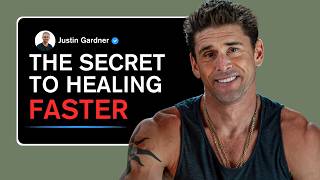
Justin Gardner explains how his company turned hypochlorous acid, a molecule your white blood cells naturally produce, into a medical-grade skin product. It kills 99.9% of bacteria, viruses, and fungi in 15 seconds without stinging or damaging healthy tissue, and works on cuts, burns, acne, eczema, diabetic ulcers, and dozens of other wounds.
Chapters
Inside the white blood cells is a molecule called hypochlorous acid, and it's your body's natural mechanism to fight off infection, to reduce the inflammatory, uh, effect from the injury, and help to actually speed up the healing process in your body to heal itself. We're able to replicate that same molecule your white blood cells produce so that you can apply it topically the same way your body's working internally.
So what you're about to hear about could very may very well be the most effective non-toxic biocide and skin repair agent known to modern medicine. And I feel like a dummy because I didn't know anything about it, but fortunately, the podcast guest, Justin Gardner, filled us all in remarkably. The show notes are at BenGreenfieldLife.com/SkinRepair. Let's dive in. All right. So, I was telling my guests right before we started recording that I really know very little about this molecule that he has built a health company around called hypochlorous acid, hypochlorous acid. My guest is Justin Gardner. And, Justin has worked in the medical space for over 20 years, particularly with hospitals and doctors on what are called regenerative medical technologies. And, his company now is called Active Skin Repair, which I believe has quite a bit to do with hypochloric acid. But Justin, I guess you're going to be the person to put on the professorial hat and educate me and my audience on what this actually is, huh?
Oh, I'm honored to do that. Appreciate you having me on.
Ben Greenfield: Alright, cool. So, here's what I have. I have some bottles of Active Skin Repair and I know it's supposed to be antimicrobial and anti-inflammatory. And, I know that hypochlorous acid is abbreviated HOCl and my body of knowledge stops there. So, can you tell us what hypochlorous acid is? And, I know you didn't like invent it or discover it, but how you kind of like came to be aware of its existence and use it.
Sure. Well, it's actually produced by our bodies, right? So our white blood cells. So it's been around since humans have been around. So the, the molecule, the easiest way that I usually explain it is if you get cut, scraped, burn, any type of skin damage, your body's natural immune response is to send white blood cells to that injury. Right? And inside the white blood cells is a molecule called hyperchlorous acid. And it's your body's natural mechanism to fight off infection, to reduce the inflammatory, uh, effect from the injury and help to actually speed up the healing process in your body to heal itself. We're able to replicate that same molecule your white blood cells produce so that you can apply it topically the same way your body's working internally. And so what you get is a really powerful antimicrobial. It kills 99.9% of bacteria, viruses, and fungi within 15 seconds. You get something that's going to help reduce that inflammatory response and also something that's going to speed up, up the natural healing process. And what's really cool about it is because it's innate to the immune system, because the way we replicate the molecule is simply by electrolyzing salt and water. You get really clean ingredients, completely non-toxic, um, same safety profile as saline solution. So you get this really powerful antimicrobial, but it's also incredibly safe. You can put it around eyes, ears, mouth, uh, any sensitive areas. And we kind of joke, we call it the WD-40 of skin repair or the Windex from My Big Fat Greek Wedding because so many skin issues are bacterial inflammatory related. So it just works on so many different things.
Yeah, I wish I'd known about this when I had MRSA back in the day. I sat through everything and the kitchen sink at that. But how did you discover or kind of become aware of HOCL?
So, previous to running Active Stain Repair, I had an agency that would help launch regenerative medicine technologies into the hospital space. A lot of times, really expensive bioengineered dermal substitutes that are used in surgeries. And the medical device company came to me and my agency and said, we want help launching this technology called hypochlorous acid into the hospital. Um, and so I started to do my research and, uh, read all the clinical articles around hypochlorous acid and was really intrigued by the science and also that it wasn't this incredibly expensive technology either. It was at a really digestible price point. And the company had both a professional and an OTC FDA clearance, but they said, we just really want to focus on the hospital side. And so really, long story short, I ended up selling my agency, licensing the technology, same medical-grade formulation that was being sold into the hospitals, and brought that to market about 10 years ago under Active Skin Repair.
So what, what would a hospital— sorry if this is a dumb question, but like If a hospital wasn't using hypochloric acid, what would they normally be using to like disinfect, clean surfaces, et cetera?
Sure. So, in hypochlorous acid gets used a lot in different areas of hospitals. They'll get used in chronic wound care centers. So, people with diabetic foot ulcers, venous stasis ulcers, but it will get used in intensive care burn units. And a lot of times if we go into wound care centers, they might be just using toxic antiseptics, your peroxides. They might just be using saline solution to cleanse it out, or maybe a silver. On the intensive care burn unit side, a lot of times you might get Dakin's solution, which is just diluted bleach. So this is just a much better kind of more technology that just has a lot less side effects, but with all that same kind of antimicrobial power.
Now, I don't know if this is true, but I've heard about stuff like bleach that it could potentially create resistant populations of bacteria or something like that. Is there anything to that in terms of how it compares to HOCl as far as how bacteria respond?
We did not have bacteria resistance with hyperchlorous acid from any of the articles that I've read. And what you get in comparison to a bleach, cuz hypochlorous acid does fall into that chlorine family, right? But when you're able to stabilize hypochlorous acid and we're able to get it at the correct percentage or parts per million per bottle, then we're able to get it unlike a bleach, we're able to get it in a really safe pH range. So you usually have it between a 5 and a 7 pH range and then stabilize that for 2 years. And what you get is something that's actually 100 times more powerful than bleach, but without any of those side effects that you would get from bleach.
Geez. Yeah. It doesn't have that strong overpowering smell. At least I haven't really smelled much when I use it.
No. And it's, um, you know, hypochlorous acid's been around, like you said, for a long time, right? In terms of scientists being able to replicate it, but it's only recently that we've been able to stabilize it, get it into a really tight pH range. And get it into a bottle formulation that's going to last for 2 years. And that's really what's unique about Active Skin Repair is our proprietary formulation that has gone through that same rigor that a hospital would use in a surgical procedure.
Is that what it means for it to be medical grade?
That's what it means to be medical grade. So every time we produce a lot— so we produce everything in California in an ISO-certified cleanroom. All FDA regulated. Every time we produce a lot, we go in and we test to make sure that that antimicrobial effectiveness that we state is working. We also know that it's in the correct pH range and we know it's at the correct parts per million. Then we put a lot number on it and expiration date on it, and we have a unique device identifier that goes on it as well. And that really differentiates us from, let's say, a cosmetic spray that's just able to contract manufacture it out and put it out without any testing. So we go through all that rigor to know that our product's going to work. It's going to work from day one all the way to the end of a 2-year shelf life.
And how do you guys know how, like, what pH is the right pH to use for this stuff?
And there was a lot of, there's a lot of data and clinical research out there that you really want that to stay within that 5 to 7. Skin-friendly pH range. And that's where you're going to get that really solid safety profile without any skin irritation. And so one of the things that you— that becomes really important in having that kind of medical-grade formulation is that it doesn't drop below that 5 pH range. And what— that can happen over time as that degrades. And so it becomes really important to keep it there so that it's skin-friendly. And kind of maximizing the skin health benefits to it as well.
Okay. So tell me more about like what you would actually use this stuff for, what you've seen it successfully used for.
So hundreds of skin issues. What's really cool about Active Skin Repair is we do have clearings to be used in open skin. So cuts, scrapes are kind of a no-brainer. It's a way better for you Neosporin. With the Neosporin, you're using synthetic antibiotics. You're going to get back, but you can get bacterial resistance. It's a petroleum base to it. And, um, up to 20% of people have an allergic reaction to Neosporin. We don't have any allergic reactions. We don't have any toxic ingredients or synthetic antibiotics. So, uh, cuts and scrapes, no brainer, way better for you, Neosporin. But it also works on all those inflammatory skin issues like Bug bites, sunburns, anything where you, your skin might have an inflammatory response or has some sort of inflammatory issue going on. We also get used a lot with eczema, any atopic dermatitis, psoriasis, especially if they're, when you're getting the, from an eczema, let's say a flare-up where there could be some bacterial colonization. This is a great product to help with reducing that bacteria and also helping from the inflammatory side.
Ben Greenfield: Interesting. Okay. So, if we back up and look at— like, I was at this coffee shop the other day and I was in the bathroom and they had one of those kind of red plastic first aid kits in there. And you open it up, I think it might have Neosporin in there. It's got some Band-Aids, some gauze, and some different kinds of ointments, sometimes sprays. Is this considered old school first aid and then HOCL is new school or what are your thoughts on just a typical first aid kit?
Yeah, I think it is definitely the new school of first aid, but it does way more than just first aid too. So, when you're able to use it on all these bacteria, I mean, key acne, acne is a bacteria issue. So, people use it all the time as a daily facial spray. So, I think you get that way better for you first aid, more modern technology for first aid, but you also get a lot of multifunctionality in the way it's used and being able to use it for a lot of skin health issues that are beyond just first aid.
Ben Greenfield: Okay. I hope my 18-year-old sons, almost 18-year-old sons don't hear this and get embarrassed, but they're rapidly growing. Muscle-bound, 6,000-calorie-a-day-consuming young male human beings. And, I've noticed before when I give them a hug and they're not wearing a shirt, you can feel some of a little bit of the acne type of stuff on the back, for example. For teenagers, is this something you could just hand your teenager and have them spray on areas of their body that are breaking out?
100%. Yep. And it works great for that. I think you can go read up to hundreds and hundreds of reviews of people who have used it like that as well.
Ben Greenfield: Okay. So, what about the— sorry, I've got all these questions about the first aid piece and how it compares. The petroleum-based ointments, I think Neosporin might fall into that category. What's the effectiveness of something like that versus HOCL? Because it's my understanding that the petroleum-based ointments, they create a barrier that helps to keep bad stuff out or something like that.
I think the main thing when you're looking at the petroleum-based ones is they're using synthetic antibiotics.
Okay.
And, because of the way that they're being used, I think they're you'd be a little careful to use it around sensitive areas, putting it in your eye, your mouth kind of area. So I think they're just a little bit more limited in use where you have all that antimicrobial effectiveness in a hypochlorous. If you do like that kind of more ointment, um, type approach, we do have a hydrogel that just doesn't use a petroleum base.
Oh, I see. Okay. Interesting. Yeah. For, for something like a deep cut where you'd smear it on a cut and then pull a bandaid around that.
Yeah.
You could use something like that, like a hydrogel.
Yep. So we have it in both a liquid and a hydrogel form, and you get that used a lot. So the hydrogel will get used a lot. It's more targeted if you want to use it in spot treatments, if you're putting on acne or eczema, but it also works great to be used with bandages. It gets used a lot in wound care centers when they're using it on chronic ulcers as well.
Yeah, I grew up, uh, with a lot of like alcohol pads and hydrogen peroxide. For cleaning wounds and always figured that the bubbling, the white bubbling that the hydrogen peroxide produces that stings a little bit on a cut or whatever, you tear your fingernail off, you name it, is a sign that it's working, that it's doing its job. What are your thoughts on things like alcohol and hydrogen peroxide?
One is we don't— hyperchlorous doesn't sting. So it is a really great product for kids, right? Because I remember that too, and that stinging that you got after putting it on. And we actually have to tell people that that doesn't actually mean it's not working because it doesn't sting. It is still working. You just don't have that sting that you would get from an alcohol or peroxide. The problem with an alcohol or peroxide is that yes, they're killing that bacteria. But they're also killing all those healthy growth factors that your body's producing to help heal where hypochlorous acid kills that bad bacteria but none of the healthy growth factors that the body's producing to heal. So, you're not stalling down the healing process, you're actually helping facilitate it while also disinfecting.
Ben Greenfield: Okay. So, you said that it helps kill bad bacteria while retaining some of the active components that would allow skin to heal. But, back to spraying it all over my teenage son's back or my face, I know that the skin has bacteria and it has kind of a microbiome. I even had one guest talk about not heavily showering with soap every day so that you maintain the skin's biome more effectively. And, I don't know about the trade-off between that and stinking all the time depending on how often you sweat. But, when it comes to HOCl, I mean, if it's so good at nuking harmful pathogens and bacteria, what is it doing to the good bacteria on the skin?
So, what the studies have shown, and you can go in and do some research, is that hypochlorous acid is selective. So, it's going to attack those really bad bacteria strains first, which is actually can help create a healthy skin microbiome. So, it is selective in how it's able to target that bacteria.
Ben Greenfield: Okay. Now, a lot of skincare products, I think, are now including HOCl. I did a little bit of research before this interview and it seems like HOCl is occurring more frequently in consumer skincare products. And it seems like you said it's super simple to make, just salt and/or electrolyte. What'd you say, like an electrolytic plate and water? So, is, is what you're doing with Active Skin Repair the same HOCl as is in all these other products?
It, so the molecule's the molecule, right? Okay. But how you produce and formulate the molecule can be vastly different. So, hyperchlorous acid definitely is having its moment right now. We were lucky enough to introduce it as one of the first over-the-counter products 10 years ago. But it has become extremely popular in the cosmetics space as a facial, daily facial spray for all the reasons that we just talked about, it being a great antimicrobial, it really helping from a skin health perspective. So it's very cool to see it get such broad adoption on the— what a lot of times you don't get in the cosmetic side is that really strong stabilization. So you will see that pH range move The molecule's also really finicky and it's tough to, uh, it's very specific to what bottle that you put it in and it can't be recipied with other ingredients. So sometimes when I see a cosmetic product that has hypochlorous plus other alternative ingredients, I know right away that that's not a properly formulated hypochlorous acid. And when we brought 'em back to our research and development team, what we find is they don't even have any active hypochlorous in it. So it is, it is a great, um, everyday skin health products. It's really cool to see a lot of the cosmetic brands come to market. The formulation that gets used in something like ours, it's medical grade, is just a little bit different than what you get in a cosmetic side, especially if you're using it in things like cuts and scrapes where you really want to know that effectiveness is there and that safety profile is there.
Okay, got it. I'm sure there's a million people wondering, uh, when it comes to COVID, if this is something that would be effective in that type of scenario. I mean, I know COVID is less of a hot topic than it might have been 5 years ago when I would go and check my mail and spray everything down with some kind of antibacterial spray or antiviral spray before I'd even touch the mail back when I was convinced that you had to do that. But with COVID And I know, you know, you got to be careful not to get this show canceled with what you, you may or may not say, but what can you say about, about active skin repair and COVID?
So anytime I'm talking about hypochlorous acid, I always encourage people to go to PubMed and type in hypochlorous acid. There's hundreds of peer-reviewed journal articles around hypochlorous, the mechanism of action of how it works. All the bacterial strains and viral strains that it kills. So doing that research, it will really show you the robustness of hyperchlorous. It did get approved. Hyperchlorous acid became really popular, especially during COVID and the EPA did approve it, hyperchlorous acid, as a hard surface disinfectant to kill COVID as a human regulated product like Acne Skin Repair. It's We can't make that claim, but hyperchlorous has shown that and been able to prove that efficacy for a hard surface side.
Okay. Okay, got it. Well, that's good to know. And back to the FDA, like, you know, I know that some of this stuff is regulated by the FDA, but when it comes to how it's regulated, I mean, do they consider active skin repair to be like a medical device, a supplement, a beauty product, or how is it categorized?
It's a great question. No, we're cleared as a 510 medical device. Oh. Uh, and that's because of our ability to be used in open skin. And so that's a big differentiation between what you would get on a cosmetic product that's just making daily facial spray claims or skin health claims. We're actually, uh, cleared by the FDA to be used in open skin. And I think to kind of go back to the, the robustness of the molecule and how you might have used it in COVID. Even now, when I travel with my young daughter, anytime we're traveling, I'm spraying my hands down and using it as that kind of protective layer while I'm traveling. So, it still works great is that you can kind of mist your face getting off airplanes and things of that nature.
Yeah. And I didn't shop around too much on your website, but do you have travel versions or like a nasal spray that I could use when I'm traveling?
We don't have a nasal spray just because that's a different FDA indication to go after that.
Well, that'd be pretty easy to make though, right? I could just dump the Active Skin Repair into a nasal spray bottle, right?
Sure.
Okay.
It is important though from the bottle side to go back to the travel side and the bottle fit. The bottle that we're using, that's where we've done all of our efficacy testing. So, when you remove it from the bottle and let's say you put it into another bottle, You could be deactivating the hypochlorous and essentially making it ineffective. So it's really important that it stays in that plastic bottle that we have because that's what we've studied. And to kind of go back to that kind of finickiness of the molecule, when it goes down too small of a size, the shelf life comes down pretty substantially. So everything is TSA in the TSA approved side of things. It's just 3 ounces, but that's where we keep our bottle size and because that maximizes the shelf life that we can have.
Ben Greenfield: Okay, okay, got it. Now, I briefly mentioned this staph infection that I got. I mean, it was bad. It literally ate a hole in the backside of my leg, a deep golf ball-sized hole. This was, gosh, 7 or 8 years ago. And, you know, staph or MRSA, form of staph. Those are obviously pretty concerning issues to people. Could this play a role when it comes to something like that?
Sure. If you have a staph infection, I'm going to state the obvious, it's really important that you go to the doctor and you get that looked at because it might need oral antibiotics. However, this can be really effective in making sure that you don't get that staph infection so that you don't have that issue. And, that's actually when I first started using the product, I'm an avid surfer in you go out to the, on these boat trips and it's quite common to get caught on reef while you're out there and you're really susceptible to staph while you're out in these tropical environments on these reefs. And so we would always use it. Then I could watch the product just catch on. In fact, it gets used on the World Surf League still to this day in the medical tents when they're out there in a, um, competing. It does a great job of making sure that that that doesn't progress to a staph infection.
Ben Greenfield: Okay, okay. Got it. And then, for the alcohol, I know it has kind of a skin-drying effect and potentially there's some barrier damage kind of similar to hydrogen peroxide when you're using alcohol. But, a lot of people, for example, inject. They inject insulin, they inject peptides, they inject testosterone. Could this theoretically replace an alcohol swab for cleaning a rubber bottle stopper or a subcutaneous injection site?
It absolutely could. Yep. It's going to function the same way, again, without kind of the side effects that an alcohol would come with.
Okay, okay. Got it. Talk to me a little bit about kids. Particularly safety for child skin versus adult skin. And then also, I'm just curious for people listening in who have babies and kids who like to drink stuff, the actual toxicity of this should God forbid a little one try to drink a full bottle of Active Skin Repair.
So, from a kid's side and now as a father myself with a 4-year-old, you just— and I, I know, Ben, you've gone through this with kids as well— the skin issues are just numerous that you're dealing with from day one of diaper rashes, hand, foot, and mouth, baby acne. So all those pediatric skin issues, hyperchlorous is such a great product for. Again, same safety profile as saline solution. So you have this kind of really safe, non-toxic product that you can apply anywhere on your kid and your baby. So great at helping prevent and also help relieve diaper rash. Again, bacterial issues, right? Things like hand, foot, mouth, things like baby eczema, it can work great as a first-line therapy, especially in the pediatric community where you're, where you're trying to avoid steroidal treatments, things that are more toxic at all costs, right? So again, first, great first-line therapy for all those pediatric skin issues. And then they move into toddlers and start to walk, right? And so now you're going to get all the cuts and scrapes and that come with having a 3, 4-year-old running around.
Okay, got it. Now how about for adults or kids, like a post-procedure, post-op, post-surgery type of scenario? I know a lot of doctors might not be sending their patients home with a bottle of this stuff, but could you use it on a wound to speed up repair or what kind of settings have you seen it used in when it comes to that?
So, you are watching dermatologists these days send patients home after procedures. I think it started to become much more widely adopted as a post-procedure product. There's actually some great peer-reviewed journal articles on scar reduction. So if you can use hypochlorous acid to help speed up that time to heal, that's going to help reduce scarring from any procedure. Where it's really caught on is in the aesthetics community, being used post-procedurally for all of the aesthetic procedures that you might get, like microneedling, things where you're creating abrasions or inflammation. It works great to kind of maximize what that procedure is.
Gosh, Ben Greenfield: I got to interrupt you. I literally am dealing with super red area underneath my lips right now and above my eyelids because it's totally random, but I was snowboarding in the Alps and getting exposed to higher amounts of UV radiation on very bright snow-filled days at elevation. And then, I was at a beauty clinic during that trip and I got, what do you call it, exfoliated when they're picking at your skin and cleaning it up. And, I still have redness. It's been a week. So, I could use this on something like that.
That would be a great way to use it. And, I'd think the hydrogel probably because you can just put a little hydrogel on and put it on those areas where you have that redness.
Okay. Alright, got it. What about just the absence of exfoliation and going to a beauty clinic while snowboarding in the mountains. What about just basic sunburn?
Yeah, you know, the— it's probably the two most used kind of immediate uses that people just come back and say, this worked absolutely amazing, is bug bites and sunburns. And we're a very seasonal product. So you watch a lot more of our sales come in during spring and summer for all those reasons. But sunburn, you're— especially when you have that chance you try your best not to get sunburned, but if you're an athlete, if you're just out in the sun too much, it's going to happen, right? And you can feel that inflamed kind of feeling of your skin. This really helps bring that down and helps reduce that kind of that uncomfortable feeling of that sunburn and heal faster.
Ben Greenfield: Okay, got it. Now, I know that you had mentioned that, you know, the, the issue with mixing HOCl with oils and botanicals and fragrances and preservatives and other acids or bases might influence its ability to work on the skin, which is why you wouldn't necessarily want it mixed with a bunch of other beauty products in a bottle. But, if someone is using it for one of the conditions you've talked about like acne or eczema or psoriasis, should you spray it on and then wait for a certain amount of time before putting on I don't know, a serum or a moisturizer or cream or something like that?
That's a great question. So, generally what we recommend is the— all the data shows that the molecule in its effectiveness is a 15-second kill time, right? And so, what we recommend is you either apply the hydrogel or this spray and then you let it sit for 15 seconds and then you can apply whatever of your beauty care regimen or if you're talking about little kids, if you have a balm or a zinc product that you like to use for diaper rash, continue to use that product, but the hyperchlorous acid would come first. So you would let that, that molecule go to work and then give it about 15 to 20 seconds, and then you can apply a balm, a serum, or whatever, uh, products, moisturizer you want to use after that. The— we actually— hyperchlorous acid could be a little drying, especially if you're using the spray. And so we actually came out with a, a hyaluronic acid serum for that very reason, especially when people— and we did it as a face and body. It's a really high-quality imported Italian hyaluronic that you can apply after applying hyperchlorous acid just because those molecules seem to work really well with hyaluronic acid being a really hydrating molecule.
Ben Greenfield: Now, for people not familiar with hyaluronic acid, you said it's a hydrating molecule, so I'm assuming it would work for dry skin. But, what other scenarios would someone use hyaluronic acid in?
I mean, we— so we use it for, for that hydration, for that skin health, being able to create a strong skin barrier is where it gets used. I mean, it's used in so many facial serums these days. So it has all that, the benefits that you're going to get out of a, a hydrating product to reduce wrinkles and to just create a stronger skin, skin barrier.
Okay, got it. Now, tell me more about who's using this stuff. Is this something that's caught on in the jiu-jitsu community, again, for MRSA, for athletes on turf, say NFL, or what's your guys' reach?
Our reach is, I think we have over a million customers now. I would say it's a pretty diverse set of customers that we have because Our roots really go back to athletics, outdoor sports, extreme sports. So we have kind of a core tribe of athletes that use our product, especially endurance athletes. When you're talking about triathlons, anything where you're gonna get a lot of rashes, chafing, things of that nature, uh, we get used quite a bit within that community. Then we have a lot of, I, I, I'm at the core to our customer base are moms. Somebody who's caring for kids, dealing with all the skin issues that you have with kids that we spoke about, and is really values natural, non-toxic, better-for-you products. So that, that's really the core of who we use. But then we also get used by people who have chronic skin conditions, who are dealing with acne or eczema. So we've got a big group there. Then we also get used If you're an elderly person where your, your wounds aren't healing as fast, this is also a great product. All the way to the hospital sides that are using the product, to aesthetics, to dermatology as well. So that was a long answer of a lot of different people, but especially where we find a big adoption for Active Skin Repair are parents who are helping, you know, raise their kids and looking for products that are better than kind of old archaic first aid products.
Ben Greenfield: Yeah. Yeah. So, you have the HOCL spray. You said you have the hydrating product where you mix it with hyaluronic acid. Do you guys have other products? Are you working on incorporating it in anything else that it will, based on what we were talking about earlier, mix well with without destroying the HOCL?
We are coming out. We, we have a daily hydrating sunscreen that also uses hyaluronic acid. And then we have two new sunscreens coming out. And that's just the— so they're because of how we get used and because it's such a product that you use in nice weather and when you're outdoors and all the things, it just seemed natural for us to add in the sunscreens. And then we also have a lip balm and a hydrating serum that I spoke about before, really building out a full kind of suite of skin health, nontoxic products. Everything that we do from a cosmetic side as well for sunscreen, serums, balms is going through EWG Verified program. So EWG is the Environmental Working Group and they have a verification program to vet all of the ingredients and formulations that we're using to make sure it meets their highest standard for kind of clean non-toxic skincare. So really, I would say we're building out with really cool active ingredients that can complement hyaluronic or hypochlorous acid, but also being really conscious in how we're formulating and the ingredients we're using to make sure that they're also extremely clean.
Ben Greenfield: Okay, cool. We have this lady that cleans our house. I guess she's here, my wife would know more specifically, but it's like once every 10 to 14 days. She comes to our house and does a deep clean. She's here 6 hours. Is there any reason, I guess besides the windows, that she couldn't use something like this on every surface? Or do you guys make Active Skin Repair to just be for wounds and some of the topical skin stuff? I guess what I'm wondering is, is it not that economical to just use this everywhere to just clean a house?
You absolutely could. We're probably at a price point where you wouldn't want to use it as a cleaning, um, solution. But the hypochlorous acid does get used all the time in hard surface. So you can go out and find a much more— and it works fantastic as a, as a cleaning agent as well for hard surface. You can just find it more economically than you could in Active Skin Repair. But with that formulation, and they even make at-home generators for hypochlorous acid to be used.
Yeah, I think I just had this light bulb moment when you were saying that. I think I have a spray bottle And it like sits on this thing that charges like a plate and you put water and some kind of salt solution in it. That must be making HOCl. I mean, obviously not medical grade, but is that an example of like what a product is that I could use to like clean the toilet or whatever?
Yep. And that, that works great. I mean, I would never put it on my face, right? But for the toilet, it's going to work great where you're, you're getting that. You're able to replicate that molecule. What you're not getting is that stabilization. You're not knowing where that pH range is. You're not knowing where the parts per million is. So it's not something that you would ever want to apply to human skin, but for hard surface, it works great as a non-toxic cleanser that uses that kind of effectiveness of the hypochlorous molecule. So absolutely. And there's at-home generators you can buy, you know, when big 1-gallon jugs of it as well for, for cleaning solutions.
Yeah. You ever used it? This is like the bane of my existence. You ever use it on like a mosquito bite or a sandfly bite or the type of bites that just like itch and keep you awake at night.
I'm telling you, it works so well on the bug bite stuff. Those are the ones that usually, you know, for especially if you're an adult, you're not getting cuts and scrapes that much, but summertime comes and the mosquitoes come. That becomes a daily thing, especially, you know, for me where you get bit if you're just outdoors. Right. And so it works great to help reduce that inflammatory response from the bug bite. The hydrogel works great at reducing the itching as well. So, it's a great product that works a little bit different than the other products that you would find in a pharmacy as well.
Ben Greenfield: This is super cool because you guys sent me some bottles of this and I've kind of been sitting on them, used them a couple of times but wasn't quite sure what it was. And I'm like, "I'm just going to wait till I get Justin on a podcast." And now, I'm like, "I could use this for everything." So, I'm going to have to bust the bottles out. What else about Active Skin Repair have I not asked or do you want to let the audience know about?
But to go back then to what you're saying is it's been tough when you come because it's tough to not sell it like snake oil where you're like, "Oh, but it works on all of these things." But when you understand, if you can go in and you can really research and understand how the molecule works, then your kind of light bulb goes off and you go, "Wow, it really does work on all of these things." I always say too, such a great first-line therapy before you move on to something that you might need, like a steroidal treatment where it's a little bit harsh and probably at a higher price point. So it, it might not always work, but it certainly can't hurt to try ACTIV. The, I think that there's just such a great opportunity for this to become that everyday product that, that sits in every mom's purse, every athlete's gym bag, every, um, every teenager's medicine cabinet for, for daily facial care to prevent acne as well. So I, you know, I think there's just so much ability and multifunctionality for the molecule to, to be used. And for people that, for 90, I would say 95% of consumers, they still don't know about the molecule and all the things that it can do. So just educating people is, is, is a challenge, but I appreciate platforms like yours to be able to do that.
Yeah, it's such a simple solution. And, I know in some cases you run into something like this and it's like, well, pharmaceutical lobbying or some other commercial interest has made a relatively affordable, widely applicable solution fly under the radar. And, I don't know if that's the case with this or if I've just been living under a rock, but either way, I think it's pretty cool to now know about this and share with my audience. I know you guys gave us a discount code. I don't remember what it is, but I'll put it in the show notes. So, if you're listening, if you go to BenGreenfieldLife.com/SkinRepair, BenGreenfieldLife.com/SkinRepair, I'll put links and details to everything that Justin and I talked about. And, you can also leave your comments and your questions over there. Justin, what a fascinating little molecule. I'm going to be like, running up to my bathroom after this to set out the bottles and figure out what I can use them on. Sneak up and spray them on my son's backside.
I appreciate it. And yep, at activeskinrepair.com, when they use your coupon code, they'll get, I think it's 30% off. So, a great deal if you go to our website as well.
Alright, cool. Well, folks, thanks for watching. Again, BenGreenfieldLife.com/SkinRepair. Justin, thank you so much, man.
All right, thanks, Ben.
All right, folks, have an incredible week. Hit subscribe, leave a ranking, leave a review if you got a little extra time. It means way more than you might think. Thank you so much.
More from Ben




The Solution to Aging Might Be Closer Than Anyone Realizes - With Ben Goertzel



