$10M of Crypto Investing Knowledge in 15 Minutes

In this 15‑minute YouTube presentation Ben Simpson walks viewers through a recent in‑person mastermind held in Sydney for Collective Shift’s Platinum Program, a high‑net‑worth crypto advisory service serving 7‑ to 9‑figure investors. He introduces the event’s purpose—providing clarity on market positioning, strategy, and community for sophisticated investors—and showcases the multi‑disciplinary expertise of the team. On‑chain analyst James “Checkmate” explains how institutional‑grade on‑chain data reveals a shift from retail‑driven cycles to institutionally led market structure, emphasizing Bitcoin as the leading indicator. Performance coach Travis discusses behavioral finance, quantifying the annual 4‑6.5% loss retail traders incur from emotional errors and the importance of mindset in execution. Analysts Matt and Simon present market outlook, risk‑reward considerations, and portfolio positioning, highlighting differing risk tolerances and the value of patient, likelihood‑based decision making. Client testimonials from Alex and Adam illustrate real‑world outcomes, reinforcing the “Bitcoin‑Camry vs. altcoin‑Ferrari” analogy and the benefits of focusing on Bitcoin over speculative altcoins. Ben then outlines Collective Shift’s business model—independent research, aligned incentives, no paid promotions—and the global, application‑only community built around quarterly in‑person events and ongoing digital engagement. The video concludes with a call‑to‑action for interested high‑net‑worth individuals to apply for the program.
Chapters
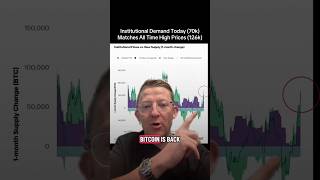
4 times a year we bring in our high net worth sophisticated clients in person for an in-person mastermind as part of our Platinum Program. And these are 7, 8, 9-figure investors, business owners, entrepreneurs. It's a part of our high net worth program. So, you know, it's at least $100,000 in crypto. You know, our highest client's got $32 million. And the latest one we had in Sydney was brilliant. It was just recently held in Sydney. We had 160 clients come in, we had some guest speakers, we had our analyst team speak, I spoke, and it was about really getting to the core of one thing, and that is clarity. Clarity on people's positions, clarity on where the market's going, clarity of strategy. And crypto is such a lonely place, we just wanted to provide an area where people could come together and, you know, meet other like-minded individuals. They could speak with us one-on-one, they could speak with the analysts, they could understand what's happening at the ground level of crypto. And then we overlaid bringing you know, tax experts. We brought in different people in different parts of the industry that people wanted to speak to and had that real touch. And to have 160 of our clients there in person in Sydney was phenomenal. And I just want to give you, you know, a sneak peek of, you know, what we spoke about and some of the insights we shared. So one of the first speakers was Checkmate. Checkmate is our on-chain analyst here at Collective Shift. He's actually one of the world's leading on-chain analysts globally. He used to be the head of on-chain at Glassnode. They're, you know, one of the leading, if not the leading, data and on-chain analysis, you know, companies in the world. And one of the best things that, you know, I've known Checkmate for nearly 6, 7 years now. He's worked with our clients and does regular updates and insights. Really allows people to see exactly what's happening on-chain, you know, what are the movements of coins, exchange flows, unrealized profit and loss happening on-chain with Bitcoin, right? And Bitcoin is the leading indicator of the market. You can love an altcoin all you want, but if Bitcoin is not heading in the right direction, your altcoin's not going to win. So, you know, one of the most beautiful things about, you know, the blockchain is it's immutable and anyone can see it, and we can literally see who's selling and who's moving coins at any one time. And every cycle is completely different. And, you know, James Checkmate, you know, was presenting this to our clients, and one of the best of the things I think, you know, about the data that we're able to share and use is, you know, it's institutionally led. This is very expensive data. It's content and information that isn't widely available and isn't widely understood by people. All right, because if you were to look at this data alone, you know, and you look at a chart, like, it's going to make you super confused. All right, it's a lot. And, you know, for business owners and our clients that are very busy, they don't have time to look at all this sort of stuff. It's about having people to synthesize this information and give an indication of where things are going. Like, you know, data is just data without actually understanding the synthesized outcome of what's actually happening. And that's one of our biggest jobs is to do that heavy lifting for our clients so people don't have to do the work themselves. And honestly, looking at this stuff, Checkmate's an unbelievable guy. He's super smart. He's an engineer. And he's breaking down exactly why this time is different, why the structure of the market has significantly changed. And the players in the market are different. Retail investors primarily led the last cycle. Now it's predominantly institutionally led. And that's going to change what's going to happen with the cycle. Everyone was buying into this 4-year cycle piece, and, you know, the data has showcased that is no longer true. And that's really important to understand that. And even last year where we saw a lot of OG Bitcoiners selling their Bitcoin, you could get really worried and spooked if you didn't know that actually what was just going on was people that bought back at $10,000 were selling because they were huge in profits and was being rebought in by new buyers. So really important, that on-chain analysis sector.
All the old rules do not apply anymore. You have to think about what's market structure doing from a more fundamental standpoint rather than this metric didn't get to my level. Wall Street thinks they've tamed a wild horse. We'll see what happens on a Sunday afternoon when you've got too much options exposure at risk. And at the end of the day, stay humble and stack sats because it is, you know, Bitcoin, it is the asset. I mean, when you look at the scale of this thing, great rotation of old holders to new holders. They're happy to buy above $90,000. They're going to be happy to buy at $90,000, happy to buy at $80,000. These guys are just letting the market come to them. And when you're that kind of buyer, you're not waiting for a 10% pump. These guys are putting it away. Like, there's a lot of sailors out there, they're not doing what sailors doing, but they're not going to sell.
Now, you can have all the data in the world in crypto, the knowledge, the information, but the most important part that I didn't really understand or recognize until I really got into crypto and started working with Travis, who's now come on board, is our Chief Growth Officer. Travis is a, you know, executive coach, performance coach. He's worked with Olympians, athletes, sophisticated investors, a range of different individuals, really about their mindset. And, you know, not only getting clear on the strategy, but the hardest part is actually executing on that strategy. And crypto has this crazy, crazy world where it makes it really difficult to actually understand what's going on, and then emotionally can trigger decisions that are not based on logic, right? And that your psychology is the thing that can hold you back. Bitcoin drops 15%, drops 20%, you make a poor decision. I saw this, you know, a lot of people in the last 8 years, when the market gets volatile, you make emotional decisions. That's because it triggers things in your brain around the fear of loss, the ego, the shame, all right? And then when the market pumps 100%, 200%, you've got the emotions of, you know, greed and euphoria taking over, and then you don't, you know, execute as well. So Travis has been working with our clients for a while now as he's, you know, come on board and, you know, leads the growth of the members. And this isn't taught in crypto. This is like very, very unique to our program and something that Travis adds a lot of value to, to break through that emotional decision-making, break through that constant repeating, round-tripping. And I'll share a little bit of his talk here.
But 4% to 6.5% annual loss from behavioral errors with retail traders. All those things, conviction on people rather than process, not doing research, trading on impulse, those are all things they found that contributed to the average retail trader being down 4% to 6.5% in behavioral errors. Over time, that's massive, a compounding effect on that. And that was per year, by the way. That wasn't a one-time thing. That's not overall portfolio across their lifetime. That's per year. The average day trader in the US, when they last looked at it, makes less than a McDonald's worker. 92% of day traders make less than the average McDonald's worker. Why? Behavioral errors. The biggest driving factor. They think they're smarter than the market. They think they're smarter than the research that's happening around them. They trade based on impulse and based on ego.
So at this point, you've got, you know, the on-chain data, you know, the psychology piece. But the next question is like, you know, how do we actually bring it all together? Then how does this relate to me? And this is really where Matt and Simon, two of our analysts— Simon's our head of education, Matt's our director of research— really brought everything together in terms of, you know, are we in a bull market, are we in a bear, what should I do? If you are new to crypto, here's, you know, how to think about it. If you've been here for a long time, here's how to think about it. And I worked together for a long time in cryptos, you know, he's been working with me for nearly 7 or 8 years. He got in early in Solana, you know, Simon got early in SUI and sold out. You know, there's a lot of noise in crypto, a lot of people having different expertise and different insights and, you know, knowledge and, you know, there's a lot of, like, just a lot of noise, I guess, in crypto, and everyone's, like, competing for, for the limelight. But the best thing about, you know, working with these guys is we bring them on and they aim to hire the best in the space. I've already made a lot of money in crypto, and now they want to give back to others, and they have a real sense of, like, I guess, value to the community and the sense of wanting to give back. And just like me, I got burnt, you know, crypto back 7, 8 years ago, and now we're on a mission to help other people avoid all that. And being an independent research firm, like, we're all incentivized by client results. That's the only way we win. We don't do paid promotional, you know, affiliates. So being able to navigate where we are now and personalize that to people's portfolios is big. So Matt and Simon, you know, came up and spoke about the market outlook and, you know, how they're navigating with their money and what they're doing. And, you know, it's really great insight. Doing nothing is actually doing something. It's being patient and it's waiting to let the market give me a signal. Just because when Bitcoin's doing bad, altcoins do really bad, and I don't necessarily want to play in that game. I'm not going to try to catch a falling knife of an altcoin at this time. I'm going to let the market come to me. I'm going to be patient. I still hold plenty of Bitcoin and I'm happy in that position right now, but I wouldn't reaccumulate until one of these scenarios played out. That's just me.
And that's where the risk-reward has massive implications. Understanding yourself as an investor and how much risk you're willing to hold. And again, holding is definitely a decision. I'm more, I would say I'm more risk-seeking, or I guess have a higher threshold of risk compared to Simon. So again, like, I'm not looking to buy in these scenarios, but I'm more willing to hold a lot of my altcoins throughout this choppiness if we continue to grind lower. And the more I expose my— again, back to likelihoods and possibilities— if we keep grinding lower and the possibility of a bear market is increasing, that's when I'll like continue and then start like to trim and cut my altcoins as that likelihood increases. But again, I'm someone who has a higher, I suppose, risk tolerance, and I'm happy to sort of sit through this uncertainty at the moment. But if I was someone who was uncomfortable with that, if it was not sleeping well at night, you know, that's when I would be taking chips off the table, maybe just holding through Bitcoin or some of my altcoins. Importantly, it doesn't have to be binary. You don't have to sell everything or buy, use all your cash at once. Like that's something that surprisingly you'd be surprised to hear, like over the years, like I guess hundreds of conversations now, like a lot of people, they do get stuck up on either going all in or taking it all out at once. And I suppose part of the benefit of being with us is we do emphasize likelihood and possibilities a lot because you sort of have to think that way, in my opinion, to be like a long-term successful investor.
So you heard the strategy, the psychology, you know, a bit of the insights from, from Matt. And the big thing that we like to do is like actually showcase real-world client results. And we actually had two of our long-term clients come up on stage and speak to the rest of the, the members, which was really cool. And they shared their own story, how they got value out of the membership, where they've actually made money, where they've not. And, you know, a lot of people like you sitting at home, you know, round-tripped and, you know, are busy and have families and careers, and, you know, you've got a lot of wealth you're trying to manage. It can be a lot, right? So we brought up Alex and Adam to speak about, you know, their goals and how they've been through multiple cycles and how they've won using the analysis and systems that we utilize. So yeah, check it out. So I might start with you, Alex. You've been with us for a little while, man. How long you been a part of the group for? And I guess all the challenges you had in crypto before joining.
So I've been with the group probably for— has it been 4 years now?
Yeah, 5 years.
Yeah, 5 years. So I remember the very first video that you put together in the very early days of Collective Shift, and I was like, this is going to be interesting to see where this goes. But where I started, 2018, unfortunately got involved with Celsius Network. I went all in. I took equity out of the house. Put my self-managed super into it, my mum's money, and it was a catastrophic disaster, as many of you know. So living through that really was something that I'll never forget. Enabled me to learn a lot about just investing and managing emotions. I'm glad I've come out of that, but it's been a very long, difficult journey. That's where I was.
And what's the takeaway for you and for the newer members maybe, like looking at where to put your capital, promised returns, the sort of exciting stuff about crypto? Like if you could share and go back and teach yourself something or remind yourself at that earlier journey, what would that be?
Crypto, when you think about crypto, you think about fast gains. You know, you want to get in, you want to get out, make a lot of money and retire. So I did retire actually, just before the Celsius Network thing fell apart. If I was to go back, I would say, don't put all your eggs in one basket, which is what I did. And if it seems too good to be true, it will be, which it was. And also, get comfortable driving around in a Camry and don't go for the Ferrari, right? Because the Ferrari is going to have high maintenance and it's probably going to have an accident, right? So sticking to Bitcoin, being the Camry analogy, is probably the best idea. Just not having a short-term mindset, I think, is the thing. And look, and I made this mistake again, you know, 3 cycles later. I made the same mistake in this cycle where I'm like, I remember looking at you, Ben, and going, oh, he's really heavy in Bitcoin. I'll put, you know, 40% in altcoins, which I did, and that was a mistake. But, you know, always learning. And I like to make mistakes twice or 3 times because then it really seizes in, you know, it's embedded in my core now. I'll never forget them. Will I repeat them? Probably. But, you know, maybe not.
Adam, what about you? So you, before joining, what was kind of the biggest challenge you were facing and sort of how have you navigated that?
Been in crypto since about 2017 and good old YouTube and Twitter were my educators. So round and round we went again and again and again for 3 cycles as well. Made every single mistake. Shout out for the synthetic one that I went around on.
You were on that?
Yeah, I was on that one.
Oh, awesome.
Finally started to figure it out after watching all your stuff and I was at the lower level for quite some time and I actually had a really bad accident. I'm a business owner and at the time time I needed to pull money out. I was 21, so it was probably a lucky time. So that's the only time I've ever taken profits. Nearly died to have to do it. And after that, started to change my portfolio, listen to you guys more and more. Went from 50 to 60% altcoins that kept going around and losing money to, you know, increasing my Bitcoin portfolio and a small percentage of altcoins. And here we are today.
And if you could, again, what you'd tell yourself, or maybe an experience share for the other members in the room, like what was a sort of an aha moment or a lesson if you could go back, you'd you'd change?
The biggest thing I did, I don't know if I heard it on a podcast of yours or something, but I actually went back and looked at all my transactions in all my trades, and I figured out how much money I would have had if I'd just stuck to Bitcoin. And it was bloody scary. That was probably the moment that really changed me and said, hey, don't go the Ferrari, let's stick to the Camry. Yeah, since then it's been great.
So, you know, now you've seen, you know, the rest of the team. I did a talk at the start, the Platinum Playbook, and really the reason I do Collective Shift, the reason I I started this 5 and a half years ago was because I lost a lot of money with a crypto YouTube influencer that I used to work with. And I saw the inner workings of what goes on. And I'm so passionate about Bitcoin. I'm so passionate about decentralization, the power back to the everyday person, how generational wealth can be made during this asset class if done right. But I lost a lot of money when I first started out by listening to the wrong people. And when I started to get an edge and I started working with Matt and the team, I realized that we had this edge using our strategies of fundamental analysis, on-chain sentiment analysis, and we were better than a lot of these influencers online. And we actually were making real money. I made life-changing amounts of money back in the metaverse in 2021. You know, we wanted to be able to continue growing our portfolio and helping other people. So the idea was we could sell our research to others that wanted to follow along and utilize what we do. They make money, we make money through the research fees we charge, and we can buy more crypto. And that's the way we do it. We have aligned incentives. You know, we don't do paid promotion, we don't do affiliate links. And, you know, we wanted to really make sure that our trust and transparency and reliability incentives were 100% correlated with our clients. And that's exactly how we've grown over the last 5 years. We've got over 1,000 active clients now. Coinbase, the client, SwiftX is a client. But it's really about our Platinum Playbook and the way we think about our investing and the way our methodology works. So I wanted to share a little bit of that, uh, in this presentation as well. Survival during these periods is most important, all right? And a lot of you are in different parts of the, the journey of crypto, but I think for those that have been around for long enough, you know that these periods of time, these fearful maniac sort of periods, they pass. It feels like we're going to be like in this stage forever, but it doesn't, you know, it's never that way. Your goal is to stay in the game. What do retail investors do? The real retail, they're buying at local tops, they're panicking on the way down, they panic sell, and it just happens over and over and over again. All right, you've just got to stay in the game. Hope is not a strategy. I relay this to so many members that have probably been around for, you know, a little while, multiple cycles. Hope is expensive, particularly on altcoins that you're holding and they're down. I know because I hoped my altcoins back in 2017, 2021 were going to come back. And I look back and you see what changes happen every single cycle. Those altcoins are well and gone. The trend changes, bull markets change. Hope is expensive. There's the difference between hope and conviction in an asset that you believe will come back. It's a very fine line though, by the way, and it's a very difficult decision whether you cut it because it's underperforming and you don't think it's going to come back, or you wait, you hold, you lower your buy price, whatever it might be. It's a very difficult choice. So there you have it. There's a bit of an insight on our in-person masterminds. We do 4 times a year. Our clients get access to 2 of these events, whether you're in Australia, the US, London. We've got clients from 40 different countries, and the in-person piece is just phenomenal. We take that away, we do the in-person, and then we have pop-up events. We do, you know, WhatsApp community. We've got so many different parts around making this part real. Like, you're allocating real, real capital. We work with, you know, high net worth. You want to make sure, you know, you're a part of a great community. And that's exactly why our programs are by application only. We want to make sure that everyone that comes in is at a certain sophisticated level and really adds to the community and doesn't detract from it. So if you're interested in this and you were thinking, yeah, I'd love to be a part of that program, we've got a little link in the description below. You can check it out. It's got a free training on how we operate and how we work. You can speak to one of our team. Otherwise, yeah, let me know what else you'd like us to talk about on the channel and comment it below, and I'd love to continue helping everyone out and love to meet all of you in person, as always. So thanks, folks, and yeah, speak soon.