A Day in the Life of an Actual Crypto CEO
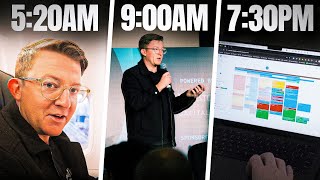
A behind-the-scenes YouTube vlog by Ben Simpson documenting a typical work trip as CEO of Collective Shift: travel to conferences (Sydney, Adelaide), preparing and delivering a 10–15 minute keynote and participating in panels, meeting platinum clients, and managing company growth. The video emphasizes realistic day-to-day work (team management, research-based keynote prep, market commentary) and offers practical crypto investing advice (stay patient, keep cash on the sidelines, favor Bitcoin/Ethereum when overallocated to altcoins).
Chapters
Every day in the Life, crypto video, YouTube video you've probably seen is like luxurious boats, travels, girls, women, drinks, all this sort of stuff. Absolute nonsense. Most of this is just complete shit. Today I'm going to show you a real behind the scenes of a crypto CEO going to Sydney, speaking and trying to make a positive impact on people, to actually help people make money in crypto. So come along with us as we go to Sydney and Adelaide.
Morning, how are you? How are you? Good, thank you. We're going to Sydney.
Creative business.
All right, we're heading to Sydney to speak at the Digital Asset and AI conference. So we've got a keynote today, panel session, media interview, then we're doing some drinks with our platinum clients tonight. And then we're heading to Adelaide tomorrow for meeting with another one of our platinum clients. We're gonna get a full behind the scenes next couple of days.
Just preparing for my keynote today on our platform, our analyst post, research and data, kind of talking about the L of August and September. Historically, these two months are horrible for crypto. The returns are negative, things are quiet. You basically just got to survive this quarter to then thrive in Q4. And we're getting a lot of calls, a lot of people asking what do we think about the market right now? Things aren't going well. Altcoins are down, whether they should sell, what's going on. The stock market's ripping, but crypto's down. It's really about just staying calm, staying patient. Bitcoin's still up 100% over the last 12 months. People sort of forget that. So just preparing some data, my keynote afternoon and yeah, gonna share some of the insights.
So I got off the call with a platinum client this morning and it was something that's actually pretty common at the moment where people have over invested and they don't have enough money on the sidelines in crypto because you get the volatility. You get so much, so many pullbacks and opportunities to buy the Diplomat. And historically these dips in these bull markets are the best times to buy because you get these 20, 30% corrections and if you don't have any cash on the sidelines to buy back in the dip, you can't lower your average price. So one of the clients I spoke to this morning had over allocated and doesn't have any additional cash on the sidelines, so you can't deploy. So ultimately without that, you don't have a lot of options to reinvest. So what I've done in the past when I've done that. And over allocated is just consolidate. Especially if you're over allocating altcoins and maybe you're down 20 or 30%. Consolidate, move into Bitcoin.
Consolidating, move into Bitcoin or Ethereum and then you know you're not having the drawdowns of those corrections with altcoins, because if the bitcoin goes down 20%, your old coin is going to go down 30, 40, 50%. Right. So if you can try and get some cash just deploying those in those corrections because that's when you can get 20, 30, 50% moves on the upside and you're going to get a better average price. So moral of the story is don't invest too much cash, always have some on the sidelines, mate. It was fast, very fast. The little upgraded business always helps. Yeah. Nah, just prepping for the keynote, we had a lot on today, I was just. It's like 9am We've only had like five hours sleep, so I got in from Gold coast yesterday, so. Hey mate, how are ya?
Like historically it's just a really boring period in the market and.
Nearly 15 people that work for us now at Collective Shift, there's probably about 10 or 11 full timers, plus we've probably got half a dozen contractors, so equivalent of 15 full timers and it's growing massively. We've nearly doubled the team in the last six months. So that was David, our head of member success. So I try and check in with him every week, maybe once or twice a week. We've got an amazing team. I really don't need to do too much. These guys are pretty much sorted, but we have over a thousand active members now in our platform and he sort of looks after them all and he does the strategy calls and a lot of members support and things like that. So candidates, check in, see how he's going. We've got a big master class coming up this Thursday, so we're just preparing for that and he's reaching out to our high net worth clients and just making sure they can attend and preparing them as best they can. So my job as CEO is basically just to make sure they've got everything they need to do their job and we hire good people, they do amazing things. So yeah, pretty lucky with that. Sorry man, our flight got moved earlier.
Thanks, man.
So I live more than six months outside of Melbourne, so my place in Melbourne, but I live on the road for more than six months of the year and for the first three years of building this Startup. We had basically no money, right. So it was living in bloody, you know, not quite backpackers, but it was like pretty rough going there for a little while. Now the business is really on a good trajectory. I can invest a little bit more into getting a nicer place. Helps with sleep, especially when I'm speaking. And at the moment probably only getting four, four maybe four and a half hours sleep because I'm traveling so much. Like getting a good hotel, getting a good bed makes the world of difference. It has a gym, you know, that I can actually get a good night's sleep. When I used to just slum it out on the road, like you just get a shit sleep, it's got no good food, you feel like crap the whole day and affects everything else, right. So spending like the extra 50 bucks, 100 bucks to get a good hotel makes a massive return on investment. So hasn't always been like that. But I'm glad I can actually stay at half decent hotels now.
Here we are, mate.
Need more coffee. So I always get asked how do I actually prepare for these keynotes and these panel presentations? Like what actually goes in behind the scenes when you do one of these things? The first thing to understand is that panel presentations are super easy, right, because you're up there with four or five others and basically you can just. I just usually just show up and I know what I'm talking about. Maybe there's like a pre conversation it's had. So last week we actually had a 30 minute talk with other panel presenters and the moderator just to sort of go through what we're talking about. But when it comes to a keynote, that's a whole other kettle of fish because it's all on you, right? So the first thing I try and understand is, you know, who am I talking to? Like who's actually in the audience? Like what is, like what is their knowledge about crypto? Why are they at the conference? What's the conference even about? Second of all is how long am I speaking for? That's a big one. So the talk I'm doing today is only about 10 or 15 minutes. And what I usually go and do is once I know who I'm speaking to and how long I have is try and come up with what is, what are people asking about right now? Like what is something that people want to know? And I have so much data, obviously with the content I do and the members I work with, I know exactly what people are after. So at the moment it's a lot about like, you know, where we are in the cycle. Is the bull market over what happens if there's a recession? Should people be buying the dip? And also again, like strategy, how do you put a portfolio together? So what I basically put together is my presentation today is creating a crypto investing strategy in 10 minutes. And really what I try and focus on is what are the key takeaways? What is something going to walk away from my presentation? I always want to deliver as much value as possible. What are the things that someone walks away and go, these are the four things I learned. So once they've got that, I then start to lay out my presentation and that's really using data that I've got from my team, my analysts, or it might be just data I know of and I start to piece together this presentation. So literally this was like, you know, yesterday or the day before. I was putting together this slideshow on the plane because I was like, actually it was last night. That's right, it was last night. I was putting together these slides to put together to present today. We sent it over to the, to the event and they get it going. So once you know the content it becomes really easy. But if you're talking about stuff you don't know about, you know, obviously it's a lot harder. So I've been doing this for years now, sort of become second nature. But yeah, that's kind of how I prepare. Like it's non stop, absolutely non stop. The market's going sideways.
You know these guys you've been watching on YouTube, the guys that you know, have the million dollar mansion, the rented out Lamborghinis, the boats, the yachts and they do this day in the life video of them living this amazing lifestyle. I've met these guys and it's just so full of shit, right? They sell dreams, they sell visions, they sell hope to people that are maybe in nine to five jobs. That's not what I'm doing on this channel and it's not what I'm showing you behind the scenes. I'm genuinely showing the real deal of us building a multi seven figure research company in the crypto space where we really deliver value and really deliver results. You're not going to see all the boats and the girls and the Lamborghinis on these videos. It's more about the real deal, what goes in behind the scenes, what on earth I do, the ups, the downs, the challenges. And I'm just glad you coming along with me. So there's no clickbait in this video. You're just generally Going to see some good insights and yeah, hopefully. Enjoy.
Amazing. Do you know which room the bags are in?
We collected too many of these. I could.
I reckon I've got maybe 50 of these now. If I actually kept them, I just lose them. So this conference is digital Assets AI technology. So it's a bit of everything. Basically, you have like, companies go and pitch to investors and then get people like me to come present.
So, yeah, we've got about 12 staff now, which is pretty nuts in Australia. And we've really sort of pivoted towards trying to be like the morning star of crypto.
No one's in the same place. We're five copies deep because again, average about four and a half hours sleep. So that's gonna be interesting when you. I always don't like going on too much, less sleeping over talk, but actually pretty decent grad here. So this is crypto, AI, Digital assets, tech. I don't know, a few massive subjects are sort of just piled into one. I think the AI stuff was up this morning, so I'm about to go stalking crypto. I'll probably look over my notes, look at my slides just to remember what I'm talking about. But this stuff's pretty much my bread and butter. So have some slides, talk about the market, talk about how to create an investing strategy in under 10 minutes. So sort of go through that. I don't think we've got any time for Q and A. So just kind of knock it out, smash it out, and then have a media interview. And then we've got a panel later on today, so hope you guys are well. And is it a mic or handheld? No, it's on the lectern. Is there a handheld you can. Yeah, do you prefer. Yes, please. Yeah. Okay, I'll let them know. Thank you so much. Okay, cheers. So psychologically, if you stand behind a lectern, there's something between you and the crowd. So it's harder to build trust. So I learned this when I did my public speaking course last year, two years ago, when I was doing my preparation for my TEDx talk, that by speaking behind something, it's harder for the crowd to trust you. And also, first impressions for a human is usually created within the first four or five seconds. So one, dress nice. Number two, never use a lectern, never stand behind something, always get out in front and open and be open to the audience. And the trust goes up instantly.
About to go on, just ringing the bell. When they ring the bell, everyone comes in and I'm busting For a piss. Been slamming the waters. We did a ice bath and sauna last night, Daniel and I, and I didn't drink any water. So I've been slamming it today and non stop going to the bathroom. So just have to hold on while we're gonna go do this. Key.
Thank you.
So the, the blue, the far right is the current cycle and as the. The colored lines go down further, they are basically.
Millions of dollars in the next 10, 20, 30 years. It's currently at 60,000, but we will see a lot of volatility and a lot of people lose money.
Ten minutes went fast.
I think it went all right. I sort of lost track in the middle there because I was like, I don't know how much to spend on this slide. Never actually done a talk that went for 10 minutes. So I was trying to fly through it. I kind of tried to balance both for people that hadn't bought crypto, because there's people in there that didn't really own any crypto, but there was a lot of people that had a lot of crypto. So I was trying to balance both the beginner and advanced stuff. But, yeah, I think overall went all right. The next speaker shook my hand, so I don't know, we'll see the feedback afterwards and see how many people come up and talk.
So cryptocurrency and bitcoin specifically is a way for me to help other people understand about how money works and how finance works, how investing works. And I believe bitcoin is one of the best mechanisms to grow your wealth. So that's how I help you. Yeah, perfect. Because we are actually setting up some speakers as well. So I'll just let Steve know that you're going to be. So we can probably do another session. That's good. Amazing. Thanks so much. Cheers. Thanks, man. For whatever reason, people in crypto just don't remain patient. Like, if you look over the life cycle of bitcoin, it's compounding at 60% year over year. Even today it's up 100% in the last 12 months. And yet people, when the market dips, panic. And I think it's because they over allocate to altcoins. Like, people think about, you know, trying to get too much of a return. Apparently 60% year over year is not good enough. So they barrel into altcoins. When you get these corrections, everything bleeds out and then they panic. So really having a top heavy portfolio is super important because if you look at the bitcoin halving cycle, usually the bitcoin will peak somewhere between six months to 18 months after Bitcoin halving. So we've probably got six to 12 months to go. Bitcoin will usually run and then the assets will. The money will flow down from there into the other altcoins. But yet people go altcoins first. Not to say that you can't have risk in your portfolio. I'm pretty heavy on eth and altcoins, but ultimately you've got to be able to wear the downside if you want to go in altcoins early. So if you invest in altcoins, proceed with caution. It's going to happen. But don't get too impatient when the market dies.
I just wrapped up a bit of lunch. I wasn't quite Korean barbecue. If you want to see the first vlog, check out the Korean week in the Life, but had some good lunch. Now we're going to go to the panel. This panel's got madness, right? We're talking about AI security tokens, deepin, we're talking about.
Crypto, we're talking about bitcoin, we're talking about. There's about six massive subjects in 30 minutes on a panel. So.
This panel is going to be a little bit easier than Korea because everyone speaks English. We're in the last panel in Korea. If you watch the vlog, the audience had to translate from Korean to English and the organizing committee was like, in Korean, obviously. So it's kind of hard, the translation difference. But yeah, we've got a pretty good panel today. Everyone's like, got a different skill set. So there's an AI security tokens guy, someone for Digital X, for the etf. We're fund manager and there's me. So we're a good mix. So going to be fun. Good crowd out there. So fun.
Yeah. A sentiment. The last probably six months has been pretty flat. I mean, bitcoin, the whole crypto market has sort of been.
I will watch it. And now, ladies and gentlemen.
All done, finished the panel. That was pretty good. 30 minutes to cover. AI, DPIN, security tokens, crypto, it's just never enough. But those guys were pretty smart. Actually, one of the guys on there, Joey from the SingularityNET, which we met earlier, he's like one of the OG, like crypto AI projects, like those guys were around back in 2017. If you were an investor, then you probably remember the Singularity ico. I'm not an investor personally, but those guys have been doing crypto and AI for a long time. But I think that the key takeaway for me is that there's investing and then there's like, then there's like, is this thing actually viable? And there's like thousands and thousands of different cryptocurrencies all trying to create a solution for probably like eight problems. We actually need solving. That doesn't necessarily change the investment lens, you know, Deepin, AI, metaverse, gaming. These are all sexy narratives. Do they need blockchain? Will they actually solve something? Will it be something around in 5, 10 years time? Who knows? But in the short term, a lot of these projects are good investments. If you find good fundamental value and get the right narrative, they can grow a lot in a bull market. So it's about finding those projects, moving away the shit, get rid of that. But yeah, do these things really need a blockchain? I don't know. We'll find out.