I Just Took a Huge Loss in Crypto
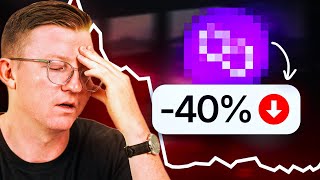
Ben Simpson (YouTube) recounts personal crypto investing mistakes and lessons after taking losses on altcoins. He describes two large July 2023 altcoin investments (Polygon and Maple), explains why Polygon performed poorly (overweighting announced partnerships, weak on-chain/user metrics) while Maple (MPL) has stronger on-chain product/TVL and token revenue capture, and generalizes four lessons: due diligence, managing emotions, entry/exit plans, and regularly reviewing thesis. He also references an NFT loss (Moonbirds) as an example of failing to take profits.
Questions this video answers
August 2017.
Early 2018.
July 2023.
About 40%.
About +200%.
Chapters
In August of 2017, I first discovered bitcoin and I absolutely loved it. I went completely down the rabbit hole and in early 2018 I poured everything I had into crypto. Over the last six or seven years, I've made so many mistakes and so many lessons. There was one in particular over the last 24 months that I want to share with you today where I made a really big mistake, which I've learned from. And I want to share with you that lesson so you don't make the same mistake now. About 12 months ago, in July of 20, what was it, 2023, I made two pretty large investments in the Altco space in the bear market. I only tend to hold Bitcoin because I know bitcoin outperforms pretty much all altcoins by about 99% of the time. I held a lot of bitcoin during the bear market and it was about, as I said in July 2023 where I made my first two altcoin investments for this cycle and I went really heavy. As you probably know by now, my investment strategy is to go hard on very few altcoins rather than having 20 or 50 or 70 different altcoins with very little capital in the middle. Once I know what I'm investing, I have high conviction. Now, the first investment I made was Polygon. Now Polygon, the project Matic was super exciting at the time. The layer 2 space was just heating up and I was super excited about getting on board this train. The reason I went with Polygon over the likes of Optimism and a few others was purely around their Web two integrations or their quote unquote partnerships that they'd spoken about, you know, the likes of DraftKings, Starbucks, Disney to just to name a few. They had so many exciting partnerships that they had flaunted to the market that they were going to make and integrate. Plus they had the upcoming matic to Pole 2.0 upgrade. So I felt that tokenomics was good. I felt they had the Web two partnerships and also I thought the Ethereum narrative was really going to kick off and essentially the Layer twos were going to hop off the back of that. Now as the next 12 months went on, what we end up seeing was that Ethereum really didn't do too much. Over the next 12 months the layer two space became super, super saturated within the market and ultimately a lot of the partnerships really didn't play out. Now looking at my thesis, where do you think I went wrong? Ultimately I over indexed in these quote unquote partnerships that that flaunted the market that, you know, ultimately, whether they paid off or whether or not it actually happened, it didn't. And really the market didn't pick up any of the narratives or the value that that really exposed. Also, if you look at the chart, you can see how all the layer twos really haven't performed really well at all. Polygon's down about 40% since when I bought and when I recently sold. And I think here just the lesson and takeaway is that I over index as I mentioned on that, you know, the partnerships I didn't really focus enough on where was the user metrics, what were they building, what was the user adoption, who actually used Polygon. Now arguably at the moment, you know, they've been able to build or poly markets built on top of Polygon. But again really that mainstream narrative, or I guess the excitement around the layer 2s have really died off. In crypto, when you invest in a project, not only do you need those partnerships, you need the marketing, but you also need the underlying fundamental value. You need the on chain metrics and you need the revenue to drive back to the token. You know, another example that I've invested in the past was D Hedge. D Hedge was a, a project that was basically building copy trading on chain. I really love the idea. I still think it has a lot of legs. But ultimately the difference between the protocol and the token is that a lot of the revenue isn't driving back to the token. Same with XRP and Ripple. You can have a great project that is Ripple, let's say they're doing really great things in the real world. But unless the token is actually driving revenue and it's actually driving great tokenomics, then the price of the token won't go up. It's not like a stock or a business in the nasdaq. When you buy Facebook, you're buying the underlying value of a share when all revenue is driving back. Crypto is not the same. The token and the protocol, the token and the business are two separate things. You can have a great business in crypto, but if the revenue isn't driving back the token, well then you're not going to actually see any of that value from that investment. So essentially I have in the last few weeks sold off my Matic, sold off my Polygon, and that is a mistake that I made and learned from that and essentially made the decision to cut it off. Now, at the same time, when I invest in a Polygon, I also invest in a project called Maple. Now, if you follow me, For a little while. You know that Maple is one of my favorite projects. Maple or the ticker MPL is up about 200% since I invested the same time I invest into Polygon. Now the reason Maple has done so well is not only has it the real world integrations, but it's genuinely got a token that is fueling the ecosystem. Maple is an institutional DEFI product. It's up over at the moment around 400 million in total value locked on chain and they're continuing to generate real products that people are actually using. So not only has it got the partnerships in the real world, but it's actually got a product that people are using with an on chain product where people are deploying capital, they're earning a yield or they're getting lending from and it's actually solving that problem. And that value is accruing through the token and the token is ultimately growing over time. Now, Defi took a big hit over the last couple of years with obviously the SEC and a lot of the Defi projects sold off. But Maple continues to be a quiet killer and it continues to be a large percentage of my portfolio as it continues to grow. The real key difference between the two here folks, as I mentioned, is that one had the partnerships, but it didn't have the fundamental underlying value, didn't have the real world adoption, it didn't have the user metrics and it didn't have that narrative where, you know, Maple, arguably Defi, hasn't had the narrative, but it had the partnerships, it's got the user adoption and it's actually fueling revenue through the token and it's growing the demand. Once we get that narrative, I think that's going to take off even more and I think that's where the project will continue to fly. So between the two, we've got a couple of different things. And I think the biggest key takeaway that I want to share with you is that once you understand you've made investment and hasn't gone the way that you've wanted it to, it's really important that you cut ties with that project. Another investment that I made back in the NFT space was Moon Birds. A lot of you probably remember the Moon Birds project got in at the mint price of whatever it was, 2.2, 2.5 eth and ran it all the way up and all the way down again. Pretty classic moving crypto. Went up to I think at the peak 40 or 45 eth. I think it was in the hundreds of thousands of DOL and Wrote it all the way up and all the way down again. Again, the marketing and the FOMO can get you really sucked in on not only the buyer side, but even the sell side. Now, I haven't sold my maple this cycle. I've actually bought maple in previous cycles. When I've sold large percentages near the top, I didn't execute on the Moonbirds. I think the NFT cycle was something none of us really predicted how it's going to play out. But we've got to understand that not only when it comes time to buy, we're looking at those quality fundamentals, whether it be on chain, whether it be the sentiment. We also need to analyze sell, period, right when it comes time to take profits. When we analyze top of the cycles, this is where you see mass fomo, you see sentiment going crazy, you see social media going nuts, you see people piling in when we're getting massive green candles, that's ultimately the right signal to start selling as well. So not only these metrics help us when we come to buy, but it also helps us when it comes time to sell. And I made that mistake with Moonbird. So sharing with you a couple of those mistakes that ultimately helps me with my strategy and moving forward. We've got to learn from those poor investments or those decisions that we regret. That's what helps fuels us to be a better investor. If you're sitting on those projects that you invested three or four years ago, hoping they're going to come back, that's not a strategy. Hope is not a strategy. You always hear me talk about this. We need to learn from those mistakes, especially in crypto because it moves so fast. There's going to come a time in the next 12 or 24 months where we need to start taking profits and we need to look at the data, look at the research and see what those projects are doing and realize a lot of these projects are going to get way overvalued. I mean, a huge interest from retail investments, huge excitement from consumers, and they're going to be piling it at the top. That is the are liquidity. So we need to be remembering that at the time and not getting married to our bags. That's another big lesson. Being married to our project is not a viable strategy. Right. We need to be as unemotional as possible, logical as possible, and that's what's going to help us, not only on the buy side, but the sell side as well. So by analyzing these four mistakes, the four things that I want to share with you Today are the four lessons that I continue to take in. Every time I'm looking at a project, looking at analyzing some of our members portfolios, when I'm helping them with their strategy. These are the things that you need to take away with your portfolio. And the first one is due diligence. I see so many people just barreling into projects, not doing the proper due diligence, not understanding the projects they're investing in. You know, a lot of the members that I speak to that come and work with us end up having a portfolio of 30, 40, 50 coins with so many they don't even understand. And especially those older projects, they don't know whether or not they're going to ride through and actually make it this cycle. You've got to do the due diligence and look at all those areas, whether it be on chain, the partnerships, the revenue models, the team. We've got to look at all of that. If you need help with that, again, that's what we do here at Collective Shift. We've got so much research on tokens where we can help you understand a team. The tokenomics, the bullish, the bearish, bearish. We've got all of that in our platform that we can help do that due diligence for you, but it's a really key, important part. The second one is managing emotions. You've got to invest based off logic and not emotions. Especially if you've invested in something that's down or it's gone up a lot. Managing your emotions is a key way to ensure that you're not holding on to something that essentially won't come back. Especially those projects that are down 70, 80, 90%. If your project is down 70 or 80%, it's got to go up 800, 900, sometimes 10x just to get back to break even. Alright, manage your emotions and cut the ties off projects if you're not happy with the way they're performing or if you don't have conviction. Again, same on the sell side. Don't be married to a project. At the end of the day, these are investments in crypto. They're going to go up a lot and they're going to go down a lot in those macro cycles. So it's important you take profits so you're not looking back and being frustrated when you didn't make a decision that you should have. Having those entries and exit strategies as well. This really helps level out those emotions by having those dollar cost averaging and dollar cost averaging out strategies. That's what I'VE done with Maple in the last couple of cycles when I've been able to take profits is dollar cost average out and sell on the way out. Where I made most of my money was investing early in the metaverse, before the metaverse was really a thing, before Facebook renamed to Meta. You know I was able to get out some of these projects 20, 30, 40x. It was because I had dollar cost averaging out strategies. I just didn't buy at one point and sell when it did a 40x. That's just not realistic. As it was going up, I was taking profits off the table. I was banking those profits and still having a position in the market. So as things got crazier, I still had exposure and I could continue to make those gains. And the is review your thesis. This is such an overlooked one that so many of our members come and we talk about we need to restrategize Crypto moves so fast. And if you're not continuing to review your strategy and your investing thesis, you're going to be left behind. As I mentioned in previous videos, like what's going on right now is like AI deep in next gen layer ones. None of those were really even a thing in the last cycles. So if you're still holding on to previous cycle coins, you're going to be left behind. You've got to review your thesis. You will be wrong on Investments. No one is ever 100% right. You just got to out beat the market. You're ultimately trying to beat Bitcoin if you can. That's what we're trying to do, a collective shift. And we've done it pretty well. It's because we're continuing to review our thesis, looking at the new projects and cutting off the projects that are not performing. Hope is not a strategy. Alright? So if I can leave you with anything, please review your thesis. Review the assets you have in your portfolio. Cull the crap, right? Remove the emotion, look at it logically and create a plan. Do that due diligence. And if you need help with any of that, that's what we're here for, right? We've got a bunch of independent analysts that can help with all of that. We help with over a thousand people across the world with their portfolios and really it's a great way to outsource a lot of that work. So if you need help, please out. But if I can leave you with one thing petty, just review your portfolio and don't get married to these projects on the buy side or the sell side. Have a plan and make sure you make profits this cycle. Hopefully you enjoyed the video. I'd love to hear any feedback on what you think about this. Do you agree with it? Have you got any lessons or stories yourself? Please leave in the comments below and I'll see you on the next video.