The Ultimate Guide to Fix Your Messy Crypto Portfolio
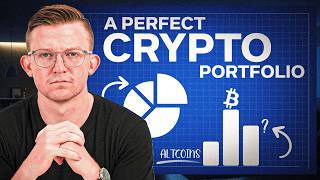
Ben Simpson (YouTube, Jul 22, 2024) explains how to clean up and optimize a "messy" crypto portfolio. Main recommendations: consolidate scattered holdings, prioritise percentage-based allocation (not dollar amounts), hold a large core in Bitcoin and Ethereum (recommended 50–70%), use the 1–5% rule per altcoin with a target of ~10–15 altcoins for time‑poor investors, and reserve small percentages (1–2%) for very high‑risk meme/low‑cap plays. He also outlines sector buckets (Solana and other layer‑1s, gaming chains like Ronin, DeFi, layer‑2s, layer‑3s), and stresses checking pair performance vs BTC, staking, and FDV/fully diluted supply when evaluating projects.
Questions this video answers
July 22, 2024
50–70% of the portfolio (recommended)
1–5% per altcoin (1% = low risk, 5% = high risk)
Around 10–15 altcoins
1–2% (up to 5% used as a rotating high‑risk bucket)
Chapters
One of the biggest overlooked part of actually succeeding in crypto is your portfolio construction. What is your portfolio strategy? So many people go out and buy more and more coins listening to YouTubers and influencers online talk about new coins. No crypto influencer wants to tell you the secret inside information on this Exit liquidity. And you wake up one day and you've got 30, 40, 50 different coins in your portfolio. Some of you have different wallets, you have different exchanges, and you don't actually know where these coins are located, how much you actually have, and what your portfolio construction will look like.
So in this video today, I'm going to share with you some of the best strategies you can utilize to actually optimize your portfolio, what a good portfolio looks like, and some of the mistakes you may create on your crypto journey as you accumulate more and more altcoins. I'm going to go through some of the mistakes I made and now how my portfolio looks going into the remainder of 20, 24 and how you can optimize your portfolio. Now, if you have a large portfolio, some of you have more than, let's say a quarter, quarter a million, this is going to be even more important for you. One or two percent movements as you get into the hundreds of thousands. Even the millions of dollars in your crypto portfolio are substantial differences when actually looking at your results at the end of the day. So the first thing I want you to do is try and just bring everything together. Even if you get a spreadsheet, we've got a tool on collective shift where you can actually just add in all your crypto assets, bring everything together and figure out what percentages you currently have. Right now, this is going to be the first indication of where you are on your crypto journey in terms of actually understanding your portfolio construction. Now, when I first started out six or seven years ago, I started buying crypto and I primarily started with Bitcoin and Ethereum and had a couple of altcoins to start, had three or four, very manageable. But as a lot of you have probably been on the same journey over time, you start adding to this portfolio, you start listening to influencers, you start having your favorite YouTubers and they're pumping out new coins each and every day, every week. And all of a sudden you wake up with 30 or 40 coins. Now, is that too many? How many coins should I actually have in my portfolio? The biggest trap I see people make in crypto is having too many coins. The reason being, and the reason you have these many coins is you're chasing those returns, right? You're buying these coins because you think they're going to go up, you think they're going to make these massive returns. But at the end of the day, probably most of these coins you bought are probably a load of crap and have basically zero value, right? The first thing you need to do after you've figured out what you actually have in your portfolio is what are these coins that are underperforming? What are these coins you need to get rid of? As you're looking at that, you're probably wondering what to sell? How do I sell? Sell, you know, which one should I move back into? Bitcoin and Ethereum? What percentages? These are all questions you need to be asking. So before you go and consolidate, because I went through a consolidation period, 2018, 2009, and I'll share that. The most important thing is you need to figure out your goals and your risk appetite, right? So are you 50 or 60 heading into retirement or are you 25, 30 and really looking for wealth creation for most of you? And I probably recommend for pretty much everyone in crypto, when looking at portfolio construction, I recommend having a large percentage of Bitcoin and Ethereum. I a lot of people overlook this and try and go straight into Altcoins and try and get those big returns. But in downturns and in periods of corrections in bull markets, these altcoins will be burnt more than Bitcoin. If bitcoin goes down 20 or 30%, altcoins are a leverage position. They're going to go down even further. So it's really important to have a large percentage of Bitcoin and Ethereum. I try and have at least 50 to 70% of my portfolio in Bitcoin and Ethereum to begin with. And then I'm going to look to add something like Solana as a hedge against Ethereum and then maybe going down a list and having some of the other top tens, right, Which I'll share in a second. If you have a lot of coins and you're wondering which ones to sell and which ones to bring back, some people ask me, should I buy this, should I buy that? How much should I buy? If I want to add, you know, some defi to my, my portfolio or if I want to add some, some new layer ones, how much should I buy? I always bring it back to percentages. So the rule I usually utilize when adding any coins to my portfolio is the 1 to 5% rule. Okay? Any old coins, I like to have somewhere between 1 and 5%, 1% is low risk, 5% is high risk. Sometimes my altcoins will go out to sort of the 5, 10, 15% range. Sometimes like individual altcoins will go that far if they start to perform well. But then I'll rebalance them back into my portfolio to try and have somewhere between 1 and 5%. Now my main objective is trying to maintain somewhere between 10 and 15 altcoins. Some of you that have more time, you may go out to like the 15, 20 range. But some of you that are busy, that are business owners, entrepreneurs, investors, doctors, whatever, and you don't have time to be managing a full time portfolio in crypto. I would recommend somewhere around that 10 to 15 range. Why 10 to 15? Well, it's more about when it comes time to sell. The biggest mistake I see investors make when they have a large number of coins in their portfolio is when it comes time to sell, it becomes completely unmanageable to figure out when to sell your coins. Right? And for a lot of you, perhaps those bottom five coins, you have quite a small amount of like liquidity in each of those coins. So a little bit of capital in each of those coins. So what will happen? Let's say you've got a $100,000 portfolio and those bottom five coins, you might have $1,000, $2,000. Let's say those, those coins, 5 or 10x. Okay great, you might make 5 grand, 10 grand, probably not going to make a whole lot of difference in the long term of your portfolio. But if you can consolidate some of those coins and now have 10, 20, $30,000 in some of these coins as your portfolio grows, and then you do a 5 to 10x, now we're talking 100, 150, $300,000 return on some of those coins, that consolidation, try and get between those 10 and 15 coins, have a large percentage of Bitcoin, Ethereum, and then aim to have 1 to 5% in each of those altcoins, that's where I'd like to start out. That's where I recommend a lot of you that are busy, that are time poor. That's a good structured portfolio. Now you're probably thinking, what should I add to my portfolio? What even should a good portfolio construction look like? Well, it really depends how much risk you want to have, how much time you want to spend in the market, and also you know your goals and your strategy, right? So for a lot of you that are beginner, that maybe you just want to have some exposure, maybe you're Looking at Bitcoin and crypto is just a diversification away from your, your property, your business. I recommend just having a really basic portfolio, some of you, that might just be Bitcoin, 100% Bitcoin. Right. If you just want to set it and forget it, I just throw some, you know, maybe 1 to 5% of your entire net worth in bitcoin and just forget about it. Right. Throw it in a cold wallet, throw it away and forget about it. All right. That's one end of the spectrum. Moving down a little bit. If you want to have a little more risk, I'd have that BTC and ETH portfolio and then maybe add something like Solana into your portfolio. Okay. Having a couple of good layer ones in bitcoin, focusing on that infrastructure level and layer ones, I think that's where it's going to accrue a lot of value. And rather than playing each individual crypto or like trying to pick an individual stock, you can back the infrastructure level. The way I like to think about it is rather than trying to pick the app that's going to, you know, 10x100x, you just back the App Store, back Apple, back Android. Right? That's your Solana and Ethereum, in my opinion. So right down one end you've got just bitcoin. Only moving down a little bit, you've got Bitcoin Ethan Solana. And now we'll go into some more advanced strategies if you're ready to start to look into some other sectors that we believe are going to have, you know, some really good inflows once the retail market comes back. Right. These sectors are places like gaming, AI scaling, layer twos. These are sort of the core areas. Right. And then we can go down a little bit further, which I'll touch on in a second. But after you've got your core 3 BTC, Ethan Solana, probably the next one that makes a lot of sense is probably something like gaming. Right? Gaming is one of the areas in crypto that's had the most venture capital, the most amount of inflows, and potentially we're going to see the most amount of growth. Now there's a lot of different gaming projects in the space. If you look on Instagram, if on Twitter, look on YouTube, there's a lot of influencers talking about various different gaming projects. Now it's like trying to pick a horse in a horse race, in my opinion. It is very difficult. There's so many games, there's so many developers, there's so much money coming into the space. There's literally tens of thousands of different projects you could back. For me, we look at the VC method, right? We are looking at deploying capital in areas where we believe have the highest potential return with the lowest downside risk. And for me, that is backing the infrastructure level. Again, back to that analogy of investing in the App Store or Android, right? We want to back the infrastructure level. So something like Ronin. For me, gaming is a gaming specific layer one blockchain that is building a blockchain specifically for gaming developers. Okay. So, so games will be built on top of Ronin and the value of the tokens and the revenue will accrue in the underlying blockchain. Okay. And that's why something like Ronin is in my portfolio, some of my gaming exposure. Okay, you can go and back something like, you know, Illuvium Immutable X. You know, you can look at other layer 1 blockchains that are specifically focusing on gaming, like Avalanche. You know, Solana is focusing a lot on gaming. You can look at these other one layer one blockchains. For me, Ronin is my play in the gaming space. Moving down. You've also got things like Defi. For me, you know, Maple Finance is a big project of mine in my portfolio. It's focusing on, you know, real world assets. It's got a lot of web two companies and Web three companies that recently hit all time high in terms of monthly revenue. But super risky as well. Right. It's a lower cap coin. You know, Defi has had a lot of headwinds but you can look at other things like you know, maybe you know, Uni Swap or you can look at things like MakerDAO, which I also own in my portfolio. These are some other Defi projects that you can potentially look at as well to add to your portfolio. The next sector I'll be looking at is something like layer 2s. We've got something like Optimism, you've got something like Polygon. These are some scaling solutions on Ethereum. We've recently seen, you know, nearly record tvl so total value locked in these layer two platforms. And I think as the, as we start to see more institutional inflows come in through things like the Ethereum etf, I think Ethereum will continue to scale and I think these layer twos should also start to perform quite well heading into the later half of 2024 and 2025. So that's kind of what where I would say like an everyday good quality portfolio looks like you've got some BTC ETH. You're looking at some Solana, you got some D5, some gaming, some layer twos. I think that's like a solid portfolio, right? That's where I think majority of you will sit. And then we can start to add and remove some coins as we go through, you know, the months and the years to come, and we can add some risk as we go down. Okay? So, you know, you're probably thinking, okay, great, Ben, this is awesome, but I currently have a lot of coins in my portfolio. I don't know which ones to consolidate, I don't know which ones to be buy, which ones to sell, how much should I buy? And I spoke about this at the start that I personally went through a consolidation process back in 2018. You know, like a lot of you went through that phase where I ended up with 20, 30, 40 coins. I was just throwing money at all sorts of stuff. And that was one of the biggest lessons that I learned in crypto and making money in this space was that you've really got to back yourself in the projects you had the most conviction in. Right. And the other lesson I learned is that don't listen to people online. Okay? So many people online are incentivized to sell you these coins that because they're getting paid to promote them, they own the coins themselves, they're pump and dumps, whatever it might be. You've really got to focus on the fundamental value, right? Reason being is that in corrections in bear markets, and more importantly in the peak of bull markets, projects that have good quality fundamentals, with projects that are actually creating solutions that people are using, that are generating revenue, they will outperform the ones that purpose. Purely a built on hype and sentiment. Okay? So what I like to say in crypto is the reality is that the tide lifts all boats, right? In a bull market, most tokens will go up, but what we're trying to find are the tokens that give us a 5, 6, 7, 8x return versus a 2, 3 or 4x return. Right? And even on the downside when we have these corrections and in previous bull markets, we've seen bitcoin and crypto retrace 13 times 10% plus in a, in a space of a year and a half in a bull market that will continue to happen in these corrections, fundamentally good projects will correct less. Okay? So one tip when looking at which projects to consolidate is looking at your crypto asset against the bitcoin pair. Ultimately, if you're going to hold altcoins, they must outperform bitcoin. There is no point in holding altcoins unless they outperform Bitcoin, right? What's the point? If you look at a chart, right? Even if you go to something like CoinGecko or CoinMarketCap, and at the top right hand corner you can hit the settings button on Coingecko and you can change the default currency asset from USDC or USD to btc, right? And then look at the year to date performance or the last 12 month performance. If you look at something like XRP for example, at the time of recording, down 45, 50% against Bitcoin, that is a project that is fundamentally not performing at the level you need it to to be in your portfolio. Okay, so that is one tip. The other tip is just looking at their roadmap, looking at the narratives, looking at the themes. Does it have the community, community movement? Does it have the sentiment? Do we think that that's going to get retail interest in the next cycle? I firmly believe a lot of the old layer ones, Polkadot, Cardano, are not going to outperform in this cycle. They've been around for a long time, they've raised a bunch of money, they're spending a heap of it on marketing. And the reality is they're just not competing against some of these new layer ones or even just Ethereum or Solana, right? So look at these products, look at these assets. Maybe some of them are down 80, 90%. Maybe you bought into some pumper dumps, look at those, consolidate them. And then you're probably wondering, what do I sell them into? Back to that question I asked at the start. Have those target percentages of your altcoins. If you have only 2% of DeFi and you want to get it to 5%, well, figure out how much new capital you need to invest to get that altcoin to 5% and that's how much you should sell of those lower coins. So people come and ask me, Ben, should I, you know, should I buy Solana? How much should I buy? What do I need? I've got $100,000. Should I just put in Solana or whatever it might be? That's not the question to be asking. The question question to be asking is, where is my portfolio right now? What are the percentage allocations I have right now? What is my target allocations and how much do I need to add to get to those target allocations? You should always look at your portfolio as a percentage base, not a dollar base. Someone with $100,000 versus a million dollars, it's completely different question. Right. But the portfolio construction itself is similar. So that's what we need to be targeting when looking at how much to buy and sell. Now you're ready to add even more risk to your portfolio. So you're at the stage, you've been in crypto for three or four years, you've got a quality portfolio. Maybe you've got on the sidelines that you want to deploy and you want to add some more risk. Maybe you want to look at something like some meme coins or you want to add some, you know, some really lower market cap assets. These are ones that I'd probably recommend having no more than 1 or 2% in. They can return you a lot in your portfolio, but they do have a high level of risk. Okay. So looking at something like meme coins, there's so many meme coins coming and going, and for a lot of them, the narrative comes and goes extremely quickly. This is something we cover at Collect Issue for our members in terms of new narratives and new meme coins to come and go. It is something you need to stay on top of. As you'll notice, as we went from our lower end risk of just Bitcoin, only then we added that Bitcoin Ethereum, Solana, we had our medium portfolio and now head into the advance. The level that you choose from one end to the other is the time that you need to be spending or the advice or assistance you need from others to help you manage that portfolio. Right. So if you're now down at this end of the spectrum and you're busy, you're an entrepreneur, you're running a business, this is where something like Asking Collective Shift can come and help out, where we can help you navigate and give you some research and data and some insights and sit down with you and actually give you some, some feedback on what you, you know, potentially should be looking at with your portfolio. Okay. If you're down to this end, maybe you don't need to do as much. Okay. But as we're heading down, this is where you can add things like some meme coins, right? Whether it's some Pepe, some Doge, whether it's some whiff, these are all different meme coins you can be looking at. And what I'd recommend in doing is, is having or allocating a small percentage of portfolio, as I said, maybe 1 to 2%, 1 to 5% to those higher risk assets and just using that 5% of your entire portfolio to chop and change between these assets. Because the higher the risk of the coin Especially these memes, the shorter the trade is going to be. Okay, so again, when you're asking how much money should I put in memes? It's not. That's not the question to ask. The question to ask is, what percentage of my portfolio do I want to allocate to these higher risk assets? Assets. Okay. Another one you can look at is some of these, you know, maybe even layer threes. It's a sector that I'm quite bullish on. I think the layer threes, which is like more of these DAPs, these faster applications that are building, you know, web three versions of social media, web three versions of YouTube, versions of Twitch, these are all super high risk, potentially, you know, big return plays, but they have a lot of risk. And it comes back down to what percentage of my portfolio do I want to allocate to that? Okay, so beyond that, you've also got things like staking. You can stake some of your E staking some of your Solana. Always look at these assets, especially from a long term hold. You want to also look at some of these, the supply dynamics, all right, of, of the token, a lot of these coins. As you'll notice that there's two metrics you need to look at, right? One is the market cap, but the other one is called the FDV or the fully diluted value market cap. Okay. The fully diluted value of the market cap is something that is constantly overlooked in crypto. The market cap is one thing, but for a lot of these tokens, they have a huge amount of supply, meaning a huge amount of total tokens still to come back in the market. If those tokens were to be brought in the market right now, that would massively increase the market cap of the project. Okay, so you need to be looking at fdv and if you're holding these tokens that have a lot of supply still locked, that is still to come in. Looking at something like staking can offset some of those losses when the supply comes in. Now what does that mean? You know, some of these tokens, if you look at something like Alluvium, for example, right. In terms of the token all time high, we're down about 80, 90% at time of recording from the previous all time high set back, you know, three or four years ago. But if you look at the market cap, the market cap is actually only 20 or 30% off the all time high, meaning that the supply of Illuvium has massively increased. Okay. So as you get more tokens into the ecosystem, it takes a lot more capital to get the token back to that price, right? Because it's like fair currency. You're just printing more and more tokens. But if you look at something like staking, you actually get some of those rewards as the supply increases. So you can actually balance off the devaluation of your token. So just look at that as staking as another way to potentially reduce the dilution of your assets long term. So they're my top tips for building a portfolio allocation. Remember the two things. One, focus on the percentage allocation, not the dollar amount. Get your future goal percentage allocation. That'll help you build your portfolio. And two, consolidate down those coins, right? If you have a lot of crap, consolidate them. Push them into the assets that you have the most conviction in. And that's going to help you get through the next two, three, four, four or five years and build a really quality long term portfolio with maximizing the short term. Hopefully that's been helpful. If you like this video, I'd love you to leave me a subscribe on YouTube. Leave me a comment about any other videos you want me to do and I'll see you on the next video.