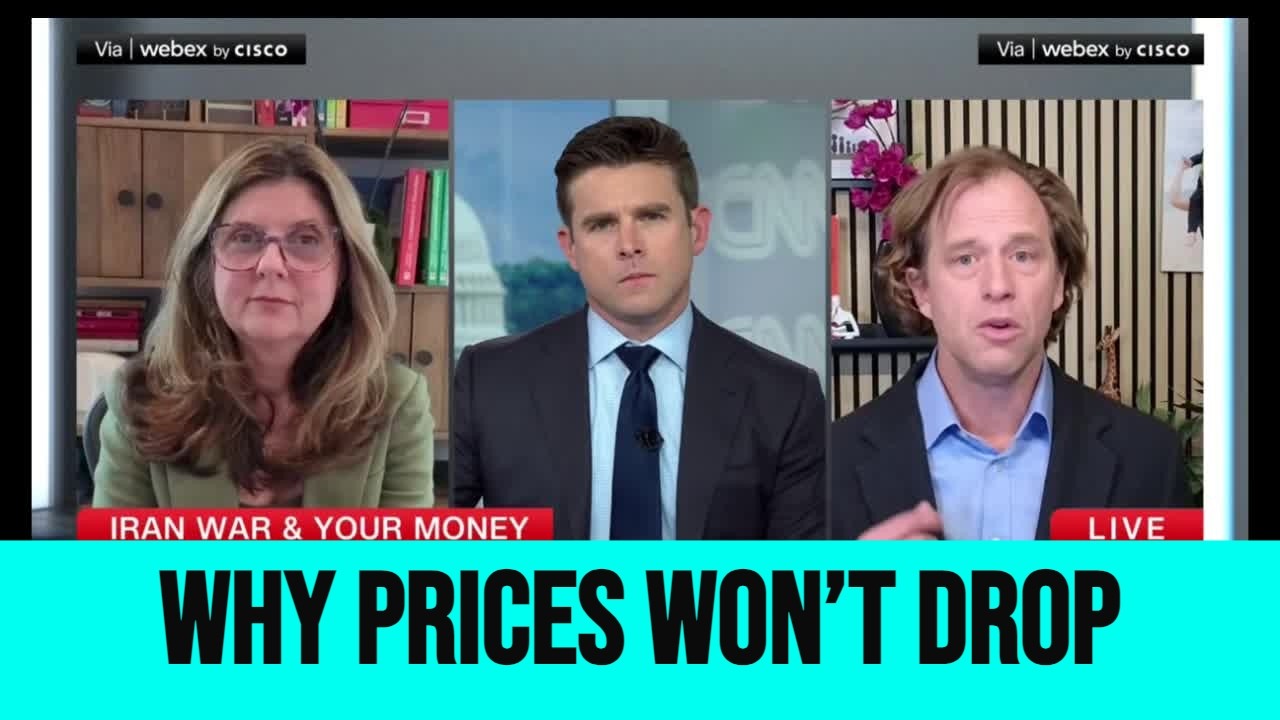
In this interview, host SPEAKER A talks with economists Betsey Stevenson and Justin Wolfers about the ongoing oil market turmoil following the recent geopolitical shock. They discuss how the duration of the energy shock—whether weeks, months, or years—drives uncertainty for the broader economy. Stevenson explains the Federal Reserve’s challenge: trying to look through a temporary oil price spike while avoiding a rise in inflation expectations that could force tighter monetary policy, even as the economy shows signs of slowing. Wolfers points to futures markets, which price higher oil and inflation for several years, and highlights physical constraints such as full storage facilities and bottlenecks in LNG logistics that could keep prices elevated even if the conflict de‑escalates. Both economists stress the importance of monitoring employment data and other macro indicators to gauge whether consumers will cut spending in response to sustained high gasoline and air‑fare prices. The conversation underscores the complex trade‑offs policymakers face and the limited ability to predict a clear timeline for price normalization.
Chapters
Let's compare notes with the smartest economic household in America. Betsy Stevenson and Justin Wolfers join me now. Guys, I really appreciate your time. Justin, I want to start with kind of what I think Matthew is getting at there, which is everybody kind of knew where this would go if certain things occurred. And by that, I mean the day the straight-of-four moves was pretty clearly effectively shut. All I could think about was this is going to get terribly bad, terribly quickly, which seems to be playing out. And yet markets based off of Truth Social accounts or public statements are not pricing that in the way I'm thinking about it. You're smarter than me. Am I thinking about this wrong?
Look, there's a lot here to worry about, and we're seeing markets around the world bounce up and down based on what's happening. One important thing to realize is that the effect on foreign countries and therefore foreign markets is much, much larger than it is over here. But the reason you're seeing this on again, off again, up then down from markets is because the president is an unusual sort of a character. The real question is, are we there for, you know, 4 weeks, 4 months, or 4 years, or 40 years? These are really important questions, and the president's mood seems to change. He posts something— normally you'd be able to know something from a person's character from their previous statements, from their policy positions. But really, it does feel like policy is being made on the fly.
Betsy, for people who are watching this, you know, to Justin's great point, duration is everything here. Like, whoever can answer that and however quickly this ends will tell people what's going to happen next. You listened to Fed Chair Powell last week talking about how, look, in monetary policy, you're trying to look through an energy shock, not necessarily going to be reactive on a monetary policy side. At what point can you no longer look through it? At what point does it become anchored in the broader economy?
That's a great question, because in terms of just the energy shock itself, that's exactly what the Fed wants to do is look through it. The problem is if people start to expect that this is going to lead to higher prices overall and that leads workers to try to negotiate for higher wages, And essentially what economists talk about is inflation expectations. If we start to expect that we're going to have inflation running 3% or 4% or 5% a year, and so we start to act as if that's happening, that's when they're going to have to take action. They won't be taking action against the higher oil prices. They'll be taking action over the things we're doing to perpetuate ongoing inflation. The problem is that the US has a slowing economy. And the action they would take would be to raise rates and to, to deal with the prices. But if you want to deal with the slowing economy, you need to lower rates. And that's the tough position that we're in right now and why Chair Powell described a rationale for somewhat restrictive monetary policy for right now, why they're not cutting rates right now despite the weakening labor market.
Yeah, if you're wondering what— if what Betsy was just describing sounds really complicated for a Fed chair to try and navigate, you are right. That's their worst nightmare, I believe. Justin, just for people who are driving by their gas stations every single day now and thinking, I don't understand why this is continuing to go up, how long is this going to last?
If—
I guess the simple question would be, if the war ends, how long would it take for gas prices to come back down?
Probably still another couple of months. So first of all, you can already look at futures prices where people are betting on the future of inflation. While the White House tells you that this is just a blip, according to futures prices, they expect oil prices to be high actually for several years to come. So that's people betting on the duration of this thing. But even if we woke up tomorrow, we hugged it out, told our Iranian friends we're all good mates again, one of the problems is all the storage over there is full. Which means they're actually having to put a lid on the oil wells. And this is doubly problematic when it comes to liquid natural gas. And then once you got to get it in the boat, and then you got to get through the, through the straits and all around, all the way around the world. So at a minimum, a couple of weeks before we get a ton of relief, but there's a real possibility we're stuck with higher oil prices and therefore higher gasoline prices for months and possibly years.
Betsy, last, last one before I let you guys go. As you're kind of looking forward right now, given the uncertainty, given kind of the inability to put timelines on things or actions at this point in time, what are you really keyed on from a data perspective that maybe people could look at to help understand where the economy is going directionally?
Well, I think it's important not to, to take your eye off of just what's happening with employment and just you know, the sort of broader macroeconomy, are people getting jobs? I think I'm more pessimistic than Justin. I think gas prices are gonna stay high for a while. Airfares are gonna stay higher. You know, the CEO of United said, we may end up leaving demand on the table, but we'd rather be prepared for $100 oil through the rest of this year. So, you know, we're stuck in this for a little bit. So I think we're gonna see people making some strategic cuts in their spending.
It's an— I don't know, it's a— I'm trying to think of the word to describe this moment right now as somebody who covers the economy in my day job, but I'm having a difficult time with it. But it certainly doesn't lack for interest on a day-to-day basis, which people really care about it, of course. Thanks to you both. Despite Justin's connections to the University of Michigan, I still like you very much and find you extremely informative.