Women in Economics: Betsey Stevenson on Work-Life Balance

In this interview, labor and macroeconomist Betsey Stevenson discusses how family dynamics and labor‑market policies are deeply intertwined, a relationship that became starkly visible during the COVID‑19 pandemic. She explains that the pandemic exposed the porous boundaries between work and home, prompting both men and women to reassess their labor‑market choices. Stevenson highlights the transformative effect of "use‑it‑or‑lose‑it" paternity‑leave policies, arguing that they reshape father‑child relationships and long‑term family involvement. She notes that, contrary to early expectations, women’s labor‑force participation rebounded more strongly than men’s, and fathers reported higher happiness from increased time with children, suggesting a potential deepening of gender equality at home. A central concept she revisits is the "greedy jobs" metaphor, originally developed by her mentor Claudia Goldin, which describes jobs that demand workers’ time without respecting personal boundaries. Stevenson observes that men’s tolerance for such jobs has declined post‑pandemic, and that broader adoption of flexible work‑from‑home options could reduce the gender wage gap by giving women more bargaining power. Stevenson also reflects on her earlier research on the economics of marriage and divorce, emphasizing how technological change and global trade have eroded the traditional specialization model of marriage (as described by Gary Becker). She argues that modern marriage is less about complementary production and more about shared projects and companionship, noting that college‑educated women now marry at higher rates and experience more durable unions. Finally, Stevenson explains why she co‑authored a new introductory economics textbook: to incorporate recent advances (e.g., information asymmetry, market power) and to make the material relevant to a diverse, contemporary student body. She stresses the need for textbooks that speak to students’ real‑world concerns—climate change, student debt, job prospects—while remaining engaging. The interview closes with Stevenson’s forward‑looking agenda: using pandemic lessons to shape policies that promote gender equality, family well‑being, and a more joyful, resilient society.
Chapters
If policymakers care about labor market outcomes, then they've got to care about what's going on inside of families.
We often think about the economy as being driven by how productive we are on the job. And until recently, the idea of our life off the job could have any significant impact on our productivity at work wasn't really factored in.
We got to COVID, and I think this idea of the Boundaries being really porous became evident to everybody because they are deeply linked. I'm Betsey Stevenson, and I'm a labor and macroeconomist, and I focus on economic policy and families, how families are shaped by their economic situation and decisions policymakers make.
And labor policies can have profound effects on some of our most important relationships outside of work.
If we have a use-it-or-lose-it paternity leave policy, dads are more involved. It changes the whole relationship they form with their baby, and then it changes the whole way they interact with their baby for the rest of their life.
Betsey Stevenson is a professor of economics at the University of Michigan and a former economic advisor to the Obama administration. She spoke with journalist Rhoda Metcalf about her research into the powerful connections between our work and home lives for this special series on extraordinary women.
The last couple of years has really forced us all to rethink the traditional work-life balance. So how do you think the pandemic has changed the way we approach that?
So I've spent a lot of my career thinking about the porous boundaries between our work life and our family life. And at many points in history, we spent a lot of our life, you know, working the land around our home and Making things in the home. But as, you know, we sort of developed into a social structure and an economy where men often worked outside the home, and women worked inside the home, economists started to think of these as very separate spheres. Like, you know, men specialize in bringing home income, women specialize in the home. And the extent to which they tried to think about the economics of marriage and the family, it was often, you know, the economics of that relationship, the partnership. But I've been trying to think through my whole career about how interconnected every single one of the choices are around what should you major in in school. That's going to be shaped by what you think your family life might look like. The kind of job that you seek has a lot to do with your spouse and how you see your married life.
Sure.
I remember being in high school. And I was a pretty ambitious high schooler. I had come from a family that had some, some rocky financial times. And I was really excited to start my own career and have control over my destiny. And one of my closest friends said to me, well, I think I want to be a dental hygienist because I want to be married and have kids. And I need a career that's gonna be flexible enough to allow that. And I was so sort of horrified looking at this 15-year-old in front of me who had already decided the limits to her work life based on her expectations for her family life. And I really spent a lot of time thinking about it because she wasn't wrong, given her expectations for her family life. But that shows that these choices, like, back all the way up to the decisions we make when we're young, but also the decisions— we're making when we're young then go forward and shape what we do later on.
Right.
You know, my father was in the military, and a lot of my mother's choices were shaped around my father's career, my father's job. So I've seen the way families have to navigate going in and out of the labor force, going in or out of different jobs based on the choices they're making about who to marry, how to raise kids, And these choices seem to me to be the most important choices because they're literally how we're going to spend our life and who we're going to spend our life with. We got to COVID. And I think this idea of the boundaries being really porous became evident to everybody.
Yeah, sort of blew it open.
I think it's changed the conversation because we actually saw that these aren't really easily separable.
Do you think that also people began to question their decision-making around work versus home as well? They began to make sort of a different calculation?
Certainly, looks like most parents wanted to make a different calculation, but it wasn't gendered. And I think that that is what surprised everyone. I think a lot of people thought women would retreat into the home and be like, oh, whoa, this thing didn't work out. And that didn't happen. Women's labor force participation has recovered more strongly than men's. Parents, both men and women, are roughly participating in the labor force at the same rates they were prior to the pandemic. Optimistically, I would argue that we may have seen a deepening of gender equality in the home. Fathers had a chance to see what women do up close and personal. And I think many of them also started to think about the time with their kids. Some of the most interesting survey data to me has been data that showed that men report being a lot happier in the pandemic with the amount of time they had for their kids. And that increase in happiness was much bigger for fathers than for mothers. You know, I sometimes joke that mothers were like, we had enough time with our kids before this. They can go back to school now. Thank you very much.
Exactly.
But that's because mothers did make a lot of time. They did leave work to make sure they were the ones who could pick the kid up from daycare. They were, you know, the ones that are sort of constantly on call for their kids prior to the pandemic.
Right.
And they were already trying to juggle that. When the kids came home and this was all happening in the home, it sort of put fathers front and center and made them have to, like, actively choose, am I going to go to the basement and shut a door while, you know, my wife deals with the kids? Or am I going to be part of this whole work from home, be at home experience? And what I think we saw was a lot of fathers dove in more deeply. But I think if you think about the experience, what we did see for sure was women were more likely to quit altogether than men were. And that was definitely evidence of the fact that, you know, women were taking on a bigger share of the burden at home. And there was a lot to do when you had— remote schooling and no childcare. But what you did see was men were more likely than women to turn down promotions or try to switch to flexible work or, you know, men were making changes. They were just less likely to leave altogether.
That's interesting. I know in the past you've also talked about this idea that women don't necessarily want to take high-level positions sometimes because these jobs are too greedy. And I'd be kind of interested in this question of greedy jobs. And I wonder whether that was sort of reinforced during the pandemic.
So my advisor in graduate school, Claudia Goldin, has been, you know, the real pioneer in developing this idea of greedy jobs. And what I love about it is, you know, it's just such a beautiful metaphor. Like, you can't have a greedy job and a greedy toddler. So, and the idea of the greedy job is the job wants what it wants when it wants it. If you have a job where it wants what it wants when it wants it, It's really hard to have a toddler who wants what it wants when it wants it.
Also.
And so, you know, it's not that women can't work. They just have to work in jobs where there are boundaries that can be respected and flexibility. What I think I've seen since the pandemic is men's tolerance for greedy jobs is going down.
True.
And that's important. I think things will never really get better for women until men say, No, I'm not going to be on call 24/7. I have other things that I have to do. And I am a professional, and I love my job, and I'm ready to give a lot to it. But if I tell you, like, I can't work from 6 to 7 PM, because that's when I pick my kid up from daycare and take them home, that's got to be a boundary we've learned how to respect.
Yeah.
And, you know, a lot of people are worried, because if you look at, like, the work from home, And you do surveys on that, there are scholars that are showing that women are willing to give up more pay to be able to work from home than men are.
Right.
And so they're like, oh, this work from home could lead the gender wage gap to grow. And I think that's a failure to recognize the fact that women are already paying for flexibility. They already turn down higher-paying jobs in order to take the job that has those boundaries, that has that flexibility. So I think adding a new option on the table, a job that also has work from home, actually will shrink the gender gap. We're clawing our way towards the world of equality.
Hopefully.
And adding another tool in that toolkit, which is work from home, even though women want it more than men, I think still pushes us in the right direction of jobs needing to be less greedy In order to attract the employees that they want to attract.
So I'd like to wind back a few years in your career to some of the earlier work that you did around the economics of marriage and divorce. What were some of the more interesting conclusions that you took away from those studies?
I mean, I think the big takeaway is, like, incentives matter everywhere. You know, in my research, we've shown that the model of marriage that Gary Becker, a famous economist who hypothesized that, you know, the benefits of marriage come from the fact that we produce more together than we would apart. Marriage is like, you know, a factory whereby through specialization, we can produce more. His argument was, you know, a married man lives a better life than a single man, and a married woman lives a better life than a single woman, and that's because they've done this specialization.
Right.
So the challenge is that a lot of the things that fed into those benefits of specialization have really been eradicated by both technological change and by global trade. So you don't need somebody at home who's a seamstress, a chef who can cook from scratch, can tend to animals to get milk, right?
Right.
These are all things now that it's gonna be much more efficient to buy it in the marketplace. So if you buy it more efficiently in the marketplace, what do you need? You need money, you need to do the thing where you have a comparative advantage. We don't necessarily want your wife at home tending the chickens and tending the cow and baking the bread from scratch. You're gonna go to the store and buy your eggs and milk and bread. And that frees her up to go out and earn the income that allows you to buy the bread and milk and eggs.
Right.
And that has fundamentally changed marriage. And so, what is marriage in the 21st century all about? Well, it's really about 2 people coming together and exploring joint projects. It might be the project of raising children. It might be the project of enjoying the arts or books or movies, or just companionship, which is very different from the idea of, you know, I'll produce in this domain, you produce in that domain, and we'll have more together.
Yeah.
And it's why This sort of adage of your, you know, great-grandmother that opposites attract was a really good description of marriage 100 years ago. But it's not a very good description of marriage today. Because opposites will often find that they're in conflict and unable to enjoy the leisure and companion benefits and shared project benefits that is modern marriage. Yeah, yeah.
Were there other things you learned from the research to marriage and divorce that you found really sort of eye-opening?
I think the biggest fact that surprised me was how, if we go back 70 years, educated women were the least likely to get married, particularly college-educated women. You were really choosing between an education and a spouse. And You know, I actually went to a women's college. I went to Wellesley College. And, you know, the joke was, of course, you got an MRS degree and you were— Wellesley's right around the corner from Harvard and MIT. So you're trying to find that Harvard, MIT husband, and then you graduate and you can raise very smart children because you are very highly educated and polished and you can be a supportive spouse to your husband's career.
Right.
But if you look actually across the board, college-educated women, very low marriage rates compared to other women. So you chose to get this college degree. That meant that you weren't as devoted to the tasks of housekeeping. And that maybe personally meant that you were less interested in marriage, but also meant other people were less interested in marrying you. I remember being, you know, you know, a young woman in my early 20s, and we're being told, That it's get married now, it's now or never. And I think we were like, well, I guess we'll see what happens with never. But our generation really didn't get married at those young ages. We pushed it to later. And today, when both people are more likely to work, when we have more equality in the household, and when there's less of a need for the kinds of specialized housework tasks that wives in the '50s, '60s, and '70s did. Today, it's college-educated women who not only get married at higher rates, but they have marriages that last longer and are less likely to end in divorce.
Right. You know, earlier on, women also had to face certain barriers because, you know, once you got married, you were perceived differently in a workplace, right? I mean, even some jobs were off limits to her if you went back far enough.
Oh, yeah. I said I went to Wellesley College and I You know, if you got married the summer before your senior year, you were not allowed to live on campus to finish up your degree.
That's crazy.
So there were, like, you know, just a lot of separation of married women from single women. And then a lot of rules that explicitly tried to keep married women out of the workforce and wanted to keep them, you know, out of certain jobs. You know, it took a while after those laws changed before we really saw the patterns of behavior change.
Yeah. Why did you decide to study marriage and divorce? I mean, you know, most of us think of that as kind of the realm of sociologists and anthropologists. What took you down that road?
Well, I'm very interested in how people make the decisions that they make, how they make choices. And I think that's what economists study. Economists study decision-making behavior, including thinking about the ways in which Policy shapes the incentives that we face. And if we think about the family in particular, kind of remarkable is how very subtly policy laws around marriage shape how we behave in the marriage.
Mm-hmm.
If we have a maternity leave policy with no paternity leave policy, Dads are less involved.
Mm-hmm.
If we have a use-it-or-lose-it paternity leave policy, dads are more involved. And I don't just mean for the 3 weeks of paid time off they get. It changes the whole relationship they form with their baby. And then it changes the whole way they interact with their baby for the rest of their life. This is an amazing power. It's why policy, I think, is so important. But it's also important that we understand when we're making policy choices, how extensive that influence is, right? You know, we could end up shaping how someone lives their whole life for better or for worse.
Sure, sure. So I just, I had to ask you, one of your most recent projects has been to co-author an economics textbook. Why does the world need another economics textbook?
I think that's such a telling question. Why does the world need another introductory economics textbook? And I think I have 2 answers to that. One is that it is important that we start to update our discipline for all the things we have learned as a discipline over the last 70 years.
Mm-hmm.
So we've actually learned things that are fundamentally important. For example, George Akerlof, pioneered the idea that when information is hidden, so one side of a transaction knows something the other side cannot know, you're going to have market outcomes look very different than they would if everybody was fully informed. And I think that teaching students about the ways in which things can go wrong when everyone's not informed, for me, is incredibly important. But there are more bread and butter issues. Like, if you look at introductory textbooks, they will often teach a chapter called market models. Are you a monopolist? Are you perfectly competitive? Are you an oligopolist? It really reads like 1970s economics, ignoring how businesses got to be a monopolist, an oligopolist, or perfectly competitive. And I joke that But we still teach it as if businesses put on the Harry Potter sorting hat, and the sorting hat tells them whether they're a monopolist, an oligopolist, or perfectly competitive. But of course, once we step outside the introductory classroom, in all of economics, what we talk about is the ways in which businesses seek market power. If you look in the policy world, if you look in the newspaper, the thing we're debating all the time is, does Amazon have too much market power? What does it mean if it has too much market power? How would we know? And yet we don't really teach any of those things in introductory economics because we're teaching in a really old way.
Right.
And that's one small thing. I think the bigger thing is that our students have changed. And I think they need a textbook that speaks more directly to them. And given the diversity of our students today in terms of age, race, nationality, ethnicity, Gender identification. That means you have to really be thinking broadly. You can't just do, you know, pizza and baseball examples and think your students are going to connect to the material. You have to be in there trying to think about how do they live their life and what do they worry about and what are they thinking about. When I wrote this book, I thought about myself a lot as a student, and I think about my children. And one thing I can tell you is, at 18, I took myself very seriously. And so I think it's really important that we realize a lot of these students, they are making big decisions. And they feel like they've got a lot of the weight of the world on their shoulders. They're worried about climate change, they're worried about paying off their student loans, they're worried about what kind of jobs are going to be available for them. I think they need a textbook. in which every single one of our students can see their own life in some way, shape, or form. And then I think finally, I would say that I've spent a lot of time over the last 20 years reading really fun economics trade books. And I was like, why do principles of economics textbooks have to be so boring?
Right.
And trade books are so fun. And so I think what we really tried to do was think about How do we write a book that's as successful in teaching students economics, but as much of a roll-up, you know, of a good time as, say, any of the trade books like Freakonomics or The Undercover Economist that many people have just found to be a joyous read?
So what lies ahead for you in your work? Are there other questions you'd really like to dig into?
I think what I'm trying to do is process everything that we learned over COVID to try to think about where are families headed? And how are women making choices? And what is the best way in which policymakers can facilitate not just more gender equality, which I think is important, but actually people being able to take advantage Of the fact that we live in such a wealthy society, to live a life that's more full of joy, and that we address some of the real trauma that I think many people have experienced from the pandemic. I think that there's a path forward in which we come out brighter, lighter, stronger. But I think that it's going to take some work to get there.
Well, Betsey Stevenson, thank you so much. It's been a real pleasure to speak with you, and I thank you for taking the time to speak with us on the program.
It's great talking with you. Thank you so much.
Betsey Stevenson is a professor of economics at the University of Michigan and a former economic adviser to the Obama administration. She was speaking with journalist Rhoda Metcalf. Look for the other podcasts in our Women in Economics series on Apple Podcasts or wherever you listen. I'm Bruce Edwards.
And I'm Rhoda Metcalf. Thanks for listening.
More from Betsey
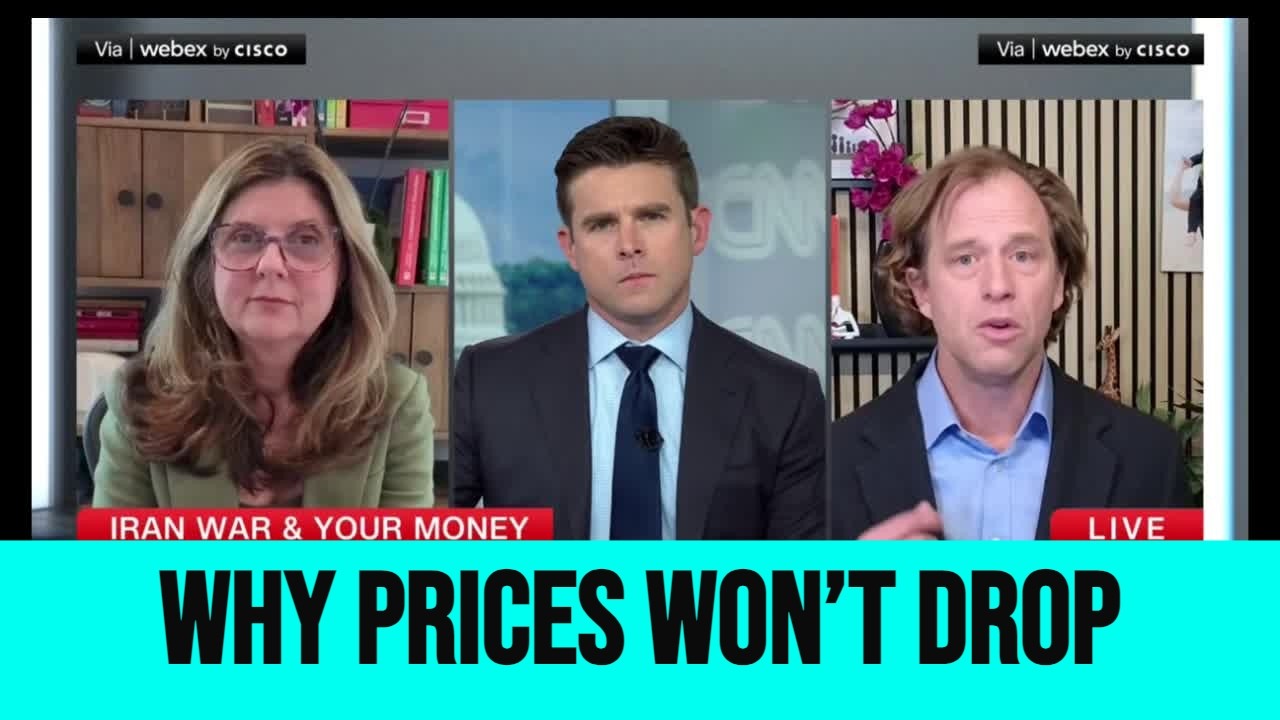
Betsey Stevenson & Justin Wolfers Explain Why Oil Markets Aren’t Calming Down Yet
