Self Mastery of the Mind & Flow State - Bradley Kohn | The Momentom Podcast
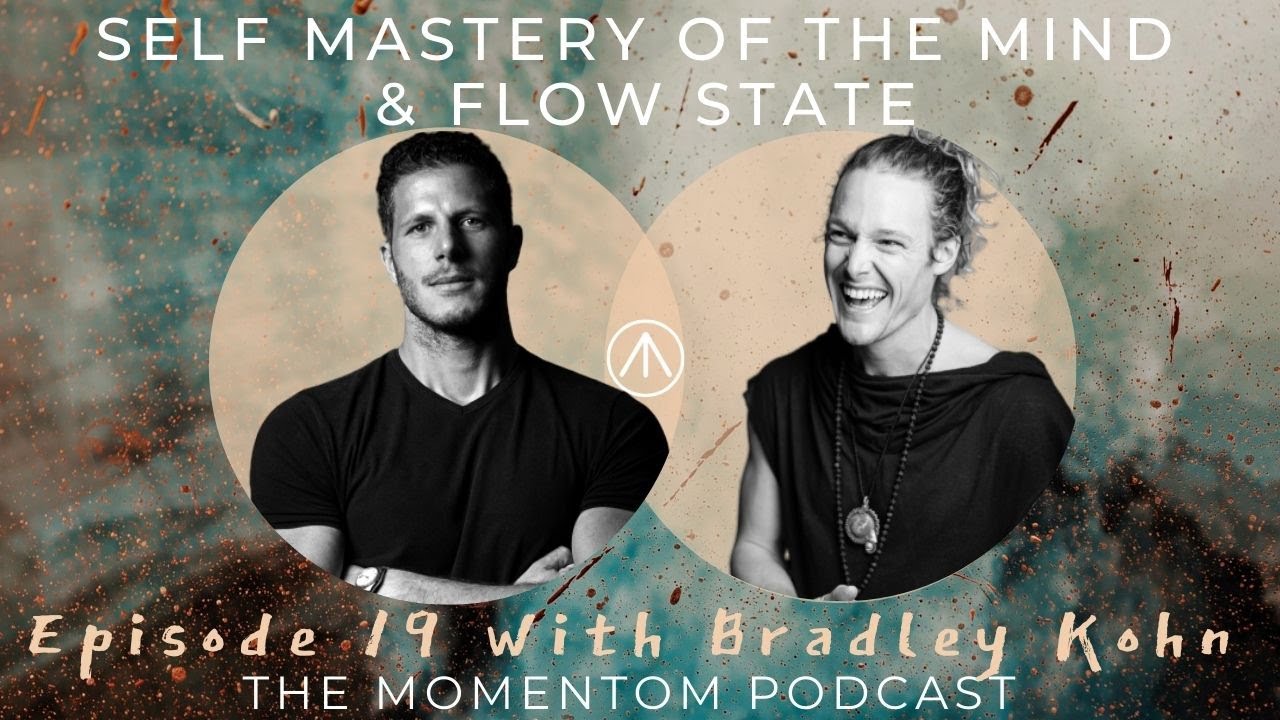
Bradley Kohn, a musician and martial artist turned wellness coach, explains flow as a "no-mind" state where effort matches capability. He built the Neurohacker program around six pillars: physical health, mental health, hydration, nutrition, recovery, and purpose. Small habit shifts like airplane mode before meditation reshape behavior more effectively than willpower alone.
Chapters
Welcome to the Momentum Collective podcast. Momentum Collective provides training spaces and community around the world for unconventional minds and nomads to co-create the future. This podcast shares ideas on how we can transcend and shift towards our highest self. Welcome everybody, Momentum Familia. John Early here, one of the co-founders of Momentum, and really excited for this conversation ahead. With Bradley Kohn, a modern British Renaissance man. He's a published poet and writer, multi-platinum awarded record producer, songwriter, stuntman, extreme sports athlete, and founder of Neurohacker, a coaching program for self-mastery and peak performance. So we've got lots of great topics to dive into, especially how they relate directly with our artist residency and a lot of the things that Momentum has going on. So, uh, Bradley, thank you for joining us here today for our podcast.
Thanks for having me, John.
Yeah, we had first crossed paths through the Create Community project where you've been doing some coaching, some group coaching every week there. And that's also where we've been doing some of our Momentum and Body Movement and Dance classes. And I really appreciate how you wrapped a lot of these different things together. And so I'm excited to jump into some of the conversations here today.
Thank you. I appreciate that. Thank you.
So why don't we give people, or some of our listeners, a bit of a background on how you ended up into this, this path, a little summary towards self-mastery, being, being a coach?
Sure, sure, absolutely. So as the little description you gave of me suggests, I've always been interested in flow state experiences, and I got, I got to scratch that itch a lot through music and through extreme sports. and martial arts as a kid as well. Um, so, you know, I was always interested in that, that, that state of flow. And, um, my, my career for the majority of my life has been in the music industry, both as a record producer, songwriter, and musician. I've always thought of myself as an artist and also always been very interested and committed to self-development. And so, you know, as a man in my mid-30s, started to realize that people around me were starting to— maybe they had successful careers, but they were suffering with family dynamics or health issues or, you know, even their mental state of mind. And started to realize that the work that I'd been doing was really valuable and something that I could share and actually improve people's quality of life. And So for the last, uh, over a year and a half now, I've been working as a coach. And though I still make music and I have, um, 2, 2 new projects coming out in the next few months, coaching is, is kind of my professional focus at the moment.
Yeah. Excellent. Yeah. I'm excited to dive into a bit of, bit of that. Um, but the first thing that comes to me when you discuss all of these things from, from music to, um, uh, to being a stuntman, to coaching and self-mastery. You mentioned flow state and how, how that seems to be a pretty common weaver amongst a lot of these different, um, these different things. How do you define flow state and how do you feel that it's, it's best used?
Um, for me, it's a state of no mind where you are actively engaged in, um, an activity, you're not thinking about it, but you're actually performing at your optimum. And is it Mihaly Csikszentmihalyi? I can never pronounce his name properly, but the guy who kind of coined the phrase, he describes it as an experience where you have the optimal amount of strain and kind of motivation. And there's, there's this kind of sweet spot where you're You're doing something that requires effort, but it's also— you have enough capability and momentum to keep you in that kind of optimum space. And so I have a great story about it. If you— well, I mean, so for example, if you're a snowboarder— I don't know if people like snowboard or skateboard or something like that. Yeah. you've ever been doing that and you find yourself kind of, you know, carving and you're really like in it, and then maybe there's an unforeseen bump that you hit or rock that you kind of go over that you didn't necessarily see, but you kind of hit the jump and land it and everything's kind of just flowing. You're like, boom, like I'm just in this. That's one of the best ways I guess I can describe it. The same with music, you know, you're playing music and especially with other people, but not necessarily. And you have that kind of telepathic communication, and everyone kind of moves to the next place. And there's just an incredibly gratifying energy. Yeah, I don't know if I'm explaining myself well.
No, absolutely. I mean, I'm a musician as well, and I know that feeling, especially being able to play music with people that don't speak either Spanish or English and you're still able to communicate. There's a communication there through that flow state, through to that kind of like understanding each other. Um, that kind of bypasses language on, on that vocabulary level, I guess. And so you're kind of tapping into more of the instinct rather than the mind. And the first thing you'd mentioned was a flow state being a space of no mind. And that's something that I find really fascinating and something that I've been actually looking at a lot into in this last week was, is even like the statement, you are not your mind. What does that statement mean to you? And how can the— why does the mind seem to always interrupt our flow state?
So, uh, that's a really good question and something that I, um, coach on and have quite a lot of thoughts on actually. So, um, the mind is a really useful tool. Right? It's a cognitive faculty that we have that allows us to think about and decipher and point energy towards various problems or various perceptions of the world. It's not really a great tool for many of the things that it gets used for. When you're thinking, you're not fully present. And these flow state experiences that we're discussing are, are usually obtained by being very present in what you're doing. You know, if I'm playing music and I'm thinking about my taxes, chances are I'm going to miss the subtle cues around me in the conversation we described, or vice versa. You know, if I'm snowboarding but I'm thinking about emails I have to send, um, you know, I'm probably going to fall over the rock when it comes rather than just kind of take it in my stride. And so what you said about not being your thoughts, uh, plays into a couple of things. One we just described about this flow state thing and presence. But, um, what I teach people through meditation, which I teach as a mental health practice, is that most people are addicted to thinking, and they're unaware that they're addicted to thinking. And this I actually see as a disease that plagues humanity, and yet isn't talked about or recognized as a disease, because 99% of people are doing it all the time. When you meditate, particularly using mindfulness meditation, you are able to see your thoughts and emotions as sensations, no different from, you know, the sounds around you or an itch in your shoulder. And when you can have that distance and realize yourself as the experiencer of your thoughts, rather than get so caught up in your thoughts and emotions that you feel like you are them, it's a very different way of being. And I believe that's what Viktor Frankl— sorry, Viktor Frankl refers to as And, you know, every person being able to choose their response and that being the ultimate freedom. I'm paraphrasing, but, um, yeah. So, uh, he's a famous Holocaust survivor. He wrote the book, um, Man's Search for Meaning. And yeah, it's exactly that. But when, when you can see your thoughts as these transitory things, um, and the mind as a tool, rather than the place in which consciousness resides, you have a very different experience. And I actually believe that, um, is, is a big step towards what Buddha describes as the end of suffering.
Hmm. Beautiful. Um, I love that notion and I've, I'm, I've listened to a lot of Eckhart Tolle and he mentions as well that, you know, the number one addiction in society today is thinking. And especially with social media. And I'm, I'm very guilty of it as well, constantly listening to podcasts and you kind of verify it by going, it's okay. Cause I'm, I'm gaining information. I'm, I'm, I'm upleveling myself. I'm learning things. I'm going on podcasts. I'm, I'm sharing with friends. I'm being creative and I'm, I'm soaking up information on Reddit or whatever it might be. And, but there's this overwhelming bombardment of too much information that we're trying to process. So do you feel like that's been the de-evolution of, of a lot of different ways? It's been a benefit. We've got so many beautiful ideas and technology developing, but at the same time, the core of missing out on, I guess, being able to tap into the presence and the flow state of being a human by overthinking.
I don't, I don't, I don't see those things you described as, as inherently bad. I mean, podcasts and the information that we have access to have granted me, you know, incredible resources. And I think everyone has that access. You know, if you have access to the internet, you have that access. What is difficult and what people may struggle with or be challenged by is how they direct their attention with so much on offer, right? When you've got social media companies throwing things at you that intimately align with your interests and often not driven towards your growth, but just something, just whatever is going to capture your attention, whether it's pretty girls or cars or cute animal videos, right? And then what your friends are up to. You're contending with a lot of noise. So I think it's extremely important to filter what you spend time looking at and where you put your attention. So the positive side of that is maybe what you described around spending time looking at information that's going to broaden your view of the world and increase your depth of knowledge around subjects that you feel are important. And you have access to Nobel Prize winners and real kind of influences and conversation leaders, let's say. I think that's the positive end of the spectrum. And then the negative end of the spectrum is just getting lost in this soup of social media noise. You know, the other thing is that, and this is a problem, and this is something that I've been addressing in the sessions where we met through the Create Community, is this idea that people are struggling through a combination of information overload and being unaware of their own cognitive biases to make sense of all this information. You can go online and, you know, if you Google, you know, is sugar bad for me or is sugar good for me, you're going to get 2 conflicting sets of results, right?
That are going to probably end up being— you'll probably end up reading the one that Ends with what you want to read.
Yeah, yeah, depending on how you phrase the question. So I guess that what I'm trying to say is that there's information that will support almost any point of view. And so that can be really difficult to make sense of. And I think that that's been shown with COVID and what's been going on there. Um, you know, a lot of people have felt— a lot of people, uh, feel like an intuition against the mainstream narrative and have, um, assimilated what I'll call conspiracy theories, uh, that somehow reflect or mirror or connect to in some way their worldview. And a lot of these theories or, you know, ideas about things are not fully substantiated, but what they do is they create a viable narrative for people's distrust of the government or you know, or horror at how governments are essentially in the pockets of big businesses. And so it's hard to point a finger and specify exactly what's going on, but it does create a narrative or point towards a shadow of something else. And so I've been, you know, using my voice to try and help people further define what these things are, because I think that it's important to be specific, you know, and it's important to be accurate, especially when you're targeting people of wrongdoing. And there's lots of ways, I guess, that, you know, whether it's the MeToo movement or even this cancel culture, you know, it's, it's important that people don't just get lumped in a box because, um, it's the phrase correlation is not causation. Does that make sense?
Yeah. Yeah. I think you bring up a lot of really valuable points there, especially not seeing thinking as necessarily a bad thing. I feel a lot of people will study brief glimpses at Buddhism and be like, okay, I need to just turn off my mind. And then I'll be a better person or like no more thinking and no more planning. I need to just be present. And it's not that I feel like it's not necessarily that it's more so seeing your attention as a currency, which companies seem to have figured out right away with marketing and different things. But yet we're not valuing our own attention as much as I feel other bigger, bigger initiatives are and focusing that attention as, as true value. So how can we reflect inward with that intention or with that attention to bring that intention inward through meditation so that we can be more able to use our thoughts and then kind of turn it off so that we can kind of turn on a little bit more efficiently as well. So that, that switch, I think, is really, really important to know. Let's talk a bit more about Neurohacker, your, your, your program for coaching, and you've mentioned cognitive biases. as well. Um, so how that's— how you— that plays into some of your, um, ways that you help people with their self-management.
Yeah, absolutely, absolutely. I'll just, um, kind of use what you just said as a springboard into that, in that I think human beings are quite simple when we come down to it. We all really want the same things, you know. We all want to be expressed and to be heard. Um, we all want love, we want to feel safe. Obviously that expresses itself differently for, for each of us, but essentially, you know, it comes down to the same essentials. Um, and so often what I do with my coaching, and I'll get into the fundamentals of it in a second, is rather than try to modify somebody's behavior or desires which are often very deeply rooted, what I like to do is just change the habits around the behaviors that point towards better outcomes. So for example, with, you know, what we've been talking about with online information, rather than saying, okay, you know, no, no using your phone or no going online between this hour and this hour, you might just say, okay, well, why don't we Either structure it in a reward system whereby if you've completed X tasks— I'll give you a good example. I typically tell my meditation clients, sleep with your phone on airplane mode. It's better for you anyway. You're not getting, you know, text messages and phone calls in the middle of the night disturbing your sleep. And then when you wake up, the impulse for most people is to grab the phone and see, you know, the list of notifications they have. You don't turn your phone off airplane mode until you've done your 30 minutes meditation or whatever your morning practice is. So you've already, you've already had a win. You've, you, you've kept your attention, um, you know, undistracted. You've got your morning practice in, then you get the payoff of the dopamine from all your social media and emails and whatever else. So things like that. So Going into the coaching, there's essentially 2 parts of it. The first part is what I consider a wellness framework that I've developed that is nothing revolutionary, but is just common sense and something that I think has been lost along the way. So I see wellness as, you know, if you are well, you don't really need to go to a doctor. You're not on medications. You're of a healthy body and mind. You can go about the world and do whatever it is you wish to do with freedom and mobility and ability. So I break the wellness framework down into physical health, mental health, hydration, nutrition, recovery, and purpose. And so by looking at those 6 areas and making sure they're all optimized, you Then fit the profile of a healthy person. From there, it's about what do you want to do with your time? Do you want to serve? Do you want to build a business? Do you want to, you know, raise children? Maybe it's a combination of these things. Okay, how much time do you want to spend on each? Do you have goals? Which areas of your life are thriving? Which areas of your life need a bit of work? And then— I support people in that way and help them put not only clear goals around these various areas of their lives, but also a timeline around it. So, okay, you want to run a half marathon. When? A year from now? 6 months from now? You know, you want to make whatever it is, 50 grand a month in your business. You know, when do you want to achieve that by? And so on. And we, you know, we build it from there.
Mm-hmm. Excellent. I love the holistic approach, obviously including so many aspects to the health of someone. Um, and I feel that's one of the major downfalls of modern medicine, Western medicine. The last part that you mentioned on there was purpose. Yeah. And this is an interesting subject because I feel a lot of people are always searching for their purpose, but almost to the point that it's a detriment. Like they're overwhelmed with the weight of not living up to their purpose or feeling like their purpose isn't strong enough or as good as others. How do you approach, um, helping people find their purpose, uh, in, in that level?
Yeah, so again, this is one of those things that can sometimes be over-intellectualized or complicated in some way. We all have innate values, um, so even a person that would describe themselves as disorganized, right, or maybe forgetful, there are areas of their life where they are very organized, and those areas are the areas where they put the most value, right? So for example, somebody might have a messy house, but their files on their computer are really organized because, you know, that's, that's where they place their value or whatever it is. So to get clear on your values can point the way towards, you know, where your purpose lies. I don't think it's about, you know, forcing a round peg into a square hole, but rather seeing where your natural inclinations lie and then working on your strengths. So does that, does that answer your question?
Yeah, I think that's really valuable to that. Purpose doesn't have to be bringing the world world peace. It's those little, I feel like it's those little values that we live every day in the presence that we share with ourselves and with each other that I feel are the instigators. I feel people always shoot so high for this purpose. Like my purpose is to, you know, end world hunger or kind of like do these things that I feel are so overwhelming and daunting. I feel like there's some important baby steps that are just as valuable.
Absolutely. If you can find something that— I mean, this is cliché, but for good reason. If you can find something that you love doing and make it your vocation, you never work a day in your life. What I would say is find something that you genuinely enjoy and interested in. and find a way for it to serve people or, you know, the environment or the community around you. If you can combine those things, you have a purpose which you're not going to grow tired of. And it, you know, if it evolves, that's fine. I mean, I mean, you know, I always thought that, you know, music's always been a big part of my life. I never thought I would be working as a coach, but I've been open to what's going on around me, the shifting environments, you know, how I can serve others. And, you know, I owned a studio for 10 years. I've been an independent producer for many years. And, you know, this came through a deep journey, but I'm really happy at where I've arrived. And, you know, my clients get a lot of value from what I do. So It's, it's great. And it, and it still builds on a lot of the, a lot of the essences that I took from music, you know, about creation, about flow state, these kinds of things that we touched on earlier.
Yeah. I'm, I'm, I'm really fascinated. You know, you've been through the music industry and as a stuntman and these various aspects, extreme sports. What was the moment, especially with so many people diving into the coaching industry and so many people both, both looking to be a coach and also find a good coach to help uplift them. What was the moment when you're like, I'm ready to formally help coach people?
Um, so there was a bit of an aha moment last year at the Grammys. I had some— I had a family member who was, who was nominated for one of the big 4 Grammys, and they were out here And as you know, we all kind of come up through music, you know, around the same time. And he's got a crew, there's 3 guys in there. And one of them, or my family member, I'm trying to keep this somewhat anonymous. But one of them had health issues, another one had, you know, family issues. And they said, you know, Brad, you may not be at the Grammys with us this year, but actually you've got what everyone wants, which is, you know, true wellness. You know, you're not down, you always have a great disposition, you're super fit. You know, you have this freedom and this ability in your life that a lot of us would really love. And, you know, it's great to have number one records and and Grammys and whatnot. But if you're, you know, struggling because you've got back problems or, you know, your relationships are causing you a lot of stress, let's say, you know, that's something that is— we'd love to overcome. So it was kind of around there that I— and I'd already been coaching, but then I realized really the value of it across society. Um, and that's kind of when I formalized the practice.
Yeah.
So there's, yeah, there was a bit of, there was a bit of trial and error with regards to coaching and what works best and how to deliver it. But I'm really, I'm really proud of and excited by Neurohacker and what I've built there. And, you know, the clients that I have now are really getting Great value, I think.
Yeah. Amazing. And especially I think being in LA yourself, you know, I feel like there's a lot of the chasing that American dream or that purpose of fame and success and realize once you get there, there's all these, the other holistic aspects that aren't maybe backing up that success. So it doesn't feel maybe as good as people were expecting once they put all that effort and energy to climb that crazy ladder. So
yeah, there's the old story of, you know, the people that work all their lives just to then have to like buy their health, you know, in old age, if you know what I mean. And I've always just been of the mindset that you want to enjoy the ride. You want to enjoy your life as much as you can in every moment. You don't know when it's gonna end, you know. And I think I say this to my clients when we look at the financial portion of their lives, you know, know how much you want your life to cost, whether you want, you know, $200,000, $1 million, $10 million, whatever it is that's going to give you the life you want. Have an idea of that. You know, things can change, but If you think you're happy with $200 grand a year and you're just slaving on the treadmill even though you've hit that number to get higher and higher, you're kind of missing the point because all the things that you wanted to do with that money, whether it's take trips or go surfing or whatever, are available to you. And that's great. That's enjoyable. That's how you want to— I mean, It's up to you what you want to do with your time, but whatever you want to do with your time, you know, you, you should enjoy that. Life is fleeting.
Absolutely. Yeah. There's a few different correlating studies, I believe from Cambridge on happiness and especially towards economic reasons that justify happiness. And all these studies are pointing to, at least in the United States, once you reach about $80,000 a year, once you go beyond that monetarily, You don't gain any more happiness from it. You reach a point where you've got all your needs met, you're able to have the things that you need. And then after that, that point, which, you know, it's, it's like—
It's incremental gains. It's incremental. Yeah. Daniel Kahneman talks about this as well. Um, and I'm sure Dan Ariely does as well, that, um, you know, after a certain point, each unit of money that you add brings less and less return. in terms of happiness. Absolutely. So as you said, maybe, maybe $80,000, you know, across the general American public is the threshold. And then every, let's say, $20,000 you add brings incrementally less, or rather exponentially less benefit to it.
Yeah.
Which is why insurance companies is essentially people with a lot of money insuring the risk of people that have less money because if they take a hit, it's, it's less damaging to their stability.
What, what are some of the more common blockages you find people are coming to you for to hit that self-mastery? Do you feel there's, there's people mainly just dealing with either anxiety or lack of confidence or again, these mental blockages that are preventing them from Stepping into that?
Yes. Everyone's different. I think that generally most people don't have a mental health practice. Uh, and so teaching people meditation, regardless of whether you're, um, you know, I've had a couple of clients who are, you could say, having like midlife crisis, but just like restarting their lives in their mid-30s for, for a variety of reasons. Um, I'm working with one younger woman in her 20s who is looking to start her own business and transition professionally. You know, or executives that have had to sell companies, but having a mental health practice where you have a mechanism for alleviating stress is a huge thing, I believe. And so That's something that's generally common. And that's something that I usually start my clients with as, as, as one of the first exercises is we'll spend a few days teaching them, um, you know, either mindfulness meditation or a Vedic meditation and get them into the habit of doing it every day. It's really important that they do it at least once a day. I recommend twice a day. Um, Some other commonalities are around habits. You know, Aristotle said, you are what you repeatedly do. Excellence, therefore, is not a virtue but a habit. And that is such profound and wise advice. You know, if you want to be a musician, play an instrument, you know, 20 minutes to an hour a day, and you're going to get good at it. You know, if you want to learn a language, again, you spend half an hour a day doing something, you're gonna— it's all about consistent effort over time. And so, as I said, you know, if you're somebody that loves to be on their phone, and that's a really hard habit to break, but you notice that, you know, watching CNN or going on news apps is making you depressed, well, then maybe, you know, find a news source or or a source of information that is going to feed you more positively, whether it is, you know, some of the podcasts you were talking about or whether there's, you know, there's so many websites that curate information in a really good way. So, you know, and then, and then the other thing again is around, yeah, so again, habits really shape our lives. And so it could be in any area of life, whether it's financial, relationships, physical health, mental health, but just helping people to put in really effective structures. And also, I'm doing a lot of the work for people in that I have a genuine desire to see people thrive and for my clients to get value out of what I do. So I'm giving them the real thing. That's not to say I'm doing it for them. You still have to do the meditation. You still have to work out. You still have to eat right, whatever. I can't sleep for you. But I can tell you what's really worked for me and what's worked for other people. And as I said, we're living in an age where there's information that will seemingly verify any point of view. And it can't all be right, if you know what I mean. I mean, we can get into like, you know, objective truth and subjective truth, and that's probably a conversation you don't want to go to now. But essentially, I've done the legwork for you. I've tried this all out on myself. I know what works. So yeah.
Yeah, humans are such creatures of habit, and we always seek structure because we don't normally thrive on uncertainty. So being able to find, create those habits and make them fun so that we can put in the time to reach what Malcolm Gladwell would say is the 10,000 hours into anything. And you'll be a genius. You'll be a guru at it, whether it's playing the guitar or surfing or any kind of a thing that you can put that amount of time into. But obviously you've got to make it fun and exciting to do.
Yeah. You know, I, um, I think it was, uh, I think it was his autobiography I read a few years, uh, Slash. I'm showing my age now, but the guitarist from Guns N' Roses. And a lot of these, you know, other well-known musicians in Los Angeles, they were like, you know, whenever I see that guy, he's always got a guitar in his hands. He literally drives with a guitar next to him in the car, or it's on his lap. I mean, the guy is like, oh, and he just loves playing guitar. And so, you know, you'll see that when he kind of left Guns N' Roses, he already had his next project. And he was just always playing, whether it was with Michael Jackson, or with his, you know, I think it was called Slash's Snake Pit, I believe. You know, the guy just wanted to play. And so that's somebody who is destined to be a great guitar player because that's what he loves to do. You know, if you love skating, you know, no one's gonna have to motivate you to go and skate. So, you know, when we go back to finding your purpose, you know, if you love reading and And yet somebody is pushing you as, I dunno, an athlete or something. I'm not saying you're not a good athlete, but if, if, if your, if your desire is for knowledge, then maybe you should find a way, you know, to harness that as your, as your vocation.
All of this really leads really well into what we've always valued at Momentum, especially at our artist residencies, is finding the art in everything and using art as that tool for transcendence. Whether it's finding the art in your yoga practice or finding the art in your woodworking or your, your aerial silks or whatever it might be, your music, and how valuable that is as a tool to, to, to see everything as art, uh, to reach that self-mastery. If you have any comments on, on value of that.
A friend, a friend of mine, uh, read a quote to me from a book once that I haven't read. but it always stuck with me. He says, uh, I think it was from The Monk Who Sold His Ferrari, and he said, um, I am an artist and my life is my work, my life is my art. And that really resonated with me. Um, you know, my, my frame of reference for art you know, has really been music. But I love food and it turns out I'm quite a good cook and I see it as a direct parallel to music. You know, you want good ingredients and you just basically add them at the right time in the right amounts. And so much about— so much of music is about space and it's about listening. I really think that those are, you know, like are painting on a canvas of silence. And like food, if you add too much and all the silence is filled up, then there's no space for reference. And so, you know, I find cooking, as I said, just innately a very direct parallel. But I also believe that everything in life is a fractal of everything else. And so whether it's carpentry, whether it's aerial, whether it's dance, whether it's music, whether it's accounting, you know, everything works on the same kind of innate principles and structures. And once you find your discipline and you go deeply into that discipline, it serves as a framework for you to learn about yourself and about the world. I truly believe that.
I really love that music is painting on a canvas of silence. And I, I couldn't agree more. As Miles Davis said, it's not the notes that you play, it's the notes that you don't play. And I feel that you can take that into pretty much any category. It's like, it's not the things you say, it's the things you don't say when you're listening or the time that you do take in meditation. So you do have the time to turn off the mind, So that you can turn it back on and it's kind of extra, extra ready to create or to be focused. So I really, really value that.
Yeah, again, I mean, again, it's another kind of cliché, but again, something that was said to me many years ago, you have 2 ears and 1 mouth, which suggests you should listen twice as much as you speak. It's, you know, it's coy, but it's true. Uh, you get so much value out of listening.
Mm-hmm. I've got to ask as well, um, a lot of these different topics, and especially today, there's so much talk about this transition we're in and people waking up. And then there's also the kind of backlash into people making fun of the woke culture. What's your take on, what's your definition of what it means to be awake?
Um, well, that's a great question. I think that— I don't think that there's like a mystical date whereby when we cross that date, you know, whether it was 2012 and this Age of Aquarius that people talk of, and suddenly, you know, everyone's enlightened and we're living in harmony with each other and the planet. I mean, that is a vision that I, I have for humanity, that we can live sustainably with each other and with our environment. And I really would love to experience that in my lifetime as a race. I don't know if that's possible. I think these changes happen multi-generationally. Steven Pinker is a great resource for anyone that's feeling nihilistic about the world. World. And, you know, you can think that particularly because of all the information that is channeled to us through the media or social media, that, you know, this world is a terrible place to live in. But actually, it's never been safer. You know, things have never been better. We've never had more opportunity. We've never had more access to capital than we do now. So, you know, changes take time. If you look at the, you know, what's going on around human rights and the Black Lives Matter movement and female empowerment and female rights, all of these things are improving. And that's not to say, you know, we're at an optimum, but look at where we were 100 years ago. Look at where things were 1,000 years ago, you know, it's a very different, it's a very different environment. So I feel like I'm rambling and kind of maybe forgotten a little bit your question.
The waking up. And I think the waking up too.
Yeah, I don't, I don't think it's a, I don't think it's a thing that, as I said, happens instantaneously. I think it's a process. One of the things Again, one of the things that really changed my life was something a friend said to me when I was 21, I think. He said, um, there's always a possibility there's something you don't know, and that something could change everything. And that has— that changed my life, because to be humble enough to recognize that there may be something you don't know I think that's fair, right? We don't know everything. A lot of us would like to think we do, but I'm sure there's a lot more out there than we know. So if that's, if that's true, and I think that's very easy to accept, and then to accept that that something could actually change your entire worldview, then, you know, approach life with curiosity, approach life with humility. I think that's, that's, that's huge. And I think that, that will lead you to a greater awareness. And, you know, Daniel Kahneman says Um, what we see is all there is. So we're constantly making decisions and creating our worldview based on this limited amount of information that we have access to, when there's, there's so much more. And so I think there's 2 things to really waking up. One is this humility that there is potentially more out there than, than we have yet come into contact with, especially when people make comments on things that they have no experience of, right? I mean, you know, marijuana was very recently illegal, right? And people were being put in prison for it. And now it's considered an essential—
Essential business.
An essential business in parts of America, right? So just look at that. And I'm sure that there are Tens of thousands, if not millions of people who, you know, are convinced that anything to do with marijuana is detrimental to your life and yet have no experience of it. Now, I'm not advocating for, you know, I think marijuana serves a lot of benefit to a lot of people. I don't want to get too deep into that, but, um, again, you have to know what you're talking about. So that's, that's one thing. And then the second thing is what we touched on earlier with the fact that we are not our thoughts and we are not our emotions. And people are living their lives as if that is the essence of who they are. And what I'm saying sounds completely radical until, again, until you have the experience of something otherwise, right? As we said, almost the entire human population is addicted to thinking and is unaware that they are addicted to thinking. Sam Harris equates that to the difference between being in a lucid dream and being in control of your dream, or being in a dream and being unaware that you're dreaming. You know, it's a bit like being in The Matrix. It really is. So I think that when you—
Great analogy.
Yeah. When you, when you increase your awareness to the point where you're actually aware of some of the systems of your mind, um, you know, awareness is, is, is, um, is, is a differentiator between being asleep and awake, I think.
I think, oh man, that, that's really, really well said. And I appreciate that because that also goes into a lot of things that I've been kind of researching and going into over the last few weeks, particularly the value of, um, the expansiveness of not— there's things that we don't know yet that will also— that could change our lives. And I feel that's— you could almost trace back history and see every, every generation, they're waking up to something, whether it's waking up to, um, the fact that there's an— we're not like, uh, on a flat earth, we're on a round globe, we're going around the sun, or that these different— there's always these different ideas that are coming along that are totally changing our way of thinking and being open to that. And, and I feel is one of the biggest ways to stay awake, so to say, is being open to that change. And I've been listening a lot to Matt, Matt Kahn, who is, uh, kind of a spiritual guru. And his definition of consciousness is the ability to be open to change. Unconsciousness is being closed to change. You're, you're kind of in that state. This is what you believe. Nothing will change my mind. And it's like, then that cuts off the potential for you to continue to learn more things, to step into that higher version of yourself. And so I really value what you've been bringing forward there.
100%. There's a really nice quote that I have on my Instagram, um, which, which pertains to this. It talks about the fear of other, but basically what it says is that You know, when people are unable to join a conversation that converges on the truth, or that even worse, are but refuse to because they already know what the truth must be, you know, it's a dangerous situation. And yeah, I very much concur with what you just said.
Excellent. Well, where can people find some more information on you? Best to go on to—
At the moment, the best place to find me is on Instagram. My Instagram is Creative Ninja. You can, uh, you know, throw me a message there. You can contact me there. There's definitely a bit of a picture board of things I'm up to, from motorbiking to coaching to just, you know, thoughts about the world. Um, and yeah, I would love to hear from your audience. I think you're great. I think what you're doing is great. I'd love to come down to Nicaragua or wherever, you know, you end up next and, uh, and collaborate with you guys. I really, I love your energy and I think it's great what you're up to.
Amazing. Thank you, Brad. And I guess before we go, do you have any advice for those that are getting into the coaching world or any final Final things that you want people to have as the main takeaway for this, for this podcast?
Uh, what, for people generally or for people getting into coaching?
Yes, getting into coaching.
Um, find out what's going to best serve your, your clients, your audience. Like, who is it that you want to serve and what is going to best serve them? Um, You know, all too often people project their own values onto other people, but find out what other people really want and then serve that in a way that fulfills, you know, you and your purpose and them as a result. And I think you're going to get the best out of your efforts.
Fantastic. Well, thank you again for this talk. Really excited to Stay connected with you, Brad.
Yeah, thank you. I really, as I said, I'm really a fan of what you're up to and of you personally, and I appreciate you inviting me on here. Thanks very much.
Great. And I look forward to, uh, your next drop-in on the Create Community as well, and, and hopefully having you in Momentum residency with us soon once everything is, is fair to do so, safe to do so.
Yeah, so just, just a little plug actually, if people do want to try a very kind of easy on-ramp into mindfulness meditation. I host 2 free meditations every Monday on Zoom. The details are on my Instagram, one at 12:30 Pacific time and one at 6:30 Pacific time. And also through the rest of July, on Fridays at 10 AM, I have a an hour session that I do, which is using meditation to understand and dis— and dissolve cognitive biases that we hold. So they're all donation-based. You don't need to pay anything. And, you know, welcome anyone that hears this to come and join me.
Excellent. Looking forward to dropping into some of those and, and excited to connect with you again soon.
Thank you so much. Thanks, John.
Yeah, take care, Brad.
Thanks.
More from Bradley
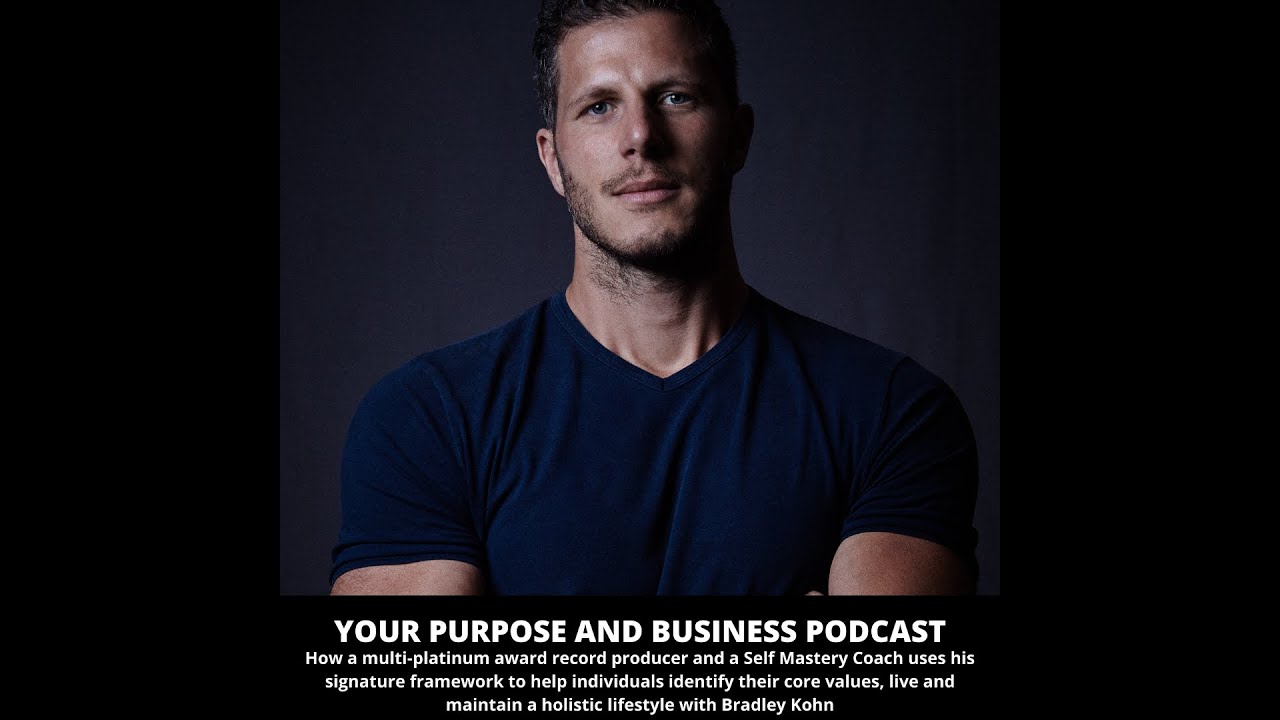
Bradley Kohn a Self Mastery Coach helps individuals identify their core values