How I got to work with Taylor Swift
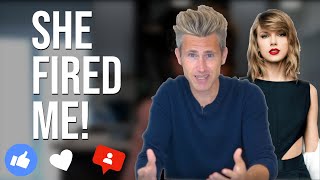
A founder shares how they built technology platforms, pitched to major executives, and ended up working with Taylor Swift. The video covers entrepreneurship lessons from both failures and wins in the music industry.
So one of the questions people ask me all the time is, how did you end up working with Taylor Swift? Or how do you actually get a client at that level? So today I'm just going to break down the story of how it actually happened, because it's kind of an interesting story and it's not what you would expect. So how I actually got to Taylor Swift, and this is a huge misconception, was I didn't just approach her on the street. And most of the time, when you're dealing with people at the highest levels, you're not going to get to them directly. So my journey actually starts. Started all the way back to a boardroom meeting at Viacom. So if you're not familiar with Viacom, they own MTV, VH1, Comedy Central. I was put into a room with 14 of the top executives at Viacom, and I was meeting with them about a technology that I built. We had built this technology, which, looking back on it, was the first ever influencer marketing platform before influencers ever existed. This was the first time as an entrepreneur that was solely me. It wasn't a movie. I didn't create that. I was presenting an idea around. It was a technology that I actually built from scratch with my team. And now I was presenting my work. Now my creative mind always gets me into trouble. So I come up with this idea, and a few weeks before, I actually came up with another idea, another version of that, and I wanted to present it in this big meeting. But this was a new form of the technology that wasn't completed. So I pushed my development team super hard. And the night before, I was up till like 4 or 5 in the morning working with the developer to perfect this demo. I need more time. You can't have it. So I was going into one of the biggest meetings of my life, and I was adding a level of the technology and a level of the presentation that I had never done before. So walking into it, I was absolutely exhausted, and I didn't even know if a part of the presentation was actually going to work. This is one of the biggest pieces of advice I can give to entrepreneurs, is you've got to love what you're doing, you've got to love what you're building, you got to love what you're presenting. Because when you get into those big meetings, that energy will carry you. And that's what carried me through that difficult meeting. And out of that room of 14 people, only one person got it. Let me repeat that. Only one person got it. There can be a hundred People in a room. Most people think you have to go into a room and you have to sell everybody. But that wasn't the case here. I just had to convince one person and that executive that I convinced in that room led to multiple licensing deals with them. And that set me on this path and this journey to working with Taylor Swift and other major celebrities and brands and corporations. Now the slow part and the frustrating part of dealing with huge brands and corporations is the legal process. The amount of paperwork that you have to go through, the amount of negotiation that you have to go through is just mind boggling. And that's the frustrating part. And me being a young kid at the time, I was very impatient. But you had to kind of set back and understand why these corporations basically paper the walls with their legal team to protect themselves and make sure that they're not going to get into trouble with any of the deals that they're doing. So once we actually had the deal in place, we started testing it. We did a private beta test, which means you're not opening it to public, but you're just testing it privately with a select group of people. Because when I actually positioned this deal to mtv, I hadn't even launched it. This was just an idea. It was a concept from a brand perspective. We tested this with Vice magazine, Yahoo, mgm, Lionsgate, Rock Band. So when we launched this, we ran into a big problem. Actually there was multiple problems that we ran into. One, this was very early in the social media days. So we, when you look today at the virality and the reach and the engagement, you get off of TikTok and Instagram, a Facebook and YouTube. That was not nearly the case back when MySpace first launched. The numbers weren't as big. You didn't have huge videos doing hundreds of millions of views. You didn't have influencers with tens of millions of followers. It just didn't exist because it was so early. Now the other problem that we looked at and we talked to the head of ad sales at Viacom was because we were completely outperforming the traditional advertising. When we're outperforming by 10-20x, it makes their other advertising that their sales team is selling to other big brands and corporations look like. And that was a big problem. So after seeing that it wasn't the right time for this technology, I had to go back to the drawing board. Failures just like this one are really stepping stones. I had to come up with a new concept, a new idea for a new technology. Living the life of an entrepreneur is all about failure, failure and learning from that failure. So when I spent all this time going through this process to sell in the technology, do all these tests, and ultimately not work out is failure is not an option today, because I've been doing this so long, I can get over something in a few hours. Because you've got to realize that you've got to move on to the next thing or find a way to improve upon what you're doing. And because I had this relationship, I felt, well, how can I maximize this relationship? What is the next thing that I could build? And. And in those conversations with this executive at mtv, I saw that there was a huge opportunity. At the time, there was something called 360 management. Back in the day, before social media, MTV had shows like trl. And what MTV realized is, hey, we're helping grow these massive careers of musicians and celebrities and athletes, but we're not really participating in the upside of this, so what is it that we can do to participate in the profit in the brand that's being built? So I just started thinking about that as, like, well, what are different ways that MTV could extend that relationship and actually participate in the upside of building these huge brands? And after thinking about it for a while, I came up with a concept of a platform that literally, you could start from a blank white screen and drag and drop anything onto it. A video, an image, and navigation, and our system would dynamically write the code for you. And if you remember back in the day of MySpace, one of the biggest attributes of MySpace is that you could control the embed codes and customize the backgrounds and express yourself in a unique way. But even in MySpace, you had to learn how to read and write code to do that. So we envisioned, like, what if you had no experience in code and didn't ever have to touch a single line of code and can build an enterprise website that you can customize and dynamically change everything to express who you are to the world. So as I started building this prototype, I went straight back to the executive that I did the deal with. I knew he just closed a huge joint venture partnership with NBC Sports around something called the DO Tour. And the DO Tour was kind of the competitor to the X Games that was sponsored by Mountain Dew, that was around skateboarding and extreme sports. So I said, I have this concept that I think could be helpful in this partnership. So I walked in there with a prototype of it with snowboarders and skateboarders, showing how you could dynamically change it. And we created websites that were creatively Unique that you had never seen before. So that got him really excited and allowed us to structure this other licensing deal with him. Now, once again, going through this crazy six to seven month process of closing a deal and papering the walls with all these contracts. In those conversations with the executive, we started looking at the larger ecosystem is like, okay, if this could work for action sports athletes, can it work for traditional athletes? Can it work for musicians, can it work for celebrities? And that's where it sparked the conversation. And the question from the executive is, hey, would you like to go meet Taylor Swift about this technology? I think it could be really beneficial to her. Now, to be honest, I had no clue who Taylor Swift was at the time, but she was on that inflection point of breaking out into the mainstream. And at the time, like, I would take a meeting with anybody. And if this executive, who's very smart and successful, is recommending we take this meeting, I said, sure, I'll take it. I'll go see what it's about and see if I can help and provide value to her. Now, the journey to actually getting the meeting to Taylor Swift was a marathon. So the first meeting was with Scott Bruschetta. So the MTV executive said, hey, we've got to go to Staples center on this night. It wasn't the night of the Grammys. It was a rehearsal. So I show up at Staples Center. I. I go to the security and my name's not on the list. And I'm like, what the hell do I do now? I can't get into this meeting. Luckily, the MTV executive showed up about 10 minutes after, afterwards and walked me in to this meeting. So we were backstage in the Staples center in some kind of secret room or green room or. I don't, I don't even remember where it was. And I had to present the technology to Scott Bruschetta. Now the important thing is, and this is, I teach young entrepreneurs this all the time, is do not go in with a stock pitch. And, and I hate the word pitch because it constitutes selling. We cannot sum up a man's life with a bunch of numbers on a computer screen. You've got to be flexible. So I had to learn how this guy, Scott Bruschetta, the head of the record label, perceived the problems around Taylor's business. And I typically ask more questions that before I even start talking so I can learn. What do you perceive as your greatest challenge in your business? What's holding you back from achieving X, Y and Z? What solutions have you tried in the Past that haven't worked for you, what's your biggest frustration? If there's one huge pain point that you have that could be solved, what would it be? So I went through that process in this meeting and started showing the technology after I gained this information and how it could apply. Now, Taylor did end up swinging the door open and was singing a Rihanna song, which is kind of funny because I built some technology for Rihanna later on, but she just popped in, she's quick, say hello. And then she was back out in rehearsals. So I met her briefly for probably like 5 second seconds. Then from Scott, I had to go then go to the father and have a meeting with him, understand him and how he perceived the business, how he perceived the pain points and the problems and the solutions. Then after that, then I had to go to the mother. Same thing is go through the problems, the solutions. Then I had to go to William Morris and meet with the agent and then go through that process. And I was stuck in a boardroom with about 10 other executives and agents around that. And again, each time I'm changing the message, changing the way that technology could be used to express, express the way that they perceive the ultimate outcomes that they're looking for. So for the father, a big portion is how do we maximize revenue, how do we build the E commerce? For the mother, it may be more about trust and validation and making it feel safe that we're good people to work with the head of the record label, it's like, well, how do we use this to actually move album sales for the agents, it could be another aspect of the business. So I had to go through four meetings to eventually get to Taylor Swift. We built an entirely new website for her in less than six hours so that we could go in there and show how she could control and dynamically change everything. Because one of the biggest pain points that I heard from her team that Taylor had is it would take 48 hours to update her current site because it was an all flash website at the time and she had to go through a developer versus using MySpace or Facebook or any of the social platforms. She could connect directly with her fans and control that conversation, control that narrative. Now, going into that meeting again, like every other meeting, I would ask questions and I could see clearly that she was in control of her own success. She was the reason she was successful and she wanted to be really hands on. I structured the whole story around that. I pulled up the website, I said, taylor, we built this entire website for you in six hours. Now what we can Do. And I gave her the mouse. I said, we can change any element of it. You know that navigation that will take a week to change through your developer. We'll change it in 15 seconds. You know how you love to express yourself on MySpace with different backgrounds of holiday seasons, album launches. Well, let's change the entire website background in less than five seconds. And gave her control of it and showed that she could express herself in any way that she wanted to. And that is where we really connected. That is what made her excited about doing this deal and signing off on. Okay, this is a direction that I can believe, and this is a direction that I think we should move in. So after that meeting, Taylor was super excited. And then it moved again to the crazy world of legal, where MTV had to go and broker this deal. So they started going into that negotiation process, and then we started to work with Taylor's team about, okay, well, we had already built this entire website in six hours. What elements do we need to change? What features do we need to add to make sure it can actually deliver on all of the key business objectives, not just on what Taylor wanted from a creative standpoint. Once that deal was done, then we launched Taylor's site off this platform. And we spent about two years working with Taylor and her team. And we had a tremendous amount of success of building different fan tools and fan initiatives to bolster that community. To bolster her success, we started bringing in other technology partners. And one of the successful aspects that we built was a relaunch of her fan community called Taylor Nation. And when we were doing the due diligence around Taylor Nation, we saw that at the time there was about 30 fans that actually learned how to read and write code so they could build their own Taylor Swift official website. And when we were thinking about it, it was like, well, what if we could give that power to everybody? So we built a technology that literally with a single click of a button, we could turn your Facebook profile automatically into a Taylor Swift fan site in less than 60 seconds. Now, the real key was, and we let this fans into the. Into. The secret is, once that that website was built, it was built on the exact same platform as Taylor Swift. So you were using the exact same technology that Taylor Swift was doing, and then you could dynamically single element of that yourself. So we had fans literally that would go in there and have this completed website built for them and delete the entire thing and start from scratch. And then they could show their immense creativity. And we went from around 30 Taylor Swift fan sites to over 35,000 in just a matter of a few months. You know, from there and the work that we did with Taylor Swift and working with mtv, we got introduced to a lot of celebrities. We had built technology platform for Rihanna and her fan initiative. We had, you know, built an official website for Michael Strahan. We worked with. We took meetings with the likes of, like, Snoop Dogg and Lauren Conrad from MTV's Laguna beach in the Hills. Looking back on that experience was really taught me is how you actually deal with different personalities, how you communicate with different personalities and effectively connect with them. Now, every beginning must have an end. And with this partnership, what happened is that the deal that I initially did with MTV got spun out into a larger company. They wanted to turn this into a bigger startup. That startup ultimately failed. Not because of a lack of creativity or ingenuity or the business plan wasn't there. It was just sometimes businesses fail, Sometimes businesses don't work. I've had businesses fail. Like we talked about the initial technology that didn't work out. And when that business failed, it really brought down us and it brought down our technology partners to a place where we really couldn't serve Taylor Swift's team anymore. We were attached to this bigger juggernaut that ultimately just didn't pan out. And because it didn't pan out, Taylor's team, and rightfully so, felt they needed to move in a different direction with a new technology partner. And this is a big lesson for me and for all of you out there, is oftentimes business doesn't work out. And it can be frustrating, it could be annoying, it could be devastating. But that's where you've got to be pushing forward all the time. And one of the biggest things that really frustrate me, especially about culture today, is everybody looks at the billionaires, everybody looks at the Mark Zuckerberg, they look at the Mark Cubans, all of these people, and they think that success came to them easy, that they didn't have any failings, they didn't have any stumbling blocks. But there always is with business, and you've got to understand that. And I've been a part of things that have been massive disasters, and I've been a part of things that have been huge successes. But you do definitely learn more from your failures than your successes. And that is the way that you've got to look at business in general and understand that going in. And does it make it any easier? No. Sometimes it's hard. You know, losing Taylor Swift as a client and going through that process was not easy, it was not fun. But sometimes partnerships outgrow each other. Sometimes partnerships don't work out. And like I said again, every beginning has an end. You don't work with everybody forever. You don't have a business that lasts forever. So even though the partnership ultimately ended up, I look back on it and there are some key things that I took away from it. Number one is Taylor Swift. I actually learned from her is in my engagement with her is she taught me a lot about how she approached fostering one to one communication. How you actually turn fans into brand advocates, how you get people to share your message with the world, your brand, your product. And what made Taylor so brilliant and so effective is that she understood the power and the value of, of fostering one to one communication with fans. She realized with each comment that she responded to online, with each autograph that she signed, with each photograph she took with a fan, not only did it turn that fan into a fan for life, but it also turned that fan into a brand advocate. And that really seeded an idea in my head that I still apply today is how can you turn your customer base, Somebody that reads your book, somebody that engages with your content, and just somebody that is going to share your message with everybody else that they know. Understand that business is a marathon, it's not a sprint. Whether you're working for a corporation or creating your own corporation or company is understand there's going to be trials and tribulations, there's going to be massive failures, there's going to be massive successes and don't get stuck in those failures. Figure out what you can learn from that and push forward. Understanding the dynamics of who you're working with. You know, understanding how you can read the room, how you can connect with people based upon how they perceive their goals, their challenges, and finally understand who you partner with ultimately impacts your success or failure. When they fail, that can ultimately make you fail. When they succeed, that can ultimately make you succeed. Now, do I regret doing any of the deals of the people I did? No. They're all amazing people. So now I'd love to hear from you. I want to hear your key 3 takeaways below of what you learned from this video and how you're going to apply it to your brand or your business. So thank you so much for watching the video. I hope you found it helpful. If you want to dive deeper into this and understand how you can close big A list clients or maybe just differentiate yourselves in crowded markets. Whether you're an entrepreneur just starting out or you're CEO of a major brand. Click the link below for my book Hook Point how to Stand out in a 3 second world. I cover these topics in more depth and detail. So if you found this interesting, highly recommend you check out the book. And thanks again for watching. And don't forget to click the subscribe button and like this video. If you enjoyed it.







