The Streaming Wars Are Confusing Everyone
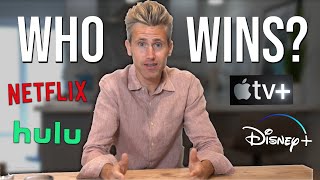
Brendan Kane breaks down why Netflix, Disney, Amazon, and Apple are locked in a brutal fight for your subscription money. Original content is the weapon, but the market is fracturing fast and nobody knows who wins.
So the landscape of consuming entertainment through television has dramatically shifted over the years. Back in the day, super simple. You turn on your TV, you subscribe to one service, whether it's a DirecTV, a Time Warner, and there's all of your content. Whether you wanted to watch Friends or Seinfeld or the Sopranos or Saved by the Bell, consumer behavior is dramatically going in a completely different direction, and it's creating a lot of competition, confusion, and where is it all going? Who is going to survive? So today, we enter what the media is calling the streaming wars.
The streaming wars. Streaming wars. Streaming wars.
Streaming war. Where it seems like every single major corporation and even some brands, all fighting against each other for our attention, to watch their content on their terms, on. On their platforms, for their own price. As a consumer, you are probably feeling the pain of this competition. You want to be on these platforms because they each have their unique shows that really hook you in to the tune of just stacking up and adding those fees up. That just really burns a hole in your pocket. So where did this all start? The biggest shift in the market was Netflix. They got started with a simple idea. Let's compete and take down Blockbuster. Why? Because. Because at the time, Reed Hastings got super frustrated, as I did. You would actually go to a physical location, take out a videotape or a dvd, and then you would have to go home to watch it, and then go back the next day or two days later and return what you rented. So this really forced Reed Hastings to think about, well, what would a world look like without having to go to a physical location? And thus, Netflix was born. And Netflix was really started as a platform to get your favorite movies, to get them without having to pay a late fee, without having to drive to a store. And as Netflix launched this, they started to gain market share very quickly. And as they started to gain market share from Blockbuster, and again, think back on this. Blockbuster, at its height, was valued at $8.4 billion. And what few people realize is that Blockbuster actually had the opportunity to acquire Netflix for $50 million at one point. But it's important to note, they didn't start out with original content. What they did is they licensed the content from movie studio television studios so that you can watch your favorite Disney movies or your favorite TV shows on their platform. But where Netflix really shined was they saw that they were gaining market share, but they knew they needed to take that extra next step to really solidify themselves in the market, kill off Blockbuster and build a huge media juggernaut. And that was creating original content because they paid to the tune of $100 million to acquire those rights and produce those shows. But looking back on it now, that was their first step to owning the streaming market early on. And the crazy thing is, is the movie studios and the television studios back in the day could have easily taken Netflix out. They could have easily acquired Netflix or cut them out of the equation. But they said, oh, there's this just young startup here. We're just going to take their cash and license content to them. Now they're paying the price to the tune of investing billions and billions of dollars to compete against Netflix. And everyone has a different opinion on who is ultimately going to win this battle for your attention. And I'll provide some commentary on what I think of their assessment. And trust me, I've got some pretty strong opinions here.
In an ecosystem that is overcrowded and oversaturated with consumers strapped for cash, who will survive.
So I also want to talk about the fact that he says consumers are strapped for cash now, especially in the world we live in today. Are consumers strapped cash for? Yes. But one thing, especially in American market, you know, 10, 10 bucks a month, 15 bucks a month is not going to scare consumers away. If you just look at the amount of debt that people incur on their credit cards, people are willing to spend and people are willing to pay. I really don't think the streaming wars are going to come down to consumers saying that I am paying too much money for this content. I think what the streaming wars are really going to come down to is am I willing to spend to get this exclusive content. This streaming war provider creates streaming services.
Live or die by their content library. And there's only one company out there whose library has been known and readily merchandised for the last 50 odd years, and that one is Disney.
So first off, I want to say that he's dead on that the streaming wars, their value is on their library and their content. And does the past library build value for a streaming service? Absolutely. But I would say the real value is in the original content that they produce to hook people in. I don't really see people subscribing to a service just because they have this huge deep library. Because there's so many streaming platforms that have that on there. A majority of consumers are looking for the new and the latest thing.
Cable TVs petered out over the last 10 years because the prices are so crazy, they've become unsustainable.
But I understand what he's saying because there definitely has been a decline in cable service, and there's been a lot of noise about the price, but I don't know that it's necessarily the price that's driving down the cord. Cutting. I think it's really that consumers are starting to realize some of these other platforms, such as Netflix, Amazon Prime, Hulu, Disney plus, are having the content that they used to get on the cable providers.
Netflix has had four price hikes even in the midst of losing some of its biggest shows. As recently as last year, a comedy fan in the US could watch Friends, the Office, and Orange is the New Black all in one place. Netflix for the low, low price of $8.99 a month. But now those three shows are spread across three separate streaming services.
Okay, so this is another area that I understand what he's saying, but I disagree with. Back in the day, when Netflix was really first starting out, they were just a library of content that you can consume. But now with Netflix spending upwards of 16 to 17 billion dollars a year on original content, that is what's driving people. That is what's going to create that retention. And the correlative price hikes associated with that is A, because they need that money to reinvest into this original content, but B, they can warrant that price hike because they're no longer a platform where it's just recycled content or older content that used to watch. And if you just think about it from a consumer's perspective, we're used to spending anywhere from between $10 to $20 to go to a movie theater. But now Netflix is coming out with a new movie every single week, a new TV show, and that's what really warrants this price hike. And it's what's going to keep consum.
Around as shows scatter. It also means that viewership is being spread thinner and thinner. It's called siloing. Siloing is making it so people often aren't watching the same shows as each other, which means that massive cultural events where everyone gathers around to watch the final season of something or the final episode of something just isn't a thing in 2020.
I couldn't agree more with this assessment. It is. Siloing is happening. And it's not just with television and streaming. It's with music. So an analogy that I like to think about, and this applies on both sides, is just imagine walking down the street back in the 1970s or 1960s and stopping people and asking them, what TV shows are they watching? What music are they listening to 9 times out of 10 they would have similar answers because there was limited choice. So the tent pole events, whether it's a movie or a television show, is that going to go away completely? I don't think it's going to go away completely. I think it's going to shift and not be as big as it is. And you see this with television ratings. It's not what it used to be. But there are certain breakout movies, there are certain breakout musicians, there are certain breakout TV shows that everybody will tune in for, like Game of Thrones, the finale of Game of Thrones, and how much attention that drew. Or you look at the tent pole movies, the Avengers, Wonder Woman, tenet. Because I think there is a part of consumer psychology that they want to be a part of something bigger. They want to be a part of what other people in their friend circle, their coworkers, or even just society and culture are really getting behind and consuming.
Not only is Netflix the current market leader, with an 87% penetration rate among us over the top video subscribers, but Netflix is still projected to be in first place by a wide margin in 2024. Basically, of everyone who has any kind of digital streaming service, 87% of them have Netflix. This is compared to companies like prime video with a 53% penetration rate, and Hulu at 41.5%. Netflix has also shown that its huge market share isn't easily shaken. Some experts predicted Netflix could lose up to 25% percent of their subscribers when Disney plus launched, but it lost almost none.
First off, I love that he said that, because that was. And he's so spot on. There are so many media pundits out there that as soon as Disney announced that Disney plus was launching that Netflix was dead. And to his point, they said that they could lose up to 20 million subscribers. And that's just insane. It's not. That's thinking that just because Disney's launching something, people are going to quit Netflix, underestimating the amount that Netflix has invested. And this is where Netflix is so brilliant. And people can look at the amount that they're spending on content and think it's insane, but this is where they're building their brand equity. Netflix eventually can be as big as Disney from a brand standpoint of the content that they produce. So I absolutely love this fact. Now, one of the other things that I want to point out by his numbers as well is people get so caught up in the US market, in the US numbers, the information that he just displayed, he said it was from a US perspective, where I firmly believe the streaming wars are going to win or lose is not by the US it's by the global market. That's where you see Netflix, for example. They say their next hundred million subscribers are coming from India. And this is something I talked about in my first book. I did a whole chapter on emerging markets. Now, often people think, oh, well, Africa, Indonesia, India, they're not valuable markets because the consumer doesn't spend as much money. You're completely dead wrong if you think that this is where huge corporations like Netflix, like Facebook, Instagram, Tesla, Nike, Coke, they're all going after emerging markets because that's where the scale is. More than a third of the world's population is in emerging markets. They predict that India in the next five years is going to have the world's largest population. And if we look at the population numbers that we're displaying here on the screen, you will see the huge discrepancy between the US market and when you combine Africa, Indonesia and India. So if you really want to determine who's going to win the streaming wars, you look at the global market and where that's going. Even if you look at the movie box office numbers, 60 to 70% of movie box office revenue is coming outside of the US There are movies that are literally saved by the international market. Well, they will completely bomb here in the us, but they'll make up all of their revenue overseas. So some people may think that Netflix is solely going to win because they were there first. So the one thing about consumer behavior, it is very difficult to shift. We get into our habits and we do not like to change those habits. So with Netflix, they do have an advantage in the fact that people are already subscribed to that and the likelihood of them canceling is not as high. Like to get into Netflix. If I had to go and cancel my Netflix membership, it would probably take me 5 or 10, 15, 20 minutes to figure it out. And personally, I don't have the energy to do it. But that's why people love subscription services, because typically, once somebody subscribes to something, they typically don't cancel unless it's a complete, completely negative experience. Netflix is going to survive. I'm not necessarily they're going to come out on top. I think that they probably will. But Netflix is definitely going to survive and continue to thrive because of their intelligent investments in content. They understand that their original IP is what is going to keep people subscribing, getting new subscribers and retaining those subscribers. So for the new startups in the streaming war space, it's critically important that they have extremely strong hooks to bring people into their service.
Flicks has to perform or die. It has to create its own shows that are big hits or else it's gonna fall apart.
Well, he's saying perform or die. They are performing. They are doing this. They realize that this is the business they they're in and why they're investing so much money. It's why they've tapped deep into Hollywood to attract the biggest talent, to attract the biggest directors and writers.
Sure, Netflix might seem like a behemoth in the realm of streaming, but it is a downright puny company when you compare it to Disney, Amazon, Apple, and the other company conglomerates that are far more diversified in the businesses that they do. In essence, Netflix can't afford to have a bad year in the streaming marketplace because subscription streaming is its entire business model. They have to succeed now, and they have to keep succeeding. Meanwhile, behemoths like Apple, Amazon, and especially Disney can all play the long game because they can afford to play the long game.
Do I think that Netflix is gonna lose the streaming wars? Absolutely not. Are they going to come out the clear winner? Maybe, maybe not. But they're not going to fall apart. The company's not going to implode. But he does make a very valid point that Netflix is reliant just on streaming. That is how they make their money versus you look at Disney, for example. They are very diverse in terms of how they generate their revenue. But that IP that they create and acquire drives people to the theme parks, drives people to merchandise. That's why they spent billions of dollars to acquire Pixar, billions of dollars to acquire Star wars and George Lucas's company. Same thing with Amazon. People think that Amazon is in the content business because they want to be in the content business. They're in the content business to drive Amazon prime memberships because they recognize that when somebody signs up for a Prime membership, their likelihood to purchase more products on Amazon.com goes through the roof. And that's what Amazon is a master of. They are a master at changing human behavior. So what I will say about Netflix is they recognize this fact, and that's why they are outspending everybody when it comes to content. Are they going to beat out the business of Apple, Amazon and Disney? No, they will never be that big in terms of the global business and the picture of those corporate players. But where they can win is audience attention. So to recap with all of this, the streaming wars are here and they're going to be here for the foreseeable future. So there's two categories. There are the companies such as Amazon, Apple, Disney plus that are playing a much bigger game with their content. They're not solely reliant on the revenue of that content to succeed, to sustain. They're playing chess while these other streaming players are playing checkers. Now that's not to dilute what a Netflix or Hulu is doing, because I think they have a brilliant model and I think that they ultimately will succeed. But we have to delineate between the two, the Netflixes and the Hulu's of the world. They're playing a game where we have to just drive subscribers and keep people retained and create, keep creating great content so we can profit off of that. And I think that there's a lot of misinformation in the marketplace that's not paying attention to that larger service. Will Netflix or Hulu ever get as big as an Amazon, a Disney or an Apple in terms of overall revenue? Probably not. But I don't think that they're trying to build that type of business. And these people out there that are saying that because Disney's getting in the game, because Apple's getting in the game, all of a sudden Netflix is going to fall apart. I couldn't disagree more. Netflix is playing a very smart game, but a different game. And one of the biggest takeaways for you as a business owner, as a marketer, is leveraging this content to hook people into their services. I know you're not going to start producing television shows or movies, and I'm not proclaiming that you do that. But just take away the analogy of how it can apply to your business. Netflix is investing in shows because they know that hook them into their business. Disney invests in movies, acquiring IP TV shows to hook people into their brand, to get them to buy other things. So really ask yourself at the end of the day, what can you learn from these providers, what type of content that you can produce, even if it's short form video content, social content, advertising that hooks people into your brand. And that's what you've got to think about the crowded world that we live in today. I don't know if you know this, but there's over 60 billion messages sent on digital platforms each day. How are you going to stand out in your own world for attention? How are you going to stand out across every other piece of content? You yourself are no longer competing against your direct competition. You're fighting against every other piece of content out there. So what is your way to hook people in. So if you're looking for your way to stand out, your Stranger Things, your Will Smith movie and you're questioning, well, how do I find that? Well click the link below for my book Hook how to Stand out in a 3 second world where I take you through the whole process and the framework that we use with our client to help identify what's going to make you stand out in the crowded market that you find yourself in today. Also, if you have a show that caused you to sign up for a streaming service, comment below. I would love to see what's making you drive to sign up for these different streaming services in this war we currently find ourselves in. And don't forget to click the like button and subscribe. So thanks so much for watching the video. Hope you found a lot of valuable insights that are going to help you grow your business or your brand.







