011 – Interview with Gordon Scott – Extensive Trading Trainer
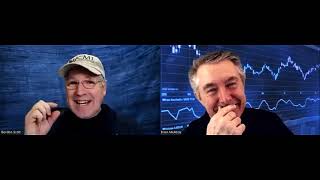
Gordon Scott, an extensive trading trainer, discusses trading philosophy, risk management, and psychology with Brian McAboy. Scott explains why trading can work as a profession and shares practical advice for aspiring traders navigating market randomness.
Hello and welcome to the Consistent Profits Podcast brought to you by Inside out trading and Brian McAvoy, where the focus is on consistency, because when you have the consistent part down, profits become easy. Hello, everyone, this is Brian McAvoy with a new episode of the Consistent Profits podcast brought to you by Inside Out Trading. I'm excited today to be interviewing Gordon Scott, author of Invest to Win and co creator of myconsistentprofits.com thanks so much for being on the podcast today.
I'm glad to be here. Thanks for having me, Brian.
Now, Gordon is a member of the Financial Review Board for Investopedia. He's also worked in the investing and trading world for over 20 years himself and helped educators, our trading educators, with such recognized organizations as Investopedia Market Technologies, Actions to Wealth, Beacon Learning Group, INVEST Tools, and Wiley Efficient Learning. Gordon co authored the book Invest to Win and even manage the CMT program at Market Technicians association. And he's been a trading coach for quite a while. He's had exposure to a lot of different perspectives and helped a lot a lot of other traders over the years. Again, thanks for being here and for being game for this interview.
Yeah, looking forward to it.
Now, when I saw that you'd work for Investopedia, I just had reach out and learn more about you because that's one of my absolute favorite sites for traders and investors. And just because it's such a great resource and provides an excellent foundational resource because I'm a big believer in get to know your vocabulary when you're getting into a new field and a new body of knowledge. And just having the glossary that's there at Investopedia and all the learning materials is just a fantastic site. I love referring people there. How did you wind up working there?
Oh, that's a fun story. I'll try to keep it short. I could talk about it forever. I was working as the managing director of the CMT program, which you made mention of. And at that time, Caleb Silver, the managing editor there, wanted to have a higher collaboration between CMT people who had the CMT designation and were working in industry and Investopedia. He wanted content from people who were CMTs, and particularly people that, you know, kind of wanted to get their name out and get a little more name recognition. And so, you know, I struck up a conversation in trying to help make those connections. And along the way they developed the ambition for a brief moment to create something called the Investopedia Academy. And they wanted to create online courses about all sorts of things Trading, investing, finance, Excel, spreadsheet modeling. But they didn't have an expert on site who really knew a lot about all of those fields and, you know, what should be developed into online courses. I've been doing trading coaching and instruction and curriculum consulting for 20 years. But my original background was instructional design and technology. So they realized, wow, here's somebody that has both domain knowledge and, you know, skill in presenting, learning how to structure information so it can be presented. This is the guy we need to be our head of education. So they, and I got in discussions with them and I just, it sounded too fun. I couldn't, couldn't resist. Although I loved working with the CMT Association, I love those, those folks and so forth. This, this thing sounded so much more fun and I just felt like it was a once in a lifetime opportunity. So for a year I got to be part of Investopedia Academy, even got to do, you know, get behind the camera and be one of the instructors on the penny stocks course that they have. It's all that content is fantastic content. It's still out there today, if I, if I do say so myself, calling it fantastic. I just, I'm very proud of the work we did and the value that it continues to give people today.
Yeah, very cool. Yeah. As far as developing curriculum, that, that is definitely a specialized skill set and it's cool that you're got that background mixed with trading. Now in talking with you, we had come up with a couple of topics that really sounded interesting. One of them that you had mentioned, and I wanted to, if you would, I'd love for you to share your thoughts more on this. You'd mentioned the justification for trading because I know some people, you know, they have a little bit of a moral dilemma and other things that they struggle with just with trading itself since it's not a regular business where there's a value exchange and other aspects of it as far as a pursuit and that kind of stuff. So when you said, you know, a justification for trading, I thought, yeah, okay, tell us more about that. That sounds really cool.
Yes. So I'm glad you asked. So the justification for trading from a sort of academic standpoint is the trading is really no different from investing once you understand what the business really is. Now, like you said, most people think of that there's kind of moral dilemma because there's no exchange of value. That's not true. There is a very clear exchange of value, but it's a little esoteric. It's hard to see if you don't Know what you're looking at? The exchange of value is risk management. Most people think that what trading is is forecasting or prediction, right? If you know what's going to happen next in the markets and you make a big bet on it, then you can get this windfall, you know, lottery, lottery gain, right? But that has very little grounding in actual practice. Like, you don't know anybody that made one call and got out there, made a huge when and just walked away and said, well, I knew it and I could do that anytime I wanted to. The closest person you could think of that might come in that category, we Michael Burry. But if you understand what Michael Burry actually did and does, you'd realize. No, no, no. It's, it's. He is on the extreme edge of risk and reward setups. But I mean, just to give you a quick example, you see the movie the Big Short. I love that movie because it does a really good job of depicting the emotional pain of trying to stay short in a market that is genetically disposed to be long as much as it can be right? And that is a very hard position to take to be a contrarian and to get it right. And what the movie very subtly depicts is that Michael Burry began his shorting of the real estate market in 2004. You talk about being early, right? And he built up his position to get to the point where in about 2006, he was all in, right? 2006 is a long time to wait. And that's why you had those investors, as depicted in the movie, coming at him and cursing and screaming and wanting their money back, even though he's going to make them about 400 or 5,000% or whatever it is on their money in just another 18 months more. Fast forward. The Gamestop bid. He was on that a whole year early. And even he didn't think it was going in his furthest imagination. 50 would be where he thought it could go. It ends up at 483, right? So, you know, the whole idea of prediction and speculation, even in the best of circumstances, is a mirage. It's not that nobody can predict. You certainly can. The business of making money at it, though, has very little to do with the prediction and everything to do with risk management. So what the business of investing or trading is, is risk management. If you manage your risk better than the marketplace on average will do, the market will pay you. If you don't, the market will charge you for that service of risk management. And if you look at it that way, then you Realize that the only difference between investing and trading is frequency, frequency of activity. Right? Oh, because you know what, what most investors, professional investment money managers do is they manage risk by creating a portfolio and then having rules about how much they can allocate to any one position. So they'll say things like, well, you can't have more than, you know, they got a billion dollar fund. I'm not going to put any more than 1% of my money into any one security. Right, okay, well, what they did is they just limited their risk exposure to, to 1%, because if that one stock goes to zero, then they only lose 1% of the portfolio. Meanwhile, they'll hold onto it for as long as they want. And if it goes to the moon, great. That's an asymmetric return. And of course, that's what they're hoping for. That is the typical standard by which Warren Buffett, as an example, might try to make his decisions. Now, the problem with that particular idea is it is grossly inefficient in terms of risk management because you buy a stock at 1%, you know, 1% of the portfolio, you buy a stock and you leave your money there. And then you buy another stock and same thing, 1% of your portfolio and you leave your money there. Those risks, in theory, should be the same, but really what you're doing is you're managing the risk of bankruptcy. Coca Cola does not have the same risk of bankruptcy that say, well, Silicon Valley bank, something some regional bank today has, right? They're not the same. So if you allocate the same amount of money, then you're, you're kind of wasting your time on about 60% of that risk of the 1% of Coca Cola, because maybe Coca Cola is going to fluctuate a bunch, but it's not going out of business, at least not in the foreseeable future and probably not in the foreseeable decade. But a regional bank, they do have some sort of right where we sit right now, some sort of elevated risk. And Maybe it's not 100% risk that in a decade they're going to be gone, but it's certainly orders of magnitude larger than Coca Cola being gone in a decade. So as a result, just the simple rule of, Hey, 1%, 1%, 1%. It's kind of ridiculous, but investment professionals don't have much better tools. It's not like they can themselves predict, well, this thing I could probably get away with risking 50% of, you know, having a 50% probability that goes bankrupt and so forth. It's too much time and effort and so forth. So they don't do that. They just simply slice it up into 1% or 2% or depending whatever their funds profile is how much risk they want to do. And that's sufficient, that's good enough for the likes of Ray Dalio to make billions of dollars a year in investment returns. So we look at that and we say, here's this fantastic industry in investment management and all it does for risk management is slice up everything into allocation percentages, buy it, keep their fingers crossed and hope, well, if I can do even a tiny bit better than that, then I can offer more value to the marketplace as an individual trader who's much more nimble, has the ability to get in and get out, has the ability to look at just order flows, has all sorts of information that I can react to far better and faster than a committee of portfolio managers can. Surely there's something that I can offer to the market in terms of slightly elevated risk management. I don't have to be the best risk manager in the world. I just have to be a little bit better than average. And quite frankly, that's not that hard to do. And that's why I say there is a logical and philosophical justification for being a trader. Now, should everybody be it? No, not everybody should be anyone given profession in the world. Right. I mean, you don't have any sort of obligation to run out and become a trader. But if somebody tells you, oh no, no, trading is a, a stupid industry, it's, it's not, well, okay, that person doesn't know enough about the industry and they certainly don't know anybody that knows how to do it.
Right.
But if you boil it all down to risk management, then you can start to have realistic conversation.
Yeah, well, and that does make sense as far as that kind of a value proposition. Most people are looking at it just as in terms of a business in general and the fact that there's not a good or service being exchanged with a person or organization.
And that's.
Right, yeah, you put, you put it in a different context and that does make sense. And that actually is a good value to be providing, so.
Right, yeah. And you know, I mean in terms of not transacting a hard and fast good and service, I mean, the world we live in is more and more digital. I mean, all you got to say is three letters, nft and you are well past the edge of, you know, transacting anything of hard and lasting value. Right. But, but the reality is all of us have a need to look after our finances in ways that authority figures in our society, government, regulatory agencies, academia, are not going to be able to provide us sufficient information to do the job we need to do. The government, the US Government, any government, but let's say the US Government, it can't predict and it certainly won't describe its risk of failure. It's risk of its own failure. Even if it could, there's no way in the world they would tell you about that because, oh, loss of confidence. People are going to stop buying U.S. treasury bonds. We can't have that. And I'm not trying to talk about political side of the spectrum, I'm just talking about the mechanics of a business, of a system, of an organization and its own desire for self preservation. There's no way that somebody's going to come along and tell you, okay, put your money here because we might fail, and this is the best hedge against it. You won't do that. You're left to figure that out yourself. Right. And, and people that have their money in banks that aren't doing a good job of risk management, they don't know that, you know, and those banks are not going to tell them. Well, you know, we're crummy risk managers, so you probably should put your money somewhere else. They're not going to tell you that. And, and the worst part about it is, as is, as has been shown in the case of Silicon Valley bank, not out, not all of them know that they are poor money managers and they might think, hey, I'm a great money manager because blah, blah, blah, blah, you know, all these things I'm doing are things that people have done the past 40 years. True, but in the past 40 years we've had a declining interest rate environment. And now all of a sudden we have a very steady upward climbing interest rate environment. And nobody got schooled for that. Nobody went to school to learn how to manage, you know, money market banks and money market positions in that kind of environment. So some people are going to do it better than others. And they're not going to tell you. They don't know how to tell you. Even if they could, they wouldn't. So that's all a way of saying you have to recognize at some point that taking care of your own finances means you need to know how to quantify risk. Now, for those people that are really interested in the nuts and bolts of, of the market and are willing to learn about trading stocks and options and so forth, if you got the time and interest in it, you have this huge opportunity because given the right approach, you can learn to trade far more effectively, far more efficiently and far more quickly than you might think you could have. And that's been my passion for the past 20 years, is to refine the systems of instruction that I use to try and help people get through from where they are to profitable trader. Not in a matter of years. Right now, about a matter of months. You know, four months to a year. I'd love to get it down to a matter of weeks and I'm working to do that.
Well, and on that note, I absolutely agree with you. Trading is not something that requires a four or six or eight year degree if you're given the right instruction. Yeah, months is very reasonable, very reasonable. It's just, it's not that complex. It's just not that information, that much information to absorb. It's better about getting the right information, the right instruction, the right teaching and developing the right skills and perspectives. And fortunately, most traders are above average. And so, yeah, I mean I've been, I've been trying to, I've been trying to get people to understand for years. They'll come to me and it's like, you know, Brian, you know, I got a good system and I just can't stick to it. So you know, what I need to fix is me. And it's like, well, no, you don't have all these psychological issues, you don't have discipline issues, whatever, you're okay. I mean, you've proven that you've got all the assets that you need to be successful at this. You don't have psychological issues, you have lack of training issues. And if you get the right training, it's not that tough and you'll be fine. And I've proven it again and again and again and other good educators like yourself who get it, it's like, yeah, you need to know what to do and how to do it properly, not just learn a method. And like you're talking about, you know, effective risk management. Yeah, that's huge. And just get, you know, some of the, some of the critical skills down. It really isn't that tough. And so yeah, the timeframe, the books that say 5 to 22 years, I'm like, yeah, if you're beating your head on the rock and trying to figure it out yourself, sure it's going to take that long.
You and I see it the same way, Brian, that trading psychology, that can be useful. And I gotta say, you know, in all the years I've been coaching people, I have run across few people who have psychological issues that need to be addressed, but they're not the majority. I mean, by far they're, you know, less than 5%. And what I have found instead is that there's this incredible mismatch between what a normal person experiences who may or may not realize they're normal and what the statistics show.
Right.
So there's this published study out there in the, I think it's Journal of Finance or something that, that looks over 10,000 Taiwanese day traders. Now these are people that buy and sell within 24 hours, right? That's the typical kind of trade they're looking to do in their account. 10. Over 10,000 of these traders. And this was, you know, several years back, but they repeated this study, I believe. Anyway, the study showed that 90%, little over 90% of these traders failed. Okay. And by fail, we mean lost more than 50% of their account within three months and didn't go back. Right. They failed. 90% of those traders failed within the first year of trading. And you know, first three months. Right. And, and the kind, the point of the study was to, to sort of show, hey, you know, maybe day trading is not that great of an idea. Can people really consider it to be worth, you know, it was sort of exploring those kinds of questions. Buried within the data though, were some really astounding fact. Consider this one of the people that didn't fail. If you were able to trade your account for an entire year and not blow it out and give it up, you now had a 40% chance of being, becoming what they called a successful trader. 40% chance if you could manage trade for one year. And further, if you could manage trade for two years, you had a 60% chance of becoming a successful trader. They, they didn't highlight that. They didn't, they didn't bring that out. I was just looking at the, the data, the progression that they had, and, and I was just astounded. 60 chance, you have a better than even chance of becoming a successful trader. Meaning you're going to beat the markets and you're going to have profitability in multiple years thereafter. Right? 60 chance. I thought, wow, if anybody thought that they had a 60 chance better than even chances of becoming successful at trading, surely they would think of success or trading as a successful career. Right? Now, the comeback from people who would conduct a study like this and read it for what, you know, its intended publication message was, would say, yeah, but that's just this tiny little small percentage, you know, for me, I say, well, yeah, that's the tiny small percentage that did a better job of risk management. I don't think that there's anything magic about one year or two years. I think that the survivorship bias of that data. Right. Who's left is all the people that were doing dumb stuff that got out of the market. The ones that are left were the ones that weren't doing it. So they were doing a better job of risk management. Here's another kind of simple idea. If the market. You hear this from academics a lot. And in fact it was Vogel, John Vogel had a founder of the big ETF company starts with the V, not Fidelity, but the other one. I just, I keep wanting to say Vantage. It's not Vantage, but anyway, it'll come to me when I'm not trying to think about it. So Vogel, Jack Vogel said, not Vogel, Bogle. Jack Bogle said you've got very little chance of beating the markets. So index, everything should be indexed. Vanguard, that's it. So he's the founder of Vanguard ETFs billion dollar hedge fund. Not hedge fund, mutual fund company. So the whole idea of indexing is just prevalent. It's everywhere in the market. And the idea of indexing is I can't beat the market averages, so I'll just ride the market averages. And that turns out to be a pretty good idea. But it really begs the question, why can't you beat the averages? I mean somebody has to, otherwise it's not the average. Right? If 90%, 90% of people trying to beat the market through day trading failure, that is a very curious problem because shouldn't at least 50% of them be on the upper half? Right. Well, the answer is that it's not about prediction, it's not about backward looking returns, it's about forward looking risk management. The people who burned out were those who put too much risk on a given trade. If you risk, for example, if you risk 5% on every single trade or investment that you make, statistically speaking, it's only a matter of time. You will bankrupt your account. It's fascinating, but statistically it bears out. It takes about 200 trades and you will experience a failure event. So 200 trades in a highly active day trader. That can happen in about two to three months. You know, you just, if, if you're betting too much money, then there'll be this black swan event for you. And in your trading, you know, something you didn't see and somehow it moved. The market just says, oh, you know, Goldman Sachs move 3% today. But you know you were all in on going the wrong direction that it went and half of your account is gone overnight, right? So what, what was a yawn for the market is, is your black swan event because you're amplifying the risk and therefore the consequences of being wrong about your prediction. So the first, first thing I teach people to do is to eliminate the dependence on prediction by looking at exit strategies. If we take the point of view, hey, markets are random, right? I mean, that's what the efficient markets hypothesis, Gene Fama and all the, you know, Nobel prize winners who are so much smarter than us tell us. You know, markets are efficient and, and you can't predict them. Okay? You know, instead of trying to fight that and prove them wrong, years ago I came up with the idea, what if I just accept that idea? How could I find a way to trade if the markets were random? I mean, I wanted to know this because I was sitting there coaching people and I'm having my own little existential crisis about am I just telling leading people down the primrose path. I mean, if it's all random, I can't really get anywhere, can I? Right. Well, there's a longer story about how I found that there is a massive opportunity in trading because of something called the Arcsine law. And basically it's the idea that even random events will tend to cluster into trending appearances, trending behaviors, trending data strings. And so what people think of as something, you know, a trend. People usually think a trend is non random, but in fact a trend is random. It will occur even in random events. And this is the big problem that people like, you know, the author of Random walk down Wall street and, and you know, they, they look at that sort of stuff, they are fooled by randomness. That's another book. Talib Nassim Taliban. Anyway, those books mistake the appearance of random data as something distinct from market professional behavior. If the efficient markets hypothesis is true, then no, they're not distinct. It's not as though somehow you can be smart and do it right and create non random returns just because you somehow used the right slice of the market. The market's random. It's random. Better to, to play it in what random means. So here's, here's what random means. If I buy a stock at $50 and I set a stop loss at 49 and I set a take profit limit order at $51, right, it's $1 up, $1 down. What is the probability that I'm going to win that trade? Now it's not too hard to guess that in a random market it should be 5050 because you've got just as much distance up as distance down. The probabilities are, you know, and, and interestingly enough, option pricing, the black Scholes model and the various option pricing models they're all built, they'll have that same assumption built in that market movement is random. And so any given distance, equal distance from one up or down from one starting point is a 5050 proposition. And so I thought to myself, okay, well if a 5050 proposition is equal distance of stop to target, what if I just monkey with the distance? What if I made twice as much distance to my stop as to my target? So my stop loss is now 48. My profit target remains at 51. Is it still at 50 50? No. You can, you can back test this. And I have back tested this thousands of times and found that the percentage of time you will get stopped out compared to the percentage of time you, you will take profit is 66.7%, give or minus a couple of points. Which means that the markets are pretty random in the way they move. I don't call the markets random. I call them randomized. Because all of the millions of people participating in the markets and the sort of cross currents of the decisions they make create a degree of randomness. This, and yet every single one of those decisions is 100% deterministic. I am trying to do this to get to there. Right? Right. Everybody has a purpose. So it's not random. Nobody made the decision. Nobody said, I'm just gonna flip the coin and throw it in. I don't care where my money goes. Nobody did that. Right? And yet the cross currents of everybody's decision creates such a randomizing factor that it is more valuable for us to say I'm going to assume the markets are random than it is to try to assume otherwise. And if I can assume that the markets are random, then I know that I can just change my exit strategies and I can change my winning percentages. I can have my winning percentages be 70% if I want, or 30% I want. Now, you could look at it and say, yeah, but just because you win 70 doesn't mean you're profiting. Right? Because when you lose, you lose bigger. Exactly. That's true. However, what it does do is it gives you a baseline for your results and you say, all right, if I'm trading in this certain way, I should get these kinds of results. How do I incrementally beat that? How do I find an edge well, it turns out there are all kinds of edges in the markets because the markets aren't random, they are randomized. You can find all sorts of edges and that's what Michael Burry does. But Michael Burry's edges that he finds are cruise ship edges. They're long, slow moving kinds of things. What a trader finds in edges are much more ephemeral. Ephemeral, the kind of things that will last, you know, for minutes, maybe days, maybe weeks. But they're there. They're there to be had and to be found. And I just completed a couple of months ago a multi episode description of 10 persistent edges that academic studies have shown are in the marketplace. And it's been really fun. And then what I did after that was started trading based on the best of those edges and then just doing a public portfolio of hey, here's here, this is the theoretical portfolio. And then I actually took some of those trades, most of those trades, and put them in my own real money account. And so just in the month of March, that portfolio was up something like 4.8% on the public one. My own portfolio was up 5.2%. Over that same period of time, during that same period of time that the portfolio started and ended, the market was up 0.5%. It's only one month, but it was a lot of fun for me to say, hey, here's all the edges. If we trade them, we should, we should get some benefit and then to actually do it for the next month. It's kind of like calling eight ball, corner pocket and a little bit of self promotion. Yeah, it landed, but that's not the first time I've done this. I've done this three different times over past years and the result has been surprisingly similar each time. So it gives me a lot of confidence to say if you concentrate on the right things, you can get your trading business up and running a lot faster than you might think.
Oh yeah, actually, although you're talking about there, I find it hilarious because one of my favorite examples, I mean, speaking of random, and you know, the exit strategy is key. A guy that I worked with several years ago had a random entry trading system, literally random entry. He would, he would lay out a sheet that had all the different commodities listed on it. He would take his finger and he would let it drop, okay, that's what I'm going to buy. And he would flip a coin to say, this is the direction I think the market's going. And he was profitable. We got him profitable because of the trade management With a pure random entry system, they only taken out of it. It was all in the trade management and the exit.
Yes, yes, absolutely. Cool.
And so, yeah, what you're talking about.
Is, have you ever heard the story that Chuck LeBeau tells about the commodities trader back in the day who talked to other planets? Have you ever heard that story?
No, but I have worked with traders, use their horoscope.
It's amazing to think about people that rely on prediction, especially like large investment managers or commodities managers that rely on prediction. You know, you say, well, this guy took a random entry system. Hey, they're all random entry systems. Let's be truthful, right? It's like if the markets are random, it doesn't matter what you think is a non random entry, it's still a random entry, right? But this guy, to prove the point, Chuck LeBeau, this is, this happened back in the late 80s. There was this gentleman, Chuck LeBeau was working at a commodities trading advisory and sort of the front office there was a gentleman, it was in Chicago, a gentleman who would come in and he would say he would want to do futures trading. Now this guy would take one of those wavy Coke bottles and put a bit of gum in the bottom of it and then break off a transistor radio antenna and stick it to the gum. And then he would hold it up to his ear and mouth, you know, predating cell phone usage. And he would talk into it, saying things like, what should I buy? What are they doing? And then he would have this imaginary, well, imaginary conversation. And, and then he would come and he'd tell the brokers, they're buying soybeans on Saturn, so I'm gonna go long. Soybeans. And he had the belief that, you know, there were interplanetary individuals participating in Earth's commodity markets. And so what was fascinating to Chuck was that he ended up being more profitable than most of the money managers in his firm over a period of months. And he sat there and looked at this guy and he thought, now I can either believe that there are traders on other planets, or I could believe that the entry isn't the thing that's making him money. So he went and looked for what was making him money. What he found was that when this guy bought soybeans or whatever and held the position, the other traders, floor traders that were part of the advisory would sit there, roll their eyes, and when the soybeans started going down, they would razz it. Yeah. Oh, those Saturn traders, boy, you can't top them, they're so good, aren't they? You know, they give him all this grief and, and what he would do is eventually he would just cut the position. But if the position went well, nobody said anything because they didn't want to. They didn't want to feed his ego and they certainly didn't want to make themselves feel stupid by not having gotten in the trade. So they wouldn't say anything. Consequently, he would let it run. And just out of his own pride, he was following the golden rule of trading. Cut your losses short and let your winners run. And so Chuck looked at that and realized it's all about the exits, isn't it? And managing yourself through exits and through your positions as they progress. That's the key skill of risk management the traders really need. I just love that story and I kind of based a lot of what I started developing in the way of coaching when I first heard that story and started, started trying to find ways how can I more efficiently get people into that realization. And I'm very proud of what we've accomplished over at my consistent profits.com because we have this sort of methodology that leads people through in a matter of weeks what they need to know and then in a matter of a few short months gives them the exercises they need to complete in order to be able to get themselves there within about four months to a year.
Cool. Yeah, I'm glad you brought that up because I wanted to ask you about that. As far as your site, you know, when people do come to work with you, what's the experience like for them?
Well, we have on my consistent profits.com, we have four different kinds of webinars. So they're all small group, one to many kind of instruction models. And then of course we've got lots of recordings, we've got an online library, and then we've got exercises that people have to go through. So it's very much of a self study, but kind of a guided self study. You get to talk to experts. I like to consider myself one of them who can answer your individual questions and also give you day by day market insights and that kind of thing. But the real thing is, can I develop the habit of tracking my trades, structuring my trades. Well, even getting further back, seeing the trade and then structuring it and then tracking it all in a consistent way that helps me do better risk management? You know, how do I get to believing I need to do that? That's the hardest thing. You know, psychological issues that people have. Okay, the biggest one anybody actually has is just Believing that they need to do this, kind of need to do that. I know this is right. I know GameStop's gonna go up from here. I'm buying it. You know, people that stay stuck there, that's where psychology has to come in. Most people find. I think I can get past that. After half a dozen losses, most people can get past the idea that they need to have perfect prediction capabilities. And so once you're past that, then you can say, well, what's the right way to structure my trade? And then believing that you need to consistently structure your trades, imagine them, structure them and implement them is that's the next psychological hurdle. Believing that you need to do that. And once you get, once you have that belief, then it's all a function of, you know, repetition and skill building the ability to do that. And, and like I say, that doesn't take that much time as long as you believe in it and, you know, agree with this, this system of risk management, if you don't agree with it, you'll be fighting it, you'll be looking for something else and it takes you longer.
Oh, absolutely.
Yeah, yeah. So we, we sometimes offer one on one kind of coaching situations and I work with people one on one specifically for. To help them overcome that hurdle. You know, how do I get into this pattern where I can build the habit of consistently looking at a trade I believe in and structuring it the same way every time and then tracking my trades so that I can have predictability in my system and gain the kind of consistent profits I want.
Very cool. Now if so, if people want to, you know, find out more, it's my consistent profits dot com. That's, that's okay. Very cool. And they can reach out to you through there.
Yeah, yeah.
Well, excellent. Excellent. Well, I tell you what, this has been a whole lot of fun and I got to tell you, I got to ask you back on because we didn't even get to talking about the parallels between business and trading.
It's true.
Which is a great conversation and I'm looking forward to having that with you because I know we definitely see eye to eye on that and it's a worthwhile conversation. It's not just interesting, it's actually useful for traders. So, yeah, if your game, I'd love to have you back on. We can, we can have that conversation too, so.
Oh, yeah, we'd love to do so. I think that's the kind of information that there's just not enough of out there. You hear a lot of scary stories about oh, I'm gonna go into trading. Oh, well, most traders fail and, and fear, fear, fear. Well, most people repel those stories because they don't want to feel stupid for not having tried it themselves. And to be truthful, most people aren't stupid for not trying it because it is a high failure rate unless you understand what the game really is.
Yeah, yeah. Indeed. Indeed.
Well, cool.
I tell you what, it's been a lot of fun. Any last words of wisdom? And we do need to go and wrap this up. We'll run a little bit long, but totally worthwhile today. Any last words of wisdom for our listeners today?
Well, I would say that if you have been feeling like, gosh, I just, I want to learn trading. But I just, you know, my significant other, my parents, my, my good friend, my boss, if I ever dared whisper that to them, they would look at me with horror and tell me I'm stupid. So I don't consider it. Then you should reconsider that idea and maybe come back and listen to the second part of this that, that Brian and I end up doing. Because in 19. I'm sorry, in 2001, I sat there in a library in Texas watching those videos on 9 11. They're played over and over again. And I watched my first career burn up. Just, I mean that picture was, was a perfect metaphor for what was happening in my individual career at that time. And I thought to myself, okay, my career is a do over, so what do I need to do? And I don't know why, but in that library and in that moment, I thought to myself, I want to learn about the stock market. I want to learn what stock trading is all about. And just on that desire alone, I built a second career. I heard all of the things that everybody said and I experienced a lot of things people said. You know, I lost significant money, but I also made significant money. And more important though, I gained knowledge in studying this and going down this path that has helped me in every other aspect of my life. And I'm a big believer that trading is philosophically good for the people that really somehow feel drawn to it. And if they can get the right information about it, it can enhance their life and allow them to enhance the lives of those around them.
Yeah, I agree. Yeah.
Good call.
Yeah, excellent. Well, again, Gordon, thank you for sharing all that you have today. Very worthwhile and enjoyable for sure. Now, as far as, you know, everybody listening, I would strongly urge you, like I do on every call, but especially with Gordon, if what he had to share with you Today resonated at all. Definitely don't just, you know, listen and say that was cool and then go about your day. If it resonated with you, go ahead and act on it. Go and reach out to him at his site, myconsistent profits.com and, you know, go ahead and, you know, find out more about it and if it's great, go ahead and engage him. Because the main thing about it with trading is you have to do, you do have to continue the pursuit of learning and developing yourself until you get there. You can't just coast and do the same thing you've been doing. If it isn't, if it isn't getting you there. It's not like, you know, one day you're going to magically wake up and things have turned around on their own. You do have to, you know, take some action to move, you know, move your, move your career forward as a trader. So, and Gordon, Gordon's good guy and yeah, he obviously he, you know, he's got some good experience to share with you and some good coaching. Good, good perspectives that will definitely help you. So, you know, don't, again, don't just listen, go ahead and take action on it and, you know, that's it for this episode, though. Gordon, thank you again. This was a whole lot of fun and thank you doing this again with you. So, yeah, thanks again for being on today, man. And I'll tell you what, so, yeah, we're going to wrap it up and we'll see everyone on the next episode of the Consistent Profits podcast. Thank you for joining us today on the Consistent Profits podcast brought to you by Inside Out Trading. Make sure to swing by Inside Out Trading and pick up your copy of the proven formula for consistent monthly profits. If you enjoyed the show, make sure to subscribe on your favorite channel and we'll see you on the next episode. Cheers.









