018 Interview with Norman Hallett - Master of Trading Discipline
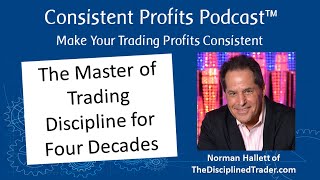
Brian McAboy interviews Norman Hallett, a veteran trader, about discipline and mental control in trading. They discuss how trading practices have evolved, the role of prop trading, and why understanding your own psychology matters more than chasing strategies.
Hello and welcome to the Consistent Profits podcast brought to you by Inside out trading and Brian McAvoy, where the focus is on consistency because when you have the consistent part down, profits become easy. Well, welcome everybody. This is Brian McAvoy with Inside Out Trading. And today I'm really excited to be interviewing Norman Hallett, the disciplined trader. Welcome Norman. Glad you're here today.
Thank you.
Yeah, Norman and I have known each other for a lot of years. He, he was kind of foundational and helped me get off the ground back in 2006. And so that, you know, just some background on Norman himself. He's, he's been a trader and trading educator for over four decades. Been around a while and I'm sharing this from you as far as his general background, but from 81 to 88, he ran one of the largest options firms in the country and later worked as a commodity specialist for Paine Weber. Maybe you may remember that name or not. Big, big time company. Years ago, 1991, he formed the Hallett Group, managing large trading accounts for individual investors. As commodity trading advisor. He currently owns and operates the Disciplined trader, founded in October 2000, where he focuses on helping traders with the too often neglected area of mental and emotional control in the building of simple trading plans. Norman is a popular speaker at trading expos and countless international venues and he has over a million views on his four minute Drill for Traders which, where he gives tips and techniques for being a more successful trader. And actually over the last about 20 years he's, he's helped directly and indirectly over 100,000 traders. So definitely making a dent in this space. And Norman, again, thrilled to have you here, man. It's just, yeah, we've known each other for a long time and a lot of fun to talk to. Glad you're here, man.
But listen, but what has he done for me lately? You know, I mean that's, that's really the important thing. What is all that culminated into. I, I think you and I are probably. We are. We, we've been around the longest in this, in, in the area of the mental and emotional capabilities. Don't think that I can't, I just can't remember anybody who's actually stuck with it because there's a lot of resistance. I mean, people resist, you know, I'm not the issue. It's. The market's getting me again, you know, so that, that's, it's hard to listen, I, I know it was for me, I spent a lot of years losing. Not a lot, maybe four or five years Losing I was. And that at that time futures more. I think a futures round turn was a hundred dollars, not, not a dollar or two dollars.
Oh man.
So when changed a lot over the years. Yeah. So I remember running to the, to the ticket window and, and I was managing guys who were managing option money for, for clients and I was responsible for making sure that they, they did the right job. And I pull them into my office and you know, go over their numbers. But when I was done with them I was just going back and forth from my office to the trading window, you know, buying 10 contracts soybeans and it was crazy times at $100 a round turn we were, you know money was flying around in those days, you know.
Oh yeah. Well back, back in those days trading online really was non existent for everyday people. It's you pick up the phone and call your broker or. Yeah, you're going to a window.
You're more of a geek than I am. When did, when did actual. So when did it actually start when you can actually trade on online. Not online but through a computer and so on.
Investor. I think it was around like 03 or 05 somewhere around there.
Yeah.
And there weren't very many places where you could do that. It was still. The standard was still pick up the phone and call your broker. And around 2009, 2010 was really when it started to become popular. I don't know if you remember or not but around like 08 09, 2010 in the Internet marketing space because remember the Internet was still evolving. I remember on Warrior forum which is like a forum for Internet marketers. Man in 09 oh my God, it looks like forex was the thing and all the marketers were just pouring into the forex markets because that was like the rage. And yeah now you can trade online and it's just, it's like so it was. The marketing was so easy and it.
Wasn'T long and all you need is $500 to open an account.
$500 and the leverage was insane. You get like 400 to 1,001 leverage. It's like oh my God.
And.
So but yeah, yeah it's been really interesting watching the evolution of the whole industry. It has wise things are a lot different than they used to be. Yeah. I mean because you figured back back in the day, I mean one at one broker I ran into early on, he was 200 bucks around term and when you're hitting that kind of commissions you got to be a lot more. You got to have your game a whole lot More up than, you know, that's almost basically zero commissions nowad because it's a whole lot harder to make, make it when your commissions are that much.
Yeah, no question about, I mean we had, you know, the account had to be at least $50,000 otherwise the whole thing didn't make sense. All you need is a few losing days and you were down 5,000 in commissions, you know, so it, you know, of course you, and even in those days, I don't know what they do right now. But when I was managing money, I was a commodity trading advisor and took accounts of 250,000 and more and we earned 20% of what we, what we profited, which was a good thing. We did very well. When you did well at times where you started with an accountant and you went the wrong way, if you got a few percentage deep, you would say to yourself, well I'm not going to make money until I get back over that zero line. So you know, you can, you get more conservative. A lot of guys did it the wrong way. They say well now it's time to get aggressive because unless I cross that finish line. So it was, you know, listen, it's still kind of the wild west in a lot of ways because of the leverage. I think the lack of appreciation of the leverage really I think opens people's eyes when they start doing, I always say trade, think big but trade small because it'll come to you. I mean I was trading the Japanese yen today and it's just amazing how that market tends to trend all day long in the same direction. So if you put on a small position right from the beginning of, of the day when you, when, when your signals give you the direction for the day and, and have a reasonable stop, you can stay in that position all day long, you know, without fighting anything. So I think people need to do a little understanding of the markets that trading how they act. I think every futures contract, which is what I usually trade again, I grew up on options, but boy, when I saw that every dollar up was a certain amount, every dollar down was the same amount but the other way, I said boy, that is clear as a bell. I don't have to worry about premium prices where the market goes up and nothing happened. My premium, what the hell was that about this? I knew exactly where runs at all times. And that's what I love about the futures market. I mean there's slippage which is very minor now even during reports it's amazing how they can fill you very close to stop. Even some wild Number that comes out at 9:30 or, or 8:30 Eastern Time. But you know, it's, the market has, you know, it's, it's, it's calmed down. It is the Wild west from the leverage standpoint. But if you have an appreciation for the leverage, there's no reason why you can't figure this thing out, you know, from a, from a trading plan standpoint. I'm sure you know, people that come to you with trading plans, how does it look? You see them all, all day long. And then the ones I see, I'm not going to say the majority, I mean all of them, I think I can tweak a little bit. But the majority will make you money if you follow it some better than others. A lot of them will, you know, many of them usually that's not the problem. The problem is up here following it. And that's, you know, that's where I, you know, I, you and I are all, we're almost the last bastion about five or six years ago where nobody cared about the mental and emotional game, you know, and, you know, things that changed in our industry. So, you know, I'm glad you're still standing and I'm glad I'm still here, so.
Likewise. Well, and one thing you just touched on, and to me this is just kind of a common sense thing, I mean, because, and it still blows me away and I get it from a, like a sales marketing standpoint, but it still kills me how there are so many people out there that are still selling strategies. It's like this, this industry, if you, if you actually take it back, you know, to its roots, it's been around as long as the stock market or actually it goes way back, even before, you know, modern times, as far as, you know, exchanges and, you know, buying and selling and all that kind of stuff, trading. And so there are. But even since just over the last, say 50, 60 years, you know, the markets have basically existed the way they have even with technology's advance. And so the strategies, there have been strategies around forever that they work. They're just, they make sense and they work. And so you know, why people are going out and, you know, dumping 5 or $10,000 on new strategies. When, if you look at it, it's like, no, it's the same one, you know, here I can tell you, yeah, it's basically know same one. I saw it 50 years ago. I just kind of, you know, put a new sticker on it saying, you know, you know, new, new packaging and.
Truths, truths are truths, you Know.
Yeah, but I mean, you know, like I said, everybody's thinking it's, you know, the magic is in the strategy and it's not.
And wrote something down today where is was about strategy because I knew I would be seeing you today. But you know, it, it's akin to what we're talking about where, where strategy is. You know. That's why I think that what we've done, what I mean our focus has, has been the mental and emotional conditioning and, and, and of traders. What was the missing piece for most traders. But we've taken a different tackle. I go inside the head with the subconscious mind. You do the complementary thing and they're both just equally important of making sure that your strategy is something that you understand. That was my note. If you understand it, it's much easier to follow. People buy these strategies and they have no idea even what a moving average is or what the difference is between a moving average and an exponential moving average and, and why it's better in some markets than other markets. If you understand the components of what makes your, your strategy, then you go and you believe in it tested. That's the process as opposed to believing somebody who shows you that they, that they have 98 winners. Somehow it's not happening when, when you get into the trading room because it was a bad day. But the, the idea is that you know, if somebody hands you a strategy that's even, even one that's, that works somehow when you get it, it's not, it doesn't work because you don't understand from where, from where those, that strategy came. And because of that you have doubts every time you have three or four losses in a row. Whether you got sold again, whether you got taken again. So what you do and your focus about, about defining strategies and not only defining strategies but matching the strategy with the person because everybody is different. And so you're, when you do your coaching, you know, there's a, there's of course that element of matching the, the, the strategy with, with the individual. I mean somebody's not a patient trader. You can't give them, you can't run a strategy that has two, two signals a day on an eight, eight hour training day that it's just not going to work, you know. And so you know, strategy matching the person understanding the strategy from once it came. Because we're both, we're both engineers. You, you're an engineer a little longer than I was. I actually practiced engineering for about two weeks. I went to a school that was work study where that where we had the University of Cincinnati where we went to school for a quarter and then we worked for a quarter for the first and it was a five year school instead of the three years. So the last job I was on was measuring guardrail on the Long Island Expressway with a guy that was retiring. I had like a clicker measuring. I said, no, this is not for me. So I went to teaching. I went into. I was a T. I. I got my license to teach and I was teaching mathematics in Cincinnati. I'm not Cincinnati, but San Francisco.
Okay.
That didn't last for. That lasted for about six months because they caught me. I would teach replacement theory through blackjack. And I had a tough, you know, I had. They gave me the tough class with the, with everybody had, you know, that time. Tattoos were not only, you know, criminals and crazy people had tattoos, you know, now I'm thinking about getting one. I must be a criminal or a crazy person, but I'll let you choose. The idea is that, you know, the toughest they work. They would come to my class, right, without question because, you know, I haven't sit around the desk. They can't touch the card. And there was no money exchange. But I would tell take a hit or not take a hit and take a hit and not take a hit. And why, you know, well, because you counted. There's so many deck tens left in the deck. And, and therefore it was more favorable that you bust. So I'm going to, you know, stick with what I, you know. And they would come to my. I said, boy, I, I went home one day to my wife. I said, I really, I'm. I'm a great teacher. You know, look at what these kids wouldn't. Couldn't get them. Now they're coming early. Where are you, Mr. Hallett? They're telling me I'm two minutes late. Anyway, I looked through the window the next day and I was, I was out on the street. You can't teach blackjack. So, you know, but, but there's an example of understanding. I mean, these kids had no math was the last thing they wanted to do. But if they could, if they could understand a few things about met like Replacement theory, which is a great theory to understand anyway for a lot of other things. But if they can understand replacement theory, you know, they may be able to make some money, you know, with that. And so, you know, understanding and then makes it much easier to execute. That's. That's kind of your valleywig. And of course I can't, you know, I Can't be in this part of the business without mentioning it or doing some of that as you can't talk to people about, you know, meditating and steeping deep breathing before they, they start and things on that or. Because, hey, if you don't have the subconscious mind working for you, it's going to be working against you. All the negative news and so on. So I've always been into the meditations and you know, getting the, the mind to be focused and so on. You put that in combination with what you're, with what you do and that is the, you know, the process and understanding the process and matching the process. I mean, you got a trader that's going to do well. It's just that that sounds like a lot of work people. So you know, and you know, it doesn't sound like you make any money with it. If you give me a good stock, I can make some money. But you know, you give me a meditation, all I'm going to do is fall asleep. So.
Yeah, yeah. Anyway. Well, you said a mouthful. With the understanding what you're working with, like with indicators and stuff like that. That's one that blew me away years ago when I first started running into that. You know, I'd be talking to people and you know, ask them, okay, well, you know, why are you using that indicator? I don't know, I just, I like it or you know, I heard about it here and it's like, so what does that tell you though? How's that actually helping you in your trading? I don't know. And it's like, then why are you using it if you don't even understand what it is or what it's telling you, why are you using it?
And you know, you don't have to be, you don't have to, you know, understand it in rocket science. You just have to know that a exponential moving average is the same eight periods of time added up and divided by eight, but, but weighted toward the more recent day so that it's somehow more pertinent to what's going on today. Makes some sense kind of like that. So what markets would be good for that? Certainly markets, you know, like crude oil and, and even now the, the, the, the s P&NASDAQ. Any markets that seem to react on, on news or have high volumes, these are great markets for. In any event, the idea is that you got to understand why you're doing what you're doing. And that really is, is a major part of what leads to be able to stick to your Plan and that's all we have, we have to have, we have a tested plan. If we stick to it, we, we know. Which is why one of the things that I ask traders to do is to always review yesterday's chart before you start trading. So if you're trading like I do, the five minute candle chart, I'll, I'll go back to yesterday's markets that I trade. I've been trading primarily the Japanese yen euro dollar and the S P and a little bit of gold, sometimes copper and crude. But I'll go back to the what I was trading yesterday, say what I plan to trade today, and I'll go back to that chart and I'll mark it up with little arrows. Here's where I, and then I would see how I would have done and I would have done very well. And the vast majority of the time, if you have a decent trading plan, you're going to see that the trading plan worked yesterday very well. I mean that's, yeah, you named all the things that I've done in my career, but what have I done for anybody lately? You know, where am I at now that can help people? So where's the market now? I mean it's great that it, you had all these great years in, you know, in the turn of the century, but what's yesterday was the best indicator. And if, and if yesterday you would have lost a little bit of money, go back two days or three days if you have to, and that's usually all you have to go back and you'll see that over three days. If you had just followed your trading plan, you would have done very well. And if you can't say that, then you need to look at your trading plan. But after that, you know, that gives you the incentive to do the right thing and stick to your plan, at least part of it, you know, so that's something that I always advise looking back on yesterday's action.
Well, you also mentioned, you know, what, what are you doing lately? When you spoke not too long ago, you were, you were, you'd already started into qualifying for prop accounts. Yeah. And you said you've been getting more, you know, even more busy with it. So, so yeah, what, tell me what's, how'd you, how's your job?
Well, you know, that's, that's another thing. You know, we can bang people over the head, you and I with the importance of the mental and emotional piece in trading and why it's equally important, if not more important than the plan because you only have One head. And you got all, you got all these plans out there. So, you know, if you can find, if you can take the pressure off people, that's a big advantage. And I have, when I saw this prop trading where you. And there are several firms that do it. Most of them do. A lot of, Most of them do futures. Now. There are some that did forex. There's. I'm sure there's still some, but they've stopped that. They've pretty much gone to futures. I'm sure there's options and stocks, too. I haven't looked into that. Again, I'm focusing on the futures. And, you know, it's, it's, it's, you know, I looked at it and I said, if I can trade their money and make 90% of the profit, in fact, a hundred percent of the first 25,000, if I can do that, why would I trade my own money? I mean, I used to do it for 20% of the money, and it was high pressure. I had to go. Now I'm in the house. I can trade somebody else's money and not small accounts. You can trade a $250,000 account, 150 or 50, you know, depending on where you're at or where you feel comfortable. And you can trade multiple accounts. You can do that. And if you're not risking your own money, there is a level of anxiety that the cortisol level drops a little bit now as you get older. It's not about the money, it's about the time. I mean, we don't want to waste any more time. I mean, I don't want to waste time. I want to do the right thing. And so if I don't take their money seriously, I'm just going to be spinning my wheels and losing their money. And generally you never get. Most traders never get to the point of losing their money because they never pass the qualification, even though it's relatively simple. So they asked me, well, how can they. How can you, you know, how can I. Can I give you 90% of the capital of your profit? How do they. Why, how could they do that? How do they make money? Well, they're charging you, you know, even during the sales, they're charging you 40 and $80 a month to pass, of which 90% don't pass. Same percentages in our business in general. And so they know that that train is going to keep coming no matter what happens. They're not in the gambling business. They're not in the trading business. They're not even there's. No gamble for them, you know, they're just collecting. In fact, when you blow out an account, all you got to do is pay another $80 and set it up again. Start, start the test again. So that dilemma that I talked about before where, where I was trading somebody's money and if I, if I was down 3 or 4%, you'd have this feeling, should I get more aggressive and try to get up? That's if you're trading somebody else's money that really doesn't have a face to it. I have to talk to these people every day. And, and so, you know, you, you, yeah, you can start to think I'm going to get really aggressive because if I blow it out, I can start again for 80 bucks. Well, those 80 bucks add up, you know, and they know that. So. But, but if you're serious about it and one of the things that, you know, you're a, you're a real detail guy. I can say everybody knows this about you if they've been on your list for any, any reason. You're an orderly guy. I'm sure your sock drawer is, you know, perfectly. You know me, I got to look for the pair. You know, I got one Adi, you know, with a pair, you got everything lined up. I don't have that, you know, but, but, you know, listen, what we do, you know, is, is, is always been the tough part of the business again because, and I think that prop trading allows some of that cortisol level to go down. So, you know, that's you, you. If you, if you frame your trading as a business, that's really my point. You, I think creators have to frame it as a business. And we've got mental trainings on it and we, you know, I talk about, in pretty much any large course that I have, there's going to be an area where I say you're not trying to trade. You're not. Let's see what happens in a hobby. It's a business, you know, you have to. And when you lose money, when you have two trades in a row that lost money, that is akin to putting an ad in the paper and nobody came, nobody called. You got to do it, you know, not what not to do now. And now, you know, now you do something else that makes sense. So the idea is that if you frame everything as a business and you know that there's going to be 60% wins and 40% losses, and if you keep your losses down, then you know that, that 60% is going to happen. If you Stick to the system and the net net will be, you know, a lot of money for you. But you know, you can't mentally get through those, those losing times. But in any event, crop trading is good because it, it. I, I believe I wrote a piece called the Death of Simulated Trading. I mean why would anybody simulate, simulate trading? I mean there's, there's no, you're really not. The goal of course is trading your own money and then having high anxiety and, and getting into that. If you're, if, if you haven't framed it as a business and, and you haven't taken any time with your money. This is what the 90% are doing. You know, let's see if I can do it sim. And then once they get it sim, they start trading, they blow, they lose money. Say let's go back to sim. So it's a, it's, it's like a dance, the sim real money dance. And it gets nowhere, you know, so why not make it. And this one, you know, you're a process guy. Why not have a different process? The process is let's, let's have a goal in that simulated trading. Because in the, in the evaluation stage of, of these, of the prop trading you're, you, you've got to make for instance to trade a fifty thousand dollar account you've got to make three thousand dollars before you lose twenty five hundred. Okay, so that's, now they have a little, they have a little shtick in there that's that a lot of others don't have where they count open trade equity. So if you have a, if you were up a thousand dollars in the trade and it came broke even at the end, you didn't take it all of a sudden that 2500 is 1500. So they want you to. So, so when you're trading with, with these prop trading firms you're going to understand their rules. And that rule for instance can be countered by always taking two positions when you trade or treating everything as two positions. So whether you have four or so that when you, because the problem is it's, it's the same dilemma between traders who day traders and scalpers. You know, the scalpers are scalping, taking the low hanging fruit and then all of a sudden the biggest move since the beginning of time and they say why the hell didn't I stay in there? And, and then you've got the person who, who goes, who takes the moonshots all the time, comes right back and says I should have taken that low hanging fruit when you got It. Well, when you take two positions and you treat one as a scalp and then you move the stop to break even on your runner, you've solved that problem. Now you're trading with confidence. So if you understand the rules, like I've just mentioned how open trade equity goes against you, I hope we're not losing people with the math but, but you have a pretty good. If they're on your list, they're pretty good at math. So you know, the idea is that.
Hopefully they get the math.
What's that?
If they're trading, hopefully they can do.
Yeah, yeah, hopefully they get them. I think, you know, that's not true. A lot of it's. But you know, the idea is that, so if you, if you treat it as a business and understand the rules and then, then adjust your trading. I didn't really adjust where I got in based on that rule that I've adjusted my trading plan for. I won't take a trade in this when I prop trade without having two positions. And if the risk is too high, I'll go to micros. I have no Problem with trading $150,000 account and trading full micros, you know, if the risk is gigantic, you know. So I think everybody has to just stop with the ego, of course, which is easy to say because you, you and I are egotists and so is everybody else to some degree. But you have to tone that down. You know, I think as you get there's a difference between wisdom and smart. I think I take back that you and I are egotists. We have, everybody has egos is what I'm saying. And that, you know, I think, you know, that gets in the way if you don't recognize that about yourself and because what's happening as you're, as you're trading and, and offset it. But again, it's back to what we talked about. Understanding why you're trading the way you're trading. You know, when you're, when you're, you know, when you're, when you're using a tool, when you're using an indicator. I mean, why should you use MACD when you're using rsi? You know, I'm not sure. I never understood that. Maybe somebody can explain it to me and what. But they're both relative, you know, they're both momentum indicators. They both have their place and so on. Some prefer some over the other, but I don't know why anybody would have to. And it just messes up the chart actually. The more you have to look at A chart. Anyway, back to the trading of sim trading. So I think that when you have a process of simulated trading, meaning that you simulated, you simulated trading through your testing. So you have a goal and that's to get funded because when you make that $3,000, they will give you the, the, the, they'll put that money in your account. It's not, you know, you're logging into their back end to trade it, but the money is there and you're trading the $50,000. And I won't explain that it's a pool of money and it's not fungible and so on, but the idea is that your response, you have $50,000 now that you can work with or 150,000 because you were smart enough to run a system that made $3,000 now, because so now when you sim trading, you're doing it with some responsibility and you do, and you're getting a lot further than just trading it with, you know, no other goal but to trade your money and, and, and be a little bit more fearful, you know. So I think similar, I think as, as the, as this prop trading gets more popular, I think simulated trading is going to fade because why, why do it when somebody, when the result is going to be trading somebody else's money for, for that kind of, for that kind of return. And, and you know, when I started getting the checks, you know, a thousand, two thousand, all of a sudden the checks they put wire it into your account, all of a sudden it was real. So that, that thing I had a year and a half ago or come on, that's bull, nobody's going to give you 90 of the money until I looked into it and, and charge for, for the people who don't pass. And I said to myself, why am I in this business? I should be, I should be in the prop trading business.
They figured out a different game. Yeah, I mean if you think about it, it's hilarious because with trading, one thing that's always cracked me up is how there's almost, there's historically been almost zero barrier to entry to trade. It's like if you've got money and you can open an account, you can trade, period. Doesn't matter. You know, smart, stupid, short, tall, skinny, fat, you know, doesn't matter. If you can open an account, you can trade. And now they figured out a way to even eliminate that barrier. If you got a little bit of money now, you can trade. Yeah, I mean, but they figured out the game. They just told you to come in the casino now to start with.
Well, look at the, look at the, the lengths the, the, the, the. Because, well, everything in the market is, is compressing in time. But, but the idea of having a daily option or a weekly option, man, it sounds crazy to me. But that's for, you know, you can get that for 10 cents. I've never traded them but you know, there's really no, no way to go. But you know, look at all the people that buy lottery tickets. I mean I have been seen buying a lottery ticket when it goes up to 200 million or something, you know, then it starts to be worth it for, you know, for a buck, see what happens. But there's a lot of people, a lot of money and time there and that's, that's probably the worst bet in the world then there as we come up. You know, Forex was in there for a while. You know, Forex is a tougher market. I think even though I mentioned that I like trading the currencies and so on, I think that people, you know, the environment when you trade in the Forex market is, is the wild west, you know, especially if you look at some of the social media posting everybody, oh, I just blew out another account or I just made a thousand dollars, you know, it's, but you know, everybody has to have, you know, develop their own parameters. You know, it's all about looking inside before you look outside, you know.
Well, you mentioned a word a minute ago and I'm glad you did because it was one that I, I was paying attention to a short while back and it's a really good reminder and kind of appropriate at the same time. One of the key, key traits that I've seen in practices for traders is just self awareness. Yeah, like you were talking about, you know, as far as paying attention, you know, where you were yesterday and that kind of stuff. But especially right now and you know, in, in all regards, self awareness is one of the key things with, well.
What'S your definition of self awareness is just the fact that we're aware that we're here and breathing. I mean it's got to be more than that.
Well, it's, it's, it's, it's, you know, being, being. I mean knowing that yeah, you're here in the present moment, but it's also the act of self observation. That's what awareness really is, is you're being cognizant of things and you're noticing them, you're paying attention to them. So it's like, yeah, as you're going through Your trading day, you know, am I, you know, of course I'm aware that I'm here and I'm looking at my chart and everything, but I'm paying attention to how I'm feeling and how I'm thinking and the thoughts that are running through my head to conversations and how I'm responding to things. Am I paying attention to those or am I just kind of responding on, on a like almost subconscious level and I'm just going through things and I'm not really even aware of myself and what I'm doing. I'm just kind of caught up in the moment or, you know, my emotions or my head or my thoughts. So yeah, just being, saying, staying self aware is one of the huge ones. And you know, and I'm sure, same with you, you know, people that I work with, as they develop the self awareness is really when they start to see the growth.
And yeah, I mean, I believe that, you know, we've talked about it before in. Last time I was in my car, I think last time we talked about. But the idea is that, you know, I think it's all, you know, listen, what's in your subconscious mind, you know exactly what the dominant neural net is that's driving you because your conscious mind can say anything you want to yourself, but the subconscious mind is going to create the response. So if you're, if you keep missing trays and taking, you know, being controlled by fear of some sort. So you need to reprogram your mind literally with, with, you know, we have the meditations to do that. So, you know, combination with working inside and outside has always been me and then understanding what self awareness is from a conscious level, like you've just explained. So. Oh, I mean it sounds kind of airy fairy, but the idea is that, you know, it's, it's, it's important, you know.
Yeah, actually it's not airy fairy. It's, it's actually intelligent. I mean, if you think about it, in any performance activity, whether it's, you know, golf, tennis, you know, any other, you know, any.
Well, you were a review guy, right? I mean you reviewed systems. I mean that was your thing. Wasn't before you got started trading?
Well, I was, I was a quality assurance manager. So yes, Processes and systems.
Isn't that what I said? Yeah, Quality assurance manager.
Yeah, yeah. But yeah, the, the awareness, you know, in any, in any performance activity you have to be aware of, you know, what you're doing. You still have to be present in the moment, but you can't just get lost in the moment either. It's, it's that real heightened state of awareness that lets you perform.
Well, what about the emotions that, that, that, that stop you from change? Why changing what you, Is it through the understanding of what the right thing to do is that you'll change? Is that how you look at it? I mean, somebody's self. Being self aware and understanding what they're doing and seeing a problem in their trading because of. We'll concentrate on the trading part. If they, they, they see that, you know, they're, they're constantly missing trades, somehow they, how do you respond to them in that respect?
Well, if they're, if they're making the same mistake over and over again, to be aware, I mean, first of all, they need to be aware in the moment that, yeah, okay, I'm kind of repeating the same pattern. It's kind of like you have to step back to different levels of awareness or observation because you can be sitting there, you know, and you make the same mistake and like, damn, I made the same, same mistake again. And you're, you become aware of it then. But it's also, you know, you need to step back. It's like, okay, well, instead of just noticing that I screwed up again, it's like, okay, let me, let me look further a little prior to that and it's okay. What was triggering that? What was actually going on in my head at that moment? Where were my eyes looking on the chart? And you'd start, you expand what you're noticing, and again, you're being cognizant of. Instead of just this one thing that, oh, yeah, I'm just watching the candles form and oh crap, I'm jumping on that. It's like, no, am I noticing my breathing? Am I noticing my emotional level? Am I noticing my posture? And just like I said, well, and.
When they notice there, and when they notice they're breathing heavy in there, posture is not there. What are they, they're supposed to correct it right at the moment. Is that how you see it? It's kind of like nlp, you know, Tony Robbins, where you, you know, your.
Motion is yes and no. A couple of different things. First of all, trying to deal with it when you're in an emotionally aroused state is generally not the time to do it. You really need to take note of it. But as far as when you're going to address it and how you're going to address it, that's when you, you want to, you want to take that process over to when you're more calmed down and you're not all worked up and you can look at things logically and rationally and say, okay, yeah, here's what's going on and here's what's causing it, and here's what I can do about it to prevent it's happening again. I mean, and this actually, you're talking about Eric Fairey. This one book that I got actually was a gift from one of my clients. He sent this book to me. It's called the Handbook to Higher Consciousness by Ken Keys. And he's got the 12 rules to or 12 pathways to higher consciousness. One of them that I really liked was, and now it was in dealing with other people. But it's pertinent to trading. He said, you know, if you're in an emotional state and like you're angry or whatever, don't respond, don't engage other people until you can calm down and come from a better, better, better state to, to engage with them. And so kind of the same thing with trading. It's like, or really any other situation, if you're all emotionally worked up, your rational mind is only engaged partially at best. And so that's not the time to deal with it. You need to wait until you calm down and then you can approach it, approach it rationally and actually attend to things in a sensible manner. And same thing with trading. I mean, it's actually one of the questions I wanted to ask you today as far as what's your opinion on comfort zones? Because I've had this, I've had this conversation with other traders over the years and some people say, you know, yeah, it's, you know, it's good to be trading outside your comfort zones because, you know, that's when you're going to be learning and stretching them and all that kind of stuff. And others. And like me personally, I don't think you should be trading outside your comfort zone. What are your thoughts on the matter?
Yeah, I, I agree. You know, I wouldn't, I wouldn't be trading out of my comfort zone. I mean, I think that's where people get into trouble. I mean, that's really inviting. I mean, some people can do it to stretch their. I mean, if you're, if you're trading one contract and doing very well to move to two contract and expanding your horizons is, is a, is a process that you've defined before. But, and, and it may be stretching your comfort zone for a day or two until you realize, you know, it's really the same as the same movements and I'm just. It's got twice the effect because you've come across it in a logical way. But, but to, but to trade out of your comfort zone in all, I guess. Do they, do they want to match the market? Do they want to match the excitement that they want to kind of be one with the market? Is that where, Is that where being in the com. Stretching your comfort zone? Because you know, when those markets start to move around, you've got to be the Zen guy in the room.
Room.
You know, you've got to be the, you've got to be the, the quiet person in the room. And you've got to figure out what you're going to do before the report comes out. And then when something happens that you didn't figure, you've got to realize that this is a time to learn and you do nothing, you know. So one of my favorite expressions, my wife always brings it up is doing nothing is doing something. Doing nothing is doing something. I mean, you can, as a trader, you can remember the time. I'm sure in the beginning I know I had them where I get my monthly statement. They would PR it out and I have a certain equity at the top and all these trades, you know, page at the page and at the bottom, the same equity. All this effort stuff that I've been doing, it's getting me nowhere. You know, it's almost worse than lose already, you know, this way I can do something else with my time. But, you know, you know, and I think that, that what I was doing then as far as comfort zone is whenever I had a great day, I try to have another bigger great day. You know, I'm on it now. I got it. And so I was, I was expanding and then contracting my comfort zone to back to the facts and I know, build it back up. And so, you know, that's, that's what this sheet, those are series of sheets which show me. And that certainly has a relation to comfort zones. And then, I mean, why would anybody want to. I mean, do they believe that it's instigated or it's the first step to bravery and you got to have, you have to have balls to trade. Is that what it is?
Yeah, I think it's, it's along those lines. I mean, for me, the main argument against it is really, I mean, just looking at the definition of, you know, your comfort zones. Your comfort zones is where you're okay and outside of your comfort zones is where you're emotionally worked up to a certain point. And it's like so if you're trading outside your comfort zones, by definition you are in an emotional state which is not good for rational good decision making in your trading.
I mean that, that to me certainly outside your comfort zone doesn't mean off your trading plan. It means position sizing. Right. I mean, is this trading outside the comfort zone? I mean certainly nobody's saying you should trade out that, that outside your comfort zone means you see something you think would be a good, a good place to get in, but you've never tested it or back tested, but looks like, and the news just said it was going to. And you go, that to me is not outside your comfort zone. That's, that's, that's idiocy to, I mean that's, if you know better, that's, you know, that, that's, that's asking to lose, you know. But, but if, if outside your comfort zone means play bigger, then you know, we're back to what we do. I mean, I think if somebody wanted to play bigger, they're very good at trading, you know, two positions and they want to move to 10. But every time they do, they, you know, that gap that happens, you know, coming to you or I for that area, you know, for the mental area, that would be the key to set up a process and with goals and accountability, that kind of thing that, you know, accountability, you know, if I had, you know, you do a lot of accountability. I don't do it. Not that you don't, but that's, that's really, it's one of the main things that you do. No, with traders, with your coaching.
That's part of it, of course.
Yeah. I mean I, I, it sounded very, I mean we do coaching but we do what we call laser coaching.
Right.
Which is we give them unlimited. But it's only 15 minutes, you know, maybe it stretched to 20, but it's a lot of time, you know, when you're, when you're being, But I think accountability is, I just read something on that myself and it just clicked to me because who I think of myself, you know, I want to, you know, take this vitamin for. All of a sudden I'm, I'm looking at my vitamin places, 18 vitamins that have full and I, I got onto another great vitamin that I think is going to have me age more gracefully, you know. So, you know, it's, it's follow through anyway.
Yeah, I mean accountability is part of it. But the biggest thing that I've been trying to stress to people over the last year is regardless of where you're at with your trading, get outside help because you know the markets are not going to teach you. They're just going to punish you for not trading properly. And if you're, if you're not, you know where you want to be, then you know, you need that outside perspective because otherwise you're your own limitation. This is not an occupation that lends itself to just being figured out. And you're always going to be stuck where you are because you don't know what you don't know and you can't see what you can't see. You need that outside perspective to help because otherwise it's just you and the charts. I mean, that's why, that's, you know, the allure for a lot of people to get into trading is like, yeah, you know, it's not a real business. I don't have to mess with other people. I don't have to set up a store and I have to do any of that stuff. It's just me and my computer. But that's also a liability with it too because yeah, it come, you know, like when somebody comes to you, they're getting an outside perspective that they never would have had on their own and the markets aren't going to get it.
Which brings me a question to you. I know I'm being interviewed, but I have a question for you, and that's Trading Buddies, where, you know, two people get together and make themselves accountable. What is your bit of your experience when you've encountered that with people?
Well, depending on who you partnering up with, that can be a real slippery slope because, I mean, I've experienced it and almost everybody I've talked to, they experience it too is if it depends on where they're at in their trade or development, if they're more mature and more successful than you and they've got more experience, then it's likely that it's going to be a beneficial relationship. But if they're like way behind you and they're doing stupid stuff and they have the wrong perspectives on things, but they're also saying, hey, what are you doing? Oh, you should be doing this. And they're like throwing suggestions and input at you, that's counterproductive, then it's not a good thing.
Yeah, most of the time it doesn't work. I've seen. But, but those that it does work, they have rules. What the, what they talk about, what they, you know, and, and just kind of keeping and, and trading at the same level. You know, it's because when you're if you're, if you're trading with somebody at a higher level and you, yes, you can learn from them if they're that patient, but if the gap is too big, they'll get frustrated with, hey, I'm not here to teach you. I want something out of this myself. You.
So, yeah, yeah, like I said, it just, you gotta be, you gotta be selective about who you're buddying up with. That's the main thing. It's gotta be a good fit. It's gotta be just like any other relationship. It's gotta be a healthy relationship. It's gotta be good for both of you. And if it's not, then no, it's not gonna work. It's not gonna be helpful and. Well, and the other part of it is hopefully you're both also pursuing growth so that as, as you grow, they're growing too, because otherwise you're gonna leave them behind and then you gotta find a new buddy. That's at where you're at now versus where you were six months or a year ago. So. Well, speaking of your, you know, your laser focusing and coaches coaching, what all have you got going on right now with over at the Discipline Trader? I know you're always staying active. You're an innovator.
Well, the, the core has always been the mental and emotional part. But I'm going to say you almost can't run a business on it. You can run a business on it, you can run a bit, but it's tougher to, you know, if I was, if you and I had chosen in the same field, you know, you know, trading plans and, and suggestions and market analysis, you know, that's an easier path because that's what people want, that instant gratification. But so I'm, I'm, I've always, that's why I've always stayed connected with you and I've always had a love for, because I know how important it is and I, I feel like I'm holding the baton for, for the, for this, this area. But yeah, our basic thing is the mental and emotional capabilities of traders. And we do it through two major areas. We do it through those subconscious trainings. Like there's eight and ten minute, minute meditations. I remember when I first asked my wife to do the meditation because she's a subconscious trainer. I said, we need, she says, okay, there'll be about 20, 25 minutes. I can, I said, no, traders are not going to sit there for 25 minutes. They're not going to do it before they Trade five minutes. Can you do it in five minutes? She says, I can't do it in five minutes. I said, all right, I'll get somebody else to do it in five minutes. She said, well, hold on a second. So we compromised, we compromised on. It's eight to, eight to 11 minutes where you get. So you got those meditations that change the neural pathways that result in the right neural net to run your trading decisions from a subconscious, a standpoint. So we do these, we do that. We also use something called eft, Emotional freedom technique. Yeah. That you're probably somewhat familiar with, being some student of just about everything. And I think where you're, it kind of combines Eastern Western technology in a, in a way you're tapping meridians while saying things consciously repeating after us in our videos and whether it's taking trades without hesitation. Oh, stop. Over trading, revenge trading, which was big last year for some reason, it was a high jump in revenge trading. But those kinds of things, you can separate the thought from the emotion literally in one five or six minute session. Sometimes you got to do it twice. But when you can take the thought from the emotion, I mean most of the things that you've just talked about in the way you approach the mental and emotional capabilities is attached to an emotion that you need to analyze and adjust. And so when you can separate the thought, actually you stop. Many of the people can't even remember the thought that they had after the five minutes. And you're not closing it, you're just repeating things and opening up these chakra areas. Now I'm not a holistic doctor, but I do think that there are energies that run through your body. And I do think the Eastern philosophy has it down from a preventative standpoint. And Western is putting out the fires pretty much in our philosophy for medicine and so on. But together it makes a lot of sense where you're stating situations, opening up chakras and it works. They used to call it the five minute phobia cure, but the guy who invented it was, you know, they started suing him because they couldn't say, hey, you can't say cure. It's managing and coping with. You know, nobody cures anything because that stops the paychecks from coming in. So we've got the eft, which are these follow along EFT sessions that we do. We got that. And then my latest love is the, is the prop trading because I, I was talking to you about who's on our lists. Everybody on our list is pretty much passionate about making money and Trading for whatever reason, some a little bit more desperate than others. But there are a lot of traders on my list that don't have a lot of money to trade. They're trading with 5,000, 10,000, 15,000. And that may sound like a lot of money to somebody, but in this market, if you're going to keep that cortisol level down and keep those emotions out of it, one of the main things you can do is, is, is have a large account, but trade it like it's a small one. You know, when I trade, I've, I've qualified for 50,000, 150,000, a hundred thousand. When I trade the $150,000 account, I treat it like about a $70,000 account this way, any motions, you know, so I frame it differently, you know, so that I'm staying in the game. And my, my trading plan gives me the progression that I want. This is the process that I think is available to people with not a lot of money here they can understand how to trade. They can, instead of sim trading, they can be qualifying for something. And then when they get that goal, they can use particular. Not only we can help them with the mental part of them, but also some of the things that we do. Like the two position situation that I talked about, eliminating that grand question that everybody has. Should I stay in this position or should I take my profit? Well, when you start out with a plan to do both, you know, and keep your risk reasonable, you take that question out and that is a major question. There's about three or four or five of them and we don't have the time to go through them. But the idea is that if you can, if you can have a new trader without not having to use their own money, qualifying instead of sim trading, having, you know, yes, it's, I mean, most traders, they've lost 5,000, 3,000, but it's hard even with, with the 100 and 200amonth for, for qualifying for, depending on how big an account you're qualifying for. Even with that even it takes you six months, a year. You'll never get close to what you've been losing by, by straining yourself and trying to trade your own money. And if you do it right, you can qualify in a month or two months easily, you know, and when the checks start to come in, everything becomes real. And now you're saying, I have something that's a business. So my plan now is to have 10 accounts, 10, 50 or $150,000 diversified, and then have what they call a. They Call Trade Copier where you put in. I have, I bought it last month, but I haven't installed it yet. So I'm still running around, you know, with each account. But the idea is that they should be, you can just put in one trade. It'll, it'll diversify, it'll put them in different accounts and at the, at the levels that you want, you can put 2 and 1, 3 and 1 and it'll even take the micros.
Right.
If it's at the same time. So you know, there's, there's ways if you, if you approach it as a business and not a hobby and, and look at, especially, especially if he's trading small money and you're, you know, I think this Prop Trading is like a dream come true.
Right. If you do it right.
Yes, if you do it right. I've just, I've just grabbed Prop Trading University. I can't believe it wasn't taken Prop Trading you and Prop Trading University. And I'm going to build something that, you know, that will be the, you know, the place where traders will gather. Excellent. We'll sing together.
Yeah.
That'S right. We'll drink the Kool Aid all together.
No, that's cool. That's right.
Anyway, so you know, I have the idea but you know, you got, you need the time to do it and you know, there's a lot of elements to that. So I may start out small with it, but I, I got the URL because I do think it's, it's going to be a growing part of the future.
Yeah, I don't see it going anywhere because for, for the, the prop firms, I mean it's, it's a good business venture for them. I mean obviously they, they, you know, they figured out how to organize it so that it made business sense for them and it does open the door to a lot of people who otherwise wouldn't be able to get into the trading game.
Yeah. And I'm noticing though, you know, it's not only independent companies that are doing it to start it, but it's companies that are, that have trading platforms and whatever and, and are, are putting in another stream of income because they've, you know, and make it a vertical. They've got everything that you need. They're the vertical. So it just makes all the sense in the world. So, you know, but there's a big difference if you have a diploma from Prop Trading University. Who knows?
True. No, that's cool. Yeah, we'll have to, we'll have to talk about that on a separate call. Yeah, yeah, fun stuff.
Anyway, so for right now, it's the DisciplineTrader.com and you know, anybody can connect with me in the contact area, just write me a note and so on if they have any questions about anything but.
Cool. Well, Norman, this has been a lot of fun, man. Always great catching up with you. And maybe we did a little too.
Much kidding around, but I think that it's important for traders to know that we're here. You know, we're raiders, you know, we're with traders just like them, with people just like them. And, and it's just that we have taken this very seriously about the mental part of it. And, and yes, there's probably people out there that, that never, that somehow naturally have the mental capabilities. And, and you know, for instance, if I was training an Olympic athlete to be a good trader, I think I could do that very quickly because an Olympic athlete knows the importance of the mental game and, and, and, and keeping the emotions out there. So if you had, if, if I was picking a jury of, of traders that I could trade, I would definitely trade any. Take any athlete, for instance, a, a professor, I probably wouldn't take maybe because I don't want, you know, you don't want questions. You know, not everything's a question. You want answers. So, you know, once you have the answers, you know, you don't have to make up any more questions, you know, so it's too much. I have a, I have a brother in law, I call him the question man. It's very hard to get anything past him, you know, but anyway, it's all good. It's all good.
Oh, excellent. Yeah. Well, Norman, let's do this again sometime soon, man.
Absolutely.
I want to, I definitely want to definitely keep in touch with these as you continue on your prop firm journey and with your, with your new, new idea you got going on here.
And I love the new, I love the beard. I, when we first got on, I, I was akin to George Clooney, but apparently that's, that's what I'm seeing him with. I got it. Maybe I should, you know. You're inspiring me.
Well, how long it lasts being, being this time of year, it's, it's already getting a little warm and itchy, so we'll see.
Here we go. Another excuse there. We're not supposed to have excuses. Okay.
Anyway. Yeah. Norman. Hey. And everybody is listening. If, if, yeah, if you're concerned about the mental game, if it, if you, if you recognize its importance. Norman's been in this game for a long time. One of the best there is. And he's definitely. No matter what's going on with you, I can guarantee he's run into it before, and he can definitely help you out. So, yeah, hit him up at the disciplined trader. Besides that, he's just a good guy. And you can tell. Yeah, he's human. He's a lot of fun.
You better have a sense of humor if you're gonna work with me. Because life is too short, Right?
True. True, man.
Because this will take the years from you. An unsuccessful trader, I think, lives 10 years less than the average person. A successful trader lives 10 years more. I'm not sure about that study. I have to check that, but I think it's probably true.
Oh, there's merit to it. Sure. Indeed. Well, anyway, everybody. Yeah. Good swing.
All right, my friend. Be well. I appreciate it, Norman.
Thanks for being here, man. Take care, man. Thank you for joining us today on the Consistent Profits podcast brought to you by Inside Out Trading. Make sure to swing by Inside Out Trading and pick up your copy of the proven formula for consistent monthly profits. If you enjoyed the show, make sure to subscribe on your favorite channel and we'll see you on the next episode. Cheers.









