Proven Strategies for Generating Greater Profits – Robb Reinhold – Episode 042
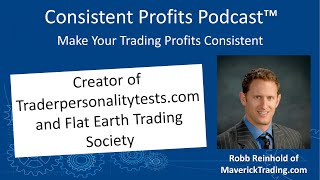
This is a YouTube video titled "Proven Strategies for Generating Greater Profits – Robb Reinhold – Episode 042" published in December 2023. It features an English conversational interview between Brian McAboy, host of the Consistent Profits podcast, and Rob Reinhold, founder of Maverick Trading. The discussion covers trading psychology, risk management, options trading strategies, personality testing for traders, and innovative concepts like random entry trading and AI's role in trading. The conversation is detailed and explores both personal experiences and professional insights in trading.
Hello and welcome to the Consistent Profits podcast brought to you by Inside out trading and Brian McAvoy, where the focus is on consistency because when you have the consistent part down, profits become easy. Hello everybody. This is Brian McAvoy with another episode of the Consistent Profits podcast. I'm excited today to be interviewing Rob Reinhold. He's creator of Maverick Trading. Rob, thanks so much for being on the podcast today.
Hey Brian, thanks for having me on.
Glad you're here, man. For those of you not already familiar with Rob, he's the head trader and owner of Maverick Trading and Maverick Currencies, US based proprietary trading firm that has been been in business since 1997. So he'd been around for a while. Rob started trading professionally in 97 after a year or two of dabbling in the early days of online trading as a head trader overseeing hundreds of traders. His main focus has been in trading psychology over the last 15 years as it is the number one thing causing traders to struggle and fail. In addition, having written the book Maverick Trading, Proven Strategies for Generating Greater Profits and Running a Prop firm, there are a couple of things that are unique to Rob. The fact that he prioritizes psychology is nothing new. But what Rob has done differently is he actually developed the Trader Personality Test and we're going to find out about that today. Rob also makes a strong assertion that the Exodus where the Pros Succeed. He's even gone so far as to demonstrate this with his Flat Earth Trading Society YouTube channel where he places trades that are completely random, which is very cool. We're going to be talking about that. So Rob is obviously not afraid to challenge conventional thinking and so this should be fun. Rob, again, thanks for being here and being game for this.
Well, thanks, Brian. And look, we named Maverick Trading Maverick because we're not going to do it how Wall street does it. We're going to do it our own way.
Oh, indeed. I totally agree, man. Now, I gotta ask, I'm always curious, just because trading is an unusual occupation, you know, how did you get started in trading?
Well, this is an interesting story and it's going to go way back to sixth grade. When I was in sixth grade, I had this awesome teacher and he was one of those teachers that didn't follow the textbook. He was going to teach us about real life and so he was always teaching us things about the world. And one day a guy in a suit and tie comes in and he was a banker and he explained to us how bank accounts work and how checks work. And by the end of the Day we all had our own checkbook, you know, a fake one, of course, but we, our teacher explained to us that we all now have accounts at the, with the teacher and there's some money in it, and if you do something good, you get money into your account. If you do something bad, you got to write out a check and, and debit it out of your account. And at the end of the month, he would open up a store where you could buy like, you know, cool NFL pencils or erasers or whatever. About a week after that, he comes in with some newspapers, the business pages, okay, and he explains to us what a stock is. He explains to us how to read the tables in there. And then he mentions if you want to use your account money to buy and sell stocks, go ahead. You just have to fill out one of these tickets when you buy and another ticket when you sell. And then if you made money, you get more money in your account. I'm pretty sure none of the other kids cared at all, but that's all I wanted to do. And at home we got the Sunday newspaper and I would get the Sunday newspaper out and I'd be looking through, okay, that one's good, that one's good. No idea what I was doing. And of course then I got into, you know, junior high and girls were around and sports got in and so, you know, lost track of it. But when I was 16, I got in a bad car wreck. And when I was 18, I got a settlement of $20,000. And they always tell people, if you want to know about risk, putting $20,000 in the hands of an 18 year old boy, super risky. But I remembered my sixth grade teacher, right? And my mom and I went down to oldie discount brokers. I mean, you got to be really old to remember all the discount brokers, they were the first ones to go under a hundred dollars in a stock Trade Commission, like 95. Pretty sweet. And I put, put money in stocks and I went and did a couple other things, played some college football and stuff. And then by the end of it, that money had grown to $45,000. And I thought to myself, I think I really want to do this for a living. So I then took that 25 or $45,000 and then quickly turned it back into $20,000. It was amazing. It's amazing how I did it. But luckily I found a group called Maverick Trading, it was in downtown. And I went in there and they had computers and a T1 Internet line and all the guys there were good traders. And they would kind of teach you what you needed to know. And that's really how I started. So that's kind of my story in a nutshell.
Yeah. How cool. Like for really actually started in sixth grade. Isn't it cool how like in middle school, some of the teachers there are just like, absolutely noteworthy. A couple of my favorite teachers of all time were from my middle school years, sixth and seventh grade.
Those years, you know, you're not really fully formed, but you're such a blob that some stuff is going to get in. And if you, I mean, that's, that's a difficulty. Imagine being an 8th grade teacher and trying to get this kid to understand a key concept.
Oh, yeah.
You may not be successful, but if you can get it in there, it's the perfect time to teach them.
Oh, yeah. Yeah, Indeed. Huh. Well. So along the way, somewhere you decided to write a book. What, what prompted that?
You know, this didn't come from me. One of our other traders in management said, hey, have you ever thought about writing a book? And I said, of course, everyone thinks about writing a book, but you don't just get a book published. Now, look, this is back in like 2010, when self publishing really wasn't much of a thing. And he's like, give me two weeks. So he comes back and he's like, I got a book deal with McGraw Hill. They've already given us a $10,000 advance and we need to have the first draft done. And I'm like, what? Oh, I gotta actually write this thing now? So, yeah, the three of us got together and we wrote the book and we. It's really a book about options trading. Maverick Trading is an options trading firm. And the biggest reason why we love options is for the risk management. There's no better risk management than options.
All right, very cool. Now, as far as you said, it is option trading. So you talk about specific methods or strategies in the book.
Yes, absolutely. But, you know, all options trading, it's. You can have one leg, two legs, three legs, 10 legs, 100 legs.
Okay.
In the end, you're just going to get one trade and it's going to have its set of Greeks. If any of you know options trading, it is what it is. And you know, we always say, keep it simple. There's really no reason for a 50 leg options trade when you can do the same thing with like a five leg trade.
Okay, okay, now, fair enough. Yeah. No, as far as strategies, I was, I always like to ask, you know, what people favor, you know, Some people, they, they generally lean toward buying. When we get into options, yeah, you can get kind of sophisticated with things. Some people, they're just, their game is just totally selling options. And so, yeah, I was curious what.
Option selling is the easier part. But you need really good risk management.
Oh, indeed. Oh yeah, yeah, definitely. Huh. Well, speaking of risk management, again, that's something that you note on the COVID and, and is a big deal. And you also, at different points along the way, you bring it up. Specifically, how do you approach risk management as far as, you know, when you, when you're teaching it to other people, what do you focus on as far as risk management?
The great question, and I hope we have enough time for me to go into all this because look, everyone starts out, I call as a singular trader. And what I mean by singular trader is you, you do this research on 1, 1 stock, 1 future, 1 metal, whatever it is you're going to trade and you do the research and then you make that one trade and then you follow that one trade and then when it's done, you close the trade out and you go on to the next one. Everyone starts out as a singular trader. So risk management in that aspect is having the correct position, sizing, having an exit, and having a plan for when you're going to take profits and exit. That's really the basis is risk management. And that is Risk Management 101 and Risk Management for elementary school. As you get a little bit bigger, all of a sudden you start to need to look at risk management at a holistic level. We start off of the entire account.
Good.
What we do is we, we look at the entire account and say, okay, we're going to break this into blocks, okay, where you know, this block is going to do these strategies and if it does these strategies, it's allowed to do four maximum of these strategies so it isn't too overweight in one direction. And then this part of the account over here is doing this strategy. You know, maybe these strategies are more delta neutral to where it's, you're selling options and getting time decay in and then a small slice of your portfolio, maybe you're being ultra aggressive, but again, it's a very small, small part. So while every single trade has its own rules of risk management, position management, the whole thing should drive all that. Your trade should be driven by what your portfolio needs, not what you think on the chart, but what your portfolio needs. If you're not bullish enough, you need to add more bullish trades to match the market condition. Like right now we're sitting on lows of the day, turning back over again. You should be more bearish at this point than bullish. So again, it. The overall holistic view is driving it down to the individual level of each trade.
I'm really thrilled to hear you say that because one thing I thump on a lot is, you know, treating your trading as a business. And it's not just, you know, be serious about it, but actually look at it from a more holistic perspective. Not just one trade at a time. It's like, yes, step back. What, you know, what, what are your goals as an investor before you even thought about trading and investing in a trading business? And then, yeah, what are your goals with the business? But like, you're talking about, it's like, okay, yeah, we're not going to be all in on one thing. If you were running, you know, a real business. Yeah. How would you allocate your funds based on your goals and your needs and, like, what you're talking about, you know, what, what, what are the opportunities being presented to you and how, you know, how do you pair that up with your objectives? And so that's really cool that you do that. So, yeah, excellent. Very cool, huh? Now, of course, we do have to go ahead and touch on, you know, psychology. I mean, you know, there's a variety of notions on the number one factor. You know, some people say it's risk management, others say it's money management or, you know, the strategy. But you're saying, you know, it's. I mean, the impression I get is for you, it's like, hands down, the number one thing. So what, what are you.
Yeah, look, if you can't follow your trading plan, a trading system, who cares about your trade, A planet trading system. It's like a diet and exercise plan. If you're like, I'm going to get in shape, I'm going to run every day, I'm going to eat all this stuff. Right. And yet you can't run every day and eat this stuff. Right. Who cares? Who cares about your plan? It doesn't matter. It doesn't matter whatsoever what you planned out, because if you're not able to enact that plan, you won't have success. So that's why we are so big about trading. Psychology at Maverick Trading is that that, like, you could never trade like me and I could never trade like you. Based on our risk tolerance, based on what we like to do, our time frames, we're going to be wildly different on what we do. And so Every single trader needs to find what works for, for them. So let's go back to the diet and exercise example. If you hate running, don't put running in your exercise plan, don't put it in your exercise plan. If you hate swimming, don't put it in your exercise plan. If you only like walking around your neighborhood, guess what? That goes on your plan because you might be able to actually follow it. It's such a big deal to be able to follow your plan and it's more important than the plan itself.
Oh yeah, yeah, yeah. Well and I'm trying to remember where I first heard about it but you know, the, the different questions you're answering, it's like okay, what should you do? What can you do? Wait a minute, what will you do? Right along lines with that. Well, okay now that said, you're kind of talking about the, the after effects or so to speak, but okay so now as far as making that happen from the perspective of psychology, how do you, how do you generally, generally approach that?
Well, the first thing we have all of our maverick traders do as soon as they come in. And we've now made this available to the public. I'll tell everyone about it a little bit. But for years we've had them take a Myers Briggs style personality test based on trading.
Okay.
And what we found is that people will have different trading personalities in Myers Briggs and they have in their regular life. It's very odd to see that. But most of the time I'm going to say 70% of the time it's the same score they get when they take the Myers Briggs elsewhere.
Yeah, but once you isn't like most traders then. I was only reading this like it was like a couple, couple of weeks ago. Most, most traders are like in JT, right?
INTJs or INTJ. Yeah, I don't know. I don't know what most traders are. Right.
Yeah, they are. It was like I was really surprised because they're saying like over 80% of traders are falling one, this one kind of personality. Well, but what's been your experience with.
It as far as personalities or as far as INTJs? Because I have opinions of both of those.
Well yeah, on both.
Okay. So the INTJs, these are introverts.
Right.
And the term introvert and extrovert, they get bad names. Introverts are, are where you go for your energy. Like me, I'm a huge extrovert. I love to go out.
Okay.
If I've had a stressful day, I want to go out. Other people, if they Have a stressful day, they want to stay in. So an introvert, a thinker, meaning that they think very linearly. They need to know all of the details. Sorry, intj. So Ann is intuitive, meaning they actually, I'm going to say istj. No, sorry, INTJ is probably the most common. So intuitive, where you don't really need to know all of the nuts and bolts, but you need to know the big picture. T is very linear. You think with logic and reason, not feelings. And then J's and sorry J's. J's are the hardest personality to deal with in trading. Jc, the world in black and white. It's always a binary thing. There's no gray. It's always right or wrong. And so when a J makes a bad trade and takes a loss, they, they categorize that as bad as negative. And when A I'm in, I'm an entp. These are more shades of gray. I'm saying, hey, you know what? I know I'm not going to be right on all the trades. This is just one of the ones I'm not right on. But boy, J's are very rigid in that style thinking. So these are the things that we go through with all of our traders and say, hey, if you're a J, these are the things that you're going to want to screw up. This is how you fix that. And so for Jays, any Jays I work with, I say you need to trade in blocks of 10. You never care about one trade, just do 10. And when you're done with those 10, send me those numbers. Do you see now that the J is no longer focusing on the individual trade, they're now trying to get good trade numbers over those 10. That's how you work with Jays, huh?
Very cool perspective. Now you were saying that people will have different personalities in trading versus outside of trading. What did you mean by that?
You know, I'm going to say that that probably happens more for traders who've been doing this for a long time. Whatever your personality style is, there's going to be something in trading that kicks your ass. Sorry, hopefully I can say that on your show, but it's already out there. So here it is. There's going to be something. So there's going to be something that, that your personality is very negative. And you're going to have to work through that in your trading. You're just gonna have to work through it. And so when you sit down and you take a trading personality test 10 years later and you answer questions about trading You've already changed your behavior because you felt the pain from those things, whereas in your personal life, you probably are going to get a normal score.
Very cool. So what, what kind of led you down this whole path as far as trading psychology, as far as looking at the personalities and the Myers Briggs.
Great question. I'm going to say, just on a personal note, you know, probably about my second or third year of trading, you know, you're starting to get it, but what happens is you still keep shooting yourself in the foot. And I'm thinking, why am I doing this? I'm a reasonably smart guy and I'm disciplined. Boy, I can. I can be disciplined. I can be disciplined like no one else. But when it came to trading, I could do it nine out of ten times. And I. And I just got to a point where I was just exhausted with myself and I was really beating myself up. And when I finally came to the realization. And so let's take my biggest one is I'm an over trader, okay? All extroverts are over traders. I've never seen a strong extrovert that has never been an over trader. We love stimulus. We love the clicking buttons and the stimulus. So I'm an over trader, and I couldn't. I couldn't stop myself. I mean, I would do crazy things. Like, I would give my security card to my wife that I needed to get into my account, and it'd be like, here's this. Do not give this to me until next Monday. I've already made the money I wanted to make this week. Do not give this to me until next Monday. Now, the first time I went to her, kind of nonchalant, like, hey, you know that card I gave you? Yeah. Oh, I need that real quick. So she gave it to me, and of course I blew it. I screwed up. And I said, don't look. No matter what I do or say, do not give this card to me. And the next time I said, hey. And she's like, no. And she was really good. And then what happens is, because now I've got to, like, figure out, I just wanted to click buttons because it gave me something to do. Now I had to go figure out other things to do. And I got really into working out. I got into all these other things. And now as an extrovert, my day was full. And that's really all I wanted, was a full day. It didn't need to be clicking buttons. It just needed to be a full day. And when I, when I finally started to recognize that there Are things inside of me that I will never be able to change. How do I trade in spite of those is when I really started going down this. This trail of psychiatry. And then I met one of our traders. He is a trading psychologist. Professionally, he's a psychologist to traders, and him and I work together to develop this trading personality test that we do.
Huh. Very cool. That actually is very cool. And yeah, it makes sense, actually. What. Where I expected you to. To go with the story with your wife was. I mean, I'm glad that you went the route you did because I was just waiting for the, you know. Well, I tried to be nice and now I'm going to be, you know, like, irrational and I try to trick her and, you know, all the stuff that kids do when they're learning.
What are you talking about? I'm terrified of her. No way. It's easier just to go do something else. She's sweet. She's a sweetie.
Oh, how hilarious. Oh, that's cool, huh? Well, now, speaking of behaviors, now you've talked a little bit about, you know, like, your own, but what qualities or specific behaviors, you know, do. Do you think, differentiate successful traders from those who fail or just break even, you know, based on. Because you've been able to observe a lot of traders over the years, right? Yeah.
So I've been doing risk management for over 15 years where I literally am watching trader by trader, trade by trade, you know, and going through all the monthly returns and looking and seeing what strategies they're using. So I feel like I have a very unique outlook of what it takes to be a trader because I've done it myself. But I've also watched so many people do it. Some fail, some succeed. What is the difference? The difference is who can adhere to their trading plan the best. That's it. That's it. And it's really about finding a strategy. Just like I talk about with dieting, exercise. If you love swimming, then swim. Swim all you want. If you love option selling, that's your thing. Be an option seller and just be rigid about it and know what you're doing. Just do what comes easy to you. Because if you try to do something that doesn't come easy to you, you're gonna fight it and fight it and fight it, and your personality is stronger than your. Than your desire, and you're gonna lose.
Oh, yeah. Now on that, I absolutely agree with you. If you're. If what you're doing is in conflict with your natural tendencies. Yeah, it's. Eventually you're going to Lose that battle. It just matters absolutely no what killed me. And I was, I was amazed. It didn't take long in working with other traders. How many people would come to me and they're like, you know, yeah, I want to be a day trader, Brian, and this and this. And it's like, it only took about five minutes talking with them. It's like, you don't want to be a day trader. Don't you know, you've talked yourself into it, but you're not enjoying it. So we need to figure out a different way for you to trade. Because you trying to be a day trader, it's sooner or later. I mean, you're just, it's a chore for you and you're not enjoying it. And so, yeah, we just got to figure out something else because you can't force this to work. It just ain't gonna work.
I love what you said. At Maverick, we are strategy agnostic. Like all the strategies work in certain market conditions and certain trades. They're all, they all which ones work for you. That's what you need to figure out.
Well, in the circumstances. And I'm thrilled to hear you, you know, talking like, you know, when I was reading about, you know, what you, what you do and how you approach things. One of my favorite metaphors is how with trading, it's almost like you're a football coach. You don't just show up to the, to the game with one play. You need a playbook. And depending on what the markets are presenting you, you break out the play that's appropriate for that situation.
I love that we are a big adherence to that. At Maverick, we use what's called a top down approach. Whatever the market is doing is what you should be doing because that, that force is bigger than anything you could possibly do. If the market's going down, don't fight it. Just, just go with it. Just go with it. Pull out your playbook of. Okay, things are tanking here. What's my playbook? Follow that playbook and then once it stops and turns. Okay, what's this next market cycle? So absolutely true. I'm 100 with you on that.
Yeah. Very cool. Well, speaking of that, I mean, one thing. Haven't been in the game as long as you have. I know One thing that I've been just absolutely fascinated with from basically 2000 on is just watching the trading space in the markets and the technology, all how it's evolved and continues to evolve. I mean, it's not just technology and it's not just the trading population, it's the markets, the rules. I mean the whole thing. Where do you see things, where do you see things going? Particularly with, and I know AI is like a big buzzword right now, but it actually is going to come into play, you know, as, as a, I think a major force at some point. But what, what's your, what's your take on, you know, what do you think is, lies ahead as far as, you know, the trading space that people should at least, you know, be aware of, to respond to?
All right, I think that's a great question. And this is where my opinion is worth almost nothing, because peering out into the future to see the changes in technology, look, we didn't see the Internet coming, did we?
Oh, true.
And what an amazing thing. So, but right here, right now, there's no question that machine assisted trading, I'm going to call it, is definitely going to start to become a thing and we're working on it at Maverick and it's stuff that, you know, you just have to stay ahead of. I heard a great quote when AI was, you know, becoming a big thing last year and everyone was worried about it replacing all the jobs, I heard a great quote. Someone said, AI is not going to replace your job. It's going to replace people that don't know how to use AI. And I said, I said, yeah, I, I see, I see that.
Yeah, that's pretty cool.
So yeah, we, we are using AI at, at Maverick to try to make things better. The, the greatest thing. And again, I'm going to say this and then you go play with it on your own. You can get ChatGPT to write trading scripts for you. Oh yeah. So if you, if you don't know, program and you're like, I really want to back test this strategy with these moving averages and with this stuff, but you don't know how to program. Go into chat GPT and say, I need, you know, if you're in trading view, it's pine script. I need a pine script for this and this and this. It will literally put it together there for you and then you can just copy paste and you can get your results. It. There's so many cool things. I'm so excited about it.
Oh yeah, yeah. Well, and I like your notion of machine assisted trading. Yeah, I totally agree with you. Well, one thing that's funny is just, and, and it hasn't been called robotics per se, at least not in the common population, I would say. But you know, as far as machines replacing humans in, you know, our Society that's been going on for like decades. I mean, because I remember when I first got out of school and got into manufacturing. Yeah. I mean, people, you know, things that used to be done by hand, by people were being done by machines. Like I used to work at a company, we made plastic bottles and so, you know. Yeah, the machines were taking care of a whole lot of things that used to be done by hand, by humans and eventually to the point of like even inspection and stuff like that. So. And well, even as far as AI, I think it's hilarious. You know, everybody thinks, you know, November of last year when OpenAI introduced ChatGPT, it's like, oh my God, this, this new thing, it just appeared and it's like, no, AI's been right. If you think about it, even when the first publicly known AI that a lot of people don't consider, when the iPhone came out and you had Siri, that was AI, straight up and oh, gps.
GPS is AI.
True, true. Yeah. So it's been around, it just hasn't really been labeled and you know, the focus brought around to it and well, and the public access. So that's, that's probably the biggest thing is the public access to it. Yeah. So. But yeah, I, I agree with you. It's like who's, who's going to, you know, embrace it and move forward with it is really going to be the difference. So. Huh. Very cool. Yeah. Interesting perspective. So, okay, so like I said one thing, we switching subjects here a little bit. I told you I was excited to talk with you about this whole flat earth trading society you got going on in the random entry trading. So. Yeah. So what's up with that? I mean. Yeah.
Hey, can I cover the trading personality test first?
Oh yeah, yeah.
I just, I just wanted to give out the link. So we have put out our trading personality test we've used for years out to the public. It's trading personality tests with an S. So trading personality tests with an S. Go on. You just go in answer. I think it's 20 questions and it's going to tell you this is your score, this is your avatar and, and these are your strengths and weaknesses and these are the things that you can do to become a better trader. And these are the things you really need to watch out for. So it's free. So go take it.
Yeah. Oh, well, since you brought it up and I'm glad you did because yeah, like with the Myers Briggs, we go online, what is it, like 16 factors, whatever the site is.
Yeah.
They've Got the avatars. So did you use similar avatars or do you have other avatars, like lottery player or. And stuff like that or what?
No, they're pretty similar.
Oh, okay.
Pretty similar. Okay, so we didn't get too crazy.
You're being a little more serious about it than I would. I would, like, have, you know, clowns and, you know, jokers and all that kind of stuff. All right. Yeah, very cool. Well, and as far as. Yeah. At the end of the call, like I said, we'll review, you know, how to. How to, you know, connect with you and stuff, because you have some cool stuff going on. So I want to make sure everybody knows how to do that. But yeah, with the. With the flat earth. And how'd you come up with that name for, you know, the random entry? Anyway?
All right, so let me tell you what it is. It's. I heard a story years and years ago, like, when I was just starting trading, I heard a story about two traders who said that the entry doesn't matter. And it's. The only thing that matters is the exit is position management. And to prove the point, they got the Wall Street Journal, hung it up on the wall through darts. Whatever stock the dart hit, they flipped ahead. Heads that go long, tails that go short, and they just did position management. And supposedly they were profitable. After 18 months of doing this. I've had a couple of people tell me that that's the Richard Dennis Turtle traders. But I haven't been able to find, like, the data. I wanted the data, like, how many times were they right? How many times were they wrong? So it's one thing that I've wanted to find, I've never been able to find. So I decided, you know what? I'm going to recreate it. So when I was recreating this YouTube channel where we just make, again, random entries, right, I thought, okay, what's a. What's a good name for this? And I thought about controversy? And I thought about, okay, what's. This is very controversial to tell traders that the entry doesn't matter. Now, look, that's not what we're saying that the entry does matter. But when you take a look at all the trading books, the trading websites, the trading everything, 97% of all the info was on the entry. Very little is about the exit. And the exit is where the money is made or lost. It's where all the psychological problems happen. And so I said, you know what? Let's. Let's talk about the controversy of the trading world telling you all about the entries and all about Elliott Waves and Gans and Fibonacci. And it's like, no, can you hold your winners and sell your losers? That is going to determine whether or not you're profitable. So we started the channel up, branded it, and my first video, I saw a huge warning underneath the video that said, warning, the earth is not flat. This is a conspiracy theory. And I'm like, I didn't even think. I didn't even think that we would get banned or not banned, but branded as, you know, conspiracy theorists. But, yeah, we're. We're on the wrong side of YouTube. But we've been doing lots of trades, and it's fun. I've been doing. Turning over Scrabble tiles. I did. We did some darts, some D and D dice. I called my mom one day. Mom, what's the stock? It was a loser. So I got. I got some words for her, but we're now on to trade 33. And we just implement the system. We just say, all right, this is where it is. If it goes to here, we're out. If it goes to here, we're going to tighten up some trailing stops and just let it go. It's been very interesting. It's gone up, it's gone down, it's fluctuated. It's. It's a fun thing. Go check it out. I'm having a ton of fun doing it because it's just. It's just fun. It's just fun to randomly choose stuff.
Okay, well, so before you even started, did you expect that it would. That you would be able to make it work or not?
Yeah. Yeah. And I will be absolutely 100 shocked if it doesn't work. But look, I don't know either. I don't know either if it's going to work well.
So one thing, and. And I'd love. I absolutely love what you're talking about. I was reading an article a while back, and it was about this guy who was a grandmaster chess player. And when he was teaching his daughter how to play, most of the training was not on the. The opening setups and all the gambits and, you know, building the board and the long game and everything. He had to focus almost exclusively on what was the, like, the last four moves to. To end the game and had her study all. I mean, that's all she did for, like, months was just practice the end game. And she wound up just totally killing it. And she reached grandmaster status pretty fast herself.
Wow.
That was like, the primary focus was, forget what happens. You Know, throughout all the rest of the. The chess game. Yeah. At the end of it, can you survive the end?
You know, very interesting.
You know, you're in a better or weaker position and yeah, she just wound up killing it. And I thought that was so cool, though, because. Have you ever played chess?
I played, but I'm not very good.
Well, no, the thing is, as you know, there. There are a jillion, you know, possibilities for how the game can play out. And I mean, that's why it's an interesting thing because, yeah, it's strategy and you have to be able to think ahead so far. But the fact that he just said, not worried about how most of it goes. We're just going to focus on the end game. And, and, and that was like, what he had learned in his years in developing into a grandmaster. And. Well, and also said, you know, from psychological standpoint. Yeah, that's. There really is very cool. Yeah, just from a psychological standpoint.
Um, and I think if you also understand where you're going to be, you can also work backwards on how to get there. Like if you're working on the end parts of the game when, you know, oh, if I do this, I'm going to end up in this bad situation, it's going to cause you to play the game totally different just, just because you're thinking about the end. I think it's. I think it's genius.
Oh, yeah, yeah. Well, and right along with that, after a while, you get to where you can start processing that not even so much on a conscious effort level. It just. It becomes naturally how you work. And, and that's, that's when it gets like, really scary for the opponents, the ones that always kill me, them. And I won't go down this rabbit hole too far. But the coolest ones that I've ever seen are where you have one person in a room and they're playing multiple games at once on a timer, and they just walk from one table to the next. And, and that. So they have to not just play one game, but, but they might be playing like eight or 10 games all at once and keeping.
And to play chess correctly. And again, this is where I know I'm not good. You need to be 8, 9, 10, 20 moves ahead. I'm like three or four moves ahead and that's it. And so that's why I'm not very good. I. I thought I was good. And then I played against, actually one of our traders once. He beat me pretty easy. And he said, this is where you. He Put the board back to where it was eight moves ago. He's like, this is where you went wrong. Should have gone here. Then I would have to go here and here, here, and we would have tied. And I'm like, I'm never playing you again. And thanks for just crushing my ego.
Yeah. How excellent, huh? So what, what kind of feedback have you been getting with your, with your experiment? Have you, have you got any blowback from it as far as people saying no? You know, you're full of crap. You know the answer. The entry is no.
Like, everyone is just as interested as I am. Like I said, I literally have no idea how this is going to work out, if it's going to work out. I'm being very public about it, you know, putting my reputation on the line that, hey, this is what I think. I think everyone is just sitting back with a bowl of popcorn, just being like, this guy could look like a fool or he might look like a genius. We'll see what happens. Everyone has been fantastic because everyone loves it and everyone knows how important that position management is.
Oh, yeah. Well, a little spoiler alert. I've actually worked with a client that had a random entry system and kind of like they did with the darts on the wall, he would lay his sheet out on the table and he would just take his finger and just let it drop and then flip the coin. And it was all on trade management. But he was profitable.
Yeah.
Simply because it's like, okay, you know, and, and I liked his thinking on it because in any given trade, going into it, on that trade, you don't know if you're going to be right or wrong. You don't know if that trade is going to be a winner or loser. But so long as you can manage them and then in aggregate, you're winning more than you're losing. That's how you win the game. And so he, he was able to make it work and it was just totally cool. So as far as how you're going about it, I'm curious to see. Yeah. How it works out for you. He wasn't worried so much about position sizing. His was really just straight on, you know, keeping the, keeping the loser small and letting the winners run.
Brian, I, I want to go down the road. Use went down because I think this is so important. The reason that he was so good at position management, because he had no skin in the game of, of picking that stock or picking that position.
Yeah.
And so this is what happens. And I talk with my traders all the time. If you are, are looking at one, one trade, one position, and you spend a couple hours analyzing it, you now have invested time, resources, effort, a little bit of ego. And the more time that you invest in a trade, the more likely you are to screw up the position management because it's very difficult. It's, it's very difficult to do. Let's say you spent 10 days researching a trade and within the first 15 minutes it went against you and you were supposed to get out. You can't do it. You can't, you can't do your position management because you would have to admit that what you did over the last 10 days was a total waste and you've already put in the work and effort. So I always tell our traders, look, you need to do enough research. But there is something is too much research. And the guy you just told me about, he, he dumped that trade in a second because why? He literally put his finger on it. He's got no skin in the game. He's like, that one's gone. So to any of your listeners out there, look, there is something is too much research on a trade. The more research you do, the less likely you are to follow your position management correctly.
Yeah, yeah, that's, that's a good point because, yeah, well, it just, it tends to bias you and like you're talking about, you absolutely go tied up in it. So yeah, you're biased. And it's like that, that's never going to work for you if you have a, if you have a bias that's not well founded. I mean, and you know, it's. And is that information, your bias and everything, is it relevant to what's going on? That's the thing.
And even if you have a bias, can you admit you're wrong? That's the biggest one. I have biases all the time. I'm very, I'm very strong opinion of where I think the mark is going to go. I used to dig my heels in because my ego was on the line. And after getting my ego, its ass kicked over and over again, I'm like, look, go out the door, buddy. I just want to make money. I, I got to tell one story about early on I brought in one of my best friends to trade and we were arguing about a trade and I said, Joe, I, I know I'm right, I know I'm right. And he looked at me and he said, I don't care if I'm right. I just want to make some money. And I realize I'm an idiot. And Joe was the smart one. So we, we have a saying at Maverick. We don't, we don't want to be right. We just want to make money. Because my ego, My ego was tied up in every single one of my trades. When I was right, I felt good. Especially. Oh, especially if I went counter trend. The market. Oh, boy. Shorting is shorting a market that was going up and being right was. It was ecstasy. Because the biggest, the biggest ego boost because I told you so. Now granted, I probably lost three on the way to that fourth one, getting knocked out of them, but that fourth one was all worth it. Yeah, you don't want to be right. You want to be profitable.
Well, actually, that's cool. And that kind of answers the question that I have to ask everybody that I have on here, you know, as far as, you know, since this is the consistent Profits podcast, you know, you know, what do you see as, like, the biggest obstacle that most traders run into in achieving consistent profits? So would you say you got a different answer for that or that you just did?
Yeah. Again, you have to be able to follow your plan. And the, the biggest, the biggest thing is your plan has to fit who you are as a person. I'm an extrovert. If I only traded once every couple weeks, there's no way I could do it. It's impossible for me to follow a trading system like that. It's gotta fit you, and you've got to spend some time building it, and you got to find out a little bit of who you are and how you work. That's why we have our trader personality, to give you a little bit of a head start. But you still got to figure out, you know, how can you trade in spite of yourself and how can you trade where you are robotic. And again, jumping into AI and computer assisted trading, you can make a lot of the things that you struggle with. You can make those automatic if you know how to do it. We're not big fans of fully automated trading at Maverick.
Right.
But we like, we call it gray box trading, where you automate the things you're not good at or you automate the things that take a lot of time. Automate those.
Oh, yeah.
And then do the rest. Do it. The rest that you do. Well, stick with that.
Yeah, yeah, that's. Yeah, that's good advice, definitely. So, yeah, tell you what, man, we didn't need to go and wrap things up. We've been, we've been at it for a while here. Thanks for sharing all you have today. It's been very cool. You got some cool stuff going on, man.
As you can tell, I can talk, I can talk and talk about trading. I, I, I'll get off of this podcast and I'll go talk to someone for another two hours about it.
Yeah, I know what you mean. Yeah, very cool. Well, for everybody that's listening, if you, if you enjoyed, you know, what you've heard and you kind of like the, the rebel attitude, the maverick attitude that Rob's got here. Definitely. Yeah. Swing by site, mavericktrading.com and also the, your trading, Trading personality test. What was that URL again?
Yeah, trading personalitytests.com.
Yeah, trading personalitytest.com. i'll make sure the links are in the, in the, the description, the show notes, so. Really? Okay, thank you. But yeah, everybody, you know, if you like it and this, you know, and your trading's not really just killing it right now. You like what you hear, it kind of resonates with you. Yeah. Swing by Rob's site and, and both of them and check them out and connect with him. Uh, you know, act on what you've learned here.
Brian, let me, let me bring up one last, last thing. At Maverick Trading, we are a proffer. So we actually hire you and bring you on, and then you are required, you are absolutely required to develop a trading plan. And you're, you have to do back testing and you have to do demo trading. Once you prove that you're ready, you go live with firm capital and we literally have risk managers that are watching over you. And so a lot of people need what's called forced discipline. Now, look, I hate forced discipline. I don't like people to tell me what to do. But whenever I'm being an idiot in trading, I need someone to come in and be like, slap. Hey, don't do that. Like, I just had a call the other day where I called, like, one of my traders and my, hey, look, you're stuck in this position. Look, I've been stuck in a position where you're just literally stuck. It didn't go the way you wanted. You didn't really plan out what you're going to do, and now it's going against you, and you literally are like a deer in headlights. I told him, I'm going to go ahead and take you out of this. I know you're not going to like it. Let's talk in two days and let's regroup. Took him out of the trade. It saved, saved him a bunch. Saved him a bunch. And he realized once all the Emotions were off of it. He realized, yeah, that's. Now I'm so happy I'm out of it now. Now I can go back to being logical and rational again. So if you're struggling with stuff like that, a prop firm is a great place to go to where you have some oversight.
Oh, yeah, yeah, yeah. And I'm glad you brought that up. The well term with better, better connotation so people don't cringe at it. So, so bad, you know, accountability. I've had a lot of people over the years come to me for accountability. Same thing. It's like, help, help me do what I know I'm supposed to do because I'm having a hard time doing it myself. And that's exactly what you're doing there is really just helping people know what they, what they know they should do anyway. And so, yeah, having that, having that support there and the, you know, the regimen, some, some guidance and some structure. Yeah, that's awesome that you're doing that. So, again, yeah, everybody that you're here, you know, that's here listening today, you know, first of all, I applaud you for taking time out of your day to, you know, come and listen and, you know, learn and develop yourself as a trader. But again, you know, yeah, if your trading is not, you know, really just going great right now, if you could use some help, come check out Rob. He's. He's a good guy. Based in the U. S. Seems to be pretty normal. I mean, we do have a lot of crazies running around the U. S nowadays.
Look, I've been labeled the conspiracy theorist by YouTube, so take that for what it is.
So. But yeah, you know, act, like I said, act on, you know, what you've heard today. You know, make. Make a difference in your trading. Don't just coast along settling for the same results. So, Rob, again, thanks for being here today. Definitely appreciate it. And, you know, if everybody that's listening, you know, if you enjoyed it, go and subscribe to the podcast. And other than that, we'll see you on the next episode of the Consistent Profits podcast. Cheers.
Goodbye, everyone.
Thank you for joining us today on the Consistent Profits podcast brought to you by Inside Out Trading. Make sure to swing by InsideOutTrading.com and pick up your free copy of break the cycle 10 things you can do to stop reinforcing the past and get your trading on the right track. If you enjoyed the show, make sure to subscribe on your favorite channel and we'll see you on the next episode. Cheers Inside Out Trading make sure to swing by InsideOutTrading.com and pick up your free copy of break the cycle 10 things you can do to stop reinforcing the past and get your trading on the right track. If you enjoyed the show, make sure to subscribe on your favorite channel and we'll see you on the next episode. Cheers.









