This is a YouTube video titled "Psychology of Trading - Courage Vs Confidence" created in January 2012. The content is a presentation by Brian McAboy from Inside Out Trading, discussing the psychological differences between trading with courage versus trading with confidence. The presentation covers concepts such as fear, anxiety, preparation, and the importance of training and personal growth for successful trading.
Hi, it's Brian McAvoy with Inside Out Trading. I hope you enjoy the following presentation and find it useful in your trading. If you have any questions or if there's any way I can help you, feel free to shoot me an email. BrianSideoutTrading.com Anyway, enjoy the presentation.
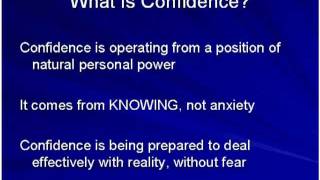
Welcome to this presentation. This is part of the Psychology of trading series, Courage versus Confidence, brought to you by Brian McAvoy. That's me, of Insideouttrading.com now, really, which describes you best? Are you trading with courage or are you trading with confidence? See, there's a huge difference between the two. Okay, so what is courage? Well, courage is really a balance of emotional forces within you. It's your force of will trying to overcome your fears, doubts and anxiety. That's courage. That's taking action in spite of fear. Now with courage, rather than lessen these doubts and fears and anxiety, courage simply seeks to outpower them, recognizes that they're there, and just says, well, rather than doing anything about you, I'm just going to beat you down. I'm going to overcome you. Now, let's contrast that with confidence. Confidence is really operating from a position of natural personal power. When you have confidence, you're coming from a position of knowing, not anxiety, about the unknown and how to deal with it and how successful you're going to be. These things are known. The anxiety isn't there, the fears aren't there. Confidence is really, it's being prepared to deal effectively with reality without fear. Again, comparing that with courage. Courage says, oh, there's fear. We're just going to outpower it. Confidence says, no, we're going to eliminate the fear by being prepared. So how do you gain confidence? Well, confidence generally comes from having ability. When you can do something, you're not scared. It's when you aren't good at something. It's when your proficiency isn't there, when you don't have ability, that's pretty scary. When you lack understanding, that's where anxiety comes from. That's where doubt comes from. It's not having a complete understanding of things. So confidence comes from having that understanding. Successful experience. If something's brand new, you've never done it before. You don't know if you can because you haven't really done it. You haven't had any successful experience. Maybe you have plenty of experience in it, but no successful experience. Again, confidence comes from some successful experience and then, of course, supportive evidence. When somebody can provide proof, when you can provide proof, when you can prove it yourself. These things all Give you confidence. How can you get these? Well, effective training from a knowledgeable source provides guidance, insight so you get both the direction as far as what to do and the understanding. You get focus so that you are spending your energies on the right things and not wasting them on the wrong things. Most of all, really effective training provides efficiency. Again, so you're not wasting time on the wrong things and doing the wrong things, you continue to reinforce strength and again, that position of natural power. Okay, so what should you look for in a trainer? Well, the first thing that's got to be there is the integrity of both the person who's going to be your trainer and the organization that they're part of. They need to have proper qualifications. Are they even in a position to be teaching you? Do they have the ability to teach you? What do they bring to the table now? Okay, so the first two, that's kind of a natural thing, but how do you kind of verify that those are there? Well, this is where the third party credibility comes in. Who else says that you can do these things, buddy? Who else says that you are a good business? And that's where the third party organizations like the ctfc, the Better Business Bureau, there are a number of organizations where it's their job to be the watchdog in a variety of industries or business in general. Like I said, Better Business Bureau has been around for decades and providing that function. The other thing, as far as what you should look for in a trainer, do they have a sensible approach? Are they just giving you some little shortcut that really doesn't do anything to help you become a better trader, to provide you the things that are going to give you confidence? Like I said, ability, understanding, success, that kind of stuff. Do they have an approach that's going to give you those things or are they just giving you an easy out where there's really nothing in it for you personally? Personally, because really everything that a trainer is supposed to train you so that you get personal growth, you come out of it a different person. You have greater ability, you have greater understanding. The things that are going to give you confidence, that's what your trainer should provide for you is personal growth. Not just a new tool, some new shiny gadget. No, they should help you become better at what you're doing. That's where your confidence is going to come from. So hopefully, you know, I hope that this has been helpful with you and that you will trade with confidence. Really decide right now though, if you're tired of stressful trading, decide right now that you are going to trade with confidence versus courage. So many traders are, you know, they're, they're having fun. Part of the kick of being a trader is, you know, oh, I've got guts, you know, the courage thing and flying in the face of fear. But really, you know, courageous trading is very stressful. That's why it's so emotional for so many people is because it's stressful because you don't have the things to have the confidence that makes it very stressful. And of course when things are stressful, it's going to be emotional. And emotions don't lend themselves to good judgment and good execution. That's why courageous trading is rarely profitable or sustainable. So prepare for your success. Make your success a natural outcome by preparing yourself, growing as a trader, doing the things so that you operate from a position of confidence and not courageous. That's really where you're going to give yourself the best advantage. It really all starts with the core skills. It really does. At the very core of your business, you must have the skills and know how of being a trader and what the essence of all that is. If you would like for more information on this, Simply go to www.tradingsystemsmastery.com and you can find out some further information. Again, don't trade with courage. That is the hard way to go. If you.