Talking Trading Strategies & Life Tiles – Casey Stubbs – Episode 056
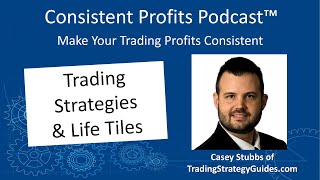
This is a YouTube video titled "Talking Trading Strategies & Life Tiles – Casey Stubbs – Episode 056" published in March 2024. It features a podcast-style interview hosted by Brian McAboy with guest Casey Stubbs, founder of Trading Strategy Guides. The conversation covers trading strategies, mindset, consistency, the impact of AI on trading, and personal life experiences including family and travel. The discussion also touches on gaming, social media, and the importance of focusing deeply on one trading strategy for success.
Hello and welcome to the Consistent Profits podcast brought to you by Inside out trading and Brian McAvoy where the focus is on consistency because when you have the consistent part down, profits become easy. Hello everybody, this is Brian McAvoy with a new episode of Consistent Profits podcast brought to you by Inside Out Trading. I'm excited today to be interviewing Casey Stubbs, creator of Trading Strategy. Guys, good friend and long time, a long time colleague of mine. Thanks so much being on the podcast today.
Casey, you're welcome. Thank you for having me.
Yeah, good to have you back, man. It's been a little while, so.
Yeah.
For those of you that don't know Casey, he's the founder of Trading Strategy Guides along with several other trading related businesses which include Learn to trade for Profit, Finance and Markets, Price Action and income. And since 2009, Casey has helped thousands of traders by providing excellent free trading education and trading strategies. Casey and his team's mission is to simplify trading strategies by giving traders a detailed plan with step by step rules to follow. Most recently, Casey's published a book called the Complete Trading System. How to developing mindset, maximize profitability and own your market success. He's been in the trading space for a number of years and brings substantial experience to the traders of the world. Casey's also very down to earth again. Thanks for being on here today, Casey.
You're welcome.
Cool. Yeah. Now as far as your book, last time, last time you're on, you had, had just, or you're just getting ready to launch your book, the Complete Trading System. So how's it been going with that and tell us a little bit about the book.
Well, I think it's been going pretty good. I've been getting some good feedback and you know, I touch on the whole package of trading. I feel like strategy is one component, but it's not everything. I mean, you're a consistency coach. You know how important it is to be consistent and to make sure you're following the same strategy over and over again. But I also talk about mindset and consistency. I talk about, you know, how to create a process that doesn't just involve trading, but kind of like a structure for your trading. Like, okay, how do I get ready for the day and when do I trade and how do I approach my trading and you know, how to make sure that I'm on top of my game every day.
Yeah, well, actually that's excellent. I'm glad you mentioned that because for crap, probably about a year now, almost every one of my clients that I've Been working with, that's a question that they eventually get around to is, you know, hey, Brian, you know, what are your routines like during the day? How do you start the day? How do you, you know, get. When you first get up? You know, what all do you do? And when you first start your trading and you have, you know, end of the day routines and stuff like that? So. Yeah, if you're talking about that in the book, awesome. Yeah, that's cool. Because. Yeah, that. That stuff definitely helps a lot. Big time.
Oh, yeah, yeah. And just, you know, anything you can do to systematize your life, it's very helpful. Right. And then stick with it. For me, it's like with all the other things I got going on with the big family and doing multiple businesses and trading and everything, the more structured I am, the better.
Oh, yeah, yeah. Well, I mean, you gotta be. Otherwise just the chaos will overwhelm me after a while. And now first, remember how many kids you got?
I have nine kids.
Yeah, that's what I thought. I mean, at first I was thinking six. It's like. No, it's more than that. Yeah, not. Good grief, man.
Yeah.
Why you don't have more gray hair than I do? I don't know. I had three and that's like, here I am. Right? So.
Yeah. Yeah. My grandmother actually, she's the one that told me. She says, you know, when you got kids that are little, you have little problems, and then when they get bigger, you got big kids, you got big problems. I didn't realize that till recently as my kids are getting older.
Well, eventually though, you've got that. Well, eventually you're gonna have like a big support group, though.
Yeah.
Yeah. Really cool.
Yeah, that's. I'm looking to the future, you know, like. Okay. Trying to get a really cool setup so that I'll be like the cool grandfather. You know, I don't have any grandkids yet, but, you know, you want to be like the cool grandf that has all the cool stuff so that they're always coming around. You know what I mean?
Oh, yeah. Oh, yeah. Now, see, that's how my dad was. And unfortunately, he never got to know any of my kids. He died right before I started my family. But my dad, he was. He always had to have a boat. So whether it was a ski boat or cabin cruiser down at the lake, he was, you know, big time into golf. And I mean, he was always wanting to go and do fun stuff. And so it's. It's too bad that, you know, he's he's not storing for my kids because, like, he was. He was like Mr. Social and. Yeah, it's every weekend he's not sitting on a couch out doing stuff. And it was.
Right, yeah.
So, yeah, I can see what you're talking about. Well, I mean, it's also just a good way to live life, though, you know? Yeah. You know, you got cool stuff going on. It just makes for a fun life for you, too. Right?
You know what? I'm. I'm a big believer in trying to get experiences that you're going to remember. You know, I love to travel. You know, I learned. I started traveling when I was in the military.
Right.
I was. That's when I got started with trading, too, but I was investing in traveling. My first duty assignment was in Germany and, man, I just fell in love with culture and so going out doing cool stuff, making memories, experiences, that's really what life is all about.
Oh, yeah, yeah. Well, you remember that old board game Life?
Yeah.
One of my favorite things from that game, you remember the lifestyles? Yeah, that's. That's a term that I started using with my kids when it was something, you know, we'd go do some cool. Have some cool experience or whatever. It's like, yeah, we picked up a lifestyle because it's like, yeah, that's the kind of stuff it's like, you know, you keep with you. Because remember in the game, one thing I loved about that game and I thought was so cool was it's like, yeah, you go around, you know, you go around the board, you got your different paths to the end, you know, the end of it, the retirement, you know, at the end. And. And of course, certain things, you know, you get a job and you have your salary and you buy a house and, you know, maybe make investments or win the lottery and stuff like that. And at the end of the game, you know, the winner was whoever had the most. But the life tiles were all worth ten grand each. So even if you didn't make a ton of money, if you had like a big pile of life tiles, you could still win the game.
Yeah. Yeah. And the experience is big, you know, and that's one of the things I've loved to do with my kids, is because I live on the east coast and my. My family's originally from the west, we travel. Right. We drive all the way across the country. And so my kids and I and my wife, we've been in every single state except for Hawaii and Alaska. Wow, that's a lot of driving.
That's cool, though. That's cool. So you gotten to see some cool stuff though, right?
Oh, we always, we always hit up different. Different things all the time. The last trip that we took this summer, we went to the Battle of Little Bighorn National Monument in Montana. It was like, amazing. I just loved it so much.
How cool. Now, did you also swing through Mount Rushmore where the.
You know what? We did see Mount Rushmore, but I didn't see Crazy Horse. It's like right in that vicinity. And, you know, we drove through there and that whole area is like a tourist area, so you could actually do a vacation right in that Mount Rushmore area and like, do stuff every day.
Yeah, that. I did that with my boys two years ago and that was totally cool. So. Yeah. In Montana. Montana is gorgeous, man. Isn't it?
Oh, yeah, I love it.
There's just beautiful. So. Huh. Very cool. Well, so what are. So what are. What are a few of your favorite places across the US that you guys have seen?
Well, I, you know, I love the. The parks. Right. Like, even that. The historic stuff, I really love that. So Grand Canyon is always a big one. And, you know, we went to a museum and, and I'm a military guy and my family's. I got a lot of military. So there's a museum in New Orleans called the World War II Museum. If you are into any military history at all, you've got to, like, make the trip to New Orleans just for that museum. It is so cool, huh?
Wow. Yeah, some of the military stuff's pretty cool. Have you been on the. The Midway in.
Yes, yes. I loved it. Yeah.
I mean, well, what, what kills me is like, you know, it's cool going through there, but it's like, could you imagine what it was like for the guys when it was in action? Like you're out to see and doing stuff on this monstrous freaking boat and, you know, with the weather and the waves and of course, the wartime and all that kind of stuff, it's like, man. Yeah. You talk about lifetimes. Holy cow. That was like.
Well, you're. You're a consistency coach, so I could imagine that you could really appreciate the systems that had to be in function on that ship.
Oh, my God. Yeah. Oh, yeah. Well, I mean, the military. Yeah. From a consistency standpoint, I've always marveled at that. And, and I actually used to use it in one of my presentations when I was talking about consistency, but also, like businesses in general and how, you know, standard operating procedures, SOPs, that largely came from the Military and became a business practice because it's like, yeah, you got a big organization, how are you going to keep it from being total chaos? It's like, well you get structured and military, they've already figured all this out, right.
And you know, you get 19 year old kids, you give them a checklist, the SOP and they're running everything and they don't know what they're doing but they just got this piece of paper that keeps them in line.
Yeah, well, as far as businesses, it's amazing. So many people, you know, when you talk about quality assurance and process control and stuff like that, they always think about, you know, machines and automation and you know, an SPC chart and stuff like that. But what a lot of people don't realize is the quality assurance in like, in real life in manufacturing and all sorts of like especially service businesses and everything, it's not, you know, machine processes that you're monitoring and making consistent. It's all the people in the mix. And that was one of the things I loved about it when I got into quality was because back when I was in engineering it was in the frustration for all the engineers was you know, you could design a perfect machine or you know, perfect plant layout or you know, and, and you know, or you know, perfect organization, a whole building or whatever and lay it on a perfect lay down on paper and it's perfect. But as soon as you throw people in the mix, probably going to blow up and not work worth a crap. And the cool thing about quality is it's like this is how you make it work with people in the middle of it and it's, it's awesome. And most of my time as a quality manager it was only maybe 10% of the time I was focused on machines. Most of the rest of the time was focused on people and the training and evaluation systems and you know, SOPs and work order and work instructions and forms and records and all that kind of stuff. So yeah, it's the people side of it where really where quality really comes into play.
So and that's why you're a really awesome consistency coach is because you understand that and you understand how the people side of it is. And that's the biggest challenge as a coach is to get people to really grasp those SOPs and things. And that's why you know, it's just bringing it back around to trading. I keep my trading checklist right here on my desk is my sop, right. It's just so easy. You got the checkbox? I got it. On a laminate. So with a dry erase marker, I can just do this every day, and it just makes it so easy.
Oh, yeah, yeah. Cool. You got it sitting right there. Yeah, that's awesome. Well, now, as far as with, with your trading businesses, I mean, you got, you know, the, you got your how to Trade it podcast, you got trading strategy guys, website, and what, what else have you got going on with trading strategy guys? You got, you got any new, new stuff coming out?
Well, I'm, I'm really working at trying to find great traders to kind of release them into the world and share people's systems. Right. So I found a couple guys, you know, I talk to people on the podcast, right. So I meet great people. And I got this one guy on YouTube. He was really good, great options trader. He grew his account to like $2 million. And I'm like, you know what? We got to get your system into the hands of people. And I've got, you know, I've got a website, I've got traffic, I got marketing experience. I want to work with you and help get your system out there. And so I've been trying to do that with, with some traders and just getting, getting some of these different strategies out to the world because I think that strategies are really important, but they're not everything. You know, the SOP and the other thing is important, but if I do see a good strategy, I want to get it out there to people.
Oh, yeah. Oh, yeah. I mean, consistency is one thing, but yeah, you do, you do need to have a decent strategy. And there's so many garbage strategies out there. That's what kills me. And when you run across one that actually does work, and it works pretty decently, and it's one that, you know, more than one person can, you know, actually make it work. Yeah, that's, that's worth doing now. Actually, you, you had a setup like that for a while. Like up until like a year or so ago, you had a, you had a, you had something like that already going on, right? As far as like a, you know, coaches teaching people specific methods. Right.
Yeah, yeah, I've, I mean, I've been doing that for a long time. I just think that with me interviewing, I mean, you're a podcast host, you, you know how it is. But it's great. It's expanded my, my knowledge, expanded my network, expanded a lot of areas of my life and business. It's just been so cool getting to talk to some of these great people.
Oh, yeah, yeah. Oh, indeed. Yeah. There's There's a wealth of experience. And I'll tell you what, there's some guys that have been around for a while too, that it's totally cool that they're still in the game and they're willing to get on and share what they know. You know, like Ray Barrows. He's one of my favorites. I don't know how old he is. I know he's, he's old, he should be retired. But I think the guy's. He's just going to stay in the space forever because he seems to really enjoy it and, and he's, he's really good at what he does and he's really got his heart in the right place as far as helping people. I know he stays really busy, but yeah, there are a lot of guys, there are a lot of good people in this space, which is cool.
Yeah, I've interviewed some of the, the old timers as well, and I really enjoy those. I really do.
Well, so who are a couple of your favorites?
Well, you know, it's so funny, but I've been as you. As soon as you mentioned it, this guy popped into my head, but I cannot remember his name.
It's.
I, he's pretty well known, so I think you probably would have heard of him, but I cannot remember. Real strong price action guy. He's a, he was like an eye doctor. Started out as an eye doctor and then he switched over to trading. But I cannot remember his. Oh, Al Brooks. Al Brooks. I had Al Brooks on the show. Yeah, and he's, he's up there in age.
Well, one of the cool things about this occupation, though, it's not physically taxing, it's, it's, you know, it's a mental game. So as long as you can still work your keyboard, you know, you can stay in the game.
Right, right, right. Yeah, yeah, that's definitely true. And although, you know, with, with me delivering products and trying to teach traders the. Always have a little bit of a challenge with the older guys, just with keeping up with the tech and, you know, some of the stuff is really difficult for them.
Well, yeah, I can see that. I can see that. But, you know. Well, here's one thing I learned a while back that I thought was really wild. This was years ago after my mom had mild stroke. And so I'm looking into, you know, remedies and treatments and that kind of stuff. And one thing that they found was very effective for recovering stroke victims was video games, because the mental challenge and the, the rapid eye movement, it actually helped Them heal their brain. I was like, no kidding. Video games, that's like, yeah. And the more I read into it, it's like, how wild. But yeah, even though, you know, they just kind of, you know, they camp down a chair, you know, physically maybe tied up or whatever, you know, not functional that well, they can play video games and it actually is helping them heal their brain and their, you know, their nervous system. And it's like, what a trip.
I mean, well, I'm going to tell my kids that because they'll love that. They love gaming.
Oh, yeah. Well, well, okay. So what, what is your general posture on, on gaming for kids?
You know, I think it's great. I love some of the stuff I see nowadays is really good, especially competitive stuff. Like, you know, some of these, my kids were into, Fortnite a few years ago was a really popular game and so they got me into it and I started playing. And as an older guy, you're just so slow. It's amazing, like the speed that these guys have, these young kids. Well, the guy who won the tournament, he was 16 years old.
Oh, yeah.
And the purse on the prize was $3 million.
Wow.
So, you know, it's hard for me to like yell at kids for playing games when they could actually win a three million dollar prize.
Oh yeah, well, yeah. As far as the video games, I don't know about you, but like when I, when I was, you know, in high school and college age, yeah, I, I recognized straight away it's like this, this is a problem for me. I, I can spend way too many quarters, you know, and because that was back in the day and too many hours at these, you know, these video games. And so it's like I had to walk away from it. But with, but with my kids, you know, I've kind of monitored, you know, what they were, what they were playing and making sure that it's like, okay, at least it's keeping up their, you know, their critical thinking, you know, with the role playing games and stuff like that. Like Call of Duty. One of the things I liked about that is you have to figure stuff out. It's still keeping them thinking. It isn't just cruising around shooting stuff. They're actually having to think and figure stuff out and strategize. So it's like, all right, at least, at least there's that aspect of it. And, and of course, good social aspect. We would have Call of Duty tournaments. It was always all the kids in the neighborhood would come over to our house and it's like we got a whole pile of kids in the living room, had the projector up on the wall and it's like everybody's playing Call of Duty and it's like, cool. So, yeah, that was a lot of fun.
Yeah, I mean, those stuff, those are good. And then on the, on the negative side, it can be very addictive, right. And if you're just sitting there and you can't interact or do anything, like, I've seen the draw, like, it just, it becomes like way too much. But I mean, anything's like that in life. So you just got to really know what's controlling you and not let things control you.
True. Well, I'll tell you what, between social media and video games, I'll take video games all day long.
True. Yeah. Social media is a, is a brain kill. Like this, this, the swiping, they call it doom scrolling. Like that's a do not. I don't. I'm not going to participate in that at all.
Well, you know, one thing, and this really, it surprised. I mean, it surprised me in one regard, but. But not in another. But I was kind of surprised to hear it. This one guy was talking about, you know, like, social media and how it affects your brain and how, you know, they've. Yeah, they work real hard at figuring out how to stay, you know, keep you hooked and in a trance, like state. And so he was saying, you know, what if you want to give yourself a dopamine detox? That's what he was talking about. He said, you know, keep social media like Instagram down to a maximum of four hours a week. He said, Stay completely off of YouTube, like zero. And I'm like, huh? And it's like, why would he single YouTube out? But I got to think about it. It's like I found over the last few months especially, it's so easy to lose an hour in YouTube. You know, it's like you get on there, you look, you know, you're looking for one particular video about something, and next thing you know, it's like, crap. Two and a half hours have gone by.
You know what that happened to me with, with the shorts, right?
Oh, my God. Yeah.
I couldn't believe it the first time I did. And I've only, like done it once or twice, but the first time I did it, I just said, I'm just going to check this out. So I just started swiping and the stuff was not really that entertaining, but I couldn't stop. Like, I'm watching crap that I don't even want to watch. And I couldn't stop swiping. It's like, whoa. Next thing I knew, 30 minutes had gone by. I'm like, I'm out of here.
Well, see, part of it with the shorts is it's like pennies. You don't mind, you know, losing pennies, right? Dollars or $10 bills, you know, you'll think twice about it. Oh, it's just a penny. And so that's why the shorts are so bad, because it's like, oh, it's only going to be less than a minute.
Yeah. And I think it's maybe the, you know, the addiction. Like, okay, I'm just gonna find one video I like. And so you're. I don't like that one. Don't like that. And so he's like, you know, eventually you're gonna get one. And so I think that's part of it.
Like, they figured it out. They definitely.
Yeah, yeah.
But. Well, now on that topic, and this is, you know, a little more serious back towards trading. One thing I've found, I've noticed myself saying to clients more and more, especially over this year and, like, over the last six months, is because it seems like everybody, you know, when they come to me, they're like, yeah, Brian, you know, I'm watching, you know, a lot of YouTube videos and, you know, going to webinars, and I'm really trying to take in a lot of information. And I'll tell them. It's like, you might want to curb that because you reach a certain point where you've learned really all you. That you need to know. And now it's just sucking up a lot of mental energy and creating a lot of mental noise.
Right.
And it actually gets to a point where it's counterproductive. I mean, you're gonna hit a point of diminishing returns pretty quick, but then you're gonna. You're gonna hit a point where, yeah, it's just burning up mental energy and. And make. Creating noise and pro, and probably even confusion. So you might want to just chill on that.
I think it's a surface level learning, right? So, you know, when you first learn strategy, you can learn everything you know about it really quick. But I. I feel like that's surface level knowledge. Right? And then to really get the true value, and this is not just a strategy, but this is anything in life, you got to go deep with something, right? You know, with the Internet and everything, you know, we have are like, we. We're a mile wide with our knowledge. We know a little Bit of everything. But very few people are truly deep, right. They really go all in on a subject. And I think we got to go all in on our strategy and on what we're doing and just kind of have tunnel vision and just stop looking at those other things. And, you know, I've told customers that and they get mad at me because they, they don't agree. But I, I do agree with what I'm saying.
Oh, no, no, you're absolutely right. Well, and here's, here's the flip side of it. Part of the reason that everybody's wanting to look at all this other stuff is it's interesting. It is. Some of it's really cool. It's like, you know, if you go to a car show, there's a lot of cool cars, right? You wouldn't necessarily want to own most of them, but it's pretty cool to go check them out. And with trading strategies, yeah, it's the same thing. Especially, of course, you know, with all the, you know, the hype and, and all the, you know, excitement, all that kind of stuff. But no, as far as what you're talking about, now, here's something, and I haven't heard too many people talking about it lately, but I, I really believe it's true. Your comment about going deep on a strategy, that's one thing I've done in particular with a couple of my clients. It's like, and I told them, it's like, stop looking at all these strategies. You, you've been bouncing around a lot of different stuff. You need to, let's, let's get, get you back over to here to this one, because I remember you, you really liked it and it was working pretty well for you. What you need to do is you need to decide to become an expert on this strategy and just get really good at this one. Stop trying to learn 50 different strategies. Get really good at this one. And here's the thing with AI coming along. AI assisted trading, it may not be that common now it has started, but I guarantee you it's going to become commonplace where people are sitting there. They're going to have AI in their trading to really help them sharpen the game. And a lot of people forget trading. It's not just you on a chart on the screen. That chart on the other side of that chart is millions of other traders who are all as hungry for money as you are. You got algorithms and other AI, you got institutional investors, you got, you know, seasoned veterans. And it's a competitive game. Trading is not a Friendly game. It's competition and it's everybody for himself. So it's not just you and your computer, it's you against everybody. And everybody out there is up in their game as the best they can to win. And if it's at your expense, sucks to be you. So you really need to, yeah, focus on something, get really good at it and also as AI continues to develop, make sure that you're taking advantage of it and, and using it however you can to better your game at trading because it's going to get more challenging.
Yeah, I agree. I think, I think the AI is going to definitely be a game changer and change in trading. It's a game changer in a lot of areas and we gotta really focus. You know, it's so easy to get sidetracked on other things and we think, oh, well, if I only had this. If I only had this, it kind of goes back to the grass is greener on the other side. You know, if I could. If I only moved over here and tried this and I had what you had, then my life would be great. But then you get what that other person has and it's like, wait, wait a second. This isn't all it was cracked up to be. I want to go back to what I had before.
Yeah, there's manure in this grass over here too.
Yeah.
Yeah, no, that's, that's true. Well, so as far as your strategies that you've got going on now, I mean, you've obviously got to have. Or I would expect that you've got probably a couple of favorites that are at least, you know, for people who are kind of struggling to figure out what they'd like to trade with? What. What of the ones that you've got now would you say are good ones that you would recommend to, you know, say if, you know, if you're looking for something, this would be a good starting point.
Well, my favorite one now is so cool. It's just. I love it because it's so easy and you know, when in trading you got to be careful with the word easy because it might. It's easy, but I've got a lot of experience and I'm been working on my consistency for a long time, but it really is easy and it's. Doesn't take a lot of time. I'm. I've been using weekly charts a lot and so I'm just focusing in on Fridays at the end of the market close. And so I'm really just trading once a week. Don't really even look at the charts until Friday. And it takes a lot of my time out. And so my whole trading process has been streamlined and cut back and my returns are like almost the same, which is kind of like, okay, why wasn't I doing this a long time ago?
Yeah. Nice. Well, if you don't mind sharing, obviously don't want to give away the secret sauce, but is it a trend following strategy? Is it directional, non directional?
You know, I follow just a couple. It's pretty simple. I mean, it's straightforward. I do talk about it in the book too, but it's. I look for a couple key things. I do like trends, so I'll look for pullbacks in a trend and then so when I find a nice pullback, I also like to find consolidation where I know that there's accumulation of buyers stepping in, right. So I'm looking for the, for like a sideways movement where I can see buying activity. I look for some volume. Then I also like to see a break out of the consolidation pattern in the direction of the trend. So yeah, pretty. There's, I've got like a checklist of like three or four different things that I'm looking for. As long as I get a few things on that pattern, then I'm ready to trade it. And I've been using weekly charts, so it just saves a ton of time and it helps me stay into trades too. If you're, if you're looking at weekly charts that you can go for a little bit of a deeper pullback, a little bit bigger stop loss, you know, just, it makes everything a little bit easier for me.
Very cool. Very cool. Well, what, what, what other, what other advice you got for relative newbies?
Well, so I think the biggest one that I mentioned it earlier is.
Go.
Deep with your strategy. Don't expect things to be easy. Don't look for, get rich quick. You know, really work on your mindset. Don't look for the magic system. Don't jump from system to system. I think the biggest thing that I see and you know, I'm in the marketing business, so I'm selling strategies, right? And so it's hard for me to sell a strategy and then at the same time say, just focus on this one. Because people will say, well, you sold this strategy last week, now you're selling this strategy. I'm want both of them. I'm like, just, you know, try to find your personality and buy one strategy and stick with it. Don't buy all my strategies, just buy one of them, you know, and, and that really is probably the biggest problem that I see with people is they just want to jump from thing to thing there. I think it's, it stems with people get into trading maybe because they have a need or maybe a financial problem. And so they think that trading is going to be the thing that's going to solve that problem really fast. It's going to maybe ease their financial pain. But if you treat trading like that, it's more like playing the casino and it's more likely to hurt your financial situation than it is to help it.
Oh, yeah, yeah. Well, one of the oldest trading wisdoms that there is is if you've got financial pressure on your trading, that's putting you at a big disadvantage just because it is going to affect your decision making and probably not in a good way.
Right.
So, yeah, no, you know, good advice. Well, the other thing, and part of it really is just having the patience because going right along with what you were just saying, you know, to have several strategies is fine, but how you accumulate them matters. And so what I, what I like to do when I'm working with people is, and I'll tell them right up front, it's like I'm teaching you a process. This is a skill set that I'm transferring to you. So we're not going to take all your strategies. You're going to pick one and we're going to work with one. So you can learn this process and you get it down. We'll establish success with it, and then you can add to your playbook one at a time. But you're going to do it right with each one separately and to, and to build a playbook over time is, is good as a trader. So that way, you know, depending on what the markets are presenting you, you can respond with the, with the appropriate strategy, and that just makes you a more capable trader. But don't try to do everything at once. It's like, right, one at a time, get really good at it, make sure it's working. Then we'll add another one and we'll take it slow and we'll just add them one at a time. And that way we know that our playbook is solid.
Yeah, I think you're, you're right when you say doing it the right way, that's the critical thing. You know, I grew up playing sports, and so in Baske ball, right, the coaches are teaching you the fundamentals and how to do something the right way. Okay, this is how we do a layup. This is how we block. This is how we, you know, dribble the ball and you just focus on those one little foundational things, the fundamental things, they're just not boring. They're boring, but when they add up, then that's how your skills are built.
Oh, yeah, yeah. Very cool. Very true. Cool, cool. Well, we're running a little bit long. I appreciate you taking a little time and everything. It's been a fun conversation. And so do you get anything new on the, on your horizon as far as what you got going on at your site? Are you just kind of, I mean, aside from looking for some traders to help, you know, teach their methods, you got anything else coming up?
You know, the biggest thing I really feel like I've, I'm contributing is just creating content online with, with my articles on my website, my strategy. So I would recommend people check out the website, maybe get on the newsletter, check out some of the content, because I'm, I'm really focusing on educational content for traders.
Yeah, yeah, yeah. And I, I, I will agree with you there. And, and definitely, yeah, everybody that's listening, if you're not already, if you haven't already checked out Casey's stuff, go ahead and do that. And best place to do that is at the trading strategy guides dot com, right?
That's right. Yeah.
And, and you got, actually on your home page, you got several different looks at kind of the thing, the different things do. So yeah, swing by. Just keep it, yeah, keep it real simple. TradingStrategyGuides.com link will be down in the show notes or in the description. But yeah, go ahead and check out Casey if you like anything you've heard here today. You know, go and connect with him. He's a good guy. He does care about his people. He's been in the space a long time. He'll give you good advice. It's not going to steer you wrong. And he definitely has a lot of resources that you can take advantage of. And as far as his content, yeah. I've been sampling Casey's content for years now and he does produce good stuff. So you'll enjoy it and it will definitely benefit you. So, yeah, definitely.
Thanks, Brian. Yeah. And when you get over there, check out the podcast too. Brian's been a guest on my show. I've talk to a lot of great people if you guys like podcasts. Oh, I'm gonna have Brian back on again. And so there's a lot of good stuff over there.
Yeah, indeed. Very good. Well, everybody, I applaud you for taking time out of your day to learn and develop as a trader. And so, you know, good job on that. Keep up the good work. And again, you know, follow through with this. Whatever you're doing, don't just listen to it and then keep doing the same thing. If you, if you hear anything that sounds like it'll help your trading, go and take action on it again. Go ahead and connect with Casey. You'll be glad you did. And Casey, thanks for being here today again and we'll go ahead and wrap things up, everybody. If you enjoyed the podcast, make sure you subscribe and we'll talk to you soon. Cheers, thank you for joining us today on the Consistent Profits podcast brought to you by Inside Out Trading. Make sure to swing by InsideOutTrading.com and pick up your free copy of break the cycle 10 things you can do to stop reinforcing the past and and get your trading on the right track. If you enjoyed the show, make sure to subscribe on your favorite channel and we'll see you on the next episode. Cheers.









