Technical Analysis Market Expert – Rob Hanna – Episode 055
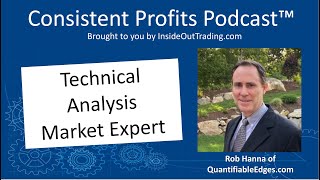
This is a YouTube video titled "Technical Analysis Market Expert – Rob Hanna – Episode 055" published in March 2024. It features a podcast-style interview hosted by Brian McAboy with guest Rob Hanna, founder of Quantifiable Edges. The discussion covers Rob's background in quantitative trading, his approach to market analysis, trading psychology, and his educational courses and newsletters aimed at helping traders develop consistent profits. The conversation is technical and focused on trading strategies, market timing, and adapting to changing market conditions.
Hello, and welcome to the Consistent Profits Podcast, brought to you by Inside out trading and Brian McAvoy, where the focus is on consistency, because when you have the consistent part down, profits become easy.
Hello, everybody.
This is Brian McAvoy with a new episode of the Consistent Profits Podcast. I'm excited today to be interviewing Rob Hanna, founder of quantifiableedges.com thanks so much for being here today, Rob.
Hi, Brian. Thanks for having me.
Hey, glad to have you, man. For everybody who's not familiar with Rob, he is well regarded in the financial community for his analytical approach to the stock market, investment strategies, and personal finance. He's been particularly noted for his expertise in quantitative analysis, where he uses statistical and computational methods to identify trading opportunities based on historical data. Rob's work involves examining market trends, volatility patterns, and other financial indicators to make informed trading and investment decisions. His reputation has been built on his ability to merge detailed historical market analysis with contemporary market conditions, offering insights that are both informed by past outcomes and relevant to current market participants. Rob began trading in the late 1990s. In 2001, he formed a private investment partnership that he ran through 2019. In 2019, he decided to shut that down and join Capital Advisors. 360. Since 2020, he served as an investment advisor with Capital Advisors and Trades many of the models he developed over the years for himself and for his clients. Rob began sharing his research and ideas publicly back in 2003. In 2008, he established Quantifiable Edges through his writings, particularly in the Quantifiable Edges subscriber letters and online courses. He shared his extensive research, contributing valuable perspectives on market behavior, trading strategies, and risk management. The Quantify Quantifiable Edges Subscriber Letters, which compile over 16 years of financial research and insights, reflect Hannah's commitment to empirical analysis and his belief in the importance of historical context when making investment decisions. The research at Quantifiable Edges is a testament to his approach, combining rigorous analysis with practical strategies for traders and investors alike. In addition to being interviewed in numerous trading magazines and podcasts over the years, Rob has spoken to major conferences for the Market Technicians association, the American association of Professional Technical Analysts, the National association of Active Investment Managers, among others. Rob's advice is often sought after by both individual and institutional investors for its clarity, depth, the quantifiable edge it provides in navigating the complexities of the financial markets. Rob, thanks again for being here.
Thank you. Thanks so much for having me. That's a nice intro.
Yeah, that's. Well, you've been at, you've been at this game for a while and you've been a busy guy. You've done a lot of things and a lot of cool stuff. And now as far as you know, your start. One thing I always like to, to start with everybody. It's like before trading, what were you.
Doing so well if I was always interested in trading. Right. So before I was a full time trader, my first experience with trading was as an intern on a desk in New York. That was during college. So between my junior and senior year I graduated in 1992 and didn't want to move to New York. I wanted to stay in Boston. And so I had a tough time finding job initially. I did a few things and I ended up with Thompson Investment Software which was part of Thompson Financial at the time. And I sold their. It was a financial accounting and they did performance measurement and a little bit of trading out of it. Not so much of that with most firms, but it was mostly back office software for firms. And I got to learn about the investment industry that way as well. It was a, you know, it's a, it's a, it was a big sale. It normally took six months to a year to close a deal and you know, they'd run their whole back office on it. Right. So I did that for a few years and then while I was doing that I, you know, continued to learn about the market and I started trading on my own on the side.
Mid.
To late 90s and I traded, you know, through the Internet bubble. I did a little bit of day trading, I did a little bit of investors Investors Business Daily, you know, the can slim type trading for a while there. And I kind of developed my own methods and strategies and. And then I started trading full time in 2001. Cool.
Well, so you, you kind of want.
It kind of happened when it first came out and still hold it.
Right.
I'm an, I'm an in and out guy.
Yeah. Well now when you said that it was. They were relatively quiet clients. That brought to mind one guy I used to have a lot of interaction with years ago. He ran his own brokerage firm and one of his biggest things was how he hated managing other people's money because they were constant bugging whether, whether the markets are going up or down or whatever he said, I just wanted to shut up and let me do my job. But they're always wanting to meddle and say are, you know, are you doing this? Are you taking care of that? Why'd you do this?
Why'd you do that?
It's like, just leave me alone.
I know what I'm doing. Well, yeah, but even that, I don't mind so much answering the questions. And the nice thing about having, like a newsletter now, you know, I didn't have that when I first started is that all of my clients these days that I have through Capital Advisors, 360, I provide the quantifiable edges letter to them so they have an idea of, you know, what my thoughts on the market are and what I'm doing, and they can check that out every day if they want. So I end up not having a whole lot of questions anyway. I do, you know, when they're having thoughts about the market and I enjoy interacting with them at this point, but it's not the. There's not a whole lot of, oh, my God, the market just dropped 3%. What's going on? Do I panic? Should I get out? You know, the kinds of things where, you know, some people might have that kind of interaction because they. Their clients don't hear from them very often. Right. They're hearing from me every day in some form.
Yeah, that's that. Yeah. I'm sure that goes a long way to keeping things settled in. That's good. Well, so as far as sharing your. Your research and ideas, you know, publicly back in 2003, what. What prompted that?
Well, you know, I had. I had the small firm I was trading for myself, and I thought, you know, I just get my name out there a little bit and see where it leads to. And I'm not. I wasn't sure what I wanted to do. But blogging hadn't even really started much at that point. I started writing for tradingmarkets.com because I. I used to read them a fair amount. It was a Larry Connors site and Dave Landry was on there and a few other guys that I liked a lot. And. And so I started writing for them, and I did that for a few years.
Yeah, you were writing for them like weekly, right?
Yeah, I think it was twice a week even.
Yeah.
Which, you know, I did for four years or so. And then I got sick of, you know, just putting. Putting together the reports, you know, twice a week. And I didn't get paid for it. So I'm like, why am I doing this?
Right.
So then I started quantifiable edges a while after I. I stopped doing that. I took a little break from writing and then I, you know, I. To get my ideas back out there. I've always found that just, you Know, putting ideas out there gets you a lot in return. Right. There's a. I think it was due to the emergence of hedge funds or, you know, maybe just a lot of people in the industry feel like, hey, I've got this secret way to trade. I don't want to share my secrets. And I've always kind of been thought the opposite of that. Where, you know, most of the research I have has probably been thought of by someone else at some point and maybe by a lot of different people. And so when I've done research, I've often shared it, and then the feedback I've gotten has been invaluable to me, you know, oh, Rob, you know, I see you did this. What about this? Or what about that? Or some people will just offer up, hey, I did this. This is similar. Check this out. Or, you know, and it helped me so much over the years to kind of look at things from many different angles. So it's something that I've almost done and continue to do. And. And I've gotten great value just from, you know, being open and sharing much more than I would have from holding things secret. Because I don't trade in, like, penny stocks or small caps even. I trade in indices. I trade in, you know, highly liquid ETFs, and I trade primarily in S P 500 stocks. So I'm not moving the market with anything I say.
Oh, yeah, well, yeah. And as far as, you know, specific strategies, I mean, if you think about it, trading's been around for a long time.
Yeah.
And unless you're coming up with some, like, really something just earth shaking it, somebody's probably tried it somewhere along the way or something similar to it. And so, I mean, because there's only so many ways you can spend getting in and out of the markets.
Right.
And so, yeah, if, you know, if you got a good idea, it's like, cool. And yeah, you can put it out there. And there's like millions of traders. So it's like, even, even if 100 people, even if a thousand people do it, that's still just a tiny fraction of everybody. And unless you get somebody. Yeah, it's trading, you know, 100,000 contracts at a time that borrows your method. It's like, yeah, this is not going to have a huge influence on things. You're not going to hurt me by doing, you know, something similar. So.
Yeah, well, even. Even if they do take my method and use it. One thing I learned from, from Larry Connors many years ago, I had a. I had a system I developed and I was thinking of, you know, hey, should I, should I share this? Should I, should I sell it on the site? Right? And he's like, yeah, why wouldn't you? I'm like, well, I don't know, seems like it's like a really good idea. I don't know, you know, do I want to share this? And that was, you know, way back when he said, Listen, if 50 people buy this, they will trade it 52 different ways. Like no one's going to trade this. Exactly. It doesn't matter how much you, how accurate, accurate you are with it or how good it is. Everyone's going to put their spin on it. No one's going to trade it exactly as it is. And it's so true. Like, you know, I, if I told you whatever, two day RSI systems or something like that, right? So let's buy the S P when it gets down to this level and sell it when it bounces to here for a mean reversion system. You'd look at that and say yeah, that looks pretty good. And then you'd say well, what about if I, you know, added a 200 day moving average average? Or what if I adjusted this? Or what if. And then you'd end up trading it, you know, slightly different than however I trade it. But no one's taken your edge if by, by sharing something, you know, unless it's in some very true micro cap, I guess.
Very true, very true. Well, so, so you started your, your site in 2008 and so what prompted you to prompt you to write the book though? Your book came out around 2010, right? Yeah.
I'd done a lot. So the, the book is just the quantifiable edges guide to Fed Days. And I'd done a lot of studies and published a lot of research around trading around Fed Days. And so I just thought, hey, why don't I just compile it all and put it together and I can release it as a book and it'd be, you know, nice to have something to give people and, and that people can, you know, holes in their hand and read is, you know, because I'm not sending out the nightly subscriber letters via paperboy or anything. So that's what got me to, to, to put together the, the Quantified Blazer Guide to Fed Days.
Very cool. Well, I haven't read it yet but the reviews are looking good on Amazon, so kudos and thank you. Well, no, I would think I'll be.
Happy to share it with you One.
Thing I learned a while back is a lot of times you can tell if a book is worthwhile just looking at the review count and, you know, if a book's been up there, you know, for, you know, a little while, it's got a lot of reviews and, you know, as long as it's like, you know, like four, four stars and up. Yeah. Probably worth taking a look at if it's like close to five. Yeah. Okay, cool. And so, yeah, yours has done pretty well. That's, that's excellent. Now, as far as your, your nightly newsletter that you, when we talked before, you said that you're like approaching Cal Ripken as far as you're steadfast. Yeah. You know, committed to publishing that, like, daily. It's like been 16 years, right?
Yes. It started in February of 2008. And, and yeah, like I was telling you, I looked up Cal Rip and Streak, and it was something, 16 plus years. And I think I'll get to pass him in June if I can keep publishing letters every night until then, because I, I haven't, I haven't taken a night off from it yet. So, you know, I've always been able to put out something which has become a, you know, a little bit of pride thing for me at this point. But it also is a pain in the neck sometimes when, you know, the market moves sideways all day and does nothing. And I got really hardly anything to say. And I gotta, you know, come up with something. Even if it is, I got hardly anything to say tonight. Right.
But sometimes it goes that way. Well, right now in your newsletter, are you mostly speaking to just what's going on in the markets or do you also maybe sometimes, you know, go a little off, off topic and talk about like, you know, psychology or, you know, maybe philosophical kind of stuff or life or that. Whatever you very, you know, do you mix it up a little bit or is that pretty much always just to do with the markets?
No, it's, it's. I don't get into that stuff so much. I will, I will post that kind of stuff once in a while, like on the blog or whatever, but the letter has a kind of a strict format. It's. It's pretty quantitative and, you know, maybe I'll put a personal note in there once in a while, but, but not too often. I'm. I'm looking at market studies I've done and I'm always trying to come up with new ones as well. I have a little tool I call my quantifinder.
Okay.
And so any study I've done in the past that still seems relevant will appear on my, my website each day in, in this, what I call the quantifinder. So it's just got a little link to hey, Rob wrote about this in, you know, January of 2022. And if you click on it, it'll take you to that letter and you can read on it. So I use that for myself to see, hey, is anything popping up that I've written about before and then I can go back and, and re research it and check on the study and update it. So I have, I don't know, 1400 or so studies that.
Wow.
That I, that are in the quantifinder right now that you know, that I, I check periodically. So there's normally something to talk about only for.
Really?
Yeah.
That's a lot of work, man. Well, yeah, now you, but you like keeping things technical and pretty mechanical. What's your take on the psychology of trading? Because a lot of people, you know, they hold the perspective that so much of trading is, you know, it's just in psychology and that's like where, you know, 90% of it is. What's your, what's your take on, you know, the, the technical aspects of trading versus psychology?
So it's interesting you ask that. So for me initially I like I said I traded like cancel him type trading. Right back when I first started off, okay, and one of the things I struggled with there was, you know, I was pretty good about knowing when I wanted to get out of positions if they were going against me. But when they were going in my favor, that was when I, I tended to get anxiety. I had winners anxiety. I mean there's losers anxiety when something's going against you, oh crap, is this going to turn around? But also winners anxiety. Like should I get out of this before it turns the other way? Right?
Oh yeah.
So that's why I wanted to be more quantitative in my approach. So I began doing a lot of studies and that's kind of what led to quantifiable edges. I started doing studies every night and it was more for, for me from a psychological standpoint, hey, I know I'm in a position now or I'm in a bunch of positions. I'm, I'm either real long or I'm real short. Should I stay in them? And the market made some crazy move today. You know, should I still be in these things or should I be bailing? And so I would run studies saying, all right, this is what the market did today. This is what it's done leading up to today and where's the edge? And if it's opposite of where I am, then good time to get out. If, if it's, if the edge looks even bigger than it did the day before, maybe I want to load up more. Right. So my, when I would have really good or really bad days doing the research each night kind of brought me back to, all right, this is reality. This is where, this is where things are at. You're in the right spot or you're not in the right spot, but you can adjust. Right? So that's where I was able to keep my sanity. It was all right, I know what my edge is and now I can focus on that rather than, I hope this turns around. I don't know what my, I don't really know the math behind where I'm at. So when you know the math, it makes it so much easier to say, all right, you know, I'm in it or I need to get in it or I need to get out of it.
Well, you touch on something that to me is, is huge for traders. And, and when you talk before, you had mentioned that your, your, your time outside of the normal trading hours is your most valuable time. If I remember correctly, that was, that was your comment that that's really where your money's made. It's not during market hours, it's in your prep time and your review afterwards and that kind of work. So that's that. Yeah, to me was just gold because so many people forget trading is a decision making process.
Right.
Of course we're buying and selling securities, but in its essence, it's a decision making process. And so being able to, you know, evaluate your decisions and how you're going to make them when you're not in the heat of the moment really can be invaluable in the heat of the moment because you've already thought it through when you're in a nice calm state of mind.
Yep, exactly. So, you know, there are some people that are really good and really thrive on that, you know, looking for intraday patterns. Right. But if you're not looking for intraday patterns, then you might as well be ready for everything before the market starts. Right. So I know what securities I'm going into at the open or getting out of. And, and same thing if, if the market does this during the day today I'll be looking to add or subtract the positions near the close. And yeah, so my money is made during market, outside of market hours, like doing the research, setting up for the next day. And all I do during the day is just execute on it. And then whatever projects I come up with, right. Like or customer service or you know, making adjustments to the website or whatever it is, but you know, I got the screen on, but I don't need it on. I'm not gonna make any change, you know, at noon or whatever. There's no trades going on for me at one o' clock in the afternoon unless they're limit orders that I put in the night before.
Right, good. Very cool. Well, that does sound like a much more relaxed way to trade.
Well, so that's the other thing about trading psychology. Like I, the numbers bring me back to where I'm supposed to be, right. And I know what I'm supposed to do. But you see people, you know, push mechanical systems or quantitative approaches that say, you know, take all the stress out of trading, take all the anxiety out. And you know, it doesn't take any, you know, it takes out the anxiety of what am I supposed to do? But it doesn't take out the, the stress of my account's down or my account's way up. Hooray. Like I'm excited. Like that is still there. There's, you're never taking the, the stress out of trading. If a trade's going against you. You want them all to work. They're not all gonna, you're gonna have you. You know, for me, each year something around 70% of my trades work. So 30 don't. And it's not a matter of I did something wrong on those 30%. It's just, you know, there isn't a lot of methods that are going to make money 100 of the time.
True.
If they do, you're probably an inside trader.
True, true. Well now as far as at your site, quantifiable edges, I, I know you've got, you got several courses and you've, you've also got your membership. Right. So you know, tell us, tell us about your, your courses in the membership and what, what you know, how you developed them and as far as, you know what your intention is, as far as you know, how they're going to help traders.
So it, there's, there's three courses really that, that I have. One's I call my market timing course. And it's a fairly simple course. It looks at just a few indicators and it's, it's dedicated to, you know, long term and for me long term means that, you know, most of the models in there might trade once a month at most. Right. So that's long term and that actually comes with a membership. If anyone has like an annual membership, you get that. I also have code to all that. So I code in amibroker. There might be tradestation code available for some of that as well. I think the market time, of course, is tradestation code because I did that a while ago and then I updated it last year. So it's got real test code as well. I like real test as well as amibroker. So anyone can, you know, take those. And like I said, no one's going to trade it exactly like I do, but they're gonna, they might make their own little tweaks and with the code it's easier to do that. Right. And they can play with the ideas more so for yourself. The swing trading course is focused on trading for, you know, two to 10 days. Most of the, the edges look at, and that kind of takes a big picture look at, at the market and looks at, you know, when is there, when the market does this, what has it done afterwards? So it's a lot of big spreadsheets that say, all right, if, if we have, if we use Bollinger bands, how's the market done? When it's, you know, below the bottom band or above the upper band or in the middle of the two or around its moving average. And it's got a bunch of spreadsheets that show, hey, one, three, five days later, this is, this is what's happened. And there, you know, you can also break it out by what if it's, you know, near its upper or lower band in an uptrend? What about in a downtrend? And we can define uptrend and downtrend multiple ways. So you do that and it looks at a bunch of indicators, you know, RSI and Williams percent R and things like that. And then it's got some additional stuff in there on, you know, building some simple models and looking at things like the Fed. There is a section in there on psychology of trading and I have Brett Steenbarger in there. I did an interview with him and he, he talks in that section as well, which is neat. He's a lot better than I am with psychology stuff. And then the last course is the VIX course and that, that just that.
So, you know, tell us, tell us about your, your courses in the membership and what, what, you know, how you developed them and as far as, you know, what your intention is, as far as, you know, how they're going to help traders.
So it, there's, there's three courses really that, that, that I have one's I call my market timing course. And it's a fairly simple course. It looks at just a few indicators and it's dedicated to, you know, long term. And for me, long term means it, you know, most of the models in there might trade once a month at most. Right. So that's long term and that actually comes with a membership. If anyone has like an annual membership, you get that. I also have code to all that. So I code in AMI Broker. There might be tradestation code available for some of that as well. I think the market time of course is train station code because I did that a while ago and then I updated it last year. So it's got real test code as well. I like real test as well as amibroker. So anyone can take those. And like I said, no one's going to trade it exactly like I do. They're going to, they might make their own little tweaks and with the code it's easier to do that. Right. And they can play with the ideas more. So for yourself, the swing trading course is focused on trading for, you know, two to 10 days. Most of the, the edges look at and that kind of takes a big picture look at, at the market and looks at, you know, when is there, when the market does this, what has it done afterwards? So it's a lot of big spreadsheets that say, all right, if, if we have, if we use Bollinger bands, how's the market done when it's, you know, below the bottom band or above the upper band or in the middle of the two or around its moving average. And it's got a bunch of spreadsheets that show, hey, one, three, five days later, this is, this is what's happened. And there, you know, you can also break it out by what if it's, you know, near its upper or lower band in an uptrend? What about in a downtrend? And we can define uptrend and downtrend multiple ways. So you do that and it looks at a bunch of indicators, you know, RSI and Williams percent r and things like that. And then it's got some additional stuff in there on, you know, building some simple models and, and looking at things like the Fed, there is a section in there on psychology of trading and I have Brett Steenbarger in there. I did an interview with him and he, he talks in that section as well, which is neat. He's a lot better than I am with psychology stuff. And then the Last course is the VIX course and that, that just, that talks about trading how you can trade Vix Options, Vix ETFs and Vix Futures. And it looks at edges around, around the vix. So for people that are interested in trading VIX type securities, which I personally do a lot of, you know, that might be worth taking a look at.
So, so what is it? Why do you like swing trading versus day trading?
Oh well, day trading, you got to look at it all day, right? You kind of gotta, you gotta pay more attention. Swing trading. You know, I like being able to run my models at night and then enter the trades at night if I need to and then see how things played out and run the models again, you know, the next evening and then I can get out of my trades the following morning or get into new trades the following morning. You know, the adjustments don't have to be made during the day, they can be made at night. So theoretically if I want to do other stuff during the day, I can, you know, I'm not tied, I'm not chained to the computer and that's probably what's allowed me to. You know, like I said, I do it every day, every night for 16 plus years. But if you're at the computer all day, every day, that's just that, that would kill me. You know, you gotta love it or.
Yes, I can get taxing in a hurry, so.
Oh yeah, right, yeah.
Huh. Well, what does it like about the vix?
I've just found there's some real, you know, tremendous edges and some, you know, with trading the Vix, you know, for instance, the Vix ETNs, if you, if you look at them historically or even VIX futures, if you look at a, a continuous VIX futures chart, what you see is that they've come down, down, down, down, down over, over time. So there's a real bleed to them. So there is a, there's generally a short volatility edge and that's a persistent edge that's out there now. It's, it's not a set it and forget it type edge. You know, being short volatility, you, you can have the market go against you real hard, real fast. You know, a black swan event happens and there can be blow ups like happened with XIV was a Vix camera's an ETN or ATF. But you know, back in 2018 during what they called Volmageddon or explosion. But understanding when that, that short side edge is real prevalent and, and when it isn't, and that's Been for me, the, you know, my favorite trade over the long run. So I've made a lot of money with that and, and I've adjusted or explored further over time. So now I trade, you know, long ball as well. And I've got some, some kind of strategies that I trade. I don't cover all of these in the course, but you know, I do some options, VIX option calendar trades and diagonal trades and things like that. So I find it an interesting area and it's largely misunderstood as well. People think that the VIX should be doing one thing when really doesn't necessarily have to do that. So for instance, the bear market of 2022, a lot of people on Twitter and other places that I read said the VIX hasn't spiked to 40 yet. You know, it's got to spike to 40 if this market's going to bottom. And you know, the VIX didn't spike to 40 because actual volatility never got that high. It wasn't a panic sell off. It wasn't like the COVID crash. It wasn't like the great financial crisis. It was, you know, the market's doing bad because interest rates are going up. Like that's scary to who, right? Like, I mean, it sucks that they're going up. You're trying to get a mortgage and it might suck for some banks, but it's, you know, it's not the zombie apocalypse that Covid was preaching in March 2020. Right? So you were you, there was never a point where you're seeing the market go up and down 5%, 10% during the day. It was, it was a more controlled sell off. So you're going to get a lower VIX reading.
How funny. Well, changing topics here just a little bit. I, I, one thing I always have to ask because this is the Consistent Profits podcast, what do you see is probably one of the primary obstacles that traders run into that keep them from realizing consistent profits?
Probably not adapting to changing market conditions. Right. So if you have a strategy that works, you need to understand under what conditions is that going to be performing best. You know, I'll give you an example for my own trading. Like I said, I started trading in the late 90s, right. And that was the Internet boom. And IPOs were coming out like, you know, pets.com and I can't even remember half of them. But you know, the, the IPO is priced at $8 and it opens the first day at 18 and it runs up to 56. And then the next day it's trading at 72, this sounds ridiculous, but it was happening over and over. So I developed a strategy back then. I called it my second day runner, right? So anything, any IPO that would gain over a hundred percent the first day, you know, above its IPO price, if it moved above the high of the day one trading on day two, I'd buy it, right? And. And I'd hold for sometimes minutes, sometimes, you know, the day. And that was just a great strategy for me. It would, you know, as soon as it moved above it, just a rush of people were going into it, and I made tons of money on my second day runner IPO strategy. Well, then 2000 happened, right? And there were no IPOs. And when the recovery from 2000 happened a few years later, there were IPOs, but nothing like that. You know, no one's IPO prices are doubling and tripling day one. So that strategy, I haven't traded since, like, 1999. So, yeah, I was a genius for a few months there. But you need to adapt to market conditions and understand that it's not gonna, you know, your favorite strategy might not be your favorite strategy forever. And you need to understand, you know, when the market's likely to give you profits and when it's likely not. And. And take what it gives you rather than trying press too hard on things.
Oh, yeah, yeah. Good advice, good advice. Well, we need to go ahead and wrap things up, but thanks for taking the time today, man. This has been a lot of fun and very worthwhile and as far as for anybody that wants to connect with you, so quantifiableedges.com probably the best place to connect with you.
Yeah, you can email me@supportantifiable ages.com I'm also on X, Right. It's Twitter. And my handle there is at Quantifiable Edges, although it's smushed a little because it couldn't fit all those letters. So it's. I think there's one E and smush the edges together. But, you know, you can look up Rob Hannah and probably find me on. On Twitter or start typing out quantifiable edges. That'll come up.
Okay, well, yeah, I'll have all your links in the, in the show notes in the description, so.
Okay.
Yeah, but. Okay, very good. Well, I appreciate you taking the time, share your wisdom with us and everybody that's listening. I appreciate the fact that, you know, you took the time out of your day to, you know, learn and grow as a trader, not just, you know, keep chasing strategies all the time, but yeah. You know, focusing on yourself. And if you know what Rob shared with you today, if you know if what he has to say and, you know, his, his attitude and his, you know, perspective, if they resonate with you, go ahead and swing by quant fiveeledges.com and go ahead and check out his site and connect with him and seek out his help. Don't just listen to the podcast and say, wow, that was cool, and it disappears from your life. Trading is definitely a game of skill. And so the more you pursue good help and.









