Trading Psychology Lessons from “The World’s Most Disciplined Options Trader” – A.J. Brown – Ep. 044
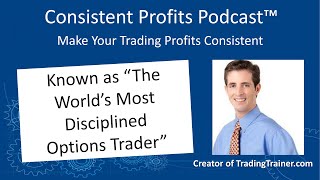
This is a YouTube video titled "Trading Psychology Lessons from “The World’s Most Disciplined Options Trader” – A.J. Brown – Ep. 044" published in December 2023. It features a conversational interview between Brian McAboy, host of the Consistent Profits podcast, and A.J. Brown, an experienced options trader and educator. The discussion covers A.J. Brown's background, trading philosophy, educational programs, and his work with inner city youth, focusing on options trading strategies and trading psychology.
Hello, and welcome to the Consistent Profits podcast brought to you by Inside out trading and Brian McAvoy, where the focus is on consistency, because when you have the consistent part down, profits become easy. Hello, everybody. This is Brian McAvoy with Inside Out Trading and a new episode of the Consistent Profits podcast. Today I'm excited to be interviewing A.J. brown, creator of TraderTraining.com. a.J. Thanks for being here today, man.
Hey, thank you. Thank you for having me.
Yeah. Very cool. Now, for those of you who are not already familiar with them, AJ Brown is widely recognized as the world's most disciplined options trader. He's been actively trading equities and Options since 1997 and has published daily insights for his Trading Trading Trainer program participants every single night, five days a week. That's 2002.
That's commitment there.
He's the author of the wildly successful ebook called the seven Strategies of Successful Options Traders, and his home study courses and video series can be found on the libraries of most most of the successful investors and oftentimes referred to by them as their secret weapons. Trading Trainer is based out of Fort Collins, Colorado, and AJ spends equal time at his each of his three homes in Colorado, Washington, D.C. and Mer. Myrtle Beach, South Carolina. Thanks for being here today, man.
Yeah, I'm. I'm stoked.
Yeah. Very. Yeah. Indeed. Well, I got to start. I got to start with this just because it's unusual. You got three homes.
Yeah.
Myrtle beach and Colorado. Why? Why these three locations?
Mountain City and Beach. Right now I'm at Washington, D.C. i mean, I grew up here until my parents passed away about seven years ago. They were here. So after spending about 25 years away, my mom came a calling. She said, hey, we're getting up there in age. Would you move back? And then I met my wife and had my little one, and we branched out to going down to Myrtle, and then we fly over to Colorado periodically. But I have to say the Trading Trainer offices are in Fort Collins, Colorado, and they work so much better without me there because when I am there, I guess I'm poking on people and asking them questions and things like that, and they just keep the business running. And I can just be the educator and, you know, have my role and they keep me. They keep me, you know, constrained. And that's. That's probably best.
Oh, yeah. Well, no, it's funny you mentioned that because you've heard of the book the E. Myth Revisited by.
Yes.
Remember, that was one of the things he talked about in the book, though, is how owners meddle.
Yes. Yes. In fact, I remember taking a short course in that particular topic when I was in the corporate world and I failed the manager. He broke people up into technical people, the managers and the entrepreneurs. And I was good at being kind of somebody who could be technical and go in a deep dive on a particular subject. And I could definitely be somebody who was an entrepreneurial mind. But managing, Managing other people or even managing my own time, forget it. I need people who manage me.
How funny. Well, so if you were in these, if you're in D.C. and that's where your parents were and everything, how do you. How do you wind up in Fort Collins? I mean, that's a really cool town. That's where my mom was born, as a matter of fact.
Oh, that's funny you should say that, because it really is a cool town. And I wound up there because I worked at Hewlett Packard. So Hewlett Packard started out their whole existence, of course, in Silicon Valley. And before moving to Fort Collins, I was in Silicon Valley, or I was in Santa Cruz, which is a beach town. And then you just. It's a short drive over a small mountain range to get to Silicon Valley. And so I started out at HP there in Santa Clara, and then they relocated me to Fort Collins. That was where they had branched out. So before branching out to Asia, which is where a lot of HP is now, they first moved from California to Colorado and opened up manufacturing facilities there. They're probably like most corporate, corporate players, they look for the cheapest place to manufacture things. So at the time, California got very expensive, they moved to Colorado. Then Colorado got expensive, they moved offshore. And, you know, when I left them, they had their biggest manufacturing site in Malaysia.
Huh. Huh? Well, I mean, you talking about that in Fort Collins that spent some time in Colorado Springs.
Yep. South of Denver, that's the opposite side. Yeah.
Yeah. But I mean, there was talk for actually quite a while about Colorado Springs becoming the next Silicon Valley because there was so much tech moving there.
Yeah, I didn't realize that.
On the north side of Denver. That's cool.
Yeah, it's like HP Central. Although, I don't know. You know, HP has broken up many times. They broke up. In fact, they took me on one of their first divestitures. I went over to a company called Agilent. HP kept all the name branding, Agilent took all the, the ip, all the, all the smarts. And so that was a breakup. And then Agilent has since. After I left, I just talked to my old co workers and it's broken up three or four times as it's divested different businesses in different areas. So I don't even know what they're called anymore.
Wow, that's pretty cool. Now. So you started off as an engineer, right?
Well, I got trained as an engineer in the university. So I graduated University of Virginia with 2 degrees, mechanical and electrical. And then I went off to the University of Arizona and went for a master's degree. Kind of officially it's a mechanical engineer, but it's the marrying of electrical and mechanical. It's like these full self driving that Tesla does or autopilots that the airplanes do. That was what I was trained to do. But I left college, never did any of that. I went right into marketing departments. I have kind of a business sense, but I can talk to engineers and I really dig engineers. But I went right into marketing, which is kind of like at least at the corporate level, it's the marrying of sales and engineering. It's like the group that figures out how to sell what the engineers make in writing and all of that good stuff.
Well, actually yeah. When I saw that you'd start off with you had got mechanical and electrical. I started off in electrical engineering and got a mid senior year, switched to mechanical. So I got the mix of the same two.
I love those two disciplines. In fact, you know, in my side life now that's I spend a lot of time tinkering and I just love all that stuff.
Very cool. Well, so how do you wind up in marketing though?
Well, because I'm a people person and also, you know, I had a speaker at a high school. You know, there was a speaker who came to our high school who was talking to us about entrepreneurial ship and basically said, you know, if you become an engineer, there's a couple of pes, like structural pes that are on their own. But for the most part if you become an engineer, you'll always work for someone else, you know. And that stuck with me. Said, you know, you can be part of a professional society. You know, I have a lifetime membership to the ASMER and to the ieee. You could be considered a professional, but engineers usually work on such big things that not, you know, you're not going to ever be your own boss. You're always going to have to answer to somebody else. And I come from a long lineage of people who don't like, who don't like to answer to anybody. And so I knew that that stuck with me all through the six years of university. I was like, do I really want to do this. And so when I got the chance, the job that I got was in the marketing department, but it was heavily on the engineering side. And then slowly throughout my professional career that ended in 2005, I, I went more and more toward, towards the marketing and towards the kind of like business development side of things.
So you left the, that world in 2005, huh?
Yeah, never to work again. I, I went to just managing my portfolio, which is what I do now.
No, that's, that's hilarious. Because 2005 was when I left the corporate world too.
Yeah, it was a, then, it was a good year. It was an omen for both of us. Yeah, you know, I was working for HP and it was a time right after the dot com bust and I had read in there, you know, these tomes of, of human resources stuff that after five years you could go ahead and ask to do a sabbatical. And I had already started this sideline thing of working with people on trading. And I said, you know what, I'm going to take my sabbatical. And I walked into the human resources department, I said, I'm going to take this sabbatical this six months. And they said, oh, you don't want to do that. We're having downsizing, you know, that we've already downsized three times. You know, you put your head on the chopping block. Now's not the time, I said, but it's in the writing. So they let me have my six month sabbatical, paid me the whole time, and I really tried to launch the trading trainer business. You know, I had already gotten the entity and I had a, you know, a following, but I never really put it in until I could do it full time. Sure enough, in that six months, I made way more than I had ever made annually at hp. And so I walked back in in about July, August, time frame of 2005. And I actually had a couple of my coworkers who are now part of this trading trainer phenomena that I created. And they came at the door and they're like, we know what you're about to do. I had my resignation letter in my pocket. I know what you're about to do, but don't. Because they just announced a voluntary severance program here and you should apply to that and see if you can get paid to leave the company. And so I worked for two more weeks. I applied and at the end of the two weeks, they went ahead and gave it to me. So I figured it was in the writing because not only did I leave hp. But they paid me for an additional nine months afterwards.
How funny. That is hilarious, man.
It all worked out. It was. It was meant to be in 2005 that I leave the workforce.
Oh, yeah, obviously. So. Yeah. How cool. Well, so as far as you finding trading now, you. You. You actually discovered trading through Robert Allen, right?
Oh, man. I was always on the search for something other than working for someone else. In fact, when I. When I graduated college, you know, I went into some engineering work. I was living in Tucson at the time, so there was a. A battery company I. I became affiliated with. And I'm not talking little batteries, I'm talking big batteries that would power, like, cell phone sites in sites like, at the time, we had a big site at MCI that had thousands of these big, giant batteries that were as big as refrigerators. And I kind of was an expert in that. But at the same time, I ran tattoo studios. I had five tattoo studios because I really. I really dug tattoos, but I didn't know how to apply them. I only knew how to run the business. So I had five Tucson tattoo studios that I was managing in the evenings and, and doing this engineering work during the day. And I was always having this entrepreneur, entrepreneurial mind. And so when Robert Allen came to town with multiple streams of income, I, like, bought hook, line and sinker into that program, you know, tried to do a little bit of real estate, because that's really what he's known for. But he also, at that time, he was trying to create one of the first universities of different people teaching that was what multiple streams of income. And there was a guy named Stephen Cooper, and Stephen Cooper was a chiropractor turned trader, and he ran Robert Allen's, like, leg of learning how to invest in the markets. And I really bought into that option stuff. Sadly, a lot of the stuff that Dr. Stephen Cooper taught didn't work out for me. But it got me a lot of the thought process behind options and why options would work best for me. And specifically equity options, stocks, indexes, ETFs, and why I didn't pursue anything like, you know, commodities, futures, things like that. The options really met with my lifestyle at the time.
Okay, well, you actually just kind of already answered my next question. I was going to say, so what is it about options rather than the other styles of trading?
I took. I took inventory of my lifestyle, and my lifestyle at the moment was like running on all cylinders, doing day jobs, doing night jobs, and I really couldn't be a day trader, right. And so I needed to Figure out what sort of end of day trader I could be and what sort of strategies would work. And options gave me the most, most flexibility. You know, they come with complexity. You got to understand it. But you can really turn any pattern that you're seeing into some sort of source of profit if you just match the pattern that you're seeing with the particular option strategy and the options that, that populated. So I was just attracted to the fact that it was more of just a matching game than it was a timing game of being in the right place at the right time because I knew I couldn't be in the right place at the right time.
Yeah, no, actually I'm really glad to hear you say that. The one particular phrase you just threw out there, because I try to get it across to so many people is to just have one strategy. The. It's like everything, it's like, no, you really want to be more like a football coach because you're going to have a playbook and the markets are presenting you. You break out the right strategy or like Absolutely right. First and 10 or second short or third and long. You need the play that's appropriate for the, for the circumstances and things over time. You want to develop that portfolio of strategies or a playbook. And that way. Yeah, like you're just saying it's like, yeah, whatever, whatever the market's presenting me, hit it with the right strategy. Cool.
That's an analogy I use with my subscribers all the time. And I always tell them as well, you're going to constantly, just like a good coach would do, you're going to keep those plays up to date. You're going to keep updating them after each, after each use of them to see if there's any tweaks that you have to do to keep that each, each playbook ready, each play ready to go.
Well, very cool. So one thing I noticed was kind of cool again, it's a little, a bit unique is you work with inner city kids.
Yeah, yeah.
What's.
Well, I was one. I was one. My, I got, I had a single mother, me and my brother, my brother and I. And you know, she figured out, and it was neat because she, she was really investor minded. But you know, she chose us over working. She also was very good at being a legal secretary in the 1970s. And so, you know, when my father passed away and left my brother and I, she had to figure out what was a priority. And so she made the decision that, you know, it would make more sense for us to collect Social Security at the time and her to be in our upbringing than for her to go to work and figure out something to do with my brother and I, we would have. We would have killed each other if it was just the two of us together. So it was neat to watch that because then she got very good at managing her money. And I remember her sitting on the floor and had the different piles of where money would go. And she taught me. You know, I grew up here in Washington, D.C. and we had the Department of Treasury, so she taught me how. And back then, interest rates, I mean, people are going crazy right now with interest rates at 5, 6, 7%. Back then, interest rates were 14, 15%. And you could go and, you know, invest in T bills kind of like you can now, but they even paid more. And that was her investment of choice. So, you know, six years old, we were riding the subway down to the Treasury Department and buying them over the counter. And so I had kind of that mindset of, you know, by the time I was 10 and 11, fifth grade, sixth grade, I was the one. They knew me down at that counter. I knew a couple of the people behind the counter. And so I was the one rolling them out every six, eight, ten months, depending on which ones we purchased. So I kind of got that feeling. And so, you know, it took me, I started doing the options with, with Dr. Cooper, and then I was buying all these different programs in 1997. And I think I took the slow approach because instead of, you know, guided discovery, finding somebody who was really successful and, you know, following in their footsteps, I did the trial and error thing, which, don't get me wrong, I got a really good understanding because I suffered a lot of losses and figured out what was going wrong. But it took four years. It was a slow approach. I really didn't figure anything out until 2001, 2002 is when I started to, like, you know, it started to jive in here. And so, you know, at the same time that I was doing that, I was doing everything else. And it just made sense when I started to publish to all these folks who, who were in. Let me back up. The. The secret to what I figured out was going to these seminars. And at that time, you know, maybe there was some webex, but there definitely wasn't all this stuff that you could just sit in the comfort of your home, your own home. You got invited to a Saturday half day event. You did that Saturday half day event. At the end, they sold you to come back for all day Sunday. You had to pay A much bigger price. And I would, of course, hook, line and sink or do it. And then at the end of the Sunday event, next thing you know, you'd be on a plane somewhere for three or four days paying even more. And I kept doing these things. At that time, I was working in the corporate world, making enough money all by myself, you know, living with a couple of guys on the beach in Santa Cruz. So it was fine that I could, you know, I had the money to spend. I didn't have a family or a mortgage or anything like that. So I was doing this with my money and finding out all the. The answer was, is at these events, I started seeing the same faces, right? So I cornered them at the coffee pot or at the water cooler in between the breaks, and I said, hey, you want to get together and, like, try to figure out how to do this stuff together? And they're like, sure, sure, sure. So there was like nine of us, and we started to like. And I made myself secretary. I guess secretary is not the word. I made myself executive assistant. I would email everybody and get everybody's ideas of what was going on. And I think by me being the one who scribed everything down, I may have gotten it faster because I was seeing everybody else's different perspectives. And so, you know, that's kind of how it finally jived for me, is that we formed this. Mastermind is often an overused term, but that's kind of what it was. And I was the one who was making sure everybody was accountable, and I was the one who was seeing everything happening. And by being part of this group and. And realizing that once we jived, they started forwarding our emails and people started asking questions that weren't even in that original group. And I said, I think I've got something here, because I've got people interested in what I'm saying that aren't even the original, you know, circle. And so it was around 2002 that we decided in that circle to make it, you know, a $27 a month email service. And then I got some notoriety. By then I had been relocated to Colorado and I was doing some Toastmasters, learning how to speak. That was part of the whole HP thing. They wanted you to be able to speak in public.
Oh, yeah.
And yeah, they had a lot of good development stuff at that company. I think it got whittled away after I left, but at the time it was. They had a good cultural environment. Environment. And somebody's family had me come down to Aurora, Colorado, which is kind of A suburb of Denver, not some parts of Aurora, are not the nicest. True. And I spoke to the moms of these kids who were not, not, not going to make it through high school. You know, they were traditionally underserved. And the moms were like, can you work with our kids? And I said, why not? I was one of those kids. And so I spent six months working with them. And the only place we could go was a library. And the library limited us back then. They were like, it was cutting edge to be on dsl. And so the library had a DSL line, but we had only a half an hour each person on the computers. And so we did what we had to do in a half hour of time. And it kind of, it has been my recipe. Like you actually, by having that time limit, you figure out how to be very efficient in that half hour of time looking on online. And so, you know, those kids, not all of them, you know, continued on for the full six months, but a few of them did. And at the end of the six months, you know, they've gone on. One of them is a professor at Denver University now. A lot of them went off to, you know, it's just a great success story. And so we just kept doing that year in and year out.
That's cool. Very cool, huh?
Yeah. We're in Chicago now. We moved it from the Denver area to Southside Chicago. I actually partnered with the Chicago Board of Options Exchange because they've got a lot of teachers who are no longer floor traders and they've got a lot of space that used to be taken up. Now it's just taken up by computers. And so we've been partnering with them to get kids off of the street. And they basically just use my material now to, to, you know, teach these kids what's, what's up.
Now, do you keep it all just with the trading and financial education, or do you also give them some, like, life lessons as well?
Life. I mean, that's really what the markets are, aren't they? I keep trying to tell people who come to me and they're like, hey, I've got an engineering degree too. And I'm like, how about a psychology degree? Because really what's happening in the markets is a lot of, you know, if you can understand how to interact with people, you could probably understand how to interact with the markets. So, yeah, definitely, we roll in life lessons because how could you not, you know.
Yeah, yeah. Well, I mean, just, you know, since you're working with inner city kids, I mean, of course, you know, giving them a financial foundation and, and, you know, education is excellent, but yeah, it's also.
They love sticking it to the man. How else can you stick it to the man but do trading.
True, true. Right? Yeah. Yeah. And Aurora is a trip. I lived in Aurora for a year. So, yeah, I'm familiar with what you're talking about.
And I think that, I think that it's cleaned. I mean, I haven't been there in, gosh, it's been almost 20 years. But I think, you know, everything's kind of gentrified a little bit.
But I'll tell you one thing, and I will bet you money has not changed. They're still, they're still working on i25.
It's like the endless project i25. And then also here in North Carolina, I noticed i95 is always on, always under construction. But yes, i25, we travel that about twice a year when we go up to Fort Collins and it's always, always under construction.
Well, one thing, one thing that I thought was hilarious, I was on project. I was living in Kansas city back in 93, and I was on project in Denver. And so. And where I was staying was the plane was right off I 70, but the, the hotel where I was staying was right off I25. And when I moved back there in Aurora in 98, the exact same, all the barrels and everything, same place, same spot, five years later. And when, when I went back in 2016, or actually, excuse me, 2013 to Colorado Springs, went up to visit Denver and I'm driving up i25 in Denver.
Same place, hasn't changed. No, it really hasn't.
Under construction.
Yeah, but I bet you noticed that the skies were clear, I think in the early 90s, late 90s Denver, because it's in that trough, always had smoke and I think they cleaned that up a lot since then.
You want to know? I saw one of the coolest things in downtown Denver. And a matter of fact, it is right over by Du Creek, the, the path. I don't remember what road I was on, but I remember seeing, we were coming, traveling west, east to west. And it's like you see the big, you know, smog bank or. Yeah, weird. And as we got closer to it, it was actually, it was almost like a smog wall that was just like right above. Was it Cherry Creek? When we got past it, it's like we're going back, but it was like this giant wall of smog on either, on either side of it was clear and it Was like, that was the weirdest phenomena ever.
Yeah. Yeah, it's weird. Physics is weird.
Yeah, it's cool. One of your guys went to du. That's a really good school. That's really good.
Yeah. Yeah. My wife's brother is a professor there in law, so we're getting a lot of visits to that particular university. So I'm, I'm happy that they're there.
Yeah. Very cool. Are you into lacrosse at all?
I mean, I, I, I know about lacrosse from high school.
Cool, huh?
Yeah. We're in Chicago now. Our, we moved it, but I don't know anything about it since then. Why? What's the affiliation?
Denver University has one of the, like, top legacy programs. They've got a really good program there.
I did not know that to be there.
And, and they got a lacrosse game going on. Go check it out. Because they're, I mean, they're one of like the, the dynasty teams.
Okay. Yeah, I'll definitely look into that.
Yeah. And it's a cool sport, but.
Yeah. Yeah.
Well, that's very cool with the whole thing you got going on with inner city kids, man. That's, that's awesome that you're doing that.
It's really, it's, it's my legacy, man. That's. I figured before I had a family, which is just new, you know, in the last five years for me, before that, I was like, what am I going to leave behind? Right? And I remember studying and investing in Hershey stock and realizing that Hershey's stock has not been a chocolate company in years, Right. In fact, they tried to roll out the chocolate part of their company and sell it to Cadbury over in England. And the people in Pennsylvania, at Hershey, Pennsylvania, you know, striked, and the, the, the union was like, you can't get rid of us. But, you know, they, they siphoned money off of the chocolate company for so long that they created this investment trust. And that's really what Hershey stock is now. It's this investment trust that invests and keeps it going a year in and year out. And, you know, the return on the investments that they make is bigger than the amount that, you know, they're growing every year, basically. And so I was like, that's, that's the model I thought of. I said, you know, if I create this education company, trading trainer, and we take all the profits and put it into, you know, a fund that then works with these inner city kids, but I also invest that fund and I can return back and, you know, we've grown it now. Last year we graduated over 170 Southside Chicago kids from our six month program. We started with nine. So every year we're able to afford more kids coming to the program. And the fund is still growing, right? It's over 18 million now. So I figured if that fund keeps growing, it's going to grow with my name on it way after I'm gone.
Yeah.
So that's really been my thought behind it.
Well, you got it. You got a couple, you got a good inspiration there. Hershey, the company. One thing that blew me away, I remember reading about them years ago is how like in, in their industry, they, one thing that stood out about them was their revenue per employee was like 10 times. All their competitors because figured it out so well.
Yeah.
And I thought that was just really cool.
You want to hear a funny engineering story? When I was at uva, we had in Virginia, right outside of Charlottesville, there was the Hershey factory that Dud did Reese's Peanut Butter Cups. Okay. And so they came to us as engineering students and they were like, you know, our machines make these Reese's Peanut Butter cups and there's a lot of defects. What do we do? You know, we, we crush up a lot of the defects and sell it to Cold Stone Creamery. But they've already told us that they've got enough. What do we do with all these defects? And so we as students made this cool machine where the chocolate, the defective thing would come up and we'd put it up on a little pin and we'd hit it with the right temperature like blow dryer and the chocolate would melt off and squirt against the screen and drip down. And then the peanut butter would separate. So we would separate the ingredients. It was quite a cool little project for us. Like freshman, sophomore engineering students in the mechanical engineering department.
How cool. How fun. Yeah, that's awesome, man. That is, that's very cool. And yeah, well, it's also funny how you were talking about the, the company wind up making more in their investment and everything. I've heard similar stories over the years. Like Southwest Airlines back when they were making more money just brokering fuel and playing the commodities game than they were with their airline. And actually same thing I think it was. Chrysler Corporation at one point was making more money on their foreign exchange department than their automotive. Whole company was.
Yeah. And another one is that GE and their financing company made more money than they did on their turbines and all the things that they made.
For sure, I remember that. Yeah, that Was, that was cool. Yeah, that was back in the, what was his name? Smith.
Yep.
Anyway, yeah, there was some cool stuff going on back in, back in those days, so. Huh. Very cool. Now as far as your site now though, with the, the trading, with trading trainer, you got, well, you got a free indicator, you've got a couple of courses and go and tell me about, you know, what you got going on there.
Well, we do have our indicator. We're, we're, we dabble a little bit in the software. It's basically an indicator for, you know, a lagging indicator for reversals, which is a lot of times where we like to try to make our moves. But the courses we teach are mostly for, you know, following the same kind of following the same steps that I did. It's for people who want to be end of day traders and they want to learn some of the premium selling strategies that, for using options that aren't just necessarily working on the direction of the stock, but more on the fact that options work as expiring contracts. You know, they make money as time passes by. And so teaching people how to be on the right side of the equation, you know, selling instead of buying options and getting those things to work, finding those patterns where we could just let the time theta decay part of the option work for us. That's really where our core structure has been focused, especially in the last 15 years. Because there's a lot of people like me out there who, you know, they've got things that they want to be doing during the day, not necessarily being in front of the computer. And so, you know, I've got moms, lots of moms, stay at home moms that are, are playing the game with me for some reason I attract like the, the late 30 to early 40s lady, right. They're way into A.J. brown. I've got some retired folks who, you know, whether they've, they've got some time on their hands or they've got, you know, they, they didn't plan enough for their retirement, so now they're wanting to accelerate things. So, you know, and I've got the millennial who's just a crazy like ready to try anything type person but wants instant gratification. I got those, all those folks who are way into this kind of like, let's see if we can get our miss, you know, they're more interested in, you know, the destination and not so much the journey. Right. Of how to get, you know, make the markets work for you.
Right. Well, so as far as people that come to work with you and you focus, you focus primarily on selling options. What are a couple of things that people need to keep in mind if they're wanting to pursue this? Like what kind of capital requirements do they need to actually get started with you, you know, effectively?
You know, I've seen some folks start with as little as 800 to $1,000, but really you don't get a critical mass going until you're in that 5 to $10,000 range. So, you know, you've got to have something, you know, a nest egg, right? We're an investor. And so investors, you can't make money from nothing. You have to have some sort of investment. And the big thing that folks have to remember is that there's risk involved in everything. And, you know, risk management is totally downplayed a lot in the marketing materials you hear from folks, right, they don't really mention it. In fact, last time I was at the Traders Expo, there was one guy who, doing something with risk and they kind of put him in a booth behind the hot dog stand. You know, everybody else that had the, like blinking lights and the, the trading indicators and the brokers had the main square footage. And this guy who was like talking about how to keep, you know, your portfolio, your, your position sized correctly, he was in the back row. But to have some sort of investment and the big thing that folks have to remember is that there's risk involved in everything. And, you know, risk management is totally downplayed a lot in the marketing materials you hear from folks, right, they don't really mention it. In fact, last time I was at the Traders Expo, there was one guy who was, that's really how successful traders keep in the game, how they run the marathon and not just the sprint is making sure that you can assess the amount of risk you're taking on with each position and then how you can size your position and put those, however you assess the risk, put those targets in your trade plan. You know, that's what the whole thing is about, right? Making sure that you plan for the worst case, but then you never experience the worst case. And a lot of people are so excited about the shiny object that they'll, you know, and they'll throw all that risk management to one side and they'll start, you know, feeling confident, doing something with risk. And they kind of put them in a booth behind the hot dog stand. You know, everybody else that had the, like blinking lights and the, the trading indicators and the brokers had the main square footage. And this guy who was like talking about how to keep, you know, your portfolio, your. Your position sized correctly. He was in the back row, but then. Which means more of their portfolio goes into each position. And then all of a sudden something goes wrong and, you know, they, they lose a big chunk and then they're, they're out of the sport. And so the kind of, the longevity thing is the thing that I think I teach folks.
Well, it's good. Yeah. Well, yeah, I mean, yeah, that's the whole thing with trading. You got to be playing the long game.
Yeah.
Survival is the whole thing.
And it's so true.
Yeah. Huh. Well, so when somebody comes and connects with you, what's, what's the experience typically? Like these.
That's really how successful traders keep in the game. How they run the marathon and not just the sprint is making sure that you can assess the amount of risk you're taking on with each position and then how you can size your position and put those, however you assess the risk, put those targets in your trade plan. You know, that's.
Sign up for one of your courses or.
Right. Right now, I think people, you know, they'll probably experience me through YouTube. We've got a nice YouTube show that we do every Friday, or they'll just. We got lots of emails and, you know, we're on all the socials, so people get us that way. And the. Probably the first thing they'll do is download some of our indicators and see how they, they play out with us. They'll probably watch a couple of our shows. But when they finally, you know, decide to work with me, I always ask that they work what the whole thing is about. Right. Making sure that you plan for the worst case, but then you never experience the worst case. And a lot of people are so excited about the shiny object that they'll, you know, and, and they'll throw all that risk management to one side and they'll start, you know, feeling confident with me for six months, because that's, that's kind of how I've always been doing it, whether it's with the inner city kids. I want to work with you. Now, I don't think that it's going to take six months for you to figure out what's going on. In fact, usually people pick it up in two or three months, two or three weeks. But I like to look over your shoulder. Part of my program is that you can email in, which means more of their portfolio goes into each position. And then all of a sudden something goes wrong and, you know, they, they lose A big chunk and then they're, they're out of the sport. And so the kind of the longevity thing is the thing that I think I teach folks.
Well, that's good. Yeah. Well, yeah, I mean, yeah, that's the whole thing with trading. You got to be playing the long game.
Yeah. In your trade plans and we'll assess them and review them and give you a detailed, you know, feedback before you actually put them into play. And so we like to do that for six months plus we get ideas from folks that we wouldn't have even come up with our own. We get all these trade plans. So it's kind of a win, win situation. It's not like we're doing this out of the charity of our own hearts. We like seeing what other people are doing. It gives us a trade ideas. But you know, that's one of the things. I'd like to work with people for a good six months. So I asked them to commit to six months minimum with us and you know, join us for our once a week workshops. We always have a workshop where people throw candidates at us.
Survival is the whole thing.
It's so true.
Yeah. Huh. Well, so when somebody comes and connects with you, what's, what's the experience typically like? Do you sign up for one of your courses or.
Right. Right now, I think people, you know, they'll probably experience me through YouTube. We've got a nice YouTube show that we do every. And we give them our thoughts. So that helps them optimize their screening process on the candidates that you would apply these strategies to. And then we'll always pick one candidate and work through a trade plan, work through the back testing, come up with the indicators that we want to use in order to time the different legs. We like to leg in and out of the Friday or they'll just. We got lots of emails and you know, we're on all the socials. So people get us that way and the. Probably the first thing they'll do is download some of our indicators and see how they, they play out with us. They'll probably watch a couple of our shows, premium selling positions and we give that we, we wind up when we post the replay putting the cheat sheets underneath it all. So, you know, there's plenty of folks that keep renewing past the six months because they just like those workshops and they like sending in their trades for trade reviews. So those are the people who are like, yeah, I want to learn how to fish, but I want to do it with those. But when they finally, you know, decide to work with me. I always ask that they work experienced traders. But then we have those people who after six months they're done with us because they've learned how to fish and they want to do it on their own. So yeah, we kind of cater to whoever wants to learn this strategy.
Very cool, very cool. Well, shifting gears a little bit, one thing, one question I always have to ask everybody just because this is the.
Consistent Profits podcast with me for six months because that's, that's kind of how I've always been doing it, whether it's with the inner city kids. I want to work with you. Now. I don't think that it's going to take six months for you to figure out what's going on. In fact, usually people pick it up in two or three months, two or three weeks. But I like to look over your shoulder. Part of my program is that you can email.
What do you see is probably, you know, like one of the top mistakes people traders make regarding being able to realize consistent profits.
They're not assessing the pattern that they're about to apply this strategy. I always think, especially now that I've got this toddler, she has this toy with shapes right. In your trade plans. And we'll assess them and review them and give you a detailed, you know, feedback before you actually put them into play. And so we like to do that for six months plus we get ideas from folks that we will blocks that are in shapes. And then she has this almost like a workbench with holes. And it, it's, it's the matter of figuring out the pattern and the pattern is not, you can't just focus in on the individual ticker symbol. And we couldn't have even come up with our own. We get all these trade plans. So it's kind of a win win situation. It's not like come so nearsighted and only look like at the last month of history. Right. You have to take a broad picture and realize correlation is throughout. You know, with the proliferation of ETFs during my trading career, you know, you can't expect a FedEx to operate by itself when the whole transportation sector goes this direction. Right. So being so focused on an individual ticker, you actually have to look at the sec. We're doing this out of the charity of our own hearts. We like seeing what other people are doing. It gives us a trade ideas. But you know, that's one of the things I'd like to work with people for a good six months. So I asked them to commit to six months minimum with us and you know, join us for our once a week workshops. We always have a workshop where people throw candidates at us that it's in the overall broad market. Realize that if something's happening in the broad market or in that particular candidate sector, you might as well think of that. So, you know, folks I find are so focused on this one pattern that they're seeing, especially in price charts, they don't look at other, you know, what's happening in the volatility chart. And we give them our thoughts. So that helps them optimize their screening process on the candidates that you would apply these strategies to. And then we'll always pick one candidate and work through a trade plan, work through the back testing, come up with the, or anything like that. They get focused on these price and volume charts and then they try to trade us indicators that we want to use in order to time the different legs. We like to leg in and out of the strategy. And they're not looking at all the bigger picture. I think that's one of the biggest pieces is, you know, not figuring out what the pattern is before trying to respond to the pattern with an appropriate strategy. So just the mismatch of strategy to pattern is one of the biggest that. And then what I mentioned earlier, which is they, they, they throw position sizing and risk assessment out the window and just premium selling positions. And we give that. We, we wind up when we post the re. Throw. Throw a portion of their portfolio at it, which is usually way too much.
Yeah, good advice, good advice. Yeah. As far as making sure that you.
Bring the play, putting the cheat sheets underneath it all. So, you know, there's plenty of folks that keep renewing past the six months because they just like those workshops and they like sending in their trades for trade reviews. So those are the people who are like, yeah, I want to learn how to fish, but I want to do.
It with context to the, to each of the trades. Yeah, that's, that's usually very important.
Oh yeah. And you can't just trust a price and volume chart. I always. And, and a lot of gurus are different, you know, in what they say here. But I like to know what the ETF or the, the stock is all about. I like to have an understanding, build a relationship because in my mind, experienced traders. But then we have those people who after six months, they're done with us because they've learned how to fish and they want to do it on their own. So yeah, we kind of cater to whoever Wants to learn this strategy.
Very cool, Very cool. Well, shifting gears a little bit. One thing, one question I always have to ask everybody, just because this is.
The Consistent Profits podcast, once you know the company, it's not about the company, right? Because we know that a company can be doing terrific and their stock can go into the toilet or go, you know, through the roof and it has nothing to do with the company. But you have to think about the avatar of the investor, right? Especially now that they sit behind their computer in the privacy of their own home. What is the investor that is attracted to that ticker symbol? Right? If you can imagine, like, is it an old Q tip behind the computer who's like, that's the guy.
What do you see as probably, you know, like one of the top mistakes people traders make regarding being able to realize consistent profits.
They're not assessing and he's, he's looking for dividends, right? Or is it a young guy who wants to get on Reddit and boost something up and stick it to the hedge fund traders, you know what, in the pattern that they're about to apply this strategy? I'm, I always think, especially now that I've got this toddler, she has this toy with shapes, right? Is that particular avatar. Because that's going to give you a lot of understanding of being able to, you know, get in their shoes, right?
Q tip, huh?
I was down at, you know, Myrtle beach is filled with an aged population, especially in the wintertime, and we just blocks that are in shapes. And then she has this almost like a workbench with holes. And it, it's, it's the matter of figuring out the pattern. And the got back from our beach home there and we went out to one of the, they have lots of shows because it kind of is a destination place. We went one of those shows and my wife said, God, it's a, it's a pattern is not. You can't just focus in on the individual ticker symbol and become so nearsighted and only look like at the last month of history. Right. It's a cotton field in here, you know, because we were looking at the, the room of people that. And it was just a bunch of white Q tips that the, you know, everybody. It was cute.
How funny. Yeah, I knew where you were going with. Reminded me that there's one phrase I heard from sister when she moved out to Maui many years ago.
You have to take a broad picture and realize correlation is throughout. You know, with the proliferation of ETFs during my trading career, you know, you can't expect.
And she was talking about how, you know, it's. She says, you know, everybody that comes here, they're, you know, they're either you know, the young couples or really old people.
So, you know, it's like a FedEx to operate by itself when the whole transportation sector goes this direction. Right. So being so focused on an individual ticker, you actually have to look at.
The SEC every day. It's, you know, got a bunch of newlyweds and nearly deads.
But accurate, right?
Oh, yeah. But, yeah.
Newlyweds and nearly deads. That's cute.
Well, yeah, I mean, the way some people coin a phrase. I'm trying to remember who the marketer was.
That it's in the overall broad market. Realize that if something's happening in the broad market or in that particular candidate sector, you might as well think of that. So, you know, folks, I find are so focused on this one pattern that they're seeing that he was talking about.
Like the big three markets. Instead of saying, you know, health, wealth.
And especially in price charts, they don't look at other, you know, what's happening in the volatility chart relationships.
He described them as getting paid, getting laid, and not dying.
Again, accurate.
So. How funny. Very cool. Well, I'll tell you what, let's go and wrap things up, man. But I'd love to have you back on sometimes we can.
Yeah.
Some other avenues because, yeah, we seem to have. Have a lot in common. I think we can have some other fun conversations. So.
Yeah, I love it. Ask me anytime. I'll be here.
Yeah. And for everybody listening today, I. I applaud you for taking time out of your day to, you know, listen and try to learn and grow and develop as a trader. It'll. It'll pay you well to, you know.
Keeps or anything like that. They get focused on these price and volume charts and then they try to trade a strategy and they're not looking at all the bigger picture. I think that's one of the biggest pieces is, you know, not find. Figuring out that what the pattern is before trying to respond to the pattern with an appropriate strategy. So just the mis.
Investing time in yourself and, you know, and like AJ Was talking about, you know, he sought out mentors and everything. You know, investing in yourself both time and, you know, seeking out help and everything. Excellent. You're always a good investment when you invest in yourself and you grow and develop. And as the cool thing about it is, as you grow and develop as a trader, things get easier.
Instead of staying match of strategy to pattern is one of the biggest that and then what I mentioned earlier, which is they, they throw position sizing and risk assessment out the window and just throw, throw a portion of their portfolio at it, which is usually way too much.
Yeah, good advice, good advice. Yeah. As far as making sure that you bring the difficult forever things get easier as you level yourself up. So that's cool. But speaking of which, if you like what AJ's got to say, you know, what he, what he shares resonates with you, Definitely swing by tradingtrainer.com or check him out on his social sites. I'll have links for all that stuff down in the show notes below. Yeah, go ahead and you know, act on what you've heard today if you like I said, if it resonates with you, don't just sit there and say, yeah, you know, that was fun. And then forget about it. You know, put it to use so that you, you know, you better your trading in your life. So very cool. And again, aj, man, thanks for being here. This is awesome.
Brian, that was, it was really nice having you. Having me, having you invite me on your show. This is fantastic.
Yeah, that's fun. Well, yeah, so cool. Again, thanks again and thanks everybody for showing up today. If you enjoyed the podcast, make sure to subscribe and we'll go and wrap things up. We'll see you on the next episode of the Consistent Profits podcast. Cheers.
Bye, everybody.
Thank you for joining us today on the Consistent Profits podcast brought to you by Inside Out Trading. Make sure to swing by InsideOutTrading.com and pick up your free copy of break the cycle. 10 things you can do to stop reinforcing the past and get your trading on the right track. If you enjoyed the show, make sure to subscribe on your favorite channel and we'll see you on the next episode. Cheers. Context to the teach of the trades. Yeah, that's. That's usually very important. Oh yeah.
And you can't just trust a price and volume chart. I always, and a lot of gurus are different, you know, in what they say here. But I like to know what the ETF or the stock is all about. I like to have an understanding, build a relationship. Because in my mind, once you know the company, it's not about the company, right? Because we know that a company can be doing terrific and their stock can go into the toilet or go, you know, through the roof and it has nothing to do with the company. But you have to think about the avatar of the investor, right? Especially now that they sit behind their computer in the privacy of their own home, what is the investor that is attracted to that ticker symbol? Right. If you can imagine, like, is it an old Q tip behind the computer who's like, that's the guy and he's looking for dividends? Right. Or is it a young guy who wants to get on Reddit and boost something up and stick it to the hedge fund traders? You know, what is that particular avatar? Because. Going to give you a lot of understanding of being able to, you know, get in their shoes. Right?
Yeah. Q tip, huh?
I was down at, you know, Myrtle beach is filled with an aged population, especially in the wintertime, and we just got back from our beach home there and we went out to one of the. They have lots of shows because it kind of is a destination place. We went one of those shows and my wife said, God, it's a, it's a. It's a cotton field in here, you know, because we were looking at the, the room of people that. And it was just a bunch of white Q tips that the, you know, everybody. It was cute.
How funny. Yeah. I knew where you were going with. Reminded me. There's one phrase I heard from my sister when she moved out to Maui many years ago, and she was talking about how, you know, it's, it's. She says, you know, everybody that comes here, they're, you know, they're either, you know, the young couples or really old people. So, you know, it's like every day it's, you know, we got a bunch of newlyweds and nearly deads.
But accurate, right?
Oh, yeah.
But, yeah, newlyweds and nearly dads. That's cute.
Well, yeah, I mean, the way some people coin a phrase. I'm trying to remember who the marketer was that he was talking about, like the big three markets. Instead of saying, you know, health, wealth, and relationships, he described them as getting paid, getting laid, and not dying.
Again, accurate.
So. How funny. Very cool. Well, I'll tell you what, let's go and wrap things up, man. But I'd love to have you back on sometime so we can.
Yeah.
Some other avenues because, yeah, we seem to have, have a lot in common. I think we can have some fun conversations.
So. Yeah, I love it. Ask me anytime. I'll be here.
Yeah. And for everybody listening today, I, I applaud you for taking time out of your day to, you know, listen and try to learn and grow and develop as a trader. It'll, It'll pay you well to, you know, keep it.









