
Ep 267 | Character Over Talent
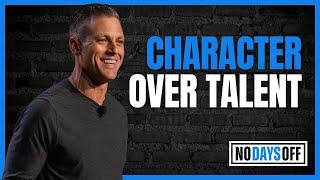
Brian Gubernick breaks down Sam Walker's The Captain Class, which found that elite sports teams succeed through leaders with character, not charisma. The best captains do the unglamorous work, model behavior in crisis, and build team unity. Gubernick asks: does your leader have discipline, integrity, and resilience.
Chapters
Thank you for joining me today. It's Brian Gubernick and welcome to the No Days Off podcast, where we believe that every single day brings a new opportunity to get better. Today I want to talk about leadership. Leadership, it goes without saying, is a pretty popular topic here at No Days Off. And that's because if you're listening to this podcast and you're part of the No Days Off Nation, Odds are you're intending, or you aspire to be a better leader, a better leader of your business, of your team, of your peers, of your family, of yourself. And so we're going to always talk about leadership here. And, and I want to lean into a book written by a gentleman named Sam Walker. I think it was probably written maybe 7 or 8 years ago. It's called The Captain Class, The Captain Class. And in the book, Sam Walker examines the most common characteristics of elite sports teams throughout history. He identifies a particular type of leader that he calls the captain class, and he argues that the driving force behind a lot of these teams' success has to do with this particular type of leader. Now, one of the, my biggest takeaways when I studied this book was that oftentimes the individuals that we associate with great leadership as it pertains to sports, and I think sports, especially in this Captain Class discussion, sports serve as a great analogy for life and business. What we find is that a lot of the individuals that we think are, are great leaders Sam Walker's analysis says, yeah, they were pretty good, but they don't make the captain class because he had a certain criteria. He had a way of grading all of these different sports— rugby, soccer/football, American football, basketball. You go on and on and on. He looked at all sports and he found the dynasties and those teams, you know, what did they all have in common? And he came up with this captain class. Just so we're all on the same page, some of the individuals that he identified as part of the captain class— of course, Michael Jordan shows up there, captain of the Bulls. Couldn't really avoid Michael. There were certainly some flaws in Michael's leadership, but he shows up. But then less known individuals land in this captain class, like Paul O'Connell, an Irish rugby player and captain of the Irish national team, or Carlos Torres, Brazilian soccer player, he's captain of the 1970 FIFA World Cup winning Brazilian team. Derek Jeter, Yankees captain. Dave McKay, a Scottish soccer player and captain of his team during the late '60s. Bill Russell, talked about him here at the podcast probably 6 months ago. Bill Russell played for the Celtics and has won more NBA championships than anybody. Lionel Messi shows up. So a really dynamic or diverse group of individuals. And again, it was fascinating to run through because I gave you names you may know. The number of names that you would not know would be surprising. So when he looks at this captain class, what does he find? The first thing that he found, maybe the biggest thing he found, or the top lesson, is that leadership is about character and not personality. Sam Walker said that the most effective leaders are not always the most charismatic or the most outspoken. Instead, they actually possess strong character trait traits such as discipline or selflessness or integrity. It was interesting to see that the best leaders he found in sports, a lot of them were individuals that didn't crave the spotlight at all. Which leads to kind of the second thing he found, the importance of non-superstar players. Walker's research suggested that the most successful teams oftentimes have a captain who is not necessarily the most talented or the highest-profile player on the team. Instead, they were just the ones willing to do the dirty work, willing to, you know, put in the work ethic and model the behavior. And through those efforts, more so than their words, they were able to motivate their, their teammates. These captains, these, these great leaders of the greatest teams of all time focused on team cohesion. These captains prioritize unity and cohesion over individual talent. I think Bill Russell might be a great example of that. He played on multiple rosters within the Celtics. But he always was able to promote some sort of camaraderie and cohesion as that team's leader, even though he was never arguably the greatest athlete or greatest player on that team. Bill Russell was an amazing player, but he was surrounded by a lot of great players, and he was not the, the loudest. From time to time, he let his actions do the talking. These leaders, the captain class, they led by example, and they embraced adversity. I found this one interesting. Walker, the author, emphasized that many of the most successful teams always faced, or many of them faced significant challenges and had a lot of different setbacks on their way to greatness. The captains of these teams though displayed resilience in the face of adversity. They used setbacks as opportunities. The real leadership showed up. These leaders, this captain class, they were married to the ultimate goal. The captains he talked about in the book were known for an unwavering focus on winning and a willingness to make sacrifices for the greater good of the team. These captains, no surprise, were focused on continuous improvement. They were the ones that were first to practice and last to leave. They were the ones watching tape when everybody else was sleeping. They were always striving to improve themselves. And then lastly, What, what Sam Walker found is that character mattered more than talent. Walker felt that character, based on his observation, was the most important factor in determining a team's success. Talent played a role, but it was the character and leadership of the captain class that ultimately makes the difference between winning and losing. So this book's insights into the qualities and behaviors that contribute to the success of the greatest teams of all time across various sports and industry. It really highlights the importance of leadership, the importance of teamwork, and the importance of character in achieving greatness. So here's what I want you to think about, right? I want you to think about your team, your business, your peers, whoever you are leading. Or maybe you're part of a team, you're not necessarily the leader. And I want you to observe or think around your teammates, your peers. How does character play a role within that team? Not personality, not talent, but character. Does the leader possess, I guess I would say, integrity, discipline, selflessness? Is that— and does that inspire other people to take action? Do you see within your team an importance of non-superstar players or, or, or role players? Because Sam Walker's research suggests that the most successful teams have a captain who is not necessarily the most talented or high profile, but they demonstrate a dedication to work ethic. How about the team's cohesion? Do you see an influence from a leader with respect to team cohesion and camaraderie? And a shared purpose? Do you see a leader leading by example? How about when adversity shows up? Does it stand in the way of getting to the ultimate goal? Are we always aiming to get better? And do we emphasize again, character over talent? If you could say yes to all of those things, I would wager that your team, your business, your family even, it's probably in a pretty favorable position. And if you said no to some of those things, okay, cool. Now we're aware. So we've got to go do something about it. I think there's too many teams that I get to work with where, you know, there's an anointed leader or a perceived leader because they're the loudest or maybe the most experienced or whatever it may be. And maybe that person while influential, is not exactly the leader of that team. Maybe there's somebody else that's just waiting to step up and not necessarily through words, but through actions, not necessarily through talent, but through character. Where does this show up in your world? If you are in fact the leader, how can you take what it is I just shared, specifically those areas where you may be deficient, and start to improve today. That's all we have for you today, the No Days Off Podcast. Thank you so much for listening, and remember, every single day brings a new opportunity to get better. So let's get after it.
More from Brian











Ep 755 | Mack Newton's Words of Wisdom - "You Are Only as Big as Your Self-Concept" (REPLAY)