
Ep 301 | Every Battle is Won Before it's Ever Fought
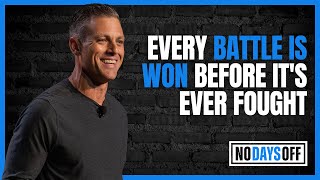
Brian Gubernick won a rental property negotiation by applying Sun Tzu's Art of War principles: he researched the seller's finances, assessed his own strengths, chose email as his medium, and planned contingencies. The core idea is that battles are won in preparation, not in the moment.
Chapters
Thank you for joining me today. It's Brian Gubernick, and welcome to the No Days Off podcast, where we believe that every single day brings a new opportunity to get better. Let's get into it. Today I want to talk about something I recently experienced and some tactics that I leveraged from a book you've probably read, or you've at least heard heard about over the course of, of your career. So just recently I was in, uh, I was acquiring a new rental property, and there was quite a distance between where I wanted to be in terms of price and what the seller was willing to offer. And we went back and forth. It was quite a battle, I would say, in terms of negotiation And ultimately, I was able to secure this property for terms that were pretty favorable based on where I, where I had intended to be. It wasn't that the seller didn't also win. He may not have won to the extent he desired, but I landed at a place that I really wanted to be, and I was comfortable with that. Now, I happen to win this one. I've lost an awful lot of them. And I recognize that a lot of times the difference between winning in a negotiation and losing in a negotiation doesn't have to actually do with the negotiation itself. It actually has to do with what I'm doing before I even engage, before I even start the process of going back and forth. The heck am I talking about? Sun Tzu. The author of The Art of War, book you may have read or you've at least heard about, Sun Tzu teaches in his classic work that every battle is won before it's ever fought. Every battle is won before it's ever fought. What does he mean? He means that it is critically important to prepare to strategize, to plan if you want to achieve success, if you want to achieve victory. Now, if we dive a little deeper, what Sun Tzu was talking about, number 1, was intelligence and knowledge. In war, Sun Tzu believed that you've got to understand your enemy. You got to know your enemy's strengths. You got to know your enemy's weaknesses. You got to know his or her intentions. Or the, the, the army you're fighting's intentions. You've got to know these things. You've got to do recon. You've got to gather intelligence before going into battle. Sun Tzu would emphasize we have to understand our enemy. We also, though, have to have some degree of self-awareness. So equally as important to understanding the enemy would be understanding your own strengths and weaknesses, the levers that you may have. In doing so, you can make better decisions, and at least in battle, you can allocate resources differently. Now, in addition to gathering intelligence and knowledge, in battle, Sun Tzu would teach you got to have strategic positioning. What did he mean? Number one, you had to choose your own— you had to choose the battleground. Like, the choice of where and when to engage the enemy can actually determine the outcome. Favorable terrain in war and timing can really alter the outcome. If you choose correctly, it could really enhance success. So Sun Tzu would teach around strategic positioning— choose the battleground. Also, make sure you're managing your resources effectively. You've got to make sure you have the necessary supplies and manpower and equipment. Lastly, preparation and timing. Sun Tzu would teach you've got to have— you got to be ready. You got to have readiness, which means you got to be trained. You gotta, you gotta prepare, and you gotta ensure that your forces are capable and ready to execute the plan when called upon. In addition, Sun Tzu would teach that you gotta, you gotta plan for contingencies. So you got to prepare for various scenarios and have backup plans. Okay, so I'm talking about Sun Tzu and The Art of War. Clearly the story I started with was not a battle in that sense, but it was a business battle. And as I said, I've won some of these and I've lost some of these, and I can almost point to the, the same reason every time I don't come out ahead. And that's because I didn't win the battle before it was actually fought. So in this particular example that I'm giving you, I, before engaging on this property, this one that I really wanted, I did a lot more research. I really understood, or aimed to understand, the seller's motivation. When did he acquire this property? What had he done with it for a period of time? What sort of, what sort of build-out or renovation did he do? Did he underspend, overspend? How does it play relative to the neighborhood? What else does this seller happen to own? Is he overleveraged? Is he holding mortgage that has a high interest rate? You know, what, where is he at? What is his position? I'm trying to understand in this case, I don't like to use the word my enemy, but understand the seller, the opposition. I also, though, in gathering intelligence and furthering knowledge, I had to be self-aware too. I had to understand what was my strength in terms of this negotiation. Where was I exposed? What kind of weaknesses did I have? This allowed me to make better decisions. Now, in terms of strategic positioning, this was a little bit funnier. It's a reference like, yeah, battle is very clear when you talk about choosing the battleground. But what did that mean in terms of this negotiation? Well, I took it— I took choosing the battleground to mean for me in this particular deal that I was only going to communicate via email. It's funny, but I'm aware of the fact that oftentimes, especially as it pertains to negotiating on real estate properties, I excel in written word. I'm more analytical. I can structure emails well. And I'm not as strong— I'd like to be stronger, but I'm not as strong if we are having dialogue in terms of negotiation. So, my upper hand in the scenario, I chose the battleground. And the battleground for this particular negotiation was actually not going to be through spoken word. It was going to be through written communication. It sounds funny, but some of you listening right now, you excel in one area or the other. Maybe you shouldn't use email or text. Maybe everything should be through verbal communication. So choosing the battleground, that's what it looked like for me in business. Now, in terms of preparation and training, I had to make certain that before I engage on this particular rental property negotiation that I was trained up, that I was knowledgeable, that I was prepared, that I, I knew the property I was getting into, I had experience with it. If I did it in this particular case and I still liked it, I would have pulled somebody else in to my world that can support maybe my lack of preparation or understanding. In addition, like Sun Tzu, I had to plan for contingencies. What I would call kind of if-then scenarios. If the seller does this, then I respond with that. If the seller does that, then I respond with this. So this is my preparation and my training. So I know this seems like kind of a crazy analogy, but I want you to think about this one. Every battle is won before it's ever fought. And I want you to think back to the various business battles or personal battles or athletic battles that you've had. Think about the times you've won, you were victorious. Think about the times where you failed, arguably where you can learn even more. I'm gonna bet that in those times you failed, you lost that battle before you even took the field. And in those times you won, you probably were set up for success And it wasn't necessarily what happened on the field that day or in the office that day. It was everything before it that set you up for that success. So where do I want you to focus today? You know, if you're an entrepreneur, if you're a business builder, if you're aiming to get better in life, better in your relationships, that's why you're here. I want you to start thinking a lot more. I want to encourage you to start thinking a lot more about the preparation and the strategic positioning and the, the knowledge you've got to gain before you even take the field versus showing up with less preparation, as we have a tendency to do. Where does this apply for you? Where can you do a better job in winning the battle before it's ever fought? To me, this was a big aha, like a light bulb moment. It's something I have to keep going back to because I forget it from time to time. But slowing things, things down, winning that battle before, before you even take the field, so critical. And if you figure this one out and you put it into practice, you'll have the upper hand. That's all I have for you today, the No Days Off podcast. Thank you so much for listening, and remember, every single day brings a new opportunity to get better. So let's get after it.
More from Brian











Ep 755 | Mack Newton's Words of Wisdom - "You Are Only as Big as Your Self-Concept" (REPLAY)