
Ep 380 | Marketing Insights with Scott Harkey
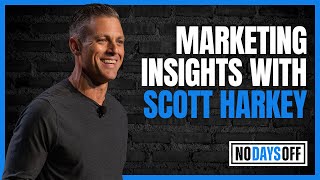
In this interview, host Speaker A and marketing veteran Scott Harkey discuss how real‑estate agents and brokerages should rethink their marketing mix. Harkey argues that the most successful agents invest heavily in brand‑building, especially out‑of‑home (OOH) advertising such as billboards, because it delivers the lowest cost‑per‑thousand impressions and conveys legitimacy. He warns against over‑reliance on short‑term, trackable performance marketing and urges a long‑term commitment to brand presence, even if ROI is hard to measure. The conversation then shifts to digital channels: TikTok is highlighted as the current high‑performing platform for reach and home‑run viral potential, followed by Instagram and YouTube Shorts, while podcasts are deemed over‑valued. Harkey stresses the importance of consistent content production, niche differentiation, and authentic storytelling, noting that many creators inflate metrics with bought likes or views. He outlines a three‑circle framework—authentic brand truth, audience trends, and competitor differentiation—to identify a unique niche and guide budget allocation across channels. Practical tips include boosting every post, hiring dedicated video creators, and repurposing podcast content across social platforms. Overall, the episode provides a candid, tactical roadmap for real‑estate marketers seeking sustainable brand growth.
Chapters
Yeah, I, uh, I guess that kind of leads me then, and you were— you're kind of already, I think, sort of addressing it. Um, 1.5 million realtors in the nation, you see a lot of different things going on out there. There's, I think, I don't know, 70,000 of them here in Arizona, correct? Uh, you probably see some things that are working.
Yep.
But what should we all knock off? Like, what do we got to stop doing? Like, when you look— I mean, hey, yeah, you could be honest with it. Yeah, you look at this stuff as a professional and you're like, That's so fucking stupid. Like, what do you—
I mean, look at, look at the— I mean, I'm gonna just speak totally out of turn and frank here. I mean, some of the shittiest realtors do the most advertising, would be my guess, right? You see them all, right? And they have some sort of gimmicky thing, but they're spending enough money that they have the— they have— they're not buttering the toast too thin. Like, they, they, they, they exist. They have the reach and frequency to, to 'be on the shopping list,' right? 72 sold. Like, I don't know if that guy's a good realtor. I wouldn't use him, but it's obviously working. The guy spends $2 million a year in marketing, right? There's a bunch of those because they've made the commitment and the decision to be a brand, and you can't get away from it. Like, they're going to be everywhere. Same thing with personal injury attorneys. The shit works. So, I mean, if it were me, I would go crazy on out-of-home. I would, I would just be everywhere. Like, you couldn't fucking turn me off, you know. I, I would spend less time on the, on the trackable, you know, sort of performance marketing, and I'd spend way more on brand and experience marketing. If you look at out-of-home, it's the lowest cost per thousand advertising medium out there, right? A Facebook ad is going to cost you $20 a thousand, $18 to $30 a thousand depending on the parameters. A billboard ad is going to cost you 50 to 80 cents a thousand people. So just look at the math, look at the math of impressions. And there's different value on different impressions, right? A digital ad, I'd put at the lowest. I'm sorry, people see 5,000 of those a day. Something— when you're on a billboard, you look legit. You just do. You look like a real freaking company because you have to have real budget to do that shit. If you put a super nice event together or a high-end chef, like, you look legit. Like, it's a quality impression. Like, impressions matter. How it looks matters. Like, we're all superficial people, right? So how you dress, how the ad looks, how much money it costs, what you're doing. Now, don't go over the top. Like, who's that guy on his jet all the time? The multifamily guy is kind of annoying. Grant Cardone, right? Like, That's douchey, right? Like, I wouldn't recommend that. Oh, hey, Eric.
Hey, big 10x guy right here.
I mean, it's a little over, but it works, right? Because at the end of the day, there's some superficialness to, to, to real estate and the business, right? People want to be working with the best and biggest people. They just do. Like, so how you present yourself and what you're doing and the size and scale It does matter. So I think— I don't know.
But you can't dabble is one thing I'm hearing from you too.
Absolutely. You'll get crushed.
And I think this is a really interesting balancing act because I think— I hear you.
Right?
Totally makes sense to me. And I also am doing the math in my head and saying, not only do I have to— it sounds like make a decent-sized contribution to my marketing. I also have a solid 5, 6, 7-year run because I agree with you in that it's going to take a while. If I haven't done anything from a brand standpoint—
Correct.
Even if I sold a shit ton of homes, if I haven't, you know, established any sort of brand presence, I've got a long run. So I may maybe spend it— this is where I struggle right now. Not that you remember, but probably 15 years ago I was saying the same thing. Yeah, I have trouble with marketing sometimes because I can't track it.
I know.
And you're saying, yeah, because I'm all ROI. I'm like, hey, I want to— if I spend this, I want to see this in return.
Absolutely.
And I hear you saying that wasn't relevant or that, that was tricky then. It's even trickier now.
Absolutely.
Yeah. So you got to be committed.
Yeah. And where are the trends? Like the big lesson that I've learned learned is as an agency person, when I went sort of down the like personal brand route, um, I learned a ton. Like, I learned a lot about podcasts. I have a podcast for 3 years, and I learned it's a totally different distribution method on how podcasts are successful than what I thought. Like, I started down like the Rogan model of like an hour and a half, highly produced. No one— I spent all the money on it and no one, no one listened to it. Then I hired like a real good podcast guy, and I had a producer that had a bunch of marketing podcasts Now we're a top 20 podcast. It's, it's produced worse, but I have, I have the right SEO and I have the right distribution method of podcast. Same thing with YouTube Shorts or TikTok, like figuring out sort of the, the cadence to content and how it should be portrayed and how it's seen in front of other people matters. So if you're going to create content and that's going to be where you're going to spend your 5 or 10% on marketing, you want to own that segment. It's doing, you know, views of houses and it's having it searchable on Instagram and YouTube, probably more Instagram, right? Like picking sort of the right tactic that you want and having the content work for that brand. Like I can tell you a lot of realtors I think do a great job. My favorite is the guy out of Seattle. What's his name? And he has like this whole like bear thing, this like, Uh, Wes would know.
Wes isn't here.
Who's this Seattle, um, uh, I think his name is Thatch. Yeah, he's, he's unbelievable. Oh yeah, yeah, yeah, he's, he, he crushes. And, and what he does is he has a full-time content guy. I talked to him about this at another real estate conference, and they shoot, you know, once, once a week, and they just pick quick topics of here's what I'm doing, or here's what I've learned, or here's a house that I just flipped. And boom, they put it on. And over the course of 2 years, he's become the guy. He's got like a million followers on Instagram.
They're, they're almost all fake, and they're almost all bots. So if you go and you look at his like list, like all the likes are like foreign accounts with no followers. And every one of those posts, they buy like 5,000 or 50,000 likes in advance. So take it with a grain of salt.
So I, I, I will say that, that all the big content creators that you see They're using steroids, right? Like, remember baseball back in the day when everyone was hitting the home runs? Like, there's definitely boosters for everybody, um, and there's a way to go in and verify that. We would go in, so of his million, let's say half are fake, half are real. Instagram can't even figure it out. The big social media people will tell you to avoid steroids at all costs, and the algorithm, like, will, like, detect it. I disagree, honestly. Um, because size and scale matters, right? So when you see he has a million followers on there, 9 times out of 10, people can't figure it out. They don't know. And he's still getting, like, the video side of things. So like TikTok is an example. You can buy views on TikTok, right? TikTok doesn't, doesn't decide are these real or, or bot views. They don't decide at all. So you can't tell at all on TikTok. Um, Instagram, on the video views, you can, you can see how many views there are. So if someone has a million followers and are getting 2,000 views on the video, well, obviously they bought a bunch of followers. But if they're getting a million views on the video, then great. And, and I will say, more than ever, social media specifically, it's, um, it's a home run hitting game. So you can have one view that'll do 500, another that just catches fire and do 2 million. And so it's not really about like the, the quality, it's a little bit more about the quantity of trying to hit those home runs. TikTok especially is that way. So if you're going down the content game, just know you're gonna fail a lot. Invest in probably a full-time or freelance sort of videographer and poster and just keep trying shit. And you could hit a home run on one of 'em and you just sort of like start to perfect sort of your algorithm. It's not about like having the perfect video anymore. So it's sort of counterintuitive, especially me as an ad person that wants like, the perfect high-produced video or a bunch of videos. The content creator world's a little different.
Do you have a preference at all for social media like channels, or is it YouTube or is it Instagram you favor or TikTok? Like from your perspective, working not so much real estate, but yeah, brands globally, do you lean towards—
I think TikTok right now is the best performing social media by far.
And when you say performing, we're talking about procuring opportunity or sales.
It is. Yeah. It has the biggest home run opportunity for, for views. I think it has the best advertising platform right now because their data is so scary good. China has really the algorithms figured out. So if you talk to like a lot of performance marketing people, digital marketing people, TikTok is by far their best performing. The other thing is there's a lot of restrictions for Fortune 1000 brands on TikTok right now. So they're avoiding TikTok. So it's sort of created an opportunity for ad buying and for content creators. Instagram's still a beast. I think another really big opportunity right now is YouTube Shorts. I think especially for younger demographic people that can't be on social media, I think YouTube Shorts is a huge opportunity right now. I think probably the most over— most overvalued right now would be podcasts. And I do a podcast, so I, I think podcasts are better for like using one-on-one interviews to, to learn a lot and then repackaging that content on, on LinkedIn and other social channels. So it's a good place to, to curate a really good conversation of smart conversation and then could be repackaged later. Um, but, uh, yeah, I would say TikTok and Instagram for sure for, for brokerages.
Even on TikTok? Yeah, I guess you just—
and I, I would boost every post. You have to boost every post. I'm sorry, you don't do a post and not boost it, especially if it's a good one. You're boosting it. Like, even your own audience, you're going to have to pay Meta to reach your own audience. They, they're not a free platform, okay? They're, they're one of the greatest ad platforms ever invented for a reason. And if you're only using it for the, for free distribution, it's, it's a, it's a complete fail.
Uh, TikTok, real quick, in my mind it's a younger demographic and they're not a lot of home buyers and sellers. Tell me otherwise.
Well, that's what they said about Instagram. It was a young demographic. That's what they said about Facebook when it first started. It's emerging, right? And so if you want to be successful as a content creator or as getting distribution of content, you got to look at the emerging platforms. And so that's why I think TikTok is still emerging. It's getting older every day. And there's just— it's an opportunity zone, in my opinion, still.
We get a good amount of recommendation in our industry. We even had 6 months ago, the guys that wrote "The Secrets of YouTube" in to speak to us. So we get a lot of guidance around YouTube and videos, not YouTube Shorts necessarily, but traditional YouTube. Number 1, how do you feel about YouTube itself? And number 2, if you were to create or market via YouTube or through your content, What should we be thinking about to be effective in that medium?
So I think it's a good point. For me, when I look at any sort of brand, you know, myself included, like the— there's an old saying that that's still true today. It says, show me a good marketer, I'll show you a great niche marketer. So I think it's really finding the niche. You know, I think that's how you can be successful because there's, there's only so many searches. and there's going to be really competitive searches. So like, what is that really unique niche? Like, maybe it's, you know, maybe it's fix and flips, maybe it's, you know, maybe it's, you know, putting people in the right neighborhoods or finding the right schools or like, what is that really unique niche to your community and to your audience where you're providing like real value? And the value doesn't need to be necessarily like highly produced. Um, and, and maybe you're going to be finding that niche over the course of content creation. Um, but like right now, for example, I see a lot of like luxury home tours. Like in my area, I live in Arcadia here in, in Arizona, like Scottsdale, Arcadia, and everyone's doing the big home sort of videos. Like, to me, that would be really crowded. Like, what's something that's a little more unique, that's a niche that you can provide? I, I don't know what it is. Maybe it's finding contractors, or maybe it's, you know, connecting people. Maybe they're moving— like, a lot of people are moving from Seattle and LA here to Phoenix and San Francisco. Like, maybe it's, maybe it's focusing on those people coming into the market. I don't know what that niche is, but I know, like, our firm, we really break down audiences and opportunities of a brand. So we look for 3 things, which is what is truly authentic and unique and true to your brand and your service. So really leaning in like internally to like what that is. Like if you're reaching too far out of something you're not, people will think you're a faker, right? So like what is like truly cool and special and unique and authentic about what you do? And then what are some audience trends of what people are looking for? And then how is that different from your competitors? So like everyone's seen a strategy of like basically three conjoining circles, right? So I look for all the brands we work with, we go through the same strategy. It's what's, what's trending from an audience perspective, right? Like what are some unique audience sort of insights and trends? Like maybe they like something unique that we didn't think about. We're always trying to find that unique, like human truth that they are looking for. That's what the greatest brands ever do. And then what are competitors doing? So how are you differentiated from competitors? And then what's truly true, unique, authentic, historically, like, what do you do well? And when you join all those three, three things together, that thing in the middle is really your, like, campaign and your brand. And if you can do that really well, I think you can be successful in any tactic, whether that's billboards or events or TikTok or content creation or pay-per-click or whatever it is. Like, to me, that's like the hard work of of the study of marketing, and then you put a budget to it, and then you optimize it. Like, that's what we do for some of the biggest brands, and we found really unique things. And what surprises me the most is sort of the differentiation. I think that's the key, is finding differentiation from what you do to competitors. Because if I were to show you brokerages in all your markets and I took the top 10, you're all saying the same shit, you all have the same colors, you're all showing the same videos. Like it's exactly the same. So if you can find differentiation in, in product and in content and marketing, you can be really successful. And if you align that with a, with a consumer trend, I think that's how you find the niche to be successful, to, to really get that multiplication effect of a brand and convert. Like Brian's going to be looking at a spreadsheet, like what's converting in this. I think that's how to do it.
It's awesome. It's a really, really great answer. So we've got [MUSIC] [MUSIC]
More from Brian











Ep 755 | Mack Newton's Words of Wisdom - "You Are Only as Big as Your Self-Concept" (REPLAY)