
Ep 399 | How to Diet Like Mr. Beast
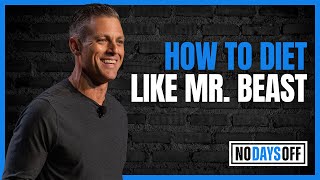
Brian Gubernick breaks down Mr. Beast's internal memo to explain an "information diet": deliberately curating everything you consume to match your goals. He shows how Mr. Beast's talent Taylor watches goofy videos to fuel his comedy, then maps what an information diet looks like for leadership, parenting, and wealth.
Chapters
Thank you for joining me today. It's Brian Gubernick, and welcome to the No Days Off podcast, where we believe that every single day brings a new opportunity to get better. I want to talk about how we can all start to diet like MrBeast. Who the heck is MrBeast? Many of you may know who he is. Many of you may have no clue what I'm talking about. So MrBeast, his real name is Jimmy Donaldson, and he was introduced to me by my 12-year-old, Katie, who I found watching YouTube video after YouTube video of this crazy station, this crazy channel she's watching. It's called MrBeast, and it's Jimmy Donaldson running all sorts of crazy challenges and over-the-top stunts. And giveaways, and she is locked in. So I'm intrigued. I gotta learn more about this guy. Well, it turns out that Jimmy Donaldson, aka MrBeast, is insanely famous in the YouTube world and beyond for these videos he does. Donates huge sums of money to people. He does these extreme challenges. He's got amazing content, especially content that is geared towards teenagers, especially teenagers that play video games. He also though has a philanthropic side to him, and these things have prompted videos of his, of course, to go viral. You can log on to YouTube right now and see many of his videos have a couple hundred million views, which is insane. He launched his YouTube channel in 2012, and it skyrocketed to, to notoriety about 5 years later. When he started getting incredibly creative with his challenges and things like that. He's definitely worth looking up, but I'll tell you, I never thought, and it was just a mistake of mine, I didn't realize what a business genius this guy happens to be. And his station, which is probably, I have no idea, but I bet you his channel's worth a billion dollars. It's gonna be worth several billion, if not tens of billions of dollars, his production company. And his brand in the coming years. What the kid has built, what the guy has built, is, is just insane. Well, why does all this matter? Just recently, at least within the past couple of weeks, uh, there was a leaked memo. And I used the word leaked in air quotes, uh, because could be a publicity stunt, could be marketing. I don't think so though. But there was this memo, this document that Jimmy had written up for his entire organization, MrBeast Production. And he had said in this memo something along the lines of, we've grown too big. I used to get to know everybody before they joined our company. Now I don't get as much time. So I've, I've now decided to sit down and kind of write out everything that MrBeast Production is about. I— he titled it How to Succeed in MrBeast production. And so he goes through how to work and thrive within the company, how they create the content they do, uh, what their edge or competitive— their moat happens to be, how to interact within the company and how to communicate. He goes through all— and it's actually an amazing document. Like I said, it was leaked, and so I ended up with a copy of it. Sure, many of you could go, go online and find it as well. And there's a ton to learn from what Jimmy had presented in this company memo. Many things caught my eye, but what I wanna talk about today is the diet of Jimmy Donaldson, AKA MrBeast. And what do I mean by diet? I don't mean food. I'm not talking about health diet. I'm talking about this concept that, frankly, we do talk about quite a bit here at No Days Off, but I've never called it this, He calls it the information diet, his information diet, and how important it is to manage your information diet if you want to be successful. What's he talking about? What MrBeast, Jimmy Donaldson, is saying is that your information diet are all of the things that you expose yourself to and consume. On a regular basis, be it in his case YouTube videos or books or podcasts, just things your eyes or ears are drawn to. And what Jimmy is, is saying to his employees with this, within this memo, is if you want to thrive, you've got to be very, very serious about your information diet. In other words, If you're trying to flourish, if you're trying to succeed, then you've got to limit distractions and be very deliberate in the information that you are in fact consuming. This means reducing social media use or other, you know, sorts of tools that bring in content to your world, reducing that content flow if it's not aligned with your goals and your mission. In doing this, you create and maintain higher levels of productivity, and you manage— you're able to manage the demands of your career, of your, of your job, of your company, of your family, of your health, if you are focused. Make sense? So this information diet concept is really one that he, he preaches, and the guy's had some degree of success. The example that he gives He talks about how one of his, uh, one of his partners at MrBeast Productions, the guy's job is to get on camera and be funny. He's— that, that's his job. He's, he's an on-screen talent and his job is to be funny. And this, this guy, I think his name's Taylor if I recall, Jimmy says Taylor happens to be funny, but I didn't understand why he was so funny until I lived with him, Jimmy says, until I lived with him for a few years. I guess when they were younger, they lived together for a few years, and he said Taylor, um, would watch around the clock ridiculous cartoons, um, random memes and, and goofy videos. Silly YouTube videos, just all sorts of strange content. And that's what he watched all day, every day, to the point where some may call it a problem, not exactly healthy. But because Taylor was doing this, it allowed for him to draw on this knowledge and this experience when he had to perform and when he was attempting, or maybe not even attempting, to be funny. Said differently, Jimmy said if Taylor instead spent his time watching videos or listening to content around stocks and investing, he would not be the same performer that he is today. This got me thinking a little bit about a topic we covered just last week when we said there's really 3 types of people in this world, right? There's the interested, there's the committed, and there's the obsessed, and only the obsessed have massive success. The committed can have some degree of success, but it's the obsessed individuals that really, really thrive. I look at this control of the information that flows in your direction, your information diet, as an effort at obsession. Let's say you want to be a great leader. I want to be a great leader in business. I want to be a great leader for my family. I want to be a great leader in my community. What should my information diet consist of? Goes without saying, this diet should be made up of materials that help you develop leadership qualities like strategic thinking, like emotional intelligence, like decision-making, like the ability to inspire and motivate others. So if that's true, like that's what your information diet should consist of, then what's the content we're looking for? I think you're looking for biographies of great leaders. You're reading books about the lives of successful leaders like Abe Lincoln or Jack Welch or Nelson Mandela. You want insights on the how these individuals handle challenges, how they inspired people, and how they made some difficult decisions. So you're reading about other great leaders. You're also likely reading books and magazines about management and leadership, like, uh, The 7 Habits of Highly Effective People, let's say, by Stephen Covey, or Harvard Business Review talks a tremendous amount about leadership. You've got to explore the qualities and the habits that make for effective leadership. I think you're listening to leadership-based podcasts nonstop. Interviews with CEOs or political leaders or just thought leaders in general. Things about decision-making and strategy, right? I also think you're looking at psychology. I think you're looking at behavioral economics. I think you're learning how to think differently and what motivates people. TED Talks, things of that nature. And then I think you're choosing your environment, networking environment, mentorship coaching environment. It's not traditional content, but you want to interact in specific environments and specific networks. You want to join masterminds, you want to attend leadership seminars so you can get firsthand lessons, so you can get firsthand feedback. So my point here is if you want to be a great leader, you got to have the right information diet. If you only have a partial diet, you'll only end up being a quasi-successful leader. This is the difference again between being committed and being obsessed. What if you want to be an amazing, absolutely amazing parent? What would your information diet consist of? Same sort of process here, right? We're talking about what parenting books can you read and, and listen to? What environments can you get in where you observe other parents or learn from those that have been successful in parenting? What kind of child development research can you be consuming? So that you understand how kids develop and how they have different needs and the psychology of kids. Uh, what, what, uh, content can you watch as like as a family, things that help you bond with your kids? As a parent, you need to have emotional regulation. How are you developing that? What are you listening to? Again, if you want to be a good parent, then maybe your diet is, you know, pieces of this. It goes without saying though, if you want to be an amazing parent, you study the discipline and you check your information diet accordingly. Lastly, wealth and finance, same sort of concept. What books, uh, what podcasts, what biographies, what, what business, uh, literature are you reading around venture capital or startups? You know, what are you attending? I mean, we go on and on and on. The focusing question here is Is your information diet aligned with your goals? If you set a goal to get to a certain place, are you obsessed to the level that you are being very, very calculated around the information that is entering your world on a daily basis? Kind of uniquely ties to what, what we want to accomplish here at No Days Off. Remember, the idea at No Days Off is to get better every single day. In some sense, I hope that No Days Off is playing a role in your information diet. It's feeding— it's playing a— it's a component of what's feeding your knowledge base and ultimately leading to success in, in whatever, whatever specific path you're choosing. On that note, that's all we have for you today in the No Days Off podcast. Thank you so much for listening. And remember, every single day brings a new opportunity to get better. So let's get after it.
More from Brian











Ep 755 | Mack Newton's Words of Wisdom - "You Are Only as Big as Your Self-Concept" (REPLAY)