
Ep 406 | Tony Hsieh - the Master of Micro Leadership
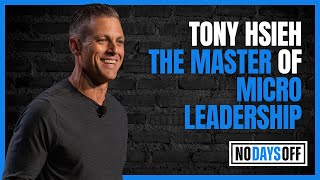
Tony Hsieh built Zappos culture through micro leadership: small, daily actions like praising work, writing personal notes, and remembering employee details. Hsieh modeled this at every level regardless of title, proving that stacked small gestures compound into strong culture and business success.
Chapters
Thank you for joining me today. It's Brian Gubernick, and welcome to the No Days Off podcast, where we believe that every single day brings a new opportunity to get better. I think here at No Days Off, while I'm sharing all sorts of concepts and, and ways to improve, or ideally improve and get better each and every day, we like to study entrepreneurs, those that have succeeded at a high level, be it athletes or just family people, whatever it may be. We like to figure out what certain people did at an extraordinary level that we can draw from, that we can learn from and apply into our own personal worlds or our business worlds. One guy that I have looked up to quite a bit in terms of his leadership and just him as a as an entrepreneur. It's a guy named Tony Hsieh. You may know Tony. Tony was an entrepreneur focused predominantly on the internet, and he was a venture capitalist. He retired as the CEO of Zappos, which is an online shoe and clothing company you may be familiar with. He led that company for 21 years. Prior to that, he had co-founded a, internet advertising company that he sold to Microsoft for an awful lot of money, a few hundred, maybe I think $265 million. Harvard graduate, amazing guy, born to immigrants from Taiwan, just a really, really special individual. He created, and I want to focus specifically on Zappos. Zappos is an extraordinarily well-known company and, uh, Like I said, he was there for a couple decades bringing the company to prominence. In 2009, Amazon acquired Zappos in a deal that was said to be around $1.2 billion. Hsieh himself probably made $200 to $250 million from that sale alone, which did not include the money made from the sale of other ventures like the one I mentioned previously, as well as other things that he was involved in. He was just an extraordinary guy. But one thing that Tony Hsieh did better than most anybody, in my opinion, was this— was, was this use of what we'd call micro leadership. Tony Hsieh was the master of micro leadership. What is micro leadership? Micro leadership refers to small, oftentimes informal acts of leadership. That are occurring in everyday situations regardless of where someone stands in an organization or what their title is or what their role is. In other words, it's about taking initiative in these small moments, influencing people or others just in a positive direction, contributing to team dynamics in a way that helps achieve goals and creates more collaboration. Unlike traditional leadership, which is usually about more high-level decision-making and oversight. Micro leadership just happens at a more granular level, and it could come from anyone at any time, not just those that are in formal leadership positions. So, some of the aspects or key aspects of micro leadership, it's doing things like simply influencing through example, modeling behavior. It's offering support. It's taking initiative and stepping up so others see that and they jump in as well. It's promoting, constantly promoting a positive culture or encouraging collaboration. It's being problem, a problem solver in the very moment, like addressing minor problems or conflicts right as they arise rather than traditional leadership, which you'd wait for someone else to intervene or maybe you'd have some sort of analysis or download. This is taking micro actions in the moment and leading and doing these things and stacking them over time, which greatly impacts the direction of, of a company. Some examples of micro leadership. Maybe it's just recognizing someone's hard work publicly, being purposeful and call— calling somebody out for their hard work. Maybe it's helping someone who's struggling. Just coming alongside them and finishing the task alongside them that they're working on. Maybe it's taking responsibility, extreme ownership, for small mistakes or oversights and just addressing them directly. Maybe it's just asking more thoughtful questions. Believe it or not, there's a micro leadership component to asking better questions in meetings that help clarify goals or challenges. It doesn't matter your role, your title. I'm just saying, taking these small You know, micro granular leadership actions. Now, Tony Hsieh, what did he do? Tony was known for his focus on small everyday acts of leadership. He was known— Zappos was known for creating a positive and incredibly dynamic work culture. Tony led by example in culture building. He was deeply invested in fostering an employee-driven company, a unique culture at Zappos. He oftentimes was interacting with employees at all levels. Yeah, they had an org chart, but when it came to interaction, he didn't pay attention to that. He would show up alongside all levels of leadership or management within his company, or just, just the, you know, the blue-collar grinders, you know, in the warehouse. He would come up alongside them and demonstrate leadership. It wasn't confined to titles. He was willing to be the janitor if it was necessary. And his willingness to engage in day-to-day work and support his team created this environment where everyone felt empowered to contribute. Tony was great at leading by example. He was also great at, at emphasizing small acts of kindness. Zappos became pretty famous for its customer service. As a matter of fact, there's a book about its customer service. And much of that came from the top-down philosophy of small but impactful actions. Tony Hsieh encouraged his team to go the extra mile for customers, whether it was writing a personal note or just having fast response time or solving minor issues before they escalated. And this sort of attention to detail was a micro leadership action, and it could turn into rather big outcomes for his customer satisfaction. So Tony was great at emphasizing small acts of kindness. He was also great at nurturing relationships, specifically through small gestures. Like micro leadership, he focused on micro interactions with his people, with his employees, and with his customers. He understood that the value of small— that there was value to small yet consistent positive interactions. For example, he would take time to engage with employees on a personal level. He'd remember the small details about their lives or acknowledge their contributions. And they were always surprised that, that a guy at his level of the organization knew as much as he did. But this practice of his really built trust and loyalty, and it made him an incredibly effective leader. It really did. He created an open and collaborative atmosphere. He actually had this, this belief in what I would call flat management, a flat management structure, which really encourages employees to, to all be leaders in some sort of way. So he had this culture of openness and inclusion. He allowed employees to take ownership of projects. He allowed employees to offer feedback. He pushed them to step into leadership roles. Whenever it was needed. So this, this approach empowered people to take more daily initiative even when they weren't officially in charge. This is another micro leadership effort. So where am I going with this? Tony Hsieh, he truly is the master of micro leadership, and I think there's something we could all draw from Tony. In that he believed leadership was about empowering others and not just managing them. He didn't limit leadership to big decisions, but he embraced all sorts of small acts, and those small acts improved culture and they improved customer experience. And he took a culture-driven approach, and through these small actions, he reinforced Zappos' core values daily, showing— he showed how micro leadership drives long-term success. I think there's lots we can draw from this. I think the focus for you today, as you're leading your organization, leading your world, leading your peer group, while we typically talk about traditional leadership, which is bigger, more comprehensive, more decision-making based, I think there's an opportunity for all of us to take some smaller micro leadership actions. Instead of being so formal, maybe, maybe a little less formal. Even informal. And come alongside people, tell them what a great job they're doing, offer some small, small gesture or support in some sort of way. Lots of things to think about, but doing these things, stacking these things together, combining these micro efforts creates what? A major result. That's all I have for you today, the No Days Off Podcast. Thank you so much for listening. And remember, every single day brings a new opportunity to get better. So let's get after it.
More from Brian











Ep 755 | Mack Newton's Words of Wisdom - "You Are Only as Big as Your Self-Concept" (REPLAY)