
Ep 463 | A Conversation with Adrianne Haslet
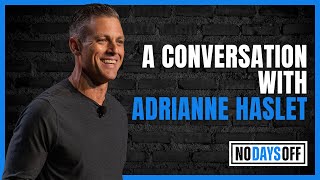
Adrianne Haslet, a ballroom dancer who lost her right leg in the 2013 Boston Marathon bombing, talks about surviving, rebuilding, and running the marathon years later. She created a competitive amputee division for the race and defines her legacy as refusing to be called a victim and using the gap between where you are and where you want to be as fuel.
Chapters
Thank you for joining me today. It's Brian Gubernick, and welcome to the No Days Off podcast, where we believe that every single day brings a new opportunity to get better. Today is going to be a very special day because I have an extraordinary person here with me that's going to do a more in-depth interview conversation. We're going to learn about her story as well as all of the things that she does in her world that has led to incredible success and just an incredible career. And, and on that note, Adrienne, I, I'm just gonna dive right in. And you and I were chatting just before we got rolling. I'm like, gosh, I don't even know how to start with you because your backstory is so incredible. I had you at our metrics event, and you blew, uh, my crowd away. Um, and so I'm gonna dive into it. We'll give it 5 or 10 minutes, but that's not doing it justice. I'm sure our audience can go learn more about you, and you've got a lot of things coming up in the future they could see even more that we, we may touch on. That may be a secret still. But Adrienne, thank you so much for, for hanging out with me today.
Thank you, thank you so much for having me. It's an— it's wonderful to see you again. I got to speak at your event in at Metrics Masterminds, and we got to hang out and spend some time with your incredibly inspiring audience. And so, it's nice to be able to sit with you again and get into a little bit more in depth. Thanks.
Yeah. Thank you. So, it's— I don't want to butcher your last name. It's Haslett, right? Adrian Haslett? Yeah. Okay. Adrian Haslett. So, Adrian, you were, maybe technically considered, still are, a professional ballroom dancer.
Yeah. Yeah. I know. People think, "Is that a thing? Is that a thing outside of Dancing with the Stars? Or how is that a career?" Yeah, I was a professional ballroom dancer. I went pro out of high school and did not take the traditional route of going to college. I grew up with parents with an independent books and records store in Seattle and fell in love with Ginger Rogers in a movie. And the rest, they say, is history. I enrolled into some dance classes and auditioned and auditioned and auditioned and finally went pro. And I was, I was a professional ballroom dancer from the age of, gosh, it was out of high school till I was about 32. Yeah.
And forgive me for being somewhat naive around this, although as I've shared with you, I have a couple daughters in dance, so I'm probably more familiar with the dance world than most. But when we say we went, we went pro in ballroom dancing, it was more than just, you know, you go into competitions and, and winning these competitions. It was, it's beyond that. Like, you made a living and a great living at professional dancing. Can you, can you go a little deeper on that? Like, I want to understand what professional dancing really means.
Yeah, absolutely. So, uh, you start out, um, as a dancer, just like you would similarly to where you would start out as any pro athlete. You have played the sport before, right? So I'd been dancing, um, but when you join a team or a studio, as I did, uh, in any sort of sport, then you really get drilled down and, uh, and you have coaches and and bosses and stuff that, that really lead you through drills, and you get a dance partner, um, and you learn regimented. So I would, I would show up to the studio, um, around like 8 or 9 or 10 in the morning at the beginning. Later I'd show up at like 7 AM, but at the beginning I'd show up around 8, 9, or 10 and practice until noon or 1 o'clock when I would start teaching. And then I taught dance to whether it was just a single guy coming in or a couple, or a couple practicing for their own wedding or their daughter's wedding, um, couple on a date night. And I would teach dance until about 8 or 9 at night, and then I would practice more, um, with my pro partner at the end of that, um, and then go home and sleep and do it all over the next day. Um, and then I would also travel and compete, uh, on weekends, um, and sometimes compete on the weekdays if it was a week-long competition. And I would travel and compete. And just like any sport, you'd eventually get either a dress sponsor or a shoe sponsor or both. I was lucky enough to have both. And you just dance all the time. And then I worked my way up in the studio and was helping enroll new students and managing other teachers and teaching other teachers how to teach and how to dance and how to sell dance lessons. And so it was a whole business. I was sort of in a lot of different a lot of different shoes, as they say. I competed in 10 dance, so waltz, tango, foxtrot, cha-cha, rumba, swing, uh, paso. Am I gonna get all 10? Are we counting?
What are we at now, 6, 7? You—
the listeners can count. Did I get them all?
I do not know, but I do know that there are— again, I have young daughters, right? They're, they're in a studio. The studio they're at from all ages, has like 1,000 kids. Like, that's not a bit— like, it is a massive studio here in Arizona. I share that only from the standpoint of thousands upon thousands of, of girls and boys are in dance across this country, yet a minuscule number go pro to the level you just described.
Yeah.
What was it— what is it about you, right? Like, I think all these kids aspire to to do this. I mean, you have, you know, kids that want to play in the NFL or kids that want to, you know, be an Olympian. There are kids that want to make dancing a profession and do it at a really high level. Again, so few do. What is it about you or what was it about you coming up?
That's a good question. I don't know what it was. I think I would call it determination. My mom would call it stubborn. My dad would call it determined. I think I also really believe in believing in yourself. My grandma growing up, I had a lot of people doubt me when I was little in my immediate family too. And my grandma always said, "You got to believe in yourself. That's the one that will matter at the end of the day. You've got to believe that you can do it. If you go in there thinking that you can't, you're not going to." And so that really sparked something early on in my life. I love to write too, and I think we'll get to that. And I always believed that if I believe that I can do it, then I have a better chance. I don't necessarily mean I'm going to go pro into this dream job that I had dreamt of when I was a little girl, like spinning around in circles in my room. But I think that it comes from just believing in yourself, walking in there like you belong and that you're good enough. You're not better than anyone else, but no one else is also better than you. And so you, you know, you, you make sure that you, that you give it your all. And I tried to give it my all and I worked really hard.
You had a, you had a great quote and I'm going to butcher it. So hopefully, hopefully you remember what, what it was. But you had said to my, my group something around like, we, we do not need any help. it was around self-doubt.
Yeah. I said that I don't like to make sweeping judgments about a bunch of people in a room together because we all know, let's not do that about each other, right? But I will make— I say this— I will make this sweeping judgment, and that's that none of us in this room, including myself, especially myself, need help doubting ourselves. We've got that down, right? We know how to do that all too well. But we do need help believing in ourselves. And so we don't need help doubting ourselves. We've got that down. So if I'm going to walk into a room, whether it's to come and speak to a wonderful group like yours or at NASA or Microsoft or to a group in Nepal or Ecuador or Iceland, I think when I have imposter syndrome, because we all get it, when I have imposter syndrome, I think, no, like, I don't need any help doubting myself. Why am I doing that? That's not helping me at all. I need a little help believing in myself.
That's amazing. So when you think about, um, and you shared some great things like coming up, like you were fueled by maybe stubbornness, determination, um, believing in yourself. Uh, here at No Days Off, and I was sharing this with you before, like our intention is, is to try to get better every single day at something. And I have a lot of parents that listen to this podcast and maybe wondering How do I instill that degree of determination or, or encouragement or, you know, things that you cited? How do I build that in my, in my child? Is there, from your perspective?
Yeah.
And I don't know if that was part of your upbringing. I'm kind of curious about that. But how do we as parents maybe influence that sort of characteristic or behavior in our kids as they're coming up?
Yeah. You know, I think a lot of it is letting your kid fail and land on their face and face the consequences. And I know I'm not a human parent, I'm a dog parent. So I know a lot of people don't like it when you compare, but it's all I know. And I can talk in reference to, you know, how I was raised and how I see my friends and family raising their kids. You've got to let your kid fail and fall flat on their face. My parents had no problem in letting me fail. They had no problem in watching me struggle or fail a class and barely pass math and serve detention the last day of high school because I got a bad grade in order to walk that night and to not feel too much shame for it, but that it was a mistake I made and I can rectify that and move on. And so if I hadn't done that, then when I was facing a hard thing as an adult, I wouldn't think, oh, if I mess this up, if I go to this dance audition and I'm told no, I've been told no before, so I'll just try it again. And I did. And I auditioned, auditioned, auditioned. And it was hard. I'm not saying it's not hard to get rejected or to get let down or to think that you won't walk at your own graduation or all of these things, but you have to let your kid fail. And it could be a micro fail. It could be You know, getting an answer wrong on an assignment when you know the answer is different, you know, let them get the answer wrong. If they're determined to put that answer down, let them put that answer down. It's not your job to make sure your kid never has a skinned knee. That's not the point. Your job is to make sure that when your kid gets a skinned knee, they know that it'll take care and nurturing and love and clean Band-Aids and kisses to make it better. And then it'll be just fine. Um, And so I think, you know, I think my parents let me fail big and small a lot. And when I turned 17 and I had graduated high school, my parents were like, "You're going to go to college." And I wanted to go pro as a ballroom dancer. So they— and I know I talked about this with your group too— they said, "You're going to go to college and you got to pay for it yourself." And I thought I could either go into debt and go to college in something that I don't know what field I want to go into, or I could start making money and work. And so they said, "If you're going to not go to college, you got to be out." And so that day I went out. And this is back in 1998. I'm 44. So this is back in 1998 when you could get a job and a bonus and an apartment all in one day. I know that's not how the world works now, but I did have some money saved up from working in their bookstore. That helped too. And I was out. I needed to be out and they put me out and they supported me emotionally. And my dad would take me to pizza and grocery shopping once a week. And he told mom that I paid for it, but I didn't. And that was a spoiler. I never expected it. And that was a nice treat. And I did it on my own. And that meant that I needed to pick myself up from my bootstraps and only have a mattress and a suitcase and be able to do that. I know that's hard to hear for some parents that want to give their kids the best chance at life. And I think when you're a parent, you need to ask yourself, what is the best chance at life? Is it giving them everything that they could possibly want? That's up for you to decide. Or is it making them work for it? That's up for you to decide too. I'm not here to tell parents what to do, but you just have to decide what is— what are they going to learn from each way? You know, and maybe there's a balance there. If they always have a safety net.
Yeah, it's really good.
I was— if I were in between apartments and one lease wasn't up for the other, I was on a couch. Um, and now that, that made me more determined than the next. I saw it with my friends. That made me more determined than the next person. I'm not better than at all. I'm not trying to sound high and mighty here. I struggled a lot. But it— but I see some people that were coddled and they face hardships and they're this— they're the first people that say, I could never face what you faced. And I think, yeah, you sure couldn't.
Yeah. Well, as you're sharing that, I, I recognize that while I brought it up from the, you know, standpoint of a parent, um, we have so many that listen to the podcast that run big organizations, big sales teams, or things like that. And so the same mentality I think is applicable with, with your people as you're trying to develop your people Uh, yes, you have to have models and systems that support them in their growth, but if you don't allow them to go out and fall on their face every now and again, they're not going to build a lot of resilience.
My dad— I mean, I'm not saying my parents weren't there for me. I would call them and they would show up. My dad would show up in the middle of the night. Like, they were always there, um, and they supported me emotionally all the time. And so it's— and I had a great network of friends and, and really, you know, had a great network at the dance studio. So it wasn't that I was all alone and, and struggling, but, um, yeah, you, you let them fall and, and fail, like you said, and even in your team members, and then you're there to support them and, and help them get back up on their feet emotionally and tell them that you believe in them, and, and then they find their footing again.
Well, on that note, we'll kind of keep going with your story because it certainly wasn't failure, but you did have to overcome a few obstacles. So you're at, you're at the I guess the height of your career.
Uh-huh.
And then 2013 happens.
Yeah.
And while again, it's probably impossible to tell it in a few minutes.
That's all right.
I'll try. Life changed in 2013 for you.
It sure did. I was taking a day off and I took myself out to lunch. It was very rare as an athlete to take a full day off of work. But I did that day and I took a day off and I was walking around. I took myself out to lunch and then heard what I thought was a parade one street over and walked over there and I saw a bunch of people running with numbers on their chests. And I said— and by this time I should add, I had moved to Boston. I guess I forgot to add that. I had moved to Boston a few years before that to pursue ballroom dancing at a higher level. And I was walking past what I thought was a parade, and I learned that it was the Boston Marathon. And a lot of people would know when the Boston Marathon is if they are living in Boston, but ballroom dancers and people that sweat in public don't usually cross paths. We usually spend time bronzing and bedazzling and doing our hair a mile high, and we just don't cross paths with people that wake up and sweat. It just isn't a thing we do. And so, yeah, it was the Boston Marathon and I thought I would never do this for a statement necklace and a free banana. Like 26.2 miles is just crazy. But I still had the utmost respect for anyone pursuing an athletic endeavor or academic or work endeavor and the look of determination. And some people were vomiting or bleeding or all these things at the finish line. And I thought, I want to stay and watch this. These people are really giving it their all. And I walked away from the finish line and I was about 3 blocks away and I heard a loud blast behind me and the ground shook. And I turned around and there was black smoke everywhere. And I knew in that moment that it wasn't, you know, fanfare or fireworks or transformer from the media. Speakers or anything, I knew that it was, that it was an attack. And people were screaming and cops had their guns drawn. And it was just very, very scary. And I remember putting my head down and putting my fingers in my ears, waiting for the next one to hit. I just knew. I think we all looking around, we all knew that something else was going to happen. And I went down and I later learned that I was walking shoulder to shoulder through— I learned this through the surveillance when I was participating in the trial for the terrorist whose name I never say. And I was walking shoulder to shoulder with him and his backpack. And then he dropped it a couple feet away from my two feet and walked away and detonated it. And I went down on the ground and I only saw gray for a while. And then I started to smell that all too familiar smell of when you leave your hair dryer or curling iron on too long and it smells like burnt hair. And I realized that my right side of my hair and my eyebrow were on fire, and I put that out with my hand. And then I looked down and I saw a giant gash in my right leg, and I kept trying to lift my left leg and kept trying to lift my left leg. I realized I was, but it was gone. And I lost my leg that day. And I thought, remember thinking two things. Number one, there goes Ginger Rogers. Like, I'm done dancing. That's never happening again. And number two, my family will never get to this side of the country fast enough. You know, they're all still back in Seattle and they'll never get there fast enough to say goodbye. And how selfish of me to pursue this vain, career in ballroom dancing where I spent most of my time primping and trying to look "perfect" or proper and get crusty old white dudes to hold up the number 10 every time judging my body and how selfish that was. And then I rolled over and someone grabbed me and put tourniquets on my legs and saved my— that was the first person of many that saved my life that day. And then I ended up in the hospital and was grateful to get there very fast. And to brag on Boston, because I never hesitate to do that, we're the best city ever. And we had every one of the 260-plus that were physically injured that day in a hospital in under 9 minutes. It was incredible. And we have 5 major trauma hospitals downtown, which is also very helpful. And I ended up at the hospital and had to call my parents and say a very hard goodbye. They told me that I wouldn't make it, which let me tell you, if you want to be, you know, have your ass kicked in life, you're told that you're not going to live and you say the things that you need to say to your people and you try and find some peace. And I rolled into surgery. And I luckily woke up and my parents and my Superman surgeon were right there. And my life has been completely different ever since.
Yeah. Uh, yeah, absolutely changed your world.
Completely, completely changed my world. Yeah.
And Boston, you know, post this event, you know, you had the whole Boston Strong movement.
Uh-huh.
Yeah. I mean, you were in the way you met your, your challenges after this with respect to recovery and really just having to kind of begin a new life, more than just a new chapter. I mean, it was— it changed everything. I mean, you're a professional dancer.
Yeah, my feet were my, were my tools. They were my instruments. Yeah. And, and I, and I was out for the count, and I didn't even know how to pronounce the word prosthetic leg. Like, I didn't know how to even say it. Um, I'd never met anyone who needed a leg, or, um, and I, I was, I was really— it was, it was awful. It was— I mean, that's such an understatement. I know the listeners know that there just aren't words that can really capture that feeling.
Um, well, you were— I mean, you're the spirit of, like, embodied the spirit, I would— should say, of, of that whole Boston Strong movement. And I— it's so special. I mean, there's— gosh, there's so much to talk about around, around that. And, and, and we could spend— and I know, you know, we, we had the opportunity to talk about it in greater detail when we were together. Um, just recovering from that and, and doing all that you did inspired so many people around you. And I, I guess one question I have for you Um, I have so many questions, but one that's been burning in my mind, so many others, not just at this particular event, but whenever there's tragedy at this level, um, or someone experiences something, we hear the stories about those that maybe recover or go to live really big lives. And I think there's probably more stories of those that go the opposite direction, unfortunately, because of the physical trauma or the mental trauma. Yeah, again, much like I asked you about how did you become a professional dancer and how did you think differently, or what did you do differently when it came to that, like, you kind of— even when you, you spoke to our group, um, it seemed like you, you flipped right into recovery mode. And I couldn't help but think in my mind, gosh, how did that happen? What may not have felt like fast to you, but you got right into, all right, let's like at least that's how I perceive it. Let's get to work. Like, here's what it is. Like, you mentioned prosthetic already. I think many people wouldn't even get mentally to that point. What is it that makes you different around that, or how did you look at it differently than others to, to really kind of be that determined to change things, turn it around?
Yeah, that's a great question. I, I don't really know. I mean, um, I know the Boston Strong movement and strength, that the term Boston Strong came from one of the Red Sox players that won the World Series that year. And the Boston Strong movement, I mean, that was done by Boston and beyond. It was worldwide. We felt it from all over. The whole world watched that terrorist attack. And so, you know, myself and other survivors will say, you know, we were just laying in hospital beds. Like, it was everyone else that was rallying around us that made us so strong, um, and that is, that is a fact, um, but early on, uh, I had an interview with Anderson Cooper, um, he came in and, and we interviewed and he said, um, do you think you'll ever dance again? And I said, I'd like to try, um, and I think I said, if you watch that interview, I mean, I was on so many meds, I was slurring my words, but And I— but I meant what I said. I don't— I'm not saying anything I said wasn't true. But I tried to pronounce prosthetic, I think, in that interview, and it came out just very wrong. And I said I'd heard about these things called legs, and I don't know how to use it. I don't know how it even stays on your body. Like, is it like a Lego? Like, I don't even know, but I'd like to give it a try. And And he said, "If you learn, relearn how to dance, can you teach me?" And that was highly motivating. That was highly motivating for me to want to dance with him. And we instantly clicked and have stayed in touch periodically through the years. And we ended up making a movie together that first year. And so we grew very close. And it felt so good to say that goal out loud, to dance again, that I then somehow by the end of the interview said, "I think also one day I'd like to run the Boston Marathon as a thank you to, you know, everyone who has shown the Boston Strong strength and rallied around all of us survivors." And I'm a big hugger, and I guess I understand that you can't go around hugging everyone who supported you, but it was my way of giving a big hug to people that had. And he said, "You've spent part of the interview talking about how you'd never ever run in your life? Like, I don't even think at that point in my life I'd run across a crosswalk. And I said, somewhere deep inside me, I don't know where it came from. And maybe this is the part of knowing that you're talking about, the part that I don't know where that came from, that I said, there was— yeah, I'm not a runner and I've never ran and I don't have a leg, but there was a time when I wasn't a ballroom dancer and then I made third in the world in my company. And so I think I can give it a good try. And so that felt really good to say the goal out loud. And I think that that made a difference. This is my long answer to your question, but I think saying the goal out loud and having people that support you was a big deal to me. Not just the Boston Strong community and supporters that I didn't know, but Anderson and my family and my Superman surgeon especially. My brothers and my parents, that just, that made a world of difference. And I had goals and I needed hope. Like, we all need hope. I think that's the thing that gets us going, at least for me, the hope that I would one day be a ballroom dancer, the hope that I would one day wear ostrich feathers and a silk organza gown like Ginger Rogers, the hope that I would walk again, the hope that I would dance again, the hope that I could run Boston. I think that's, that's what determined— I don't know what makes me different than anyone else. I can't quite answer that. But I think the support system, and I don't do the why me, like I just haven't— I don't have the why me brain of ruminating on that.
Yeah, the things that I, that I hear you saying, or what's coming to my mind when you say hope and inspiration, even the role that Anderson Cooper played, or I don't know if he knew he was Providing that degree of inspiration just in asking the questions.
I never shut up about it with him, so he knows. Well, 100 times over. Yeah.
What I hear that might— and I certainly, I'm not a professional in this space, but what I hear you saying is you had purpose.
Yeah.
Like you had found purpose. You had purpose. Maybe you found a new purpose when all this happened, but you had something in front of you that you again were going to be stubborn or determined to get after one way or another.
Yeah.
And I, it just makes me think like how important it is to have purpose and maybe just maybe a differentiator between someone that accomplishes what you've accomplished after this tragedy versus maybe somebody that doesn't, that doesn't get out of that rut might be simply finding purpose or reason to go. Yeah.
And, and I want to also say that, um, that I had therapy. I begged for a therapist early on because I just knew that I needed someone who was— even though my family is wonderful and they were all wanting to help and talk and help me in absolutely any way possible, they're not skilled in the ways that therapists are in the knowledge and the skill set of walking someone through a mass trauma. So I got a therapist who specializes in mass trauma and bombings. Unfortunately, you need those in this world. And so that helped tremendously. And that was a big one too. And just being able to talk to him and have him as a guide through that was really helpful. And purpose makes all the difference. You know, it's really helpful to feel like you have a goal and you can reach it. And yeah, I had a couple of surgeries and stayed in the hospital for a while, and then I was really determined to move on.
You had a— You had said to my group when you were with us, again, another quote that I'm sure I'm going to butcher, but you had taken a position or a stance that you were not a victim.
Yeah.
That you said you were a survivor.
Yeah. I was in an interview with Anderson and I was talking and I said something and he said, say that again. And I said, I can't say it again. I was just thinking out loud. I don't know exactly what I said, but Later when we replayed it, it was the quote, "I refuse to be called a victim. Victims are defined by something that happened in their life. I'm a survivor defined by how I live my life." And that was really important to me. And listen, I want to be very clear here that everyone who goes through their own thing, you get to define yourself. If you want to define by victim, I have no ju— you know what I mean? Like, I'm not saying everyone needs to define themselves in the way that I do. I want to honor the people that really feel victimized. For sure. But for me, I knew that that monster whose name I don't say only had me for 3.5 seconds. That's how long the blast took to detonate and blast through us survivors and victims. And so that's as long as he had me. After that, it was up to the people around me. It was up to the off-duty doctor that put tourniquets on me. It was up to my Superman surgeon. It was up to my nurses and doctors and PTs and OTs and myself, certainly. This is in no particular order. And my family, um, to make it better. And so I didn't feel— I didn't want to be a victim because then that, that, that ties me to him, and I'm, I'm constantly thinking about him and constantly thinking about walking down that street and, and woe is me and all that. And it's not to say that I don't have woe is me moments. Of course I do. I have severe PTSD, and I have, I have all the things that come with with the events that unfolded. But, but I'm not a victim. Absolutely not. I'm a survivor. And I want to be defined by how I live my life, not by that day.
And after this, you certainly went on to live your life. I know you went back and ran that Boston Marathon.
Yeah, I did. I did. Somehow, some way, I ran like my first block. I remember running like one block in a prosthetic leg. And I was like, this is so hard. How on earth do people do this for 26.2 miles? There's no way. And so people were bugging me and saying, you were going to run the Boston Marathon, you said you were going to run the Boston Marathon. And I would turn to them and say, did you know that's 26.2 miles? Did you know they, they put you on a bus in downtown Boston and then they drive you 26.2 miles away and you have to run home? And they sometimes give you pretzels and water, but that's like, and maybe a few goos, and that's it. Like, you just keep running and said, "Oh, that's— you can do it. That's fine." And so, there was a little peer pressure there. I'm not going to lie, but it fueled me to get it done. And somehow, some way, I crossed both the start and finish.
Not only did you do that, which is amazing, right? Like, you run the Boston Marathon.
You know what?
Before I say something next, how did that feel when you crossed that finish line?
Oh.
What did that feel like to you?
Incredibly— it makes me want to cry. Incredibly good. Incredibly painful physically, emotionally. And, I just remember just feeling so proud that I stuck to it and not in a prideful way, but in a— I was happy that I set a goal because I lost my leg in 2013, I ran in 2016. So, I'd set a goal and stuck to it. And even on the days when I didn't want to do it and on all the times of all those 26.2 miles since crossing the start line, I was like, I'm going to drop out. I want to drop out. And then I would get up again and keep going. And I was just really proud that I stuck to it. And things like marathons are things that no one can take away from us. You could lose a job or you could lose a loved one or something. You can lose all sorts of things in our lives. I can never lose that, you know, that can never be taken away. So I, I, on days when I think I can't do the hard things, I think if I could, if I could muster through those 26.2 miles, I can do something else. And I think that that's, you know, that's a really powerful thing.
Well, you didn't just run that one, like you, I'm pretty sure you became fairly accomplished, or you're still running, you're, you're an accomplished distance runner, like you've run multiple Boston Marathons, right?
Yes. I know I finished that and I said, "Never again. I'm never doing it again." Well, not right away. Right away, I crossed the finish line and then President Barack Obama tweeted me and said, "Congratulations, Adrienne. We finished the race. We carry on and we never let terror and bombs stop us." And I got the tweet and then popped the champagne and I took like one sip of champagne and I was out. And my body was done. And I thought, I want to run. Everything now. I'm so excited. And then a week later, I thought, "I'm never running again." And as it went, I knew what it was like to come in dead last in the Boston Marathon, which I was that day, dead last, 10 hours and 44 minutes. And I wanted to know what it was like to come in first. I'm a competitive woman and I like to be able to just test myself and test my body like I have through ballroom. I looked around and asked around in the Paralympics and the Boston Marathon and other distances, and it looked like there were no opportunities for people that run in running blades like I do. There are certainly opportunities for people that run in the pushchairs and push rims that you see in marathons, but that's not how I run, and that's not how a lot of people with prosthetic legs run. And so I looked around and we didn't have any. And I went to the Boston Athletic Association, who are dear friends of mine, and I said, "We need a competitive division." And they very sweetly said, "We love you, Adrienne, but 10 hours and 44 minutes is not exactly competitive." And I thought, "Okay, good point." So I went to and spoke at a bunch of amputee conventions and started talking to a lot of people and forums and such and tried to find other people that run like me. And the Boston Athletic Association was doing the same. And after years and years, we— and trying and trying, we got a division. And it's now a competitive division in the Boston Marathon. I was able to compete in 2002 in the Boston Marathon. And it was an awesome thing to show up at the start line, that famed start line with your name on your bib. And I remember looking down at the start line, the yellow and blue start line, and seeing— oh, this makes me cry every time— and seeing like 20 or 30 different kinds of blades and feet on that start line ready to go. And it was so emotional. And I remember announcing the division at the press conference with the BAA and prior to that, in the year before, that we were going to get this division. And you know those videos where, like, you're watching the video and someone gets into Harvard or someone's getting a puppy and you cry even if you don't know them because you're just so darn happy for them?
Yep.
I was getting sent video after announcing that this division was a thing. I was getting videos of people telling their loved ones with limb difference and limb loss that they could one day win the Boston Marathon. And they would tell them and everybody would cry. And it was the most amazing thing in the world that they had something that they could do. And listen, nothing against the Paralympics, except against the Paralympics. I said it. You know, they're great, but first of all, they don't think we can do anything further than 200 meters. They refuse. I've had multiple conversations with them. And this is not my opinion, this is truth. And they don't think we can go further than 200 meters, even though we have this distance. They refuse to give us a division. And, you know, it's nice, the Paralympics are great, and Super Bowl commercials are great, I've been in one, but they usually show us struggling, and then they show us getting back up on our feet. And it's nice to have a thing like the Boston Marathon that they can just show our strength. I think it's important to show where we came from too. But the, you know, often, and if you think about your Super Bowl commercials or anything, it shows people struggling and people with disabilities struggling and struggling and struggling. It doesn't just show them kicking ass. It has to show them struggling first. And that really bothers me. I'm sure if all women or all men or someone were always shown all struggling in order to show their strength, we'd have an issue with it, right? And so when I did my Super Bowl commercial, I was happy that it was, just running. And it was, you know, I'm not saying that to pat myself on the back. I'm saying that because it changes the narrative of how people think of us. And so I'm really proud that Boston was the first marathon to do it. I hope that others will pick up the pace and, no pun intended, and get out there and get us divisions as well. And, you know, Boston did it now that they're 5K, 10K, and a half as well.
Well, you should be proud. You've inspired thousands, tens of thousands, maybe hundreds of thousands, um, with, with, with all that you've gone through. It's, it's one thing that's going through my mind. It's fascinating, like, your determination is what made you a professional ballroom dancer, and then you had to rechannel that determination, and it, it's made you such an inspiration and all that you're fighting for and all that you're doing. It's, it's so special.
Thanks. Well, it's hard to see— it's hard to see something and then not do something about it. It's like once you— I had no idea about any of this when I was running around in a sequined bikini at a ballroom floor. Like, I didn't know about any of this, you know. But when you see it, and I have the platform that I do, I knew I could be part of— I mean, look, there were a lot of people that were part of making that division, not just me, but I knew that I could use my platform and help that along the way.
Did you end up teaching Anderson Cooper how to dance?
I did. I did. Uh, it was very fun. Uh, he's all right.
I was gonna say, is he any good?
He's good, he's good. He can hold his own. He's, he's good. Uh, I, I wish I'd had a few more lessons with him and then I could have made him, you know, a little better, but he was good.
Well, I, I'm going— I mean, what's that?
I'm sorry, he gave it his all.
Well, that's, that, that counts. That counts for something.
Yes.
So you, um, you go through this and, and you're an accomplished runner now. You've gone on to you know, speak all over the globe. As a matter of fact, I think you— keep me honest here— I, you did a TED Talk that had maybe 20 million views or so. It's insane.
I, I haven't checked it in a couple years. The last I checked, it was like 18. Um, yeah, that was a big TED Talk in 2014. Yeah, in Vancouver.
Talked all over the world. Yeah, yeah. Talked in Scottsdale for, for Metrics.
My favorite.
And you're out there telling your story about facing adversity and overcoming challenge.
It's really sweet. Yeah. You know, I think, you know, certainly my story is unique. People listening have stories that are very unique to them. But, you know, I hope no one has to go through what I've gone through. But the suffering and the going through hard times, that's universal. And I try and give people life lessons of the lessons I've learned along the way and had to relearn along the way so they can put them in their pocket when they're facing adversity. In their own lives.
Well, I, I have a few questions for you, some No Days Off podcast questions to dig a little bit deeper into— to you, kind of unpack, do our best to unpack a few of the things that make you so extraordinary. Uh, I'm a big fan of what I call getting weird, being weird. I think when you study success, what you find is those that are successful are doing things different than everybody else around them. And by definition, they're perceived— they would be considered weird. So, weird question for you, um, what would you say that you're doing in your world today? Yeah, maybe it's your morning routine, or maybe it's something you do throughout the day, or just something that you're doing that you think others, if they were to observe it, they'd be like, that is really weird. Oh gosh, it comes to mind for you.
I think I'm just an odd duck. I've always thought I'm an odd duck just out of the gate. So I feel like I want to just say D, all of the above. All of my things are weird. But besides just dancing around my apartment all the time, I think other people do that. I would say I do a lot of self-talk out loud. I want to hear it. I want to hear myself, my inner thoughts on the outside. And I think about when I put them out into the world, put that out into the world, And I live alone, so I guess it's a little easier to do because I don't— I mean, with my dog Fred Astaire after the ballroom dancer. And he's gotten over my weirdness a long time ago, or he just accepts it. But I talk out loud a lot of my mantras in the morning. I tell Fred that it's going to be a really good day. We're going to have a great day. Here's what we're going to do. And I say it out loud before even putting my leg on and getting out of bed. I prepare my coffee first. My morning routine is very routine and I need it every day. I prepare my coffee beforehand. I start my coffee, brush my teeth, put my contacts in, put my leg on first, put my contacts in and get started. And then I start what I think some people would think is weird is I start what I think is what other people would consider slow in the morning. I grab my coffee and I sit with Fred. I take Fred out. For a quick pee, and then I sit with my coffee and I reflect on what does my head need for today? What does my heart need for today? What does my inner child need for today? How do I want to feel at the end of the day? Which is an important one for me. Instead of thinking how I feel right now, I want to feel— how do I want to think at the end of the day? When at the end of the day, do I want to feel more accomplished? Do I want to feel Do I want to feel like— how do I want the end of my day to feel? I want the end of my day to feel like I'm prepared for the next. I want the end of the day to feel like I have clean sheets on, that I have clean laundry put away. The end of the day me wants to feel XYZ. The end of the day me wants to feel like I show up in my work and with my clients. I want to feel like a good mom to Fred, a good sister and daughter. So I think of— I tend to think ahead and what I want to feel, and I do a lot of that talking out loud. And part of that is because I'm a speaker. I want to just continue to use my voice and get my voice used to being used all the time. That's sort of a vocal training thing. And that's important to me. And then I get my body moving. If it's all icy, as it is right now, everything's covered in ice, I'm not going to go for a run. I'll do some bodywork. But my weird things, I guess, is talking out loud, putting things out into the universe. I could be in a hotel room or if I'm walking down a hotel hallway, I'll still talk out loud. Like if someone comes out, oh well. I'm not saying anything that's, you know, a deep dark secret. I'm not the one talking to myself when I walk down the street. I'm not that weird. But yeah, I think that's important. I write down every single accomplishment in my Notes app on my phone. Everything from changing laundry over to pouring another glass of water. Uh, yeah, I'm— I, I think that that would be it.
It's interesting when I ask, you know, high achievers about what they do that's weird, and almost everyone starts, and it— you feel like it's hard because it's not considered weird to you, it's, it's normal. Yeah, self-talk, to the extent that you do it, is definitely different than others. And, and how you— I mean, there's a great action item for everybody, how you think around your head You know what your head needs, what your heart needs.
Yeah.
What your inner child needs. What's the end of— what should the end of day look like? Like, what I hear you saying, uh, through all these actions— well, there's multiple things being said, but I think clarity.
Yeah, clarity.
You have a degree of clarity each hour, each day, each week, each month that's probably different than what most have.
Yeah, I think that's a, that's a great point. And, and what I, I'm, I'm a big big, big, big nerd. Maybe this is my weird thing of self-discovery. I just, I love, I nerd out on therapy. I read a ton of books every— do Audible. I do it, the voice audiobook. And I grew up with parents with a bookstore, so we did book on tape all the time. This is my favorite thing. And I love self-discovery. I love getting to know myself and knowing that I'm responding differently in a situation now than I would have a year ago in a better way. And so, I've learned in that the clarity that needs to come from knowing what my inner child needs, knowing what nurturing I need to do with myself that day, how much I've given the day before if I had a big speech or a travel day or a delayed flight that took a lot more out of me than I thought it would. And so, yeah, I get really clear on what I need and what I can, what's realistic about what's happening, and then I move forward. I just, I see a lot of people in this world that are moving through the world and they get in their heads. And this is why I say it out loud as opposed to just in my head is because you can spin, your head can spin and ruminate. And I'll say this and then I don't want to keep my answers too long in respect for your questions and your time, but my therapist said something to me that is so important and she knows that I'm a very visual learner. So when she explains things, she always makes it visual and tries to make it applicable to, uh, my life. And she explained, when we have a big event, whether it's a great event or a trauma or something, it's like a record player, for those of us that remember what record players are. And when the needle moves along the record player, if you play one song on that record over and over again, that groove is going to get deeper, right? And then the needle— what happens? The needle gets stuck there. So if you have a big event like me, Boston Marathon bombing, that needle is— that groove in that record is going to be a lot deeper than the others. And that story is going to replay in my head over and over and over again. That needle's going to get stuck. What happens when a needle gets stuck in a record player? We have to get up and walk across the room and change the needle. And guess what? If you're having a hard day, that room can seem like a mile long to get up and change that needle. Right? And I know people who are listening that are thinking, "Yeah, it is really hard to turn that voice off and to get up and move the needle." And getting up and moving the needle for me looks like Fred coming over and realizing that I need to move my body. He feels my mood and he'll bring his leash to me and say, "You need fresh air." Or it looks like getting up and having a glass of water or dunking my face in ice water. That's a temperature change if people haven't tried it. That's a big one for PTSD and for anxiety. Or if you can't dunk your face because you're on Zooms, you could dunk your hands completely. It's like an ice bath, but in a quicker way. And so I think that's a big one and why I don't do it in my head and I do it out loud is because you're less likely to get the needle stuck.
Such a good analogy. Wow.
Yeah.
It's really, really good.
Yeah. Some days it's easy to move the needle. You just get up off the couch and you walk over to the other side of the room and it's It's only 2 feet and you move the needle. But I know people know what it's like to get that needle stuck. And it's just a repeat song. And what happens when a song repeats and repeats? We just want to like shake our own brain and be like, "Enough. Like, I can't handle that anymore." So, when I say it out loud, I'm less likely to ruminate.
Do you think— this is kind of a challenging one, but do you think it's possible to have it all, right? To be healthy, to be happy, to have the great relationships, to have the you know, amazing family, to be successful in business. You think you could do it all? Like, you mentioned the word realistic. It's what prompted me to think about this question.
Yeah, it's such a good question. And I think a lot of us get asked this, and I know speaking as a woman, a lot of women get asked this especially. Um, and I think yes and— I want to say yes and, okay, uh, I do think we can have it all and if we know what "it all"— I'm using air quotes right now, I know people can't see my fingers— if "all" is what we define it as. So I thought having it all meant being number one in the world as a ballerina. I was never number one in the world. I wanted to be— I'm just gonna throw this out there— number one in the world as a ballerina dancer, married, maybe with kids, having the perfect dog— I have the perfect dog— and live in this certain house in the city and have a, you know, doing all of these things. And that was my definition of having it all. You know, make the money, go on the trips, do the things. And I've learned as my life has completely flipped in multiple different ways over, you know, so many times, that my all changes. So that's why I ask myself in the morning, how do I want to feel at the end of the day? And then if I can do that, then I'm not holding myself to this like standard. I'm putting my arm way in the air, like this standard that's like way up here. So if you're thinking, can I have it all? Where— what is your all? Like, get a little bit more, again, clarity, more specific. What is your all? Like, is your all defined by the Joneses that are down the street that look like they have it all? Guess what? Their grass isn't greener. It's AstroTurf. It's just AstroTurf. It just looks greener. It's not. They don't have it all. Trust me. They have holes in their relationship and they have, you know, they're struggling too. You just don't see it. So I think— I do think I can have it all, but it depends what my all is. And at the end of the day this week, my all is being with family, being healthy, sipping my coffee, having a wonderful conversation with you, getting in touch with my people, having a Christmas movie tonight with my friends, you know, doing the things that I need to do to feel like I have it all when I lay my head on the pillow that night. So I do think you can have it, but you have to define all as the all that you want. And if you feel like that all is settling, then yeah, up your game a little, but don't give yourself an— You have to know if you're giving yourself an all that is unrealistic, then you're only torturing yourself, buddy. Yeah.
It's really, really great actionable advice. One thing I love so much about our conversation today is, yes, you're giving us your thoughts and philosophy around a variety of things, but there's a lot of like actionable steps here. And I know that's because you're living this stuff. Like you're not giving me the stuff that sounds good in theory. Like this is actually how you think, how you process the steps you take. So it's, it's going to be incredibly meaningful for our—
Thank you. Well, good reminders for me too. I need all the reminders for myself to remember these too, right? We can set up systems for ourselves, but we gotta, we gotta live them too.
So speaking of, so I have one really big question for you to start to wind this one down. And it has to do with a few—
I can talk to you forever. So yeah. Ask away.
We're gonna call this the 3 Truths, okay? This is the— this is a question I, I borrowed from Lewis Howes, who's, uh, who's got a great podcast. I don't know if you, if you listen to Lewis, but I haven't, but I'll check him out. He's got a really good question I've heard him ask in some interviews, and I'm dying to ask you, okay? I've got to set it up though a little bit, okay? All right, so let's make believe that you live for hundreds of years. Who knows, maybe in our time that'll come true, but for now we're probably not going hundreds of years.
Yeah.
And you get to accomplish everything that you desire. You get to create everything you've wanted— stories, the businesses, the philanthropy— I can't speak— the inspiration, all that you do. It all comes true, right?
Yeah.
But for whatever reason, in this crazy hypothetical, um, you have to take all of your content with you.
Yeah.
So all of this content you've created goes with you. So this interview we're doing today disappears. You know, the interviews, the things on YouTube, everything you do, it goes away. Your posts on social. And I know you're pretty darn active on social. That stuff goes away.
Yeah.
But on the final day, and I told you there was a lot of setup to this, on the final day, you get to leave behind 3 lessons.
Oh, yeah.
This is all that the world has, all that we have of your information and your content. That's what the 3 truths are about.
3 things. That's it.
3 lessons, 3 truths. What would be those 3 truths for you that you'd leave behind? These are the only things left of Adrienne.
Um, gosh, I would say that I let the space between where I am and where I want to be inspire me. I would say that, and I think that that goes to, I tried my best. With the information that I had, I tried my best. And I think the quote, of course, they're all quotes. This is not surprising when you hear from me. The quote, "I refuse to be called a victim. I'm a survivor." And my family was the greatest thing I ever loved. I was going to say Fred, but it has to go with family. My family all knows the umbrella that that falls under.
Um, Fred's part of that.
That's part of that. Yeah. Yeah, for sure. Um, yeah, I think there's— there would be more, but, uh, but I think that would be it. I think that's my first answer. I feel like this is— I, I feel like I'm gonna write you like an email every week and be like, please answer again. The family one would always be on there, but I Yeah, I would want people to know that I tried my best because if there's a legacy that I would leave, it's that I want other people to try their best and then when they know better, do better.
I think you nailed this.
All right. Thank you.
Try your best. The space between is such a good part.
Yeah.
That refuse to be called a victim is such a special quote. And then your family being the greatest thing you ever loved. Yeah.
Yeah. Yeah. I moved a lot a couple years ago just because there were different opportunities and stuff. And someone wrote me on social and said, "Why do you move so much? That's so crazy. Why do you move so much?" And I just responded. I was doing one of those Q&A boxes. And I responded really quickly and I put up my answer and then moved on. And I got a ton of responses. My answer, I didn't think twice about it, but it was like, I don't really move. Like, I move homes, but my home is me and Fred and my family. Like, that where I am, I don't want to move and pack up. It's annoying, but I don't do it as much anymore. But ever since then, I've really lived by that. It was a quick answer, but just like the victim quote, you know, I think that's what I really believe that— and maybe it's because I travel all the time. I have to make my home myself and Fred and my family as opposed to one particular bed as opposed to a ton of different beds around the world.
Yeah, so good. Well, you're now officially part of the No Days Off family, and so on that note, there's nowhere else I'd rather be. Well, I want to, I want to make sure that now you're part of the family, how does our audience, how do our people support you, um, or, or learn more about everything you're up to? What can we be doing for you?
Thank you so much for asking. Um, I'm pretty active on Instagram. My Instagram is under my name, so it's @adriennehaslett. And I'm sure that'll be in the show notes. The spelling of my name will be in the show notes. So I'm on Instagram. I exist on that X Twitter thing, but I don't really use it. And I'm not really active on Facebook, but I am on Instagram. That's where all of my stuff is. And I speak all over. I work strictly word of mouth for speaking. And so I'm very fortunate to be booked through 2028, but I still have openings. So I'd love to come speak. If someone sees that they want to see me, there's an email button on my Instagram or anytime you can email me, it goes straight to me and my team. If you have thoughts from this podcast or anything, you can email me. I'm an open book. Everything reaches me. So I'd love to hear from people.
Well, we definitely want to support you in every way that you can. I can say—
I always forget to promote this because I forget that it's out, but I have an IMAX movie out right now.
That's literally what I was about to say. I said, I'm pretty sure there's a few, you know, movies or documentaries specifically at IMAX that's out though. Share a little bit about that.
Yeah, I've been filming an IMAX movie with the incredible, wonderful, brilliant, inspiring director Daniel Ferguson. He's from Canada, so he's cooler than all of us. And kinder certainly than all of us, uh, and, uh, and he's a dream to work with. And the main character in the film is, uh, the New England herself, the area of New England and its resiliency. And there's a, a through story about a little girl who moved to Boston who wanted to be a ballroom dancer with her dog Fred Astaire. So that is in the theater at the Museum of Science in Boston for the next 20 years, which which is a bonkers thing to say, but wow, it is set to play there for the next 20. So if you happen to find yourself in New England, uh, it may be going, um, nationwide, but, um, Museum of Science has the rights to it first, so I'll keep you posted on that.
That's so cool. Well, thank you so much. I told you 45 minutes, of course I went an hour because— sorry, you just have to. How can we not?
I know, I know.
I, I so appreciate you doing this and hanging out with us. You are one incredibly special person, so thank you so much.
I really appreciate it. It's such a joy to talk to you, and, um, I'm just so grateful that, uh, I'm so grateful that I was able to speak for you and your group. Um, I know Ilos left completely inspired, and, um, it's an honor to be here with you. So thanks for having me.
Thank you. Well, on that note, gang, uh, the, the typical outro here at No Days Off: thank you so much for joining us. We really appreciate it. Remember, every single day brings a new opportunity to get better, so let's get after it.
[MUSIC] [MUSIC]
More from Brian











Ep 755 | Mack Newton's Words of Wisdom - "You Are Only as Big as Your Self-Concept" (REPLAY)