
Ep 548 | Unstoppable with Anthony Robles
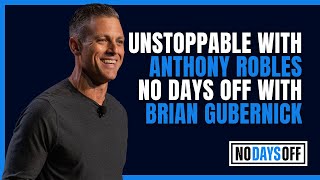
In this long‑form interview, host Brian Gubernick talks with Anthony Robles, the one‑legged NCAA Division I wrestling champion, author, speaker, and subject of the Amazon film Unstoppable. The conversation traces Anthony’s upbringing, emphasizing his mother’s unwavering belief and the early drive to try every sport despite his congenital limb difference. A cousin introduces him to wrestling, where he discovers a one‑on‑one arena that lets him control his destiny. Anthony recounts his high‑school rise to state champion, the shift in public perception from pity to claims of an "advantage," and his decision to walk on at Arizona State to stay close to family. He describes the humbling freshman year, the rebuilding of technique, and the mental battles—including moments of doubt and using anger at skeptics as fuel. The role of coaches is highlighted: high‑school mentors who reinforced positives, and college coaches who pushed him out of his comfort zone. After setbacks, including a disappointing junior‑year national tournament, Anthony’s senior year culminates in winning the 2011 NCAA 125 lb title, an emotional climax he describes vividly. He reflects on the journey to the Unstoppable book and film, the importance of authentic storytelling, and shares three core life lessons—faith, family, and refusing to let challenges become excuses. The interview ends with calls to support his speaking, book, and online presence.
Chapters
Thank you for joining me today. It's Brian Gubernick, and welcome to the No Days Off podcast, where we believe that every single day brings a new opportunity to get better. And today is one of those days to get better. Uh, it's one of my favorite days where we run a longer form interview. As the No Days Off nation knows, every once in a while we run a longer form interview with somebody that I believe to be really, really special, really spectacular, and somebody that we can all learn a lot from. And today we have one of those guests in my friend Anthony Robles, who you should have heard of him by now. If you haven't, well, you probably haven't been paying attention or at least scrolling through Amazon because he's got one of the top movies currently out on Amazon. Anthony is an absolutely amazing person and in my opinion, the definition of resilience and grit. Anthony, thank you so much for being here, man. I'm so excited to be spending some time with you.
It's a pleasure, my friend. Thank you for the opportunity.
Yeah, you are— your story is spectacular. And I don't know, a month or two ago, you had the opportunity to join, you know, my Metrics Mastermind community and, and sit down with all of us. And, and it was, it was such a spectacular hour, hour and a half. And then that night, our entire group went to go see your movie, which just really made it even that much more special. We appreciate your contribution, not just to the Mastermind, but, but the world right now, man. You are making a real difference. And before we started talking today, you let me know, like, you're traveling all over the place, you're talking, you've got movie premiere stuff, you've got a lot going on in your world right now.
Absolutely, man. I've been blessed. It's been a surreal journey. But, you know, having the opportunity to share, travel across the country and share that message of unstoppable, you know, what that means to me and where I learned that from, and that everyone in this world, you know, they all have their own challenges that they wrestle in life, you know. So to be able to help inspire and help motivate in some way, uh, um, you know, just kind of give back because I've been given so much. It's an honor for me to have those opportunities. So very fortunate and blessed right now.
Yeah. Well, I'm going to give our audience that may not know you a little bit of your background, and then I want to dive a little bit deeper into your story, if that's okay.
Absolutely. Sounds good.
So, Anthony, just right out the gate, you know, we're going to say Anthony was, was born with one leg, but that absolutely did not stop him. And you're going to hear this more today, did not stop him from, from what I'd say is chasing greatness in high school. Correct me if I'm wrong, Anthony, but you were a national wrestling champion. You went on to Arizona State and there's a whole story there and went on to become, I think, a 3-time All-American. Is that right?
Yes, sir.
In 2011, I think you won the NCAA Division I wrestling championship at— was it 125 pounds?
Yeah, that's correct.
Undefeated that season.
Yes, sir.
And then off the mat, you know, after all that, that success and that story, You became so much in that powerful motivational speaker, no question about that. I think you've been an analyst for ESPN. You wrote a book called Unstoppable: From Underdog to Undefeated. And your story that I know has touched and inspired millions was just recently turned into a major motion picture with some A-list celebrities we'll talk about. And so, today, I want to do a little bit deeper dive into your story. And really unpack kind of not just your routine, but what it takes to overcome adversity and build self-belief and stay, as you said, unstoppable. So again, welcome to the show, man. We're gonna dive in if that's cool, because our time's limited and I just want to better understand you, if that's cool.
Absolutely, my friend. I'm ready to go. Let's roll.
All right. So, I just ran through in like 30 seconds to a minute, your story, but there's so much more that— and I want to touch on that. So, born with one leg and, hey, call it what it is, I think a lot of people and families would feel bad or maybe just kind of, dare I say, live with it, deal with it. You kind of did the opposite. Like, yes, that was an obstacle. But you did everything as a kid. You tried everything. Like, you, you were trying to be the best at everything. Like, that didn't stand in your way at a young age. How or why? Like, how did, how did that come about in your family? Like, what made you, uh, push and persevere, whereas others may have taken a different path? What, what is that all about?
I think I got to give a huge shout out to my mom first and foremost. Because I was born missing my leg. And pretty much immediately, the world had these very low expectations of me and what I would be able to accomplish in my life because they saw me for what I was lacking. But my mom, she never looked at me in that way. She never set that bar low for me in that way. For her, it was just like, "Okay, you're missing a leg. It's not a big deal. We're going to figure this out." So I just remember growing up, I wanted to be like any other kid. I wanted to play sports. I wanted to ride a bike. At 8 years old, I got a bike for my birthday from my grandpa and my grandma. And my mom was never like, "Oh, I don't know. I don't think you should do that." She's like, "Okay, we'll take it out tomorrow. We'll figure it out." And so it was just that mentality coming from my mom that, yeah, missing a leg, it's a part of me, but it's not going to hold me back. I can always do what I set my mind to. I just need to figure out a different way to do certain things at certain times. And so I just saw life kind of like a puzzle. It was never that I couldn't figure it out. It's just I need to move things around and make it work in my favor. Just huge shout out to my mom for really raising me in a way to where I just believed in myself and everything that I was capable of, rather than seeing me like everyone else saw me, which was poor kid, you know, he doesn't have this or he's missing that. So got to give it to my mom.
Yeah, absolutely. And we're going to talk about your mom here in a bit because her movie role or who played her in the movie is great. So you tried everything. And I remember when we were chatting a couple of months ago before you found wrestling, like you tried other sports, you played football, you did these other things before you fell in love with wrestling and realized how great you can be. That kind of blew me away, to be honest with you. Just like the bike, uh, how you said, you know, you're just gonna go and you're gonna do it. There wasn't ever this— there wasn't ever this, well, that you can't do that sort of thing, Anthony. So you got into these other sports How did wrestling come to be? Like, what made you fall in love with that sport? Why was that the fit for you?
Yeah, you know, I remember I loved football from 6th grade to 9th grade, you know, and so that's what I was focused on. We lived in California up until my— right before my freshman year of high school. And so we moved, you know, that July right before freshman year started. And I didn't have any friends, but I had a cousin who lived about an hour and a half away in Tucson, and he was a wrestler. And I just remember, you know, growing up, we'd talk on the phone, catching up, and he'd always tell me, he's like, "Hey, I think you should try wrestling." I think you'd be good at it. And I never really thought about it too much, but when I moved out there, not knowing anybody, he calls me up one day. He's like, "Hey, come to practice with me. You can lift weights, you can get strong for football and watch us wrestle." And I remember going and that day I got thrown around. I got my butt kicked. It was like the toughest thing I've ever done physically and mentally, but I fell in love with that one-on-one aspect of it. I loved how it was just me and my opponent on the wrestling mat, which Football was awesome, but I was 90 pounds as a 14-year-old kid. I was on defensive line. I wasn't getting a lot of playing time. And so I liked how wrestling, it allowed me to control my fate in a lot of ways. My cousin told me, he's like, "The best guy is going to win in the wrestling room, and that's going to be the guy that's going to represent the team." He says, "You decide your fate. You wrestle and you figure it out." And so I liked that about it. I felt like wrestling gave me a platform really to show people what I was capable of in a tough sport. Because whether I liked it or not, you know, people were going to look at me regardless, you know, just they're going to in my life, you know, but this allowed me to control that narrative of it and say, no, you're not going to focus on what I don't have. You're not going to focus on the missing leg. You're going to focus on what I have. You know, it's this mental toughness, it's this heart, and it's this kind of determination and stubbornness within me. So I felt like wrestling was just a tough sport that really So really, you know, it was perfect for me. You know, I'd been fighting all my life, you know, proving people wrong that what I could do, and wrestling gave me that opportunity to prove them wrong on a wrestling mat.
So when did you realize that, that you were great at wrestling? When did that click for you? At what point were you like, wait a second? And I know, I know you're a pretty humble guy, so this might be a tough one, but when did you look up and you're like, wait, I might have something here? Like, I'm kind of good at this.
I would say it was my sophomore year. So my freshman year wrestling, I finished pretty much dead last in the Mesa City Tournament. Sophomore year, I went to the state tournament and I finished 6th place. And, you know, I remember watching one of my teammates. He won a state title that year, you know, and I'm in the crowd, I'm watching, I'm cheering for him. But I was like, man, I was training with him all summer long. You know, I can do that. I can be on that podium. I can be a state champ. I'm going to get that next year. And, you know, sure enough, I was blessed to get my first state title my junior year. And then from there, the confidence really started to build up. It's where it's really like, okay, I want to win a national title now. I want to go to college. I want to compete at that level and win a title. It just started to grow little by little, but I'd say it was right after my sophomore year, just realizing I'm putting in the work. I'm doing all the expectations from Coach. I'm putting even more into it. I just need to get my mental game in order. I just really got to buy in and really believe that I can do this and go out there and execute. Game changer for me that year.
And I didn't wrestle, but I've known lots of wrestlers. I think those guys outworked every other athlete I'd ever seen. Like the physicality, the endurance required, like just the training was insane. And you did it with one less leg. Did you ever think like, this is too hard for me, or I'm having to do like— How did you— I guess you never felt sorry for yourself. I'm curious, just like, how did you persevere through that? Because I would think like, man, this has got to be even harder for you. I know specifically, you know, I'm going to give away some of the movie, but there's a couple points in the movie where you're running on a track with weights or you're hiking up, you know, a local mountain here in metro Phoenix. Again, you're doing it with one leg, but that's what's required in the wrestling world. That wasn't holding you back. And, and I, I want our audience to understand what made you different from a mindset perspective than most others.
Well, I think it was a couple things. One of— a big one was, you know, I had this motivation to prove people wrong, you know, and just show them what I was truly capable of. And so with wrestling being so tough, with what you have to put into it being so much, uh, you know, I felt like if I can if I could excel at one of the toughest things in the world, I could really earn people's respect out there. Because pretty much immediately, I still notice it to this day, it's different. But when I'm walking through the grocery store, when I'm going through the airport, I notice when people look at me. I notice when they kind of stare for a second. And growing up, it was like I would see that and it's like they saw me as less than. They saw me as this poor kid, the sympathy case. And so wrestling and being able to stick it out and tough it out into that sport. It's like, man, if I can survive the toughest things out there, you know, I can earn people's respect. And that's what wrestling started for me. But also just going through that journey, you know, it echoed my mom's words in a lot of ways. You know, she'd tell me, you never let a challenge become your excuse. You know, she never allowed me to use me, my missing leg as, oh, I can't do that, I can't do this. So getting into wrestling and going through those tough moments, like you mentioned, of climbing the mountain of of carrying the weight. It was just trying to figure out a way to not let this challenge become my excuse and also just to continue to earn people's respect and say, "Hey, it doesn't matter. Pay attention to me for what I want you to pay attention to me for." So it was just that motivation to get through it. And also, I just loved the toughness of it. I don't know if that sounds kind of weird, but I just love to see what my body and what mentally I can overcome. It's just, uh, you know, my trainer used to tell me all the time, he's like, if you are unchallenged, then you are unchanged. You know, I, I enjoy a good challenge, whether it's wrestling, whether it's working out, uh, whether it's just something in business. It's like, you know, challenge yourself to be better, you know, challenge yourself to improve, to, uh, you know, make the most of your opportunities in your life. So that motivates me.
Yeah, it's, it's so good. And one thing that I found fascinating in understanding your story, that the fact that you had one leg was seen as, to your point, a disadvantage, or people felt bad for you. But later on in your career, correct me if I'm wrong, they started to say, oh, well, the fact that he only has one leg is an advantage. I can't believe, like, you know, people said, oh, poor Anthony. And now they're saying, oh, Anthony has an unfair advantage now because he doesn't have that leg. That blows me away. Was that real blowback? Was that real, like, things you heard from a crowd?
Absolutely. You know, I remember seeing it for the first time after I won my first state title my junior year. You know, I'm all excited. They have this, this online wrestling forum in Arizona, you know, and they always talk about the top wrestlers in the state. And, you know, so I win my state title, I'm excited to go on there and see what they're saying about me, you know. And I remember going on there and that was the thing that popped up, is, does he have an advantage? And You know, they're talking about, oh, you know, his upper body's strong and he's got one less thing. All these things, you know, they're making excuses for the other guys. And I felt like, you know, at first it was just rage inside of me because like, man, they're taking away from everything that I put into the sport. You know, like the 6, 7 days a week that I'm training, the extra time I'm putting in the weight room. It's like they're acting like I just woke up and all of a sudden I was strong. All of a sudden my technique was good and I figured out a style that, you know, would work for me. But as I started to think about it deeper, I realized that I was accomplishing my goal in certain ways. Now no longer were they feeling sorry for me and seeing me as less than. Now I was getting so dominant to where they were trying to pull me apart. So I felt like I was earning that respect. And really it was like, now they're seeing me for me. They're seeing me for what I'm capable of. They're seeing me for my strengths. So that became a motivator for me. I saw like a target was growing on my back. You know, and it was actually kind of fun for me to go through that process of it. But yeah, at first it made me mad, you know, but, you know, got to use that negativity as motivation sometimes.
That's right. That's right. And so you become the state champion in high school. And before I jump into college and the college career and the accolades there, since we're kind of talking about your upbringing, I want to ask you, when you look back at your upbringing, your mom, your family, your coaches, whether it's lessons from family or just experiences, what do you think were the few key skills that you learned that maybe helped you push through the challenges, the losses, maybe those high-stakes moments like competing for a state title multiple times, rather high stakes? What did you learn in that upbringing time that helped you get through those things?
I'd say a couple of things. You know, one of the things my mom always used to tell me, you know, she'd say, "You finish what you start." You know, and so with my brothers, you know, they played sports and there are certain times where they didn't want to, they didn't like the sport initially, you know, the first couple weeks of practice and they wanted to quit. And, you know, my mom was like, "No, you started it, you're going to end it. You're going to finish the season. Then you can do something differently." You know, so, and so it was finish what you start. And also, you know, my mom, She never— like I mentioned earlier, the challenge become an excuse. She didn't allow me to do anything but my best, to give anything less than my best, whether it was in sports, whether it was in the class. I remember my mom made it a rule for me that when I got into wrestling and it became something I was passionate about, she's like, okay, you cannot get anything lower than a B in any class or I'll pull you out of wrestling. She's like, C's are unacceptable. She's like, I know you're smarter than that. So she made that rule. I remember, you know, she pulled me out temporarily once because on a progress report I got a C. And so, you know, I was working and trying to get it up. It was math. And, you know, I remember I start getting it up, but then a year later I get a progress report and it's a C. And she sits down with my teacher and my teacher tells her he's coming in for extra credit. He's doing the extra things. He's doing all the work. And I was still expecting my mom to pull me out. But, you know, when we walked out of that classroom, she's like, look, I'm proud of you. She's like, you're— I'm not going to pull you out. She says, I know you're giving your best. And so that was just another thing for me is like, you know, we always want the success at the end. We always want the end result, you know, that top of the podium that we're reaching. But, you know, at the end of the day, what's most important is just knowing that you're giving your very best effort, you know, that you're giving 100%. So those are two things for me that my mom taught me early and put in my head that it's really to help me to be successful in my life. And it was also helped me to be successful on that wrestling mat.
It's, it's, it's so awesome to hear, um, the influence your mother had on, on your life and your career. We all, we all hope to have that degree of influence on, on our own kids. And, and I know you have, you have a couple-year-old son now.
Yeah.
Uh, hopefully, and I'm certain you are, you're taking these lessons from your mom and you're now imparting, or will be imparting those on your son. He's a little young right now. He hasn't started his wrestling career, I don't think so, just yet.
He's 2, but he's already in the wrestling room.
I should have guessed that. So we, we finished as a state champion in high school, and, uh, now it's, it's, it's time to go off to college. I think you always had dreams and aspirations to, to wrestle at Iowa, which I believe is, has always been historically like the number 1 ranked wrestling school. That didn't work out for you. You had another handful of offers or opportunities to go somewhere else, but you chose to go to Arizona State where you actually didn't have a full ride. You didn't have a scholarship. I think you, you walked on there. Why, why'd you go that route?
Yeah. You know, I, I received a one Division I full ride wrestling scholarship offer from Drexel and which was an honor. But, you know, for me, what really made me decide to stay home and go to Arizona State was my family. You know, I keep mentioning my mom, how amazing she is. You know, I didn't have the best father figure growing up. Never met my biological father. My stepdad was in the picture when I was about 3 years old, but it was very— it was a negative relationship there. You know, there was a lot there. And so they were going through some rough times. And, you know, I just remember graduating high school, getting ready to make that big decision of where I was going to go. And at the time, I just felt like I really needed to be home. To support my family. I couldn't be all the way across the country out in Pennsylvania and be worried about them back home. And so I decided to stay because of my family and to take care of them and support them. But ultimately, bigger picture, I realized that I needed them to support me as well. I needed them to kind of strengthen me back up and to kind of lift me when I needed it. So that was my decision maker. And people thought I was crazy for it. I thought I was crazy too for making that decision. There was just something strong inside of me that was just telling me, you need to stay home. You need to go to Arizona State. You need to be around your family.
Yeah. So you go to Arizona State, you show up there. Were you great right out the gate or was it kind of like a reboot and having to earn your stripes all over again?
Man, it was humbling. You know, you mentioned my pretty solid high school career that I finished. You know, I was like 96 in those last 2 years. I go in there and in the Russeloffs my freshman year, my true freshman year, I get pinned. And, you know, I hadn't been pinned since I was a freshman in high school. So it was very humbling. And it felt like in a lot of ways I was learning the sport all over again from scratch. You know, like everything that was working for me, everything that I was confident in, all of a sudden it's like, it's not working anymore. I'm not confident anymore. So I had to kind of put extra time and effort into it and really focus on the little details of my craft, you know, of my technique. And sharpen it up to get it to a level to where I could compete at the Division 1 level. So it was a struggle. You know, I had to kind of rebuild my confidence, rebuild the technique, and it was a step-by-step process, you know, but for me, you know, one of my big things mentally, it's that you always find that solution, you know, and it's something that I've learned in my life. On my crutches, it's I find a way, you know, you figure it out. So it was just a matter of time for me where I felt like I'm just going to figure this out. You know, little by little it's going to come together. But I had to be willing to go through that grind, you know, I had to go through the process of it all.
I want to, I want to respectfully challenge you a little bit here because you are, again, every interaction I've had with you, you are what I would describe as an eternal optimist. Like, it, to me, it's like you always find the positive in every story you tell. Like, you want to hear this, oh, I had this self-doubt, or I had this, and you never display any of that, which is amazing. But I want to push you a little bit on this, because when you get to Arizona State, you're, you're a— I mean, a national champion. Like, you had, you had proven yourself, and now you've got to kind of restart. Um, I wouldn't call that failure necessarily, but I would call that a big obstacle that you had to handle. Did you ever truly— did you ever get down on yourself, or was it always just an opportunity to get better? Like, was there ever a moment where you're like, man, maybe, maybe it's time to hang it up? Maybe I, maybe I just don't have it. Did you ever have that moment?
Absolutely. Yeah, multiple times. Believe it or not, there are multiple times when I had that, that, uh, just thought, those thoughts going through my head. And, you know, when I was close to my breaking point, you know, I remember times where, uh, you know, I'm in the wrestling room after practice and I'm sitting, you know, it's a big room, the three full-size mats, I'm sitting at the far corner by myself, and I got my hoodie up and I'm just, I'm like, I'm fighting back tears because just things weren't working out. I wasn't getting the results that I wanted to. And I really just considered just walking outta there and not coming back. But kind of going back to sometimes using negativity as motivation, during those dark moments, I kind of used that. It's like, if I quit now, if I give up now, I am proving a lot of people right. All those people who've seen me and looked at me my entire life in a certain way, I'm proving them right. So that just, that fired me up to kind of stick with it, to shut those people up in a lot of ways. That's kind of what I told myself mentally. And so it wasn't all just a negative, proving people wrong, but certain times in my life I had to use that. I had to use that kind of rage and that frustration that was kind of building inside of me my entire life, whether it was things with my father figure back home, things with just life in general. You know, wrestling was my outlet in a lot of ways, you know, so I had to kind of channel that energy, that negativity into something that was going to be productive. So, you know, there were times where, yeah, it was great, you know, I'm happy and I'm, you know, I'm trusting the process. I'm in there to get better and it's all good. And other times it's like, you know, I just got to find that courage and kind of find something within me to take that next step, you know? And that's something— sometimes that's what it's going to be, you know, it's not going to be pretty, it's not going to be easy, it's not going to be fun, but you got to have that courage to just take the next step. If you wake up tomorrow that's another opportunity, you know, so take it, you know, little by little, you'll find the way out of that darkness that you're in. And there are some dark moments for me, you know, but little by little, I started to see the light and, you know, I started to become clearer and then it kind of got back to the positive things all over again.
It's so good. So good. It makes me think a question for you. We have, you know, a lot of individuals that listen to our podcast that are, that are business leaders that are responsible for influencing the thinking of, of their people, be it employees or sales agents or whatever it may be. Um, and they've got to help coach those individuals in, in, especially in those down days. Uh, they got to help them believe that there's hope, that there's opportunity. Uh, so I want to ask you, obviously you had a certain mindset, but you also had a couple really key figures beyond just your mom I think your high school coach, uh, who still plays a major role in your life. I think your college coach, um, played a pretty significant role. Talk a little bit around, um, the influence and the support and the leadership of, of the coaches that you had in, in, in your, your wrestling career.
And I was blessed with some great coaches. You know, they definitely are still like father figures to me. I keep in touch with those guys. We're barbecuing together, or, you know, I'm, I'm in club club coaching with them, high school coaching with them now, starting with my high school coach, you know, he really echoed my mom's words in a lot of ways. And, you know, his phrase, he'd tell me, we're going to focus on your strengths and camouflage your weaknesses. And, you know, for me, naturally, I think I was already very hard on myself. You know, it's like I'd win a match or, you know, and I'd still walk off and find something to be angry about because I didn't do this right, you know, or this wasn't— so my coach, he wasn't one that was going to, like, lay into me, you after matches, whether I won or I lost. It was never like, oh, you didn't— he'd find something positive. It's like, okay, you're not there, didn't win the match, but you're doing this really well. You're getting better here. So he helped me to really focus on those positive things, kind of going through it to where as I went through my life on and off the mat, I started to learn to think the same way. Like, okay, this isn't going right right now. Yeah, this is going on. This is a struggle. But you know what? This is right. You know, I have this at least. So that positive reinforcement, the positive thought process from my high school coach was huge. My college coaches, you know, Brian Stith, who was actually my assistant coach at Arizona State, he was the wrestling choreographer for the film, and Sean Charles, you know, both those guys, they challenged me sometimes to, you know, step outside of my comfort zone. You know, I remember one time in particular, you know, I was known for being a tough top wrestler. You know, you'll see that in the movie. I do all these tilts and things and, you know, in order to get to that level of college, I had to focus on a certain part of my game that wasn't there. And my coach was watching the film and he actually pulled me in his office and he showed me on the film. He's like, look, if this doesn't go right, he's like, I can see it in your face mentally. You start to shut down right here. That's why you're losing these matches. So he called me out in that moment and it was uncomfortable. He did it in a respectful way, but it was like, No one wants to hear their flaws. No one wants to hear what's wrong with them. But he called that out, and he forced me to level up. And he forced me to address that situation. And we did an arm bike workout every single week. I used my arms a lot when I was wrestling. So, man, every single week, I'd basically get off this bike and collapse on the ground. But Coach was like, this is what you need to do. He said, we need to pull you out of your comfort zone. So I think a great leader is a combination of forcing your your people to think positively, to find the positive things in everything, and also just forcing them to step outside of their comfort zone or pulling them outside of their comfort zone to grow and level up. And it's just finding that balance of both of them, you know. And I think I was blessed with, with some great team support around me, great coaches to have that balance.
Yeah, not only do you have great coaches, you were coachable. And I, I could hear in the words you're choosing and how you're, you know, what you're saying, uh, and I think even a couple months ago I, I had mentioned when, when we were chatting, uh, at that age, to me, you just seem so much more mature, and maybe emotionally mature. Um, and maybe that was, again, upbringing or overcoming these obstacles or your mother's influence. But there's, there's just so many— there's a couple things there that I really think made you coachable. And I emphasize that, I think, for our audience today, because, um, some of us, maybe even I, I think me too, like, there's times where we should probably be a bit more coachable, open to you know, guidance, mentorship, recommendation in the way that, that, that you just described. It's really great. So we're at Arizona State. You do now establish yourself. Uh, I think you turned it on maybe your junior year. I wanna say, is that where, um, I, I think you went to the state tournament. I'm sorry, state tournament, national tournament. Then like, what was the ASU career like in up to that finale?
Yeah, so, you know, my freshman year, I redshirted my true freshman year. My redshirt year, first year competing, I was one match away from becoming an All-American at the national tournament. Sophomore year, I finished fourth in the country, so that was my first kind of, you know, basically leveling up onto that stage, showing I was here. My junior year, I took a step back, you know, it was a challenging season for me. I finished seventh place in state excuse me, at the national tournament. And that was another dark moment for me. You know, I was considering rocking one away, you know, just quitting and giving it all up. But senior year was when it really all came back together for me and when I won my title. But, you know, it's kind of a roller coaster, you know, some up moments and then, you know, come down and finished on top.
But yeah, I would bet— and I'm sorry, I kind of butchered that because I thought it ramped up to junior year, but you had actually rather early success in the college career. Going into your junior year, you might have been favored to be that national champion, or at least competing against maybe that one Iowa guy, I think, in the movie. That was supposed to be the matchup, but you finished 7th. That was a hard time for you.
That was rough, you know, and I was picked as one of the potential wrestlers to win the title that year. I was ranked, you know, top 5 in the country going into the national tournament that season. And, you know, I just remember, you know, the match in particular that I lost, it was the quarterfinals. You know, I wrestled against a guy that I had beaten in the past. And, you know, there was a moment in particular where, you know, we go out of bounds. I'm winning the match. You know, we go out of bounds. I think there's 30 seconds left on the clock. And just the thought popped into my head where I was like, man, I'm about to lose this match. You know, like, I'm about to lose this match right now. And I just remember this panic set over me and went back in, I made a mistake. I was winning the match but took a bad shot. He capitalized, he ended up beating me. And, you know, that broke me, you know, that it just mentally just, just tore me apart. And there are some things going on, you know, in my life with my family, with, with the, you know, the situation there with my father figure taking off. And, uh, you know, so there are a lot of factors that were kind of impacting me, but, uh, at that moment it just kind of all just, just buckled me.
Yeah. But you pulled it back together and did what you do, right? Got your, got your head right and, and got back in the gym. And your senior year was kind of that redemption season of sorts.
It was, you know, and, you know, kind of pulling myself back together. I got to give credit to some special kids out there, you know. I got a stack of letters from a group of third graders in Atlanta after I lost this tournament. They decided to write me as their hero of the week, you know. And so that inspired me to come back, you know, for a bigger cause. And, and It was more than just a medal at that point. But, you know, I think it just goes back to no one does it alone or no one can do it alone. You know, it's important that we find someone to lean on for support, for mentorship, for accountability as well. You know, as you're going through life, as you're going through, you know, trying to build your business, whatever it may be, you know, look to those people out there for support. There's a phrase we have on, you know, at the Mesa High wrestling team. We used to say all the time, you show up, you work hard, you be coachable. You know, you got to have people around you to be coachable, to support you, and just to motivate you and inspire you to come back. So those kids brought me back my senior year for the funnest year I ever had, that's for sure.
Well, it's the year that ended with you taking home that title. How did that feel?
Man, that moment, you know, there's 10 seconds left. I remember the clock counting down, the roar of the crowd getting louder, and when they got down to zero, it was like, you know, I felt like I took a breath for the very first time, you know, like I didn't feel pain from wrestling 3 days, uh, you know, and 5 matches, you know, I just felt this sense of joy, you know, like I had reached that mountaintop finally. And all the hard work that I put into it at that moment, I was like, man, I would have done that 100 times over, you know, all the struggles, that's what makes it special, you know, it's the price you pay for what you want, that's what makes it so valuable at the end of the day. Um, so to reach that, you know, to not only earn people's respect, but just, you know, show what I was truly capable of. Uh, that was a— it was an amazing opportunity and an amazing moment for me.
I bet it was. And it wasn't just your 1-year, 2-year goal. I think as a kid, especially, or even at least in high school at Mesa, you were talking about being a national college champion. And so that must feel so darn good to, to take that title and have your, your friends and your family and, and your mom in the crowd. Rather special moment. I could tell, like, I'm sure you've talked about it a thousand times over, but I'm gonna guess it's still, just by looking at you right now, the hair on the back of your neck still stands up when you tell that story a little bit.
The last 10 seconds, I can't help but want to crack my knuckles and get rolling again.
I bet. I bet. Well, it's, it's an amazing story. Um, it's one that, that led to you writing a book. Uh, and then that book has now become a movie, uh, your mom being played by J.Lo, which I think it just cracks me up, um, which it's awesome because I picture my mom in a movie and I'm like, well, Jennifer Lopez wouldn't be a bad, bad person to play her. Don Cheadle's your coach, Michael Peña is a coach, uh, you've got, I mean, just a star-studded, uh, uh, cast there. That's pretty awesome. Gotta have a movie made about your life, your world. How did that one feel?
I was blown away. You know, just to have that amazing cast. But also, you know, I was just so blessed and so fortunate that these— that group of people, you know, and Amazon and Artists' Equity, they came together and they're really— they're really set on making my family proud of how the film was portrayed, you know, what was shared, how it was shared, to make sure it was as authentic as possible. You know, obviously for Hollywood, they had to, you know, do their certain things and artistic creativity, but to be included through the process, my family and I, you know, to have our thoughts and opinions valued and, you know, included. That was awesome. And, you know, just really just a breath of fresh air because I had heard some, you know, some negative stories of people who had had films told about their life and didn't like how it turned out, you know. And that was a fear of mine is, you know, with so many different elements of my story, you know, the painful things, I didn't want to, you at the end of the day, have something out there for the rest of my life that I wouldn't be proud of, that I wouldn't be able to recognize. So, you know, to sit back with that amazing cast, with this amazing group of people, and also be proud of the finished product, man, I'm just— I'm blessed. It was a long journey to make it. You know, I started getting the initial calls back in 2011 for, you know, for people to make a film about my life. But it was worth the wait, you know, considering how it turned out and who we got to work with.
It's a great— it's a great movie. I loved it. I love sports movies. I like the comeback stories, but I mean, they nailed it. It's a really special, special film. Well, we only have a handful of minutes left, so I want to ask you one, um, pretty heavy question that I borrowed from, uh, Lewis Howes, who runs a great podcast. And, and here goes, uh, I want you to imagine that you could live for hundreds of years and you, you could accomplish all of these things you've ever wanted to accomplish. But for whatever reason, all of your content, the, the interviews, the movie, the books, this conversation today, it all disappears. You get to leave behind just 3 truths, 3 life lessons that we could hold onto from, from you, from Anthony Robles. What would your 3 truths be? Those 3 life lessons.
That's a good question. You know, I'd say number one for me, it's he was a man of faith. You know, my mom always used to tell me that I was made this way for a reason, that God had a plan for me, and I believe that, you know. So he's a man of faith. My faith has gotten me through a lot of things in my life, and it's given me that strength inside. The second thing is, is family was what's most important to him. You know, my wife, Laura, my son, Abel, man, I want to be the best husband and the best dad that I can be for them. You know, just real quick, Donald Driver, you know, Hall of Fame wide receiver from the Green Bay Packers. I remember I had the opportunity to sit down at dinner with him one night, you know, and I just won my title and I'm with him and his family and we're talking. I just remember him telling me, he's like, look, he's like, when you have kids, you got to remember something. He's like, you can do all this stuff in the world, all these amazing things and get all the records. And he's like, But when you die, he's like, you don't want all these people at your funeral telling your kids how amazing you were. And for them to look at them and just think, well, I never really knew him. You know, he was never really around. So that for me, they put it in perspective. Like, I need to always put my family first. I need to make sure that they're at the center of everything. So family, you know, is most important, you know? And also the third thing about me is I never allowed my challenge to become an excuse. You know, we're all going to have something. We're all going to have an answer that we can take as the easy way out. But don't take it. You know, look for that difficult answer. Look for that equation that you have to solve. Figure it out. There's a way. You're going to have to spend some time. You know, it's going to be difficult, but don't ever allow yourself to take that easy way out. And that, for me, it's given me the opportunities that I have today.
I think you nailed it. I think you nailed it. Anthony, I actually do have one last question for you. I want to make sure that our audience, that No Days Off Nation here, supports you. I want everybody to buy your book, which is Unstoppable. Watch your movie, which is also called Unstoppable. How else might we be able to support you?
Well, you can check me out on my website. It's my name, it's anthonyrobliss.com. And I'm on Twitter and Instagram, it's @aroblis125. So, grateful for any support I can get. It's an honor.
Yeah. Make sure everybody listening today share this interview. We want to see Anthony out there. Doing even more of this, uh, the motivational speaking, telling his story. He's clearly an incredible human, and, and we're so grateful for having you today, Anthony. Thank you for your time.
I'm honored for the opportunity, my friend. Thank you for having me.
All right, with all that said, the No Days Off Podcast, thank you so much for listening. And remember, every single day brings a new opportunity to get better. So let's get after it.
Thank you.
[MUSIC] [MUSIC]
More from Brian











Ep 755 | Mack Newton's Words of Wisdom - "You Are Only as Big as Your Self-Concept" (REPLAY)