
Ep 564 | Endurance, Identity, and the Unexpected Gift of a Quesadilla - Lessons from 100 Miles
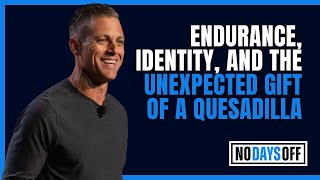
In this episode of the No Days Off podcast, host Brian Gubernick reflects on completing a 100‑mile, 33‑hour ultra‑marathon in Northern California and distills eight concrete lessons that he applies to business, leadership, and personal growth. He explains how pushing past perceived limits turned his former “ceilings” into new “floors,” framing the race as a war of many small battles rather than a sprint. He highlights the power of mantras—relentless forward progress and the 40% rule—to overcome moments of doubt. A simple act of forcing a smile is shown to shift mood and influence team energy. He emphasizes that the race was a team effort, underscoring the importance of surrounding yourself with supportive people. An unexpected quesadilla illustrates the value of shaking up inputs when stuck. He warns to expect and prepare for storms, noting how inadequate gear nearly cost him the finish. Finally, he describes nighttime running as a “cheat code” for clarity, advocating solitude away from noise for better decision‑making. Throughout, Brian ties each endurance insight to entrepreneurial practice, urging listeners to choose hard, stay in the fight, and build a resilient support network.
Chapters
Thank you for joining me today. It's Brian Gubernick, and welcome to the No Days Off podcast, where we believe that every single day brings a new opportunity to get better. Well, if you know me, if you follow me at all, and I've alluded to it a couple times over the past month, uh, I ran a 100-mile race in Northern California just over a month ago. The race took me just over 33 hours and it broke me down in all sorts of ways, many ways I didn't even— did not even expect. But in breaking down like that, it revealed some really powerful truths. Not truths necessarily about fitness, but how I show up in life and how I show up in business, how I deal with adversity or maybe don't deal with adversity. And what I really value. This episode is going to be about my takeaways, and it took me a month before I, before I brought them to you here at the No Days Off Nation. I wanted to sit on these lessons to make sure that in fact they were meaningful. Usually I talk around my different experiences in the marathons and other things that I do. If you've been following for the past couple years, you know this, but I usually talk about those quite, quite soon after I complete them. This time I sat on it a little bit because I just wanted to see if in fact these things really still mattered. And they do. So here we are today. I'm going to share with you, with our No Days Off Nation, the lessons that, that came from this experience, but specifically came from the experience of doing something hard, something that I embarked on and chose to do because I wanted to see what would happen if I was going to do something that maybe I couldn't finish. And where my mind would go, how I would react, how I would behave. And, and, you know, that experience is, is what shaped much of these lessons. So let's, let's dive in. The first thing that I realized from this particular event— 100 miles, 33 hours, pretty darn hard. I've never done anything like this. Frankly, I'd never run more than 32, 33 miles total, so I had more than 3x'd my total distance. Not to mention there was 17,000 or 18,000 feet in climb and another 20,000 in descent. So, yeah, it was, it was pretty hard. But my first lesson was the, the benefit of making your ceilings your new floors. Making your ceilings your new floors. I never thought years ago I'd be a 100-mile guy. I thought that that was for lunatics, superhumans, the elite in the endurance world. But I somehow got to the finish line. And I think just after that, or even sometime during it, my mindset, mindset kind of shifted. Because I realized that what used to feel like a ceiling, maybe something I looked at, you know, as again, crazy, or I looked up to in awe, that ceiling became my new floor. Now I know I can handle this sort of thing, and I wonder what else am I maybe underestimating? You know, I've heard the phrase redefine impossible, and I heard— I was reading it before I did this race, and when I finished this race, I was like, wow, I really did just redefine what I perceived to be impossible. And for— I think for you, if you're listening to this, I'm not saying go out and run a race that might break you, although it could be a good thing for you. I think it's— this is applicable all throughout life, making your ceilings your new floors and how your mindset totally changes. Maybe it's hiring someone to your business that you think is way, way beyond what you're ready for. Maybe it makes you scared a little bit. Maybe it's launching a new vertical in your business. Maybe it's going all in on your next move. I just know that when you choose hard and you complete it, your bar permanently moves up. And I think there's massive benefit again in striving to make whatever you deem to be impossible, whatever you deem to be your ceiling, making it your new floor. Redefine impossible. Number 2, this is a lesson that shows up in lots of places. It's not a war. Let me rephrase that. It's a war. It's not a sprint. What do I mean? This wasn't a short race. This wasn't a 5K. It was 33.5 hours for me. It was pretty rough from time, you know, at different times, mentally, physically. And that's what made me realize I wasn't running a race per se. I was kind of in this, this, this war of sorts. And, and wars are typically made up of, of small winnable battles. Now, this war was with myself. This, these battles were with myself. Some miles felt great. Others were kind of torture. And so I actually had to be strategic with my effort, you know, conserve a little bit in the hard parts, surge when I had some momentum and my mood was right, my energy was right. And I think business is, is, is the same. I don't think you win with one huge or viral moment. I think you win with consistent strategic execution over months and years. So you got to kind of know what battles matter most. And don't waste your best energy when it's not time to go all in. It's a war, it's not a sprint. Lesson 3, mantras. Mantras matter. I, you know, I didn't really necessarily believe in that. I went into this race with a couple things in my mind, you know, things I wanted to repeat to myself or think about when, you know, when the going got tough. And the two mantras I carried with me, and we've covered both of them at the No Days Off podcast over the past couple years. The first was a recent one I've been talking about, Cam Haynes and his relentless forward progress mantra, RFP, relentless forward progress. The other one was, comes from David Goggins, and David Goggins says, whenever you think you're done, you're really only at 40%. 'You're only at 40% of your potential' whenever you think you've had enough. Every time I was feeling down, I wouldn't say I felt like I wanted to quit. I can't necessarily say I ever hit a moment where I wanted to quit, but every time I was down and I was struggling a bit emotionally or physically, those things were playing in my mind. Just relentless forward progress. 'You're only at 40%.' And I started to believe in them. I started saying it over and over again, and I really believed in them. And in business, I think we hit that "I'm done" wall all the time. Maybe it's a lost deal or a bad week or quarter or month or whatever it is. It's a failed launch. It's a plan that didn't go right. But if you start to think, "Man, I'm only at 40%," you realize there's more, a lot more still in the tank. So, I think that you've got to find your mantra in business and in life, anchor to it. it could actually be what carries you through your next storm. Lesson 4, this was something, uh, my, my friend, really good friend and member of my crew who helped crew this race, Julie, she had, she had shared this with me before the race. She had talked about forcing a smile somewhere around like mile 70 of the race. That was before that, was probably in the 60s somewhere. I was pretty alone. Uh, actually, actually, it was right at about mile 60. I was pretty alone. Uh, I mean, I was physically alone. There was nobody around me, and I hadn't gotten to this aid station where I knew the crew was at. And it was, you know, the sun was starting to come up, and you'd think you'd be excited that the sun is coming up after 24 hours or so. Uh, and it was, it was colder. It was kind of raining a little bit, misty a little bit. And I remember what Julia told me, she told me to force a smile every now and again and just see what would happen. And it was the coolest thing, like I made myself smile and then I couldn't help but laugh at myself and I instantly changed my mood. I know it sounds ridiculous, but it actually really worked. Your physiology affects your psychology. So, in business, when your people are watching you, when your team's watching you, and it's hard, try smiling, even when it's forced. It's, it's, it's comical, but your energy changes, and that energy is contagious. Your mood can become theirs. Force the smile. Lesson 5: It wasn't my, my race, it was our race. What do I mean? I had a crew with me— Julie, uh, Eric, another great friend of mine, and her husband and Jeff, who was my coach. I had that crew with me, people I really care about, and they kept me fueled, they kept me grounded, they kept my head right, they kept me moving. And without them, I, I'd like to think I finished that race, but I don't know. I don't know. I did recognize though it wasn't my victory, it was ours. And I saw that really early on. I mean, yes, I signed up, and yes, I had to run it, but instantly, like right at the start I was like, wow, this is a team event. It really is. As entrepreneurs, we love to talk about grit and being kind of solo grinding it out. But if you build the right team, the journey becomes so much more powerful and it becomes more sustainable. I think in business, you don't just recruit people or recruit talent. You build people who believe in the mission, who want to be in your corner, when the miles get long. It's not your race, it's our race. Wasn't my race, it was our race. Lesson 6, shake things up. I was eating the same thing for hours, Pop-Tarts and peanut butter and jellies. I will probably never touch one ever again. I take that back, I'm gonna have some peanut butter and jellies, but I don't need another Pop-Tart. I was eating those for hours. My stomach was like, enough. My body had too much sugar. It was like, enough. And then someone handed me, of all things, a quesadilla, something I've never eat like ever, especially while I'm running. And the funniest thing happened, that damn quesadilla changed everything. It changed my mood, my energy, my focus. What I realized is that sometimes the thing you never consider is the exact thing that you might need. In business, maybe it's a new hire from a totally different industry. Maybe it's something radical like a radical marketing idea. Maybe it's a pricing shift. Whenever you feel stuck, whenever I feel stuck moving forward, maybe I'm not going to push harder. Maybe I just need to change the input. Maybe I need to eat another quesadilla. Lesson 7, 2 more left, stick with me. Lesson 7, one we've, we already know, we've heard before, but for me it really showed up. You got to expect the storm. At mile 90 or 91, I thought I was in the clear. I thought we were good to go. I made the final cut and I just had to finish the race. But I had been rushing to get up to that point. There's checkpoints and you have to make them in a certain amount of time. And I had stripped a lot of things out of my pack, out of my bag, so as to not have to carry everything. And because we were— I didn't really have as much time as I wanted at the aid stations, I couldn't change certain clothes. So I was pretty cold and wet. And at mile 90 or so, It got colder, it got windier, it got wetter, it even hailed. And it almost cost me my finish. I made it 90 miles and made it through all these checkpoints. And then it started to hail on me and rain on me. And it wasn't good. It was not good. And it's 'cause I didn't have the gear. Now, fortunately, it did stop and it cleared up, but there was probably a 2-mile stretch span where I'm like, they're gonna see me at an aid station shivering, they're gonna pull me out of the race after all of this work because I was ill-prepared, because I didn't have my gear, because I didn't expect the storm. It was gonna cost me that race. That's how life works. You think you've maybe made it to the easy road, you've earned the easy road, and then the storm still hits. If I could go back in time, I would have expected it. I would have better prepared for it. And when it comes, I wouldn't have been surprised. See, my takeaway is that winners plan for adversity. I think survivors carry the gear they hope they won't need, but they still have it with them. I got lucky because I didn't expect the storm. And then lesson 8, the final lesson, you know, has to do with the nighttime. And what I learned is the nighttime is a cheat code. Let me explain. I was in the, you know, the sunset at whatever time, 7 or 8 or 9 or— I don't even know what time it was. But you're alone in the pitch black, headlamp on. And I love it. I love that time. And I know that sounds crazy because most people fear being alone in the dark in the middle of the woods. But I really like that quiet time. I really like the chaos that you kind of feel is around you in the woods and whatnot. But just like quieting your mind and getting through that. I really, really enjoy that. I found it's kind of a cheat code. I find that that's where a lot of my real clarity comes from because I'm really away from the noise and I have to kind of quiet my mind and, and calm my fears. And I thoroughly enjoy the night. So meaning that that night is a cheat code for entrepreneurs. I think we got to get away from the noise. I think your best decisions don't come when it's all noisy and there's groupthink and Slack threads and emails. They'll come when it's just you, your thoughts, and, and no distractions. So I think you've got to lean into that stillness, and I think that that's something out there that most people just never get an opportunity to find. So this race, this 100-mile race, uh, it didn't necessarily break me. I think it, it broke me open in many ways. It didn't come out of it with just like some, some medal, but I came out of it with some more clarity. I think I came out of it with better relationships. I think I especially came out of it with a higher bar for myself. I don't think you have to run 100 miles to get this, but I do think you need to choose hard. I think you do need to stay in the fight longer than feels comfortable. And I think you especially have to keep people around you who are not going to ever let you quit. Frankly, that's what we're trying to do here at the No Days Off podcast. This isn't just about hustle. It's about becoming the kind of person who shows up no matter what— rain, darkness, quesadillas, and everything else. That's all I have for you today in the No Days Off podcast. Thank you so much for listening. And remember, every single day brings a new opportunity to get better. So let's get after it.
More from Brian











Ep 755 | Mack Newton's Words of Wisdom - "You Are Only as Big as Your Self-Concept" (REPLAY)