
Ep 588 | No Days Off Interview with Charlie Engle
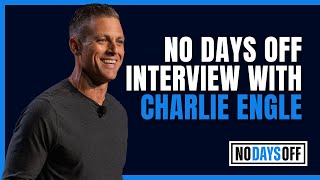
Ultra-endurance athlete Charlie Engle ran 35 marathons in three years to escape addiction, then crossed the Sahara in 5,000 miles for water.org. He served 18 months in federal prison for mail fraud and ran an ultra while incarcerated. Now he's planning a multi-modal expedition from the Dead Sea to Everest Base Camp.
Chapters
Thank you for joining me today. It's Brian Gubernick, and welcome to the No Days Off podcast, where we believe that every single day brings a new opportunity to get better. If you have been part of the No Days Off Nation for some time, then you are probably aware that yes, most of our episodes are, call it, 7 to 12 minutes in length, but every so often we do a long-form interview with somebody that I believe to be absolutely amazing, somebody that I think we can all learn from. And, and today is, is one of those special days because I get to bring my good buddy Charlie Engel on today's, uh, episode. Charlie, how you doing, buddy?
Man, I'm so happy to be here. It's a good, it's a good day when I get to talk to you for a while.
Um, you are one of my new favorite people. Well, let me back up. You've been my favorite person for a little while, but we didn't actually meet in person until just recently. Uh, you're one of my favorites. My audience here, our listeners, Charlie, they've heard me talk about this 100-mile deal I did. Uh, they've heard me mention it now and again, and doing hard things, and the whole concept and all that goes along with that. What they don't know is that, Charlie, you were indirectly responsible for me signing up for that 100, and that's because I stumbled across your book called Running Man. And a portion of the book— there's lots of the book that may not inspire you to run 100, but a portion of the book, because you're one of the world's greatest ultra athletes— there it is, here it is right here, I got my copy.
Oh, there we go.
All right, um, your story, your book, your, your intro into all things ultra marathon running and beyond. It was just so inspiring to me. And it was the first book I'd read around running like that, that made me want to go down that path. However, there's so much more to you than just simply your ultra, you know, athlete career. I'm hesitant. I don't even know how to ask this. Like, I was going to say, tell us your story, but you're kind of like a Forrest Gump, Charlie. You've lived like 10 lives in one. But if someone asks you, hey, What's Charlie Engel about? What's your answer for that?
Man, I think immediately, and you know I like humor, so immediately what jumps into my head is probably something my wife would say, which is it's a lifelong quest to never have a real job.
That's genius. I love that.
It doesn't pay all that great, but if you just do enough dumb shit, you get to write about it, you get to talk about it, you get to live it, and you get the lessons that come from it. But, you know, and I'll give you the super, uh, you know, I'm not a short answer guy, but I'm going to keep this one tight. Um, you know, I, I made a mess of things in my 20s. Uh, you know, kind of had that, that outstanding high school career, went to college, got lost in drugs and alcohol, and just kind of wallowed in that for about 10 years and just couldn't really, just couldn't find my way out. Went to rehab, went to church, went to, you know, a shaman, did everything I could to find a way, something outside of me to sort of get me out of that. And nothing stuck. And in hindsight, nothing stuck because I wasn't ready. You know, I mean, that's just a, that's a simple fact. I wasn't about hitting bottom, wasn't that stuff. It was just simply I hadn't suffered enough. I mean, which sounds like a weird thing to say, but it just hadn't gotten to the point where I was done. My son was born, my first son, at 29 years old, and his birth sort of lit a fire under me to make a change. Still didn't happen like automatically. You've heard my story and you've read the book, but, you know, ultimately, a couple years— a couple months, rather, into his life, you know, I found myself in a crack house again, drinking and doing the deal and just destroying everything I had kind of built in those first few months of his life. And I recognized that I needed to make a change. As I like to say, nobody was coming to save me. And I think it's an important point. I'm not here to teach lessons today, but they're kind of inherent, hopefully, in the stories. So many people would support me. So many people desperately wanted me to get better, to be better. To allow me to be the person they knew I could be, but I just stabbed it and deflated it and sunk it every single time. I found a way to self-sabotage or get somebody else to do it for me, or like every single time. And this time I committed to two simple things. I went after that big binge that I lost my sobriety, I committed that I would go to an AA meeting every single day. And that I would run every day until I felt better. 3 years later, I had run every single day for 3 years without missing a day. I'd gone to a recovery meeting of some type every day without missing a day. And those were my 2 priorities in life. And what I recognized is if I didn't build that foundation, none of the rest of it mattered. No matter how much money I made, no matter how many races I did or how many people loved me, I was going to destroy it all eventually. That's how I felt if I didn't get this foundation and make the most important part of my life me and my, you know, my health and my happiness and understanding a little bit about what made me tick instead of operating on, you know, I said this to you before, you know, we all kind of go through life comparing our insides to other people's outsides, how we feel to how other people look. And that's how I lived my life in those early years. And I always came up short because, of course, everybody else looks amazing. They look happy. Their life is going great. I'm like, you know, I want to be that person. Well, that person was hurting just like me. And it took me those 3 years to kind of figure out I needed this foundation. You took running to an extreme, to say the least. I ran dozens and dozens of marathons even in those 3 years. And as I like to say, because obviously I, I mean, literally I ran 35 marathons in the first 3 years because I had that whole addiction thing.
35 marathons in 36 months. Yeah. Yeah. You kind of shifted the addiction from some negative things to running to the, to the positive.
Surely there's an answer in there somewhere. And, you know, I mean, look, people said exactly what you just said right there. Looks like you just switched addictions. And, you know, and I would say, I mean, I would get upset actually. And I would say, hey, you know, I haven't sold my car to enter a marathon, you know, but I definitely did that, you know, to buy dope or to do what I, you know, what I was going to do. And so I'm pretty sure this is better. And, and, you know, I think it's another interesting trait. I'm sure you've experienced it, and, and maybe you've even done it, because I have. We criticize other people who are doing something to an extreme, even though we can't wrap our minds around, like, what's really wrong with it. Like, I wasn't doing anything wrong. I was healthy. I was running every day. I looked great. My energy was good. Like, all this stuff. But people wanted to, like, question my behavior Nobody said, well, maybe some people say, hey, it seems like you're working too much. But rarely do we criticize somebody for like working 12 hours a day every single day.
Actually, I think in more cases, it's a badge of honor.
Exactly.
Yeah.
Like, and yet, we also know how destructive that can be.
That's right.
Like, and not that it is, but that it can be. It depends on how you're doing it. But anyway, flash forward. I kind of become for a little while the, the one of the top ultra-distance runners in the world. And that's, in my mind, that's like 50 miles and up, although for me, more like 100 miles and farther than that. That was what I was really good at. And I did this big run across the Sahara Desert, became the first person with a couple of teammates to actually run about 5,000 miles across the Sahara Desert. 2 marathons every day for 111 consecutive days without taking a day off. And, you know, and life was good, man. Got a speaking agent, got a book deal, got, you know, a bunch of stuff going on. And I don't know if you want me to keep jumping through this story or—
You know what? No, let's save where this goes because I know where it goes, but I want to save that for my audience. I want to go back.
Yeah.
To— let's start with your upbringing. Yeah. Um, tell us a little bit about kind of the environment you were raised in. I guess to be rather pointed, if you don't mind, we've got a lot of parents here, a lot of people raising kids, trying to do our best. Um, and I like to figure out where everyone started, where they came from, and what lessons we could draw from that. And I'm curious how that upbringing, if it impacted the direction you initially went, if it didn't impact— like, tell us a little bit more about that.
Wow. Thank you. It's such a great question because it really impacted it. You know, my mom was 18 when I was born and she was a college student here in Chapel Hill, North Carolina.
I'm—
I haven't lived here forever, but I'm back in this area now. And, you know, I was the kid and this is a real estate heavy crowd, so you'll get a kick out of this, too. So like right down the street from me in Durham, North Carolina, right here, was a planned community called Parkwood. And Parkwood, this is 1970, 1968, '69. It's one of the first, like, subdivisions in the country because until then, people hadn't thought about building houses like that. Like, why would you? So, it's one of the first subdivisions. I went to the same elementary school with all of these kids and they were kind of the rich kids. I was this scraggly little, my hair was halfway down my back. My mom was this super hippie theater person. And so, I was very literally that weird kid that everybody else, you know, we all know what that kid looks like. I was that kid. And I sort of looked like a cute little girl. So, I got picked on a lot. And I learned how to deal with that though. I deflected and you'll hear, you know, you and I are friends now. So, you know, I use humor. Because I like humor, but also it's a deflection tool sometimes too. I dig deep, but I like to lighten it up with a little bit of laughter also. You know, but back then, of course, it wasn't so funny. And, you know, and I, and it was a struggle. And I learned that I needed to be a survivor. So, the best and the worst thing that happened to me before I was 10 years old is that I figured out that I was tough. And that I was going to have to be tough to get through this, to get through this life. And I was, and I did. And I, you know, I toughed it out and I did those things. And, you know, that's good for you when you're trying to stop the bully on the playground. But when you carry that attitude into your adult life, it gets complicated. And I think that that upbringing, in a way, along with some genetic predisposition, you know, led me into this, you know, world of addiction. You know, because when I got older, I was just insecure. I mean, weirdly, as a kid, you can punch somebody back or you can have an art, whatever. When you're 20, that's not such a good look. And, you know, and I just, I didn't know how to do it. And so the way I did it was to just drown it all and drug it away. And if I had a feeling, I would just make it go away. With a substance. And, you know, and that's just how I, that's how I got through, you know. And I, I, so, and I also, I want to say like this, in the '60s, I'm in North Carolina, like forced busing took place when I was a kid, and my mom was an activist, and I'm carrying signs at civil rights marches in my, you know, when I'm 7, 8 years old, you know, downtown Chapel Hill. And, and I loved it. And the interesting thing is, is as I've gone forward through my life You know, we don't know what anybody has going on inside most of the time. Like, you, you see a clean-cut person, whatever, you make certain assumptions. I got a great lesson, you know. I like to say that my mom taught me how to think, not what to think. And for parents, I know it's hard to hear, and we all think as parents that we know what's best, so we need to teach our children morals and ethics, but you do that with behavior, not with words. It just doesn't work. How, you know, we all know how you act is what they're going to emulate. What you say just simply doesn't matter. I should write that one down because I need to keep that one. You know, and I think so, so I'm grateful for my mom and the kind of the crazy upbringing. I was an only child, so I was lonely and like there was a lot of hardship, but you know, it gave me the foundation to never really be afraid. You know, I mean, I think that's just it. I haven't felt particularly afraid a day in my life. I've felt lonely and scared of, you know, certain outcomes, but I just always had this underlying feeling that everything's going to be all right.
You know, I was going to ask you, you know, what you think were the, the few skills that maybe you learned growing up from your parents or from sports or just from your world that normally I would ask, like, support you through the growth phases. Um, I guess more specific to you, there's certain things that allowed you to recover from that decade you had of things not going exactly the direction I think you wanted. You were able to recover and achieve greatness, whereas unfortunately so many others can't. And I'm wondering if it's tied to the skills that you just mentioned. The 3 that I wrote down was your toughness. You had to be tough. You had to learn to not be afraid. I wrote down the word empathy as you were talking about your, your mother being an activist in the 1960s. I think you learned a degree of empathy that maybe many others didn't have. And then lastly, I love this idea. You were, you were taught how to think, not necessarily what to think. Are there any other skills or things you developed as a youth that, that led to the success you ultimately have had through today?
Anything I didn't mention? You are flooding my brain, brother.
I can see the body language right now. You got a couple things in mind.
I got a lot going on. So, um, you know, I also grew up in a house filled with animals, and, you know, I love dogs and cats and Even before we got together right now, just a little while ago, I ran into a homeless— it's 110 degrees here in North Carolina today, and there's a woman with a dog, and I can see the dog is suffering. And I, I literally am channeling my mother an hour ago and trying to figure out how I can solve this problem. That's another story. But I mean, I, I helped it. I didn't solve it. But like, so that that recognition that when you see something, you have a choice to make. You either ignore it or you do something about it, but you cannot pretend you didn't see it. And I feel like that's almost more damaging than anything. We're not all, you know, I'm not responsible for that woman or the dog or anything else. It's not, you know, but, but I have a feeling around her and around you know, what I witnessed. But I think the— I'm going to switch gears here— the other big lesson that really popped into my head as you were asking the question is my mother, in her very loving yet direct way, um, I don't even remember what it was about, but I was worried about being embarrassed basically at school, you know, the next day. She bought me some crazy hippie-ass shirt that like You know, I reckon I like this stuff, but I recognize that every time I put some of this stuff on, I sort of suffered for it at school. And she actually looked at me and she's like going, Charlie, one of these things you're going to have to learn in life is that nobody else is actually thinking about you.
Yeah.
And, you know, and she didn't mean it. She's my mom. She's thinking about me. She loves me, like all of that. But like, you know, it was a great lesson early on. And you've read my book and you see how I live my life. I don't live it in a screw you way to other people. Like, that's not, you know, I don't want to harm other people. I want to, you know, I want there to be kindness and compassion and all of that. But like the reality that even with some of the things that happened to me, both positive and negative in my public life, people aren't sitting around thinking about me. They're just not. They take, you know, 2 minutes maybe if I'm lucky to ponder this thing that I did, or, you know, this thing that happened to me, or whatever it might be. And that's just how we're built. And it was a really useful lesson when I was young. And I mean, kids today, God, I never thought I'd start sentences with the words kids today, but whatever. You know, I can't imagine how hard it is with social media and with the constant comparison of you to everybody else. And like I said earlier, how we're feeling to how everybody else looks so amazing. And their life is amazing and I feel like crap, you know. And so, I think kids are really struggling with that. But my, you know, my mom, you know, I just didn't care. Like, I honestly didn't care. Like, I didn't worry if I screwed up or I made a mistake or whatever. You get teased, but it wasn't developing a hard shell. It was just the recognition that to respond to those things negatively just fed the fire. Like just letting it go and sort of laughing at it and like, you know, turning it into not a big deal made it just go away. And the people aren't sitting around, you know, thinking about that Charlie Engel guy. They're back to themselves.
They're back. They're too busy thinking about themselves.
That's right. We are. We all are, you know, 100%.
People, people aren't worried about you. They're too busy worried about themselves. I mean, we're all kind of guilty of that.
No doubt.
So you moved through your youth. I know, as you mentioned earlier, uh, college went a different direction than maybe you had intended it to go, and, and you, and you ran some time, um, in a not-so-good world. A lot of ups and downs. And I want to encourage everybody here listening to, to pick up Charlie's Running Man book because he kind of— we have limited time here today, but some of the experiences and some of the stories and Things he went through during that time are mind-blowing to me.
It's not, it's not about running, by the way.
Yeah, no, like a small fraction of them. Yeah, the ultimate, which was the surprise to me. But, uh, I'm curious, and this is, you know, frankly, I'm kind of naive to it all, Charlie, so I'll apologize in advance, but you fought for recovery and then you crashed, and then you fought back and you crashed, and you fought back. Like, there's multiple stories of the trials and tribulations of this, but you never gave up fully. Like, you may have given up for a moment of time and found yourself in a rut, but again, I don't know a ton about addiction, but I think for a lot of people, at some point they're just exhausted and they tap out. Yeah, you were unwilling. There was something inside you that prompted you to never give up until you found a path that would work for you with respect to recovery.
Yeah.
What do you attribute that to? What made you the guy to continue to fight, whereas so many others may not have gone that same direction?
Man, it's a great question. And I want to acknowledge something here. Everybody listening to this thing right now, you know, has experience in this because either, either you yourself, person listening to this, either you yourself have struggled, you've had a family member who's struggled with addiction, somebody that works for you or with you or a schoolmate or a friend. Or like, we've all witnessed it up close and personal and the unexplainable behavior of the addict. And like that weird question that we asked, like, why would he do that to himself? Well, that's not how it works. Like, nobody would— I would never have chosen to do the things to myself what I was looking for was pain relief. And I didn't understand it at the time, but like my trauma as a kid, and I say, you know, lovingly neglected is really what I was. I wasn't beaten. I wasn't sexually abused. I wasn't, you know, those things didn't happen to me. But the loneliness and kind of neglect was a real thing. And I denied it for a very long time until I finally got with somebody, a brilliant therapist who's like made me understand that just because we all go through life comparing our traumas the same way we compare our, you know, net worth, right? As if one is better or worse than the other or whatever. Like, uh, some people call it like little t trauma or big T trauma. And yes, there are some things that are just like clearly horrendous, and we all hope that doesn't happen to anybody we know. But, you know, for me, it took a long time to understand and just to accept that, yeah, you know what, the stuff that happened to me was a big impact. So there was environmental— I was a fourth-generation addict. Now, whether that was genetics or environmental, because I grew up around it, you know, my mom and my, my dad, when he was around, you know, both drank too much, and I was just kind of around this lifestyle. So You know, I think those things, I think all those things certainly played a role. But as you know, like I went to Carolina, I was surrounded by greatness at University of North Carolina. I show up and, you know, I think actually the truth is, okay, let's get real. My life fell apart when Michael Jordan came to Carolina and I lost my spot on the team.
He took the spot. I was that guy.
Okay. Sorry. That's definitely not true.
But he was there alongside Lawrence Taylor at the same time. We covered that one before. So I know, I know you were all in school together, but I don't know if he took your spot.
Yeah. Lawrence Taylor may have been the only guy there that out-partied me. So, um, you know, he was, he was quite the character, but you know, it just, you know, for whatever reason, and I think this is another, you know, I joined a fraternity because, you know, that'll solve your drug problem. Problem. Um, and another, another joke, sorry. And, um, and but this is where I learned a weird lesson. The first time I tried cocaine was with a fraternity brother, and it wasn't like some big deal. He just sort of handed it to me and I, I tried it. And like, it was, it was ubiquitous on campus in the '80s. I mean, it was just everywhere, all over the country at that time. But the big difference was when that drug hit my body, it behaved in a certain way that just lit certain parts of me on fire. And I simply, when I did cocaine for the next 10 years, I couldn't stop. There was not ever one single time, and I mean this, there was not ever one single time when I stopped doing cocaine if there was still cocaine available. Like I never one time said, no thank you, or I'm not doing it tonight, or I've had enough. Like that didn't happen. I was not capable of saying those words. And that wasn't because I was weak. It's just simply the way it hit my body. So, the way to kind of push this forward, and you and I talked about this, is, took me years to consider it this way, but what an incredible superpower. Like, I was weirdly like this, this like clean-cut white guy out on the street with a lot of street folks doing more drugs than any of them could possibly imagine doing. Like, you know, as you read in the book, people tried to like kill me with drugs, you know, and I was sort of indestructible around it. Something about the way my physiology is and the way I metabolize drugs and all of that, I would just kind of put everybody else to bed and keep going. Well, once I quit, what a great trait to have. I mean, I'm super single-minded and focused when I have a task in front of me. And I love, you know, that's a part that I love about myself is that I'm, you know, I'm able to like zero in on a target and whatever it is I'm trying to do and give my full undivided attention to it. And I'm, you know, I'm going to get it done. Age has softened me and allowed me to understand that occasionally, your original goal is not actually a good idea. And if you learn that halfway through the journey, then it's okay to shift gears and to move a different direction. You don't have to finish just because, you know, you said. But I tell people all the time, I wouldn't trade my obsessive nature for anything because it's actually what makes me decent at some things.
And when you channel it in the way that you ultimately did, it worked out favorably, which, which kind of leads us to, all right, you, you figure out this, the recovery, and it's consistent. Now you're running, you say you went out and run every day. I think for the audience, like when you say run every day, you're not running a mile or two. I mean, you had a few miles. What was like your typical daily run during that?
I was running 8 to 12 miles a day, and I was running 6:30 pace or faster. I was jamming.
And you're sprinting 12 miles a day. Uh, when did you realize— I mean, I'm assuming— I know you told me before, when you were younger, you knew you could run.
Yeah.
But when you, you start running and you realize, hey, I, I might be good at this, this might be something that I could pursue, even pursue it professionally. How did that happen?
Yeah, you know, I ran dozens and ultimately hundreds of marathons, and there was even a stretch— I think I told you this— where I ran like 50 marathons in a row, right, under 3 hours. And I don't mean like day after day. I just mean over the course of a couple of years, I was doing a lot of marathons and I just like, I kept breaking 3 hours, but I never broke 2 hours and 50 minutes. In my whole career. And the joke that I like to say is, you know what a 2:50 marathoner is at the Boston Marathon? 1,000th place, right? So, you know, just when you think you're really good at something, and yes, compared to the average runner, I was fast, but like, if you're going to talk about elite running at a marathon pace, I wasn't even, I was above average, but I certainly wasn't elite in any way. So, what I You read in the book, I won't tell the whole long story, but I sort of accidentally entered an ultramarathon in Australia when I was working. It was all the way back in 1995. And, you know, long story short, I decided to go ahead and do it even though I figured out it wasn't a 5K, it was actually a 50K. And I go on to win the race. And I think that what that says too, I always love this sort of embedded lesson. When you have no expectations and you're not attached to the outcome, things actually tend to work out really good. Like, you just do it and you just go in this minute and then this minute and then this minute instead of constantly focusing on, oh, I'm not going to reach my goal, or looking at your watch like, holy cow, I gotta speed up. Like, that— I didn't have that in that race because I wasn't there to run the 50K. Then, I win the race. And then, quite literally, it was just like, I wonder how far I can go. I wondered just how far I could run if I just ran until I couldn't run anymore. And, I began to just play with that and enter super long races all over the world. It's crazy how many of them there are now.
I mean, in the last— Now, it's even more so now. Yeah.
In the last 10 years, there's nothing. I mean, AeroVipa, which is out where you are in Phoenix. I mean, I've done a bunch of races with those guys and you know, there is— I mean, the talent is phenomenal. And there's, there's people running hundreds of miles in 7-minute pace. And like, it's, it's insane even to me. But I was a little bit ahead of the curve, you know, at the time. So another, another lesson embedded there. There's always somebody faster. So, you know, you know, don't get over yourself.
True. But you had some success partially because you're an amazing athlete, partially because you timed it well, to your point. Uh, and you built a, a career out of it, which led, I think, correct me if I'm wrong, to this really cool— you mentioned it earlier— Sahara expedition. Yeah, that I know we can't get into all of the details behind it, but you conclude, I'm gonna run across the Sahara, and not only are you gonna do that, you're gonna raise massive awareness, uh, for a charity, for a cause that that you really believe in. Tell us a little bit about that.
Yeah. So, life had gotten better and I was a senior producer for a TV show called Extreme Makeover: Home Edition with all you folks in real estate. You probably watched that show back in the day, and I worked on the pilot and the first 3 years and like, things were good. And this idea of running across the Sahara came up and I got an Academy Award-winning director on board. Which was the first thing. He got Matt Damon involved. You know, Matt and I, I do have to tell this brief story. Matt and I met. He wanted to see if he wanted to actually do this with me. And we met in New York City and we went for a 10-mile run together in the city, which that in and of itself was just a really cool experience. And at the end of 10 miles, he's leaning over and he's breathing hard and he's got his hands on his knees. He told this story at the United Nations. We did a big water thing and it was one of my favorite stories that, you know, about me. But anyway, in this moment, he's got his hands on his knees and he's like, man, that is as far as I can go. I could— I don't see how you do it. You could— I can never run farther than 10 miles. And I just— I had no plan to say anything, but I just said to Matt, I'm like, Matt, you just have to change your relationship to pain. And he literally— he said that on stage like dozens of times. And like, he sort of took it as a mantra. It was an accidental piece of advice, but it was the truth. You know, you watch people doing the Ironman, right? When they cross the finish line of the Ironman, what do they do? They collapse. What would happen if you move the finish line 100 yards farther away? They'd run to that finish line, then they'd collapse.
That's right.
Or you moved it a mile down the road, they'd run to that finish line, and then they collapse. You just have to— you— it's always about changing your relationship, not only to the pain, but but keeping it in perspective and like, it's just, again, the way we're built. We need a target. But the Sahara, I'm getting off track again, but the Sahara really, the idea came about and it was foolish. I told you this. I convinced a whole lot of really smart people that running across the world's biggest desert was a good idea, first of all, and that it would be compelling to watch, which I don't know why anyone would think that. It's sand. It's very sandy. And it was when I first realized this isn't about running. This is about storytelling. This is about encountering people in the desert. This is about the 7-year-old little boy that I ran into in the desert whose parents had to walk 3 days just to get clean water each time. And me and this crew of aliens encounter this 7-year-old boy, and he's by himself in the middle of the desert in Niger. And like, he's terrified of us. Probably never seen anyone that looked like us and certainly not in this circumstance. And, you know, we want to help him, but he's totally frightened of us. But the realization that his parents had to go so far away, every 3 days they had to go do this run and do that, made us realize that we have an opportunity and an obligation to help. So, for me, it's the best of all worlds. I get to do the thing. And I always say this about projects for anyone. Do the thing that's selfish, incredibly selfish, because nobody else is going to look out for, you know, I mean, I don't mean nobody. That sounds fatalistic. Generally speaking, nobody's going to care about something the same way you do if it's your project. So, be selfish and then be selfless at the same time by attaching something to it where you can do good in the world. So, I got to do the thing I loved. And ultimately, I raised $6 million just in that short period of time. And today, it's called water.org, the nonprofit, and it's the largest clean water nonprofit in the world with deployed assets of over $5 billion up to date. And that, you know, it wouldn't have happened without the dumb idea of running across the Sahara Desert.
It's amazing. And I've watched the documentary. I think it's on YouTube or you could get it on Prime or something like that.
Apple TV.
Oh, it's Apple TV. Okay. So, everybody could go to Apple TV if you want to watch it. What's it? It's called Running the Sahara, right?
Running the Sahara. It's like $3. So, no commission for me. So, don't worry about it.
It's really cool to see. And I want to ask you one more question about that. From a leadership perspective, I don't want to give away the story because there's a lot of— I mean, yes, you ran across the Sahara, but naturally, there's a lot going on. Um, you were the leader of that, that, that adventure, leader of, of the, the couple guys that you ran with. You organized it, then you had a whole crew, and you had the documentary being made. I mean, you were leading others, and, and we talked quite a bit about leadership here at No Days Off. Is there a leadership lesson or something that you did that you think everyone here should hear about that ultimately led to the success of that expedition that looked like it could have gone wrong multiple times? Like, is there anything from a leadership perspective you think made the difference?
Yeah, there's a couple of things. And, you know, it went wrong many times behind the scenes. And as you saw on camera, it went wrong a few times.
Yeah.
I think one thing is recognizing the beginning of a project. Everyone's fired up. We're all on the same page and like we all have this target. In our future. And I now understand, as I said, not getting attached. I talk about not getting attached to the outcomes all the time. And the, the fact of the matter is, uh, the old Mike Tyson, uh, saying that we've all heard a bunch of times: everybody's got a plan until you get hit in the face. And, you know, we got hit in the face like on day 3 of this 100-plus day adventure with sandstorms and hot weather and running out of water and being sick. And like, everything went wrong in no time. And as the leader and the fundraiser and the one making the promises to the people in Hollywood that I swear this is all going to work out and everything else, I felt huge pressure. I turned around and dumped that pressure in the form of anger and a lot of other things on my team because I felt the pressure and I'm like, I'm giving it back. I'm projecting it onto them. And you heard me tell this story. Day 8, I basically recognized that, you know, I'd been sober a long time by the one day at a time mantra that we all know in sobriety. And that's what had gotten me to this place. Yet I was projecting months in advance and trying to get to the finish line of this thing I'd been planning. Day 8, I woke up and I focused on the miles that were right in front of me. I focused on running a marathon in the morning, taking a break at lunch, getting up and running a marathon in the afternoon, and then getting up the next day and doing that again. So, one tiny incremental thing at a time. And even every marathon was divided up into like 5K. My support vehicle would drive through the desert 5 kilometers ahead. I would follow the tracks. I would get there. I would have a drink. It would drive away. I would do it again. Because to think about the enormity of the project in its whole, like to think about the whole thing at once was impossible. It was demoralizing. It was depressing. You know, I'm having a terrible moment and I'm thinking, I've got 4,000 more miles to run. Like you cannot get through something that way. So, the leadership part of that is to, you know, what you project is going to be what the others, you know, will follow. The other big thing is I had 2 teammates running with me and they were 2 very different human beings. One of them I could yell at. The other one, if I had yelled at him, he would have literally run off into the desert and I never would have seen him again. So, people feel, I think leaders very often feel that their management style needs to be consistent with everyone. I don't buy that. I think different people are motivated in different ways. You and I talked about David Goggins. Like, a lot of people on here will know who he is, right? His style is very much not my style, but his style is a great style for certain people and for certain situations. You know, mine is a lot more hands-on and a little more compassionate in general, and I want to kind of cajole people to make their own mind up to go down the road. And so, I think the lesson there is this, you know, it's okay to manage your people differently. It's not being unfair. You know, you as a leader have to figure out the best way to, you know, to actually deal with problem solving with each individual person. I know there's not always time to do that, but certainly for your top sales team, the people who are making the whole business go, you know, they deserve the respect to make sure that you're giving them your best.
It's awesome guidance, really great stuff. I appreciate you sharing all that. So you, you complete this project. I mean, you're all over the place now. You're getting hired different places to speak. You're being asked to come to different appearances. I'll fast forward a bit. Uh, you find yourself in a bit of trouble. Uh, and I think the story kind of really makes this sharp left that I certainly did not see it coming when I read the book. I was like, where did that come from? Give us kind of the— I'm going to say brief. I know it's tough to give a brief overview of this, but yeah, what happened, Charlie?
Yeah. So look, sometimes notoriety is a good thing. Sometimes maybe it's not so great. So I was a big fish in this little pond in Greensboro, North Carolina, and a single IRS agent went to see the film Running the Sahara in the theater in Greensboro. And let's just say that he was not impressed and he did not think that starting, you know, a water nonprofit was an impressive thing. And he admitted this at trial, which I'm burying the lead here. But like, you know, he admitted that he sometimes just drives down the street and sees somebody driving a nice car. And if he doesn't think they belong in the car, he'll run their plates and pull their tax returns to see if they can afford the car. I mean, it's insanity. But for whatever reason, I became his target. I became the guy that he was going to get. And I came home one day after shopping for some groceries and 6 armed federal agents came out of my building and they arrested me and they put me in a car and took me downtown. And I was handed a big stack of papers, which was a federal indictment. And it wasn't about taxes because I paid my taxes and it wasn't anything around that. I was being charged as the only person in the United States in 2009. I was being charged with overstating my income on a home loan application, a ninja loan, a no income, no doc loan. And for that, I could be sentenced to 20 years in federal prison.
I think there's a lot of the audience right now. You know, naturally, we have a lot of people in the real estate game, many of which were around in the '06, '07, '08, '09, '10 years. And we always heard about this sort of thing. I don't know if I knew anybody that had the experience that you certainly have had, especially with a rogue agent. And this wasn't just a, hey, we're going to kind of ruin your life short term or come at you. I mean, this thing goes to trial. You spend a ton of money defending yourself and the defense maybe partially works out, but not to the extent of keeping you out of jail. Yeah, right.
And yeah, I mean, yeah, that's exactly what happened. You know, I was actually at during trial, the mortgage broker who, not kidding, had been delivering pizzas a couple of months earlier because that's the world we were living in back in 2005 when the loan was originated. And, you know, he admitted to forging a loan application in my name, even though it was a no-doc loan. Like, I had a 770 credit score or something pretty good, and I'd borrowed enough money in my time to qualify for a small— this was an equity line. It wasn't even a big deal. Anyway, ultimately, he admits to signing my name to this forged loan document. And I still to this day don't know why he even did it, but he did it to about 25 people. So, I wasn't alone. In this. And other people also, uh, could have been charged in this case, but for whatever reason, I was the only one, even from him, even out of, out of his, uh, shenanigans. And, you know, and I was found not guilty of providing false information on a loan application because I, because I didn't. And, but I was found guilty of mail fraud because I signed a closing package that included this forged document And I put it in the mail to the closing attorney. And that, technically speaking, was mail fraud. And I was sentenced to 21 months in federal prison in Beckley, West Virginia. And in a, you know, it was a minimum security place, but it was prison. And, you know, I lost my— I lost about $1 million in speaking gigs, and I was booted off the board of my own nonprofit. Front page of the New York Times. Like, all these articles are on my own website because one of the lessons that you and I have talked about before too is own your own narrative or other people will own it for you. Yeah. So, if you're not telling, if you're trying to hide a story, I would never hide this story because I think it's actually fascinating. I'm bummed sometimes that it happened to me, but the rest of the time, I'm actually, the lessons that I got out of it, ended up being pretty profound.
Yeah, you, uh, you served all 21 months, right?
Yeah, there's no, there's no good time in federal system. This isn't like in state and county, you know, you hear about people, they get X amount of time and they're, they're out in no time. In the federal system, you serve all but 15% if you behave yourself, you get out 15% early. So I did get out at about 18 months total.
18 months. Now, we didn't talk about this when I had you visiting, uh, my crew at Metrics Masterminds, uh, and I don't want to butcher this, but I'm pretty sure you got the, the, the itch during those 18 months to run a 100-miler. What was it? What did you do while you were there? Like, again, you didn't bring this up that day, but I recalled this. I'm like, God, why did we not cover that?
Thank you.
You go outside and start running. Hence the name Running Man, which was, I think, what they were calling you. You know, the guys you met were calling you Running Man. Pick and Roll, one of your buddies in there, was calling you Running Man, right?
It wasn't a compliment though. It was, it was, uh, it was almost like middle school again. It's like, like, what's wrong with you, Running Man? You don't belong. I'll never forget this guy yelling across the whole yard. Everybody's in, in line for food and I'm out running around the track and it's 5:30 in the morning. He's You don't belong in prison. You belong in a freaking insane asylum. It was this very, very funny moment. So the name, the name definitely stuck. But yeah, so I ran and you know Badwater. You know, what I did was I actually decided, I reported, my kids dropped me off at the front gate of federal prison, my teenage boys on Valentine's Day, 2011. And Badwater is always in Death Valley in the second week in July. And pretty early on after I started my sentence, I decided that I was going to try to run 135 miles, you know, of Badwater on the same day that everyone else was doing it out in Death Valley. And, and it was very much against the rules. Like, there's no, like, you have to report. You have count time is what it's called 5 times a day. So you have to be standing next to your bed. To be counted. It's not complicated, right? And so you have to be present. So I would have to run back in for count time. Of course, I couldn't stay out all night, but I managed to run over the course of 2 days. You're also, by the rules in federal prison, you can't run more than 3 miles at one time. That's their, their whatever nonsense safety sort of a rule. So I got some of the COs, the correctional officers, on my side, though they couldn't publicly support me. But a couple of them actually brought like Cokes out to me and things like that, which was pretty funny. And I had a job in the game room. So at one point during this run, I had to run inside, put on my greens, which is the uniform that you have to wear. And I just put it on sweaty all over my clothes. I went in, I cleaned the pool tables, I swept the floor, I mopped, I did like my like 5 things in 5 minutes. And I ran back out the door, stripped my stuff off and kept running. And so in the course of two days, and the warden, and this is the best part, the warden, the assistant warden of the prison approached me on day two. He came up in a golf cart and it was about 20 miles before I was finished. And he said, he says, Mr. Engle, I know what you're doing. And I'm like, my heart's dropping. And I'm like, oh man, here we go. I was so close. And he was like, and he just looks at me, he's like, don't get caught. And he turned around and he drove away.
Oh my gosh. And you know, such a good story. I can only imagine. But I was, I remember when I got to that part in the book and there's more detail to it. I just was almost laughing the whole time. I'm like, yeah, yeah. I might've yelled across the yard. Hey, Running Man, you belong in a psych ward.
Yeah. Well, it was fun that day. And you think about it because we can all relate to it. Like you, you're doing something you want to be somewhere else. Else, doing something else. But instead of moping in my cell, you know, which definitely was an option that I considered, you know, I decided that I was gonna commune. I was gonna be there with them. I was gonna like feel what I could feel under those circumstances on top of a mountain in West Virginia, not in Death Valley. So like it wasn't as hot or whatever, although I would argue my circumstances may have been more challenging. Accommodating to some degree, wearing, wearing cutoff, you know, sweat— no, I was wearing a pair of tennis shoes of Nike's that at least 10 other people had worn, you know, at some point during their prison stay, and I was duct taping the toes to kind of keep it together, and you're wearing cotton socks, and you know, it was not exactly what you'd be wearing in your typical race. Yeah, yeah, although it does speak to the fact that we don't need $10,000 worth of equipment to accomplish stuff. Like, you, you— my locker was this big for a year and a half in prison. If I showed you what this room looks like right now, I would be too embarrassed to show you. I have more crap. This is my office. I mean, it's like I'm reminded of how simple— in some weird way, I wouldn't have chosen it, but my life was so simple. I woke up every day. I had breakfast. I was fed. I had a place to sleep. I read hundreds of books while I was in prison. I wrote and journaled every day. I ran. I supported other people and mentored other men in really hard situations and used the experiences that I had from life, you know, to just be there for other people and to be present and to stop worrying about the world outside because I couldn't control that. Fair or unfair in that situation, it didn't matter. I had to find a way to be happy in there. And it proved to me, like, we can be happy anywhere. That's a choice. It's a choice. It doesn't mean satisfied. It doesn't mean content. It just means in any given moment, you know, with another human being in front of you, you have a choice to be happy and to just be present and be right there.
Wow. So you get out and I don't want to say like you picked up where you left off, but, uh, you, you, you, you rebuild. Um, you ultimately end up writing this, this amazing book and doing all these super cool things. Uh, I want to save for the very end as when we're wrapping up the, the, the next journey for you.
Yeah.
But I got a question or two, maybe three, as we start to wind down that that have kind of gone through my mind. Uh, if you could go back in time, Charlie, and visit the, say, 18-year-old version of yourself, if you could give advice to that 18-year-old with all the wisdom and all the experience and just all that you've lived through, what advice do you think you'd, you'd give him? And I picked 18 for a very specific reason, obviously.
Yeah, man. I mean, I'm gonna— you know me well enough to know I'm gonna say what pops into my head first. And what I would say is, you know, A, I would tell myself to give myself some grace. You know, and I think 18-year-olds in particular, you think with one bad act, with one mistake, that your life is over. You've screwed it. All up. Like, because that's just the emotions of an adolescent, you know, you don't understand actually how insignificant whatever that moment is. And they can be hard moments. I mean, you know, whether it's arguments or breakups or real screw-ups. And I would just tell myself to like, you know, it is— I didn't know one day at a time at that point, but I would just say, you know, I would remind me that I was a decent person, that you're a good person, and that, uh, you don't have to get through these long periods of hard times. You just have to get through these hard singular moments, because that's usually what it is. Whether you're 18 or you're 80, we rarely have long periods of time that are terrible. We have really short, brief moments that are really bad, and then we sort of just latch on to it and hang on. So I would tell myself to learn how to let go of that moment. And to, you know, accept the consequences, but also just to move on, man. Same thing I said before. Nobody's thinking about you and the mistake that you made. You know, if you show back up and you just own it and you get on with it, the world and people are pretty forgiving.
Amazing answer. So this next question I have for you, it's a little lengthy, the setup. I borrowed it from this, this great podcaster. His name's Lewis Howes. Maybe you've heard of Lewis. Uh, but, but Louis, uh, his question I'm just a big fan of. And the question is, I want you to imagine you live for, let's call it, hundreds of years, and you get to accomplish and, and create everything you want in your life. The stories, the businesses, philanthropy, the success, the stuff that we've talked about, it all comes true. But for whatever reason in this, this hypothetical Um, you have to take all of your content with you. So this interview is gone, uh, the book gone, the documentary gone, all the speeches and the appearances all gone. Anything you put out in the world, um, it's all gone. No one has access to this content anymore. But on the final day, you get to leave behind 3 lessons. And this is all the world would have of your information and your content. What do you think those 3 lessons or 3 truths would be for you? Whew.
Oh, that's an easy one.
Yeah. With a setup like that, you know it's going to be easy.
Okay, well, I'm going to— the first one is easy because it is a— because I stare at it on my refrigerator every single day. And so, it is a saying that's not mine, but it's one that has informed me forever. And I think there's not a circumstance, no matter if I was wiped off the face of the earth, that this doesn't hold true. And it's actually a quote from Ernest Shackleton, the explorer from early 1900s. And he said this, he said a lot of things, and this isn't simple, but it's simply this. Optimism is true moral courage. Optimism is true moral courage. And what he meant by that is, in essence, if you know the story of Shackleton, it's pretty darn easy in life to be optimistic when things are going your way. And I don't have to tell real estate people this. Like, you know, when things are flowing, like, It just seems like you can do no wrong. But can you be optimistic? Can you still hold that same feeling in your heart when things are bad? When everything is going wrong, can you still be optimistic? Because you're not an optimist if you're only optimistic when things are going well. You're an optimist if everything and everyone around you is falling apart and you're still saying, this is all going to work out. So, that would be one. I love that. You know, one of the things that I, and I pick one of my own sayings now, which is simply, you know, what happens to us isn't nearly as important as what we do about it. And I think that's a truth that holds true in any situation. You know, whatever the thing is, whether it's a self-inflicted wound with which most of us, most of us, if we're honest, even what happened to me and my real estate stuff and going to prison, like, that was very unfair. But if I'm honest, really honest, and I examine how all that happened, I own some of the fact that I put myself in a vulnerable position in some ways to allow something like that to happen to me. I mean, it wasn't my fault. But if we're honest, you know, that's what it is. So, but what happens to us just doesn't matter. It really only matters how we respond. And it popped right into my head. Two things popped into my head almost simultaneously for the third. And one of them is a joke, but it's one that I've referenced already in a way. Never read the freaking comments. Never read the comments because generally speaking, the world is more inclined you know, if you want to put something out there into the world, and I realize you've given me the, the situation where it's all wiped away, but you re-enter the world and you put something out there, somebody is gonna shit on it. Pardon me for saying that, but like, it's just the way it is. I was the guy, if there were 10 people in a room, and this is early, early in my life, and there, and 9 of those people loved me, would do anything for me, but the other person in the room hated me, Where did I put all my attention that day? Yeah, on that person to try to get them to like me. One of the beautiful things about getting older and everything else, I do not— I, I'm not trying to be mean. I'm not going to go out of my way to be mean to that person or whatever, but I'm not giving that person any energy. I have enough people, enough love and friends and people who want, you know, we, we jive, like we're together in this thing. I don't need to make that person— not everyone is going to like you. That should be the third one, I guess. And it's okay, you know, even if you're the— you know, even if you know you're a good person, like, don't waste any time trying to convince somebody else of that because it's never going to matter. They're not going to matter, and they might even be an amazing person, you know. It's not— you know, don't take everything personally. Accept that not everybody's gonna like you and keep going, you know.
Uh, For me throwing a question like that right at you, put you on the spot, man. There's some great answers. I'd probably, you know, this is your answer, but I, I'd add a fourth, um, because I've heard you say it a few times. You said it when we were together and it just really resonated with me. Just this idea that nobody's coming to save you. Yeah, like you said about, you know, when you're responsible for, you know, you can control what you can control. Like you're responsible for taking action, but different way of saying that nobody's coming to save you. It's on you.
Yeah. The world, the universe will come to support you. You probably, you're well-read. If you read Paulo Coelho, you know, The Alchemist, everybody loves that book. You know, the whole premise of that book is that, you know, if you care about something enough, the universe will conspire to help you make it happen. Right. And I believe that, you know, and that, that probably is a good— I've just segued you into my next project.
Yeah, that's a perfect segue. And we'll close, we'll close with that, Charlie. You have a new project. And I want everybody to hear about it because one of my final questions, or my final question is usually how can we best support you? And I want everybody to buy your buy your book Running Man, and I want them to go, to go watch the documentary we mentioned earlier on, on Apple. But I also want them to support this next journey of yours. Why don't you share a little bit about what you have going on? You're, you're a maniac, and I, and I love it, and I'm committed to joining you on it.
I was gonna say, so you're a maniac too.
So let's hear it.
Yeah, so, you know, and, and, and it's not— what's funny is it's a, it's a renewed idea every few years, and I have gotten so close a couple of times to pulling this off, and The last time was 2020, and we all know what happened then, like, and I just had to shelve it again for a while, but it's come back up. And in January of 2027, I'm going to start physically at the shore of the Dead Sea in Jordan, and I'm going to swim out into the Dead Sea, and I'm actually going to do a free dive in the Dead Sea to like the lowest place I can get to, which might be 10 feet down. I don't know. My goal here is if somebody ever wants to do this after me, they're going to have to dive lower. So, uh, it's sort of just being a jerk, but, um, I'm going to come back up after the freedive, I hope. Uh, otherwise it's like the world's absolutely shortest expedition ever. Um, if I don't, uh, come back to shore and then I'm going to start running, uh, across the Arabian Desert and I'm going to cover about 2,000 miles on foot across the Arabian Desert. Jordan, Saudi Arabia, and Oman. At the very tip of Oman, I'm going to get in a boat and I'm going to row across the Indian Ocean, which is over 1,000 miles at the point that I'll do it. I'm— which, I'm also not a rower either. So, this is a great example of don't get caught up. I mean, I am a big believer, don't get caught up in all the things that you can't do. You know, I'll learn what I need to do just in time. You know, is the way I look at it. I don't know how to do all these things now, but I'll learn. When I get to just north of Mumbai, India, and ditch the boat, I'm going to get on a mountain bike and I'm going to ride 2,000 miles across India to western Nepal and then on to Everest base camp. And as you know, from there, it's only like, you know, 2, 2.5 miles.
It's just a slight 2.5-mile incline.
It's steep. It's steep. Yeah. So, it will be, it will constitute you know, lowest place on the planet to the highest. And, you know, it's a pretty good metaphor, not just for my life, but I think for most of us, you know. Uh, I think most of the people that I met at the Matrixx conference in particular are— I don't think they spend a lot of time. I know you don't, in this safe middle ground, you know. Hopefully you're up here more than you're down here, but I'm sure you have your moments too. We all do. And, you know, I love the metaphor of it. And the invitation is for people to come join me. And we've gotten some great support already. I mean, of course, uh, I'm always looking for, uh, support in a variety of ways— anything from sponsorships to brand partnerships to I'm going to create, you and I talked about this, 4 experiences that will take place along the way for a limited number of folks, you know, to be able to come out and join. And very transparently, I will say to anyone, like, if it costs, you know, $20,000 to do this thing, like, $10,000 is hard cost so that you can come have this amazing experience, and the other $10,000 is to support me and my team to be able to actually go do this thing. So hopefully there will be a nonprofit aspect to it too, which we haven't actually sorted out. Um, you know, in the Sahara it was pretty straightforward that water was the greatest need. This is a little more complex in this day and age, and, uh, with world politics and with everything else. You know, I'm not a safe person, but I also So, I don't typically make— I make choices that speak to my heart and my mind. But I also want to be, you know, I don't want to not be allowed into a country because I'm, you know, being a proponent of a certain way of life. So, I'm trying to figure out exactly what that nonprofit— because it doesn't do me or anybody else any good if I choose a super provocative nonprofit. In some way. And then, you know, I'm not allowed into some country. So still working on that piece. But, you know, look, I also want to say to everybody, this isn't a, you know, I'm going to be moving slowly. So nobody has to worry about— I will say the Sahara Desert, 5,000 miles, I averaged just a little over 9 minutes per mile for that entire expedition. Just so you know.
No, that's pretty impressive. That's pretty ridiculous. So you say you're moving slowly. I think it's a little faster than what I would probably consider slow.
Yeah, those days were a little while back though. So it's, it's, uh, and that doesn't count like stopping or whatever. I just mean the actual when I was running, that's how fast I was running. But there was a lot of, a lot of downtime. But, um, no, but I want people to— and then the other way is, um, uh, you know, I met Lewis Howells, uh, you mentioned him a minute ago, on one of Jesse Itzler's 29029 events years ago. And, you know, hopefully I'm going to be on his podcast at some point in the future. We've remained in touch a little bit. So, I say that only because people like you and others that will hear this, you have connections. If there's something that you think, if there's a platform where I can come tell a story, You brought me in to speak to your group, which was one of the highlights of my speaking career. And I'm not just blowing smoke here. I think you could see how much fun I had with your group. So, anybody listening to this that, you know, wants to bring me in to come speak at their conference, come tell some of my bad jokes and stories and have a little fun and laugh and maybe go for a little run while I'm there. Like, I'm thrilled to do that kind of thing.
We had such a great time with you. You came in, you played all out. You're an open book. We learned so much from you. And I think today, I think our audience got a taste of that. And so, to everybody that's part of the No Days Off Nation, be sure to support Charlie in all the ways he just described. Find him on social, help him, you know, with respect to this. This expedition and all he's doing. It's— he's just a really special guy. And Charlie, I really want to thank you for once again going above and beyond and having this conversation with me. I think I told you, oh, we'll probably go 40 minutes, and here we are a half hour longer than that, uh, which I am so excited about because there's so much more I wanted to talk to you about. And I appreciate you gave me that time. But Charlie, thank you so much for all you do and the inspiration you provide. You're truly, truly an amazing guy, and I'm glad I've gotten to know you over the past few months.
Thank you, brother. I feel the same about you. You know, we bonded right away, and there's no doubt that we've got some foolish things to do together in the future. So, stay tuned.
That's right. On that note, thank you, everybody, for joining us, the No Days Off Podcast. Remember, every single day brings a new opportunity to get a little bit better. So, let's get after it.
[MUSIC] [MUSIC]
More from Brian











Ep 755 | Mack Newton's Words of Wisdom - "You Are Only as Big as Your Self-Concept" (REPLAY)