
Ep 731 | Interview with Ugg Founder Brian Smith
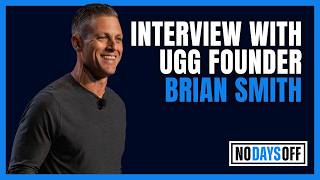
Brian Smith, an Australian accountant, founded UGG in 1979 after spotting a gap for sheepskin boots in Southern California. He struggled selling to surf shops until he switched to giving free pairs to influential people, which sparked the brand's growth into a national phenomenon before he sold it to Deckers in the mid-1990s.
Chapters
Welcome to the No Days Off podcast. Hey, this is Brian Gubernick, and today we have a, a very special episode. As you know, No Days Off Nation, you all know most episodes we do each and every day are, call it, 7 to 12 minutes on a very specific topic. But every so often we get the opportunity to do what I would call a long-form interview with an incredibly accomplished entrepreneur who we want to learn from. We want to unpack. We want to understand what makes them tick. And today, I have the pleasure, I have the honor of interviewing Brian Smith, the founder of a company you all know too well, known as UGG. Brian, thank you for being here today.
My pleasure, Brian.
You know, I had the chance to sit down with you at my mastermind, Metrics Masterminds. I don't know, was that a month or so ago? And I got to tell you, Brian, my people are still talking about the conversation we had. What a fun conversation. What a life you've lived.
That was one of the best podcasts ever. Yeah.
We had such a good time. We learned about your journey in building UGG, which I'll tell you what, if you're listening to this podcast, you don't know what UGG is, you are living under a rock. Uh, in my, my family alone, Brian, after you were, you were with me that day, I came home and counted the quantity of UGG boots we have around the house. And I'll be honest, I'm a little embarrassed to even share that number. Um, but, uh, we had so much fun and we talked about your journey. And while we're going to talk a little bit about, you know, how you founded UGG and, and the progress of the company, I want to go a slightly different, uh, direction here today and, and understand you as an entrepreneur and what's led to your success and the way you think and make decisions and all of that. Fair?
Fair. It's really good. Yeah.
Well, let's start though. Let's talk about UGG, right? So, I've said Brian's the founder of UGG. Take me all the way back. When did you launch that company exactly? When was that?
That was 1979. I came to America looking for a business to take back to Australia because I'd finally graduated as an accountant and I quit the same day because I really knew that wasn't going to be my life, you know. And I was probably 4 or 5 months in California looking for the next big thing and it got to be October, November and the wind had got chilly and the water was cold and I was pulling on my Ugg boots on the beach at Malibu after surfing because, you know, you can put them on with wet feet and they wick moisture and they get really warm fast. And, you know, I was with my buddy Doug and it just struck me, oh my God, Doug, there are no Ugg boots in America and 1 in 2 Australians own some sort of sheepskin footwear. And so we had this aha that we were going to be instant millionaires. Just like every entrepreneur does when they have that big aha, you know. And that was the beginning really, was just like 4 months here looking for something. And then finally that just fell in my lap and I had the insight to realize just how big it was in Australia. And America's population is 20 times bigger. So, you know, we just figured we were going to be in the money.
That was one thing that, that I learned that I, I would not have known if I didn't read your book, which by the way, we'll talk about Brian's book later. It's, it's a book worth picking up. Uh, but I didn't realize, as naive as this may sound, that I assumed UGG was the brand name that you had created. Uh, but that term UGG, I mean, it is the brand you created, but that term UGG, what is, is what you call your your sheepskin boots in Australia. Is that right?
It's descriptive of boots. Yeah. If you can imagine Australia being a big sheep country, every little town has someone with a sewing machine and they're making car seats or under, you know, bed underlays or whatever. And they, they make boots, right? Or, you know, slippers. And so every little town, you know, this, this town would spell it UG, the next town would spell it UGH, and the next town would spell it UGHS, you know. And so nobody ever registered it until '79 when I came to America and realized, oh my God, there's no boots here. I did a legal search throughout the world and it was obvious that no one had ever tried to do it in America. And so being the law here is the first one to register and to be in continuous business, if you can prove that, then you own the trademark rights. So I registered UGG because I thought that was the strongest of all of the different combinations. And then I proceeded to build the business. I built the brand around those letters.
So, you bring these boots to the US, to Southern California, and it was immediate success.
It was ridiculous. I was so naive. I was an accountant, right? I knew nothing about importing and retail. And, you know, I knew nothing. But we went around to all the shoe stores and got zero response. They told us we're crazy selling sheepskin in California. And then I was trying to figure out how my friends at Malibu thought it was a great idea. And it struck me that, oh my God, so many have been to Australia on their surf trips and they bought half a dozen pairs back for their buddies. So in the surf community, it was a big deal. And I did some research. There was like 60 or 70 surf shops just down the coast of California. And so Doug and I, you know, split the territory and we went after the surf shops. And I remember walking in really sheepish. I was so terrified of sales. And I had my little bag of samples and I opened them up and the owner of the store goes, oh, Ugg boots. They're fantastic. What are you doing with those? And you know, I go, Well, I'm thinking of importing them into America. Oh my God, you're going to be a million, you're going to be so wealthy, this is a great idea, all my friends have got them, you know. And the next store was, you know, hey, I'm wearing them right now, these are the best boots, you know, you're going to make a fortune. So I left the store, you know, thinking, well, you know, this sales isn't so bad after all, you know. And we finished the whole coast, all 60 stores, and And, uh, what we didn't realize, that Americans just don't get the sheepskin. And when we went back to the surf shops with product and an order pad, they go, oh, you know, you're going to make a fortune. But we couldn't sell them in our stores, right? We just sell surfboards and trunks. And I— so my whole market, which I thought was, you know, hundreds of thousands of pairs, dwindled to— we ended up selling 28 pairs that first first season. But it just happened to be exactly $1,000. So, so all those dreams of grandeur and wealth and riches and cash flow, that just went out the window. And we were back at zero, like, you know, 480 pairs left in my third bedroom and no— and my investor's money tied up and no way to get rid of it.
It was, it, I mean, and I was joking of course with my question because having, having chatted with you and reading your book, I know it was, it was a journey. I mean, it was, it was frankly, it was years, right, before it, before it really hit. How long did, how long would you say it took before?
It took probably 5 years. And, and to it, like the next season, I, I just sold them out of the back of my van at Malibu, which was like a pop-up store, which did great, you know. And the next year I decided, okay, I've opened up about 40 surf shops, I'm going to advertise. So I hired these models and put them on the beach with the perfect hair and clothing and everything at Wind and Sea and ran the ads. And the sales like went to $20,000, which should have been way, way, way, way more for the season. So the next year, and I'm getting summer jobs in the meantime, right? So the next fall I get more better-looking models and, you know, and put them on the beach at Windansea, the perfect hair, and the boots were like the major part of the ad, right? And sales like $30,000. And I just, the following summer, I decided I'm gonna give up. It's too hard. I don't understand why Americans don't get this. Everyone in Australia wears them. I'm I'm doing something wrong. It's not the product, it's obviously me. And so, I decided to get out of the business. Well, this weird thing happened is that this rainstorm hit the coast about October, which it does every year, and Californians go from, you know, summer to winter like as soon as that rainstorm hits, right?
Right.
And, I got home from the golf course I was working at totally drenched and there were about 30 messages on the machine saying, Brian, Brian, I've had people in the store all day asking for Ugg boots and I've run out. I need to get more. Can I come down and get some more? And so this was like 30 times, you know, with all these different retailers. And so I realized I'm going to have to stay in business, and I ordered a few more thousand pairs from Australia. But this year I decided, well, how am I going to advertise. If I'm going to stay in business, I'm doing something wrong with the advertising. So by a pure fluke, I was having a beer with one of my surf shop owners, and he had all these young kids that stored their boards in the shop. And he called them out and he says, 'Hey, you guys, what do you think of UGGs?' And every single one of them just went, 'Oh man, those UGGs, they're so fake. Have you seen those models? They can't surf.' And like instantly I realized I'd been sending for 3 years the wrong message to my target market. And when I saw my ads through their eyes, it was horribly embarrassing. They were so fake and so disingenuous, you know. And so I had a buddy who was running a Scholastic surf team and I called him up and said, "Pete, do you have any young kids who are going to go pro soon?" And he gave me 2 guys, Mike Parsons and Ted Robinson. And I just went surfing with them at Trestles and Blacks Beach, which are two classic walks in California. It's a mile to the water and they're always fantastic surf. And, you know, a mile back. And I just took shots of them going to and from the beach. And I ran a couple of these photos in Surfer and Surfing magazines and action sports magazines. And the sales went to $220,000 with no extra effort. And that's when I realized how badly I'd been abusing my brand, you know, the brand being Ugg, and I was putting out these horrific advertisements telling people, "Do not buy these, these are fake," right? Not even knowing I'm doing it. And then when I hit on the credible, you know, I just figured every little kid in America would love to be on the road to Blacks or the road to trestles with Mike Parsons. And it turned out that was what created the fad, the whole movement to be cool and to be like Mike Parsons and Ted. So it was like very early influencer marketing, like 45 years ago, exactly the same as the way they're doing it today.
So that was like, uh, so you said, I think it was at '85, '86, so about 6 or 7 years in.
Yeah, '84 and '85.
Yeah, '84 and '85. So Um, we talk about that 5 or, you know, 5-year run, 6-year run, as if it was like a, a small portion of time.
But when you're in it, oh, it's forever.
That feels like a slog. So I, I want to ask you, why didn't— I mean, I know some, some big things happen, some chance happen. Why didn't you quit when I think so many others might have tapped out and said, hey, this just is not It's not going to do it. Mind you, you were working multiple jobs. You were scraping together every cent you had to not just survive and pay your bills, but put back into the company and buy inventory. Why didn't you tap out? Whereas so many others might have.
There's a couple of reasons. One is that I knew it's not the product. It's me, right? Everyone in Australia wears these things. So the product's not bad. I just haven't figured out a way to sell it yet. And the other thing was that when I was able, when I finally figured, this is in the 5th year or so, when I figured out that Americans don't have a clue about sheepskin. They think it's hot, it's delicate, you can't get it wet, you can't wash it. And Australians know you cannot rip a sheepskin, you know, and you can wear them with wet feet and it still insulates. And so you can wear them in the snow, you can wear them in this, in this, in the heat, your foot just stays, just, just all these elements that, that Australians knew and Americans didn't. So that's why I decided almost to give up, you know. And then it was during that season when, when, you know, it rained on the golf course and everything, I, I did another really interesting thing. I I was at a ski show and this, we had sold nothing for 5 days, right? We were in a dinky little hall and anyway, the last day of the show, this woman came around and I knew that she owned about 6 really big ski stores in New England. And she came in and she's talking to all my sales reps and And she's going, "No, I don't need to put them on. They're not for us. We have mud and we have slush and we need rubber. We need Sorels." And I just got so pissed off that I walked down and I said, "Hi, excuse me, ma'am, but would you mind taking your shoes?" She's wearing Reeboks and socks, right? "Would you mind taking your shoes and socks off and try?" "Oh, I don't need to do that. I know how comfortable." I said, "Please just humor me." And so she did, she pulled this Ugg boot on and goes, oh my God, right? And she immediately ordered like 30 pairs for all 10 stores, right? It's the biggest order we'd had. And I realized afterwards, it's because she tried them on. And from then on, I had a rule with every single one of my sales reps all across the country. 'Never walk into a buyer's office and try and sell them until they've tried one of these on with bare feet.' And the sales just went straight through the roof. Simple, simple thing is that the only way for Americans to understand what it's about is to get one on their feet. And that's been the rule ever since. Even today, I'll see people who resist putting one on. 'Oh, they look— I know they're really big deal.' But, you know, my feet get really hot, you know. And when I finally turn them into putting it on, it's like, oh my God, I could wear these all day. You know, it's so really simplest, simplest things that can stop a company in its tracks.
You know, Sarah makes me think about Sarah Blakely, who is the founder of Spanx, right? Billionaire founder of Spanx. She tells a very similar story to where she couldn't make traction with her product. And then she went to a buyer and said, will you come in the bathroom with me?
Yeah.
And I'm gonna, I'm gonna put these on, I'm gonna try, I'm gonna show you what they do to me and how they, you know, what they do for my body and all that. Was that— it was an epiphany, I think, for her as well, where it's so hard to tell. Yeah. But when you're able to—
yeah, yeah. The stumbling blocks are all in front of us and we can't figure out the, the the doorway to get through. But once you do, oh my God, the momentum is so fast after that.
You didn't have a lot of, call it, data and research. I mean, yes, you saw what was going on in Australia, but you relied, I think, based on our conversations, what we've talked about, you relied pretty heavily on your gut instinct.
Yeah, I mean, we didn't even have computers on the desk till I sold the company in '95. That's the year the internet started, you know. So there was no data.
There wasn't data. You relied on the— these instincts of yours. I got to ask you about those instincts. Yeah, because I'm curious, because a lot of entrepreneurs, um, some of them have that sort of instinct, some of them have to develop it. For you specifically, was it something you were born with, or was it something you were— you developed over time?
No, it's, it's, it's something I think I have a unique set of observational skills, right? I can get stopped by a problem and I'll sit there and think about it for days. It was like figuring out trying on the boots, you know? There was another situation that happened in the same year where I was in one of my surf shops and this girl came in and she's you know, going down the rack, she's touching all these Ugg boots, and she found a big tall pair of white ones, you know, and she said to the store clerk, you know, hey, what are these like? He goes, I don't really know. And she was, they look sort of soft and delicate. Yeah, yeah, they do. Um, and man, they're expensive. Yeah, they're really expensive, you know. And so she put the boot back on the shelf and walked out, right? And I spent days analyzing that in my office, you know, what the fuck just happened there? Excuse my language.
You're okay.
Okay. And, uh, and then I realized, you know, that's, that's the stumbling block in every single store is that you get people who are really interested, but then they can't find out about it. So I came up with the cheapest marketing campaign the company ever did, and it was by far the most successful campaign, right? I decided to give a free pair of boots to any store that would order at least 6 pairs, any new stores. And then with the existing stores, I gave a free pair to the floor manager. And now when people came in, and I saw this guy come in once, he says, hey, these are, what are these like? And The store manager goes, "Shit, they're the best things in the world. I'm wearing them right now." And he says, "Aren't they hot?" "No, they breathe. I've never had hot feet since I did." "Well, what about if I get them dirty?" "Oh my God, you just wash them." "Well, they're expensive." "Oh shit, no, they're not expensive. If you figure out how much you wear them compared to your other shoes, they're not expensive." And so just that one interaction, the guy just laid down his money and walked out. It was so, so easy. And so that, that, and, and that, what did it cost me? Like, you know, maybe 100 stores with, you know, cost of $25, you know, $2,500 for an entire marketing campaign for an entire company. That was the best marketing campaign I ever did. I mean, it was unheard of how simple it was.
Brian, you had, um, I think you had some hard days. Right, as you were building this company. And like most entrepreneurs, you probably had that voice in your head.
Yeah.
What did that voice in your head sound like? Was it confidence? Was it doubt? Maybe it was stubborn belief. Was it fear? What was that internal dialogue for you like at that time?
There was all of that. I'll give you an example. This was a period of about, a year where I had to deal with this whole issue. And it became, it started because I didn't understand finance and I was never able to sort of forecast how much money I was gonna need to buy product. And the business was doubling every year. And that's a nightmare for any company who's in the products business. Your success is going to catch up and kill you one day. I hate to tell you that, but unless you're really well-versed in finance and you can forecast what the purchasing for product is going to have to be, right? I didn't have any of that. There were no peer groups. There was no EO. There was no YPO. There was nothing, right? So I didn't have that skill. And so I was always vulnerable to, you know, when I'd run out of money, I'd need a bigger investor and I could always find those, but then, you know, we'd bring them in and then they didn't want the old investors in. So I had to do a deal to buy them out. And so this went on a couple of times. And finally I was at, had this group in Anaheim, 3 guys, Neil, Paul, and Joe that were already in the distribution business. And they were gonna just, add my product in there and they were going to handle all of the importing and the cash flow and financing, all the invoicing and billing. They were going to handle everything except for the sales force. I was now really, really, really good at sales and I loved my product. So I was unstoppable. So we did a deal that we'd own the company 25% each. And there was a couple of provisos. One is that I didn't actually get my share certificate. Until I finished the trademark lawsuit that I was working on against this woman. And I knew I was going to win that. And then the other part of it was I was going to be 100% on the road selling on commissions only. So I was now actually out trying to make my own money. And so we ended up moving all the inventory up to Anaheim and all of the, you know, just everything. And I spent a week or two organizing everything for them. And it's finally time to go on the road. So I head down Beach Boulevard to Huntington Beach, Huntington Surf and Sport, and I walked in and Dave goes, hey Brian, I heard you sold the business. I went, what? He said, yeah, I called an order in this morning and they said you don't own the company anymore. I said, you're kidding me, they said that? And I couldn't wait to get out of that store. I went to the Shell gas station because this is before cell phones, right? Call up from the gas station, Neil, what the hell are you telling people? What do you mean? I said, well, you're telling people I don't own the company. He said, well, you don't, you know, you don't get your shares certificate issued. I said, but you're, yeah, I do own the company. You're my 3 partners. He said, well, you don't have your share certificate yet. And I just hung up the phone. I drove back to San Diego and I looked at the document, you know, and I go, oh shit. Technically I'm not a member and owner of the company. And I just went into this huge depression. So this is part of the cycle that you were asking me about, you know, is everything always rosy or not? This was probably the deepest depression I went into for the whole— maybe there was one later on, but for 4 or 5 days, I didn't talk to anybody except my wife. I didn't take a phone call. I couldn't even think of who I would call. I couldn't put together a cohesive set of thoughts, you know. And it went on the fourth day, the fourth night, I was lying on my back, you know, on the living room floor, and my wife was sitting up on the couch, and we were watching a movie, and it finished, and I clicked it off, and I rolled over on my stomach, and I started crawling. I got up on my hands and knees and started crawling to the bedroom. And my wife just looked at me and goes, you get up now and walk to bed like a man, right? And she scared the shit out of me, you know? And it was like, oh my God. And as I was getting up off the floor, it felt like I was coming out of a fog. And I just thought, oh my God, there's so much more to life than this little sheepskin company. And that night I slept like a baby. And the next morning I woke up, I got back into my meditation routine and everything. After breakfast. And then I started thinking, okay, well, what am I going to do with my life? You know, real estate, no. Business broker, maybe. Accountant, never. You know, and then I thought, man, sales. I've really come to love sales. So what can I sell? And that's when these big goosebumps hit me and it was like, oh my God, Ugg boots. I love Uggs. So I called up my partners, you know, who weren't my partners but were my partners. And I said, listen, I may never own the company, but I'm going to go on the road and I'm going to try and put a pair of Ugg boots on every single person in America. And so we had one deal point, is that do not ever tell anybody that I sold the company.
Right?
So I'm back on the road for the first month and, uh, just locally in Southern California. I got back and Neil handed me an envelope. It was a check for $5,000 and he says, that's your commissions. Oh shit, you know, I went on the road and got back the next month, check for $10,000. Next month, another check for $10,000. And that's when I realized, you know, and I've got the, you know, the book you referenced earlier, it's full of philosophy, a lot of shit that I've learned over the years and This lesson taught me that even your most disappointing disappointments will become your greatest blessings. And here I'm in a situation where I'd never pulled any money out of the business, got these 3 guys in, they did most of the work. I ended up getting a ridiculous amount of commissions out of it. And I was, it wasn't even work. I was playing golf or surfing with all my surf shop owners. And just having a ball. And so even though it was the highest of highs and the lowest of lows, I ended up now, that set up 3 years of me going on the road and working with sales reps all across the country. And I put up nearly a million frequent flyer miles over that 3-year period. And I'd like fly into Denver and that rep had to have his 10 best customers all lined up for a meeting. And so, I'd do that and then we'd fly to Philadelphia or then I, you know, up in Maine, New York. Yeah, there was like all over. So, 30 times 10 is 300 meetings a year with the best retailers in the country. And so, that was what eventually was the success. Now, I'm not going to get into it because Neil bought the other two guys out, then he died in a motocross race. And so, I now had to deal with his widow. Who'd never stepped foot inside the business. And I promised her I'd work for a year and try and figure it out. And the bottom line is, when Neil saw that I'd finished up the trademark stuff, he called the lawyers in and the life insurance companies in, and we did a, you know, a life insurance policy on each other. And so fast forward, Neil dies in February. I've got to keep the business alive till November. And the life insurance policy finally paid out and it was enough for me to buy the entire business back from his widow and pay her all the profits for the year. And so now I was in a situation where I'm absolutely totally broke, but I own 100% of the—
but you're back. It's such a crazy— it's— I mean, I've heard the story and it's still crazy to hear it again. Where you found this company, you know, you're the founder of it. You put every ounce of energy into it for years. You find yourself more or less ousted from the company.
Totally out. In their mind, I was out. Yeah.
You're out. What's mind-blowing to me is I think so many would leave a situation like that incredibly frustrated. They would have gone to attorneys. They would have done all of these things and spent all of this energy trying to get back what they believed to be theirs. And you instead, after, you know, a couple of things that had happened, kind of put the ego aside and, and, and the control that you once had, you know, you had to let go of that and said, you know what, I can still sell the heck out of this product and you go and do it. At such a level that the ultimate owner says, I gotta have a relationship, we've got to figure out how to, you know, stick together. And then the life insurance pays off after he passes, you take the company back. It's just such a mind-blowing—
Yeah, and you think of all the times I had to give up, you know, that this is where perseverance is really the whole theme of the Ugg business is sticking around when other people would have walked. You know, when the first year when I sold 28 pairs out of 500, that would have been a good time to get up, you know, and walk away. And then after 5 years, you know, before I— before the surf shop, um, kids told me how bad the advertising— I could have walked away. In fact, I tried to walk away from the golf course that summer, right? And then this, this event with the financing and there were others, you know, and I'll use this chance to show you my book. It's called The Birth of a Brand and it's like, it's a roadmap for entrepreneurs because I don't talk about all the wins and I made a million here and then we made 10 million now. I don't even talk about that shit. I talk about all the disasters that happen and what the lesson is and how to get around it. And it's, And it's not just monetary things or business things, it's a whole life situation because while the whole business is screwing up, you still got to have a home life, you've still got kids, you've still got to go to the beach at the weekend, you know, you got to do shit that you do not want to do, but it's a really good lesson in rounding out what is important in life. And the business was never as important as my home life. So therefore, when everything's screwed up in the business, that's just details when I get there next week.
Well, talk to me a little bit more about that because entrepreneurs, I think we wrestle with a number of things, personal, professional. What were the non-negotiables for you, the things that you protected in your life or business Specifically while you were founding and scaling and growing this company, what were your non-negotiables?
Uh, there, well, I don't know about non-negotiables, but I always put the kids first. They were like, when I started that heavy road work, you know, when I was traveling with the reps, they were probably 5 and 7, right? And, uh, so they didn't even know I was gone most of the week. I'd come back Fridays. I always kept the weekends for the family. And, uh, and, but one little trick I did, I started was that everywhere I went, I sent them a postcard, you know, from Des Moines, Iowa, or, you know, Hackensack, New Jersey. Yeah, just shit places, but I'd always find a postcard and say, hey, this is where I am this week, you know. And it turned out, I didn't realize at first, but my wife told me that they'd got these little plastic lunch boxes, and they were, they were keeping all the postcards in these lunch boxes. And yeah, you know the, the fires that just happened up in LA 2 years ago? Yeah, a year ago, um, in Brentwood. Um, my kids and I were talking, uh, about a month ago, and, and they said, yeah, Dad, if we were in a fire like that, the first thing I'd grab is my 2 lunch boxes.
Oh, that's cool.
How cool is that? That's really cool because that was my touch point back, you know. My wife saw it because she would get the postcards. The kids see it and they go, oh, Dad's still thinking about us, right? And so as long as that part of the family was getting fed, I could sort of, you know, get away with a few days on the road.
Yeah. Well, um, again, what an incredible story, uh, when you think about, you know, when you achieved, let's call a— call it a level of success that I think most of us would say or would define as winning, right? You were, were truly winning when it had, when it had kind of turned the corner for you. Did you experience, uh, any sort of, let's call it, identity shift or internal tension Anything of that nature?
I totally did in two ways. First, when we got up to— my method of marketing was to the youth, right? Young surfers, they don't have any money, but mum does, right? So I would advertise at Christmas with these. And so these kids, oh, mum, all the cool kids at school have got a pair of Ugg boots. I want a pair of Ugg boots, you know, it's because from from Mike Parsons' advertising campaign. And so mom goes to the malls and the stores looking for Ugg boots. And then the next year I said, well, what do kids do in the snow? Well, you know, snowboarding had just begun. And I didn't want to go after the skiing because it was a real dying, you know, bad vibe. But I went after the snowboarders and I built this really vibrant youth snowboarding thing. And I had no clue what to do back east, you know, Boston, You know, Minneapolis, that area. Um, but I was in a sporting goods store with one of my reps one day and I said, well, what do the kids do here for sport in the winter? And he rolled his eyes and goes, oh my God, they play hockey, you know. And I, being an Australian, never even thought of that. And I did some research and hockey's way bigger than surfing, you know. So I got into the Let's Play Hockey magazine in Minneapolis and Boston and we We did this whole youth. So now we're huge. We're doing about $10 million, but it's in surfing, it's in snowboarding, and it's in hockey, right? No image, right? And I'm learning now more and more about branding as I go forward. And so I came up with this idea of casual comfort. I want everyone in the country to look at UGG and say casual comfort. And I thought, well, the best way to do that is to get a PR company. And I knew I wanted to be on the front of the COVID page of USA Today on the lifestyle section, right? Because that was the biggest newspaper of the US at that time. And I made an appointment with the fashion editor in Chicago. And then I went back to Boston and I hired this PR company and we put together a really, really cool PR program and we worked our way across to Chicago and we had a meeting at 3 o'clock and we got there at 10 to 3 and June was the girl who, she comes running out and goes, oh my God, Brian, I'm so sorry. I've made an appointment for 3. I have to be in it. I've got 10 minutes, you know? And I knew that my program was, you know, just the presentation was 40 minutes. So that was out. And I did a really fluky thing. I pulled out of my briefcase an old file and it had photographs of all these celebrities that people had sent to me, you know, from all over the world. There's, you know, Tom Petty, Sting, God, all these movie stars, Brooke Shields, all the Grumpy Old Men people, you know, and then there's this one which was Pamela Anderson, uh, on the set of Baywatch in a red swimsuit with tall white Ugg boots. And I quickly flicked by that to Heather Locklear, you know, and, and she goes, go back, go back. Who is that? And she pulled out the Pamela Anderson one and she took the name of the tabloid, which was from London, and the name of the photographer. And she said, do you have a press kit? Yep. Gotta go. It was like 5 minutes. And I just looked at my PR guy, I said, we just blew 60 grand, you know, that was just horrible. And anyway, I was in the airport next day, got my coffee and USA Today, and I sat down waiting for the plane, and I finished the front section and the money section, and then there in the middle of the lifestyle section was this photo of Pamela Anderson, and then, and a little blurb about it, and then when you open the next page, the entire 2 pages inside was the whole history of wool in fashion, the history of shearing, you know, the use of boots, the use of all, you know, it was just like this exposé. She listed all the different manufacturers and all the different suppliers and all the different, it was like, I don't know how she got the time because it was only 15 hours, you know, since I'd seen her. And anyway, by the time I got back to San Diego, the phone had not stopped ringing from consumers going, hey, I'm in, you know, so-and-so, Idaho, where's a store near me, you know? And the other half were people who owned stores and they're going, what the hell are these Ugg boots? I've got people in my store asking about Ugg boots all day, you know? And so that was when it sort of became this fragmented image and became casual comfort. And that went from the, you know, the $8 to $10 million all the way up and really put the momentum into the business.
So, every, at least in my experience, and I think for a lot of our listeners, I would say that most every meaningful win, there's some sort of cost that comes along with that.
All the time.
What would you say or what did success cost you? That maybe most people, most people don't see?
Um, it cost me a, uh, I'm not going to say 100% cost me because I, I had really good golfing buddies and I had really good, you know, surfing buddies. So I still got to sort of get out with them, but The cost was that the business sort of consumed me, and I really wished I had spent more time just hanging out with all my buddies because, you know, by now my kids are teenagers and they've got their own lives and they don't give a shit where dad is, you know. And as long as I'm there, they don't really care where I'm there, you know. And so I think I lost a little bit, but again, I don't think there's a father on the planet who doesn't feel that, even if they work a 9-to-5 job at Qualcomm, you know. They're all going to go through that period where they lose their buddies. So, you could say that was one cost. I don't— like, my relationships with everybody was really, really good. So, I can't say I lost anything there.
Yeah, I mean, it just sounds like so many of us, you chose to prioritize certain things.
Yeah.
The business in this case. And as a result, you had to, you had to deprioritize some things and maybe the social circle at that time was one of those. That's, you know, yeah. Yeah. Now you ended up selling the company in, in the mid-'90s, which I think was the mid-'90s, right? '95.
That's correct.
And, and, and I think when some people hear that, they're like, well, wait, Ugg is a multi-billion dollar brand today. So to put you on the spot, uh, do you think you sold early? Do you wish you held on to it longer? Was it the right time for you? Like, how did you make that decision? What was going on?
Well, I'll give you two ways of looking at this. Um, the first was that we'd just done about $14, $15 million in sales for the previous season. And we had new product and new colors and everything out with the sales reps at the beginning of the next selling year. And they were just, we had black and charcoal and they were just kicking butt out there in the marketplace. And I realized just, you know, doing it, looking at the numbers, shit, we're going to be doing about $25 million in sales next year. And I knew that there's no way in the world I had the ability financially to get enough capital to buy enough product to satisfy that demand. And I'd been in previous years short-supplying my market, so I knew the devastation that happens when you do that. So I was, uh, I was, uh, there's, there's a segue back. I'm going to go back. Do you remember I mentioned I was selling the— maybe I didn't— I was selling the product out of the back of my van at Malibu in the first year or two, right?
Yeah, you mentioned that. Yep.
And there was this guy up, you know, a couple of spots up in the parking lot selling these triple-decker sandals, our pink-yellow-pink neoprene. He started a company called Deckers. And, uh, he ended up licensing a whole bunch of different products, but one of them was Teva sandals. And in the mid-'80s, Teva and the outdoor market just went through this incredible explosion, and he built Teva up to about $60 million. And then he took his company public on top of that. And so I knew Doug was sitting on, you know, $30 million in cash, right? Now, back to the story. Here I am looking at $25 million in sales knowing there's no way in the world I can finance that. And I was going to a trade show in Atlanta and at the airport, way up the other end of the baggage claim, I saw Doug Otto, right? And I just got goosebumps and I thought, oh my God. His company dies every winter. Our company dies every summer. If you put them together, you've got a 12-month admin, you've got 12-month sales force, 12-month warehouse. And on top of that, it's similar industries. So you've got the same, you know, everything was just so right. And Doug and I, you know, because we'd seen each other on the surf shops, you know, so many times earlier that we knew each other pretty well. And I walked up to him and we'd often joked about buying each other out. You know, I said, Doug, if ever we're going to do it, now's the time. And that afternoon we had the accountants back in California talking to each other about all the logistics of them buying us out. So that's the first part. If I hadn't have found Doug, I would have failed miserably because I would not have been able to raise the capital.
So there was a capital constraint, but then there was also these natural synergies with this, with this fellow company.
Yeah.
And so the timing in the mid-'90s, it's like, hey, if we're going to do this, now's the time.
It was perfect. Yeah. And so we ended up selling for cash. The other part, I'm going to bring back my book. The, the theme of this book is is that you can't give birth to adults, right? Every business starts with an aha and shit, I'm gonna be a millionaire. And then it just sits there. And it lies there as an infant and there's no amount of feeding it or jiggling the cradle. An infant can't get up and go to college. An infant has to be an infant. But if you can manage that for as long as it takes, it'll start toddling. And that's when magazines are writing articles about you and all your friends are telling all their friends about you. And that's a pretty cool thing because you start to see the movement in your business. And that pretty soon rolls into the youth phase, which is you've got sales and marketing's working, purchasing is working, admin is working, the warehouses, shipping, and you can run a $20, $30 million company in that youth phase. But if it gets to be a really big company, like, like I did, you know, it's really fraught with danger. You want to be in every major trade show and you want to be in every mass retailer and you can outstrip your capital so fast and go broke. And I'd almost done that a couple of times.
And so that's the teenage years, right?
That's the teenage years. You know, maybe you wanted to be in every party on a Saturday night. Oh my God, it was so dangerous, you know? And so, so I'm faced with, you know, looking at the business and it wasn't immediate that it hit the billions. It was a couple of years for, for me. And I helped work with them as a consultant for a couple of years. And then we pulled off this incredible deal, but I'll tell you more about that in a sec. But in the meantime, as far as the business went, We ended up selling it to Deckers for cash. And when I did that, I was thinking instead of, oh shit, look, now it's in the billions, I could have had all that. I didn't think that way at all. I thought more like, I found the aha moment. You know, I found Ugg boots and decided, oh my God, there's none in America. That was like the conception. Right? Buying the samples was the birth of the business. And then I went through the horrible infancy, you know, when I was doing all the bad advertising. You know, 3 or 4 years of that. And then I went through the youth when the surf market took off and the snowboard and, you know, that was the youth, really exciting time. And then we got into the teenage, early teenage phase where we were getting into all these big, now we're in all the big department stores all over the country. And then that's when we hit that potential $25 million in sales. And I look at selling the business as walking my daughter down the aisle and handing it off to Deckers Corporation so that they could go out and have more babies and more product and more color and, you know, just take it out to the world. And it's been a fantastic transition. And I Every time I walk through an airport in the winter, I'm always looking behind me to see if I have the UGG logo on the boots. You know, it's a habit I've had for 40 years.
It's a really interesting way to frame, you know, the birth of a company through its early growth into its latter years and then its maturity. And I think we can all reflect on our businesses and ask kind of where am I sitting right now and how do I manage that accordingly?
Yeah, I have people come up to me after I speak on stage and they go, oh my God, Brian, thank you so much. I never knew where I was in my business, but now I know exactly where I'm at and what I have to do. And it's very powerful if you can take that birth to adults theme, figure out where you're at, and it'll give you all the direction you need to take it to the next. Instead of trying to get to be teenage, you're still in the toddling stage.
That's right. That's right.
Take care of the toddling. And before you even know, there's another really great quote I have in the book, which is the quickest way for a tadpole to become a frog is to live every day happily as a tadpole. Right. And if you're doing everything right every day, it doesn't have to be big. It doesn't have to be a major momentum thing, but every day you're doing something right. Is one of those tadpole, tadpole, tadpole days. And it won't take long before you look back and go, oh, shit, you know, I'm a bit of a frog, you know.
So, a couple more questions for you before we wrap up here today. And I thank you so much for your time and hanging out in this amazing story. If you're an entrepreneur listening to this podcast right now, one that's grinding and working your tail off every single day and also uncertain, What's the mistake that you see entrepreneurs or people make over and over that maybe holds them back?
There's two things. One is they, if they're doing the same thing over and over and over again, you've heard that saying, is it something about insanity is doing the same thing over and expecting a different result? Yeah. Number one. Number one. Get out of your head and get out into other people's heads, right? Remember how I was able to pull off that marketing campaign by trying to figure out what they were thinking and trying to fix that? Well, and those young kids in the surf shop who told me my ads sucked, right? If they hadn't have told me that, I probably would have run another 4 years doing the same ads. So the most critical thing is when you're in that situation and you think you're failing and it's not sort of working, try getting out and asking other people. And it may be that enough of them tell you, you know, that ship sailed last year, you're never going to catch up, that's a dead horse. They'll tell you all sorts of things, but you have to have the savvy to to calculate if they are really people you want to take their word at or if they're flaky. I mean, your own intuition will tell you that. And the other thing is to question yourself. And I have these two words, does it energize and inspire me? When I get up and I have to go to work and do this thing fucking over and over and over again, Does it energize me and inspire me or does it suck the energy out of me? Right? And if it's a suck, you've got a couple of options. You can give it off to somebody else to do or you can walk away from it. And you've got to be prepared to do that. You know, there's no— I mean, if you give enough time and enough money to anybody, they're going to make a success eventually. But Maybe you, the rest of your life, can't wait that long. Maybe you've got a family you got to look after, you got food to put on the table. So you, each person is an individual and they're going to have to come up with their own situation and figure out how far do I push this before I, you know, kill it. I love it.
I have one final question for you. Well, maybe two, but one big question for you that I, that I love to ask all of our guests when I have the opportunity. To interview someone. And I borrow this question from Lewis Howes, who's another podcaster. I love this question. So I borrowed it and brought it here to No Days Off. And the question, I'm going to frame it up a little bit and it's going to sound a little silly, but stick with me. Let's make believe for whatever reason, everything you've ever said or anything you've ever written or you put out to the universe it all disappears. It all goes away. And you, Brian, have an opportunity to leave behind just 3 truths, 3 things that you'll be known for, that you want entrepreneurs and people of this world to know. So, 3 truths. What do you think your 3 truths would be? You only get 3.
Okay, number 1 would be to attempt to unselfishly love every other person on the planet. And I use the word unselfish, it's different from unconditional. I do not like unconditional love. But unselfish love is where you continuously put yourself in a position of trying to help somebody else. And it's hard, but it's not that hard. It's just, if you take the time to understand one person, let's say it's one person a day, we just make it up, okay? What makes him think like that? If I could just get to spend a couple of hours with him. Let's say it was some, let's say somebody we don't like right now, we pull a Iranian or a Jewish armed child who's living out the war and you see them as a horrible threat, right? But by taking the time to talk to them and figure out, well, yeah, this guy's sister's getting married next month and he's got to come up with the best man speech and he's trying to figure out what he's going to buy and and he promised he'd bring home the food for the family this week and shit, he's under so much pressure because there's no food around. And when you start to see how the other person's surviving in their world, you start to realize, oh my God, he's got just as many problems as I do, right? But he's not going to try and kill me. His mentality is not to do away with me. It's he doesn't understand me. Right? So I guess the short way of saying that is that the more you can get into somebody else's head and find out where they're coming from and where their values are, and you get to understand them, pretty soon you're going to like them, and pretty soon you're going to love them, and there's one more, and next day you've got to find another one. Right? That would be the ultimate scenario for this planet because all the shit we're reading, all the TV with the negative, negative news we're seeing, that all starts to go away when you can get one-on-one. And moving gears forward, the next one would be, I've already mentioned it, is to wake up every day and say, am I energized and inspired? To go out there and do what I want to do today.
Love that one.
Right, it's really, really critical because if you can pull up the energy to go, shit, I can't wait to, it may be not even a business move, it might be just some crazy thing you're trying to develop, right? But as long as you're energized and inspired to get up and go out after it, that to me is really important. And then number 3, One final one.
Number 1, love unselfishly. Number 2, you know, think around energy and inspiration. What's number 3?
Number 3 is just to realize that we are just spirits walking around in flesh, right? I talk about— remember I mentioned Goosebumps a little while earlier? I mentioned it a couple of times. Right? To me, to me, God isn't out there at the end of the universe somewhere, right? God is— a fragment of God is in every single one of us on this planet. You, me, all your staff, all my friends, everyone is, is this, this fragment of spirit, which is pure perfection. And it has a re— it chose to come here and be in us. And it's, it has a mission that it wants us to try and complete while we're here on this planet. And every time we do something that's in alignment with that will of God, right, that's where the will of God comes from. Every time we do something that's in alignment, it sends us a message, and it doesn't come through our eardrums or our mind. It comes in the form of electrochemical energy through our bodies, and it comes out as goosebumps. And so to me, tuning in to that higher wisdom every day. And I do this through meditation, and it's really the only way. And meditation can be running on the beach or it could be sitting in a room, right? But meditation is the method our bodies use to get to that spiritual interior. And so every day I make sure that I set aside time to meditate.
What a great group of three there, Brian. Thank you for sharing that with us. I think those are pretty amazing insights. So, thank you for sharing that.
Did you notice there's nothing to do with business?
No, there is nothing to do with business. But your success in business, it sounds like to me, has a lot to do or it's a byproduct of the way in which you operate, the way in which you behave, the way you take care of people and think around relationships and and all of that. And I know having read the book, that's really what the book is about. To your point, it's philosophy.
It is. It's a roadmap of philosophy for entrepreneurs.
That's right. Well, one, you know, I said I had one big question and then one final question. And I want to ask you this because you've given us so much here today. Where can people go to learn more about what you're working on now or How do we best support you given all that you've shared with us here today? What would you like to see out of us?
Thanks. Thanks for offering that up. Number one, I'll go back to my book, The Birth of a Brand, and it is a literal roadmap for entrepreneurs and philosophical, spiritual, mental, everything. Um, the other thing is I, I really love speaking from stages to entrepreneurial groups and it doesn't, They don't have to be business. They can be in, like I speak to groups of air conditioning franchisees, right? Maybe 200 of them. So it could be financial services. It doesn't matter what the group is. If there's a big annual gathering of a company, I am just a fabulous keynote speaker because I talk about a lot of these stories and I have the audience on a roller coaster with me. So if anyone of you belongs to a company that does have these annual meetings and could use a good keynote speaker, my website is briansmithspeaker.com. Pretty simple, briansmithspeaker.com. And on the contacts page, you'll find my email and phone number. And so just give me a call and I'd love to come and work with your group or even just start talking about working with your group, you know.
I love it. Guys, get out there. No Days Off Nation, get out there, buy the book, Birth of a brand and bring Brian into your company or into your events. As a matter of fact, that's how Brian and I met. Brian performed or did a keynote for a friend of mine, and I heard how fantastic he was. So, I ended up engaging with him and bringing him to Metrix. And here we are today. Well, Brian, thank you so much for your time. It's been a joy. You have so so much to share. I, I know we could go for hours more if we had the time to do so. So thank you for hanging out. It means the world.
Thank you, Brian. This is fantastic. I really had a good time.
So as we wrap up, that's all we have for you today, the, the No Days Off podcast. Remember, every single day brings a new opportunity to get better. So let's get after it.
[MUSIC] [MUSIC]
More from Brian











Ep 755 | Mack Newton's Words of Wisdom - "You Are Only as Big as Your Self-Concept" (REPLAY)