
Ep 737 | Tony Robbins on Moving From Push to Pull Motivation
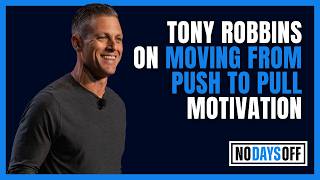
Tony Robbins distinguishes push motivation, driven by pain and fear, from pull motivation, driven by purpose and identity. Push motivation fades and burns people out. Robbins outlines four steps to shift: treat pain as data, define your future identity, set clear standards, and design an environment that reinforces them.
Chapters
Thank you for joining me today. It's Brian Gubernick, and welcome to the No Days Off podcast, where we believe that every single day brings a new opportunity to get better. Tony Robbins and Alex Hormozi just recently had a conversation. They sat down and Alex put the, put the video out on YouTube, and I think it may have been a podcast episode, but If you have not watched it yet, I want to strongly encourage you to do so. Maybe you don't know who Alex Hormozi is, uh, very accomplished entrepreneur, puts out an awful lot of content. And my guess is you probably know who Tony Robbins is. They sat down, they had an hour-long conversation where Tony basically coaches Alex, and there are a ton of lessons, of nuggets in that conversation, one of which was this idea that kind of hit home for me. It was Tony Robbins' conversation around push versus pull motivation. I want to talk about that here today because I think it impacts so many of us, so many entrepreneurs building something, putting in the work, and, and trying to create something rather special. Now, the more I sat with this idea of push versus pull motivation, the more I began to realize that most people don't fail because they're lazy. They fail because they're maybe running on the wrong fuel. And I can personally relate to this. I know I've been there before. Push motivation is more pain-driven. Pull motivation, as Tony defines it, is more purpose-driven. So today, I want to explain the difference. And more importantly than just discussing the difference, I want to talk about how you actually move from push motivation to pull motivation. So push motivation is when pain is doing the work for you. So for example, you know you're unhealthy and the doctor scares you, that creates a push motivation. Your business numbers are down, The panic sets in and it prompts you to attempt to do something about it. Maybe your relationship or your marriage is strained. The threat of loss might, might motivate you a bit. Or if you're in a sales slump, you start trying to figure it all out. You run a contest, you put in, you know, put, put the team under increased pressure. You have all sorts of urgency. That is push motivation. Push motivation sometimes sounds like, "I'm sick of this," or, "I have to change," or, "I can't keep doing this." Now, to be clear, for many, this sort of motivation, this push motivation, it actually can work. It does work in many scenarios. It creates action. It creates movement. When I think about early in my career, when frankly I was broke, yeah, paying bills was a hell of a lot of push motivation for me. The problem with this though is that that pain that you're trying to capitalize on, it's not a really good long-term strategy because the pain does fade over time. And, and if it doesn't fade over time, it's probably not all that healthy to normalize that degree of discomfort. When the pressure though is gone, the behavior may disappear. I think that's why some people crush like a 60-day sprint, but then they totally fall off. They disappear. Now pull motivation is different. Pull motivation is different. It's not about what you're running from. It's about what you're moving toward. So push mo— I'm sorry, pull motivation sounds like this is who I'm becoming, or this is the life I'm building, or this is the cause that I'm spearheading. This is the standard I live by. Whereas push lives more in survival mode, pull actually is more about your identity. And as it pertains to identity, that's a lot stickier because you don't need fear, you don't need hype, you don't need constant urgency. Pull doesn't yell at you, it draws you. Now, I think people fall— most people do fall into this trap, though. Most people never transition from push to pull. Instead, they wait for the next problem because they thrive in that, or they perceive that they thrive in that problem scenario. They wait for the next crisis or the next scare. In other words, they look to outsource their motivation to, to pain. And again, that works until one day it doesn't. And when pain becomes the only driver, burnout is absolutely a risk. I mean, heck, I'd say it's probably inevitable. So, I think as entrepreneurs, and kind of the crux of today's episode, so many of us are probably operating in this pull motivation zone. How do we get to pull? How do we create pull motivation instead? I think the first thing, step 1, I would, I would use that pain as data, but I wouldn't use it necessarily as fuel because there's value in the pain, but it's, it's value from the standpoint of it gives you information. So I might ask, what am I specifically trying to escape? Or what does this pain reveal about what I actually want. For example, you're burned out. What do you really want? You want control. Uh, you're frustrated with your income. What do you really want? You want stability or you want scale with that income. You're disappointed in yourself. Well, you want integrity, specifically with your own standards. So, pain isn't the engine. It should just be the warning. right? The dashboard warning light, if you will. So, step 1, use the, use the pain as data. Okay? Not as fuel. Step 2, let's define the future you, not just the outcome, but the future you. I think so many people stop, you know, at goals. They set a revenue goal or target weight, or they want to achieve a certain title. Well, pull versus push-pull requires identity. So the questions I'd be asking myself is, who do I need to become for this problem never to happen again? How does that, how does that kind of person operate daily? What standards do they live by? So you'd shift from something like, I want to lose 20 pounds, to again, something identity-based. I'm someone who wants— who— I'm sorry, I'm sorry. I'm someone who trains, someone who eats intentionally, someone who respects my body. Maybe you shift from, I want more money, to somebody that says, I operate businesses with systems and leverage and margin. I think when you make statements like that, when you reframe it in that sense, pull motivation starts to show up. Now, step 3 in moving from, in moving from push to pull, pull motivation runs on standards. It doesn't run on emotion and feelings. Standards sound like, this is how I do things, this is acceptable, or this is unacceptable. For example, I train 5 times a week, not because I'm motivated, because that's who I am. I don't miss commitments even when it's inconvenient. I don't let one bad month dictate my behavior. I think when your standards are super clear like that, the motivation becomes optional. You're just honoring standards at that point. And then step 4, design the environment to support pull. I think this is where a lot of people screwed up. You can't rely on willpower here. Pull motivation thrives when people around you reflect standards. It thrives when, when your calendar reflects your priorities. It really thrives when the systems that you create reduce friction. So, ask yourself, does my environment reinforce the person I'm becoming? Does my environment reinforce or support the person I'm trying to leave behind? See, pull isn't just— it's not just a mental thing. Pull is also very structural. So, I think for leaders especially, And we have a lot of you here as part of the No Days Off Nation. For leaders, this really matters because push motivation, um, it does serve more compliance, but pull motivation creates more ownership. And for your people, that's what you're striving for. Sales contests, while great and effective, that is push. But your identity and team culture and standards, that's pull. So if your people only move when pressure is applied, you don't probably have a motivation problem. You have a pull problem in that scenario. So here's your action item. If you're, if you're following me here with this pull versus push, here's your action item. I want you to pick one area of your life where pain is actually doing all the work for you. Just pick one. Then I want you to ask, hey, what is this pain trying to teach me? Who do I need to become so this pain no longer exists? What standard changes starting today? Push gets you started. Many of us in business, we understand this. Push is what may have got you jump-started in your career. Pull though, pull motivation is what keeps you going. If you want long-term success, I think you've got, you've got to start, stop thriving on the pain or running from the pain and start building towards something that's worth pulling you forward. That's all I have for you today, the No Days Off Podcast. Thank you so much for listening, and remember, every single day brings a new opportunity to get better. So let's get after it.
More from Brian











Ep 755 | Mack Newton's Words of Wisdom - "You Are Only as Big as Your Self-Concept" (REPLAY)