
Ep 74 | Adopt a Limitless Mindset to Create Limitless Opportunities with Brian Gubernick
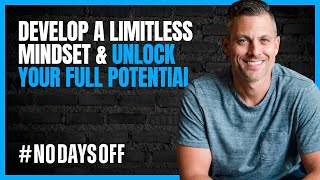
Brian Gubernick breaks down how to spot and replace limiting beliefs in three steps: name the "I can't" thought, check if it's actually true, and swap it for "I can" or "I can't yet." He opens with Roger Bannister breaking the four-minute mile, a barrier everyone thought was impossible until someone did it.
Chapters
Thank you for joining me today. It's Brian Gubernick, and welcome to the No Days Off podcast, where we believe that every single day brings a new opportunity to get better. Let's get into today's topic. Today I'd like to discuss mindset, or more specifically, the limitless mindset. Let's start by telling a story. Now, I'm not in my home office today, but if I was and you were watching this podcast on YouTube, you would see behind me a picture of Sir Roger Bannister. Roger Bannister was the first person to run a mile in under 4 minutes, and he did it on May 6th, 1954. This achievement of his was one of the most significant milestones in the history of athletics. Before his run, many, many, many runners had attempted to try to break the 4-minute mile. It was actually thought to be impossible. Yet it did not deter Bannister, and he pushed and he pushed, and he accomplished the sub-4-minute mile. Now, the crazy thing about this story, and, and the reason I'm telling it, it was again thought to be impossible. Yet, not too long after Roger Bannister broke that 4-minute mile barrier, in the months and the years following that achievement, the number of individuals breaking the 4-minute barrier began to suddenly increase. By the end of 1957, which was only a few years after Bannister's record, there are a recorded 16 athletes that had run a mile under 4 minutes. So just so we're clear, from the point of recording, whichever that, whenever that was, until May 6th, 1954, it was believed to be absolutely impossible that someone would physically die if they attempted to run a 4-minute mile. It was believed to be impossible. Roger Bannister does it in just under 4 minutes, like 3 minutes and 59 seconds, and within 3 years, 16 more runners run a sub-4-minute mile, and that's those that were recorded. My guess is that there were probably a number of runners beyond the track, indoor and outdoor, that ran sub-4-minute miles. Since that time, since '57, the number of sub-4-minute milers has just continued to rise steadily. I believe that as of today, there are literally hundreds of athletes that have accomplished this feat, and the record is actually quite a bit, quite a bit below that 3:59 and change that Roger ran. I want to say it's at 3:43, 3 minutes and 43 seconds, is the current record. And again, we're only counting those that ran it in a professionally timed event. We are not counting all of those that may have run it outside of the track. So, I tell that story why? Well, the 4-minute mile was thought to be impossible. There was a mindset. There was a fixed mindset around the fact that 4 minutes or sub-4 minutes was not possible. Then comes along this guy, Roger Bannister, who had what I would term to be much more of a limited— limitless mindset. Did not allow this concept of impossibility to stop him from running And he breaks it. But the interesting thing again is after he breaks it, what happens? Suddenly within a few years, 16 more do it. What does that mean? Well, to me what that means is that once the door was opened and the achievement was perceived as possible, the mindsets of many others changed. And therefore mentally, they developed the ability to recognize that they could go sub-4 minutes and in fact achieved this reality. Now, I think it's a really powerful example of what a, a fixed mindset or limiting beliefs actually creates and what a limitless mindset, you know, unlimited beliefs, what it could do, not just for an individual but for the environment, their peers, their family, their relationships, everybody around them. So if we have limiting beliefs, and that's what today is about, like we've got to get to a limitless mindset, which means we've got to eliminate our limiting beliefs. If we have some limiting beliefs, what can we in fact do to channel, or I should say to block, if you will, these limiting beliefs or eliminate them altogether? I think the very first thing we can do is name our limiting beliefs, meaning that we should start paying attention right now to every single time that we tell ourselves that we are incapable. Even if we think whatever we're talking about is rather insignificant or inconsequential, we need to start paying attention every single time we say I'm not able to do it. I can't do it. You know, I'm gonna refer to my kids a little bit now. You know, one thing I've heard my girls joke with one another about, it's, I don't know where they picked it up, but I remember once hearing my younger one say to my older one, when my older one said, "I can't," she used the words, "I can't," and Katie, my younger one, said, "You're hurting my ears when you say that." Now to me, that was music to my ears, right? The fact that she corrected her by saying, you're hurting my ears when you said I can't. But it's just fascinating, right? Because the reality is limiting belief oftentimes starts with an I can't. Whatever follows that is just you showcasing that you're incapable or perceive that you're incapable. So first thing, we've got to name our limiting beliefs. In other words, we've got to acknowledge the fact that it happens. So step 1, anytime you say you can't do something, Anytime you give an excuse as to why it can't be done, every time you find yourself using a phrase like, "I can't," or, "I'm not," or, "I don't," you're sending yourself messages that are affecting how you think. It's framing your mindset. Let's label it. Let's acknowledge it. Because step 2, we now need to get the facts. What that really means is, is it really true? Can you really not do it? What evidence, in fact, is there for that? Does the evidence support that, or is that, um, something that you've concocted based on your perception of others, or maybe an upbringing, or, or whatever it may be? What's prompting you to, to say that and frankly create these false facts. These things are just plain wrong. There's usually not any sort of evidence to support that you can't do something. So let's get to the facts, right? Like, let's review history. Does history really tell us that it can't be done? I would bet you that history would show you that, yeah, maybe there were times where you struggled with whatever this thing is. Or maybe it's been challenging in the past, but there's nothing probably showing you that it in fact is impossible and can't be done. So the point here is, once you name your limiting beliefs, let's really get down to the facts and see if in fact there's any truth to it. The last step in getting rid of these limiting beliefs, once you've named the belief, once you've called it out, and once you've gotten down to the true facts, The last step is to create a new belief. And what does that mean, create a new belief? Now it starts with an "I can." Maybe a great way, and to reference my girls again, my daughters again, I've heard them say, this time my older one to my younger one, when she said she couldn't do something, I heard my older one say, "Yet." End the sentence, Katie, with "yet." "I can't do that yet." I haven't achieved that yet. It's never happened before, or it's never happened yet. The point here is name the belief, get the facts, and then create a new belief. And that new belief is just a pure positive mindset. And there's scientific research that shows that when you are in fact positive and you have positive thinking, you can start to achieve things that you never thought possible. So I want everyone listening to the No Days Off Podcast to have a limitless mindset. I think too often we showcase a fixed mindset or one that is not growth-oriented, and we allow it to dictate our decisions. We allow it to dictate how big we actually think. We allow it to, to influence the type of relationships that we have, and as a result, We don't achieve our true potential. And I want to challenge you on that. So the focusing question for you today, where is your mindset a bit fixed? Where is it closed? Where is it— where do you have limiting beliefs? And what can you do starting this morning, starting this afternoon, to change that mindset? By labeling it, by getting the facts, and by rewriting, by changing that belief system. That's all we have for today, the No Days Off Podcast. Thank you so much for listening, and remember, every single day brings a new opportunity to get better. So let's get after it.
More from Brian











Ep 755 | Mack Newton's Words of Wisdom - "You Are Only as Big as Your Self-Concept" (REPLAY)