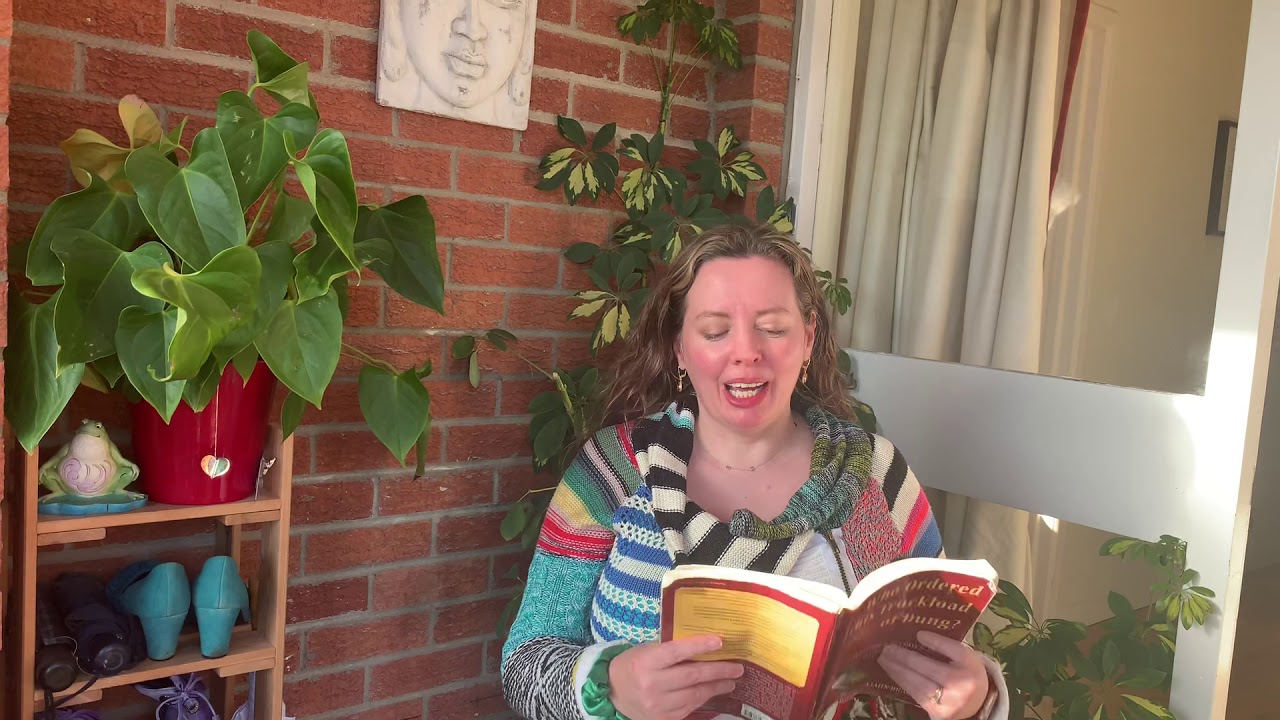
In this YouTube video, Bridget (Speaker A) reads aloud Ajahn Brahm’s story “Who Ordered This Truckload of Dung?” from the collection of the same name. She introduces the reading, noting she has not previously read this particular story aloud. The narrative uses the metaphor of a truckload of dung dumped in front of one’s house to represent unexpected trauma and suffering. Bridget outlines three facts about the dung: it was not ordered, it must be dealt with, and it is foul. She then describes two possible responses: (1) carrying the dung around, symbolizing sinking into depression, anger, or negativity, which alienates friends and worsens the situation; and (2) actively digging the dung out with a wheelbarrow, fork, and spade, representing mindful, diligent work on one’s inner garden. By gradually removing the dung, the garden flourishes, producing beautiful flowers, fragrant love, and sweet fruit that can be shared, symbolizing compassion, wisdom, and the ability to help others in suffering. Bridget extends the metaphor to Buddhist practice, noting that monks who have faced great difficulties become the most effective teachers because they have more “fertilizer” to share. She references her own teacher, Ajahn Chah, as an example of someone who likely endured massive “dung” in early life. The moral she draws is that tragedy can become fertilizer for the heart’s garden, fostering compassion and service. She concludes by inviting viewers to reflect, share feedback, and follow her on social media, promising another story tomorrow.
Chapters
Hello, it's Bridget back again with another story from Ajahn Brahm's Who Ordered This Truckload of Dung? And actually tonight I've decided to read to you the actual story about the truckload of dung. And to be honest, I never have read this one. I mean, I might have read it once, but I've never read it out loud. So the other stories that I've read, the 2 other stories, I read them all the time and I could probably tell you them without actually reading them. This one, I don't know if it's off-putting for you if I'm looking down the whole time, but I kind of know this one, but I will have to really read it properly. So I hope this works for you. I hope you enjoy the story. Please get back to me and let me know any feedback. Excuse me. I think I'm fine. A truckload of dung. Unpleasant things like coming last in our class happen in life. They happen to everyone. The only difference between a happy person and the one who gets depressed is how they respond to disasters. Imagine you have just had a wonderful afternoon at the beach with a friend. You return home, you find a huge truckload of dung has been dumped right in front of your door. There are 3 things you need to know about this truckload of dung. 1, you did not order it. It's not your fault. 2, you're stuck with it. No one saw who dumped it, so you cannot call anyone to take it away. 3, it's filthy and offensive. Its stench fills your whole house. It's almost impossible to endure. In this metaphor, the truckload of dung in front of the house stands for the traumatic experiences that are dumped on us in this life. As with the truckload of dung, there are 3 things to know about tragedy in our life. 1, we We did not order it. It's not our fault. We say, why me? We're stuck with it. No one, not even the ones who love us most dearly, can take it away, though they might try. It's so awful, such a destroyer of our happiness, and its pain fills our whole life. It's almost impossible to endure. There are 2 ways of responding to being stuck with the truckload of dung. The first way is to carry the dung around with us. We put some in our pockets, some in our backpacks and briefcases, and some up our shirts. We even put some down our pants. We find when we carry dung around, we lose a lot of friends. Even best friends don't seem to be around so often. Carrying around the dung is a metaphor for sinking into depression, negativity, or anger. It is a natural and understandable response to adversity, but we lose a lot of friends because it's also natural and understandable That our friends don't be— don't like being around us when we're so depressed. Moreover, the pile of dung doesn't get smaller, and what's more, the smell gets worse as it ripens. Fortunately, there's a second way. When a truckload of dung is dumped in front of our house, we heave a sigh and then get down to work. Out come the wheelbarrow, the fork, and the spade. We fork the dung into the barrow, wheel it around the back of the house, and dig it into the garden. This is tiring and difficult work, but we know there's no other useful option. Sometimes all we can manage is half a barrow a day, but even so, we're doing something about the problem. Rather than complaining our way into depression. Day after day, we dig in the dung. Day after day, the pile gets smaller. Sometimes it takes several years, but the morning does come when we see that dung in front of our house is all gone. Furthermore, a miracle has happened in another part of our house. The flowers in our garden are bursting out in a richness of colour all over the place. Their fragrance washes down the street so that the neighbours and even passersby smile in delight. The fruit tree in the corner is nearly falling over, it's so heavy with fruit, and the fruit is so sweet you can buy anything you like. Oh, the fruit is so sweet You can't buy anything like it. There's so much of it that we're able to share it with our neighbours. Even passersby get a delicious taste of the miracle fruit. Digging in the dung is a metaphor for welcoming tragedies as fertilizers for life. It is work that we have to do alone. No one can help us here, but by digging into the garden of our heart day by day, The pile of pain gets less. It may take us several years, but the morning does come when we see no more pain in our life, and in our heart, a miracle has happened. Flowers of kindness are bursting out all over the place, and the fragrance of love wafts its way down our street, to our neighbours, to our relations, and even to passersby. Then our wisdom tree in the corner is bending down to us, loaded with the sweet insights into the nature of life. We share those delicious fruits freely, even with passersby, without ever planning to. When we have known tragic pain, learned its lesson, and grown our garden, Then we can put our arms around another in deep tragedy and say softly, I know. They realize we do understand. Compassion begins. We show them the wheelbarrow, the fork, and the spade, and boundless encouragement. Yet if we haven't grown our own garden yet, this can't be done. I have known many monks who are skilled in meditation, who are peaceful, composed, and serene in adversity. But only a few have become great teachers. I often wondered why. It seems to me now that those monks who had a relatively easy time of it, who had a little dung to dig in, were the ones who didn't become great teachers. It was the monks who had the enormous difficulties, Dug them in quietly and then came through with a rich garden that became great teachers. They all had wisdom, serenity, and compassion, but those with more dung had more to share with the world. My own teacher, Ajahn Chah, who for me was the pinnacle of all teachers, must have had a whole chunky A whole trucking company with a fleet of trucks delivering dung at his door in his early life. Perhaps the moral of this story is that if you want to be of service to the world, if you wish to follow the path of compassion, then the next time a tragedy occurs in your life, you may say, whoopee, more fertilizer for my garden! Now, can we all say that? More fertilizer for my garden? I'm not so sure, but it's certainly a challenge on the path of practice, the path of compassion. So let me know what you think of this story. There'll be another one tomorrow. Thank you for watching. Thank you for listening. Please follow me on social. Please get in touch and please share. Thank you. Thank you.