Braintree & The Blueprint Protocol Founder: Bryan Johnson - "Healthiest Man on Earth"
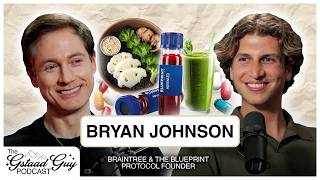
Bryan Johnson, founder of Braintree and creator of the Blueprint health protocol, explains how he went from chasing a $7 million exit to obsessing over biological age. He argues sleep is non-negotiable, treats biomarkers as status symbols through the Rejuvenation Olympics leaderboard, and believes humanity must act now on health rather than wait for AI solutions.
Chapters
Hi, Brian.
Hey.
Thank you so much for having me and having us in your home today. This is surreal. After having watched you do a couple of interviews with interview words that I admire and a couple of my friends, Mike and Logan, whose podcast actually broke character on for the first time, I felt like you were doing the same with them as well. You were, like, showing a different side of yourself and just hanging out with the guys. It was very cool to see.
Yeah, yeah. Like, Logan became a friend a couple years ago and I guess like a year ago. And so we've been messing around with stuff, so. Yeah, we had a lot of familiarity going into the conversation.
Awesome.
He's in this complicated situation because his profession, he's basically getting, like, traumatic brain injuries. You know, he's being body slammed.
Yes.
And he's also trying to be very healthy. So I was telling him, like, hey, man, be careful.
I saw he's done like 50 MRIs. But you've done similar.
Yeah, yeah. So he definitely is probably doing the best job out of all the wrestlers in terms of proactively taking care of his health and monitoring the health effects. But I don't know. I'd like to see if. If wrestlers have a similar kind of profile as professional football players. You know, successive concussions and like, when they. I went to a WME event recently and. And they get after it, so I don't know what the whole body damage is, but it's pretty significant.
For Logan's sake, I hope he's. He's okay.
Yeah.
Around the world with your host, the Stad Guy. We welcome you back to the Stad Guy podcast, sharing stories of excellence with those in the know. For those who just know.
I mean, again, thank you so much for having us in your home. I know that this is around the end of your of your day, typically, so this would be the equivalent of having an interview on my side at 10 or 11pm yeah, that's right. So really appreciate you welcoming us into your home today. I assume the audience knows you very well, but for those who don't know, welcome to the Staad Guy podcast. Brian Johnson is the man trying to live the best and longest on earth. You are the healthiest man in the world. You've achieved the perfect sleep score, and you are changing what it means to live long and live well. I have a lot of friends who are big fans of yours and who try to live as close as possible to the blueprint method. Many of them happen to share similar outcomes of their work and success as you do. And having exited companies and reached a point in their lives and careers where they have the, the luxury of time and resources to really go all out.
Yeah.
And I have other friends as well who may not have the same resources and actually focus on the, the basics of sleep, exercise and eat that you talk about very often. But I'd love to start our conversation by going back in time to what your life was like when you were a founder before you exited your startup Braintree to PayPal. What was old Brian like?
Yeah, I mean I remember the bargain I did with myself at the age of 21. I was trying to imagine how much money would I need by the age 30 to stop working. And so I just pulled out a spreadsheet, I started doing some math. I assumed a 7% interest rate and at the time I assumed my monthly consumption would be something like, you know, $10,000 a month that would be adequate for a family I had. I plan on having a few kids. And so I, if I'm not mistaken, I believe the number I came up with was something like $7 million. If I got that and we lived in a frugal way, it was enough money to basically never work again. And so I thought that's like the low end of the possibility, then of course you can go up from there. And the contemplation was that if you, if you were willing to devote yourself on that kind of journey, you could come up with zero or get, you know, 7 million or more. But you basically were making that bargain. And so I remember the mentality in doing that was I'm willing to sacrifice myself for this bargain. Which means I know as an entrepreneur you're going to have to work very hard, probably seven days a week, all day, every day. You probably are not going to take very many vacations. It's going to be on your mind all the time, like it's going to be an all consuming thing. And I remember that was the mentality I had in going into it. So I knew it was a sacrifice, I knew it was a bargain and I knew I was going to have to pay a price. And so I just didn't even question what the price was. I just assumed that doing it would be somehow worth it because then you'd have this some time horizon where you didn't need to play. So I guess that really my starting assumption baked in the fact that I was already willing to sacrifice myself for this objective.
Fine. And I assume by sacrifice yourself you mean not sleeping as well as you could have, not eating as well, as you could have.
Yeah, I mean, that's the bargain. So, like, if you. What I've learned is that when I share ideas about health and wellness and about, for example, like when I was speaking to a group on Saturday and I was trying to persuade them to make sleep their number one life priority, and I got people to raise their hands, like, who? You know, after this is like after 10 minutes of explaining the benefits and also the damage that your body incurs when not sleeping well. And I would say, like, raise your hand. Who's willing to commit. And I got quite a few people, but then there's probably like 30% of people who are being intellectually honest. They're like, I can't. And so I'd say, okay, what's your objection to this? And so one, one woman said, well, my children, they can't do it. They just. I said, why? And she said, they have too much to do. Like too much homework, too much, you know, the sports activities after school, like, how are they going to compete? And I was trying to figure out a way to articulate this, that in society we've just assumed that if there's too much going on, sleep must be sacrificed, instead of saying sleep is the non negotiable and everything else must be planned around it. And then somebody who was a student at USC also raised his hand. He said, I can't because I'm a student and I'm trying to get my grades to compete. And so I guess in both those examples, people, they treat sleep as a variable that can be pushed around according to other fixed goals. And what I was suggesting to them is they need to fix sleep and other things, other variables need to push around. And so as an entrepreneur at 21 years of age, I was basically accepting that societal assumption that I was willing to accept that sleep was a variable that I could push around because my goal was fixed. But it takes a long time for people to really think this through because it's so ingrained in us that we don't need sleep. It's not really important that it takes like several cycles to go through for someone to realize what they're actually doing.
Absolutely. I'm incredibly curious about your transition from sacrificing your health for the sake of work to once you had accomplished your goal and exited your business and you were finally able to shift your priorities and realign your sacrifices. Was that an immediate change?
I think it was gradual in its intensity. So a few things, like one, we're all motivated to have good health because Feeling crummy sucks and feeling great is something you cherish. But in between those two observations, it's not clear whether you like. So let's just say you make money and now you are evaluating your life. What's more important? Is it to have a great time with friends and party or is it to go to bed on time? And you have to weigh those two things. And if the person says, actually I'd rather have a good time with my friends and like, I'm healthy all week long and then I want to party really hard because this is something I'm enjoying and if it somehow negatively affects my life, like it takes a few years off my tail end of my life, I don't care. And so they use these thought patterns of like, I can pay this price now because I don't care about my future self at some point in time. And so like this is like a second example where there's all these layers of cultural education we have which blind us to this reality that actually those things don't make you happy. And so in my situation, I was going from depressed to not want to be depressed. Like that's a good one. But then going from there to where I'm at now is another really big leap. And so I was just trying to say I don't want to be, I don't want to hurt and suffer. So once you get to some kind of neutral state, then that's a contemplation of what trade offs are you willing to make. And that's when the reason I got where I'm at now is that was the observation. We are the first generation who won't die. And once you get there, then it's real. Then it's like, this isn't some game we're playing. This is like the biggest game in the galaxy of like we, we may not die. Which means that I understand reality in a very different way.
I definitely want to dive into that. But before we get there, I want to talk about this prioritizing health, coolness and, and that shift that has happened recently where I am privileged to know a few people that have exited and made a lot of money from selling their businesses as you have. And five or 10 years ago, the natural next step after selling a business that I always saw was just maximum indulgence. Yes. You know, just party and travel and do this whole thing right.
Yeah.
And I see that changing where a lot of people are actually indulging less and caring for themselves more. And that's what's cool.
Yes.
And a whoop is a lot cooler than a lot of watches today. And caring for yourself and caring about the quality and length of your life is one of the greatest luxuries. I think you're a part of that trend growth for sure. But why now and why is this such a cool thing now, particularly for people who have the luxuries of time and money?
Yeah, I mean, ultimately, humans respond to incentives. And it is currently not cool to be obese. It is not cool to drink alcohol. It's seen as. It's not cool to, I guess in some circles, you know, maybe to smoke, but generally speaking, it's not cool to smoke. And I'd say it is cool to flex biomarkers. It is cool to talk about what you're doing for your health. So I think humans are responding to cultural signals that you are higher status in your social group and your higher status in society. If you can speak the language of longevity and you actually, you embody it, you know, your skin looks great, you have muscle, you're fit, it does really generate power and status. And I think people respond to that.
And do you think anything has happened at a macro level to encourage that? Anything technologically?
Yeah, I think that what, what, what's transpired is that health has become measurable. And so if someone's outwardly obese, you know, that's a, that's a knock on them. Like they can't control their own eating habits. And so that's, it's kind of like a source of shame. But if you're fit, like if you're, if you're relatively healthy but, but you're unhealthy internally, no one sees that. And the fact that health can now be measured so robustly, it reveals your inner unhealth. And so I think that basically I would guess that there's been an accounting of health, that if you don't know your health markers, you're not viewed as intelligent and as you could be if you knew your health markers. And if you do know your health markers and they're bad, that's also, that's kind of like being obese. But now if you have health markers and you're good. So my guess is that when people can hide something, that they'll scoot along and do it. You can still play the games of power and status just by faking it. But right now it's harder to fake good health because the technology behind measurement is so much better.
And is that where your journey started? Did you start that self reflection and examination of your body to fix things entirely.
Yeah, I mean the, the premise was that like most humans, I ran my existence by my mind. You know, like, what are my mind, what does my mind want when it looks at the menu at the restaurant? What does it want to eat? And when I think about whether I'm going to do this debaucher's thing, what does my mind tell me about my philosophies of life? And I said, the mind is not a good steward of the body. My mind is actually a really bad boss of my body. So I said, all right, body, you're in charge. So I'm going to ask you what you want to do by getting data from you and you're going to tell me on a daily basis what to do and what not to do. And so I thought that the body, like the body is God in many ways. Like before you, you imagine this supernatural thing and now like the thing that houses our existence is our body. If we don't have our body, we have nothing. And so I think it's been this, the body's been this. In this weird like, almost dismissed thing in our reality where it's like it's, it's the flesh, it decays and over time you can't stop it. So but I think if we elevate it and imagine it to be sacred and a work of art and beautiful and like this magnificent creation that it is, it just changes how we think about it. So yeah, for me it was putting my body in charge and realizing that my mind is a menace.
I like that you said perfect the body because I think that longevity as a title and as a brand for this category is often misinterpreted and people assume it means to live longer no matter the quality of life.
Yes.
And like most old people who end up decaying and not being in great shape before they pass, they I'd rather not go through this another year than be in the suffering. I think people think about that when they assume what living longer in a bad way could look like versus living well. So with your desires for this perfect body, is it about added years or increased quality of life for the years that exist?
Yeah, it's about be sexy.
Okay.
Right. Be strong, do what you want. So even these concepts that we use like longevity and no one cares, Right. They just want to be attractive. They want others to think they're attractive, they want to have a good looking body, they want to feel great, they want to sleep great, they want beautiful skin. So that's the language that's what humans want. Now, longevity is a byproduct of those things. But just be sexy is what most people want.
And I know the fundamentals are the most important by far. Eat, sleep, exercise well, and the enhancements that can be added on beyond. The list is long, and you are the leader of the pack with all the things you can do. If you were to stop everything except for the basics today, do you think that would have a significant negative impact on your biomarkers?
I mean, probably, yeah. So there's several big camps to health and wellness, and there's a big camp that believes in natural remedies. The idea is that it's been around for tens of thousands of years, therefore it stood the test of time, and therefore we should do something like that. And then there's groups, there's people like me who we lean into medications, you know, any kind of technology. We can get our access or get access to food plus exercise plus pharma kind of stuff we embrace. And so we have said that we don't judge any intervention by any modality. If it works, it works and so forth. For us, the goal is trying to basically establish a new world record, a new singular accomplishment on what can be done. And therefore, we just pull out all the stops. So it's not like we're trying to be generally healthy or like, roughly healthy. It's like we want to have perfect health. And that's a pretty bold endeavor because we still probably are in the very early days of understanding biology and longevity. But, yeah, so that's what we've done in doing that, because we wanted to. A lot of people, in encountering this, a lot of people don't know where to find the motivation. So if, like, looking great is what, you know, the objective, a lot of people align with. Outside of that, they're not quite sure. Why do you try? Because. Because if they're going to age and die anyways, is it really worth all the hassle? And I'm trying to give people a motivation to say it's really worth it. You can. You can meaningfully change how you feel, like, significantly. And that's why I want to create this contrast where people are like, okay, before I thought, like, maybe worth a little bit, but now I'm into it because you really can make big gains. So I'm trying to change more than anything the perception around health and why it's worth doing to a meaningful degree. Not just. I'm not arguing for a lackadaisical approach. I'm arguing a very Robust, energetic disposition towards health, that it really is worth it at every layer.
And how much stronger is the prioritization of prevention than fixing the problem once someone gets there and hoping for the progression of technology to come so far that. Yeah, because I know you are a technological optimist, you believe that a lot of the world's problems will be solved by superintelligence. What if this is one of those problems that could be solved?
Yeah. So you see, like, actually, I think the most interesting pattern here is in your questions. You're correctly identifying the thought patterns people have that are the barrier for them to be to make good health decisions. So this latest question you asked, the way people process that, and I have friends who say this, like certain friends who said, I've stopped doing things for my health because AI is going to solve it when it's here. One person said I stopped wearing sunscreen because when AI comes, it's going to fix all my sun damage. And that may be true. And the point I'm trying to make though is that the psychology behind that is actually the root of our problem as a species is if we apply that same theory of like I'm going to pollute the Earth because AI is just going to fix it, or we're going to, we're going to allow nation states to go to war with each other and kill each other because like AI that come and fix it, if that becomes the way of managing our problems, we make our situation worse. And I'm trying to suggest the more healthy disposition is for us to say we are going to solve it right now. Not just because it actually is beneficial for you now, but that is part of this larger philosophy of where we're at as a species in this moment. But you can see that the biggest foe I personally have in this endeavor is all the baked in ideas that humanity has accepted for their entire lifetimes. And these ideas challenge them and they can't see that they're actual blockers. Yeah.
Where are we as a species in this moment?
I think when, if we can survive this moment and future generations are writing the equivalent of history books about this moment, I think it's possible that they say that this was the most spectacular moment in all of intelligent existence on this planet. That when you're transitioning from human based intelligence to digital intelligence and there's this transition moment to something new, that. And it's perilous, it's not clear whether we're going to make it through this. And so I think that it's exciting beyond our ability to see that if we saw ourselves in this historical moment, we would be, we would, we would behave with such different energy then. Right now we kind of know things. Something's going like a lot of people know something's going on, but it feels very much like we bring status quo like energy to it where it's like it's going to happen and I'm going to observe it versus a very active approach, engaging with it.
As I look around your home, I see that it's actually a lot more analog, I mean that fully respectfully, than I expected from someone who's so AI and so much of a tech futurist. Is that a clear decision for your health and your routine?
The way this house is organized is everything that causes death we try to control. So the water you drink is filtered in a special way that produces. And we measure it every month to monitor those parameters. The air we're breathing is finely purified and measured in every room. These windows have UV protectant, 99% protection from UVA, UVB. So you can't see these things, but these are the invisible forces that are affecting your biology in any given moment. Whereas the technology I could have in this house does very little to actually change my biology. And in fact, it might even make it worse. More screens, more this, more that, more. So I don't use a lot of technology outside of specific. In my clinic, for example, I have a lot of technology. But if it doesn't have the objective of extending lifespan, it lowers of increasing my health. Let me say that it lowers in its likelihood of being in a house.
Fine. So how bad is sun exposure for us and UVA and UVB rays?
It's not bad bad. It's just that the sun is a trade off. So the sun is good for you. It has all kinds of positive health benefits. It just is that it has a cost. It causes damage to the skin. And you can measure this. You can actually use this technology called multispectral imaging and you can measure it, look at UV damage so it's very clear what happens. So you're just in. I get a lot of flack because I don't spend a lot of time in the sun. And because of that, people hate me because they have such a firm belief that the sun is the most important thing in existence. And if they do, that's great. I encourage them to be in the sun and that's wonderful. I'm saying that the flip side of the argument, which they don't acknowledge, is that the sun causes damage and I don't want to make that trade off. So this is the same thing as if you drink alcohol, you're accepting that damage. If you smoke, you're accepting the damage. So it's, it's a similar damage assessment and trade off space. And so I'm just saying that I'm aware of the damage that it caused me. I can practically measure it and therefore I choose not to make that trade off for sure.
How much of an edge do you think people can have by optimizing for the place they live on a national level or even on a, on an urban level? Because I know you live in Los Angeles.
Yeah.
Which I find to be a choice I wouldn't expect because of the air quality and maybe the water quality and different things. Do you think people can have a significant edge by moving to somewhere like Switzerland?
Yeah, possibly. I chose to live in LA for a few reasons. It was actually a decision I made seven years ago. So I had sold my company, Braintree, Venmo, and I built that company in Chicago. We had offices in San Francisco and then I then lived in Virginia for a year or two. I lived in New York and then San Francisco and then la. And at the time I was trying to optimize for two things. One is I was building a brain implant interface company. And so I was trying to figure out whether to do invasive, to implant a chip in the brain or to do something non invasive. And I didn't know which path we were going to take. And I needed some flexibility. And so in doing that, in 2017, there were only really four markets in the US that had the talent and the density of institutions to do this. It was Boston, New York, San Francisco or la. It was hard to find. You couldn't go. It's harder to go to a second tier or third tier market and find the density of engineers because you need engineers that are very specialized in a whole bunch of different areas. And so that's why I was going through those different markets. So I lived in New York for a while. Same with San Francisco and the same with Los Angeles. And then the second thing I was trying to optimize for is that I was really, while I was, I had done this venture, investing into deep tech like synthetic biology and genomics. And then I was doing this kernel company. I was also pursuing this idea that I wanted to try to find an idea that would be relevant in the, in the eyes of those that exist in the 25th century. I wanted to kind of try to play reality on a few hundred year time scale. And to do that, I wonder, I. I imagined I need to find something very novel and in sampling New York and Boston, Boston's also a market. Could have build a brain interface company. It's just way too cold though. And also the other drawbacks there. But I realized. So I was trying to analyze these areas and in each one of these areas there's a very strong social zeitgeist on how people think and what they're into. And I basically concluded that Los Angeles was the most open of all possible places I could live. That would be the least intrusive on my own thoughts and give me the most space to play. And that's why I chose la. I didn't choose la. I wasn't into longevity at that time, so I didn't decide it. And then now I've kind of built a home here. We have a lot of friends, so it's a different calculation. If I would choosing based upon longevity alone, it would be a different calculation. So I'm open to it. But that's. I'm here because of a previous thought pattern. Fine.
And as part of that thought pattern you mentioned hanging out with friends. I try my best to sleep as early as I can and some of my friends call that antisocial behavior because I can't hang out with them when they're free to hang out. How does that look for you?
Yeah, this is again, this is like number seven thought pattern that is in between us and health. So the, the assumption that friends are making is, is that life cannot somehow be organized. Like it's a impossibility to hang out at times that are not late evening. Yeah, but it's actually not true. Like we do things in life all the time at different times of the day. It is entirely possible. It's just that it's sometimes not aligned with mass societal cultural things. And so it really is a lack of priority and not an insurmountable problem. And this is why we build the don't die community is that a lot of people do want to choose health and they don't feel supported by their friends and they sometimes get a really. They get a lot of trouble for it. All the little nuances of if they take pills, for example, or they choose to work out or they do cold plunge or sauna or like take whatever thing the person's doing, know they get ribbed for it a little bit. And if they, you know, they're mindful of what they eat, the restaurant. Yeah. So there's Just so many vectors for people to. And I think what's happening is most people know what kinds of decisions they need to have to have good health. And when someone deviates from that approach, it makes them feel uncomfortable because they know that's the correct decision, but they don't want to reconcile with that. And the friend calls them out on the behavior and then they feel very uncomfortable. And so the best way they can deal with it is by trying to get you to stop that health forward behavior because it's uncomfortable for them to exist in deciding to choose bad health over good health.
Like the peer pressure of why is the sober guy not drinking?
Yeah, exactly. It makes everyone feel uncomfortable. I think that's why I generate like so much intense hate, is I think that my decisions are in contrast to the social norms and it makes people feel very uncomfortable.
Yeah, I try to do the same thing online intentionally. My I. My entire page is built on this fictional character that I coined who basically some ways gives good advice, but in many ways embodies the habits that I'd love to see people change. So I try to do the same online.
Cool.
I mean, with your, with your. Your businesses that you're working on today with Project Blueprint and with Don't Die. Are they businesses that you and. And movements that you coined after solving for yourself because you want other people to have the same rewards that you felt on working on on yourself? Or is it a project that you ideated first and you're using yourself as your kind of guinea pig for the sake of the rest of humanity?
Both. The goal would be something like in 2027 or 2028 or, you know, even like 20 2030. It's like somewhere in the next couple years, if something like 80% of humanity said in unison, we don't want to die right now. All the crazy stuff happening in the world right now, we just don't want to die. And so that's what the world said in response to Covid, and that's why we had such a quick reaction. All the lockdowns happened and the masks and vaccines. Say what you will about those things, but the world basically said in unison, we don't want to die right now. And that was cool because we saw people act in unison across the globe, mostly for the most part, like this. We want to figure out the situation. And I want. I think AI progress is going to create a very similar situation for us humans. It's going to be moving very fast and in ways we can't quite comprehend. And it's going to be very unsettling. And in that moment, we're going to panic and we're going to say, I no longer know who do I trust? Is it my government or is it the AI? When I'm being fed information, who's it from? Is it the AI or humans? And we're not going to be able to discern what reality we trust anywhere and now. So if you take that and you back up and you say, okay, now what do you do right now that allows humans to be to say in unison, we don't want to die and we want the world to actually support life. Then it begins with a personal habit where I say going to bed on time is a good idea. Even if you haven't finished your homework, it's the correct idea. And you take all the things we talked about and those decisions then have this domino effect where then you say, okay, polluting the earth is not a good idea, not now. And not even expecting AI to clean this up. And you keep on going down the line. And then finally we say it makes a lot of sense to engineer AI to don't die with humans. And it makes sense that we actually say we are at war with death in all of its forms, and therefore we choose life over all things. And so that's what I'm trying to do is it's, it's a business, it's a philosophy, it's a religion, it's a nation state, it's everything. It's like, how do you move the species to march to the same cadence? And that's what we're trying to do. So it's all things happening simultaneously.
And is there a particular age or life experience that you think is helpful to be able to march at the cadence that you think is appropriate?
There's a few archetypes that respond really well to don't die. One is people in their 50s, 60s, they're beginning to experience aging decline. And they know what it feels like for the body to fall apart, body and mind to fall apart. And they are incredibly motivated. Another group, those who've had near death experiences, either, you know, with a health scare or something else, they just value life with this intensity where they really, really appreciate that they're alive. And then younger people, they hear these ideas and they're like, this is banger, like this is fire. This, this hits. This makes sense of reality. Where I find the myths is people who are in their mid to late 20s, 30s, and even early 40s, where their health is okay and they're locked in on other games like Ambition or something else where they're like, eh, I'm willing to live 10 years less in exchange for whatever trade off they're making. I also find that when we went to India and China, they ate this up. They thought, this is so sensible. This actually makes a lot of sense on how we deal with this situation as a species. Whereas in America there's a lot of individualism. You know, a lot of Americans are kind of like f off, you know, like, don't tell me what to do, don't tread on me. So Americans are very defiant, but Indian and Asian cultures were very supportive. So it's like, now I've spoken about this for long enough, I know the archetype and the response just, it's so predictable. You tell me the archetype, I'll tell you exactly how you can think about these ideas.
And are there any scale hacks through authority that you think could help this grow a lot faster as well? Like education? Possibly.
We're trying to find those growth factors. The ones I think that have the highest potential are the non serious ones. So it's this idea of be sexy. It's like if something like if Kim Kardashian was basically a proponent of don't die, it was just like, look good, that really resonates and something like, you know, don't eat sugar, that's bad for you. There's a path here with memes, you know that that's very powerful. But I would say like things that are serious in nature have I think, a limited reach. But also other, I think like legislation could also be useful. Legislation is like very functional. So. But it's just very hard to like, for example, if we say let's outlaw alcohol because it's bad, that's a really bad idea.
Yep.
You don't want to have to rally people. You want to get people to not drink alcohol because it improves their status and power. So you really want to come to the front door of making a positive pitch than trying to take, you know, go after the negative.
I mean, I actually see that happening with saunas and cold plunges. It has this status that comes with it now of yes, it's a cool thing to do. It's, it's a thing successful people do. I think the glamorization of being in good shape and taking care of yourself is the, the hack to scale.
Yeah.
For this, Yeah.
I mean it's, I would imagine if, if somebody is doing something like cold plunging or like sauna, you can probably with us with a stopwatch. The moment you meet them, start it and just clock the time it takes them to tell you they're doing it. 100 so it's a, it's really really powerful. It's a social signaler.
That's true.
And so you probably to find like what is culturally on point you just need to watch the word mapping of what's dropped on new interactions and when and then you get the status ranking of what, what ideas increase status the most and the fastest.
As part of my day to day job I have to study the lifestyles and patterns of my audience who happen to be some of the world's wealthiest people. And I'm seeing this growing pattern of people doing less indulgence and more self care with their trips. And from going to two beautiful health clinics to even traveling and playing paddle and doing sauna and cold plunges instead of traveling, going to clubs and drinking and doing all those different things. And I'm noticing that it also comes with bragging rights that for the first time in that community are actually positive. I think that the brag of rich people doing rich things was always like a pretty awful thing for society generally. But now the brag is actually pretty good because the guy who's addicted to saunas and cold plunge who can't stop talking about it is actually encouraging positive behaviors.
Yeah, I think where this is going is that directionally so health is being broadcasted as a status signal. And I think where we're going next is that certain biomarkers. So right now it would be you could say things at the abstraction layer like I cold plunge or Isana. The next layer is going to be talking about things like your speed of aging, that looking at DNA methylation clocks you have a number or speaking about your biomarkers with a certain level of fluency. Like my cholesterol numbers are blank and my plaque score is blank. Just one layer deeper where it shows not only do they practice health, but they measure health. Then the next layer is on some kind of comparison and leaderboard. This is what I did several years ago where I was trying to appeal to people who were engaged in health and wellness. But the problem was everybody could say what they were doing and earn the same level of respect. But that didn't tease out that there were actually ways to discern who was actually more efficacious than what they were doing. And so I created the rejuvenationolympics.com a leaderboard where people can compete for the lowest speed of aging using these DNA methylation clocks. And so it's been going on for several years now and people have gone nuts over this. Like anytime you create a sport and you create a leaderboard and you have points, humans kind of go crazy. So it's been this unbelievably successful endeavor where people are all out competing. And so I think that's probably where this steps to next is. People are legitimately competing on biomarkers for status.
And you're number one on the leaderboard. I am and always have been.
No, no, actually I was. I haven't for a while. I haven't been number one. So this is the whole point. So I created this to say basically what we've carved out is a way to be healthy, but certainly there's other ways too. And so I want to make a leaderboard. And so when you get on the leaderboard, the invitation is share your protocol. So educate the entire community on what you're doing. So everybody improves. And of course most people keep everything a secret. As you might expect, they're trying to retain their competitive edge. But yeah, so for several, for the past year or so, I haven't been number one. So we've been working very hard at it. And so, yeah, so it's been great in that it really encouraged quantified competition so you can tell who's the best. So yeah, I'm currently number one in the world. There's 6,000 people who are intensely competing for this objective.
I mean, one thing I would love to know about that on that leaderboard, I don't know if it's on there, if it can be quantified, but I'm very curious about biological clock and speed of aging in proportion to time spent and, and dollars spent as well.
Agreed.
I assume there's a point where it gets very expensive to have like less of an impact. And the sweet spot of like the 80% prior.
Yes.
Can be incredibly inspiring to more of the world.
Yeah. It also has revealed. It does that also. It shows genetically gifted.
Fine.
So it shows some people who participate on a whim and they do very minimal efforts. Like they have, you know, they try to eat well but like sometimes they're eating fast food, sometimes work out, but not really regularly. And they have one of the better speed of aging scores. And so it does in that way, in that going back to the story before of like I have an uncle who blank and blank and blank and therefore I should too. That teases out from this one dimensional measurement. What are your genetics in terms of how fast or how slow you're aging so that then can inform them maybe it's not a good idea for you to follow the whiskey smoking, whole bar chocolate everyday protocol that may not be your jam. So yeah, there's so many layers of benefits. So yeah, I would imagine your audience is going to step from social signaling to fluency with markers to competing on markers that they like me, they publish their markers and say here's where I'm at. And like, it's like what we're trying to do with our, our community is we're trying to say beat me, beat Brian Johnson. And that's the goal. And so I'm willing to share with them what I do so they can beat me. Like people will call me, they'll be like, I'm going to get you. And I'm like, great. Like I'll help you get me. So I really want the whole field to improve and we'll do that by sharing stuff. It doesn't make sense to try to partition off the knowledge.
Sure. I mean, I have one of my closest friends is based in Switzerland and he shows off his biomarkers on his stories. Yeah. With the intention and hope to encourage people to, to do a similar thing. And he actually got his kids on the journey too. Yeah, they do the basics but it's, it's really cool to see him setting trends and I see people replying to his stuff and it's, it's really a thing for sure.
Yeah.
I, I guess when what you're saying about the people who have the genetic disposition to be on a better beginning, the change of where they started to where they got is probably the most interesting part in that case.
Yeah.
I mean, I think I should probably start doing some measurements myself.
Yeah. What have you measured?
Honestly? Not much.
Is that right?
I've never measured my sleep. I've never worn a whoop or an aura ring. I know when I sleep, I guess that the measurement is my mind, which you said is the probably the unhealthiest way to go about it. But I haven't quantified these things. I think I'm reasonably healthy and I'm reasonably mindful about what works for me.
Yeah.
But I think backing my decisions with numbers would probably be a good thing.
Yeah. Do you, have you gotten a blood draw?
I've had blood tests, yeah. But by medical doctors.
And have you seen the results? I have, yeah. And have you?
They seem okay. Like the doctor's like.
Yeah.
You seem like a normal dude.
Yeah. You know, so this is. So what's your chronological age?
I don't know that.
No. Like how old.
Oh, how old AM I actually? 28. I do know. I did know that.
Yeah. So like at 28, I, I agree that the, the assumption is right, that you are reasonably healthy because you feel reasonably well and you think you sleep. Whatever. That's maybe true. It may not be true. And so this is a thing where most people in their 20s and 30s fall prey to this kind of thinking is they. You kind of don't think bad things are going to happen to you, at least at this age. And bad things could be happening to you and you just don't know. And so. Yeah, that's one of the common misperceptions. And so you, if you do a basic blood draw and then take those results and run it through ChatGPT and just say, how am I doing? Is there anything alarming here? I wouldn't trust your doctor to come back and give you the news. I know in previous times when, like when I've been doing blueprint, I work with a lot of doctors and some are into, you know, wellness, like anti aging, some are not. So one doctor in particular, he runs this high end concierge group.
Okay.
And something happened. Oh, I remember, like my inflammation score came back very high because I had been injured and so my body had reacted, but I didn't tell him that when I saw him. And so my numbers came back very high, but it was still like roughly in like the tolerable range. And he got my results back and he's like, great, keep on going. But if you look at the numbers more closely, I definitely would have said that is a big problem, like what is going on? But so they, they really have a set of standards that may not necessarily be the correct standards because they're accustomed to looking for gigantic problems and if they're not a gigantic problem, like when. Yeah, just kind of push it away. So, yeah, I would suggest it's never too early or. And you never. There's never a good excuse for not knowing the data you want to be. Yeah, it's much easier to address proactively than being caught up trying to fix a problem.
One thing I love that you spoke about is the extra virgin olive oil. I feel like it's such an incredibly simple and actually delicious fix to people's lives. And you did say that extra virgin olive oil is better than Ozempic for weight loss. I'd love to hear more about that.
Yeah. So I should clarify that. I was. What I was trying to say is that olive oil has many, many beneficial health properties and some of the same endpoints as Ozempic. Ozempic is clearly better at weight loss and appetite suppression than olive oil. But what I was trying to say is Ozempic is top of mind for people on a singular solution towards appetite suppression and weight loss. And extra virgin olive oil has some similar mechanisms that achieve similar results. So I was just trying to draw a contrast that when you're thinking about what things to do in certain situations, Ozempic is definitely the move, like do that because it's singularly good at that. Also, extra virgin olive oil, these natural foods do have very positive effects on controlling appetite, on helping with weight loss. So, yeah, I think that I try to communicate that foods are very effective at doing things that people think drugs only can do, but actually you can have a portfolio approach in doing it. So fine.
I mean, on the Stadt Guy podcast, we always conclude with a simple finale question. On my Instagram, I always talk about things that are a la poubelle, which in French means to the trash. Things we'd like to change and things that are fantastique, which are things that we love. Is there one thing that you find or one or two things that you find to be particularly a la poo belle today in the world around you or the society we find ourselves in? And one thing that is particularly fantastique and great that you're grateful for?
Yeah. Okay. First, what we put in the trash.
Yes.
I think that we should stop following our minds and instead follow our bodies. That is, if you think about your decisions on a daily basis, you're mostly. Most everyone is run by their minds. It's what your mind wants. It's what your mind has. A pr. You know, like. Yeah. Versus legitimately saying body. You're in control. So I think that that is a revolutionary idea that is offensive to a lot of people because most people understand themselves and their existence through their mind, through their preferences. This is when we talk about, like extreme longevity, like, you know, going on some duration of time. Again, the. The rebuttal the person has is, I don't want to live that long because I'd be bored. And so to me, that answer basically demonstrates why the mind should never be in charge of longevity. Yeah, the mind has no idea how to think about the future. The mind is willing to make really stupid errors of logic that basically they're saying, like, when I'm 80 years old, I'm somehow not going to value life.
As much when in fact it's probably more than ever.
Yeah, but when you arrive at 80, you don't want to die when you're 80. And so people are just incoherent with their existence. So I would put that in the trash and say at this moment, as a species, we should transition from mind to body. It is in our best interest. Our body is more wise than our, than our mind in the fundamentals of life. And that we should fully embrace that as a shift in our shared conscious experience.
I love that. And something that is fantastic and great.
We would be legitimate in having a child like excitement for this special moment that we're in. It's almost like if you traveled back in time to a caveman and you're like, if you, if you just hold on a little bit, you're going to be transported into a world where you have glowing objects for you can speak to anybody. You have these little white pills that solve infection. If you break a bone, it gets fixed. You're going to sleep in a warm bed, have a warm shower, you know, like, just hold on. I think that it's the eve of something so spectacular we can't even imagine it. And I think we can look, look at this possibility with childlike wonder and childlike enthusiasm. And in doing this, it helps motivate us through these day to day decisions we have to make. For example, if you're just in this moment right now, do you drink with the friends or not? Right. That's just one decision. You may say just tonight and then the rest of the week I'm going to be healthy. Those kinds of decisions relative to a childlike, wonderful of an extraordinary existence, it just makes that decision so easy. I'm not going to drink because that's silly. And like this is one of the cusp of the most extraordinary existence in this part of the galaxy. Like that's so silly. Why would I make that trade off? So it's that kind of comparison. So I think this is, that's to me is what's so motivating and fantastic is that we, we really, it warrants having that kind of enthusiasm and hope for the future. And it's ours to build. We just need to say yes to this moment. And it would be like the, the biggest, it'd be the, the biggest loss of opportunity in history if we actually don't succeed in this moment.
I love that. Well, thank you so much, Brian. Thank you for your time and thank you for having us in your home.
Thanks for being here.
Thank you.
Thank you for listening to this episode of the Stard Guide Podcast. If you're keen to learn more, please follow along by engaging with our social channels on Instagram, TikTok, Spotify, YouTube and Apple Podcasts. And we look forward to seeing you next week. Merci beaucoup, a la prochaine and a big hug from the Staad guy.





