BRYAN JOHNSON: DON'T DIE
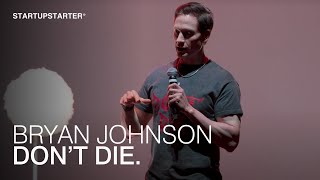
Bryan Johnson argues that "Don't Die" will become humanity's dominant ideology, replacing capitalism and religion. He runs a personal longevity program with 30 medical professionals tracking every organ and using interventions like sleep optimization and shockwave therapy to achieve world-leading health metrics. He frames AI as the single most important issue humanity faces and positions algorithmic control of the body as the path forward.
Chapters
So tonight I thought we'd do something cool and have one of the most interesting conversations of your entire life. When I zoom out on planet Earth and I try to assess, like, what is the most important thing happening on this planet right now? Like, absolutely the most important thing. Quiet. Everything else, I think it's that we're developing artificial intelligence. We're giving birth to super intelligence. There is no model of human thought that addresses what you do when you give birth to superintelligence. I want to propose to you that Don't Die is the. We do. Don't Die is the most played game by every human on the planet, every second of every day. Okay. So what I've been trying to do over the past few years, this is what I'm going to talk about today, is I've tried to become the most Don't Die person in human history. I'm suggesting that Don't Die is in a couple years time is going to become the most powerful ideology in existence. Okay, cool. We have a lot to get done. What's that? This is a comedy special. You guys know that. Okay, have you guys heard of Don't Die? What do you think it's about? Yeah, what else? Yeah, longevity. What else? Anything else? Yeah, Yeah, that's true. Wait, what's going on? What? Okay, cool. So tonight I thought we'd do something cool and have one of the most interesting conversations of your entire life. Yeah. Yeah, Cool. So it's going to require everyone to be present and to be engaged and there's a few ground rules. So it's important that a lot of you speak because you're going to understand things through the opinions of other people. Two is when you do speak, keep your comments snappy. 10, 20 seconds monologues. Just take the energy down. And three is be open minded as we kind of explore this. Okay, so we're going to start with the questions. If you had access to an algorithm that could give you the best physical and mental and spiritual health of your life, but in exchange for the act, and if you had access to that and the algorithm told you when to go to bed, what to eat and how to exercise, but in exchange you got the best physical, mental, spiritual health of your life, would you say yes or would you say no? One person at a time. You raise your hand. Yes. Okay. Yes or no? Why?
I want to live longer.
Okay. I want to live longer. Okay. What others? Yes.
I want to be the best.
Yes. So clean. Yes. Yes. Okay.
Yes. I want to have clean energy and focus while I'M also alive longer.
Sounds very good. Okay. Knows. Depends. Okay, good. Why? What the trade offs are. Yeah, good. No, we don't know. The only thing you know is you report it's the best physical and mental and spiritual health of your life. Outside of that, you have no idea what the algorithm does. So. Yes. All right. Other nos.
Yeah, I don't feel like listening to an app or to an algorithm telling.
Me what to do.
The fact that it's telling me what to do, it hurts me.
Yeah. So you have a model of the world where you want to do certain things and an algorithm imposing itself is annoying to you. Okay, understandable. And there's no correct answer here. Yes or no? They're both good. So, other thoughts? Yeah. Did someone say they can't hear? Okay. Yeah. So free up mental space. So clean. Yes. Most of you are yeses. Yeah. Oh, someone else wants to comment up there. Okay. Yeah, exactly. Legitimate. So you don't. We don't know how the algorithm works. And so giving up your ability to make decisions understandable. So, no. Okay, cool. Okay. So that. Yeah, Last one.
Well, it's kind of like yes and no, because what if someone else's algorithm works for them but not for me?
Yeah. So the data point is, you know, it gives you the best physical and mental, spiritual, healthier life. And so that's what you say. Yes or no. Yeah. Okay. All right. Okay. Now that's thought experiment number one. There's five. Okay, now, thought experiment number two. Imagined. Imagine those who exist in the 25th century just watched this conversation. They heard me pose the question to you and they heard your responses. What do they say about your intelligence, about your morals, your values, your ethics, your judgment? What do they say about you? Yeah. Yeah, we want to be at our prime and also want to be in control. Yep. What else did they say to frame this property? Imagine you're looking at people who exist in the third century, or even 3,000 years ago, or even cavemen, and you're assessing them and their intelligence. So it's a few hundred years in the future. They're probably unfathomably more advanced than we are. So again, they're judging us from that perspective. Yeah.
Well, I think if you look at.
Greek philosophy, it resonates, obviously with people, people in the modern day. I think there will definitely be truths to that still. So you think that what has been will continue to be.
I think there's probably some core truths, but I think our approach will definitely change.
Okay, so you think that many of the ways humans Think and act are durable over this time period?
Well, depends what I mean.
Are we humans at that point? Right.
Are we simulated?
Exactly. Yeah. I mean, that's the question is like, if you move a few hundred years in the future. Yeah. So it's an imagination exercise. And so when we look back on cavemen and we assess them, we're pretty brutal. We look down upon them. We have a superiority complex. We think we're much more advanced and intelligent. Do you think we'll be alive then? It's just a thought experiment. The assumption is yes. So the first question is meant to provoke your response. The second one is just a model of reflection. Like, what could be the case? Yeah, Actually, ignorance is bliss.
Yeah, they just didn't know. But they were still.
Yeah. Okay, cool. So if we just trace what we've been so far is the first question is meant to provoke a response on what we think is. So I posed a question that was complicated and you were trying to grapple with this complication. And so you went to your mind and you said, how do I understand reality? And so, for example, someone back here said, well, I don't trust models of existence. I want to verify. Others said, I want to be my best self. So, yes, but you basically chose a model of how you understand the world and you applied it to this question. All of you applied different models of reality. And then when you took the second question, you saw in a more humble state that we know the future typically looks back on any time and place and judges them that what we think about values today are not truth, they're just ephemeral phenomena. Whatever we value as norms just kind of goes away in time. So we're not speaking truth like math or physics. All right, third question. When I zoom out on planet Earth and I try to assess, like, what is the most important thing happening on this planet right now? Like, absolutely the most important thing. Quiet. Everything else, I think it's that we're developing artificial intelligence. We're giving birth to superintelligence. Now, whether you're bullish on AI or bearish on AI doesn't really matter. Over some time duration, AI is improving at a speed that is unfathomable to our minds. It will be better at us than in everything. So the question is, as a species, what do we do when we give birth to AI? This is a legitimate question. The US is doing its thing. OpenAI, anthropic, all these companies, the open source models from Meta, China's doing their thing, India's doing their thing, Israel Et cetera. When we build AI, do we become better at war? Do we become better at making money? Do we become better at social media? What do we do as a species? Do we regulate it? Do we let it be open? Do we try to create models that keep each other in check? Can they use nuclear weapons? What do we do? Pray? Yeah, pray. Well, that's the strategy. Yep.
The same thing that humans always do is you just sort of keep going until it really hits you in the face and knocks you out before you make change. So we're not going to change anything until it's like Dire Straits.
Yeah. That's typically how humans behave. That's true. Yeah.
It should be for amplifying individuals at scale in a way that we can. But there's a point humans all scale first.
Yeah. Now, the risk here is that AI is it's the most powerful technology we've ever developed. It's by far more powerful than nukes. And so it really is the most pressing question in existence. There's just nothing more important. And so we can do what we've always done. And that's just going to play out. The question is, is there something else we can do? I mean, there's like this question, like, are we humans going to be around? Like, we give birth to AI, like, do we have a future? Like, this is a legitimate question and it's not clear. So again, like, what do you think we do? And he goes, hang with me on all these questions. I'm going to tie this back to something that you'll find very relevant. So just hang with me. I promise there's a happy ending here that you will value.
So when I was in high school.
I remember 10 to 20 seconds.
Called Player Piano. And it talked a lot about how the computer age came about. It talked about how they come to a point where it was just a leap. A little tolerant, very educated, that would pretty much be running everything. Everyone could know that. Kind of like, no need for man. They would just be roaming the streets and bars. So I can see that.
Yep. Yeah. And it's. I agree most of those things are coming to reality and more that that were not imagined. Yeah. Like, just recently, one of the AI models got a Nobel Prize for solving protein folding. Okay. So I'm going to. I'm going to summarize this and say that basically, I think we all could probably agree. We don't know. Legit, we don't know. So a few patterns I want you to recognize. In the first question I posed to you would you say yes to this algorithm. You referenced models in your mind and you said, I have an answer and I feel pretty confident in this answer. I gave the second thought experiment with the 21st century and you said, maybe my answer is not that legit. Maybe in time and place I'm going to be viewed as something kind of primitive. The third, I gave you a question and you had answers again. You went to your model of your mind. You said, how do I solve this problem? Do I think about it through democracy? Do I think about it through competition? Do I think about it through capitalism? You went to models of how you understand reality. I want to propose to you that there is no model of human thought that addresses what you do when you give birth to superintelligence. There is no way that humans think about reality today that is actually equal to this moment. Not capitalism, not democracy, not Islam, not Christianity, not wokism, not anything. There's nothing that addresses the moment. We have no idea what to do. I want to propose to you that don't die is the thing we do. And so it sounds cheeky, but it's actually a multi layered concept. So here it is. Don't die is the most played game by every human on the planet. Every second of every day. Every one of us play don't die every single second we breathe. The majority of our metabolic activity is being allocated to keeping our bodies alive. If you look at the biomass on planet Earth, that is what all biology does. It's trying to stay alive, it's trying not to die. Animals and all biology. So on this earth, the game that's being played is don't die. Now, once you're not dead, you can play other games like capitalism, you can play democracy, you can play love, you can play all these other games we play, but that is the 0th order priority. It is a single thing we can agree upon. So don't die individually, don't kill each other, don't kill the planet, and align AI with don't die. There is no other answer in existence on what we do as a species. Don't die is the most powerful mimetic out there. And elegantly. It's not just don't die as a narrative that we humans say we want to live tomorrow, but it's also reducible. This is a kind of a complicated idea. It's reducible to math. Okay, so what I've been trying to do over the past few years, this is what I'm going to talk about today, is I've tried to become the most don't die person in human history. I've tried to demonstrate the future of existence. So here's the concept is when you acquire powers in the form of AI, the only thing you care about is entropy. The only thing you care about is that the battery of life runs out. Existence becomes the highest virtue. And so what I've tried to do is I hired a team of 30 medical professionals. We measured every organ in my body. We said, what's the biological age of every organ? Then we took all the best science, we applied it to my body and said, can we actually slow down my speed of aging and reverse aging damage? And can we do this in an algorithm where the algorithm actually takes better care of me than my mind can? So basically it's like my mind is going to want to eat donuts and it's going to want to eat pizza and it's going to want to stay up late and drink alcohol. But my body, when it's in charge and it works with science and data, it can run this closed loop algorithm. And so I arguably have the best biomarkers in the world. I don't know anyone in the world who has better biomarkers than me currently. Now I'm sure there are, they're just not as measured as I am. But still, I went from a 43 year old to trash myself as an entrepreneur and had chronic depression for 10 years and had bad health my entire life to having top tier biomarkers in the entire world. So it's really interesting data to show that when you apply these algorithms, you can achieve phenomenal outcomes. Now you could just easily replace my body with planet Earth. So measure Earth with billions of data points. You look at what maintains a coral reef that is healthy for an environment, what maintains a healthy biosphere for the air and water. You measure it. Use science, you implement it. So bring up my slides, I'll walk you through a few things. So if some of you have been familiar with my work, you guys seen this? It's legit. Yeah. My nighttime erections are better than the average 18 year old. Yeah. So nighttime erections are actually a really important biomarker for health. Did you know that if you're an entrepreneur and you're grinding and you get three or four hours of sleep a night, guess how many boners you're having. Guess zero. And did you know? Next slide. You know, if you're not having boners at night, you might die early because it's significant indicator of cardiovascular health, physiological health and sexual health. It is A really big deal. Now I talk about boners because in the early stages of blueprint, I would talk about my thymus, which is this gland behind my sternum, which runs my immune system, really important organ. We rejuvenated it by seven years, like this amazing accomplishment. We talked about it. No one cares. Talk about boners and people are like, wait, what? Next slide. So this is how, this is why it's important, is these topics are entry points into understanding these broader concepts. Where when you're younger, you have a lot more nighttime erections and women, females, you too have nighttime boners. They're just harder to measure. But you go through the same arousal cycle as men. So when you're 18 years old, you typically have like three to five arousal cycles where you will become erect for a certain duration of time at a certain strength, and then it goes away and it happens in certain phases of sleep. So females have the same cycles as men. And it's the same representation of your actual health. As you're younger, you have a lot more, and then as you age, it goes down. So basically your capacity declines with age. This is important because as we all know, you all are hustlers in life. Like all of you are hustling, I'm sure. And hustling, especially when it comes to the cost of your health, has significant complications. So next slide. Next one. So this is actually, this is true. So my night's predictions are the length of the Titanic. So three hours. Yep. So the movie Titanic is three hours and eight minutes. And so but that's how we actually, when we started, I was at one hour and. 2 hours and 12 minutes. And then we found a few therapies. It was focused shockwave therapy and Botox. Both those two things had clinical evidence that could improve the function of the penis, especially nighttime erections. And we increase it to that amount of time. Next slide. This is to demonstrate that science begins with counting, that you can make remarkable insights in life based upon biological measurement. Next. I mentioned this before. We basically endeavored to say, what can you do with the human body today? For example, my cardiovascular ability is in the top 1.5% of 18 year olds. My bone mineral density is the top 1% of 30 year olds, which is age min for the test, and so on and so forth. My biomarkers are stunningly good. And I say this because I hope it gives you hope that as a 43 year old, I was really trashed. I was 50 pounds overweight. I was in terrible health. My clinical marker showed I was at high risk of premature death. And so we turned this around pretty quickly. So you too can do this. And it does not require millions of dollars. We made it very easy. Next. All right, so I'm now going to have an intervention. I'm now going to do an intervention with each one of you. Next. Okay, who here slept eight hours of sleep last night? Had eight hours of sleep. Good. Good job. Who had seven? You have to be honest. Six. Okay, yeah, like, quite a few. Five, four, three, two, one, zero. Anyone pulling all nighter? Okay, so I want to quickly talk to you guys and try to get you to commit today that sleep is your number one life priority. Who thinks that's possible? I want to convince you to design your entire life around sleep. Okay, so right now, culturally, it's common that we will sleep when we're finished with our movie. We'll sleep when we're finished with our show after work, we'll sleep when we feel tired. But it's not a priority. It's not like we show up on time every day like it's our most important meeting of the day. Could we turn the light off? But it's blue light. It's going to negatively affect my sleep. Thank you. Exactly. Thank you. Okay, so I'm going to give you guys five habits to practice. So what gives me the authority to talk about sleep? I am a gold medal sleeper. I have the best sleep score in human history. Thank you. Now no one else is competing. Thank you. I have eight months of perfect sleep. So if you have a wearable, like whoop or something, you know, getting one night of 100% is pretty hard. I had eight months of continuous perfect sleep. Yeah, there we go. Okay, so here's how I did it. I spent this eight months perfecting sleep. So one is your identity that it's important that you identify as a professional sleeper. So you are an entrepreneur, or you are whatever you are, and that is a serious professional identity you have. And you take it very seriously. You need to take sleep just as seriously, and you need to be convinced that if you do sleep, it's going to have a return on investment, that it's going to make you a better person in life. You're going to have better ideas, you're going to make more money, you're going to be more successful, you're going to be more happy. I mean, just statistically, in this room, the majority of you have very serious mental health problems. Right? It's true. Let's just be honest. It is true. The majority of you have very serious mental health problems. And a lot of that is due to not having adequate sleep. And so the first line of defense is not drugs. The first line of defense is sleep and exercise and diet. But sleep is number one. So it's really important for your own mental health and for everyone around you that you are a professional sleeper because it is the most powerful drug that is successful to you. Number two is light regulation. What I do at my house is I go to bed at 8:30. So tonight I'm going to be a little late. Yeah, I'm going to be late because some other Parker was late earlier which caused me to be late. Who is that? Who's the motherfucker who got to be late tonight? Okay. Yeah, exactly. Okay, so we're at light. So I get up at 8:30. So that means at 7:30 all screens are off because blue light really negatively affects. You can do something called flux. Flux. What is it? Something just Google flux. And that kills blue light on your screens. But try to kill your screens. And then in my house we use red light. So we just have a red bulb in a lamp. We turn it on and it's amazing how light affects the environment. When you have blues or big screens, it really negatively affects your sleep. And so try to lower your lights in the house. And if you can use red light, great. You will see that it will calm you and get ready for sleep robustly. Screens will keep you awake. Number two, Number three, lighter and earlier. Now this is a good one. I eat my last meal of the day at 11am you don't have to do this, but I'm just going to tell you where the data and science took me. I was basically asking this question. When you eat food, your body has to spin up metabolic resources to digest food. It has to allocate attention to say I need to digest this, this stuff. And it requires blood glucose and a whole bunch of other processes. After six hours, your body's finished digesting food. What I found is I started measuring my last meal today. One hour before bed. 2, 3, 4, 5, 6. I found that the further I pushed it back, the lower my heart rate was before I went to bed. My head hits a pillow at 8:30pm My resting heart rate is between 42 and 46 ish. Now when I have that, I'm going to have a perfect night sleep, guaranteed. If my heart rate is 49 or 56 or 61, I'm guaranteed to lose 40% of my sleep quality. It's absolutely algorithmic. I also know If I eat at 5 or 6 or 7, it's guaranteed to boost my heart rate to 51 to 55. I can just map the calorie increase or the time increase to that. If I eat something heavy like a pizza or pasta, which I never eat but I experimented with, then that also increases the heart rate. And so what you can do as an experimentation is have your last meal of the day, two hours before bed, and then go back to three and then do four and do five and just experiment. And I say this every time to people like, you know you do, you like find out your thing. I've never heard anyone do this experiment and report back to me that they sleep better when they eat right before bed. It just doesn't happen. Now you may be the anomaly, like maybe you're the one that breaks all the rules. But generally speaking, when you eat further away from your bedtime, you will sleep better. So eat earlier and lighter next. So when I was doing this, so to be clear, I did the eight months and then I broke my streak. I did a 1am show with Steve Aoki in Vegas. I went to bed at 7:30, got up and did a set with Steve Aoki, then went back to bed to celebrate. So I'm not doing it anymore. Um, but when I was doing the consistent bedtime, I was in bed plus or minus one minute every night. So I was like that precise in my bedtime. Now when I did that, my body was so responsive that when 829 would come, my brain would literally dump chemicals and be like, we're ready. Like it was so amazing that I hit the pillow, I was out in two minutes and I'd have this perfect night's sleep. So your body loves routine, it loves rhythm and it loves predictability. So identify your bedtime and then be plus or minus 30 minutes. 60 minutes is okay, but you really want 30 minutes. So try very, very hard to be consistent. And finally, this is a really important one is you need a wind down routine. So a lot of you have morning routines in life, but a wind down routine is really important because like even tonight you guys are going to go home and you're going to be in your house and you'll be getting closer to your bedtime and your mind's going to be thinking about everything that happened today. Like the people you met, the conversations you had, the things you forgot to do, the one thing you said that was awkward, that made someone else maybe feel offended. Like you're going to be cycling through all these things and when you do that, you're still aroused in the day and you're taking that to your bedtime. So what I do is 7:30 is I activate Sleep Brian. So he comes onto in his responsibility. And so 7:30, sleep Brian's in charge. And then I have a thought. Ambitious Brian says, I have this new idea about this new thing we can do. And Sleep Brian says, ambitious Brian, thank you. We appreciate you. We see you. You're an amazing person. Right now we are in sleep mode. Tomorrow, we have all day long to talk about all of your plans. And Ambitious Brian says, but wait, we've got to think this through right now. Just take a few more steps and Sleep Brian says, I'm so sorry. We are now in sleep mode. Ambitious Brian, we appreciate you. Tomorrow we have all day. And the next minute later, Anxious Brian is going to say, you know what? But that interaction today, you probably said something really silly and made that person not like you. You fucked it up. Thank you, Anxious Brian. Appreciate you keeping me in check. Right. We know these things happen, right? So it's trying to address your inner dialogue that we all have. Because if you go to sleep and you're having the inner dialogue and your head is a pillow all night long, you're going to cycle through these thoughts. So you need to calm your nervous system because as you do this, you're still aroused in the day. Also, you can read a book, go for a walk, for example. Reading a book is as good as a sleeping pill, so it's as good as a drug. But find your activity. So one hour before your bed, start your routine, activate your sleep mode, and then do some kind of activity. But don't have a fight. Like, if you're gonna fight with a partner or someone else, like, don't fight one hour before bed. Don't have arousing work stuff. And just try to be chill generally. Okay. All right. Those five things. If you do those five things, you will have the best sleep of your life. And I would also suggest you will be the best person of your entire life. You will never be better in your entire life in anything you do. All right, so who, since I'm being serious about this, who's willing to commit to this? And if you're not, please don't raise your hand. Okay, half. Okay. Can I find out who is not willing and why? Yes.
You mentioned arousal. Nighttime sometimes conflicts with that. I think you said arousing work time.
Yeah. Like what kind of arousal? Well, that's true. Like sex. Yeah. So, yeah, a lot of people so do your sex thing. Fine. Just measure it. Yes. Like, see, because a lot of my friends, like, some friends say sex helps them sleep better, some say it actually makes their sleep worse. So just know the trade off, do your thing. And there's like a practical part of life, but just know. Yep. So that aside. So Deuce X, are you in.
Focus shock risk.
Right. Focus focused shock wave therapy. No, we haven't. There's no good data. Yeah, there's no good data on that either. That actually increases lifespan. Healthspan. Yeah. Yeah. Most things that are commonly talked about on social media are wrong. And the latter is. Oh, it can transfer the energy up from that gland to your hypothalamus. Yeah. It's a myth. Yeah. There's no evidence. There was one study that showed a temporary increase in testosterone, but it went away after three or four days. So there's no data to show that it's a longevity practice. Now, like, it may have other contributions were entirely health span, lifespan focused. But yeah, the framework that. That's true is not true. All right, who else said no? You said no ejaculation.
It's, you know, if a guy ejaculates, and that comes from the cre. Like the cream of the crop of.
The blood of our body within the.
Bone marrow, how does that lead to lengthening our life?
Oh, you're saying, like it spends. Yeah, I mean, like, women have, like what? Like I'm. I'm assaulted. Could you turn that off? Yeah. So women, I think, have something like 3 million eggs that they have over a lifetime. And I don't think that men have a certain number so like, that they have to be fertile. I don't think men have a similar situation. I don't think we have endowed like a certain number of sperm. And if you ejaculate, you spend it down. Yep. Yeah. Husulva. No one sleep. Yeah. Yeah. So as an entrepreneur. Right? Yeah. Okay, so. Yes. Yeah, I sold my company, I made a few hundred million dollars, and people now they fairly say to me, but now you're on the other side. So it's easy for you to say that. And is that your comment? Yeah, Yeah, exactly. Okay, so here's the thing you guys really need to understand is our current cultural norms tell us that if you're not hurting yourself to a point of your. Of your health being get hurt, you're not working hard enough. And we're all pressured into that social norm. If you get eight hours of sleep, it's not like you can brag about it. And people are like, good job. If you say I got two hours of sleep, people will be like, damn bro, you're really hitting it, aren't you? Good job, man. We reward insanity. It's really foolish. So let me just give you a couple stats. One night of bad sleep, four hours or less. Your NK cells are cancer killing cells. One night of four hours of sleep lowers your cancer killing cells by 70%. It shuts down your body. One night of bad sleep. You are basically legally drunk. So 16, 18 hours. Actually the data is something like 20 hours of continuous wait time. Your blood alcohol level is between 0.05 and 0.08. You're actually legally inebriated. It's a really bad thing. The key thing that you have to believe is if you make sleep your top priority, that you will be able to be everything you want to be in life. You all have goals, you all have ideas in your life of what you want to become. And you need to arrive at the belief that you can become that thing by getting eight hours of sleep. The sleep actually improves the probability you will accomplish your goals. You have to get there though. If you hang out in the current cultural norm where somehow you're fed this idea that if you grind that you'll do it, it's a falsehood. Now I know you're going to resist this. You're not going to believe me already, but if I go back in time and tell this myself, you can do epic things and get eight hours of sleep a night. In a few years time the cultural norms are going to shift and this is going to be the norm. And they, our future selves will look back at the time and be like, God, we were really stupid. So just know it's coming. So I want to give you guys permission and tell you you can be epic. You can, you can be everything you want in life and prioritize the hours of sleep and this is the best thing you can do for your mental health. Who else said yeah, give yourself a hand, encourage yourself. Who else says no? Yeah, so I'm late for sleep. So I'm finishing this talk, probably like 8:30 and it'll take me 10 minutes to get home. And so I'll be in bed by like 9:05 and that will cause me to miss about 30 minutes of deep sleep. So like when you miss your bedtime, it chews up your deep sleep. You don't make up for it later at night you go into your deep sleep window, you come up and you do remember and so you can't just go to bed whenever you want. You have to go to bed at a specific time and then your sleep patterns are very consistent. And so I'm going to pay a price. And so tomorrow morning I'm not going to feel great. I'm going to feel like I have a deficit. So I'm definitely, I feel it, I'm so sensitive to it. Whereas like when you're just sleep deprived all the time, you just don't feel it, you're just numb to the whole thing. I would definitely feel it.
Why do you sleep?
Oh, it's just, I tested a whole bunch of times. I tested 8, 30, 9, 30, 10 30, 11 30. So I just followed data and same time with my eating window. I ran a few hundred tests of like I wanted to build an algorithm to say if I do these five things I'm going to get perfect sleep. Because when you lay your head down to go to sleep, it's almost like a guessing game, like am I going to sleep well or not? You have no idea. Right. And like there's so many variables like did you drink alcohol? Are you really worried about something? Did you eat late? Like did you eat a certain kind of food that's really late? And so I wanted this to be like computer code. You write the code, it runs every time the same. I wanted my life to just be consistent, high quality sleep with control the variables and it works. And so you just, that's why you have to build your life around this. Like if you actually have systems in place, you will reliably get good quality sleep. Right now it's just like, it's just chaotic right now. No one does these systematic ways of approaching this. So everyone's sleep is just chaotic. Like five naturally, never with an alarm. And my body sits on the clock so tightly, it's just very consistent. I don't need an alarm.
Yes, I agree with what you said and really would like to commit to the hours of late. But the problem is you know people.
So to get together with your friends.
Over business dinner or there are all kind over dating.
Right.
There are all kinds of reason for them to go off at night.
Yeah.
How, how do you deal with that?
Yeah, just tell them to off. Yeah, that's the way to do it. Yeah. No, so initially your friends will give you a hard time and initially they're not going to agree. Just try to slowly nudge an earlier time. So if you're going out to have dinner, instead of starting dinner at 8:30, try to start dinner at 7:30 if you just slowly inch it back. And so these norms take time to take time to change, but it's definitely doable. And so my friend group, we now all do things so we can all get our bedtime. So I have a bedtime at 8:30, some of my friends get up at 10:30. But it's just changing the cultural norm right now. We do things like parties start at midnight, 11pm et cetera, we drink very late. So it's just having the mental clarity that our current cultural norms are insane. And in a few years time we will see this, we will definitely look back and say that's crazy and life is not so much better. It's happening. The zeitgeist around health and wealth, wellness and longevity is coming. Like you look at all the data like it is coming. It's like we're just ahead of the curve. So you can do it now or you can do it when everyone wants to do it in a few years, but definitely it's coming.
And also I read some books about longevity and aging as well. So I tried but when I tried it, quite a few them of of my friends that you're crazy.
Exactly.
You're so disciplined. You can do this like this. So sometimes it's so hard for me to be consistent.
Yeah, yeah. You know, if you look at societal change, it takes like a teeny amount of the population to actually change and then everyone else changes because that change happens and everyone just does it because it's a norm. So it doesn't take very many of us to actually change the world. We just need to establish these habits. And so like when I open up with this conversation, I'm suggesting that don't die is in a couple years time is going to become the most powerful ideology in existence. It will be more powerful than democracy, than capitalism, than Christianity, than Islam. It will supersede all these things and it will be a political system, it'll be economic, it'll be moral, it'll be ethical, it will be computational. That's the bet. Because nothing in existence addresses this moment. And so this is a very high level concept. And also it's very practical on what time you go to bed. And that's why this is the most important conversation in the entire world. Like literally there's no more important conversation. As a species we're talking about our survival. And so it does. It starts with our bedtime and it goes to how we treat our health and wellness. It maps to if we're actually mentally sane or whether we're struggling with our own sanity. So it's all very up and down. Yeah.
So in continuation for her question. So I think if I don't necessarily need to sleep at 8:30 to get eight hours sleep, I can sleep at midnight. Yes, that's the same.
Yes, that's true. No, you do you. Yep. So just be aware of like there's one study that came out that showed that people who don't have at least half their sleep done by 4 in the morning have something like a 400% increase of diabetes risk, something like that. It was a very big number and a very significant risk. So just know there's like, there's some point in time where too late is too late. But otherwise choose your bedtime. And do you. Yeah, Yeah, yeah, Yeah. I just don't travel. I just went to Singapore. So I hear you. And I went to Singapore. And the most helpful thing to do getting adaptation is you want to start your circadian rhythm. You want to tell your body, we are on a new time zone. So when you arrive, exercise first thing in the morning, eat first thing in the morning, you want to tell your body, start the clock, we're in a new space right when you get there. The other trick is don't eat on the airplane because once you eat on the airplane, it just messes up up all kinds of things fast on the airplane. Then once you arrive, be on the time zone immediately and it'll take you. So I, I adapted from like four days or so, but you know, like I'm also starting at a good, a good spot. But I hear you travel also is, is travel is very costly on health. Like it's not free. So I really don't. I try to avoid travel as much as I can. Big time zone changes like really wreck your systems. Yeah. Very costly. Yeah.
Are you familiar with that Universe 25 experiment?
I'm not.
So they did an experiment with mice and they gave them optimal environment to succeed. Long story short, they were expecting, they were trying to see how, how many mice were created in this optimal environment. It had a capacity of 3,000. But what ended up happening was the mice degenerated it all across kinds of weird behaviors and patterns and make the society collapse within 300. So when you say that this is going to supersede other ethical systems that have been around for thousands of years. Can you talk about the purpose and ethical ramifications of having don't die superseding these other.
Yeah, love it. Cool. Because it's very practical as a species. We are transitioning from knowing to not knowing. So let me give you a practical example. So when I went to college, I could study a certain. I could decide what I was going to study, decide what that career was going to be, and then map it to retirement. My 19 year old son just finished his first year of school doing math and physics, but he has no idea what to study two years from now when he's going to be in the job, in the market. No clue. Does he study humanities? Is it math? Is it physics? Is it cs? He has no idea. I have no idea. No human on planet Earth has any idea. No one knows. So in one generation we went from being able to predict a lifetime to not be able to know what's going to happen even a year from now. As a species, we cannot see in front of us anymore. Our ability to model the future has been radically changed. We have no clue. And now if you look at the speed of these AI models, they're progressing even faster. It's going to raise these questions of not only do we have jobs, but these other basic questions like who do we trust and who is in charge? And all these basic questions about reality. And so the answers that humans have come up with to settle society are based upon that. We know that we have systems in place, we can plan out the future when we don't know it sacks us of our superpower, which is to plan. We have no idea what's coming our way. Therefore if to say what is the only thing in existence we actually know is we don't want to die in this moment. And so it's like imminently practical of a contemplation. So I can tell you I've had this conversation with hundreds and hundreds of people. AI, engineers, artists, teachers, politicians, engineers, full spectrum. There is currently no known second memetic that is even close to second place. People who've worked on AI research and AI alignment, there's nothing even close. If you say I'm going to do this through a democratic process, well, the world's not democratic. We're a warfare and violent species. Everyone has different ideologies. And so I went through the competition very, very fast. Usually takes like two hours. But this is like. Let me go through a few slides. Let me just give you this quick. Yeah, one more. This is what I'm talking about, you guys. Like the seriousness of this moment. We just cannot be overstated. So this is showing that currently ChatGPT is as smart as like a high schooler. The recent model is about a PhD student. So it's on this upward directory. For this increase to happen, you don't need to believe any breakthroughs of AI are going to happen by 2027. They're going to be as smart as the best AI researchers. And many people, like Dario from Anthropic, he's thinking these models will be here in 2026, where AI will be as good as the best human researchers at developing AI. So AI will be better at developing AI than we are developing AI in like a year or two or three. Like, something like that. At that point, like, it's off. Like, who knows what's going to happen? So our visibility into the future is like, we. We cannot see. And so if you go to the next slide. So this is the problem. Everyone in the world has their own ideas about what to do, and they all vary. Next. That's what we're doing next. Yeah, so it's not. I mean, Don't Die is a religion. It's politics, it's economics, it's social, it's moral, it's all things. Go ahead. We said that next. This is interesting. If you look at it from this historical perspective, we're run by just a few ideologies that have happened over time, right? So, like, Confucius was like, hey, we have this culture of, like, family relationships. Like, that's how we built society. And then Buddha was like, actually, life kind of stinks and we should just detach ourselves from the suffering. And then Muhammad was like, muhammad should be before Jesus. Muhammad was like, we should submit to God. And Jesus was like, I am the son of God. And Adam Smith was like, hey, actually there's like, markets and capitalism and this invisible hand. And then America was like, we the people. Marx. Like, no class warfare. And so these are like ideologies that have emerged over time, right? They, like, in their time and place, they're like, addressing. It's very practical and reasonable to say when a society is achieving this level of technological advance, what ideology is giving birth? Like, what is the major religion that happens right now? We know that this happens over time. Every time there's a technological revolution, new structures emerge to help you understand technology in human society. What new realities are coming up right now? Don't die, I'm putting forward, is the only contender that actually addresses human needs and our computational reality. Let me hit this point one more time. Don't die is a story, and don't die is math. Because you can measure dye. You can measure dye in the body, you can measure dye in the coral reef. You can Measure dye in a biosphere. You can measure dye in any capacity you're measuring. So it can be translated to zeros and ones. It can basically be an AI model. So if AI were to have a philosophy, if AI were to have a religion, it is computationally suitable to be an AI religion as well as a human religion, as well as political system, as well as economics. So, again, I know this is very complicated, but I'm hoping you get the point. If we make this through as a species and the 25th century is looking back in time, they may see you guys right now. You guys may be in this conversation right now. This may be one of the most significant moments in history happening that I propose to you. That's how serious this moment is. But don't say maybe the answer, maybe it's not. But I just currently there's nothing else better. All right. If we can get back to other stuff, if you want. Yeah.
So living such a strict regimen in.
Life, sometimes you want to eat pizza, you don't, and you want to maybe watch a movie.
How do you deal with the stress also affect.
Yeah. It's very counterintuitive that my life is not restricted and it's not algorithmic. It's actually freedom. So when I have to grapple in the morning, do I eat the croissant or not? I hate that. Then at lunch, if there's a cookie at the lunch, do I have to decide do I eat the cookie or not? Then at dinner, I have to decide, do I eat a brownie and do I have a glass of wine or maybe three? And then at night, I have to decide, do I stay up late and watch four more episodes or not? I hate those. Those decisions suck. And like, most of the time, I make the wrong decision and then I feel awful. So actually, I appreciate my freedom. I now no longer have to deal with those problems. I now no longer have to deal with all the, like, shame, guilt, overweight, not sleep, of doing anything. So the perception is that I've created a hell of my own making. And I view other people like it's the exact opposite. Like you're in your own hell. You don't realize it. So I'm free from having to be succumbed, you know, subjected to those decisions and the effects that they have in life. What do you think about that? And, you know, the funny thing about all of us humans is we are so adaptable, right? Like, we live in a reality and the reality changes, and then before we know it, we're in the new reality. And the old reality is weird. Right. Like we know this, like it happens all the time. So that's why the first question shows you in the thought experiment I did of like if you had access to an algorithm. Any reality we occupy is totally ephemeral. None of it's true. We can easily have a brand new reality that is just as true and that's what's going to happen. Like your reality as a six year old is different than your reality as a seven year old. Both are true in that moment. So yeah, like that a lot of perceptions on me are basically, that is like they, it's just like you're not status quo, therefore I'm going to make my assessment. Yep.
So like the ideas of choice there. Like you're, you're saying that you've made choices, you've made confident agency in creating your own context that then empowers you to do all better versus the opposite being we follow things that are not customized that, that don't have optionality to be sealed in some paths and therefore be a rebuild path. Make a choice similar in that context. Like part of that having optionality. Something of optionality. How do you measure what tools you use to easily access the data and then realize.
Yeah, so I'm that at a basic foundation. How we doing on time? Yeah, okay. How are we doing? Is this cool? Bad? Like where are you guys at? Yeah, okay. Okay. Okay. So like the thing that I think is interesting here is that when I came here today, I used an algorithm. I plugged in the address and I just followed the instructions. I did that because it has better knowledge of me, of streets and traffic and directions. I didn't get out a map and memorize the streets and didn't chart it out with pencil. And so when an algorithm does something better than you can yourself, saves you time or is more efficient or something, we say yes. And that's true. When you scroll social media, you're asking the algorithm to entertain you give me something that's going to make me feel in a certain way. Whenever algorithms cross a certain threshold of ability, we say yes to them. What I've been trying to do with my project is I'm trying to say algorithms are now good enough to take care of our bodies, that we shouldn't be making decisions with our minds. I should not be deciding if I eat the croissant or not. My body should be deciding. Now to your point is that's why I've become the most measured person in human history to say, can you measure every organ in the body, all the biological processes. Can you feed in, can you put it into an algorithm and then apply it to science and then can that spit out what to do and how? I basically have said the future of being human is not thinking about health, it's just systems. It's data and an algorithm informed by science in a closed fashion that we don't have to think about. So.
Through the traction of data.
Yes.
However, I've had to do it manually. Easy for school.
Agreed. Entirely agree. It's very clunky right now. It's analog. You have to piece together wearables and MRIs and blood work and methylation. Totally agree with you. It is inconvenient and not great. Yep. Like that sleep stuff I talked about is an algorithm of some sorts. Like those are universals that I think apply to most people. But I think in a couple years time, given the speed of how good measurements getting, we'll just like notch your way at this thing. It'll just be increasingly easier for our algorithms to run it. Yeah, Yeah. So I have an eight sleep bed. Yep. So if you can afford eight sleep, I would recommend you do it. So it controls temperature. So temperature in your bed is really, really important. As you sleep, you'll want to dip down in temperature. Then as you wake up, you want to rise back up and so the bed will naturally adjust this temperature. So if you have a temperature control mattress, it's really great. My room is blacked out, so I have curtains. It never sees the light of day. Yeah. I don't do anything in my bedroom except for sleep. So I don't work in there, I don't hang out in there, I don't watch TV in there. It's entirely for sleep. So my body knows when I go in that room and I lay down that bed, I'm there to sleep. And so like there's five metrics you want on your sleep. So one is when your head hits the pillow, you want to be asleep in roughly three to five minutes. If you're up longer than that, then you have room to improve. You want to get roughly two hours of ram, two hours of deep thereabouts. You want to be up less than 30 minutes a night. So if you're up for more than 30 minutes, you wake up and you can't go back to sleep. That's an area to improve. And then, yeah, those are like the big ones. So if you hit that, you're like roughly around teenager level. And then as you age it's harder and harder to sleep. This is true for women. Women as they age have to spend more time in bed to get the same quality. So it's much harder for women to achieve those goals as they age. Pardon me. Yeah. I take 300 mcgs. So mcg is not a milk, not a. Not a gram mcg. So it's a very small dose. That's what's in the clinical trials. I do it because I'm 47. So my natural melatonin production is less. But otherwise no sleep aids. I don't take any sleep aids. The best is if you don't like you try to eat your body's systems and if you guys do these habits you're going to find they're more powerful than drugs. Your body will just lock into a system change.
Doing a lot of concerts like 40 nights a year, which is less than 2%. I do measure my sleep like for the last 1800 nights through a sleep cycle.
Yeah. My heartbeat.
I know my, my.
Yeah. My habits.
But it's been broken ever since. I do concerts.
Yes. Yeah. The things of. The question about travel someone asked. Yeah. Like it's. It's just like a trade off. Like certain professions have a certain cost and you just need to make a decision on whether it's worth it. Like I'm here tonight and I'm sacrificing my sleep. Right. So like I too am in the same decision matrix as you. So just make the same. Yeah. You have to just do your. Your thing and make your decision. Yeah. But I'm glad you know the cost like that's the most important thing. Yeah. Over here. Yeah. I was going to say something similar. Yes.
But the. I guess it's. If you want that I place your job plans and those connections to entrepreneurship. Eventually the. That sleep regimen that you pointed out to be honest that in those life the concentration of psychopaths like exponentially increases and they're the ones that are able to stick to that regime because there will be a stress at work.
Yeah.
Become immune. But the. I guess.
Yeah. By the way, I bet it's 8:26 right now. What time is it? I just felt my adenosine drop. This is how consistent my sleep is. I'm telling you. So adenosine drops in the brain. It's like you are ready. It just dropped as you were talking. Like it just is this total wave and I become absolutely exhausted. It is. I'm telling you it is so good to hit consistency. Yeah.
So I've tried to a couple of months and stuff.
So I guess my question question is.
Like, I guess let's do some blood.
Something is off.
How do you go around isolating what it is that you need to think about your lifestyle to get better?
Yeah. So those of you who aren't aware. So I have a company, Blueprint. When Blueprint went viral, the most common request was I want to do this but make it easy. Right now it's way too hard. And so we did that. We have a set of products. So basically I took all my Blueprint protocol and made it into this easy, low cost thing. It is the most scientifically backed protocol in the world at the best price. I'm telling you it is legit the best. So I don't say it to, I don't, I don't want to promote myself because this conversation is more important. We also have coming out, I'll just say this quickly. We have basically every calorie someone eats on a daily basis is coming out. And so one thing I've learned at Blueprint is like when I started doing this, we started measuring everything, like all the foods I was eating, all the supplements. We found out a few things to be true. One is people's labels are not accurate. Two is food is horrifically dirty. Anyone who's seen the data, it is terrifying. Last month alone we spent $50,000 testing food. We test for heavy metals, we test for microplastics. We test for pesticides, herbicides. Like all things, I think Blueprint will have the cleanest food in the entire world. We publish all of our lab reports. Don't trust my word, look at our lab reports next to it. Then we also have a bunch of tests. We have the world's first microplastics test we just came out with last week. We have biological age and we have blood work and MRIs. To answer your question, what will half of them got up and running and I've roughly 60 days is we'll have doctors in the blueprint community. So you do the protocol and then a doctor will get your results from your labs and say here's what's going well here. We need to fix. So hopefully we're going to solve the whole thing for you. So if you say yes, I'm in. We're going to give you all your food, all your tests and a doctor to keep everything in place. So we're going to try to build the world's best don't die company. So we're going to compete on your biomarkers. We want to legit be based upon data so not just like some silly story. So, yeah, we're really trying to be like first in class in the world. Which ones? Which ones. Is that change?
Why helping? And while on other fronts it's helped me a lot, I feel like on.
That one benefit is really. Yeah, yeah. I mean, so as a doctor, I could look at it holistically. Yeah. Sometimes there are these second order effects that are unexpected. Yeah. But cholesterol is a unexpected one because you've got olive oil taking it down and a whole bunch of others. So, yeah, a doctor could certainly poke at it. Yeah, yeah, yeah.
We met actually in Dubai. Yeah, I remember we got off the same plane. So.
Yeah. Yeah. Quick question.
So, like state of life question. I have a young family. It's really hard to get consistent eight hours of sleep. Even more so for my wife who's always.
Yeah, milk and everything. Any.
Any advice on that?
Yeah, so. So I have three kids and the first two are colicky and they were just like absolute nightmare. And so if I were to do this again, I would sit the kids down. Even when they're one kids understand a lot, a lot more than we think give them credit to. And I would say like family. We are a family of sleep. Like, that is our culture. And I would set rules for everybody and give people stars. But everyone, like, we, you know, we eat at a certain time, we go to bed at a certain time. Unless the house of house is on fire, nobody gets up. And so like one. I agree it's hard, right? But like, generally speaking, you can create a family culture of sleep. Whereas right now, like in most families, just like absolute chaos. Like screens are on all the time, everyone's eating all the time. So I would do that with my kids. And like, I have since I started doing this, we have this in my family. It's like at 8:30pm My son and I both run to our bedrooms. Like, it's like this funny thing we do. We're like, hey, we. We acknowledge that sleep is really important for us. So I hear you. I feel your pain. It's very, very hard, especially for your wife. But I think there's definitely some proactive things to do to just as a family say, like, we do this. And then mom and dad, everyone's consistent. So. Yeah. Cool. Yeah.
So for years I had different, like two hours here, three hours for some body things. You had to set his own personal sleep. And that's like six house. Like, no matter how late I sleep, whatever, it's like six hours of sleep. And I'm So it seemed like it would be hard to get eight when my body exists.
Yeah.
And then also I grew up eating later at night. So now if I try to eat early, five, six, I'm starving by the time, you know, nine o'. Clock. And then the last thing is, I don't think you address, like, when do you stop working? Like, people that exercise, when, how soon should they stop it?
Yeah, exercise earlier. Exercise late in the day has negative. Can have negative effects. So there's a few things you can do to test whether your sleep routine is working. So there's this new marker we measured this week called. It's like S100B. I think that's it. It's a reference range between something like 2 and 100. And you want to be right in the middle. If you're too high, it means that you have damage happening in your brain. So let me say this again. One night of bad sleep increases your S100B levels to a level as if you got a traumatic brain injury. It allows a toxin to get into your brain. It works through the blood brain barrier and a middle of us like 63 or so. 50, 63 is ideal. What you can do is you can measure this marker in your body and it will tell you whether your protocol is helpful for your brain or hurtful for your brain. Because when you're getting bad sleep, you basically have the conditions of a traumatic brain injury. It's like, not only are your NK cells wrong and your nighttime erections are gone. Also, like, you're literally suffering a traumatic brain injury. So that's a way to use data to then assess whether you're on point versus if someone just gives you a story like, you know, do this or that, don't listen to them, just trust the data. So I'd say get that marker and see where you're at. Yeah, either one.
I was wondering, we're all genetically unique, we're all different, and your protocol is set on certain purposes. How do you address.
Yeah, we have a lot more in common than we do difference. So the majority of the protocol I have is built on population level studies, not on individuals. So, like, the sleep stuff is entirely population level. Bedtimes population level, eating vegetables is population level. So 99% of everything we put out is population level stuff. And so the, Even the blueprint supplements, those are population level too. And so like, for example, what I share publicly, I do the blueprint stack myself. And then I supplement a few things like I'm a vegan, so. So I supplement Iron. But otherwise it's a population level thing. And then you can find deficiencies like cholesterol, whatever the case may be. But the point is that people over index personalization and under index population level stuff. So I'd say, I think the correct thought process is the majority of things are population level applicable and it's only a small number of things that are personalized. Like if you have a deficiency in vitamin D or omegas or whatever the case may be. Yeah. All right, I think about a wrap. Cool hanging out with you guys. Yeah, yeah. What's that? Yeah, exactly. Yeah. So.
Are you considering releasing any sort of.
Bruce, you know, as a big advocate. There's like, it's a big trend, but there's minimal. Minimal research. Yeah. For a reason. Right. So, yeah, we've been playing ever so lightly in Peptides. They're complicated and there's not a lot of data. And so we've tried. What we've tried to carve out is we want to be the most trustworthy group in the entire world because we're based on data. And so people like, cool to experiment. That's great. We just try to be firmly planted in evidence. And as you acknowledge, it's just like not a ton of peptide. Exactly. Yeah. Cool. So, yeah, yeah, we'll follow the evidence. Like we've tried to just be like it creates blind spots for us. Like there's Peptides can do so many good things. We just don't do them because we want to be rigorous in the science. So we miss out on a lot of positive stuff. Sorry, guys, we'll wrap. Let me just give you just a few quick final thoughts. I hope you're leaving tonight convinced that you can be your best self and prioritize your health. Okay. If you still have doubts, don't. Okay. You're ambitious. You've got, you know, big dreams for yourself and everyone around you. And it takes some courage to step in the direction where you will trust that taking care of your health is worthwhile. Number two is I want to invite you if we could put. Pull up one last slide. Yeah. So we have a community in Don't Die. Actually, there's a QR code. One more. Yeah. If you want to join the community, we're building systems around Don't Die. So you get a daily don't die score. Your wearable connects to this app and it tracks your exercise and your sleep and your activity throughout the day. And you get a score. And so we're trying to track that. We're going to change it by vitality score or something but we're going to add more and more metrics on so basically we're trying to step into this algorithm so join the community and of course you're around like minded people and then four is invitation. We're trying to build Don't Die chapters around the world so a lot of people really enjoy who want to pursue their help. They struggle with friends who want to do the same thing. So we're trying to build Don't Die leadership where people host weekly or bi weekly or monthly gatherings and it can be a health practice, it can be a philosophy group, it can be a political group, it can be whatever you want. But we're trying to build this around the world to again map to a billion of us being associated with Don't Die in the next couple of years. So great hanging out with you guys, wish you guys all the very best. Be well.





