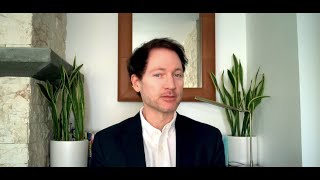
In his 2020 Chicago Booth commencement speech, Bryan Johnson reflects on a series of personal upheavals in 2014—selling Braintree/Venmo, leaving his religion, ending a 13‑year marriage, and emerging from chronic depression—to illustrate how sudden, intersecting forces can reshape reality. He argues that humanity now faces an unprecedented convergence of crises: pandemic, economic strain, social unrest, climate change, and rapid automation, all unfolding faster than any generation can predict. To navigate this volatility, Johnson introduces the concept of “future literacy,” contrasting static, top‑down planning with adaptive, real‑time problem solving, illustrated by a robot navigating shifting dunes. He urges graduates to become “zero detectives,” seeking hidden opportunities (the metaphorical zeros) and recognizing that unknowns are more valuable than knowns. He highlights the pervasiveness of 188 scientifically proven cognitive biases, advocating for a quantitative, numbers‑based view of the world to counteract qualitative, belief‑driven thinking. Johnson discusses humanity’s expanding ability to engineer atoms, molecules, organisms, and artificial intelligence, warning that algorithms will increasingly shape personal and societal goals, blurring the line between human and machine. He proposes that complex adaptation can arise from a few simple rules, drawing parallels to flocking birds, schools of fish, and AlphaGo. Concluding with a call to action, he encourages the class to adopt simple, adaptable mental frameworks, to question blind spots, and to prepare for an unknowable future, noting his own ventures—a neuroscience company and a venture fund—aimed at a cognitive revolution. He ends with the maxim that fortune favors the prepared, adaptable mind.
Chapters
Hello my Chicago Booth friends. We meet under unusual circumstances and in unusual times. My heart has been heavy thinking about the recent events and it is in this vein of sincerity and soberness that I wish to speak with you today. For as challenging as this moment may feel, the future may be much more complicated. As hard as that might be to imagine right now. My orientation to this possible future has its roots in my personal experience. In 2014 I sold my company Braintree and Venmo, a business that I started while attending Chicago Booth. It was a life altering moment, but reality changing because in tandem I left my lifelong religion, ended a 13 year marriage and started to emerge from a decade of deep chronic depression. Four seismic shifts all at once. Even if I could have foreseen these events a few years in advance, even if they felt inevitable, the unseeable intersecting nature of these forces created an emergent reality that I did not imagine. In what felt like a Big Bang of my personal universe, questions about my role in society began expanding out at light speed in a divorced household. How can I be a good father without a religion? That gave me all the answers? What is reality? How can I even begin approaching questions around what to do, how to fill and what to care about? How do I think about and use my now unimaginable wealth after being poor my entire life? Also on my mind was not just what roles to play, but what does it mean to be human? I worked through these and other questions for years. Above all, there was one question that became a permanent fixture of my what single thing can I do to maximally increase the probability that the human race can survive itself and thrive beyond what we can imagine? That question felt germane to me because after years of carefully surveying the future, I wondered, are we prepared? What gave me pause is that a number of society scale seismic shifts were fast approaching and they were all going to happen at the same time. A phenomena I had learned about personally. We are getting a taste of that right now. Large scale social unrest on top of a pandemic, on top of a faltering economy, on top of a dysfunctional government, in addition to what we are dealing with now. Already coming our way at full speed are climate change and labor automation, on top of deep fractures of societal trust. But there's even more. The well intentioned efforts to address the world's ills through new legislation, protests, social media, outrage, a new political movement, etc. Which do represent some of our best modern change making tools seem akin to bringing a spray bottle to take on a house fire as Much as I hope to be wrong, it's possible that now is actually the calm before the storm. The challenge is that for the first time in human history, the pace of change has made it nearly impossible to reasonably predict even the broad strokes of the future during one's lifetime. By preparing not for any particular outcome, but rather for this unpredictability and rapid change itself, we can increase the odds of surviving ourselves and thriving. In order to maximize our chances of future success, we need to become future literate. A few years ago, I was in the Middle east with a gentleman who was explaining his country's 2030 goals. I was intrigued how he thought he could plan 13 years out with the world changing as fast as it is. So I asked him to play a game with me. Imagine we wanted to get a robot to move from where we were standing to a sand dune just over the horizon. How would we do that? The first option would be to topographically map the area and then program the robot to take the optimal path. The problem with this plan is that the moment the robot begins, the dune patterns shift, leaving the robot stuck in the sand. The alternative is to give robot abilities that enable it to adapt to the shifting terrain in real time, no matter the change. This is future literacy. As you and I fast walk into the future, how might we equip ourselves to be adaptable to the shifting sands? I use several mental frameworks in my personal efforts to try and become more future literate, helping me navigate the shifting sands first. Where is the zero? I remind myself every day that the concept of zero had to be discovered. One of history's most important discoveries enabling our modern society was sitting in front of people for millennia unnoticed. It was hidden behind religion, habit, and an inability to see past our five senses into our blind spots. There are more Zeros to be found hiding. Where are they and who will find them? Number two is what I don't know is more interesting than what I think I know. Three, I am ridiculous. My cognition is riddled with 188 scientifically proven cognitive biases that are invisible to me and currently impossible to fix. I am irrational, illogical, hypercritical, and find most pleasant the information that best conforms to my worldview. Worst of all the despite these admissions, I believe everyone else's reality is more distorted than mine. The most valuable lesson Chicago Booth taught me was how to understand the world through numbers. My religion's reality was all qualitative. Just as our minds are a black box to us today, in the future, our biases and steps of our cognition will be quantified, which means hopefully, I will be able to understand myself and the world around me with numbers. The objective of these practices is to continually remind myself that at any given moment I actively distort my reality, even without realizing it, in order to feel good about myself and lessen my personal suffering. I wish that collectively, as a society and species, we could engage in a similar contemplation to try and peer behind the curtain of our largely invisible cognition. As you are planning now for your post graduation life, surveying the sands which you anticipate traversing, let's see if we can try to characterize in broad strokes what forces may be at play. An easy one to see, for example, is that the world is restructuring itself around the new realities brought about by coronavirus. Others that are possibly more difficult to see, yet likely more consequential. We are becoming increasingly capable of engineering atoms, molecules, organisms, and computational intelligence. These are powers that were formerly attributed to the gods. When you can engineer the fundamental physical and digital elements that constitute our reality, new unexpected possibilities emerge. We are moving beyond the individual. The individual is currently afforded the inalienable right in society. Increasingly, however, we will embrace algorithms in every facet of our lives because they will help us better achieve the things that we care about. But whose algorithms and whose goals? In this mesh of engineered intelligence, it will become increasingly difficult to distinguish between myself and technology and between you and me. It is possible that while this might initially sound scary, we may in time feel enormous relief as we become unburdened from the loneliness of dealing with the unruly nature of our individual selves. Changes of this sort will feel like a big bang of our shared universe. Questions about our identity, aspirations and purpose will begin expanding out at light speed. These emergent forces are unquestionably complex and raise countless thorny issues. If only the solution was just to put our heads in the sand. Yet 4 billion years of data on evolution demonstrates that a biological species survives and thrives according to its rate of adaptation. Given the complexity of this all, we might be inclined to imagine that our solutions need to be of similar complexity. However, the opposite could also be true. Our path of adaptability may lie in a few simple rules. Flocks of birds and schools of fish self organize into sophisticated emergent patterns using only a few simple rules. Flying insects and alphago use similar simple rules to find their way to food or their computational searches for which moves to make next. From extremely simple rules, miraculous, robust behaviors and systems can emerge. We can use our own simple set of rules to guide our cognitive scaffolding and up level our cognition to complexities never seen before. Let me put it a different way. The future is the most unknowable adversary we've ever faced. We must prepare ourselves to handle it systematically, algorithmically. The mammalian mind is an adaptable mind. It learns from its past and models the future. But it is full of quirks and biases. It can do better. You, more than any other graduating class, will have to. So what are your simple rules? How will you keep yourself fresh every single day, ready to journey regardless of what the winds have done? Yes, wind. We face formidable problems that are more complex than anything humans have dealt with in the past. Yes, it can feel quite heavy. However, over the centuries, amidst near unimaginable adversity, Humans have proven to be remarkably resilient. Each and every one of you, to get to this point of your life, have demonstrated adaptability in your own unique way. As graduates of this remarkable school, you are equipped with knowledge, skills, friends, and colleagues which will empower and accelerate your journey to accomplishing great things. As the future brings us change with ever increasing speed and unpredictability, it also carries opportunity. What role will you play? And how will you prepare yourself for it? You can be a zero detective at any stage of your life. As you look around and consider your next steps, ask yourself, am I thinking on the right scale? Where are my blind spots? In 2014, I personally came to the conclusion that we need a cognitive revolution, A reimagination of what it means to be human. So I founded a neuroscience company. I also came to believe that we must rethink how we scaffold societal progress at the atomic and molecular scale. So I started a venture fund for that objective. Don't let other people set the rules for you. Play only the games you want to play. And on that note, I leave you with Fortune favors the prepared mind. Louis Pastora once remarked, you have been prepared. As you step out into the world, Fortune will favor the adaptable mind. Chicago booth graduates of 2020. Good luck. May adaptability be with you.