Confronting My Difficult Childhood
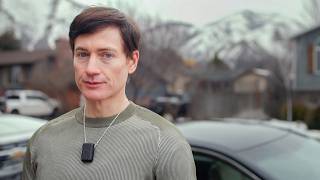
Bryan Johnson returns to his childhood home in Utah to confront his father about decades of abandonment, recounting mornings spent waiting at the window for visits that never came. His father struggled with drug use and the pressures of a large Mormon family. In a guided conversation, both men move toward acknowledgment and apology, seeking the closure that eluded them for years.
Chapters
When I went to the house this morning, I saw that front window. And that's like such a potent memory in my mind of our Saturday mornings. I would look out that window and watch for your car to come around the corner. And when it didn't happen, it was just devastating to me.
I know. I killed you. How do you restructure a father son relationship?
Yeah, I was at the window for hours, you know? Yeah.
Yeah.
I do love those mountains. I've climbed all of them. All of this is so familiar, yet so foreign. Today I'm back at home in Utah. I'm thrilled to be here. I'm also a little terrified. A lot of positive things happened in my childhood, and I also had a lot of challenging things happen. And so today I'm going to try and retrace some of my steps, and maybe it will be useful for you too. Be nice. A pretty typical Utah social signaling. Let me see if I can trigger them into road rage. Let's go. I'm not gonna. I'm not gonna do it. So I know this growing up, like, you really do want to be your best self. You want to be nice. You want to, like, help others. You want to be compassionate. Also, you're human. And, you know, like, it's interesting. How fast would this person fly into road rage? Probably about the same time frame as most. Oh. My mother built this home when she got a divorce from my dad. And it was her pride and joy. And this house was immaculate. It was gorgeous. She had flowers around the entire house. The lawn was always perfect. I helped her maintain that. And the flower bed. It was the best looking yard in the entire neighborhood. And now it's. Boy, it's pretty beat up. All these little cracks, you know, in that concrete there. Like, I remember every single crevice of this house. My mother actually built the blueprint herself for this house. And then we built it as a family. We selected this door. I did the. The stain on that door, and we did that little decorative part on the top. We chose the numbers here for the address. We put up the shades, we did the lining here on the trim. We appreciated what we had with such great intensity because we had so little. And we really cared for this place as a family because we really felt like it was something we had built. It's very, very sad, actually, to see it in the state it's in. And I suppose just, you know, like, things are ephemeral and time passes. I remember. Okay, so like, wow. Yikes. That window right there, this is where when my Father would tell us that he would pick us up on Saturday morning so that we could spend time with him. I would wake up at five in the morning. I would get ready, and even though the pickup time was 9am, I would be ready by 5:30. Like, haven't eaten breakfast and I'm not sure why I was ready three and a half hours in advance. Then I would go to the front room and I would poke my head out and I could see just far enough down the street to catch his car when it would pull around the corner. And I sat on that little sofa with my head looking out the window for hours. And nine would arrive and then no car. 905, 9, 10, 9, 15. And I was so sure he would pull up that something had happened and he was just going to come, you know, going to show up any minute. And I would wait there until 11, 11:30. And one by one, my siblings would pill off. Sometimes they'd be like, dad's not coming today. He never shows up. And, yeah, I was always the last kid remaining on that in the window. And then my mom would, you know, like, be cheerful and say, let's go do something, and we'd go do something as a family. But, yeah, boy, that's. That's a lot. I'm not sure why my dad didn't show up. I know he was going through a lot of problems. He was struggling personally with drugs, and he had some professional challenges. And I. I don't know what was really going on with him. I've never actually asked him specifically, where were you on Saturday morning?
Would you feel comfortable asking him now? Could that bring a sense of closure?
Yeah, maybe, you know, is it better if he offers that up versus me? Probing, you know, it may be healing for me. It may be painful for him. Yeah, I don't want to cause him harm.
I don't know that that's something that bothered you. Do you think he knows?
You know, he acknowledges to a certain extent that he was absent, but we've never really got into the details of it. I wanted a relationship with my dad so badly, so waiting around for a few hours wasn't a big deal. Even if he was late, I still got to be with my dad. He would tell me he would pick me up from school or he would come to my sporting event or like, you know, I don't know, like 98% of the time he just, he wouldn't show up. I never lost hope. I just believed he'd show up every time. And, yeah, I guess I never gave up. I. I continued to invite him to everything for my entire childhood. Yeah. Even when I was a Mormon missionary, I wrote him letters every week. I don't feel like I need to forgive him. Honestly. Now I think he. At this age of his life, he has finally become a father to me. So I guess I'm glad I stuck with it because not all my siblings have. There's some virtue and some redemption in that. My father has taken an ark that it took him an entire lifetime to become a father. I'll take it. I'll take what I can get. Such an ironic situation where I have three children and two of which are. They have mixed feelings about me as their dad. And so I really try to lean in to be their father. And I'm held a little bit at arm's length because they're in this Mormon community and I'm other and I can't be trusted. And so I've lost all of my authority as their father. I'm not the person they go to for advice or wisdom or counsel. I didn't have a father. I desperately wanted a father. I desperately want to be a father to my children. And two are kind of holding me at arm's length. I have one child in Talmadge that I suppose leans into this, much like I did with my dad, where Talmadge. I'm probably. I am the most important person in Talmadge's life unquestionably. And I embrace that I fully. And I really try to be the father to him that I wish I had had. And so in many ways, it's full circle, I guess. Now we're off to see my dad, and I'm excited to see him. He's been going through a lot of change recently. I think he's trying to be the best version of a f. He can be you. There are certain things that my father and I just haven't ever touched. And maybe we won't ever. A lot of things have been left unsaid.
Is that okay with you?
I'm not sure it. Hi, dad.
Hey, you.
Hi.
Oh, hey.
The whole crew's here.
Good. How are you? Do you want to come in?
Yeah. Can we? Yeah.
And come in. House is all ready for you.
Great. Not. Well, that's. That's perfect.
You look great.
Thanks.
Come on in.
I wanted to talk about the message you sent me last week. I'm potentially in one of the most consequential moments of my personal life, and recently there's been several attempts by powerful people to try to take me down, you know, to try to blunt the things I'm doing and try to discredit me. And as I've tried to maneuver my way through these various things, oftentimes, you know, I. I guess I've really kind of navigated life by myself. It was a. A breath of fresh air that you pulled up in a way that was meaningful for me. And for me, it was like one of the. Yeah. One of the more significant moments of my life. Like, I. You know, I feel like I had a dad. Right. Like I was in need. I needed to be bolstered. I needed to have a vision bigger than that moment I was in.
That makes me feel so good.
That's one thing I admire about you, dad, is like, you know, like, you've been through a lot in life. It's a testament to your tenaciousness to be the best version of yourself you can be, that you continue to work towards being that which you could be to me. And I know, like, I've been through, you know, my fair share of troubles in life, and when those things happen, it's hard to get my mind straight. Like, when I went to the house this morning, I saw that front window, and that's like such a potent memory in my mind of, you know, like, our Saturday mornings, I would look out that window and watch for your car to come around the corner. And when it didn't happen, you know, it just, like, was devastating to me. And I know you had things going on in your personal life that just made it too hard and so that we've stuck together and done this. For me, it was this moment of reconciliation that I've wanted my entire life, dad.
Brian, that means the world to me. You don't know what that means to me. Wow. Thank you.
Yeah. I mean, because throughout life, that's, I guess what I really, like. I feel like I've been looking around the edge, wanted my dad to pull up, you know.
God. Wow.
Yeah.
Well, you deserve it. You know, I've applied for the position several times.
You know.
Wow. You don't know how much I appreciate that. The last couple years, I really have tried to, but how do you. How do you restructure a father son relationship when your dad's 140? Looking pretty good, by the way.
Yeah. It took us our entire lives to sort. I would say to sort our relationship. Maybe to tune it. Yeah. I mean, Dad, I guess. Yeah. We've never, like. We. We kind of have reconciled about life in our. In our ways and the Way we communicate, I feel more reconciled. You know, like, as a kid, I really wanted you around. And when you weren't around, I felt bad. And I think I just tucked that away and buried it. And I thought, my dad's going through a hard time and I need to stand up. And I don't think I've ever revisited, you know, like, what I buried in those times that I created this idea for myself, that whatever problems I encounter, I just. I tuck away and I carry on. And that's probably compounded in my life that I just have done that continually. Maybe a skill set I learned when I was young. When you stood up last week, it was like I felt this relief that someone else had me.
Yeah, I. You know, I'm. I'm going to tell you, I told you before, I'm going to tell you now. Nobody next to you, nobody knows the trauma that I created more than I. You know, it's. It's. You look at. You look with your kids now, it's like, all right, like sitting on the curb waiting to go to the carnival thing. But at times those instances, you disappoint. You can't tell me that the father does not know exactly what the hell is going on. Our bond, when your mom and I were together and when we were close was something I did not have with any of the kids. In fact, to this day, it's just extraordinary. It's just one of those things that you establish or have with a kid. So I don't know if it's really productive to go down this line, but we talked about you coming to live with me that I flaked on. I mean, I could go on and on and on. Showing up at the curb was just. Just the top of the. Of the pyramid as far as what expectations were. You know, the separation. You have five kids, you have chaos. You have Ellen with. Drawn beyond her abilities to try and keep everything moving and just abandonment. Structurally, it was terrible. I had a house not big enough to have everyone. Ellen said, you can't visit one of the kids. You've got to visit all of them. Had to have you home on Sunday. You know, all of these things, let alone everything going on in my life, it's like, how do you. You know, it was beyond me how to navigate that. But that's no excuse. I'm not offering it as an excuse. It's just like those are the ancillary facts. I mean, from my side, you know, I have a 398 grade point average in high school. I Graduate summa cum laude from BYU, Ellen gets pregnant. I'm married. I'm working full time eight hours a day, going to school full time, 16 hours a day. Now I do that for essentially two and a half years of undergraduate, two and a half years of law school, for five years. That's my relationship with the family. Okay? Now, what the hell. Now, you know, then the religion comes, every relationship with your mom, who I saw one hour a day, it was disaster, whatever. And when it all blew up, I just. There was no way I could. I could continue that life. Private. I know I killed you. And I'm so proud of you in every way and grateful to you that even though you say that you regress, you never stopped working. That's the takeaway here, is even though, like you know, shoveling the emotions back into you having this hurt, this unresolved pain that is unresolved. You didn't completely shut off, you didn't completely give up hope, you didn't abandon me back. You continue to reach out. That's the thing that I keep telling you is amazing here. You know, I know you've got to be angry at some standpoint. You've got to be upset about the, you know, the trade offs that appear to be made to your de detriment. I want you to feel free to say them.
Yeah. Thank you. Yeah, I. I've never felt anger, ever. They just felt sadness. Yeah. I think I wanted a dad more than anyone in the family. You? Yeah, I was at the window for hours, you know?
Yeah. Yeah.
It just. It never. It just seemed like that's the way life was though. It didn't seem to me like the correct response was resentment or to pull back or to be mean or to. It just seemed like that was the situation. And when things happen, you just step into it and you work through it.
Well, it's amazing that you would do that because, you know, I really don't want to. I really don't want to say too much because I don't even want to walk, Brian. It gives me a stomachache. Thinking about.
Gives me.
I mean, you look back even then, the contrast with what the relationship was on our trips or when we were together, even during that time, they were magical. I mean, you were just incredible. So untainted.
Yeah.
Yeah, we did. Which, which really makes the pain worse is that if you're even allowed in that time of crisis to have that kind of great relationship, why. Why did it continue? The only thing I can tell you is I feel what you're Saying. And I. And it's not something I'm feeling for the first time. I felt it then.
I understand. And I don't hold it against you.
No, you don't. Which makes me feel worse. Because, you know, this is the. This is the unspoken conversation that we both have. I've had for 20 years or however long it's been. It's like you. It's like trying to start. Trying to walk on wet cement. It's like. How do you. How do you start. The fact that. That I die for you right now? I mean, I. There's nothing. Yeah, it doesn't.
I know. I know you would, but it doesn't.
And. And that's.
When I. When I think about what. What kind of dad did I have? Your message to me last week. Was it. That, you know, you. You persisted and you showed up.
Means the world to me. I'm so glad. Brian. This is. I'm glad that I didn't die before. Before this.
Yeah.
I love you, son.
I love you, too. D.
I wonder if I can still break his back. Give me out.
Set up.
Not quite. A little break. Brian. Thank you so much. I thought we were torn houses.
Yeah, we can do that some other time.
Yeah, anytime.
Yeah.
Wow.
That was the most significant conversation I've had with my dad in my life. I think he said it well. It's like a lifetime achievement moment. I didn't know if this would be a burden for him or if he would welcome the conversation. And it turns out that he, too, wanted to have that dialogue as much as I did, perhaps more. And you could just see the relief he felt. And I felt a similar way. I feel more at peace today. It was therapy day. Tackling topics that were unspoken. I feel, I think, like my father, I feel cathartic release.





