Don't Die CEO Bryan Johnson on Living Forever, AI & His $60M Blueprint For Immortality
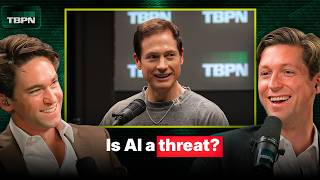
Bryan Johnson, founder of the longevity platform Blueprint, raised $60 million to build AI-driven health systems that automate staying healthy. He frames living longer as an AI-alignment problem and describes Blueprint's strategy to replace fragmented health decisions with one evidence-based service using biomarkers, supplements, and prescriptions.
Chapters
We are the first generation who won't die. It's less about living forever, it's more about a philosophy of yes, this moment is big. What a lot of people don't realize is this endeavor is entirely about AI alignment. Now AI is a tool. Like we feel more productive with it.
Yes.
At what point will do everything so well? You feel this deep hole in your stomach of like, what do I do?
We have Brian Johnson. Welcome to the stream. You want to go over there while he hops on? Let me tell you about A.I. google. Google A.I. studio. The fastest way from prompt to production with Gemini. Chat with models, vibe code and monitor usage. Thank you.
Classic LA story.
Good to see you again.
People in LA arrive on time 15 minutes after you normally arrive.
Oh yeah.
At least I do normally.
Yeah, that's the nature.
Hopefully you didn't have too much traffic. It's great to have you here. Big week for you.
It's been a great week for us.
Yeah. Congratulations. 60 million. But break down exactly what happened? What was the impetus for the deal? Take us through the recent history of blueprint.
I mean I started this. This is the idea that we are the first generation who won't die. It's kind of a crazy idea. We started this a couple years ago and I think a lot of people thought this was kind of an insane thought process. And so we've been hammering away and I think it's gone from weird to interesting to yesterday was kind of like, now it's accepted and maybe even cool.
Yeah, yeah.
And so I think we've. It's a, it's a thing now. It's a part of the zeitgeist and I think it formalizes that we're really going to take a shot at this.
Yeah. So I mean there's like the philosophical underpinning where you're, I imagine, you know, in the vein of Kurzweil, like looking at long term trends, artificial intelligence compounding just the value of compounding little gains all over the. The health system potentially could, at least in your belief, get us to infinite life and not die. Don't die. So you get to that. But then you, you know, at some point you need to instantiate that in a company, in a business, in a suite of products. And so that's what blueprint is today. Is that the idea of the fundraise? Is that what people are investing in?
Yeah, the idea is when somebody says, yes, I want to be healthy, it's pretty hard. You have to go out and you have to navigate a thousand things, is this good for me or is it bad for me? People who have conflicting opinions. And so our target customer is somebody who says, I want to be healthy. And we just say, we've got you. We will give you the protein amounts, we'll give you tested and certified foods, we'll give you the exact dose, we'll help you with your prescriptions, we'll give you protocols, your autonomous self. It's not go navigate the world by yourself, it's we've got you. And we'll do an evidence based biomarker approach.
One of the. I feel like anybody that really gets into health goes through a period where they realized I, at least at one point, I was like 19 at the time, realized that it felt like I was spending like 50% of all my cognitive power on just like trying to be as healthy as possible. And at a certain point I realized like, this is such an inefficient use of time. Fortunately, you build up some habits and kind of like understanding of what's good and what's bad and what you want to leverage more and kind of avoid and all that stuff. But I think like make, you know, removing that step from the process of being able to just kind of like default into a system walk. Can you, can you get into a little bit more of like, I remember reading a post at this point from you, maybe it was like a couple months ago, kind of like talking through the decision making around, you know, where you wanted to take blueprint, why kind of raise capital, all that kind of thing.
Yeah, I mean, it was this. I mean, I guess my sole objective is try to be sober in this moment. And I really enjoy the perspective of thinking a few hundred years into the future. You look back at this moment and we are giving birth to some kind of superintelligence. We don't know what it is, we don't know what kind of scale, but it's big, it's important. I have neither an opinion that it's positive or negative. It's just significant. And I was really trying to think through, does it even matter if I build anything in the world right now? Or should I work on building the philosophy and the moral framework on what does it mean to be intelligent on planet Earth in this part of the galaxy? And I was kind of in the middle. Like, as an entrepreneur, do you build or which way do you build? And so I was just reflecting that, am I misallocating my time? And I thought, you know, really, blueprint is the practical implementation of this philosophy. Like when you say yes to don't die. You're saying, I value existence, I respect existence. And so it's less about living forever, it's more about a philosophy of yes, this moment is big. And so what a lot of people don't realize is this endeavor is entirely about AI alignment. I mean that's the sole thing happening on the planet right now. And so when you take care of yourself, you take care of your body. When you take care of the body, you take care of intelligence. It's this holistic system of we acknowledge existence. So that was it. It was like I was trying to figure out as a human what do I do on planet Earth right now and how do I spend my time? I'm an entrepreneur. My intuitions are to become an entrepreneur. But I wondered, is that really the right way to do it?
Yeah, yeah.
What is, what does blueprint look like in a decade? It feels like you're, it's such a unique consumer packaged goods business because you can't even call it that. It's like, I mean I understand that there's like the philosophy and I love that as the brand, but even just in terms of like the business of like what people pay for, there's a lot and that's just that, just such a contrarian approach to this, this category. Because so many people are like, I have an idea, I'm going to make coffee better.
Yes.
I'm going to make a greens powder better. Or I have an opinion about the burger or the meat or the food or one particular thing. And then they grow and grow and grow. And then five years in they're like, let's do a line extension. Let's do.
Yeah. The CBG trend of the last 10 years was go walk into the gas station, find a product that's popular and make a version of it that's like 50% healthier. And then you probably have like a.
Nine figure revenue business or make nothing like Thrive Market. Erewhon. There's a bunch of companies that have been like, we're just be the seller of everything. How did you land on like I want to kind of make everything. That feels like an immense challenge. Yeah, I want to walk through all that.
I mean that's what you know, Karpathi was talking about the autonomous systems with door cash. Yeah, like that then. And he. And I think very similarly in this way is that if you model out what AI systems will do, they'll probably take on more autonomous responsibility. In our lives we see beginnings where you plug an address into a car and it helps you navigate to the place. You don't think about it much. We're going to build our autonomous self. Our health will be run on our behalf. So right now we have to chase down all our food, we have to chase down protocols, we have to chase down evidence. But it's not going to be that in the future. It will be that. It will just be run for us. And as we get measurement that's more high fidelity. So blueprint is basically we're saying we are going to build your autonomous system of health and we're going to ride the breakthroughs of science so that as we make better progress in lowering the speed of aging and reversing aging damage, you can just say I'm in and I'm going to ride with you. We're going to try to be on the very, very forefront to help people have the best possible health. So we're just building out autonomous health systems.
Yeah, that feels like super valuable just from the consumer experience of like I'm delegating all of that hassle. I know basically if I buy one brand it's all aligned with one philosophy, which is great. What does that mean on the logistics side? What does that mean on the capex side? What does that mean on the operational cost side? Do you have like 25 different product managers for each niche? Like what's the shape of the company? This feels like a big challenge, a very big challenge.
We're standing up like 10 different businesses at the same time.
Exactly, exactly. Like there's plenty of people that could have done what you did where they like become famous or they become content creators in one way or another. And then they're like now I have one product and you're like now I have. How many products do you actually have?
Over 20.
Over 20. Yeah. And it's clear that like you probably a lot of that comes from the fact that you've been a successful entrepreneur before. You're like, yeah, I can probably do more than just one. But. But what, what actually does the, what does the, does the business look like? Does the system look like. Are there cross selling benefits in retail on day one or is this just an e commerce play on day one? Like how do you think about the, the costs and benefits of going multi product so soon?
Yeah, I mean the thing is that when people want to be healthy, you can't just address one thing. They're still left with 99 things to deal with.
I totally get the consumer value.
It makes a ton of sense. So internally we're basically building out the infrastructure to deliver every single channel. So digital food, prescriptions, testing. So we could say like so much stuff. It is so much stuff. You know, like, this is what. I've done this myself, you know, like five years. Yeah, we've mastered the system for me and you know, I've been fighting to achieve the best biomarkers in the world. Kind of in some sense a, like a ridiculous idea.
Yeah.
But also like it's a new sport. Like you can imagine it becoming a thing. So yeah, I mean basically we've mastered it, we've built it now productizing. So yeah.
So what.
Is. How do you think about. So. So every, every consumer out there has probably at some point or another gone through the frustration of, of finding a product they love and then watching the company behind it or sometimes an acquirer just like steadily just like try to maintain or increase their margins to the point where it's no longer that. It might have similar looking packaging, but it's no longer the same product. Like I imagine like you want Blueprint to be the thing that you are reliant on for the majority of your calories, the majority of the supplements you take, the majority of the drugs that you are going to leverage. And so I can imagine like, you know, holding the company to that standard so that you're not having to go anywhere else or realize like, oh, this product would actually be better for me. But like, do you have any kind of like ethos around that? Because that just feels like every, you know, I try to be cognizant of like when a company goes from founder led to they've exited and the new acquirer is just going to say like, hey, you know, we could actually source this salt from over here and we're going to save like 80% and nobody's really going to notice because it tastes similar. But then the tests are showing up and it's actually like got lead in it now or whatever.
Yeah, exactly.
Right.
I mean, I am Blueprint's number one customer. I appreciate it so much, you know, because like we, when we first started doing this project, I was testing everything I put into my body. Air, water, food, like everything. And I learned first of all, food is guilty until proven innocent. It is so toxic no matter where you get it.
Yeah. People were freaking out last week when there was that protein powder report came out that a bunch of them had lead in it. And I was like, my immediate reaction was like, obviously a lot of this stuff has lead in it. I mean, like, look at the Average chocolate bar has like a ton of lead in it.
And that's. It's not even so you can isolate that one toxin, but there's so many other toxins. Totally. So people, they, they grab onto one concept that they understand. It's like, oh, that's bad. There's trace levels of heavy metals in all of our foods. So the fact that it's there is not an alarming, it's just, it's out of context, but it's at a level people understand. But, you know, the goal is I'm going to. Blueprint is my way to try to achieve, you know, this don't die. And so people will be just riding along. We build on population level data. So this is not about Brian Johnson's body, this is about everybody's body. So all ages, both genders. But no, I think we're being meticulous about what we do. And so it will be. The quality will be the best in the world. And so I care about it. I'm consuming all about myself.
Yeah.
What's the plans on the kind of telemedicine front for kind of interventions or therapies that require doctors kind of involvement? Is there anything on that front?
We will build an infrastructure to. Basically, when you want a prescription, if you want to go on a GLP1, we can help you get started whether you want a large dose or a micro dose. This is just funny.
You're just like, yeah, and also I'll do the lab testing and also like build the, you know, the. I'll be mining the metal that gets turned into the needle that injects you with the gel.
It's like you want to hold up.
The entire global economy. I love it. It's good ambition. I strongly support this. Yeah, I was interested in like, where are the edges of like, what you'd be like, yeah, actually I'm not going to go into that market. But it feels like you'll just continue to work on it until you get to some status where you're like, yeah, actually it's.
Would you, would you go into hospitality? Would you create like physical kind of.
If you want, if you want to get 100% everyone's calories.
These European kind of health retreats that are very like evidence driven, they're testing focus. I could imagine a blueprint retreat center that, that people can visit once a year to.
Yeah, we have about a dozen groups around the world that want to stand this up. And some of the biggest hotel chains around the world, they. Because the thing is, they Just want credibility. They want to say, like, come here, we have this thing structured. When I meet with some of the most powerful people in the world, they're just as clueless as everyone else. It is not like people imagine rich and powerful people just have it solved. That is not the case. No. And so, yeah, we are going to stand this up. We probably will not do physical clinics. It's just too much on the real estate. So we'll probably license it out.
Sure.
We probably do the digital model. We have IP model almost. We have trust. Like, we want to have like we could do a model across food and clinics where we have this evidence based approach. So yeah, I mean we're, we're kind of in it to just blanket the entire industry with a framework on how to do things in a credible way. That's biomarker led, evidence based.
Yeah. What was the thesis behind the round $60 million, tons of faces, not the traditional CPG VCs, private equity folks. Like, what was the thesis?
Yeah, I mean, so I've been funding the company myself up until this point and I guess I just wanted my friends to come along with me. So these are people I talk to in private. They enjoy it, they're into it. And I think a lot of people, they have not known how to think about me. Like, am I legit? Am I not? Is this a thing? Is it weird? And then they see that list of investors are like, oh, shit. And so like yesterday, I think it was the first day, it was like, oh, it's safe to say this is cool.
That flipped like a long time ago.
Really?
Yeah. I feel like the, I feel like the first, like business. What was the first piece that you did that was like, I spent $2 million on my health. And that went super viral.
Yeah. Two or three years ago.
That was like two or three years ago. I feel like that was the moment.
Where people were, I always looked at it.
My personal view was pretty quickly people dug into your backstory and were like, oh yeah, you sold them.
Yeah.
My personal view is America has over the last few years had so little trust in health institutions. Like, if you just went and followed the American Heart Association's guidance, I'd probably die at like 60. And so, so to me, I was always like, you know, knowing how much I, I. You can read about health and you can listen to podcasts and you can listen to what some influencer said in a short form, video. But to deeply understand your health, you have to do self experimentation because everybody is different. And so I Always looked at it, you know, you, you always tried to be controversial enough to like generate attention, attract some people that were going to become super fans and lose some people. And you were kind of okay with that. But my, my sense was always like, thank you. That somebody is going to invest more money than basically anyone else and just self experimentation and then open source, all of that. And now people can buy your olive oil if they want, or they can decide, no, I'm actually going to go on my own journey and try to find some, some product that can fit this requirement. But, but it felt like such a public benefit that I always wish there was like a thousand Brian Johnsons that were just all running the same experimentation, open sourcing process versus the biggest thing we talked about this the other day is health influencers quickly get into, put themselves in a niche and they're like, I'm the fasting guy, I'm the HRV guy. And then every single thing becomes about that. And it's cool because you can like tap into a world and like kind of accelerate and understand a lot about a category. But then in reality, it's not like fasting is the only thing that matters. It's just like one tool.
So I have another take on that that maybe I'd like your reaction to. There's also this, this trend in health influence where if I want to blow everyone's brain, I'm going to come in and blow everyone's mind. I'll be like, guess what? I boil it all down. It's sleep, diet and exercise. That's like 90 of what you need to do. And everyone's like, man, this John guy, he's not talking about the crazy supplements, he's just telling it like it is. Sleep, diet, exercise, I did it. I feel great. This is amazing. And then after I've made one hour of content every week for five years on sleep, diet and exercise, I'm like, you know what, let's actually talk about the 17th piece of magnesium you should take or the thing that, yeah, it is beneficial, but it's 0.001% and it's still interesting, but it's not going to have the power law effect of actually start working out or like actually get sleep. And so do you wrestle with that? Do you feel like you have to go back to the basics sometimes or do you think that there's actually maybe that's not even, that's not even a reasonable critique?
Yeah, I think that the thing that most people struggle with is doing things they don't want to do, like they don't want to overeat, they don't want to eat a pint of ice cream, like they don't want to drink, you know. So yeah, those things are really the highest leverage interventions. It's behavioral. And so yes, you can say sleep, that exercise, but you get deep and you then uncover that American, like our American society is one of addiction.
Sure.
Like the American powers of capitalism have been pointed at getting people to be addicted to food, sugar, nicotine porn, junk food, all of that. And so this is, if you look at. So like just from a broad perspective, you begin on western thought with Plato, Aristotle, Christianity, medieval times, Renaissance, Enlightenment and modern scientific era. Like you look at these big frames, we're due for a major shift. And right now we're at the tail end. This is kind of a dalio thought process of like these big macro trends. We're at the end and right now capitalism was for solving scarcity. We're now compulsive. We're now compulsive. And the idea was democracy was freedom of choice. We now have no longer choice because we're addicted to. So we're really playing on this very big macro frame of we're at different times of species. And so yes, sleep, that exercise. But in this larger frame it's about what does it mean to actually be intelligent, make decisions and you can't when you're addicted to everything.
Yeah. What do you think about some of the longer tail interventions? Like the third peptide that's not approved yet, but people are already taking it here. It feels like is this sort of like pseudo regulated, unregulated biohacking becoming more prevalent? Is that the correct world in a world where the FDA is broken or does the FDA need to change? Or how should we map the accelerating advances in science with maybe stagnation in regulatory. What's your framework for that?
Yeah, I mean, peptides are very powerful. They're basically drugs. So you get access to drug like effect sizes. The problem is peptides are oftentimes not manufactured to spec. And so you have risks like putting stuff in your body that you shouldn't be putting your body.
Like they could have lead in them, just like your chocolate bar and a.
Bunch of other stuff. Same with stem cells. So like there's a, there's a real quality problem.
Yeah, yeah.
The other problem is peptides. A lot of peptides are not fully well characterized. So typically drugs, you say like you can do this thing, but also here's a long list of side effects.
Yeah.
And that's nice because it's like, okay, at least I know what the trade off space is with these peptides. You don't have the characterization.
Okay.
And so it's a bigger risk that people experiment. You see a lot of this in bodybuilding. Now you have biohackers doing it, so it's fine. It's just, you have to understand, it's the wild, wild west. That may be your game, it may not, but like, definitely you want to be cautious.
Sure.
It's not like it's a safe path, but then there's other things. Like you start with the highest level of evidence. You know, sauna is great.
Yeah.
But you know, like if you. I've talked about this a lot. If you don't ice the boys in the sauna, sure. You crush.
Can you make a ice pack? I used to. I think we maybe talked about this last time. I used to. There used to be this ice pack on Amazon that was for this use case and they stopped selling it and I don't. I, like, I lost my.
So we should.
Yeah, they don't want you icing your boys.
I don't think they want that.
Yeah. And then a lot of men will say, like, I'm not trying to have, you know, babies, so it doesn't matter, but have negative feedback hormone.
Hormone health.
Exactly.
Interesting.
So, yeah, there's so, yes, sleep, that exercise is great. But then you dive into the details. This is what I'm saying. Like you, you start down this path and you inevitably will spend 50% of your time chasing down everything.
Some sort of weird root cause.
All these things, whatever it is, it's never easy. So you have infinite chase. And that's what I'm saying is that's the problem trying to solve is nobody has 50% of our time to do this.
How are you thinking about wearables? Because there's a world in the future where you have a camera that's effectively a sensor that's able to experience life in your view. And that as like a health copilot would be pretty wild because you could be like, hey, hey, you've already eaten. Like well beyond. You assume that cameras get better at calorie tracking. It's like, hey, you're well over your daily caloric needs. Like, you're now going into a surplus. Maybe ease off and maybe that's enough.
Meta Ray ban displays, like, need a killer app. That sounds like something you should build. What do you think?
Yeah, I mean, if you think about it, GLP1s are kind of that, I mean, a little bit, right? It's like modulating your hunger, your satiety and it's like, how do you think.
We'Ll view GLP1s and the explosion of their use?
In 50 years, it's probably the most successful anti aging drug ever built.
It's incredible.
The benefits keep on accumulating. Yes, there's drawbacks. They're getting better all the time.
But do you feel the same way about statins?
They're complicated. I mean, statins do have benefits, but they're complicated.
Do you feel like there's any value to reading into the, the conspiracy, like, weird vibes around the fact that like, Ozempic came from a demon like this? Gila monster.
Yeah, the Gila monster. Is it the Gila monster experiment, the.
Komodo dragon venom or something like that? Like, it just feels like wrong, right? If you're just like, you know, just humanity 101, you'd be like, yeah, don't.
Drink, don't become reptile.
Don't drink. The reptile venom.
I mean, you're, you're Brian trying to become the reptile.
Are you into it?
The sonorian Toad gave us 5 Meo DMT.
And I would say that that's bad too. That throw it off all sorts of red flags for me.
It just got FDA approval. It did, it did.
For what?
Break the status for treat depression.
Depression, yeah, yeah, yeah. Treatment resistant. Yeah, yeah, yeah, got it.
Yeah.
So, yeah, I mean, I guess if you're sad, you need the, you need the toad to cheer you up, I suppose.
Thank you. Thank you.
I'm happy. If it's helping people, I'm happy. It is. It is just funny. When we were, we were looking at the story of Ozempic like a year ago.
What's your, what's your view? I think everybody's hoping maybe, maybe GLP1s are this. And people haven't sort of fully realized it yet, but everybody is kind of, I feel like for a while, just hoping that, like, oh, by the time that I'm, I'm eight, I'm really aging. Like, I'm really feeling it. There will just be a pill that I can take and, you know, I'll just be able to halt or maybe even reverse. Are you like, how open to you, how open are you to the idea that, like, there could be something that is like an order of magnitude more effective than GLP1s in terms of anti aging? Like, are you, you know, where do you put the probability there?
I mean, that Study that came out from China in June, they showed that they took this form of a FoxO3 protein. They used CRISPR. They put it in a mesenchymal stem cell and delivered it via intravenous treatment. It had a biological equivalent for human anti. So this was in monkeys. It had a three to five year age reversal in over 50% of the tissues, which is unseen. And then for a human equivalent that'd be like nine to 15 years roughly. So these demonstrations are being done. I think we'll probably. I was going to actually figure this out. You know the, the hype cycle where you, you.
Yeah, Gartner. Hype cycle.
Exactly. Yeah.
Trough of disillusionment. So plateau of productivity.
I was going to model this out this week.
Yes.
Try to figure out like. Because I think we're probably going to hit peak in something like GLP ones or something. 2032, you're like ish.
Like, okay, like okay, we got some time.
A few things that help people be like, it's here.
And then people will think that they're going to live forever and then there will be a crash and be like, oh, actually there's still more problems to solve.
Exactly that. 2035, 2037. People are like, oh man. Like it's not solving this or that or we have these complications in like maybe early 2000-40s. People are like, actually yeah, we got this. Something like that.
I saw some post you get crazy inbound from. From mad scientists all over the world. They're like, hey, I made this thing. I was Talking with chat GPT 50 hours over the last week and I figured out like, let me, let me come inject you.
When I was, when I was building kernel with this brain interface.
Yeah.
I would get all these emails that people are like, I've been implanted by the government. Oh, so that would come in. But now, yes, like I do. I get, I don't know, maybe like seven to ten a day.
Whoa. People offering you experimental.
You know, like I've, I've discovered the quantum realm and how the. How sick. Yes. I mean it's wild. People are excited about this topic.
Maybe some toads involved in that one. That's funny.
Yeah.
I remember seeing this post a while back. I don't know if you remember it better than I do, but it was basically looking at like the distribution of lifespans is not. There's not just a single power law where everyone falls off at like 90 like you would expect if it was just a normal power law that we would get a couple hundred fifty and like 1-200-year-old person. But in fact, there are like this double exponential effect.
Yeah.
And so maybe that's kind of what happens where maybe we solve one of them, but then we still are at this, like, you know, exponential fall off in. In longevity. But even unlocking, like, one person at 200 would be amazing.
Yeah. There was this interesting paper that came out of Levin. He said his theory after running this model was that basically after we reproduce, our cells lose purpose. Like, we ourselves don't have a unifying objective.
Yeah.
So they just like aging. Just like we just don't know what to do.
Interesting.
So if his model is correct, like, biology needs. Don't die. Like, they actually need an objective at a macro scale, like at our level of cognition, but also at a cellular level. But I think, like, these are the kinds of experiments people are doing of, like, what. What is the underlying incentive structure of biology? Why do we age? Why do we not age in certain parts of our life? Why do we have protective mechanisms? You know, why do some species regenerate? So I think it's this really exciting frontier where our ideas now of aging are beginning to crack open a little bit and expanding our horizons. Like, how do we think about time?
I mean, we talked about this last time. You were on about Warren Buffett, Charlie Munger, not particularly famous for their biohacking, but incredibly resilient. Well, like a life well lived. So many stories about them, like, you know, staying up drinking Coca Cola and wine long into the night. And I want to believe that there's some level of just. If you have a purpose, if you have drive, your body just pulls it together a little bit more.
I know people want this to be, like, the answer. I think it's really such a bad idea because people, in their mind, they make that shortcut and they're like, you know what?
I'm just going to work harder.
I got to work harder.
Yeah, yeah, yeah.
Did we cure balding? There was that study, was it last week.
They're all such. They're weak effects. Yeah. So you. We really have not made.
I guess it's a long turkey.
It's a little bit embarrassing as a human race that we haven't been able to make really good strides on hair loss.
That one seems very simple. I don't know, it just seems like very mechanical. You know, it doesn't seem as complicated as, like, you know, your brain degenerating. We don't even know how the brain works. It's like it's Hair, it just grows like it should be.
We're working on it. We just put out our best attempt. We're gonna see if it works. Like we're gonna try to be every, everything that's out there on market. Yeah, yeah, yeah, we'll see.
How important is these like cosmetic intervention to the blueprint plan? Like because you could imagine a world where people say yeah, make me live forever, but I don't care about wrinkles and hair because unless it's going to help me actually live longer. Yeah, why bother?
I mean the thing is, don't die is really be hot. Like what, what?
Every, every, every, every supplement company, every, every company in health you're ultimately selling at the end of the day is.
Brilliant from a business perspective. But does it make sense in terms of the science? Like does it take something out?
Yeah, being hot is good science. You know, like if you look youthful and vibrant, your skin is nice and like you, you're, you have a lot of energy. So I think be hot is legit the path for this.
Okay. Yeah.
Be hot, don't die. How do you think about longevity in the business? You know, if you look at the D2C bubble, there was a lot of companies that raised similar amount of money and are no longer with us. I imagine you care a lot about just making sure that don't die and blueprint survive decades. And I'm sure that's informing the way you're building.
I mean this is like the Internet comes about. Google sets up shop and rides that tailwind. Amazon sets up shop on commerce.
Right.
Basically somebody's going to set up shop in longevity and ride a multi trillion dollar ride.
Sure.
So that's what we're trying to do is we're trying to just be home base when the early innings of longevity and then ride for the multitrillion dollar market. Yeah.
Do you think there's a lot of like I imagine M and A will be pretty important to your strategy? Really A lot of companies, I mean I just view there's a lot of companies that are important that are like single product or for specific use cases that don't really necessarily need or shouldn't be because like if you're a blueprint customer, maybe you need it once every three years, but that means it could be harder to actually build a business around, but it would slot in.
You nailed it. So basically if you look at the landscape in health right now, nothing is proprietary. You got wearables from all these different providers, you have food from providers, you have biomarkers nothing's proprietary. And so the winner's going to have to out compete everybody and bringing an experience to the customer that is sensible and practical and make. So I think that's where the competition is going to be because this is like the days when I was building a Braintree Venmo. It was commoditized, you're all in the Visa, MasterCard, IMAX, Discover Stack and you have to build something unique. And then Braintree and Stripe just collapse the market.
Yeah. How do you think about now? I want to hear the story of the Venmo acquisition. How did that happen?
So they built up a fence so people in payments. It was very clear PayPal was the only company making money.
Okay.
Because they had both sides of the market. Sure, they got lucky because they got into ebay, they built the consumer side, but then they had the merchant side too because otherwise if you just offer it to merchants, your margins are pretty low. You're making whatever 2050 basis points like that. And so everybody was going after PayPal trying to build a two sided marketplace and that took a lot of capital. It's very hard to build from scratch. And so I said, okay, I'm going to build the merchant side of the business first and then I'm going to acquire the consumer side. I said this when I started the company. So we got customers like Airbnb, Uber, GitHub, we got all the Gen Z people. And then Venmo had done a fantastic job building out consumer side and we could then marry those two demographics and we'd say perfect. And so yeah, so they had built a great business but they hadn't solved making money.
Okay.
When they plugged into our world, we bought them for 26.2 million. Yeah, yeah.
How much of that was like not making money because of fraud? I hear that a lot of fintech companies, they actually have something where the unit economics should work, but it's always crazy. In the early days you hear the story about PayPal where PayPal was losing tons of money, but it was only because of fraud. The actual business when it wasn't fraudulent made sense. But then once you get to scale, you can do the anti fraud properly. Was that something that you were problem solving around?
It's very hard because you're doing peer to peer and typically you have like illicit purposes primarily as your driver and so it's a very hard problem. So as a standalone it's hard for them to make sense because you, if you have, if you stack on a fee, when you're paying Your buddy. It's hard friction in the adoption. So you have to kind of speed run adoption and then make money later. But there was no good make money later problem.
I was running. I think it was a shower. Thought I was like, okay. There's so much capital sloshing around the private markets. It's been interesting that we haven't seen more people, like, try to take on Stripe. I don't know if it's. I don't know. I'd be curious. From your point of view, at what point will people even try to climb that mountain?
Very unlikely. They've done such a great job executing. I sold Braintree in 2013. So they've been building 12 years since. They've done such a good job making that airtight. They're just great. This is the thing. Yeah.
You can't come in and make it 10x better product.
Amazon locked commerce. So you of course can build your E commerce business on Shopify, but at a scale. I mean, Amazon has just kind of owned that entire thing. It's very hard to replicate that. So that's our goal too, is we're basically trying to do that for longevity is once you collapse the entire space, it's just. It's very hard to get in.
Okay. We got a lighting round. Favorite book or just a book recommendation? Something you read recently that you like?
I just finished the History of the Western Mind going through all of Western thought.
Oh, cool. Favorite music? What's in your.
You know, I have such a soft spot for Eminem. When I was. When I was depressed, he was the only artist that I could feel. Okay.
Love it. When will humanity develop AGI?
Such a hard. You don't want to sound like a D cell. You don't want to be.
Yeah, yeah.
Just call it right now.
Yeah.
Well, I want to be able to clip this a day and be like.
I want to say. I want to say that. I want to say that we'll be nice to you and we won't clip this. But I know our clipping infrastructure and we absolutely will clip this sucker question. Well, maybe let's flip it around. OpenAI Microsoft did this deal where the definition of AGI will be convened by a group of experts. What is your definition of AGI?
I approach this question as a more through psychology of when will humans feel useless?
Feel useless?
Yes. Our entire identity is based upon. We do things, we contribute, we build. And now AI is a tool. We feel more productive with it. At what point will do everything so well? You feel this deep hole in Your stomach of like, what do I do?
So what if. Yeah, the weird thing is, like, computers are incredible at chess, yet people play chess for fun and at the professional level. Because humans, I guess, they're anti clanker and they like watching humans play chess. And if we can solve that for everyone so that everyone has some sort of, like, in this AGI world where there's no more real jobs, there's no more actual, okay, you need to produce something for food or, you know, livability. Everything is just for fun or games and for status. And it's all about. Wasn't Andre Karpathy saying, you go to the gym and you'll learn in the future? And I wonder if your definition is. Once that breaks down, that feels really powerful.
Exactly. I like that people look forward to retirement. Retirement is a goal. It's an ideal. It's like we're getting an rv, we're going to cruise the country. Then they retire. They're like, this sucks. Like, there's not the tension. Never retire. So if we imagine we're gonna, like, learn and we're gonna, like, do yoga all day and paint and. But like, if there's not the tension of the stress and the of real life, like, do we really want to be on vacation all the time? Do we want to be at leisure? Like, so that's my. Like, what I think about is when that happens, that's a pretty unnerving situation because humans don't do well without uncertainty.
Yeah.
And then our systems have to respond. So, like, that's what I really think about all day.
Everyone, in the end is just going to be competing on biomarkers. It's going to be the final stage.
This is the final game.
It might aligns with Carpathy's take. Last lightning round question. And then I want you to ring the gong. Favorite vacation spot. Where would you go?
Redwood Forest. Redwood Forest. I love red.
Staying in California.
Yeah, I would love. I love redwoods. Let's go right like there.
This is John. There's John.
I love California.
You don't need to go to Europe.
I love America.
I don't need to get all the radiation on the plane. Yeah, just stay here.
They're such beautiful, majestic creatures and they.
Live a long time.
They live a long time.
It's a very on brand for you. I love it. Congratulations on the round. $60 million. Fantastic progress. I'd love for you to ring that gong. And I'd love for you to ring it at a decibel level that you feel is appropriate for hearing yeah, we.
Don'T want to decimal.
You know, actually, let me pull. Yeah, let me pull up.
Can you teach us?
Yeah, let me pull up my decimal meter. Do we have my phone? Let's make sure we get this.
Yes. Let's bring over.
We don't want to be over 80 decibels.
Okay. Yes. Because we do have IEM, so it is a little bit of hearing protection. But I would love to know. Feel free to take as many swings as you need. I'd love to know what an 80 decibel ring sounds like.
So, yeah, I recently I measured my ears. My left ear is 64, so I have mild to moderate hearing loss.
Oh, really?
Which substantially increases your risk of dementia. Oh. Whoa.
So, yeah, because you're going crazy because you don't perceive reality problems, your brain's.
Missing all these things.
Wow, that's crazy.
Society is built for hearing loss. Concerts, social gatherings, restaurants. So, yeah, I would suggest everyone get a hearing test. Yeah, I just get hearing aids. Okay. So. All right. Okay, cool. Here we go.
Yeah.
Yeah.
Hit that gong at a longevity approved level. Let's hear it. Okay. What are we at? How are we doing?
90.
90. Okay, so about that level. If we go any higher.
Just a tad.
Yeah, yeah, just a tad.
There we go.
We got the Brian Johnson approved gong.
Hit.
You heard it here. I bet everyone in the chat is like, oh, finally. We smacked that thing so loud. Fortunately, you know, we.
Dude, do you have tinnitus?
No, I don't.
Okay.
Fortunately. But I do. Oh, you do.
I've had it since I was my Coachella era.
This is the thing.
Yeah.
Wow.
Yeah. Now I don't go to concerts at all. I don't pay to stand in crowds and lines. But I do I specifically recall or I believe I know the exact weekend that it started, man.
Is it a pretty significant thing in your life?
No, I zone it out. But if I take a. If I. Like, I've adapted to not hearing it, but if I. Every. Probably few times a week, I'll be in a really quiet space and realize that I have constant ringing.
Have you looked into hearing aids?
No. Yeah, maybe I should.
Yeah. So I just got the Oticon Intense. Yeah.
Okay. That increases your. You're not wearing them right now.
Not right now.
But you've. You've been testing them out.
Yeah, exactly. I actually, I. I'm so sad. I was running out the door and I forgot them.
Yeah.
I just finished my morning routine, so. I'm so sad. But. Yeah, but they actually, I've only had them for a week. They have substantially improved my life.
Wow.
Yeah.
Cool.
Well, this conversation has substantially improved my life.
Yeah. You guys, this is fun. This is great. Yeah.
This is fantastic. Congratulations.





