How I Fixed My Terrible Posture - 5 Habits
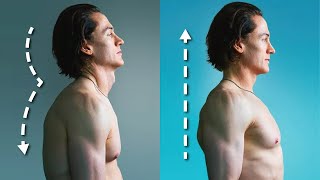
Bryan Johnson developed internal jugular vein stenosis from chronic poor posture, which he fixed through physical therapy without surgery. He shares five daily habits: visualizing a string pulling your spine up, reducing phone neck flexion, moving every five minutes, and two micro-muscle exercises demonstrated with trainer Khitil.
Chapters
For the past few years, I've been spending millions of dollars trying to create a protocol that slows my speed of aging and reversing the aging that has happened. An important part of that is posture. I never learned good posture in my life. And I found this by actually finding a ticking time bomb. I had internal jugular vein stenosis. These internal pipes that have blood flow from my brain were restricted because of bad posture. My team and I went on this kind of code red alert of we didn't know how serious it. Was I going to have a seizure? Was I going to have a stroke? I didn't know. I engaged with a specialist and I worked on a bunch of physical therapy and I corrected the problem without surgery. Hey, Khitil, nice to see you.
So I remember telling you that. What are the consequences of this long term? We are still in early stages in research there. Can this have an influence on the development of various craniological disorders such as early dementia, for example? And I would say it's plausible. And I know that many share that view. So even though you weren't suffering per se, but you were having some headaches, a little bit of brain fog, stuff like that, we started working on that together with Oliver and, well, we had a pretty good result, didn't we?
Posture in our modern society is pretty bad. We sit in our chairs all day. We have really bad habits of looking at our phones down on our laps. We're prone to bad posture. It's normalized. We don't even realize it's happening, but. But it's really bad for us. I'm going to share with you five things that you can start off with as you work to have good posture, it takes time. It's hard. It's going to make you sore. You're going to find it to be really uncomfortable. But it's worth it, so stick with it. It just takes some time to build the muscles. So the five things are. First, imagine you have a string going through your spine up through your head, and it's pulled straight up. So when I'm trying to find the right posture position, I'm just imagining someone pulling that string above my head. I'm trying to have my head straight like that. That's a really nice starting position. Number two is I try to avoid things that invite bad posture. And the phone is the worst. You pull it up and the default position is down. When I have my phone up, I hold it up. It's awkward and it's potentially embarrassing to be the person holding your phone up like this. When I put my phone down and I move my head, I instantaneously feel it. I can feel the flow from my jugular veins actually stop. I'm that sensitized now to feeling this. Three is I move every five minutes throughout the day. So I'll do a bunch of movements. I'll do like a lunge or I'll get down on my knee, knees or raise my arms. I'll do various stretches to move my body about. It helps me reset my body to have fresh posture. And then four is I do two exercises every day that help me strengthen the muscles. And you'll see this in the video with Gahito. He'll show you the exact muscles. They're small, they're very hard to get to. You're not going to hit them at the gym by doing bicep curls and lunges and other stuff. They're really nuanced. And so the first one is, it's highly technical and it took me a long time to get this right, is you want to have your elbows back, your shoulders like this, position weights in your hand. You want to bring your shoulders up and out. But in doing that, you're strengthening these core muscles around that maintain your posture.
Now, here's the thing, guys. You want to pull with the shoulders, not with the wrist. So you pull, you hold your wrist back, neck long, and you pull your shoulders up and forward. And that looks better than I expected, actually, because this is very. This is very heavy, you know, So I have no other patience doing levator exercises with. With this weight up and forward, up and forward. Beautiful.
And the second one is hands on the forehead with some light pressure. And then you're moving your head up ever so slightly.
It's a lot of patients when they do this, takes them such a. An amount of effort in the beginning that they kind of clench to stay there. And patients who have that habit from before, they can. They can do this without it being visible. So you're not going to see them doing this. It looks perfectly fine. But the clenching to there. When I have someone in my office, I put them in a position. And then when they're not expecting it, they cannot expect it. So I just come in and just without them expecting it, try to turn them. And if there's resistance, it means they're clenching to stay there. So you have to cue them to stop doing that. So they want to employ minimal effort to stay in beautiful posture.
When you begin working on your posture, you're going to feel incredibly sore. It's going to hurt all over and you're going to feel all the muscles you never felt. You're going to find out it takes a lot of muscle to maintain proper posture. Improving my posture has been one of the most important things I've done in the entire effort of Blueprint. There's also this really interesting element of identity where when you maintain proper posture and you put your, you know, you're standing up straight, it's a representation that you're proud of yourself and that you're okay to be who you are and you don't need to shy away from others and be like, oh, I'm just, you know, I'm just grateful I'm here. Like, you're proud to be alive. You're happy to be alive. People are going to immediately identify you have unusual posture. That's good because everyone around you has bad posture, so do it. It will have a very positive effect of encouraging others to also be aware. It's really hard to maintain bad posture when you're around somebody who's maintaining good posture. So it has really positive effects on everyone you're around. All this said, make sure you talk to your doctor. I'm speaking from my experience working with my doctors using our medical grade imaging. But of course, everybody's individual case is different. So I'd encourage you to also include your practitioner in terms of anything you're doing to change your lifestyle.





