How This 47 Year Old Multimillionaire Figured Life Out - Bryan Johnson
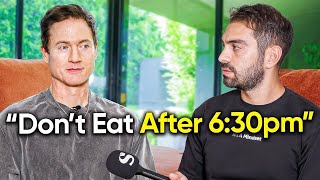
Bryan Johnson sold his company for $800 million at 47 and spent five years trying to reverse his biological age to 18 through sleep optimization, nutrition testing, and stress reduction. He measures health like wealth and argues that resting heart rate before bed is the single metric that guides everything else.
Chapters
I've spent the past five years trying to become the healthiest person on planet Earth. When I was in my early 20s, I was playing the games of life that other people had told me to play. I bought that grind narrative and just drove myself into the ground, really destroying my health. I built a business. I sold it for 800 million in 2013. In one year's time, I sold my company, got a divorce, left my church, all in one year.
Do you ever feel left out of normal people, experiences that you're not experiencing right now?
I don't care what any anybody right now thinks of me. I've become the most measured person in human history and I've just learned data is the very best source of judgment people like. But Brian, you're missing out. And no, I'm not. I'm not depressed. You are. Can we just get that straight?
In this video, I'll be interviewing Brian Johnson, the man who is spending millions of dollars a year to try and reverse his aging process. He sold his company for $800 million. Then he made it his mission to become biologically younger than his son. In this video, we speak about the myths he's shattered about health and longevity and whether he regrets giving up a normal life for one that is governed by data. If you've been listening to our interviews, especially those with older people in their 90s and hundreds, I think you're going to really enjoy how Brian's findings align, but also clash with what everyone else says. In the end, this might genuinely be one of the most useful conversations that you listen to about how to live.
A longer, better and happier life. How old are you?
Chronologically, I'm 47. Biologically, I'm 18.
What does it feel like to be 47 chronologically?
Maybe it's a bit confusing to have spent 45 years on the planet, but then feel really good, better than I have in a long time. I do think I feel physically better than I can ever remember in my entire life.
I would say when I think of the average 45, 47 year old, you're probably thinking, dad bod, stress, kids, mortgage, losing hair. What have you done in your life to be able to get to this point and feel the way you feel?
I mean, I've spent the past five years trying to become the healthiest person on planet Earth because there hasn't really been a category for this. We, we rank status, power and wealth. For example, like there's the richest person in the world, there's a, the fastest person in the world, but we haven't ever quantified what would the healthiest person in the world be like? And that's what I've tried to do, is create a new category of aspiration and status journey as well.
But for someone who's never met you and this is the first time that they see you, what do we need to know about how you grew up in order to understand the version of you that we see here today?
I grew up, in a sense, small rural town in Utah. It was a highly religious community, so almost everybody in my community was of the same religion. My parents split when I was three, so my mother raised us for the next five years single. Then I got a stepfather. We didn't have very much money. My mom made me my school clothes. And we worked very hard for what we had and we valued it. And I went on a Mormon mission. So I. In Ecuador. So I spent two years trying to convince the Catholics of Ecuador that they should join Mormonism. And then I built a business. I sold it for 800 million in 2013. And then I have set my sights on, like, other adventures, including this one. Don't die.
Were you close with either of your parents growing up?
Very close with my mother and then my father. I worked really hard to be in his life, and he just had. He had quite a few challenges that he was dealing with professionally. It was a pretty challenging situation on an ongoing basis. But, yeah, I tried very hard to be in my father's life.
When you think about, I guess, let's say your father or your mother, any bits of advice or things that you've learned from them over the years that have maybe stuck with you? Because I think your journey in previous decades is obviously very different than it is today.
Yeah.
Is there any piece of advice or lesson they taught you that keeps coming back to you?
So I guess maybe I'll just, like, say some meta commentary is. My mind very much thinks about the world in numbers and in scientific evidence and quantified things. And so when you ask me the question, for example, of, like, you know, explain my childhood. Yeah. I want to explain it numerically. Yeah. Because I guess, like, let me just say this. Like, I grew up in a childhood where the world was explained through stories. So, like, if you had a question about what this life is or why bad things happen to good people or why the universe is the way it is, there would be a story. It wouldn't be approached numerically. And then one time I read this book by Gary Becker, the Economics of Life, and it flipped my mindset to understand that you can explain the world through numbers. And it was just like this most transformative experience in my life. Therefore, I. I generally struggle to explain things in words. So I guess I'm just giving the audience context on if you're like, this guy is weird, and, like, he's not giving a typical response just so you have context. Like, that's how I understand the world. I mean, my. My mother is the kindest of humans. She spends her entire life helping other people, and she really gets satisfaction out of helping others. My father, I would say his redeeming attribute is that he, I think, was dealt a tough hand in life with certain genetic dispositions. And I think he, over the course of his life, he's going to end up being triumphant in, like, overcoming himself and finding a good place. So I guess I admire my father' persistence through it all.
Yeah. When I looked on. On your website and blueprint, the picture of you in your twenties that's there honestly looks older than you today.
Yeah.
Can you tell us about that version of you? I think you. You relate to him as, like, founder Brian. I'm not sure if he fits in there just yet, but yeah.
When I was in my early 20s, I started this process of discovery that I was playing the games of life that other people had told me to play. And one of those games was, when you're an entrepreneur, you play the game of martyrdom, which means you're willing to sacrifice your health in exchange for potentially making a lot of money. And so in that game, you say, I'm so awesome because I only need four hours of sleep, or I sleep under my desk. And you say those things so that other people are like, wow, that's really impressive, man. Like, that's amazing. Or like, you hear heroic stories of, like, you know, they coded two nights in a row, didn't take any breaks, whatever. And so there's like, this mythology that accompanies this idea. And so entrepreneurs are not socially rewarded by being fit at prioritizing health and sleep. And so I, unfortunately, I bought that narrative. And that's why in my 20s, I looked the way I did, is I bought that grind narrative and just drove myself into the ground thinking I was, like, somehow being a hero and sadly just really destroying my health.
So what were those examples of those bad habits? I guess I definitely understand a few of them. That's why I consume a lot of your content, especially.
Yeah. And that's the role I try to play in people's lives, is I really want to be the angel on the shoulder saying that it is a good idea to prioritize health, it is a good idea to exercise every day, and it is a good idea to eat healthy foods and not do the bad stuff. I was doing everything wrong. Like I was not prioritizing sleep. I was very stressed and I was depressed in life and so nighttime would come and the only way I knew how to deal with my stress was I'd eat food and I'd try to stress eat. And then when you do that, you eat a bunch of food before bed, it increases your heart rate, which then destroys your sleep. And then when your sleep is destroyed the next day, you have like 50% less willpower to stop that cycle from happening again. So then you do it again, you get worse sleep and it ruins your will, your willpower. So then you're basically, you're powerless. So when you just want to stop yourself from doing that certain thing, you, you can't, you can't stop yourself. And so I got myself into a really bad cycle where I lost all my willpower.
Who's the one at this moment who's making those habits continue? Is it more self inflicted?
Yeah, it's self inflicted entirely.
Is that driven by a desire to, I guess, want to be better, want to do better? I guess you're building a startup and that's the nature of the game.
I mean the challenge is you, once you lock into a given situation, if you're a founder, that's especially hard because now you've, you're running a company, you have employees who depend upon you, maybe you have investors who've given you money and you are the person that needs to perform. You can't just take a day off because then things fall apart. And so there's the tension that builds around you and so you to deliver the expectations of other people. You work a lot and when you work a lot, you don't have time to exercise. And you also tend to have bad habits. Like you eat what's available, but you're not prioritizing really healthy food. And plus you, you crave salty, fatty, high junk, high calorie, dense junk food. Y And so it just creates this domino effect where you're hitting it again and again. It just creates this really bad cycle. So I got stuck in that cycle.
If you're to look back at that version of you, let's say you knowing everything that you know today, what would be something you would have done differently? Maybe a simple fix. I'm trying to think of even myself. Yeah, I mean, I would say that I exercise consistently. I prioritize my health. Sleep would be the one. Sleep and stress would be the two, which I think are equally as huge.
Yeah.
But if you were to look back at your previous self, what would you advise him to do?
One thing, lower your resting heart rate before bed. And so this is. I'm amazed at how simple and elegant this idea is. When your heart rate is low, before bed, sleep is very good. When your heart rate is high, sleep is bad. And when sleep is bad, everything falls apart. When sleep is good, everything's okay. And so you can basically take that one metric and build your entire life around that one number. If you are stressing about or ruminating about things that can increase your heart rate by 5 to 25 beats per minute, more than food. So it's really damaging. And so I guess, like, I work with people to identify all the things that increase heart rate and try to minimize those and then work on things that lower the heart rate. But if you do that, everything in life gets better.
How do you decide what. What you specifically would use? What method or what habit or what? Everyone's got a different thing. I find the amount of options really stresses people out. And everyone wants the secret.
I've become the most measured person in human history, and I've just learned data is the very best source of judgment. There's just no human opinion that's better. Right. Follow the data.
That's what we say a lot, too, is I can have an opinion over something. You can have an opinion over something. At the end of the day, what does the data say?
Exactly. Test it and see what? See if the data kills. Exactly.
So basically, if we're to kind of figure out why people might not feel as good as they should, it's because they don't test themselves enough.
Exactly. Our health culture has not been based upon measurement. It's based upon storytelling, which is like, that's my upbringing. My upbringing is storytelling. And I saw that when you use storytelling as a way to find truth, you're really handicapped. When you use data to find truth, you're really empowered. Now, data is not like a silver bullet. Like, data is definitely nuanced and hard. It can be biased. So it's not like, so. But it's still. It's a better path, the truth, than storytelling.
Everyone has their sort of turning point in life. Well, not everyone, but hopefully all the people that we look up to and that we admire have some form of a turning point. You going back to your 21 year old self's dream of making the world a better place. Can you just take me through? I guess you sell the company and you decide I'm kind of at a new start in my life. Like how do you decide that you want to go down this path?
Yeah, I was 34 years old and I in one year's time I sold my company, got a divorce, left my church all in one year. And it was kind of like this opening to remake myself. And so it's a really complicated moment because I'm transitioning from being a like a family, a family centric guy to a divorced dad. That's a big change in identity. Yeah, I'm going from being a founder to a post exit founder. I no longer have my identity and then I'm leaving my religion where I was. Like all my existential explanations of reality are explained to not having an explanation, understanding. So I kind of was unmoored of all of my foundational pillars that kind of stabilized my consciousness of like my reality. So it was really positive in that I felt like a severing of the things that otherwise I used to build reality with.
Did the feeling of judgment from other people on all, I mean some of the decisions are more in your control than others but did any feelings of other people's judgment get to you at any point?
I mean certainly, I mean it's like yes, there's pressure like from like my children of like what kind of father will I be? There's few points of people in my church community of like I know I've left on how will I be. There's people in my friend community of entrepreneurship like what are you doing next? So there's like an expectation. So yes, certainly interlace there. You know one thing I've I figured out over the coming over the over those years though is I was trying to figure out how to play a new game like, like rebuild myself. I was working on it for 10 years and there was one thought experiment that really kind of cemented it and it was being in the 25th century, the year 2500 and what it allowed me to do is it allowed me to say I don't care what anybody right now thinks of me because when I look back through the history books, I can see that in any given time, no matter what a person was doing, they're somehow in some form of acrimony and fighting with people of their time. Yeah, there's always conflict and there's always feuds. That always happens. But those are not the things defined even Though they can very loud. And it has a lot of effects because it's socially pressing. It's not the things that define history. Those little disputes and feuds kind of get swept away and what the person does. And so for me, the liberation was to not care what people right now think of me. And also secondarily is not only not care but to view their opinions as a threat that would hinder my ability to be my best self.
So I guess initially operated out of a sense of revenge or like the, the initial desire to change the motivation.
It was, it was an awareness that as I was exiting founder, exiting church, exiting family.
Yeah.
I was acknowledging that these systems had been exerting a lot of power and influence on my own psyche. Who I should be, how I should do it. Yeah. And I wanted to say I'm no longer going to be owned by systems. These are systems I didn't create. They're social expectations that are not mine. So I'm not going to be owned by them. And so I want to create my own systems. And so by doing that it was nice. It was easy to make a hard cut and just say, I'm not like you do not have power over me. I am my own thing in my own time, in my own way. Yeah. And it's been, I'd say that's probably been one of the most liberating experiences of my life. And I really believe it. Like I don't just say that. I genuinely just don't care what people think.
I would say that of all We've done over 1200 interviews and I've asked people what, what they wish they didn't worry about so much when they were younger. I'd say 85% of people say they wish they would have gotten over the opinions of others sooner. And I would say to that point it's a lot of learning, but more unlearning. Like yeah. From when you were young and you didn't think for yourself, there were people who were preaching things onto you. And so you realize at a certain point they actually might not have been right for you. What would you say to the person who's listening or watching to this and is still feeling like 34 year old Brian, kind of what they want to do and who they want to be are not the same and they want to make a change, but they feel stuck.
Yeah. I'd say that the first priority is to wrestle power. Like you, you want power. And the first way you acquire power is power over self and to sever power that other things have over you. So for example, you want to build your life around sleep. That's very counterintuitive. And it's also counter to power, to narrative powers. Like culture says, if you want to be powerful, don't sleep very much because people who don't sleep very much can be successful. And that cultural narrative wrestles power over you because when you don't sleep, you lose your willpower. And when you lose your willpower, you take poor care of yourself. When you take poor care of yourself, you become lesser of a human. So the way to wrestle power in the world is to say you will build your life around sleep because sleep is the best performance enhanced drug in the entire world. And when you do that, then that has other virtuous bridges where you say you will not doom. Scroll on your phone before bed because that increases your heart rate, which lowers your bed. Because the social media companies want to have power over you, to invite you to scroll, to spend time on their apps. They can show you advertisements. And the same is true the food companies want you to snack on their foods and eat their dirty shit right before bed. And so if you look at like everybody in society is trying to exert power over you for you to do their thing and these things cause you to lose agency and to lose power. Now like there's a follow on question like what you do with the life. But what you do with your life is wrestle power from the world to avoid being enslaved by other people who do not have your best interests at heart. So my entire message to people is I will be on your shoulder and be the strength. Like you need the companionship to say you can in fact wrestle your own independent power.
I like that a lot.
Have you been looking to start a simple side hustle or add an extra.
Stream of income to your life?
If so, check out Printify, the sponsor of today's video. Whether you want to sell T shirts, mugs, tote bags or more, and you don't want to have to deal with the overhead and inventory, Printify handles the printing and shipping for you so you can focus on creating and earning no matter how old you are.
Let me give you an example.
I actually recently hosted a hundred person event in Montreal and used Printify to make our staff T shirts by uploading my design, customizing it and then ordering straight to my apartment to hand out to my team.
And these guys looked really good at the event.
If you've been looking for a creative side hustle, use the link in the description to sign up and use the coupon code sprout to get a free 30 day Printify Premium subscription. Only the first thousand people will get.
This opportunity, so act fast. All right, back to the video. I just want to circle back for a sec. To building and selling your business. I mean, that in itself is an incredible accomplishment. What would you say are some of the principles you applied that made you as successful as you were?
Yeah, there were three things which we focused on internally. One is, I said the number one rule is customers would write us love letters. And we know what that feels like. When you engage with the company and you have a spectacular experience with their product or service or something about it, you just think that was so amazing because otherwise you're kind of anticipating pain, like it's not going to work or it's going to be too hard. If something doesn't work, customer service is going to suck. And so one is customer service Love letters is the goal we try to achieve. Number two is that people at the company would say this is the best job they'd ever had.
Right.
And three, is that in your category? We were in payments, we would be the best of what we did. And so those are the three metrics I continually spoke about in the company because those were universals that you of course could speak about revenue and about things like that. But that's really. Those are the cultural principles. If people are happy, if we're thrilling our customers and we're the best, what we do, that's like a really good combination for people feeling animated and driven that I like what I do on a daily basis.
I've interviewed, like I said before we started filming, a lot of 90 year.
Olds, a lot of 100 year olds.
Actually. Two days ago we interviewed 107 year old woman and I asked them, what do you think has allowed you to get to this point? I can't say I've really found definitive answers. Everybody seems to have gotten there in a different way. Some smoke, some still drink, some don't drink, some never drank, some eat vegetables, some don't eat vegetables. I know that you say biologically 18 is the age of your body and then you want to live forever. What are some of the pillars that you've discovered so far that you think will guide you or could guide anybody?
Yeah.
To living, in your opinion, forever.
Yeah. So I mean, I, I guess I say 18 in a facetious way. I'm like, I'm like missing around. Okay, so this is, it just makes.
The question look better.
Yeah, exactly. This is, this is What I'm trying to do. So in culture people make that shortcut. They say, my aunt lived until blank smoking a cigarette a day and having tequila. Right. And then they think like therefore. Right. So but you have to realize that is not a robust way to make decisions in life. And what I've tried to do is to say ignore all that silliness and look at the scientific evidence. And so you can just start look at the data. Smoking is the worst thing anybody can do for their body.
Yeah.
By far. Number two is not exercising is the second worst thing somebody can do with their, with their body. And so you just go down and look at the evidence. Like you just look at the population level data. So what we've tried to do is say look at the scientific evidence and you there have your answer and then you back into that and you build your life around these things. Which is why high quality sleep increases the probability you will exercise. And if you exercise that dramatically improves the likelihood you will eat well. You'll, if you eat well. Like so it has this really positive domino effect. And that's why we just use data and evidence and just say like, you guys this is obvious. Like we know this stuff. It's just that we've been trained poorly with habits and society has given us false narratives. But we all know it is better to be in good health than to be, to not be in good health. We all feel better and like the, the auntie, uncle or friends or Warren Buffett or whomever, like they're not examples you should be following.
Yeah, I agree with that.
How would you classify, I guess in.
Terms of importance, stress versus sleep versus diet versus exercise.
Yeah. Sleep. Right. Sleep, sleep, sleep. Because you cannot have a good nutrition, have good diet unless you're sleeping well, you will not have the willpower to do it. And you're not going to exercise every day if you don't sleep well. And so that's why sleep is the foundation. And I harp on this because I never got taught how to sleep. Yeah. No one in modern society. And it's not like you just lay down and go to sleep. Like there's like you have to build your entire life around it. Yeah. And our culture right now is designed to annihilate sleep. Yeah. So you have to fight against all the culture that tells you to stay up late. It's okay to be on your screens, it's okay to eat late. Stress is non stop. You're doom scrolling, you're working 24 7. All these things annihilate Your ability to sleep. So you have to like reprogram someone's entire identity just so they can go to sleep. It's really like a mountain of work.
How would you explain that? I guess if you could give us like a quick breakdown of teaching someone how to sleep.
Resting heart rate before bed.
That's the main.
It's it. Because if you, if you use that marker. So the way you do that is tonight, before you go to bed, just if you have a wearable. Look at your wearable. If not, just take your pulse on the side of your neck for six seconds and then multiply that by 10.
Okay?
And now you're going to do several experiments. So first of all, let's just say you do it tonight and your resting heart rate is 60. So your goal over the next month is get to 55. And so the first experiment you're going to do is, is if your bedtime's at 10pm, have your final meal at 6pm okay? That means after six, no food, no snacks. That's hard.
Well, you got to reorient your life, right? Some, some people wait until 8, 9 to eat.
Exactly. Or they dinner at 6 and then they eat again. Then they've got like a bag of chips or like their favorite little treat. Right. But like you're kind of trickling the food in. So how did you curb that?
Sorry to interrupt, but I know you said that you ate a lot of snacks late at night. How did you curb that? Going from the 6pm to nothing before that?
Well, I realized that that version of Brian Johnson that is in charge of my body is not a responsible eater because he's stressed out, he's tired, he's like end of day mentality of like, let's take it easy. And no matter what I do when he's in charge, I cannot stop him because he gets in charge and he's like, guys, we're stressed. We had a tough day. Let's just have a few chips. And like a few chips becomes a whole bag. And it's like, we already did a whole bag. We might as well have a few cookies too. You know, Just like gets out of control. So I know this guy, I know he can't stick to one chip. I know he can't eat things in moderation, therefore he was fired. So I now just say that Brian, at that time of day, cannot eat. And so I call him Evening Brian. And I know all of his arguments. He'll say like, today's the last day. Tomorrow morning we're going to work out really hard. But today's an exception. And so, yeah, I basically have created rules for myself in life because I know I will make the wrong choice if given the opportunity. So I have to build systems and habits that are much more reliable than just my fickle emotions in the moment.
What about now? Is it still. Are there still battles or have you permanently taken over?
Yeah, it's so much different now. That was before when I was in a really bad state. Of course now I realize that if so now if I imagine eating something at 7, 8 or 9, I know how badly it's going to wreck my sleep. I know how badly I'm going to feel the day after. It's not worth it to me.
Yeah.
Like it's, it's just awful. I hate feeling bad. Whereas before, like, when you're always feeling bad, feeling a bit more bad, like, doesn't matter. But when you feel really good and go from really good to like a little bad, it sucks.
Do you eat at restaurants anymore?
Rarely.
Yeah.
I mean, we, we started testing all the foods I was eating and I just real. I've learned firsthand how dirty the food system is. Yeah.
Yeah.
And I just especially.
Yeah.
I just don't trust any food supply now. Yeah. So sometimes. But if I do, I'll get something like steamed vegetables. Yeah. But I do try to. I source my own food. We test in a third party lab. So I know where it's coming from. I know the lab reports.
What if you travel? How do you manage that?
Or do you take. I take most of my food with me and then I'll go to a local grocery store and buy avocados, berries. Yeah.
Do you ever feel, not, I mean, left out FOMO of normal people? Normal people. Experiences that you're not experiencing right now. Does that ever get to you?
Yeah. I mean, so like here's. I would flip it and say, for those that continue that behavior, do they feel FOMO of me getting good sleep? And do they feel FOMO that I am not stricken with depression and anxiety? And they do have it. And so I know this is the thing. Like there's that default position of staying a plate and partying or whatever is the right thing. And those who don't do it have fomo. Like, I, when I talk to people, I'm very honest. I'll be like, half this room has a very serious mental health problem. Yeah. And the room always goes dead quiet because people are like, yeah, they know it's bad and so that's why it's like so funny of like in these conversations people are like, but Brian, you're missing out. And like no, I'm not, I'm not depressed. You are.
Right.
Like, can we just get that straight?
And that comes with obviously you not caring about what they think.
Yeah. I mean they're just wrong. Like it's just wrong to hurt your biology. Now, like, is my 8:30 bedtime limiting my ability to be with friends until 10pm Maybe can I meet with them at 7? Yes. Like there's no, there's like no universal law of physics that says you can't have dinner with friends at 6. Right, right. That you need to be at 11pm.
What about like the NBA finals or the super bowl or things like that, that go out late? No FOMO there.
I mean like it's a case by case. You can make exceptions. Like it's not like.
So we could see you watching the Super Bowl.
Yeah, yeah. I mean like I was in Sweden last week and we went to a rave. So like I do make exceptions. We do have fun. I just try to be very thoughtful about what I do and when. So it's not. Yeah. So I'm not dogmatic.
You mentioned that you were married before. If you're looking back on that relationship and how that impacted you and why it didn't work out. I know a lot of relationships, people are in happy or unhappy ones, but generally they don't work out. What would you say is the reason why you think that was the case?
My relationship was kind of like an arranged marriage in some ways and we just weren't the right pair, period. So nothing matters more than the people in your life. So whether it be partners or business partners or friends, there's nothing's more influential. And I just didn't have the right partner.
What would you say? Like, how would someone know if they are in the right one or not? Are there feelings that you've developed or insights that you've gotten?
Yeah. Like as a founder, you, like most founders, know this principle to be true. When someone's not working out, it's almost inevitable you're going to part ways. Right. It's rare that things ever. Correct.
Yeah, right.
I mean, has that been your experience? Yeah. Right. It's like almost never.
Right.
And then you wait and you wait and you wait and it never gets better and it gets worse. And I think that's kind of true with relationships is everybody kind of knows now. Like some people have succeeded in working through difficulties. They have stayed married, they have come out on the other side. So this is not to say don't work through challenges. It's not to say that it's not worth it. It is to say there's a difference between working through hardship and knowing it's not the right fit. I have friends who have been in bad relationships who have basically known it's a. It's the wrong relationship, and they've been in it for 10 years and they finally end it. And they experienced what I did, which is like this unbelievable liberation. Everybody's better off. Both partners are. The kids are better off. Like, it's a better environment for everybody than, like a very acrimonious. And so sometimes you just need to make hard decisions. And so it's really a nuanced thing. It's individual. Do you stay and work, or is it just the wrong thing?
One of my favorite quotes of all time is easy choices, hard life, hard life, easy choices.
Yeah, yeah.
Can you define the word love for me?
Yeah. I mean, I would just say from a biochemical perspective. Right. Just measure the biochemicals, and you've got a very. You have a very clear signature.
So do you do that in any relationships that you've been in or will be in?
Sure. Right. Like, you can measure. You can see the fingerprints of love. And so this is why I'm saying it's such a cool time to be human because we're moving from these abstract levels of ideas like love and whatever, to biochemical processes. And it's just a much more clearly defined way to actually understand it.
If you could define what it means to have a great life. Well, let's say I'm making a cookbook and this is your recipe, in as simple terms as you could figure out, what makes a great life.
I'm going to say to you that we no longer know what a good life is because technology is changing very, very fast. With that change, we will be changing very, very fast. And it's the pairing of all the change in biology and technology and culture and society that is going to change us faster than we ever have before. And it's going to open up new opportunities for us to reimagine what it means to exist. So I think we're on the cusp of potentially rewriting all the basic fundamentals of what does it mean to be human? What do we care about? What do we pursue? So I think really, this is one of the first moments in a very, very long time where we can say excitedly, we no longer know what it means to have a good life.
You wrote down in your journal here one piece of life advice for today. Can you read that and then elaborate on what it means?
Yeah. What can't I see? So I am obsessed with this concept I came up with. People are familiar with first principles thinking. That is, like, as an engineer, you identify what you can know and making the fewest number of assumptions. But I came up with this idea called zero with principle thinking, where you're trying to find the unknown unknowns. And so it's almost like that joke where there's a person on all four below a street lamp. And if someone walks by and they say, what are you doing? He says, I'm looking for my keys. He said, when did you last see them? He says, over there. And he said, why are you looking here? And he said, because the streetlight. So we humans look under the light to try to find answers to our life's problems and questions. And I think the moment now that's so exciting is the invitation for us to look in the darkness that it's very counterintuitive. It's very scary. But I think with AI here, I think that there's this, like, really big opening for us to say, what if the future of our existence didn't have meaning as a reason for our existence? So what if future humans said, oh, man, like those Homo Sapiens back in 2025. That was so silly. They all spoke about the meaning of life and their passion of life and their purpose of life. And the common life advice was like, find what you're passionate about. And they say that was so harmful because when people did that, they actually invoked all of these cognitive biases that constrained their ways of thinking. They had confirmation bias, and they only saw this maniacal thing. They also. It led them to be tribal, where they now fought other people for their purpose of life over other people's purpose of life. And it caused all this derision and acrimony among the human race. And now we're at peace because we don't have that primitive need to express meaning. We're fine. And, like, our minds would be like, what if you don't have meaning? Why do you live? We find it just, like, unthinkable. And so I'm not saying this is how the future is going to be. I'm saying, like, this is what it means to look in the dark. Like, that is a interesting idea. It is an unexpected idea. And, like, the world may be a better place without meaning.
Man, a lot of food for thought for people.
Cool.
Thank you so much. Yeah, that was awesome.
If you're watching this video and you're enjoying the advice that you hear, but you also want to do something about it. Because you do not want to reach 80 years old with a bunch of what ifs, I recommend that you grow.
Grab a copy of our daily improvement journal.
This is the one that you see.
A lot of our guests actually filling in themselves.
The point of this journal is to help you figure out, using data that you collect every day from your daily life, what makes a great day and.
What makes a bad day.
This is a journal I've been making for the last 10 years. It has been refined over time as we speak to everybody that you see on our channel. Think about it as 1,000 interviews in one journal.
The best pieces of advice in one.
10 minute a day formula that actually works. And why I say that is because thousands of people have used it. But I've been using it for over 10 years. So if you're someone who wants to make sure there are no what ifs in a couple of decades, I recommend.
You grab a copy. Click the link in the description. We made a limited batch and this is where you can get them.





