How to Achieve Success Without Sacrificing Wellness - Bryan Johnson Interview
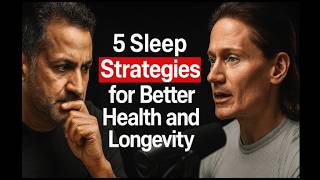
Bryan Johnson, who built a startup empire then quit to focus on longevity, argues we've got the success formula backwards. He prioritizes sleep, exercise, and diet over hustle, uses biomarkers to test what actually works, and wants a billion people to adopt "don't die" as their core identity.
Chapters
I've always wanted to be an entrepreneur. It's how I understand the world. I enjoy building things and living in a world of my own creation. And the script as an entrepreneur is you grind really hard and that oftentimes means at the expense of your health. So you're willing to sacrifice sleep, you are not having the ideal diet, you don't exercise because you're too busy doing things. And then you become very ragged. And when you achieve that state, it's actually admirable. People will give you a compliment. You basically earn social points like, they work so hard, but it's hard. We want respect, we want status, we want power. Every day we try to do these things and when everyone else is doing it, it's really hard to pull yourself from the system. And so we just get trapped in that environment.
Is your quest for success silently compromising your health? Could the very drive that fuels your ambitions also be leading you away from the balanced life you're striving for? In this episode of the XTEND podcast, we dive deep into these intriguing questions with my friend Brian Johnson, who shares his transformation from a relentless CEO to a passionate health advocate. Brian and I have spent a lot of time together lately and not only do I love talking with him about the scientific basis of health protocols, but also our deep conversations about the future of humanity. We talk about his journey into humanity's enduring quest for immortality. Cutting edge scientific advancements that could redefine life as we know it, plus practical trips on everything from sleep strategies and diet to maintaining a plant based lifestyle in a world where clean foods sourcing is increasingly complex. Brian Johnson is an American entrepreneur, a venture capitalist, a writer and an author. He is the founder and CEO of Kernel, a company creating devices that monitor and record brain activity, and also OS Fund, a venture capital fund that invests in early stage science and technology companies. I can't wait for you to hear my conversation with Brian Johnson. Brian, I've super enjoyed getting to know you and become friends and your dinners that you have where we talk about longevity and life and everything. And I just so honored that you joined me here for the podcast. Thank you.
My pleasure. I'm so happy to be with you.
Yeah, this is, this has been such an incredible journey and time watching you kind of evolve over the last five, six years and seeing all the things that you've done. Would love to get into that. But before we do that, I would love to hear from your own, kind of, from your own perspective about yourself looking in the mirror. What do you Consider yourself an expert as what do you consider yourself the most. Most relatable to people that you can talk about?
I guess I would say those are maybe two different questions. What is. What do I consider myself to be? A specialist?
Yes.
Probably my own ignorance. And so, you know, when. When I read history, I see in their time and place, most people are blinded to what the future is going to be. And they're so wrapped up in the games they're playing, like this is Plato's cave, like this played over and over again. And I guess it's like a deep feeling that I really can't discern what is really going on, because I'm so wrapped up in this moment, in our cultural context, that it blinds me to most things. And so I'd say that's what I really try very hard at being, is identifying this invisible omnipresence, which we're just a part of and we can't see out of it.
Right, that's. That's a really good answer. And I feel like, you know, just knowing your journey. Was health one of those aspects of life or just human biology one of those aspects of life that you felt more that you didn't have all the information on, and that's why you did such a deep dive.
Yeah, it was basically the societal script that says, so I. I've always wanted to be an entrepreneur. It's how I understand the world. I enjoy building things and living in a world of my own creation. And the script as an entrepreneur is you grind really hard. And that oftentimes means at the expense of your health. So you're willing to sacrifice sleep. You are not having the ideal diet. You don't exercise because you're too busy doing things. And then you become very ragged. And when you achieve that state, it's actually admirable. People will give you a compliment. You're like that. You basically earn social points. Like, they work so hard. You'd often hear stories of people who slept under their desk or who coded two days in a row, almost like this mythology about them. And so that created this positive feedback loop where others also felt like they had to be martyrs. And so this is again, like, what is happening right now is there's a script in the world of professional success that you grind really hard to achieve accomplishment. And whether that be wealth or status or some other form of reward, but it basically is you are willing to sacrifice your health in order to get the exchange of this accomplishment or this money. And so I'd say when I realized that I was playing out a script I hadn't chosen. I was just behaving in a way that others expected me to so I could achieve the social status that others achieved. And that's the kind of thing where, when you realize that like, wait a second, is this really necessary? And so I wanted to call it into question and say, do you really need to grind and sacrifice your conscious existence in order to do it or is there a different way?
Yeah. Did you find yourself in that state when you were doing your first company?
Yes.
So you actually turned your health around by. And was exiting your company the moment you did it, or did you do it before or was it some time period in between?
It was after. Because once you probably relate with this once you're in it and you accumulate a certain level of responsibility within the organization. And when you're in that mesh, you just can't extricate yourself very easily. You're just, you're there. Like you keep the wills on the machine and as much as you try, you're just kind of inextricably the thing that keeps it all glued. And so really it was, yeah, it was exiting. And so like, I think evidence of this would be like, many of my friends will report feeling guilty if they get eight hours of sleep. They feel like somehow they're falling behind or they're not working hard or that, you know, a friend stayed up until 4 in the morning, then woke up at 6, you know, so there's, if you look on the flip side of what, like, people who even want to be healthy and maintain these practices, they feel limitations on what people's expectations and judgments for them. So all the evidence is there that we really do have, we have a grind culture in society and it's a martyrdom culture. And just like every other cultural trend that has passed this tool pass. So in some duration of time that will be seen as primitive and outdated. It's just a matter of time. And so really it's like the, the value in my estimation is trying to find these auto scripts we all run. We do them without choosing them. We do them because others do them. And we really, we sometimes never awaken ourselves to see that we're doing them now.
It's so interesting if you look at history, like, I feel like this script was really only written probably in the last 50 years. Right. Because before this people worked to survive and they wanted to get ahead, but it wasn't really to this grind mentality that we have right now. And I totally agree with you. I think this is going to be completely flipped again once AI and just society evolves into understanding that this is a detriment to our health and there's a better way to do things.
Exactly right. Right, Yeah. I mean we both know like when you're ambitious, like attracts like and I don't know many people who are not incredibly stressed out and just feel intense pressure in life. Like there's just a never ending list of things to do. You can never quite check your, your to do list off. There's always more social media to do, there's always more meetings to take, there's always more. It's this arms race of martyrdom which has everyone really wound up. It's really a challenging environment. I mean, I don't think anyone is feeling at peace with reality. It's really a high strung situation we're in and I think it would be to everyone's great pleasure if we called it called peace. A shared peace. And it almost is a shared piece because you can disengage and that you'll live on a farm or you can choose to opt out. But it's hard. We want respect, we want status, we want power. Every day we try to do these things and when everyone else is doing it, it's really hard to pull yourself from the system. And so we just get trapped in that environment.
Yeah, so true. So do you feel that that is the leading cause of the detriment of the health of our current society, in the physical health of our current society? Do you feel that that grind culture, the stress that is, that's what's really led us down this path? I'm. There's a multitude of factors of course, but do you feel like that's probably number one?
Yeah. I mean this is, this is what we spoke about at the dinner. I mean, so I've, I guess I view my life as I'm trying to make one contribution to the human race that survives through the 25th century. So if I, you know, let's say I start a company and I make some money and do this and that, like my name and my contributions will be washed from history. It's just, it's not going to have a durability and I really have a deep relationship with people in the past who did interesting things beyond the scope of their time and place and I find it motivating. And so I'm really trying to imagine the 21st century appreciating what we did in this moment to see. And so I think to your question, I think the Critical insight for this moment is we are playing a game of die. That when death is inevitable, it walks us down a path of follow on decision making. That if I'm going to die anyways, I yolo my way into decision making. I might as well drink, I might as well do this debaucherous thing. I might as well grind myself to nothing for the immortality of deeds. Because everyone, whether they admit it or not, is seeking immortality in some way, shape or form. Right. Either it's children or it's accomplishment or it's notoriety. Like we humans are kind of wired that way, some more strongly than others. But it's an uncomfortable thing to talk about because it's almost like you're admitting ambition or you're confessing. But it's a prime human drive. And so yeah, I think it's basically it derives from that we seek immortality through die means we're willing to give up our conscious existence. And so my proposal is, you know, that don't die is basically the antidote for the current situation, which as you know from our dinner, it takes two hours to really get your head around this. It's not an easy concept to understand, right?
Absolutely. Now, the concept of don't die, just, just to take it back a little bit is about. Do you feel eventually that we're going to get to the point in scientific discovery that we are able to extend our lifespans potentially indefinitely? Is that kind of what you're saying at one level? Because I know there's different levels to.
Yeah, I'm saying. So for those of you listening, I'm going to share these ideas, but I don't expect you to understand them. Understand that I also fully expect you to shut them down as fast as I tell you. Like I've done this hundreds of times now.
Exactly.
It plays out with 99.9% accuracy. And everyone always thinks they have an original insight or original content they don't like. It is the exact script every time. It's amazing. What I'm proposing is that the only thing that we know as a species right now is we don't want to die right now. That's it. So I'm saying nothing about living forever. I'm saying nothing about how long I'm going to live. I'm just saying the only thing I know, as we're giving birth to superintelligence and as we live in this die society, basically I'm shortcutting two hours of conversation.
Yes, yes, thank you for doing that, by the way.
I'm basically saying that we've imagined ourselves, that we can. We're at the apex of our intelligence where we say we want this capitalistic system, this form of democracy, this form of government, this form of fashion. Like we can make all these statements about what we want. And I'm saying when you're giving birth to super intelligence, when you're in this moment, as we are as a species, we literally now only know one thing, which is we don't want to die in this moment. What emerges from this new evolution of the species, we can't even imagine. We have no idea what's going to happen. And so that's what my entire life is dedicated to, is that can we as a species evolve through this transition with artificial intelligence? We're going to become a different species. Can we successfully evolve and still be here? Like, can we avoid extinction? Is what I'm trying to address.
Absolutely. Just on that point, you know, I love some of your comparison analogies that you made at dinner where it's like, you know, someone living in medieval times cannot even imagine a cell phone or a computer or a satellite in space. We're at that same moment again now in human history where we have no idea what's going to be there in 50, 100 years. It could be anything. And the only thing that we do know is now's the time to not die.
Exactly. Right, right. Yeah. Your point is accurate. Like, basically, when we looked at history, we look at people a thousand years ago, two thousand, five thousand, ten thousand, a hundred thousand. They always had missing pieces of the puzzle. They didn't fully understand all there is to understand. And we look back at them and we pity their primitive ways in serious ways. And so the wisest thing we could do in this moment is to contemplate that we too are going to be seen as primitive by the future. And so it's less about what we know and it's more about what we don't know. But that's the hardest thing for the human mind to do, is to actually sit patiently and acceptingly in. I don't know, our minds have to fill the void by confabulating things. It's just such an impulse that we don't even realize we're doing it.
Yeah. So I love your current lifestyle where you have committed to, while you're waiting patiently, committed to your own biological health. And you've really moved the needle, I think, in the consciousness of, of Americans in the world. I think of people really focusing in, on. On health. And I love also that part of Your message too, I feel, is that you're not telling everyone out there that what you do is right for everybody. I think you're a big proponent, correct me, I'm wrong. Big proponent of n, of 1. Right. Like you're experimenting on yourself. These are the things that work for you. You're talking about them to bring them into people's consciousness so people can start doing their own self experiments and figure out what works for them. And so I'm just curious, how did you come upon kind of your methodology blueprint and just kind of the origin story, I guess, is what I'm getting at?
Yeah, well, I, after I came up with the philosophical contemplation that the one thing the 25th century would observe about us is that we, we realized the wisest thing to do would be to lock in is don't die. Don't die individually, don't kill each other, don't kill the planet, and align AI to don't die. Like that was the move as a species. And then so I basically said, how can I become don't die? Like the embodiment of don't die. And so I hired a team of medical professionals, we went through all the scientific literature on healthspan lifespan. We found the studies and the evidence that had the best effect size. And then we created the evidence and we put all the evidence into me. And before we did that, we measured the biological age of all my organs. And then we applied the protocols and we measured again. And so we basically said, okay, so baseline, you know, Brian Johnson is 100 different ages. Like my left ear is 64, my heart, you know, let's say 37. My chronological age is 46. And so we had hundreds of different ages across my entire body. My cardiovascular fitness, my brain. And then we applied the evidence and said, did the biological age change or am I still the same biological age? And we just repeated this process again and again and again, and we showed some pretty compelling reductions in my biological age. And so what I was trying to show is there's like one version of health where it's like, eat well and exercise and you feel better. And what I want to show is there's a whole next level of like, can you actually slow down your speed of aging and can you reverse some aging damage or get your organs to operate at a lower biological age? And so we were, I was really trying to do like the equivalent of a 4 minute mile or the Wright brothers taking flight. Like a brand new paradigm where people would say, huh, is this real? Like like, is this more than just about eating healthy food and feeling well, but you can legitimately change your trajectory of aging.
Right, Right. And I mean, we've all seen online and through your writings that it is possible you can absolutely change your trajectory of aging. And I'm curious, in all the things that you've done, can you give the audience, like the general audience, general public, I told you a little earlier, who the audience is, the patients that I see. What are like the two or three top things in your mind that you would highly recommend most people should kind of get after?
Yeah. Number one is sleep. Because there's nothing that will change your conscious existence more. And when you're well rested, you feel energized to do other positive things like exercise and eat well. When you're not well rested, you're grumpy and cloudy. And you're also at higher risk of self debauchery, like doing bad stuff. So sleep, there's nothing more important in a given day. There's no meeting, there's no situation that is more important than sleep. And then after that is exercise and then diet. Like those are the three things, we all know them. It's basically if you can nail those three things, then you become a different human, you have a different experience as a human. If you actually master those three things.
Yeah, that makes total sense. And I agree with you on the sleep part. I went through my own health journey where I was 50 pounds overweight. I had five medical diagnosis, autoimmune disease, going to the gym more, trying to eat better more, did that for months and it didn't work. And then the minute I focus in on my sleep, it just made everything so much better. Yeah. By the way, I love your YouTube content. Like, it's just incredible. And I saw this awesome video you made about the top 10 things for sleep. And I really liked your framing around it as well. Do you mind if we dive into sleep a little bit more?
Let's do it.
So do you think everyone should track their sleep with some sort of sleep tracker?
Some people find it helpful, others find it disconcerting.
Right.
Some people don't like to see their score. Some people feel anxiety. So it depends on what your relationship is with technology. So some people, yes.
Okay. And I want to be very clear too. Like I, you know, there's all this news about how you spend $2 million a year on your health and you do a lot of things right and you're self experimenting, but that's not what you recommend for everybody. No, you really recommend focusing in on the free things that move the needle the most.
Right, exactly.
The pareto principle, the 20% of stuff. So what are the things around sleep that'll move the needle the most for people that are free or low cost?
Yeah, you're right. The, the million, the $2 million a year headline has stuck. Really? People think that, but it's. I think my protocol is about $1,000 a month that includes all groceries. So it actually is like potentially lower cost than what people are spending today. So it saves them money. So yeah, it's a myth that it's actually millions. So I'd say the things that. So with my sleep, I generated a eight month perfect sleep score.
So that's incredible. I don't know how you did that.
100% sleep score every night for eight months. Wow. So as far as I know, it's the best ever recorded and I wanted to show that you can get reliable, high quality sleep. And so I'd say the things that were the most significant is one is you really do need to reframe your identity that you are a professional sleeper. Now that is in contrast to most people sleep when they're finished with their show or when they're finished being out with their friends or when they're finished, whatever. So it's basically sleep is always considered to be optional and something you can just get around to when you want. But that's not true. So just like if you show up for a meeting and you're three minutes late or five, you apologize to the person like, I'm so sorry I'm late. Like, you know, we had an agreed upon time and I'm sorry that I disrespected you by showing up late. So the first is to show yourself the same level of respect when you're to bed that when you miss your bedtime to apologize to yourself like, I'm sorry for disrespecting you and not prioritizing this thing we really need. So it's like one is the shift of the identity. Two is I found that I have my last meal of the day at 11am and so you don't need to do that. I'm definitely trying to explore the frontier of this, but I found that when I ate earlier, my body would be finished digesting food. And so when I laid my head on the pillow, my resting heart rate is between 46 and 49 thereabouts. And I sleep very restfully. Whereas when you eat late, it like even one or two hours before bed, it creates a Pretty big metabolic burden. It's asking your body to do a whole bunch of stuff with blood glucose, your melatonin production is disrupted. Like there's a whole bunch going on. And so I found for me that pushing back earlier. So if you're trying to do this now, try two hours before bedtime, experiment with three and then four and then five and then find the right place for you. But you know, you still, of course, you probably have a preference to be with friends and family. Great. And then I'd say three is a wind down routine. So for 30 to 60 minutes before bed, I try to turn off all devices. So no tv, no tablets, no mobile phones, red light in the house only. And a calming activity. So reading, meditation, going for a walk. But something where I basically shut down and say, okay, work Brian is done and sleep Brian is now engaged. And so I really try to get myself in a calm state. And that is so important that, I mean, I don't know if you do a wind down routine, but like I totally do. If I miss it, it wrecks my sleep.
Yeah, you know, the red light helped my wind down routine a lot too. It's just a, whatever. It's like a psychological signal that it's time to just start calming down. Whereas I think all these bright white lights, you know, that we're under all the time keep us in this heightened state of awareness all the time.
Yes.
And that's most people's bedroom lights is a bright white light and that's I think causing lots of disruption in the sleep.
I agree with that.
Just get a red light bulb. You can buy them on Amazon, they're super expensive.
Agreed. A lamp and an $8 light bulb, that's all you need.
That's all you need is really a great signal. And especially if you set an alarm either on your phone or something to turn that on an hour before your bedtime. One of the things that you mentioned, I think you'll agree is true, is also having a sleep time that you never.
That's right.
Deviate from. Did you do that the entire eight months that you did?
And yeah, I was so tight it was like within one to two minutes.
Right. You were asleep.
That precise. So I mean I said my bedtime was 8:30, but I was in bed at 8:30. Now like normally people go to bed within like a three hour window, you know, like somewhere thereabouts, depending upon the day and how you feel. But I was within one minute and now I'm probably about 30 minutes plus or minus. I've because I've been doing more social events and it just requires a bit more flexibility. But I can tell you it hurts when I miss my precision. I definitely pay a price. So. Yeah, I agree. So I'd say for starters, within an hour, if you want to be advanced within 30 minutes, if you're all in, try to do within five minutes. That same bedtime every night is so powerful. The body works for you.
It's incredible. The power of the circadian clock. It just knows exactly what time it is. Yeah, this is mind blowing. I wanted to double click on something you said earlier that I think is missed in a lot of health and wellness conversations around all topics, sleep, exercise, what have you. Is the mindset piece right? Like you said, for sleep, tell yourself first and foremost you're a professional sleeper. That's your number one responsibility. Do you do that with all the aspects of your health routine?
I do. And I think what's notable on this is if. If you're really trying to become healthy, you don't need to spend your time listening to podcasts and reading books and endlessly learning. Oftentimes, those things are coping mechanisms that help you procrastinate doing the things you actually know work. And so in the field of longevity right now, we actually don't need to learn more to get the basics done right. Like, new therapies are going to emerge and new data is going to inform us, like about sauna and hbot. Like, great. Like, yes, definitely. Also, we basically can stop and we can all just focus on the basics. And I think we would actually win more than chasing the esoteric natures of, like, I'm going to breathe through one nostril versus two. Or, you know, like, whatever. Whatever the practice is.
It's so incredibly true. I mean, people go down the long tail of information, so much so that they forget the big things. And it's. I see it all the time.
You know, it's like the. It's the default human condition. Yeah, it's like. And everywhere I go, probably the same as you. It's like everyone's got their thing. Like, what do you think about this supplement and this therapy and that practice? Everyone's got their own thing. And I try to explain there are power laws. The list of things you could do is endlessly long. And so it makes no sense to randomly pick a thing. You want to pick the most powerful things, master those things, and then slowly work your way down the list. But without a prioritization process, you're just randomly picking stuff that may or may not be useful and you're really. Yeah. Missing the benefits you could have.
Yeah, absolutely. You know, George just reminds me of, you know, I see patients a lot and I see very often 50 year old male or female, what have you. You know, totally tired because they went to bed late the night before and then they come in and they've skipped breakfast and they're running in super stressed out. Sit down with me for a consultation and one of the first questions that come up is, what supplement should I take?
Exactly. Right.
You probably get this question all the time when people meet you for the first time.
Top three, Right.
Like, tell me your list of supplements.
And I say sleep. And they're like, oh, come on, man, like, no, like legit.
Exactly.
Get sleep first.
Yeah, yeah. I think the moral of the story is very clear is if you don't have the big things right, don't worry about the Brian Johnson supplement routine. Get those things right first and then, yes, you figured this out for them. You have a great supplement routine for them, but if they don't have the big things in place, you probably almost don't even want them to take your supplements because they're going to say they don't work. Right.
I mean, it's funny because people do. Like, we all genuinely want to do things that are positive to our health. We also, I think, all to some degree, feel helpless. Like, I know for the longest time when I was in my bad state, I was absolutely helpless to stop myself from overeating. No matter what I tried, I could not stop the bad behavior. So I understand where people are at, like legit. And when you're in that moment, you just want an edge, like one positive thing. And maybe it's a pill, maybe it's like some health practice, like something just to give you an edge. Like, you know what? I'm doing this one positive thing. I can't stop this other bad stuff, but it definitely is. We are trying to find ways to cope with being human, with the fundamental challenges of being human.
I think one of the things that humans are fundamentally wired to do is make habits. Whether they're bad or good. Our brain makes habits and forms neuronal connections in order to expend less energy doing certain things over time. Right. You are one of the world's Olympiad habit formers. I feel you have figured out how to form habits better than almost anybody else I've ever met. And I'd love to have you dive in a little bit about habit formation. And what are some of your Techniques around that.
Yeah. So Alfred North Whitehead is a mathematician and he made this observation that he said, society advances by the number of important operations it can do without thinking about them. And if you think about that like, you know, we, the basics, like if someone were to get a washer and dryer in their home, they don't get out the tape measure and measure the door and then look at the dimensions on the website. Whether it fits or not, we just assume it fits to the door. And so society builds in a structured and methodical way where we just assume when you buy a new car, you don't wonder whether it's going to fit inside the lanes, it just does. And so so much of our society, of our progress is building upon step upon step. And so I basically said, okay, so technologies, I built this company, Braintree, Venmo, we built software that got better every day, version one to version two to version three. My software didn't have an overeating problem. It didn't have a bad habits problem. It didn't have the situation where it would go out and get drunk on the weekends. It didn't have these mistakes. And I thought, why is my technology so beautiful? And how can I just systematically fix this? And then I'm such a wreck where every day I have to fight the same battles. Do you eat the cookie at lunch? Do you eat the brownie at dinner? Do you stay up late to watch your favorite show? Every day it's the same battles and you lose most of them. And so I thought, okay, so I'm actually going to build myself like I build technology. I don't want to deal with the mistakes, I don't want to deal with the shortcomings. I just want to systematically build me so that I can evolve with AI in this systematic way. And so that's what my life is, is. I'm basically trying to say, what is the next evolution as a species? And I'm trying to embody being that it's the algorithm.
It is the algorithm. But how do you stick to that? Have you eliminated the temptations of the cookie at lunch? And a part of his willpower mindset? Yeah, I think willpower mindset or willpower is one of the toughest things to, to have, you know, and so I struggle willpower myself a lot of times. So what are. Do you have any advice there?
I never use willpower.
Ah.
The key is to never put yourself in a situation where you, whether your success or failure depends upon willpower. You'll lose every single time.
So modifying the environment and the. And the. Maybe even schedule things that you're exposing yourself to so you don't have to fight that battle.
Yeah, I mean, for example, like when I overate, it was a reliable pattern at 7pm so the day has been stressful. You know, the kids were bathed, put to bed. The partner surely was there wanting to fight, you know, like the sequence of events. I wanted to be like the opossum and just lay down on the floor and be dead.
Right.
And the only thing that would soothe me was imagining overeating, the temporary pleasure of that engorgement. And so I tried to stop that for years and it was unsuccessful. And so one day, out of desperation, I said, evening, Brian, you're fired. So, like, this version of me that came on, like, basically came online in that evening. He was pummeled with the stress and the heaviness of reality. It was his responsibility to be me. And he tried to soothe himself in ways he did. So I empathize with him, but I wrote his name down, I explained what arguments he made. Like he would say, brian, today's the last day. Tomorrow we start new. Tomorrow morning we're going to exercise really hard. We're going to do just one bite, like whatever his compelling arguments were. And then I wrote rebuttals like, Brian, you know that we've been saying tomorrow's the first day for two years and it's never been the first day. Tomorrow morning we can work out hard, but it's not going to solve the problem here. And so then I would just systematically do it. And so when he'd show up at night, I'd be like, hi, evening, Brian, how are you? I see you and I know you're here to persuade me to the following thing. And so I made a rule for myself where I said between 5pm and 10pm I couldn't eat food no matter what. Even if you're at a social affair, everyone's eating and you're there with an empty plate, whatever, pay that price. And so to this day, I still don't do it. But I broke myself out into different versions of myself, identified that there are versions of me that are actually strangers to me. Like evening Brian stuff in the morning Brian, the dad Brian work Brian. And so it really has been a process of trying to understand my own psychology that I am different humans in different contexts. And I try to put the ones in power to actually act in my best interest.
That's very, very powerful stuff there. On the topic of nutrition, I want to talk about Nutrition a little bit. You have a very specific diet. You're vegan. Right. Or as a vegetarian vegan. Okay. And I know you don't say that's right for everybody, but I would love to hear kind of your journey through diet and how you landed there and kind of what your overarching advice is for people that, that are looking for a dietary pattern that's going to match their biology and keep them, you know, turn back their biological age.
Yeah, yeah. So I am vegan, excluding collagen peptides. There's one thing I do primarily from an ethics standpoint because I we're building another form of intelligence that we want to coexist with and we want it to treat us with respect and acceptance. And I think if we want that, we need to treat existence, we need to treat other living organisms in a similar fashion. And so it really is trying to get the alignment right between all of biological existence. Now like once you open this topic, of course it goes down all these rabbit holes of like, you know, are plants alive, do plants want to be eaten, et cetera. But I'm trying to like just make a baby step to say I respect the conscious existence of other animals. I try my very, very, very best to not impede upon their existence as best I can. So. But it's like a very challenging dance to do. Like very challenging. Now having said this, it's the only thing I do on my protocol that is an ethics based decision. Otherwise it's just entirely data. So we just said what does the science say about data about the food? What can we measure in my body and what output do we see? And so otherwise we just try to follow the evidence I'm not aware of. And people are going to hate me for saying this. I'm not aware of any study that highlights red meat as one of the best performers for longevity. Now if that's the case, I'm not aware of it, but so it's just not something that the evidence says to get after. Now if you have some fine, like do your thing, be you. I'm not saying don't do it, I'm just saying that we tried to say if you're looking at the evidence and trying to prioritize the best performing studies, I'm unaware of it rising to the top. And so far, as far as I'm aware, I have the best comprehensive biomarkers in the world. I don't know of anyone who has better biomarkers than me. Now if they do, I would love to see them and Love to learn what they're doing. We're always eager to learn. But what we've tried to show is a process of if you look at the science and you implement the protocols and you measure, do it again and again, you can actually achieve good outcomes. But yeah. So it's a long answer to say, I don't want to be in the war of diet. Like the moment you bring it up, warfare breaks out, everyone's in their camps, everyone fights each other. I'm not here for that at all. I'm here for people to achieve good biomarkers. And some people do need meat. Great. Some people don't, fine. But really it's just like a process of trying to use science to the best of our ability to achieve good outcomes.
Yeah, and that's exactly right. I think, you know, a lot of people are arguing about what's the best diet. And really it's different for every single person because everyone's an n of 1. And even down to the individual foods, there's some foods that'll be right for you that are not right for others. So just following one diet, you're either going to harm yourself or it might be okay, or it might be actually beneficial for you, but you don't know what that is until you try it on yourself. On the vegan diet, though, I was a vegetarian. I grew up vegetarian. My family's Hindu, it's part of our culture. But then I started eating meat and now for me, having a protein forward diet is beneficial. I found that for myself. I think many vegetarians struggle with a couple of aspects of it. Number one is that the, the protein intake is harder to get if you're trying to aim for that optimal 1.6 grams per protein. And also that the variety, getting enough leucine, methionine in the protein. And I know you've kind of figured this out, so I would love for you to give the vegetarians or the vegans out there some how you kind of got over that, that hurdle.
Yeah, yeah. I mean the assumption in health and wellness is that, so I'm a vegan plus I fast, you know, 18 hours a day, plus I do caloric restriction. So I do 250 calories less than RDA, so 2250. So those three combinations, typically you're going to get people thinking that I should be weak and frail and suffer in some way. However, my body muscle is in the top 99.4 percentile, my body fat is in the top 99.4 percentile. My total bone mineral density, top 99.8% of 30 year olds. My cardiovascular fitness, the top 1% of 18 year olds. So you take any metric, you look at my uric acid, my bun, you're like any biomarker in my entire body. I'm in basically the top 1% of every single biomarker. And so to me, this all is good evidence. It's not evidence that what I do is the only solution. It's evidence that what I do may be a solution for you. And also when I learn about things in health and wellness and I hear people will make arguments that basically say you have to do the following things to achieve the following result. I'm a counterexample to that. So we just don't know what we don't know in health and wellness, which is why you have to kind of take everything with a grain of salt. You just have to sign up for a process of do the measurement, do the protocol, measure again and again. Otherwise. We humans, we love religious warfare, right. We fight over everything and it's honestly ridiculous. It's not worth it. It's like we don't know enough about health and wellness to fight about it.
Yeah. And we especially don't know enough about in your individual body, how does this apply? And so using biomarkers, using like wearable technologies, we could start learning for ourselves what is going to work for us. And so how did you so give us, give us the, the methodology that you've used to have this diet, but still obviously maintain incredible muscle mass and bone density. Is it coming from your exercise routine, your workouts?
Yeah, it could be. Oh, I also failed to mention that if you look at my single rep max bench press and leg press, I'm top 1% of 18 year olds and top 10% of 18 year olds. So every metric of strength, cardiovascular capacity is all top 1%. Yeah. So it's basically a diet of vegetables, lentils, berries, nuts and seeds.
The variety is important too.
Yeah. And so a lot of plants, I'll do proteins, I'll do hemp and pea, and then again collagen peptides, I'll do about 20 grams a day. So we're trying to find a vegan form of collagen peptides right now. It's a bit challenging. It's more challenging than I thought, but yeah, that's basically it. Then I take around 50 or so supplements and a lot of olive oil. A lot of olive oil? Yeah. Three tablespoons a day, 45 mls. It's the most calories I get from any food is from olive oil and that's it.
Now you have an olive oil, right?
I do.
Blueprint olive oil, yeah. What's different about yours?
We discovered two things about food when we were trying to build this diet. One is we wanted to source clean things, supplements and food. And then we started testing the things I was doing. Like there was what the company said, you know, like we've tested for heavy metals and they're the following levels and then you test the actual product. It's not what they say. I, it is so reliably the outcome that it is not what companies say. And so we start testing and it honestly was alarming at how dirty food is. Like, I generally am aware, like, you know, before this, like food is dirty, it has contaminants, we hear like microplastics, heavy metals, in other words, then we start testing. I became horrified. And so I started doing blueprint because I was trying to, you know, run down nutrition and health. Now I do blueprint to save myself from the insanity of our food supply. It is awful. And so, yeah, we built our entire line of supplements and foods where we go through this rigorous process where we, we go to the supplier, we, they give us their coa, we test their coa, we test final product, we publish the whole thing publicly. It's like we don't just say one thing, we just put it out there and we say, here are the results of what we've tested. So, you know, but yeah, it's a really big problem because I had to ensure we were getting high quality stuff and there was no way, there was no company I could trust to get it done. Like literally no one. And so we just had to do it ourselves. And food, food is not a glamorous business. Like, it is a tough business.
I was surprised you got into it.
Low margin, tough business. But like, honestly, it feels like after blueprint went viral, I really paused to say like, what do you do? Like what do you do with this virality, this attention? And there's very few interesting financial opportunities in longevity. Most are fractured, most are low margin, most don't scale very well. And so I thought, okay, you know what, Like, I'm not going to process this through the frame of like trying to become a trillionaire. I'm going to process through the frame of trying to rebuild society with the basic building blocks of nutrition, cleanliness. And so, yeah, it's like I'm trying to do the world solid.
Yeah, yeah. You know, I think it's really disheartening to Hear that? Even the ones that say that they have clean products don't.
Yeah.
Because 90% of the food out there, they don't even say it's clean. They just like throw it on the shelves, Right?
Yes.
So just basic empty calories just keeping us alive, but serving us very little nutritional value.
Exactly. And like many of the vendor of the suppliers we will go to, they will not work with us because they don't want to test their food, they don't want the knowledge. And so it's taken us four times as long to get to market because we have to chase down suppliers who actually meet our specs and will work with us. It's just like, I really want people to know this because if you're an average person in society, you have an assumption. In the us, like, we're a pretty developed economy. You have an assumption, like, someone surely must be looking out for you. No, they're not. So there are things like salmonella, which we're like, yeah, we can't do that. But in terms of contaminants, there's no one looking out for you. People really knew that then. If you actually eat really bad food, like, it's bad food, plus it's really contaminated. Like, no wonder we're so sick as a society. Like, when I look at these test results, it's so obvious why it's just like an absolute disaster. Disaster out there.
Yeah, it's obvious. We do a lot of toxin testing as well. And almost everybody is just has so much exposure to all the toxins, whether it's on your skin or in your food or pesticides or whatever. It's really, it's really mind blowing and sad and disconcerting. And, you know, this is all only really happened in the last maybe 80 years when we became such an industrialized nation and industrialize our food supply. I was just saying to a friend of mine, you know, I had someone reach out to me on Instagram, send me a picture of a can of peaches that she was feeding her daughter and asked me, is this healthy? So I said, turn the can around and send me the.
Oh, no.
Yeah, you know what was on there? Grown in Mexico, packaged in Thailand, and then it ended up in a shelf in California. Like, food goes through. Yeah, there's so much distance. Food travels before it gets to you. And then they add, of course, high fructose corn syrup and you know, I don't even want to know what's in the canister. It's really bad stuff. And so getting back to that you know, shopping at your local farmer's market is so important.
Yeah.
And just understanding where your food is coming from I think is a big piece of this.
Even so, even that, like I would say so first of all, my commentary is not meant to shame any company because when you're a company trying to bring a product to market, this extra level of testing is really, really hard to find your suppliers and do it. So a lot of people just don't know they need to test. And then number two is even when you're doing that, even the manufacturing processes of foods, like the plastic tubing that's used to manufacture at high temp leeches microplastics into food. So you may be a food company and be well intentioned, but your back end supplier uses these things which contaminate your food. So it's an entire supply chain problem. Like everyone is in this difficult situation. So it's really a big problem. We're at Blueprint, we're launching a certification program to basically start labeling. Because certification programs don't really give you much. Like you don't. They're not validating tests. And so we're doing that. But to your point, even on like farmer's market, like that's complicated because they're growing with irrigated water.
Sure.
And that irrigated water is coming from somewhere and it has the same contaminant profile of other stuff. Like we bought some lentils the other day. We're doing this lentil product and it had incredibly high levels of heavy metals. We're like, what? We expect heavy metals in cocoa, but why in lentils? And they're like, well, we use human sludge as the fertilization agent. We're like, wait a second, do you have a version without human sludge? Do we have an option here?
Wow.
Exactly. So like these kinds of things which are just stunning. And so even at your local farmer market, it's not a safe haven. It's not like you go there and like you're safe from the food supply chain. It's everywhere.
You just blew my mind with human sludge.
Yeah. Yeah. This is the thing.
Yeah. Because you don't know what are they using for fertilizer? Where are they getting their water from?
You don't know.
Right.
And even I buy, I've been buying these organic lentils myself because not knowing, I leaned on organic as like a, a somewhat safety buffer, like better than non organic even. Those were high in heavy metals. And so I. They were better than the ones we were getting from the supplier. But still it's just like there's no safe place right now in the world. And that's why I, I do like that we made the decision to do this very painful, low margin, awful business of food because somebody needs to do it. Like somebody needs to come in and set a standard, be transparent and try to knock out how to actually deliver clean food. Because you start pushing these things back to the entire supply chain. And even people who try to say hydroponics is right, you've got all the plastics in the hydroponic systems. There's just no one way to solve it. So it really is a societal, systematic challenges we need to, we need to solve.
Yeah. And I think people just need to demand better across the board. More humanity demands better. The more these things will change over time. And so I encourage, you know, even though you don't know the organic food is better, just ask for more organic. You know, hopefully we'll get rid of some of the ultra processed food in the supermarket over the organic stuff.
We also need to improve organic because organic adds a 15% price tag. Like it elevates the price.
Right.
So we need to figure out how to achieve optimal levels of. So we don't, we want, we don't want contaminants, but we want to do it at a low cost. So that's what we're trying to solve is like, how do you not elevate the price artificially and actually achieve lower, higher value foods?
Yeah. Are you working on that project problem right now and what are some of the kind of the technological solutions or something like this?
Yeah, so we, we've done a, we built out an entire infrastructure testing. So we started with heavy metals and now we're familiar with the world of heavy metals. And we, there was no standard like what is an appropriate level of heavy metals. And so California has Prop 65. It's so ridiculous. You couldn't even eat one meal without violating Prop 65. It's insane. It's like it's the stupidest legislation.
Every restaurant you go to says Prop 65 on the wall. But it's like no one can achieve those goals. Right.
No one can. And it was specifically done, I think if I'm not mistaken, the studies were done on pregnant rats.
Oh God.
So I understand, like you can't use humans as the test subjects and you of course can't use pregnant people for it. So I think they were trying to get a proxy, but it's just, it's a really poorly designed thing because then consumers see Prop 65, they're like, oh, I'm scared. Like, they have no idea where it came from or what it is. But it's a ridiculous standard. But then, yeah, so what? We built this entire supply chain to say, can we test heavy metals? Can we test other contaminants? We just started with microplastics. We couldn't find a lab to test microplastics.
Sure.
It's just not there. Like, there is no infrastructure. So we're like, what do we do? We don't know. What microplastic content do we have in our foods? We don't know. And so there's just this big problem. And this is why we're trying to be transparent with the process to say we don't know. We'll let you know as we go along. But we're trying to bring stuff. So we just actually spun up this assay where we're testing microplastics in the human body via a blood spot card.
Nice.
Okay, so we want to start, we want to build the largest database in the world of microplastics. What do you have in your body? Where are you at? And so it detects 84% of microplastics. It's just a simple finger prick. So we don't have a solution for you, like, once you do it, like, we think maybe sauna, like maybe, you know, plasma freesis, like maybe a few things. But we just basically, as a community, we can say now we have the data, how do we begin approaching how to reduce these microplastics?
Yeah, I think it's so important because we're exposed to so many toxins. You're never going to be able to test for all of them. But testing for the big ones, like microplastics, just to know where you're at.
Yeah.
And what are you eliminating from your life? What are the kind of things you can do to lower those levels? I think is a huge step forward. Absolutely. We do some urine testing for microplastics and also for many other toxins. And, um, we've been seeing some good results with things like sauna plasma.
What kind of effect size do you see with that?
It's different per individual. And I think a lot of it has to do with what they go. What environment they're going back into, you know, because I think the minute you get re exposed, you have a. Another spike. You know, I think we're overwhelming the capacity of our liver and kidneys to detoxify us.
Yeah.
From the constant onslaught of toxins. That we're exposed to. And especially in la, I think we're. The minute you, you do things to clear it, that respikes. And so I feel like sauna, for example, is very detoxifying, but you almost have to do it every single day. It should be part of your health routine because your body just can't keep up with the environment that we're living in.
Do you think you have enough data to roughly circle what you think is the most efficacious? Let's isolate microplastics.
Right.
Do you think you have enough data to soft circle a hypothesis on what you think is most efficacious?
Not yet. Not yet. We're looking at plasma exchange at NextHealth. I think it's gonna be hopefully a game changer in detoxification. Obviously plasma exchange, not everyone can afford it. Right. Right now it's pretty expensive. But if we can sow efficacy, it would become more universal because more people will demand it. It'll just increase the amount of machines that are out there, practitioners doing it and then it'll drive the price down. Yeah, I think it's. Honestly, it's very sad that we have to live in a society where you have to do things like hook yourself up to a machine two hours a week to detoxify. I think we need to make massive changes in society and how we live. Yeah, but it's not going to happen fast.
Yeah, it's like the equation of like you live 24 hours of life and you need like 48 hours of therapy to process the trauma.
So true.
We need to bring that number down.
Yeah, yeah, no, absolutely. I've been really impressed with the latest exercise routines that you've been talking about and really adding more longevity, focused movement based exercise to your exercise routine. And I love your longevity protocol as well. I just was wondering if you have any updates on that, if you've added anything new. What are your thoughts around exercise and how people should maybe modify or change their routines for longevity? I see a lot of people just either they're training for a sport or they're going to the gym and just like a gym rat and they're just doing one thing that they've been doing since teenage years. What are your thoughts around this?
Yeah, I have a new. We're going to do a new video soon. But I do four things. I focus on strength, cardio, balance and flexibility. And so I have a lot of new things around back strength and balance. So I'm doing a. So as you know, like one of the Most interesting age tests you can do is one foot standing. So you stand on one foot and then you close your eyes and so you see how long you can stand. And so if I'm not mistaken, the age men for that test, like age 13, I think is like 3 minutes and 30 seconds somewhere. If I. Whatever it's like somewhere.
I think that. Right. I think one minute is a threshold where you want to. Like if you're less than a minute, there's a problem. You need to focus on balance training.
Yes, exactly. So I have a new routine coming out. But yeah, if you, if you're new to health, six hours a week is your target. And I would say don't worry about the nuances. Like don't worry about toe yoga. Like just be, just be active. Like try to be. Go for walks, like to move about, like stretch. Even if you're in bad, you know, like if you don't know the technique, just like be active. And then if you want to go to the next level, of course you can start getting into details of like training for, you know, high intensity training and zone two exercise and certain muscle groups. And then of course you can get very involved of like very specific kinds of muscles and exercises. I personally have tried to, to be the voice in level one and level two of like try. So on the assumption the world doesn't need new knowledge, they need help with habit formation.
Exactly.
They just need to do what they know to be true instead of. So I really try to avoid these rabbit holes of science and like this nuanced thing. Just be active. And so even other things like going for a walk for five to 10 minutes after you eat. Right. Supporting metabolic health, getting up from your desk every 30 minutes and like going up the stairs or doing something, get your heart rate up, like these really basic things, they make such a big difference and they save us from having to feel overwhelmed by too many things. So yeah, I guess I've learned that like in the beginning I was very much. I would have the intuition to go down these specific tracks. But then people, like, it's a natural human reaction is they didn't give up. Like if they, if they size it up and they're like, what's the complexity of this given thing? If it's not doable, they're just out. They don't pick two or three things, they do none.
Right.
And so I've learned it's really beneficial to be much more simplistic than nuanced and like go down the scientific rabbit hole, which is the temptation. So, yeah, I'd say, yeah, just really basic stuff.
Yeah, it's so empowering once you realize that, number one, and then you actually live that life, because then you're going to see massive changes in the mirror, in your health and all of it just by focusing in on the habits, on the big things. And then obviously, you know, you've gone down the rabbit hole, I've gone down the rabbit hole. But that's after that's been done. And I think that's a really important message for everybody. What's next for Brian Johnson? What are you. What are you up to? What's the next big thing?
I. I dream of there being, you know, a billion people in the world by just say 2027, that their primary identity is don't die. That, you know, if you say, like, what is. What are your top three primary identities? It could be like, I'm an American, you know, like, whatever your country is, I do this as a profession and like, I'm, you know, a parent or whatever. Like whatever your primary three things are. And I want don't die to be in number one or number two slot for everybody, for like a billion people. And that sounds so ridiculous, you know, because most of these. Of that kind of societal adoption curve would take place over a few decades or a few centuries. It takes a long time to get people to update identities. But I think that we really are in this moment of rapidly evolving our species. It's happening faster than we can identify. And as this continues to happen, we're going to experience these exogenous shocks. Like things are going to happen and we're going to say, oh, my goodness, who are we as a species? What do I do for a job? Do I trust my government? Like, all these really basic questions about reality which we've kind of solved. Like, we have a democracy, we have a functioning government, we have a world order. Like, everything's kind of stable. I think these things are going to wobble. And in that moment, I think we're going to want to say, what do we do as a species? And I want don't die to be there. So that's. That's my only game I'm really trying to play is as a species that we lock in that we don't want to die right now. It's not about eternal life. It's not about indefinite life extension. It is about don't die right now. And it's trying to point AI at the don't die direction instead of pointing AI at war. And Money and addiction. When we created technology, we created the superpower of technology, of mobile phones and algorithms, and what did we do? We made the world a worse place. Are we better or positive? I don't know. But it's a very complicated thing that we humans did with technology. And so, yes, there's many positive things also. We humans ferociously use them for our objectives that sometimes lead to death.
And all the other problems that we have right now from technology that have occurred. I totally agree with you. Look, I have from my first conversation with you. I'm a don't dyer. So we call them don't dyers.
Yes.
Yeah, I'm a don't dyer. I think it's such an incredible. Once you understand the reason why, like you just explained it, and I know you have podcast episodes on this that go more into detail. I think. I think that why really makes a lot of sense. We just really don't know what's going to happen in the next 50 years. Just stay alive to see this experience.
Exactly.
Exactly.
Yeah.
And, you know, it's fun to do that, too. It's fun being in the DODI mentality. You get to feel great doing it as well. So I just. I love that.
Cool. I'm happy you're in community. I'm happy to be doing this with you. It's. It. There's very few things as rewarding as doing something impossibly hard together, and I feel like that. Don't die. It's like it's a. It's a war cry. Like, we are basically going to war with death and all the causes of death. Like, if we say, you know, two cigarettes cost you 30 minutes. Feeding our kids school lunch is seven minutes of death. Like pizza, canned vegetables, or chocolate milk. Like, we're feeding our kids. Die you can do. Don't die. Planet Earth, don't die. Coral reef, don't die. Like, all these things. So, yeah, we have a lot of work to do, and I think it could be, like, one of the most epic endeavors that we've ever done.
Yeah. Transformative for the individual, for communities, society, the entire planet. Right. Absolutely. So I love that. Love having you on here with me today. Hopefully continue the conversation again in the future.
Thanks for having me. I really enjoyed it.
Yeah. And everyone knows where to find you, but just tell everybody.
Anyway, I hang out on all the socials, so I'm pretty active. So. Yeah. Come play along. Be part of the community. I would love to have you.
Thank you so much, Brian.
Yeah, thanks for joining me.
Thank you. So much for listening to the podcast today. Please remember to subscribe if you like this episode and give us a good review and share a link with your friends. It really helps to support all of our efforts. I also want to remind you that the information shared on this podcast is for educational purposes only and is not intended to replace professional medical advice, diagnosis, or treatment. Please consult with your healthcare provider or physician before making any decisions or taking any action based on what you hear today, especially if you have any underlying health conditions or on any medications. Your doctor knows your personal health situation the best, and it's always important to seek their guidance.





