How To Make My Anti-Aging Meals (Live to 120+)
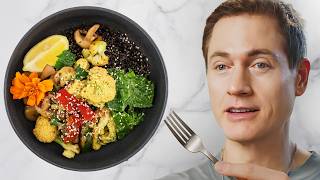
Bryan Johnson walks through three complete meals built on a 25% protein, 35% carbs, 40% fat split, using ingredients like turmeric, shiitake mushrooms, and lentils for their anti-aging compounds. He explains why each ingredient matters: sulforaphane activation, polyphenol content, fiber density. He also covers cookware safety and meal prep in three-day batches.
Chapters
Do not die.
Hi friends. Given that we are the first generation who won't die, my team and I have scoured the scientific literature looking for the evidence on how to build the best nutrition protocol. The rule is every calorie has to fight for its life. Every day I consume three meals and the meals vary day to day. But what they do have in common is a set of foods that we have deemed to be the superfoods of all things that I could put into my body. Today I'm going to share with you how my personal chef prepares three of these dishes. While the recipes change, each meal must meet the following criteria. They have to be the most elite ingredients for longevity. It needs to keep me within my daily macros of 25% protein, 35% carbohydrates and 40% fat. The ingredients need to be included in the Don't Diet Food guide and obviously it can't include the bad things such as sugars, fried foods, etc. You would be surprised and maybe you're not of how frequently you find these things hiding in your food. My chef also prepares the food in a way where we can make it one day and have enough food for three days. All right, let's get started with Sweet Potato Curry. This dish meets the criteria of foods from the Don't Die Food guide, including macadamia nuts, cauliflower, turmeric. It's also great because you can make it in under 30 minutes.
First, chop one whole onion. There's no correct way of doing this, but I aim for a fine dice. Once done, take a medium stainless steel pot and put it on medium high heat. It's crucial that your pots are stainless steel or ceramic as non stick cookware releases forever chemicals known as pfas into your food. These can stick around for decades, messing with your metabolism, hormones and fertility. Once your pot is heated up, add in half a tablespoon of avocado oil. Use avocado oil when cooking because it has a higher smoke point. This will form fewer toxic carcinogens than other oils. During cooking, keep it on medium heat to make sure the oil does not exceed 375 degrees Fahrenheit or 190 degrees Celsius. Once the oil starts to simmer, add in your onion, stir and carry on cooking until it's nice and translucent. It's going to be about five minutes. As the onion cooks, use a spoon to peel your ginger. This is faster than using a knife or peeler and way more efficient because you don't remove any of the juicy flesh underneath Next, peel a couple of cloves of garlic and chop them with the ginger into a fine mince. Let it cook with your onion for a few minutes. There should be an amazing smell in your kitchen right now. While the aromatics are cooking, peel, peel your sweet potatoes and chop into cubes. Sweet potatoes have more fiber than regular potatoes, so you absorb their natural sugars slower. This reduces blood sugar spikes and keeps you feeling fuller for longer. Add to your pot, then peel and chop your carrots into rounds. Add them to the pot as well, giving everything a nice stir. Okay, more vegetables. Time to chop your broccoli and cauliflower. There are two things to keep in mind here. First, use the stock and the florets because the stock adds a nice earthy taste and has more iron, calcium, vitamin C and fiber. Second, and this is an odd one for the best health results, let the broccoli and cauliflower sit for 40 minutes after chopping before you cook it. This is because chopping activates a natural enzyme in broccoli and cauliflower called myrosinase, which which then unlocks sulforaphane, one of the strongest anti cancer compounds you can find in food. It also has potential sugar lowering detoxifying properties. But heat from cooking stops this process. So chop at the start of your cooking session and wait a bit to let your vegetable reach maximum sulforaphane levels. So we have all our aromatics in the pot, including ginger, garlic and onion, which are the base of every good curry. Now we'll add in the black pepper and a teaspoon of turmeric. We're adding black pepper because it boosts the power of the turmeric. A compound in pepper called piperine slows the breakdown of curcumin in your gut and liver. This makes it more stable inside your body and makes its antioxidant, anti inflammatory and metabolic benefits last longer. Give everything a good stir to incorporate all the flavors. Next, add in your broccoli, rested or unrested and cauliflower and pour in enough water to cover everything, giving it a nice stir. Now bring up to a boil and then cover the pot and let it gently simmer for 15 minutes. While that's coming to a boil, we'll make our quinoa. Heat up a medium sized pot. Add in two cups of vegetable stock and one cup of quinoa. Once that comes up to a boil, lower the heat and simmer for 15 minutes. Now juice two limes and reserve the juice until you finish cooking. You always want to add lemon or lime Juice at the end of your stews or curries because if you do it too early, it loses the citrus flavors you want in your dish. Now we're going to chop our trimmed green beans into bite sized pieces. Place to the side and chop your cilantro. Now that the quinoa is finished cooking, after 15 minutes, turn off the heat and let it sit aside, covered. Next, we'll add in the rest of our ingredients to the curry. Peas, green beans, cilantro, citrus juice. Finally, macadamia nut milk will give your curry a really nice creamy flavor and color. Macadamia is rich in monounsaturated fats and can lower blood sugar and bad cholesterol. Bring that up to a quick boil and then turn off the heat and set aside. Now it's time for plating. I think the plating is just as important as the cooking. Precise, intentional arrangements stimulate the appetite and encourage you to eat slower and more mindfully, which all improves digestion and nutrition absorption. To plate, give the quinoa a nice little fluff with your fork. Add to the plate as a base. Top with the curry and add plenty of curry broth because that's where all the flavor is. Garnish with black sesame seeds, cilantro and microgreens. And if you're feeling extra bougie, you can add in some edible flowers. Finish with a wedge of lime and enjoy. Bon appetit. If you're meal prepping, keep the curry and quinoa in separate containers. Then reheat and combine when you're ready to eat.
Next up is the green smoothie. I love this dish because it's like a summertime palate cleanser.
It's loaded with healthy ingredients and tastes absolutely delicious. You might have heard that you shouldn't consume fruit in juice form because it strips away all the fiber and lets your body absorb sugar unnaturally fast. This is all true, but it doesn't apply to smoothies. The key difference is that for smoothies, you don't remove the solid parts of the fruits and vegetables, you just blend them all together. This means you still get their natural fiber content, which regulates sugar absorption, feeds your gut microbiota and prevents inflammation. In fact, adding vegetables, nuts and fats to your smoothie dilutes the sugar content of the fruit, slowing down absorption even more and keeping you from for longer. Alright, let's get going. First, add in your macadamia nut milk. Adding the liquid first stops your ingredients from stalling the blender. Next, add in one banana, frozen if possible, to thicken the consistency of the smoothie. Then add in the rest of your ingredients. Mac nuts, three frozen cherries, pomegranate seeds, hemp seeds, wheatgrass, vanilla extract, chia seeds, juice of half of a lemon and one celery stalk. These were all chosen for a reason. Pomegranates have unique polyphenols that protects your cholesterol from oxidation, which all improves your blood flow. Dark cherries have another distinct type of elite polyphenols that help with cardiovascular health and are rich in melatonin, which helps with slightly Hemp seeds are a great source of essential omega 3 and omega 6 fats with a remarkable 32% protein content. Close the lid and give everything a good blend for 30 seconds. Next, add in a handful or two of washed spinach and blend again until all your ingredients are thoroughly mixed. Take your glass and serve your smoothie. Note that this will be a thicker smoothie. If you want to make it less thick, you can always add in more filtered water or or your choice of nut milk. Top off with a little strawberry and mint and you're ready to go. This is a great meal prep smoothie. You can make a big batch and store in the fridge in an airtight container for up to three to four days. Just make sure to give it a quick stir or shake before enjoying.
Finally, we have the roasted vegetable, chickpea and lentil bowl. I love this dish because I have learned to absolutely love vegetables and legumes.
Roasting makes the vegetables sweet and juicy, the lentils are packed with protein and the creamy chickpea dressing has a great hit of high polyphenol olive oil. Of our three recipes, this might be the most satisfying to eat. Preheat your oven to 400 degrees and start chopping the vegetables. We'll start with half of a cauliflower and cut into bite sized pieces. Keep the other half in your fridge for later or you can double the recipe to make more portions. Stir. Set this aside in a mixing bowl and chop up one zucchini. Now take your red bell pepper. Cut the top and bottom like this. Cut in the middle and slice out the bitter white membrane before chopping into bite sized pieces. Once you're done chopping vegetables, measure about 1 teaspoon of macadamia nut oil or any kind of oil with a high smoke point like avocado. Take a tiny bit of this oil and spread onto your baking sheet to prevent stick sticking when the vegetables are in the oven. Then add the rest of your oil to your bowl of mixed vegetables. Give everything a good Toss and add to your baking sheet. Spread evenly and place in the oven at 400 degrees for about 15 minutes. Now that the vegetables are in the oven, we'll start cooking our black lentils. Lentils are 18% protein but also 16% fiber, which again slows down food absorption, making you fuller for longer and reducing blood sugar spikes. Studies suggest that eating 10 grams of legume fibers every day lowers colon cancer risk by 32% versus just 10% for the same amount of other dietary fibers. Add about 1 1/2 cups of cold water and 3/4 of a cup of black lentils. Bring up to a boil, then partially cover with the pot lid and turn down to a medium low temp. We're going to let this simmer for about 15 minutes. Next, we're going to saute our shiitake mushrooms. We're using shiitake because they have three particularly healthy ergothioneine, lentinan and eratadinine. Bring your stainless steel pan up to a really high heat for a few minutes so that the pan becomes nonstick. I like to take a teaspoon of water and splash it onto the heated stainless steel pan. If the water forms beads, that means that your pan is officially nonstick and ready for cooking. Place the shiitake mushrooms in the preheated pan with a teaspoon of avocado oil or any type of high smoke point oil. Cook for about five minutes, stirring occasionally. Once cooked, take your mushrooms off the heat and set aside. Now let's make our dressing. Take a cup of cooked chickpeas, 1 tablespoon of nutritional yeast, 1 tablespoon of olive oil, 1 garlic clove, a tablespoon of lemon juice, 4 tablespoons of filtered water and a handful of chives. Put everything in the blender and blend for 30 seconds. High polyphenol Olive oil is the most powerful ingredient in this dressing. It increases HDL or good cholesterol and reduces several keys markers of cardiovascular disease. We use Blueprint olive oil as it has a very high polyphenol count. Garlic has also been shown to lower blood pressure and help the immune system. Once your lentils and vegetables have been cooked, take everything off the heat and set to cool. Plate up by placing your lentils in a shallow bowl. Next, take your roasted vegetables, sauteed mushrooms and a handful or two of kale. Add our dressing to the mixing bowl and give everything a nice toss. Put a big help of vegetable mix on your lentils. Add in a large pinch of hemp seeds and a wedge of lemon. And that's it. You now have an easy and nutritious meal that you can make in less than 30 minutes. Enjoy.
If you want to learn how to make one of my favorite dishes, super veggie, watch this video here.





