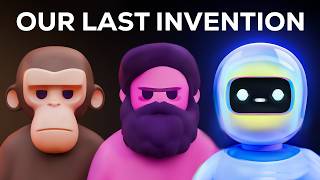
Bryan Johnson argues that superintelligence will be the most extraordinary event in cosmic history and could rewrite reality. He treats his body's 35 trillion cells as a single aligned system through his Blueprint project, and after two years of algorithmic health optimization, reports feeling healthier and more intellectually alive. He offers three questions to test assumptions in life decisions and ends with an imperative: don't die, don't kill each other, and align AI with not dying.
Chapters
For 13.8 billion years, there has been a universe. Earth has been around for 4.5 billion years or so. We were single cells for most of that. Fast forward a bit and boom. Homo sapiens. We're intelligent. We think, we think about thinking. We get fire, language, agriculture, cities, writing, industry, electricity, nuclear, solar, Internet. And then AI. It took almost 13.8 billion years, but finally intelligence made more intelligence. We are in fact baby steps away from creating super intelligence, which very well might be the most extraordinary event in the history of the universe. Superintelligence will rewrite reality. It will pop the bubbles we live in, revealing to us dimensions and realities from far beyond our imagination and comprehension. There are many differing opinions on AI. Some people are convinced that humans are inevitably doomed. Others believe AI will save us from ourselves. What we do know is that AI is improving faster than we can comprehend and in ways that we cannot predict. There is no way to stop or even slow its development. Nation states, corporations, ideological groups, individuals and everyone in between will unabashedly use AI for their self interested objectives. The major problem is that we tend to be reactionary and not proactive. It's one of the failings of the human mind and a scenario that may be unforgiving to our survival. Building AI systems that align with continued human existence is a discipline in itself and deserving of the greatest minds of our generation. For anyone not directly working on AI alignment, you can contribute by knowing that aligning all intelligence is the central opportunity of our time. It can begin with self. Today, my daily routine is trialing a version of human AI alignment. Blueprint considers that I am a collection of 35 trillion cells and aligns all of them towards a single objective, continued existence. I did this to try and demonstrate a beta version of a future human, one intelligent being trying to self align. What if I could improve myself at the speed that technology improves? What if we all could? What if decay and decline were not inevitable? In the 1990s, this would have been ridiculous to suggest. Not anymore. Imagine that you have access to an algorithm capable of generating the best physical and mental health of your life. The catch, what you eat, when you eat, and other health related decisions will be determined by the algorithm. Do you opt in or decline? The thought experiment is of course oversimplified. To sincerely answer the question, we'd each need to ask hundreds more questions. My personal experience is that two years after saying yes to the thought experiment, I've never been happier, healthier, more emotionally stable, or as intellectually alive. I no longer spend any amount of time thinking about my next meal or when to go to bed. I no longer grapple with whether to do this naughty thing that will accelerate my speed of aging. It's understandable if this contemplated exercise invites an existential crisis of sorts. Right now, this is a big idea, as big as the Earth, not being the center of the universe. This first version of blueprint took years and millions of dollars to build. Most of the processes are still manual, clunky, and require a large team. It's impractical to imagine the current version being scaled throughout society. That's okay, because this is how innovation works. The key is looking past the awkward things and finding the gem of inevitability that that's been demonstrated Every second of every day my mind is searching for the most important piece of information available. What is the highest value use of my time? The task that I've given myself is to write you a letter that prepares you for the future. This is what I know the future is not going to be like the past. Every generation before, you had the advantage of being able to learn from the past and model out their lives the way they thought about individuals, countries, currencies, and relationships. For the first time, we cannot look into the past. The zeroth nature of computational intelligence steals away control from using the past to create any future predictions. Be aware and cautious about what assumptions you make about the future. If you can make this a staple in how you process information, you'll be able to sift through arguments, trends, and norms and keep your mind in sync with technological advance. Here are three simple questions you can ask to enhance your predictions when you're trying to make life decisions. What must remain true for this to continue to be true? What new thing would make this untrue? What wildly unexpected surprise would change the question? The only things on humanity's to do list don't die, don't kill each other, and align AI with don't die.