I Made Myself Older By Mistake
Bryan Johnson took rapamycin for four years hoping to slow aging, but instead experienced mouth ulcers, delayed wound healing, and a higher resting heart rate. After he stopped, a study found the drug accelerated biological aging across 16 epigenetic clocks. He shares the failed experiment as part of rigorous longevity research.
Chapters
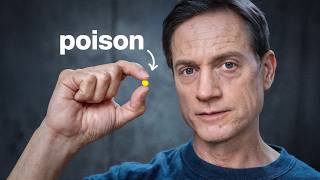
For the past four years, I have been working with a team of medical professionals trying to build the world's best health protocol. Now, in doing this, we were trying one of the world's most promising experimental drugs for slowing down my speed of aging. Turns out, I was actually accelerating my speed of aging. The name of the drug, Rapamycin. Here's what happened. Rapamycin was first discovered in the 1960s by scientists gathering a soil sample in a cave on Easter Island. In that soil sample, they found a bacterium that had powerful antifungal fungal properties. They named that compound rapamycin. Researchers thought it might be the ultimate cure for many fungal problems, such as athlete's foot. But before they could develop that further, they also discovered rapamycin was a powerful immunosuppressant. In some cases, immunosuppressants can save someone's life. But for large portions of the population, suppressing the immune system can be a death sentence. In 1999, the FDA approved rapamycin's usage for organ transplant patients because of its immunosuppressant properties. The idea was that high doses of rapamycin would stop the body's immune system from attacking the organ that was just transplanted. Even now, this is a major problem, with over a third of transplants being rejected by the body. And while there's been plenty of research, nobody made the connection of rapamycin and longevity until 2009. In 2009, a study in older mice showed that dosing rapamycin increased lifespan for females with 14% and males 9%. When they repeated the study in younger mice, they showed that rapamycin further increased longevity. Now, when they combined rapamycin with other drugs, such as acarbose, they showed even further longevity benefits. In females, it was 28%. In males, it was 34%. The findings were replicated in other animals, which gave researchers hope for the final test, which was in humans. Now, in dosing humans with rapamycin research, researchers were cautious because of the significant side effects they'd seen in organ transplant patients. These include metabolic disruptions like high cholesterol, tissue swelling, soft tissue infections, impaired wound healing. But more recent studies showed that intermittent dosing or lower doses reduced these side effects. Now, if they could mitigate the side effects, the positives were just too great to ignore. So let's get into the science. How does rapamycin work? Rapamycin's potential in longevity centers around its ability to inhibit something called MTOR C1. This is a growth pathway whose over activation plays a role in many age related diseases. Now, if you want to naturally inhibit MTOR C1, you can do things such as caloric restriction, fasting exercise and AMPK activators. Inhibiting MTOR C1 is what rapamycin is doing directly. So what were the benefits? We were looking at reduction of my biological age, my speed of aging and organ specific biological age markers, as well as potential benefits for rejuvenation of the immune system and skin. But it's not free. Rapamycin also inhibits MTOR C2, which has been linked to the side effects that we discussed before, the metabolic dysfunctions. Rapamycin also suppresses the immune system and specifically NK cells, your cancer killing cells. So it has a double edged sword, making the dosing protocol very important. Other risks include disruptions in cholesterol, insulin and blood glucose, and finally, potentially reduced gains in both exercise and muscle growth. So I knew all of this going in. So what happened? First, this is what rapamycin looks like. It's a triangle shaped pill. Now, knowing the risks of having too much rapamycin in my body to suppress my immune system, but, but also wanting just enough for the benefits, we tried many things. We tried protocols, including five of these pills per week. We tried a protocol of six pills one week and 13 pills the next week. We tried 13 and 13 and then 90 minutes after taking the pills, we would take my blood and measure the level of rapamycin in my blood and then measure 24 hours later. 48, 72, 96. We were trying to assess how much rapamycin was in my blood. How fast did it decay? Back to zero. Now knowing that information, we then could figure out is the dose appropriate for the effects, then also narrow enough to avoid the side effects. Now, in doing this, I didn't notice any benefits. Everything seemed to be the same. I did, however, notice side effects. For example, I'd have cankers in my mouth or maybe a wound wouldn't heal fast enough. My blood reports show that I had cholesterol disruptions and my blood glucose spiked a little bit. And then perhaps the thing that was most painful for me, it increased my resting heart rate, which as you know from watching my videos, it is the most important biomarker I track every single day because it's the most influential thing determining my sleep quality. Now these side effects continued for several years, but again, I was willing to make the trade off for the potential longevity benefits. Now of course in blueprint we are doing many things, so it's always trying to isolate is this thing causing that thing now, now, we suspected rapamycin would be the cause of these side effects because we'd read the literature, so we wanted to put it to the test. So with that in mind, we decided to test discontinuing rapamycin. And sure enough, without it, my blood glucose dropped, my cholesterol corrected, soft tissue infections went away. The side effects were in fact from rapamycin. Now, we also had some concerns about cancer. Remember, rapamycin suppresses the immune system, including NK cells, which are your cancer fighting cells. And we were worried it might have some kind of long term increased risk with this oppression. Now, on October 27, a month after we discontinued rapamycin, a preprint came out which is a paper that they were evaluating several longevity interventions, including rapamycin. It showed that rapamycin accelerated the biological speed of aging in humans across 16 epigenetic clocks. This was huge news. Now, of course, what this means is irony hunts me. We talk about this on the channel a lot, which is it's kind of the funniest, most humorous outcome that could happen is a drug that I was taking for longevity actually was accelerating my speed of aging. So you got to give it to irony. It's pretty funny. Now, in saying all of this, we have to keep in mind rapamycin may in fact have all the benefits we've imagined. And that study was simply flawed for some reason. That's entirely a possibility. That is the way science works. We are taking a cautious step at this point, though, and observing that data and want to see more data that comes out that could refute that. It's always important to be cautious as you see new evidence emerge. Now, did I cause myself lasting damage by taking rapamycin? Maybe. I don't know. A lot of people think that I take excessive risk in doing these things. And I always remind them they too are taking risks. When you eat that fast food meal or you go to bed late, those effects are known. You are accelerating your speed of aging. You are causing metabolic disruption in your body. So this is a game we're playing was we're trying to figure out, using science and data, which things legitimately slow down the speed of aging at which things accelerated. I consider it to be part of the game. I'm fine with the whole outcome. It's just part of the scientific method. For those of you who are laughing at home, I'm with you. Laughing with you. Irony is the love language of the universe. The conclusion here is not to try new things. The conclusion here is to share things, whether they work or whether they don't. That way we all learn.





